
Felt cherry is a hardy tree, capable of adapting to the most challenging climates. This small tree grows and bears fruit in almost all climate zones, with the exception of arctic and subarctic ones. Despite their compact size, felt cherries produce generous harvests. They are undemanding and easily withstand the harshest frosts.
General information about felt cherry
The felt cherry, or Chinese cherry (Prunus tomentosa), is a woody plant in the Rosaceae family, genus Prunus. It's not as popular as the common cherry, but that doesn't make it any less appealing to gardeners interested in hardy fruit trees.
History of the variety
The felt cherry is native to China, Korea, and the Russian Far East. It is here that this plant grows naturally. It arrived in European Russia relatively late, in the late 19th century. This new variety quickly took root in Far Eastern orchards, where ordinary cherries were unsuitable due to the climate.
West of the Urals, felt cherry was initially planted solely for ornamental purposes—the compact trees with small leaves are beautiful at any time, but they are especially impressive during flowering and fruiting.
Breeding history:
- Felt cherry was introduced into cultivation by breeder N. N. Tikhonov. Having discovered it in the southern Far East, he developed its first varieties and hybrids by crossing the tree with the sand cherry.
- In 1912, the famous breeder I. V. Michurin acquired felt cherry seedlings. He did this in Blagoveshchensk. He was the first to successfully domesticate the wild Chinese cherry. The result was a significant increase in fruit weight.
- The first variety of felt cherry, bred by Michurin, was called Ando. Subsequently, many varieties and hybrids were developed at the Far Eastern Research Institute of Agriculture. Many of them are still successfully grown today, serving as benchmarks for the crop.
Characteristics of the plant and distinctive features
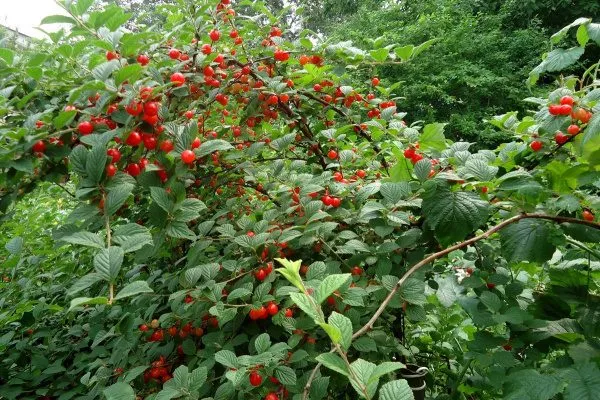
The felt cherry gets its name from the fine, short hairs that densely cover the shoots, the undersides of the leaves, the stems, and even the fruit itself. This covering vaguely resembles felt, hence the unusual name.
Description and characteristics of felt cherry:
- The tree is compact, light-loving, up to 2.5 m in height. The crown is spherical or slightly flattened. It bears fruit at three years of age and has a lifespan of 12-15 years. It prefers loamy soils on the southeastern side of the site and grows well in loamy and sandy loam soils with neutral pH.
- The leaves are oval, pointed at the ends, and heavily corrugated. The flowers are white or white-pink, attached directly to the base of the branches (very short stalks).
- The tree looks great as a tapeworm. But it looks no less beautiful in group plantings. It tolerates air pollution well, making it suitable for urban landscaping. The tree is virtually disease-resistant and pest-free, but it does attract bees.
- The fruits ripen in mid-June/early July. In temperate climates/northern regions. Fruit weight is 1.5-4 g. Color is bright red. Stems are short. Taste is sweet and sour, slightly tart.
- After full ripening. Felt cherries become completely sweet and aromatic. They contain up to 10% sugar, a lot of vitamin C, and pectin. The pulp is slightly juicy, and the pit is large, occupying a significant portion of the fruit.
- One adult tree produces 10-12 kg of fruit. This is several times less than that of regular cherries. The berries, clinging to the branches, are easily crushed during picking and are unsuitable for either storage or transportation.
- Felt varieties always have fruits of the same color scheme. Unlike regular cherries, they do not have more or less red fruits.
- Felt cherry can cross-pollinate with its closest relatives. Plums, apricots, and cherry plums. However, with steppe and common cherries, it doesn't produce hybrids capable of growing and bearing fruit.
- Many varieties of felt cherry require pollination. Therefore, it is recommended to plant at least 2-3 trees per plot. It is important to clarify whether the variety being planted is self-fertile or self-sterile.
- Felt cherry fruits are actively used in cooking. For making jam, compotes, fruit desserts.
- Felt cherry can be propagated in different ways. By cuttings, seeds, and grafting. It is usually grafted onto Vladimirskaya cherry, as well as cherry plum and blackthorn.
Growing area
The felt cherry thrives in its historical homeland—the Far East. Thanks to Michurin's work, this tree has spread across a vast territory. It is grown in southern Russia, the Northwestern Federal District, the Leningrad Region, the Urals, Ukraine, and the Caucasus.
In regions with harsh winters, cultivar selection must be especially careful. Here, trees that successfully survive the winter can be killed by sudden, recurring frosts. Among the most frost-hardy cultivars recommended for the Urals and Siberia are Natalie, Vostorg, Skazka, and Vostochnaya.
Advantages and disadvantages
Before planting felt cherry in your garden, evaluate its qualities. It may not be suitable for canning, but it will certainly become a true garden ornament. Moreover, the trees, planted in a row, can serve as a beautiful hedge.
Advantages:
- Unpretentious and undemanding to soils.
- Increased frost resistance.
- Precocity.
- Early ripening.
- Highly decorative.
- Ripe fruits do not fall off.
- Excellent honey-producing qualities.
- Can be propagated by seeds.
- Drought resistance.
- High immunity.
- Usefulness of fruits.
- Resistance to atmospheric pollution.
- Compactness.
Flaws:
- It does not tolerate waterlogged soil or excess calcium in it.
- Harvesting is complicated by short stalks.
- Low yield.
- Cannot be propagated by layering.
- Poor shelf life during collection and transportation.
- Regular pruning is required as the tree quickly becomes dense.
- Due to early flowering there are no insects for pollination.
The best self-fertile varieties of felt cherry
Over more than a century of felt cherry breeding, hundreds of varieties have been developed for different regions and climates. Almost all of them are self-sterile and require pollinators. Below are the best self-sterile varieties of this fruit crop, with descriptions, advantages, and disadvantages.
Firework
The tree reaches 1.5 m in height. It is dense, with straight branches and rounded fruits. It does not require frequent watering. Fruiting begins in the third year after planting. It tolerates temperatures down to -35°C.
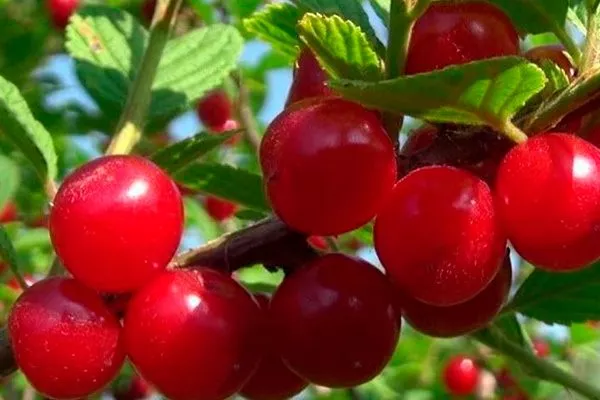
The yield per tree is 9-11 kg. The fruit weighs 3-4 g. Ripening time is the second to third ten days of July. The fruit is dark pink, and the flesh is bright red, slightly tart and sweet. They are dried, eaten fresh, canned, and used to make jams and preserves.
Alice
This variety is definitely one of the best felt cherries. The tree reaches 120-150 cm in height. It is dense, with thick, straight branches and oval-shaped leaves. The fruits are large, slightly oblong, juicy, and sweet, suitable for for blanksBut they can also be eaten fresh.
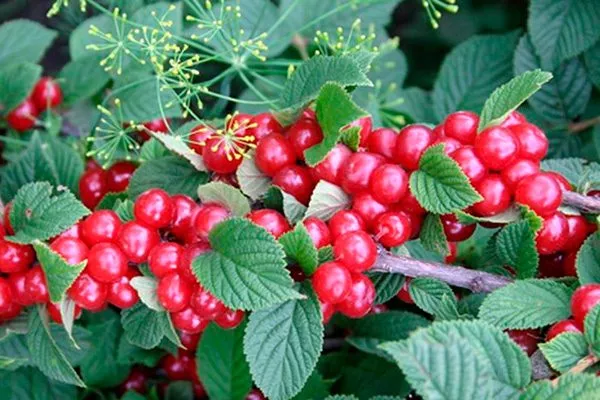
The variety produces its first harvest in the third year after planting. The best method of propagation is by cuttings. A single tree yields 8-9 kg. Fruit weight is 3-3.5 g. Ripening time is the second to third ten days of July.
Princess
This variety grows low, reaching a maximum height of 1.2 m. The crown is sparse, the branches are straight, with small oval leaves. The fruits are oblong. Grafted seedlings begin to bear fruit in the second year after planting. Frequent and heavy watering is not recommended, as this can lead to fungal diseases.
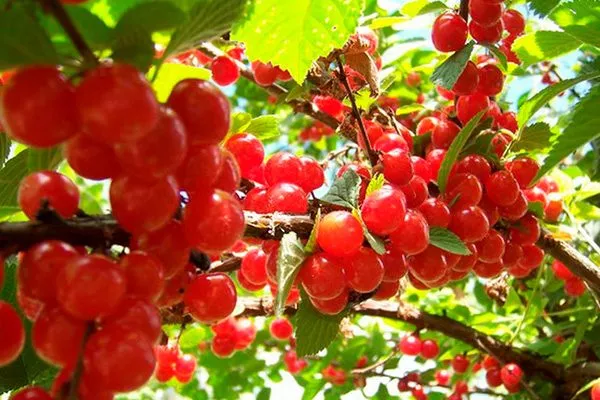
The yield per tree is 9-9.5 kg. Fruit weight is 3-4 g. Ripening period is the second to third ten days of July. It is recommended to process the fruit immediately after harvesting.
Anniversary
The bushes are vigorous, oval, with straight branches, reaching a height of up to 1.7 m. The fruits are large, tightly pressed together, and broadly oval in shape. The fruit color is burgundy, the skin is shiny, and the flesh is red and juicy. This variety is self-sterile.
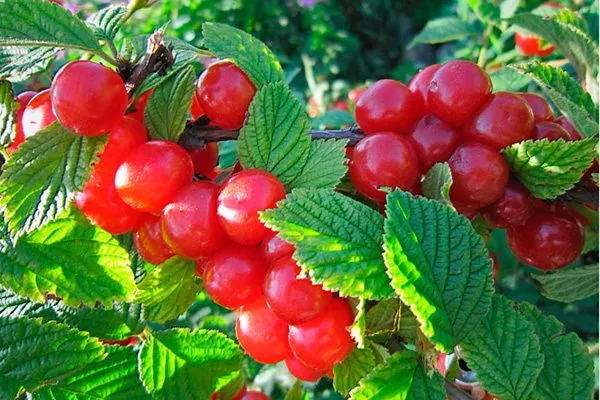
The yield per tree is 8-9 kg. Fruit weight is 3.5 g. Ripening period is the second ten days of July. The fruits are suitable for a variety of purposes, including desserts, compotes, and jams. Fruiting occurs in the second year. Propagation is best by green cuttings.
Delight
This variety's bushes are medium-sized—up to 1.5 m—dense and wide. The fruits are oval, bright red, and glossy, with firm, juicy flesh. Grafted cherries begin bearing fruit in their second year. This variety is recommended for commercial cultivation near processing facilities.
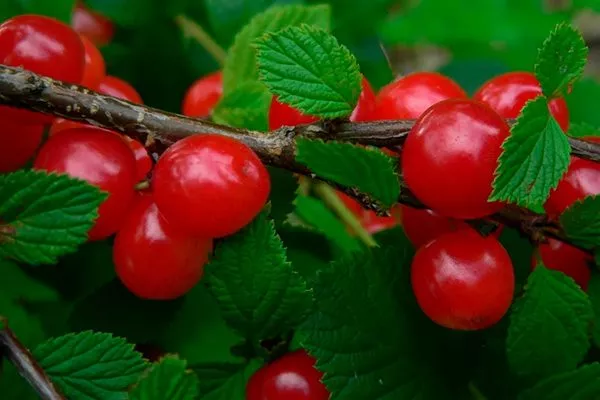
The yield per tree is 9-9.2 kg. Fruit weight is 3.2-3.5 g. Ripening period is the first ten days of July. The fruits are used to make jams, pastilles, marmalade, winter preserves, wine, preserves, etc.
Autumn Virovskaya
The bush/tree grows up to 1.8 m tall. The crown is broadly oval and compact, and the leaves are oval with doubly serrated edges. The fruits are oval, dark burgundy, and glossy, with firm flesh. The flavor is sweet and sour.
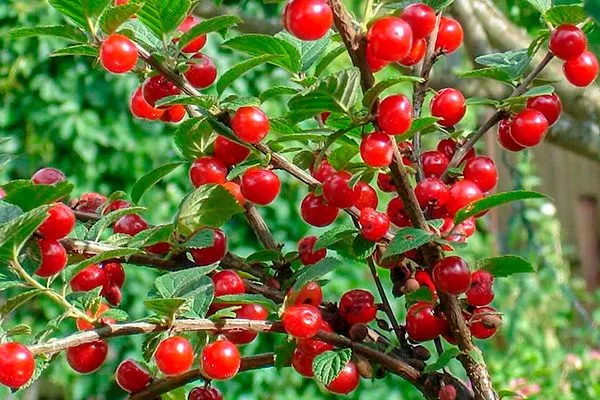
The yield per tree is 8-9 kg. Fruit weight is 3.3-3.6 g. Ripening period is the last ten days of July. Grafted cherries bear fruit in the second year. The tree lifespan is up to 18 years. Propagation is best by green cuttings.
Natalie
The tree is quite tall, reaching up to 1.8 m, sometimes reaching 2 m. The crown is wide and oval. The fruits are deep red, with dense, juicy flesh. The tree bears fruit for 15-16 years.
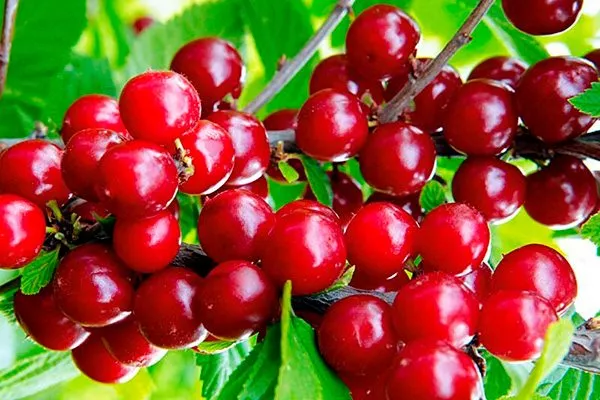
The yield per tree is 8 kg. Fruit weight is 3.5-4 g. Ripening period is the second to third ten days of July. It is recommended to process the fruit immediately after harvesting. The berries are used to make delicious juices, desserts, and wine.
Ogonyok
This large-fruited felt cherry hasn't yet been officially registered, but it has already earned the highest praise from gardeners and summer residents. The bushes are vigorous and compact, reaching up to 2.4 m in height. The crown is wide, reaching up to 2.8 m. The fruits are red, sweet and tart, and the skin is firmly attached to the flesh.
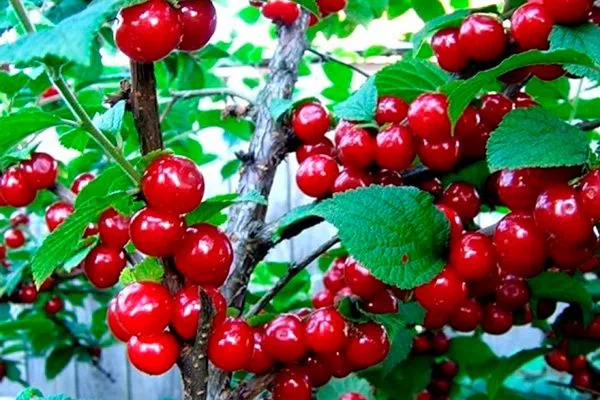
The yield per tree is up to 8-12 kg. Fruit weight is 3-4 g. Sugar content is approximately 12%. The fruits are used to make juices, compotes, and jams. Ogonyok cherries are also suitable for drying and freezing. Tasting score: 4.5.
Morning
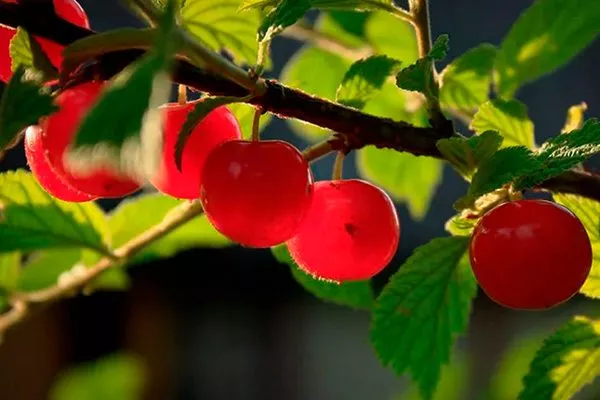
This variety produces compact trees with sparsely dense crowns and lightly pubescent fruits. The berries are round, bright red, and juicy. A single tree yields up to 6 kg. Fruit weight is 3 g.
Triana
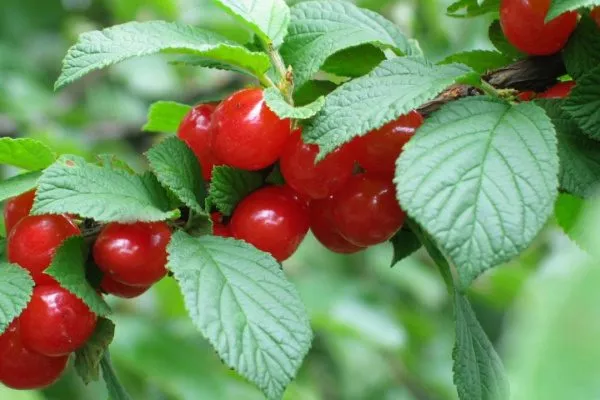
This variety is a cross between the Red and Pink varieties. The tree grows to a maximum height of 1.3 m and has an elongated crown. The fruits are large, oblong, dark burgundy, and juicy. The yield per tree is 10-10.5 kg. Fruit weight is 3.5-4 g.
Gorgeous
The bushes grow up to 1.6 m tall. They are dense, broadly oval, with straight branches. The fruits are dark pink and striking, the juice is red, and the flesh is firm with a harmonious sweet and sour taste.
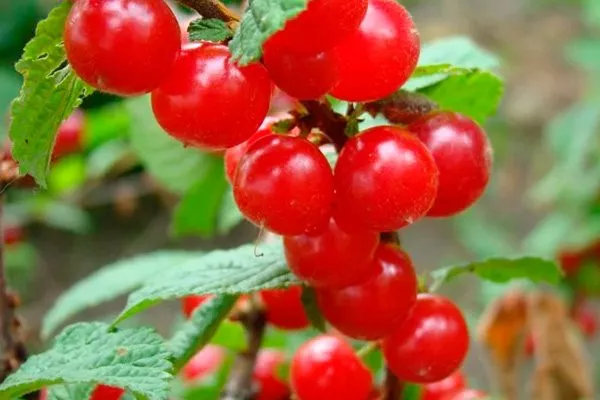
The yield per tree is 10-10.5 kg. Fruit weight is 3.5 g. Ripening occurs in the third ten days of July. Grafted cherries bear fruit in the second year, while own-rooted ones bear fruit in the third or fourth year. The tree can live up to 17 years. Propagation is by green cuttings.
Pink Harvest
The bushes are medium-sized, spreading, with straight branches. The leaves are ovate and heavily pubescent. The flowers are pale pink, and the fruits are pink, rounded and flattened, with firm flesh. The taste is sweet and sour.
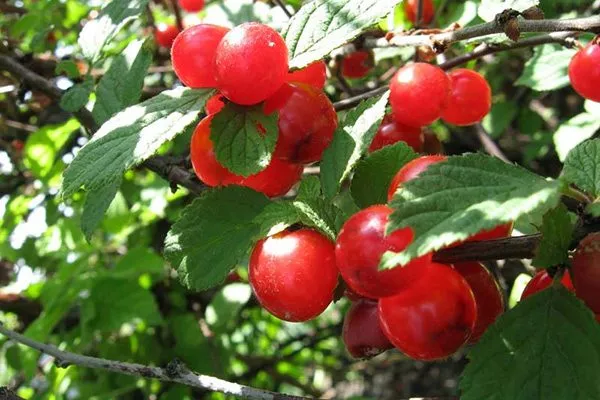
The yield per tree is 7.2-9.6 kg. Fruit weight is 3.5 g. Tasting score: 4 points. Ripening occurs in the second ten days of July.
Ocean Virovskaya
The bushes are vigorous, compact, and moderately dense, reaching a height of up to 1.8 m. The fruits are oval and striking, with burgundy skin and a tapered top. They have red flesh, juicy and dense, sweet and sour, with a subtle aroma and red juice.
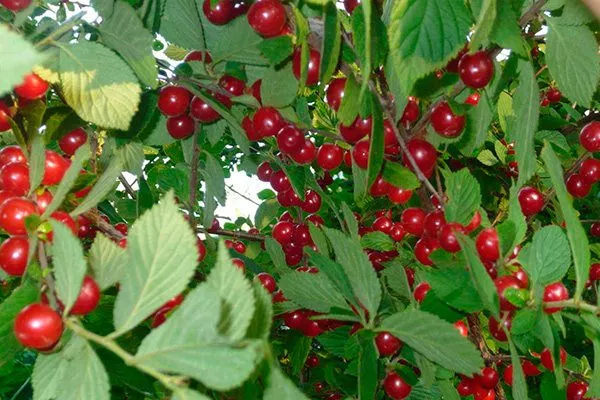
The yield per tree is 9 kg. Fruit weight is 3-3.6 g. Tasting score: 4 points. The fruits warm up in the third ten days of July.
Altana
This variety has medium-sized bushes with a rounded crown, small leaves, and thin, straight shoots. The flowers are pink, and the fruits are small, round, dark red, and sweet and sour. The yield per tree is 3.5-4.7 kg. The fruits weigh 2-2.3 g. Ripening time is the third ten days of July.
Amurka
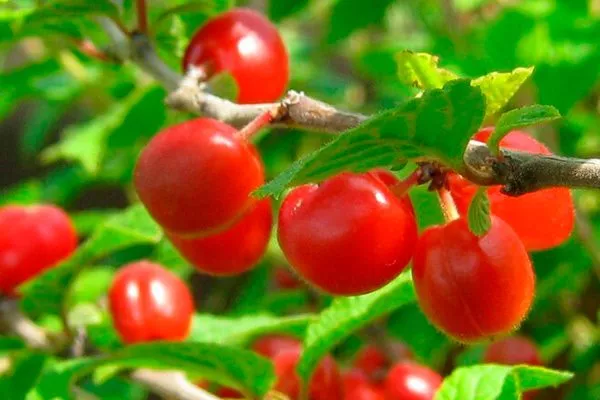
This cherry tree's bushes are robust, vigorous, semi-spreading, with medium to sparse branching. The variety produces fairly large, slightly pubescent fruits that are tightly packed together. They have a rounded shape and a sweet and sour, refreshing flavor.
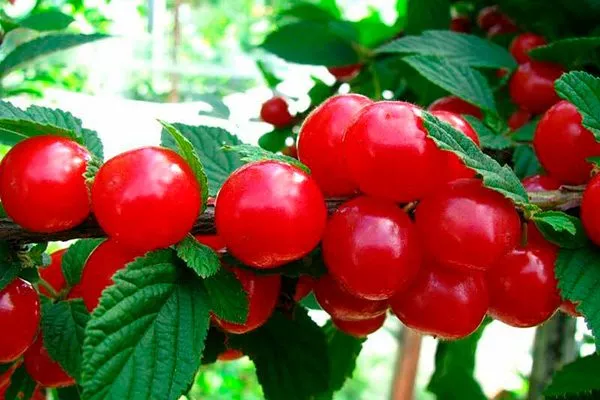
The yield per tree is up to 14.5 kg. Fruit weight is 2.7-4 g. Ripening period is the third ten days of July. Tasting score: 4.5. The fruits are used for processing and eaten fresh.
Damanka
This versatile, self-sterile variety belongs to the late-ripening group. The bushes reach 2.2 m in height. The fruits are cherry-burgundy, almost black, round, and slightly angular. They have dense, juicy flesh with a pleasant sweet-tart flavor.
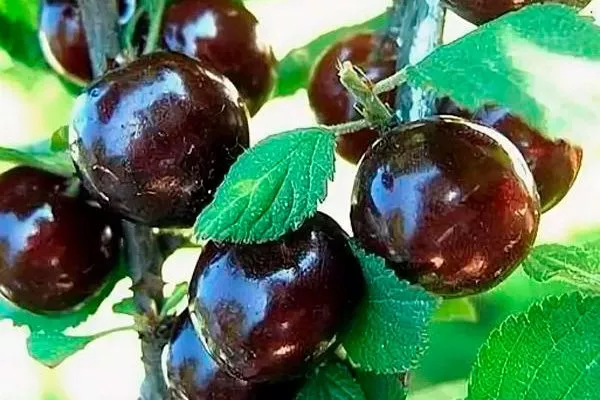
The yield per tree is up to 6-8 kg. Fruit weight is 2.7-4 g. Ripening time is mid-August. The first fruits appear in the third year after planting. Tasting score: 4.5. The fruits are used for processing and eaten fresh.
Eastern Darkling
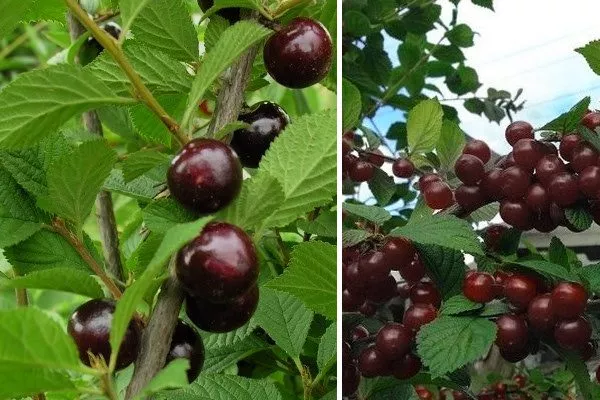
The bushes are low-growing, no more than 1.2 m tall. The fruits are round, small, with a subtle, pleasant aroma. The skin color is dark red or burgundy. The yield per tree is 7 kg. The fruit weight is 2.5-2.7 g. Ripening time is the second ten days of July.
The best self-fertile varieties
It's believed that there are no self-fertile varieties of felt cherry. This isn't entirely true. Some cherry trees rely 90-100% of their yield on pollinators. At the same time, there are varieties that can bear fruit even without pollinators. However, their yields drop significantly.
Next are the varieties that are considered self-fertile or partially self-fertile.
Fairy tale
The tree grows up to 1.3 m tall, with a moderately dense habit. It has elongated leaves, and the fruit is burgundy and sweet and tart. Tasters consider it one of the most delicious varieties.
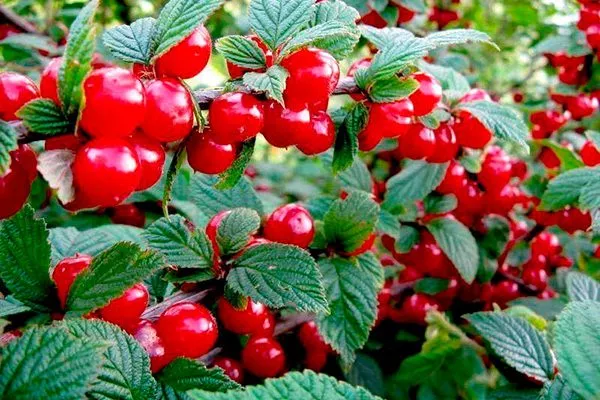
The yield per tree is 8-10 kg. Fruit weight is 3-3.5 g. Ripening time is the second to third ten days of July. Grafted seedlings bear their first fruit two years after planting.
Summer
This variety, compared to others, is characterized by slow growth. The first two years after planting, the tree takes a long time to gather its strength. This compact cherry is also called the sand-tomentose cherry. The shrub has straight branches, oval leaves, and large fruits.
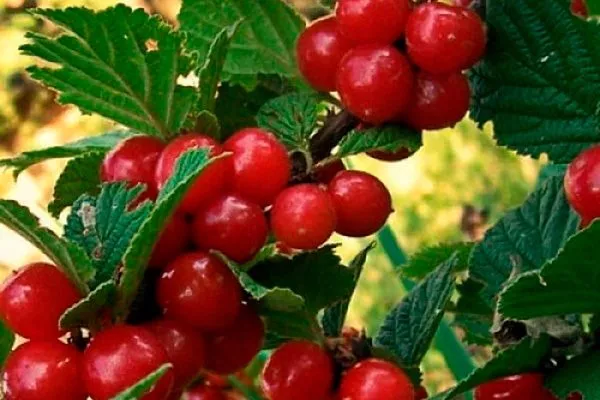
The yield per tree is 6-7 kg. Fruit weight is 3-3.3 g. Ripening time is the second to third ten days of July. The fruits are fleshy, sweet and sour, and bright red.
Children's
This variety's bushes are not dense, reaching up to 2 meters in height, with strong, thick branches. The fruits are slightly flattened, red, with oval seeds and juicy, fleshy pulp. Fruiting begins in the second year. Under favorable conditions, the tree can live up to 18 years.
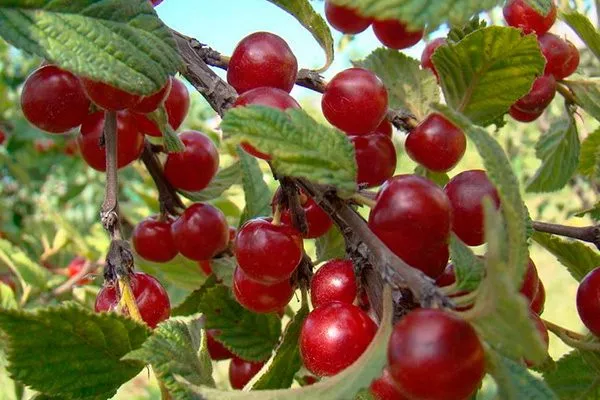
The yield per tree is 9-11 kg. Fruit weight is 3.5-4 g. Ripening period is the first ten days of July. Ripens earlier than other felt cherry varieties.
White
This late-ripening variety is a small tree with small fruits. It grows up to 1.5 meters tall. Its crown is spreading, and the leaves are elongated. The "White" variety is the only felt cherry variety with white fruits.
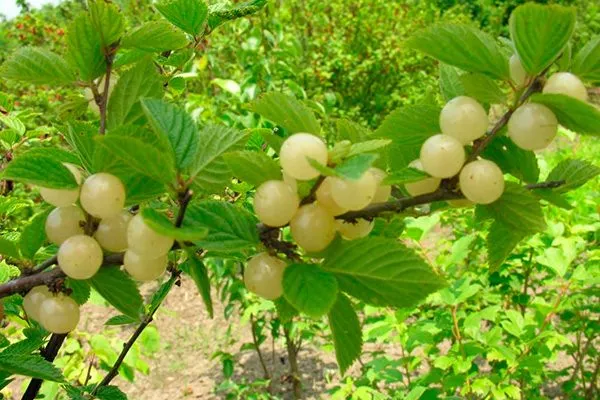
The yield per tree is 9 kg. Fruit weight is 1.5-2.5 g. Ripening time is the third ten days of July. The fruit color is white (pearlescent) or cream. There is virtually no pubescence on the fruit. The pulp is fibrous, juicy, and sweet and sour. The berries are used for preserves and juice.
Felt cherry varieties by category
When choosing felt cherry for their garden, gardeners consider not only its appearance, fruit characteristics, and yield, but also other characteristics, such as ripening time, ability to withstand harsh winters, and other nuances.
Felt cherry variety groups:
- Winter-hardy. Despite their high winter hardiness, not all felt cherry varieties can survive in regions with harsh winters. The varieties that perform best in Siberian conditions are Alisa, Leto, Natalie, and Osennyaya Virovskaya.
- Early ones. They ripen in early July, and some varieties even in June. Examples of early varieties include Vostorg, Detskaya, Yubileynaya, Rozovaya Urozhnaya, and Skazka.
- Average. These varieties begin to ripen in mid-July and early August. Examples of mid-season varieties include Tsarevna, Triana, Lyubimitsa, Alisa, Okeanskaya Virovskaya, and Osennyaya Virovskaya.
- Late. These varieties ripen in August. Examples of late varieties include Leto, Altana, and Belaya.
- Hybrids. By crossing felt cherry with related crops and species, hybrids with improved characteristics can be produced. The best hybrids of felt and sand cherry include Tsarevna, Damanka, Alisa, Leto, Natalie, Rozovaya Urozhnaya, and Osennyaya Virovskaya.
In the Moscow region and central Russia, the first to ripen are the Detskaya, Skazka, Tsarevna, and Natalie varieties. In principle, all felt cherry varieties can be grown in the Moscow region, so when choosing a planting variety, gardeners primarily consider the yield and quality of the fruit, and many also consider its decorative qualities.
Reviews of felt cherry varieties
If you don't have a felt cherry tree in your garden yet, be sure to rectify this omission. Thanks to the abundance of varieties, you can find one to suit any growing conditions. This charming tree is especially appreciated by those with small plots—it's very compact and takes up minimal space.