
Cherries thrive in hot summers and don't tolerate dampness. This is why growing them in the temperate climate often poses problems. Today, we'll learn which cherry varieties are recommended for the Moscow region, when they ripen, and how they differ from each other.
Early-ripening varieties for the Moscow region
Early cherry varieties ripen in early July. Early cherries differ from each other in taste, juiciness, tree and fruit appearance, and other characteristics.
| Name | Yield, kg per tree | Fruit weight, g | Tasting score |
|---|---|---|---|
| Revival | 25 | 2.5-3.5 | 4.5 |
| Toy | 45-72 | 7-9 | 4.5 |
| In Memory of Yenikeev | 9-15 | 5 | 4.5 |
| Rastorguevskaya | 8-10 | 4 | 4.4 |
| Silvia | 12 | 2 | 4.0 |
| Crystal | 10-15 | 5-6 | 4.5 |
Revival
This cherry variety is highly resistant to disease and bears fruit abundantly and reliably. It thrives in all types of soil. The first fruits appear in the fourth year of planting. Due to its high immunity, this variety is popular in many regions of Russia. Recommended pollinators include Korall, Lyubskaya, and Crystal. Yields are high—up to 25 kg per tree.
These dark-burgundy cherries have small, easily separated pits and excellent flavor—they earn a 4.5 out of 5 stars. The berries are large, sweet, and juicy, weighing between 2.5 and 3.5 grams. They transport well, even when fully ripe. Their marketability is excellent. They require little care—watering is only necessary in early June and during droughts.
Toy
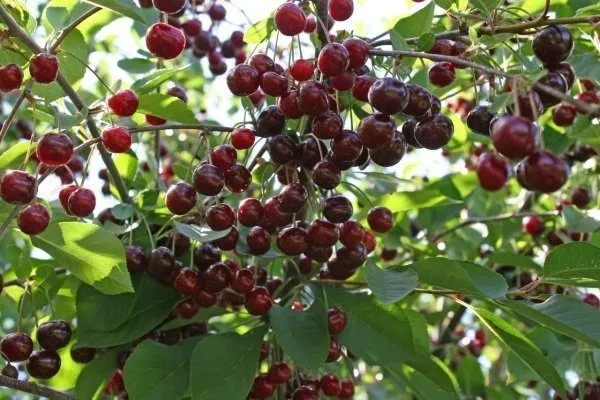
This large-fruited hybrid is a cross between the Lyubitelskaya cherry and the Solnechny Shar cherry. Recommended pollinators include the Samsonovka or Shalunya cherry, and the Krupnoplodnaya and Valery Chkalov sweet cherries. The hybrid grows up to 7 m tall. The first fruits appear in the third year after planting. The yield per tree is up to 45 kg, with a maximum of 72 kg. It bears fruit for up to 25 years.
The fruits are dark red, very large, weighing 7-9 g. They have red, tender flesh and a sweet and sour flavor. The rating is 4.5 out of 5. The fruits are eaten fresh and used to make juices and wines. The pit separates easily from the flesh. They tolerate temperatures down to -25°C. In the Moscow region, they require insulation.
In Memory of Yenikeev
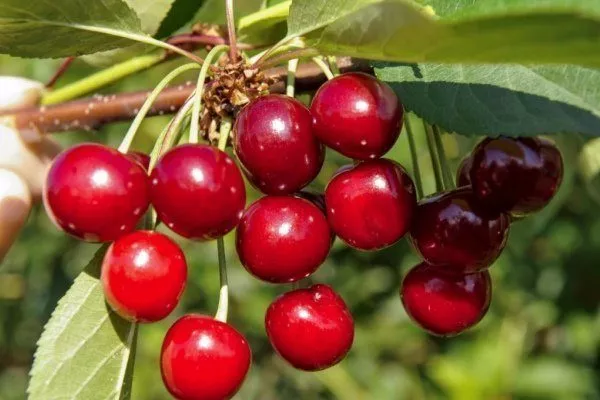
This self-fertile variety is considered mid-early. The tree reaches 3 m. A tree yields 9-10 kg of berries, with a maximum of 15 kg. It begins bearing fruit in 3-4 years. The fruits ripen uniformly.
The fruits are medium-sized, weighing 5 g. The berries are oval and dark red. They have a dessert-like flavor, sweet and sour. They tolerate winter well and have average drought tolerance. The seeds are large and oval. Resistance to coccomycosis is average.
Rastorguevskaya
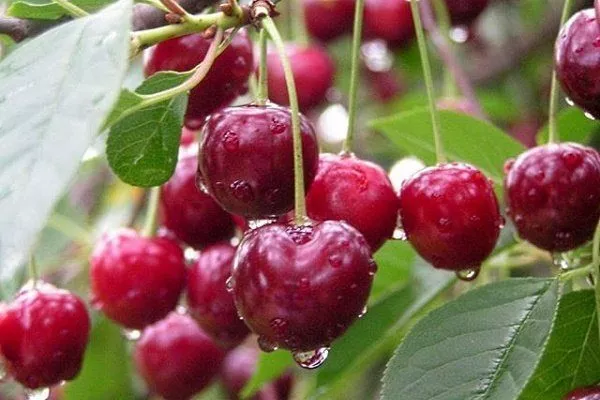
An early-to-mid-season variety. A single tree yields 8-10 kg of cherries. The first fruits appear in the third year. The variety is self-fertile. The harvest is uniform, abundant, and consistent.
The cherries are round, dark red, weighing 4 g. The flavor is sweet and sour, with a rating of 4.4 points. The pits are large and separate well from the flesh. They are relatively resistant to coccomycosis. They recover well from frost damage.
Silvia
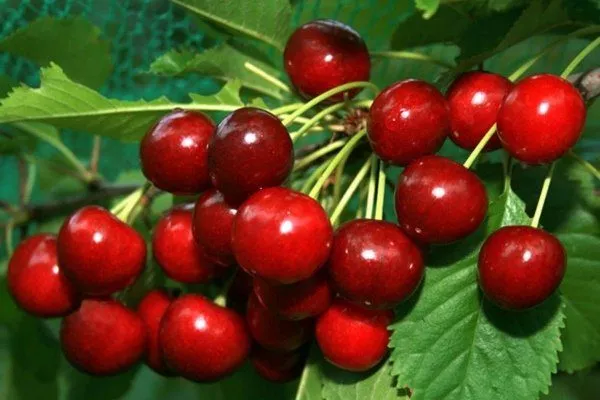
A high-yielding variety with an early-to-mid ripening period. 1 hectare yields 460-660 centners. 1 tree yields 12 kg. The plant is medium-sized, up to 3 m, with a spreading, rounded crown. It is highly self-fertile.
High resistance to coccomycosis. The berries are round-oval, dark red, almost black. The berries are small, weighing 2 g. The taste is sweet and sour, and it is suitable for general use. High winter hardiness. Poor disease resistance.
Crystal
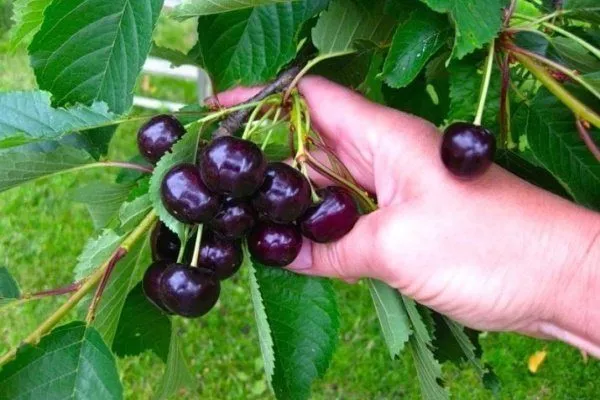
Compactness is the main characteristic of this variety. It is also valued for its winter hardiness and high resistance to coccomycosis. The tree grows to a height of approximately 3 meters. It is recommended to plant the Lyubskaya or Korall varieties nearby. Fruiting begins in the fourth year of planting.
The berries weigh 5-6 g. They ripen in early to mid-July, depending on the weather. A drawback is their low immunity to moniliosis.
Mid-season varieties
Mid-season cherries ripen at the very midpoint of summer. Having absorbed the maximum amount of solar heat, their fruits delight gardeners with sweetness, juiciness, and tenderness.
| Name | Yield, kg per tree | Fruit weight, g | Tasting score |
|---|---|---|---|
| Volochaevka | 10-20 | 2.7-4.5 | 4.7 |
| Radonezh | 50-70 | 4-5 | 4.2 |
| Turgenevka | 25 | 4-5 | 4.5 |
| Bulatnikovskaya | 15 | 3.5 | 3.9 |
| Cinderella | 15 | 4 | 4.5 |
| Nurse | 15 | 8 | 4.8 |
| Spartan | 10-15 | 6-8 | 4.5 |
Volochaevka
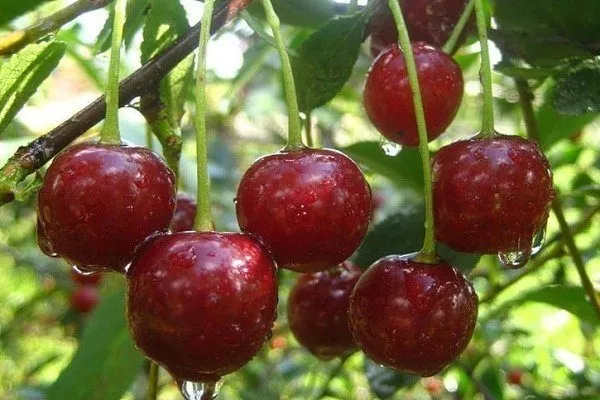
This variety is valued for its resistance to moniliosis. For decades, this fungal disease has plagued cherry trees in Russian orchards. Many gardeners even abandon cherry trees because of this scourge. Volochayevka is a short tree, only 2-3 meters tall. Fruit appears in the fourth or fifth year. A tree produces 10-15 kg of cherries, and in southern regions, 20 kg. Harvest is July 20-25. The harvest is consistent and abundant every year.
The fruits are dark red, with a predominantly sweet flavor and a subtle, cherry aroma. They weigh 2.7-4.5 g. They tolerate temperatures down to -30°C. Severe frosts can damage the buds. There is a risk of coccomycosis. They are highly self-fertile and can survive without pollinators. Their transportability is average. The fruits are delicious fresh and easy to process.
Moniliosis, or fruit rot, is widespread in the Moscow region and throughout the temperate climate zone. The rot is triggered by cold, damp springs, typical of these latitudes.
Radonezh
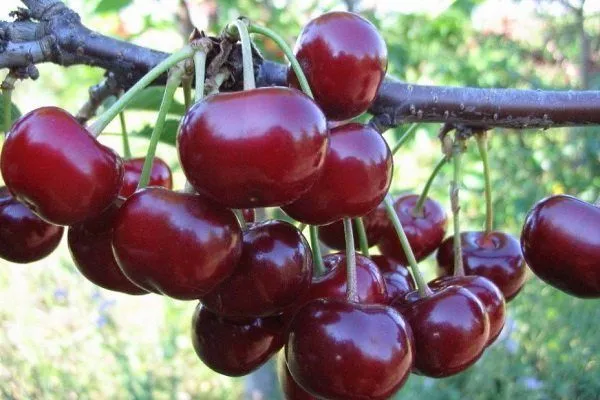
This dessert variety yields 50-70 centners of cherries per hectare. Without pollinators, yield drops by 60-70%. It bears fruit in the fourth year after planting.
The dark red fruits are high-quality—firm, tasty, with easily separated stones. Weight: 4-5 g. Suitable for jams, juices, wines, and liqueurs. Tasting score: 4.2. Highly resistant to coccomycosis and moniliosis. There is a risk of inflorescence freezing.
Turgenevka (Turgenevskaya)
The variety is partially self-fertile. The tree grows up to 3.5 m tall and bears fruit in the 4th or 5th year. A tree yields up to 25 kg. The tree bears fruit for up to 25 years. Pollinators include 'Favorit,' 'Molodezhnaya,' and 'Lyubskaya.'
The berries are dark burgundy and heart-shaped. They weigh 4-5 kg. The seeds are small and easily separated. They have a sweet and sour flavor, making them ideal for making preserves, juices, and compotes.
Bulatnikovskaya
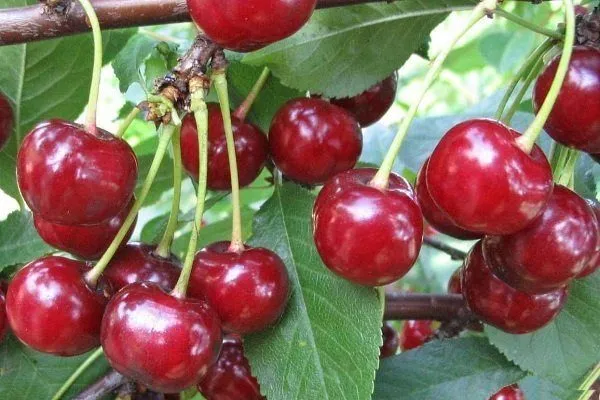
A distinctive feature of this self-fertile variety is its increased resistance to adverse conditions. The tree is bushy, up to 3 m tall, and can withstand extreme temperatures from -40°C to +50°C. A single tree produces up to 15 kg of cherries.
The round, dark-red berries weigh approximately 3.5 g. The taste rating is 3.9 points. This is the variety's main drawback—its poor taste.
Cinderella
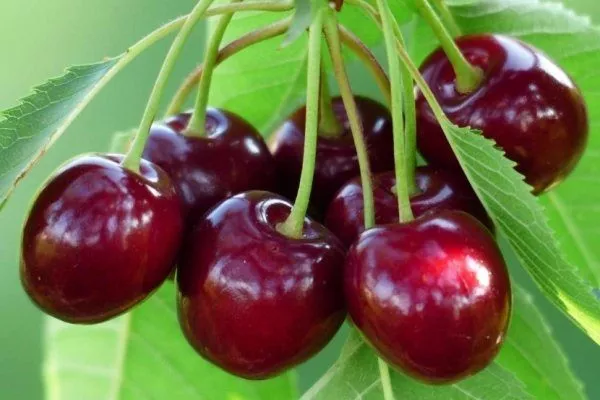
This beautifully flowering variety bears fruit around July 20th. It requires no pollinators. The trees are winter-hardy, densely foliated, and compact. A single tree can produce up to 15 kg of cherries. The tree height is 1.5-2 m.
The dark-red berries weigh about 4 g. This variety tolerates cold well and does not require antifungal treatment. The dense flesh has a pleasant flavor.
Nurse
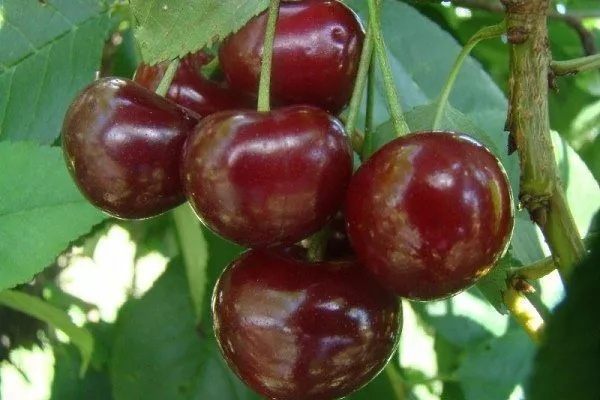
A self-sterile, mid-season variety with very large fruits. It begins bearing fruit at three years of age. Pollinators are required. The tree is medium-sized.
The berries are dark cherry-colored with sweet flesh. They weigh up to 8 g. They combine the flavors of cherries and cherries. The taste and aroma are considered exemplary.
Spartan
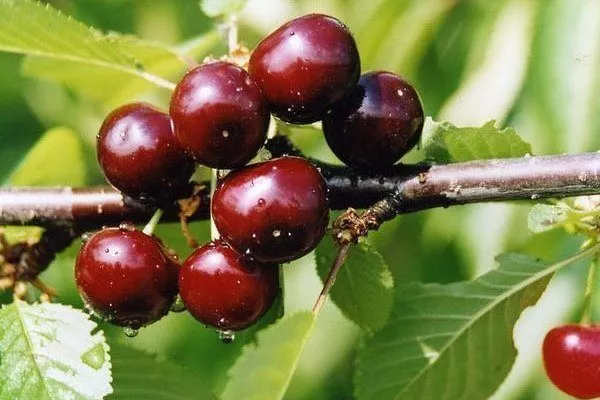
This self-sterile cherry-sweet cherry hybrid was bred for Siberia, so it thrives in the Moscow region, tolerating severe frosts well. It's a mid-season variety, with a medium-sized tree. The yield is 10-15 kg per tree.
The fruits are round, cherry-red in color, weighing 6-8 g. They are large and sweet. This duke is easy to grow and disease-resistant.
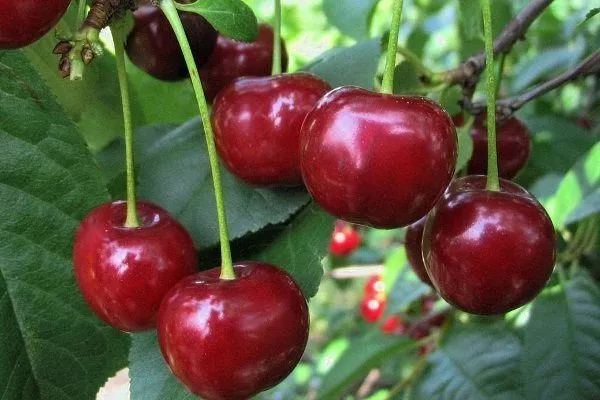
Late cherries near Moscow
Cherries are a summer fruit. All cherry varieties, including late-ripening ones, ripen in the summer. Late varieties ripen in early August.
| Name | Yield, kg per tree | Fruit weight, g | Tasting score |
|---|---|---|---|
| Apukhtinskaya | 10-15 | 5 | 4.0 |
| Robin | 15-16 | 3-4 | 4.0 |
| Coral | 70 | 4.5-5.5 | 4.5 |
Apukhtinskaya
The Apukhtinskaya cherry is well known among gardeners in central Russia. It's an ancient variety, the origins of which are unknown. It's believed to originate from the village of Apukhtino (Tula Oblast) and is a product of folk selection. It's a late-ripening variety, with fruits ripening in the second ten days of August. It blooms later than other cherries, so the Apukhtinskaya cherry is not used as a pollinator for self-sterile varieties. The tree is small, reaching up to 3 meters tall, and resembles a shrub.
The cherries are dark red, glossy, and have a classic tart flavor. They weigh 5 grams. They are slightly tart, with a distinct cherry aroma. They are medium-sized, with rounded, heart-shaped drupes. Many consider the Apukhtinskaya cherry to be too tart and not flavorful enough. The flavor of these cherries is greatly influenced by growing conditions—climate, light exposure, soil quality, etc. Fruiting occurs 2-3 years after planting. After 5 years, the tree produces 10-15 kg of cherries. This variety is winter-hardy and rarely prone to diseases. It is suitable for any processing. Cons: it spoils during transportation and releases sap.
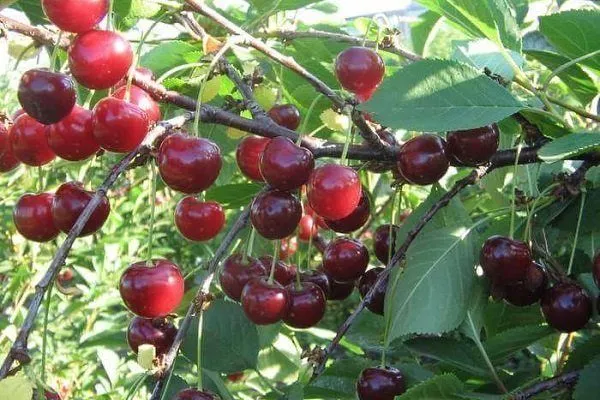
Robin
This is a technical variety—the fruit is used to make jam, preserves, and other processed products. The tree height is 3-4 m. Malinovka's downside is self-sterility. Suitable pollinators include Shubinka, Lyubskaya, and Vladimirskaya. Fruiting begins in the third to fifth year. The yield of this technical variety is 10-15 tons per hectare, or 15-16 kg per tree.
The cherries are dark red, weighing 3-4 g. The pits are quite large, but easily separated from the pulp. The flavor is sweet and sour. Berries form only on one-year-old branches. The cherries are hardy down to -25°C. At extremely low temperatures, the buds freeze. They have weak immunity to moniliosis, but are more resistant to coccomycosis.
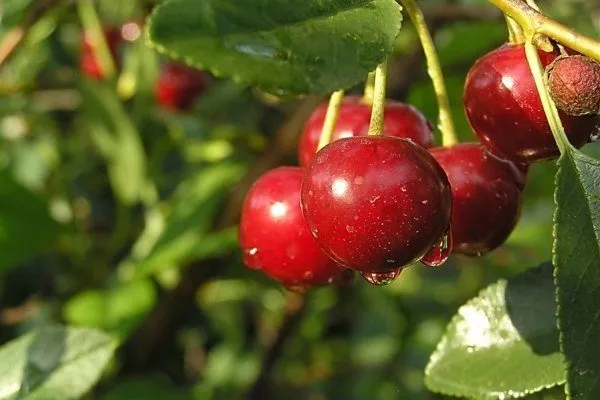
Coral
The variety's distinctive feature is the scarlet or coral-colored fruit. Thanks to its late flowering, the buds are protected from spring frosts. Yields are high and consistent—up to 70 kg per tree. Tree height is up to 3 m. Suitable pollinators include Gnomiq and Alatyrskaya.
The cherries are medium-sized, weighing 4.5-5.5 g. The scarlet fruits have a typical cherry flavor. However, birds don't like the taste. They are winter-hardy, but their transportability is very poor. Because of this difficulty, this variety is not grown commercially. It is resistant to coccomycosis.
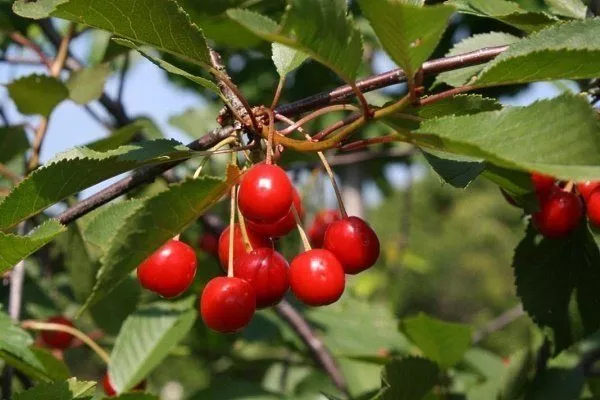
Short stature
This category of varieties is easy to maintain and harvest. Compact, short trees reach a height of 1.5-2.5 m, no more.
| Name | Yield, kg per tree | Fruit weight, g | Tasting score |
|---|---|---|---|
| Youth | 12 | 4.5 | 4.5 |
| Lyubskaya | 10:55 | 4-5 | 4.0 |
| Chocolate Girl | 11-12 | 3-3.5 | 3.8-4.0 |
| Fairy | 12 | 3-3.5 | 4.3 |
| Mtsenskaya | 50-80 | 4 | 3.8 |
| Morozovka | 60 | 5 | 4.5 |
| Brunette | 10-12 | 3.5-3.8 | 4.0 |
| Assol | 70 | 3-4 | 4.7 |
| Tamaris | 10 | 4-5 | 4.6 |
| Bystrinka | 100 | 4 | 4.3 |
| Lighthouse | 15-25 | 4-6 | 4.5 |
| Winter Garnet | 10 | 3-4 | 4.5 |
| In memory of Mashkin | 40-65 | 5 | 4.6 |
| Saratov Baby | 15 | 4-5 | 4.5 |
| Dwarf Shpanka | 10 | 5 | 4.5 |
| Griot of Moscow | 9 | 3.5 | 4.0 |
| Octave | 100 | 4 | 4.5 |
Youth
This variety has increased frost resistance. It doesn't require pollinators, and its height doesn't exceed 2.5 meters. The tree lives for only 15-20 years. It resembles a bush in appearance. Fruit buds appear only on one-year-old branches. A mature tree produces up to 12 kg of cherries, or 8-10 tons per hectare.
The cherries are medium-sized, dark burgundy, weighing 4.5 g. They travel well. The pits are small and easy to remove. The fruit is versatile – suitable for both edible and processed. The variety is drought-resistant, but its resistance to moniliosis and coccomycosis is limited – this is the main drawback of the Molodezhnaya variety.
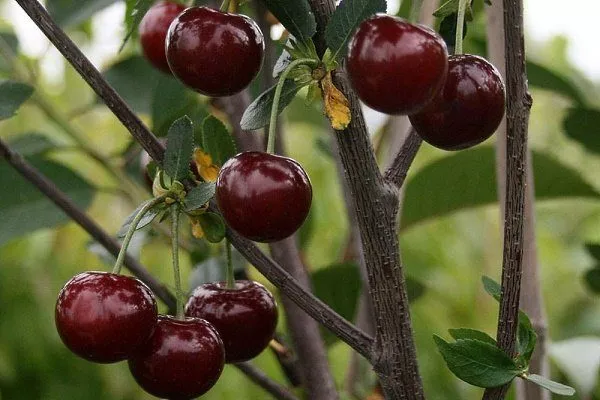
Lyubskaya
This low, bushy, and self-fertile cherry ripens in early August. It is classified as a commercial cherry variety. The compact tree grows to 2-3 meters in height. This is an ancient variety, bred by the people. It is also known as Lyubka. It bears fruit in the third year after planting. A tree produces 10-12 kg of cherries, with the maximum yield reaching 55 kg after 10 years.
The fruit transports well. Its disadvantages include low frost resistance, low immunity to fungal infections, and a sour taste. The tree is very ornamental and is often used for landscaping. The fruits are dark red, with a thin, tough skin, weighing 4-5 g. The taste is sweet and sour. It is an excellent source for jams, preserves, wines, etc. The stone has a pointed tip. The bushes rarely form suckers. It is considered an ideal variety for industrial use. A disadvantage is its low resistance to fungal infections.
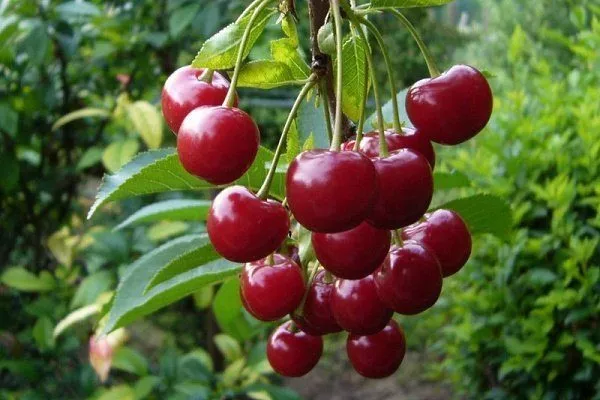
Chocolate Girl
This small tree with an inverted pyramidal crown reaches 2-2.5 m in height. The first fruits are harvested in the 4th or 5th year. The yield per tree is 11-12 kg, or 80-90 centners per hectare. With intensive care, the yield can reach up to 200 centners per hectare. Self-fertility is variable and depends on growing conditions.
The berries are flattened and round, weighing 3-3.5 g. When ripe, they turn dark red, almost black. The fruits are shiny and very juicy, with small, easily separated seeds. The tasting score is low – 3.8-4. They are versatile – eaten fresh, dried, frozen, used to make liqueurs, and jams. They are highly winter-hardy and drought-resistant. A downside is their susceptibility to fungal infections.
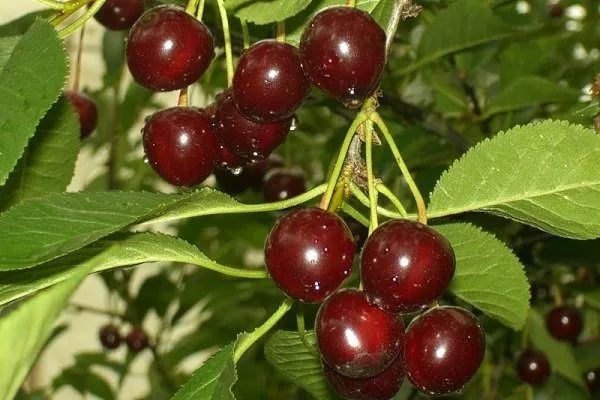
Fairy
A self-fertile variety with early to mid-season ripening. A low-growing tree up to 2.5 m tall. The crown is lush and spherical. With pollinators, yield increases by 50%. Recommended for planting near Turgenevka or Vladimirskaya cultivars. Yield per tree: 12 kg. 80-85 centners per hectare. Fruiting begins in the third year.
The fruit is pink, with a pinkish-yellow flesh. Fruit weight is 3-3.5 g. The taste is dessert-like. Tasting score: 4.3. It tolerates frosts down to -38°C. It is highly resistant to fungal infections. It produces virtually no root suckers.
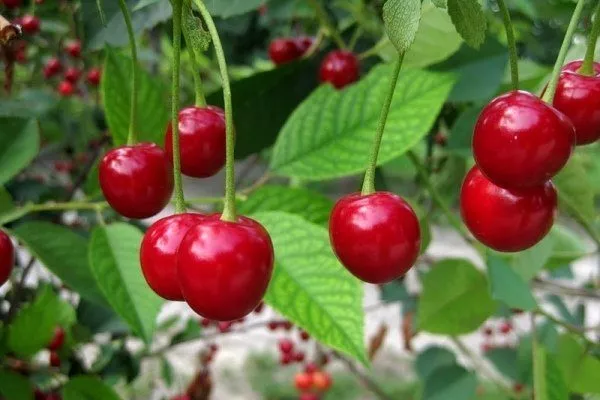
Mtsenskaya
A mid-season variety for industrial use. The tree has a spreading crown, reaching a height of up to 2 m. It bears fruit in the fourth year. Yields 50-80 centners per hectare. Self-fertile.
Dark red, round cherries weigh approximately 4 g. Tasting score: 3.8. Highly resistant to cracking. Average resistance to fungal diseases. Winter-hardy and drought-resistant.
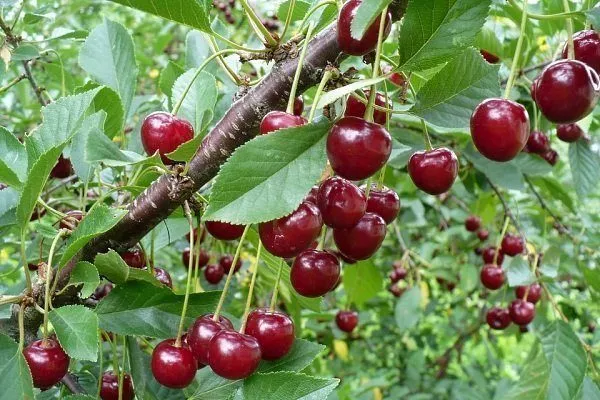
Morozovka
A low-growing, self-sterile variety with a mid-season ripening period. Berries ripen in July, although the exact timing depends on the weather. The tree grows up to 2.5 m tall and has a wide, spherical crown. Fruiting begins in the third year after planting. Productivity is up to 60 centners per hectare.
The fruits are large, round, and dark red, almost burgundy. They weigh 5 g. They are frost- and drought-resistant. They are highly resistant to coccomycosis. The best pollinators are Turgenevka, Vladimirskaya, and Griot Michurinsky. A drawback is the low winter hardiness of the flower buds.
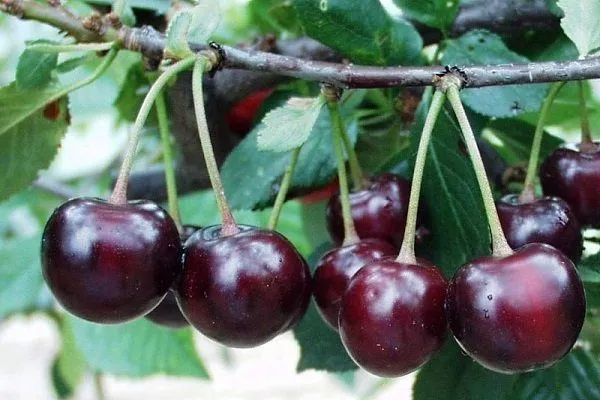
Brunette
Tree height: 2-2.5 m. Spreading, spherical crown. Mid-season, highly productive variety. Yield: 8-10 tons per hectare, 10-12 kg per tree.
Berry weight: 3.5-3.8 g. Color: dark burgundy, almost black. These versatile fruits have tender, juicy flesh. The seeds separate easily from the flesh. Average resistance to fungus. A drawback: the flower buds have limited winter hardiness.
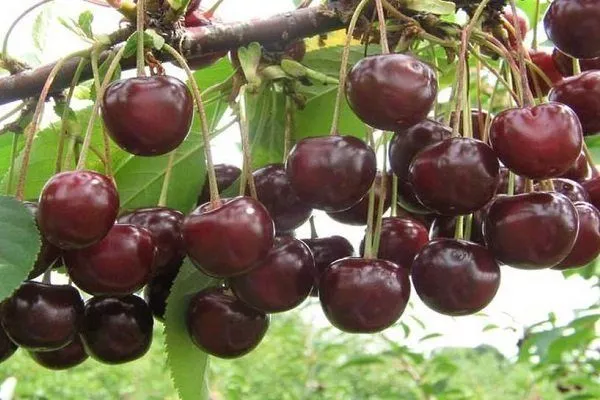
Assol
An easy-to-grow mid-season variety. Tree height up to 2 m. Highly self-fertile, no pollinators are required. Fruiting begins at three years of age. Up to 70 centners per hectare can be harvested.
The berries are red, glossy, and weigh 3-4 g. Their flavor combines sweetness and tartness. They are suitable for any kind of preserves. They are highly resistant to scab and other diseases. They are winter-hardy to temperatures as low as -30°C.
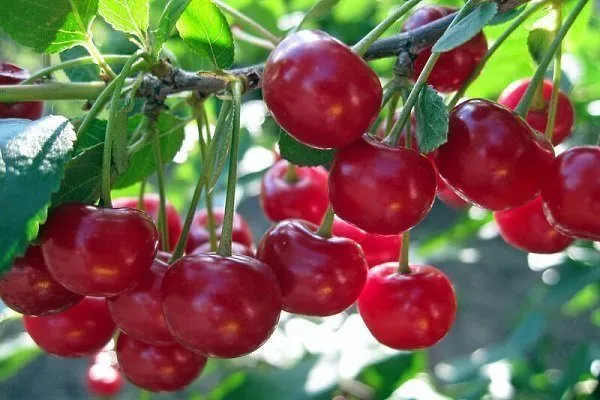
Tamaris
A dwarf variety. The plant height is no more than 2.5 m. The tree has a spreading crown and a decorative appearance. The first berries appear in the second or third year of fruiting. Up to 80 centners of fruit are harvested per hectare, and a single tree can yield up to 10 kg or more—the variety is very responsive to care. This variety is mid-late. The berries ripen in late July or early August. It is highly self-fertile, but pollinators such as Lyubskaya, Turgenevka, and Zhukovskaya are recommended for increased yield.
The berries are glossy, dark red, and weigh 4-5 g. They have a good cherry flavor, but sweeter than sour. The tree lives up to 20 years. They are highly resistant to coccomycosis, but less so to moniliosis. During transportation, the fruits may become damaged and sap-spilling.
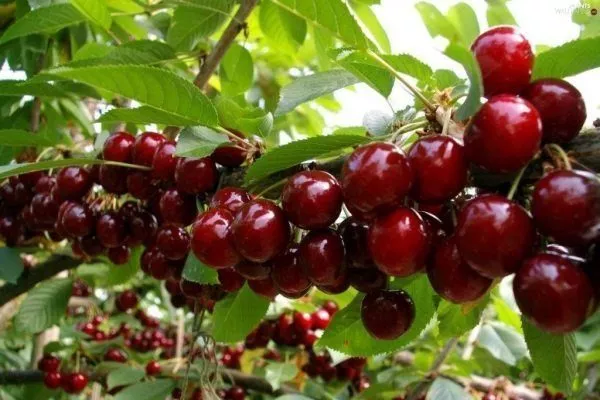
Bystrinka
A low-growing, early-ripening variety. Maximum height: 2.5 m. The tree has a spherical crown. Berries appear in the fourth year. Up to 100 centners are harvested per hectare.
The berries are oval, dark red, and weigh 4 g. They have juicy, aromatic flesh, and its flavor was rated 4.3 points. A drawback is their susceptibility to fungal diseases. This variety is used as a hobby and commercial crop. Frost resistance is average.
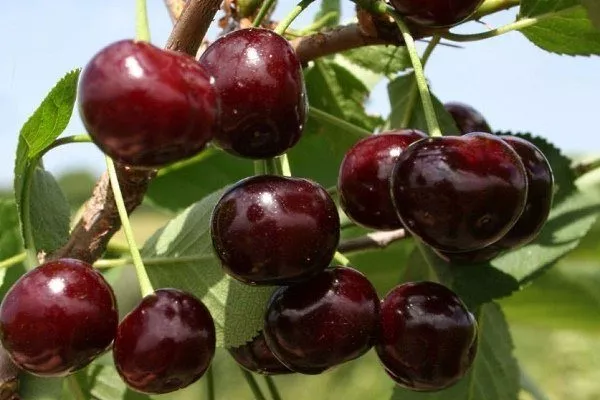
Lighthouse
A bushy variety. The plant grows up to 2 m tall. Foliage is low. Fruiting begins in the third year. Harvesting begins in late July. Up to 15 kg of cherries can be harvested per tree. Yields of up to 25 kg have been recorded. This variety is considered long-lived, with trees bearing fruit for up to 30 years. It is partially self-fertile.
The fruits are dark red, round, and weigh 4-6 g. Tasting score: 4.5 points. Cons: cracking, poor transportability. Frost resistance: down to -35°C. May be affected by fruit rot and coccomycosis.
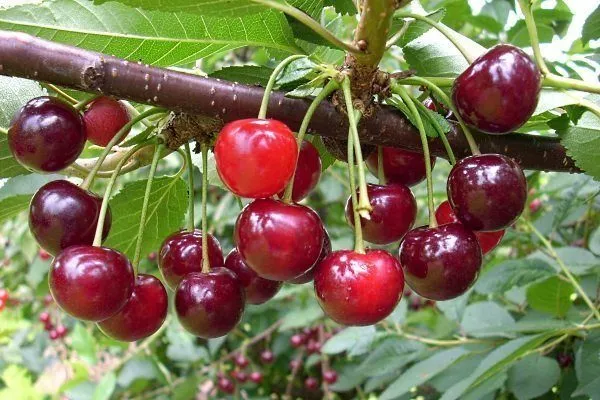
Winter Garnet
This dwarf cherry tree was recently bred. It is a self-pollinating variety. It grows up to 1.8 m tall. The bush is compact and bears fruit abundantly. The first berries appear in the third year. The yield per tree is up to 10 kg.
The berries have an excellent sweet-tart flavor. They weigh 3-4 grams. The variety tolerates frost well, making it suitable for northern regions. Frost resistance reaches down to -45°C. The tree has an ornamental appearance and is disease-resistant.
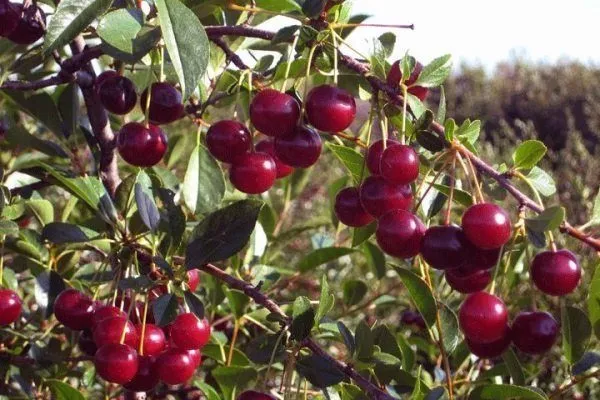
In memory of Mashkin
A low-growing cherry tree with a spherical crown, no more than 2.5 m tall. It bears fruit in the third year after planting. It is partially self-fertile. Berry yield is 40-65 centners per hectare.
The berries are red, heart-shaped, and round. They weigh up to 5 g. The tasting score is 4.6. The flavor is dessert-like. The variety is relatively resistant to fungal diseases. The tree and buds have average frost resistance.
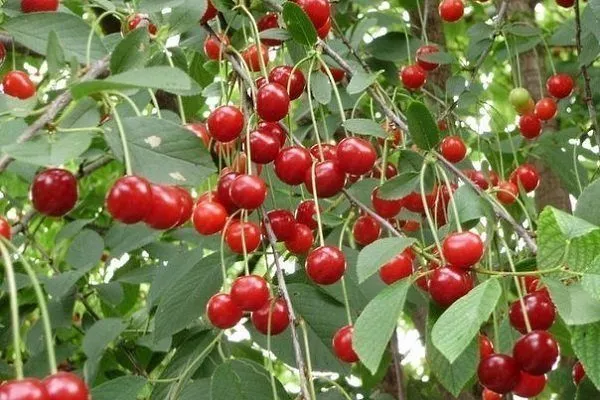
Saratov Baby
A low-growing, mid-season hybrid, created by crossing cherries with sweet cherries. Often referred to simply as "Malyshka." Maximum height is 2.5 m. The first harvest occurs in the third year. The crown is arched. Average yield is 15 kg per tree.
The cherries are dark red, very attractive, and sweet and tart. They weigh 4-5 grams. They are frost-hardy. The tree is very ornamental. The small pits are easily separated from the flesh. They are highly resistant to fungus.
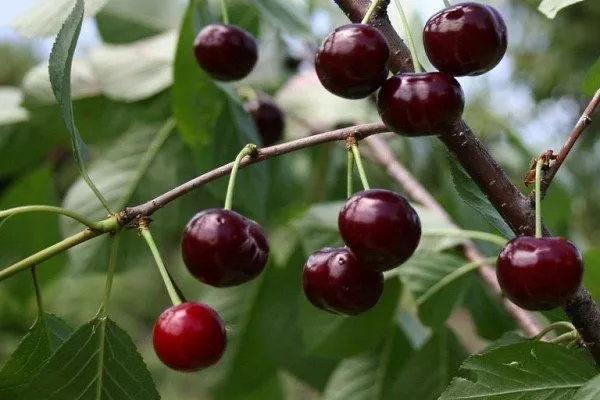
Dwarf Shpanka
This is a variety of the Shpanka variety, a cherry-sweet cherry hybrid. Shpanka is an ancient hybrid of folk selection. The dwarf version of Shpanka grows up to 3 meters tall. Non-dwarf Shpanka varieties reach 4-6 meters. The variety requires pollinators.
The fruits are large – 5 g. The variety is hardy and vigorous, resistant to frost and fungus. Frost resistance is down to -35°C.
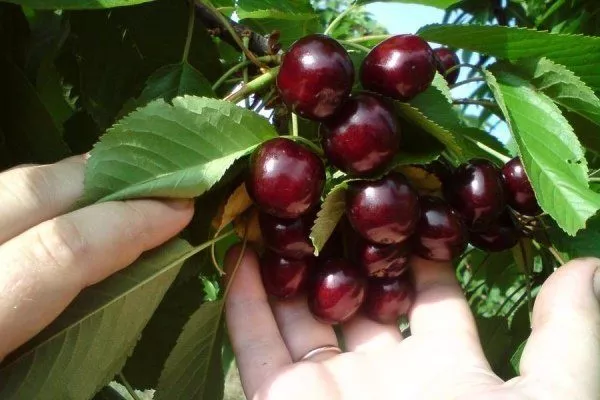
Griot of Moscow
A self-sterile variety, ripening around July 20th. Pollinators are Sklyanka Rozovaya or Vladimirskaya. The tree, with a spherical crown, grows up to 2.5 m tall. Up to 8 tons of berries can be harvested per hectare. A single tree yields up to 9 kg.
The berries are tasty and dark red. They weigh 3.5 g. They are moderately resistant to fungal diseases.
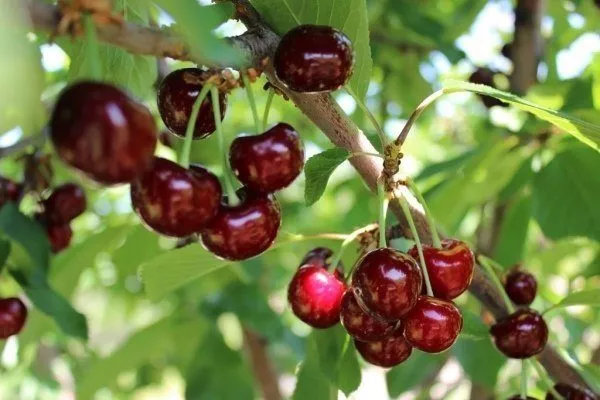
The Duke is a hybrid berry obtained by crossing a cherry and a sweet cherry. It was first bred in the 17th century and was named the May Duck. Now all sweet cherries are called Dukes.
Octave
The tree is low-growing, with a compact, rounded crown. It is distinguished by its decorative qualities. It is a self-fertile, mid-season variety. Yields per hectare are up to 100 centners.
The berries are dark cherry, almost black. Weight – 4 g. Shape – round-flat. The flavor is good, the berries are sweet and juicy. The seeds are small and easy to remove. Frost resistance is average. The buds are highly resistant to frost. Immunity to fungal infections is average.
Features of cherry cultivation in the Moscow region
Moscow region orchards were once teeming with cherry trees, but today this fruit tree is extremely difficult to grow due to fungal diseases. When choosing a variety for the Moscow region, disease resistance and frost resistance are paramount. Cherry varieties for the Moscow region must be resistant to recurrent frosts.
- ✓ Resistance to fungal diseases, especially moniliosis and coccomycosis.
- ✓ Ability to withstand frosts down to minus 35 °C.
- ✓ Self-fertility to ensure harvest in conditions unfavorable for pollination.
Factors influencing the choice of cherry varieties for cultivation in the Moscow region:
- Climate. In the Moscow region, frosts reach minus 35°C.
- Diseases of fruit trees in the region. The most widespread are moniliosis and coccomycosis.
- Self-fertility. In cool and damp summers, bees stop working, so it is advantageous to plant self-fertile varieties in the Moscow region that do not require external pollination.
- Productivity and fruit characteristics. The variety you like must be suitable for the climate of the Moscow region.
- Ripening periods. In the central regions, varieties of all ripening periods are grown—early, mid-season, and late. When choosing, it's more important to consider flowering time rather than ripening time. Varieties that bloom after the threat of frost—mid-season and late—are preferable.
- ✓ The 'Vozrozhdenie' variety has high immunity and does not require frequent treatments.
- ✓ 'Igrushka' is a hybrid of cherry and sweet cherry with very large fruits, but requires insulation in the Moscow region.
- ✓ 'Memory of Yenikeeva' is a self-fertile variety with uniform ripening of fruits.
- Tree height. Gardeners especially appreciate low-growing varieties – they are convenient and decorative..
Varieties by criteria
Cherry varieties are classified by more than just ripening time. Table 1 lists the extra-sweet cherry varieties for the Moscow region, along with their yield and fruit weight.
Table 1
| Variety | Yield, kg per tree | Fruit weight, g |
| Bulatnikovskaya | 15 | 3.5 |
| Volochaevka | 20 | 2.7-4.5 |
| Winter Garnet | 10 | 3-4 |
| Lighthouse | 15 | 4-6 |
| Morozovka | 15 | 5 |
| Octave | 16 | 4 |
| In Memory of Yenikeev | 15 | 5 |
| Saratov Baby | 15 | 4-5 |
| Spartan | 10-15 | 6-8 |
| Tamaris | 10 | 4-5 |
| Fairy | 12 | 3-3.5 |
| Chocolate Girl | 11-12 | 3-3.5 |
We also recommend reading the article about the best varieties of cherries.
Cherry varieties for the Moscow region, classified into various categories, are shown in Table 2.
| Self-fertile varieties | Large-fruited varieties | Varieties that are particularly resistant to diseases | The most winter-hardy varieties |
| Apukhtinkaya | Fairy | Fairy | Fairy |
| Bulatnikovskaya | Dwarf Shpanka | Bulatnikovskaya | Bulatnikovskaya |
| Lyubskaya | Tamaris | Radonezh | Lyubskaya |
| Volochaevka | Spartan | Silvia | Robin |
| Youth | Saratov Baby | Turgenevka | Turgenevka |
| Radonezh | Morozovka | Morozovka | Youth |
| Chocolate Girl | Nurse | Volochaevka | Chocolate Girl |
Table 4 shows the most delicious cherry varieties for the Moscow region.
Table 4
| Variety | Berry weight, g | Taste | Tasting score | Sugar content, % |
| In Memory of Yenikeev | 4.5-5 | sweet, with a little sourness | 4.8 | 10 |
| Assol | 3-4 | sweet and sour, with a hint of sourness | 4.7 | 10 |
| Volochaevka | 2.7-4.5 | sweet and sour | 4.7 | 10 |
| Chocolate Girl | 3-3.5 | sweet and sour | 4.6 | 12 |
Despite the difficulty of growing cherries in the temperate climate, local gardeners can achieve decent yields. When selecting a variety for the Moscow region, in addition to yield, fruit size, and flavor, it's important to consider its winter hardiness, pollination methods, tree height, and disease resistance.