
Thanks to the work of breeders, gardeners in the Moscow region and throughout the Central region are harvesting reliable cherry crops. Today, many frost-resistant cherry varieties have been developed that thrive in temperate continental climates.
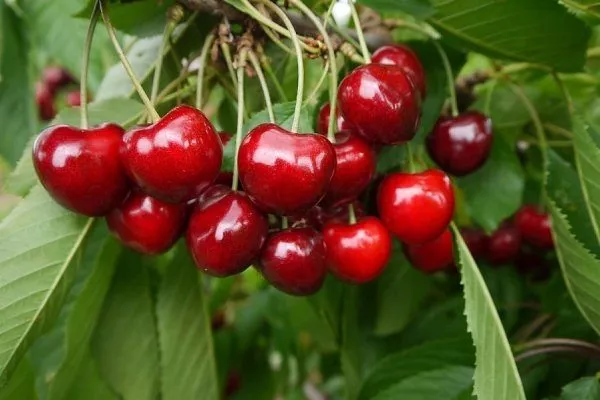
Criteria for choosing a variety for the Moscow region
The most hardy cherry varieties, zoned for the Moscow region, require specific conditions for growth, development, and fruiting. When choosing cherries for the Moscow region, consider, first and foremost:
- ripening periods;
- soil requirements;
- frost resistance.
- ✓ The groundwater level should not be higher than 1.5 meters from the soil surface.
- ✓ The soil should be well drained, with a pH of 6.0-6.5.
- ✓ The planting site should be protected from northern winds and have maximum sunlight.
Even regionalized cherry varieties can be damaged by early and late frosts—in spring and fall. Cherries thrive in warmth, sun, and fertile soil—a combination rarely found in the Moscow region. Therefore, when developing new varieties, breeders strive to increase their hardiness and adaptability to the far-flung conditions of the Moscow region.
A gardener should know more about plants, and therefore we recommend reading the article about the most common varieties of cherries.
Self-fertile and self-sterile cherry varieties for the Moscow region:
| Self-fertile and partially self-fertile varieties | Large-fruited varieties | The sweetest varieties |
| People's Syubarova | People's Syubarova | A gift for Stepanov |
| Homestead yellow | Michurinskaya | Homestead yellow |
| Valery Chkalov | Valery Chkalov | Valery Chkalov |
| Fatezh | Fatezh | Fatezh |
| Iput | Veda | Iput |
| Ovstuzhenka | Teremoshka | Ovstuzhenka |
| Cheryomaschnaya | Odrinka | Tyutchevka |
| Jealousy | Jealousy | Jealousy |
Yield, color, and fruit weight of cherry varieties for the Moscow region
| Color and variety | Color | Yield, kg per tree | Fruit weight, g |
| Chermashnaya | yellow | 25-35 | 4.4 |
| Homestead yellow | yellow | 45-55 | 6 |
| Leningrad Black | dark red/black | 30-40 | 3-3.5 |
| Veda | dark red/black | 25-65 | 5-6 |
| Valery Chkalov | dark red/black | 60-170 | 6-8 |
| Iput | dark red/black | 25-50 | 5-5.5 |
| Ovstuzhenka | dark red/black | 15-20 | 4-6 |
| A gift for Stepanov | dark red/black | 55-65 | 4-4.5 |
| Bryansk pink | pink | 20-30 | 4-5.5 |
| Orlovskaya pink | pink | 25-35 | 4-4.5 |
| Fatezh | red and yellow | 45-55 | 5-7 |
The best varieties with descriptions and photos
Below we list the best cherry varieties for the Moscow region.
| Name | Ripening period | Frost resistance | Yield, kg per tree |
|---|---|---|---|
| Lena | Late-ripening | High | 80 |
| Michurinskaya | Late-ripening | High | 80-140 |
| Veda | Late-ripening | High | 77-80 |
| Raditsa | Early | High | 60 |
| Iput | Early ripening | High | 25-50 |
| Rechitsa | Mid-season | High | 80-140 |
| Bryansk pink | Late | High | 20-30 |
| Ovstuzhenka | Early Middle | High | 15-20 |
| Odrinka | Mid-late | High | 80-220 |
| People's Syubarova | Mid-season | High | 55 |
| Chermashnaya | Mid-season | Average | 25-35 |
| Teremoshka | Mid-season | High | 50-100 |
| Leningrad Black | Mid-season | High | 30-40 |
| Homestead yellow | Early | High | 45-55 |
| Fatezh | Mid-season | Above average | 45-55 |
| Valery Chkalov | Early | Average | 60-170 |
| Tyutchevka | Late | High | 80-140 |
| Red Hill | Early | High | 45 |
| Gronkavaya | Early | High | 30 |
| Jealousy | Mid-late | High | 2:30 PM |
| Orlovskaya pink | Mid-season | Average | 25-35 |
| A gift for Stepanov | Mid-late | High | 60 |
Lena
The late-ripening "Lena" variety has been in variety testing since 2006. This medium-sized tree has a standard, rounded-oval crown. It requires pollinators. Recommended varieties include 'Iput', 'Revna', and 'Ovstuzhenka'. The tree begins bearing fruit in its fourth year.
'Lena' produces large, dark-red fruits, weighing 6 to 8 grams. Ripe cherries turn blackish-red. The variety is virtually immune to coccomycosis, moniliosis, and clasterosporium. It has a tasting score of 4.7 out of 5. The average yield is 80 centners per hectare. This variety is chosen for its large, tasty fruits, high yield, and frost resistance.
Michurinskaya (Michurinka)
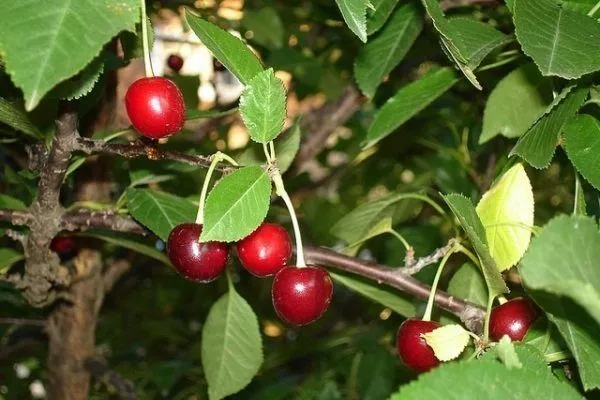
A late-ripening cherry tree developed by breeders at the Michurin All-Russian Research Institute of Cherry Pruning. It has been in variety testing since 1994. This medium-sized tree, characterized by rapid growth, has an upright, rounded-oval crown. The tree produces its first fruit in its fifth or sixth year.
The dark red drupes weigh approximately 6-7 g. The fruits have short stalks that easily separate from the branches. This variety is versatile and transports well. A yield of 80 to 140 centners per hectare is obtained. The variety requires pollinators. The recommended pollinator is Pink Pearl. This variety is recommended for the Moscow region – it is frost-hardy, drought-resistant, and resistant to coccomycosis. A drawback of this variety is that the wood is susceptible to frost damage, which results in a short-lived tree.
Veda
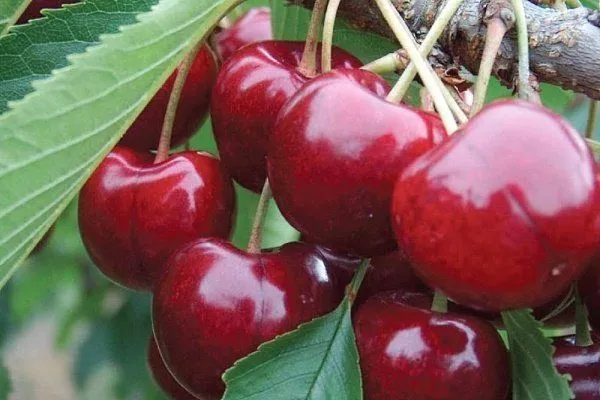
A late-ripening cherry of domestic selection. Recommended for the Central Region. The tree is short, reaching approximately 2.5 m. This height makes it easy to care for and harvest. The crown is rounded and wide. Recommended pollinators include Bryanochka, Tyutchevka, and Bryanskaya Rozovaya.
The fruits are deep red, almost black, and weigh approximately 5-6 grams. The flesh is dark red, and the juice is burgundy. Yield is 77-80 centners per hectare. A single tree produces 25 to 65 kg of cherries. It transports well, making it suitable for commercial cultivation. "Veda" attracts gardeners in the Moscow region with its high frost resistance, sweetness, and versatility of the fruit. Experts awarded the variety a tasting score of 4.6 points. Drought resistance is average, and winter hardiness is high. Even after the harshest winters, 80% of flower buds are preserved.
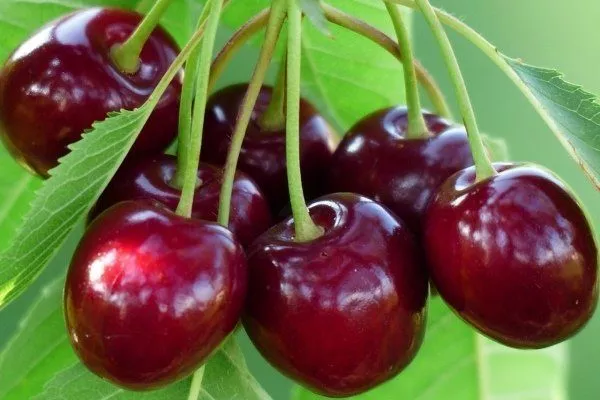
From a botanical point of view, a cherry is a fruit, a drupe, but from a culinary and household point of view, it is a berry.
Raditsa
An early variety of domestic selection, added to the State Register in 2001. The tree grows rapidly, reaching a medium height of up to 4 meters, with a medium-dense crown. Pollination is required. Recommended varieties are Iput, Revna, and Tyutchevka. Harvesting begins in the fourth or fifth year. Approximately 60 centners per hectare are harvested.
The drupes are slightly elongated and dark red. As they ripen, they turn black. The flesh and juice are dark red. Each drupe averages 4.5 g, with a maximum weight of 6 g. The stalks are long and thin. The tasting score is 4.5 points. The stalks easily detach from the branches, making harvesting easy. It tolerates temperatures down to -35 degrees Celsius. It is resistant to coccomycosis and moniliosis. The fruits do not crack.
Iput
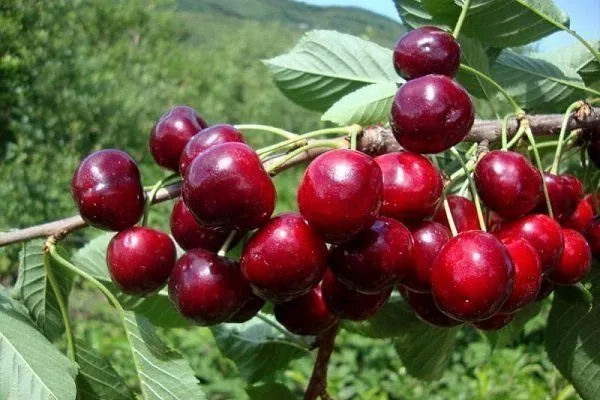
An early-ripening cherry tree. The tree grows to 4 meters tall and has a broadly pyramidal crown. Although this variety is early, it doesn't ripen until late June in the Moscow region. A single tree produces 25-50 kg of fruit. The best pollinators are Revna and Tyutchevka.
The cherry's color changes as it ripens, from red to black. Weight: 5-5.5 g, maximum weight: 9 g. They peel easily from the stems. The flesh is very juicy and sweet. Tasting score: 4.5. Cons: cracks during rain, difficult to remove pits, and sensitive to soil conditions. Pros: fungus resistance, frost resistance, versatility, easy transportation, and shelf life.
Rechitsa
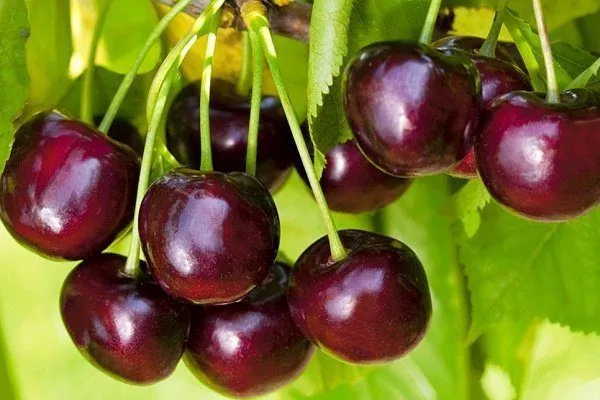
This variety is mid-season. The tree grows quickly to 3-4 m. It has a pyramidal crown. It ripens in the second half of July. 80 centners are harvested per hectare, with a maximum of 140 centners. One tree produces approximately 30 kg of fruit. The recommended pollinator is Iput. The tree begins bearing fruit in its fifth year.
The drupes are round, deep red, sometimes black. They weigh 5-6 g. The juice and flesh are red. The berries are sweet in taste, with a rating of 4.5. The cherries do not leak juice during transportation, meaning they can be transported without loss. The cherries are versatile – delicious fresh and excellent for preserves. They have average drought tolerance and high frost resistance. The variety is resistant to recurrent frosts.
Bryansk pink
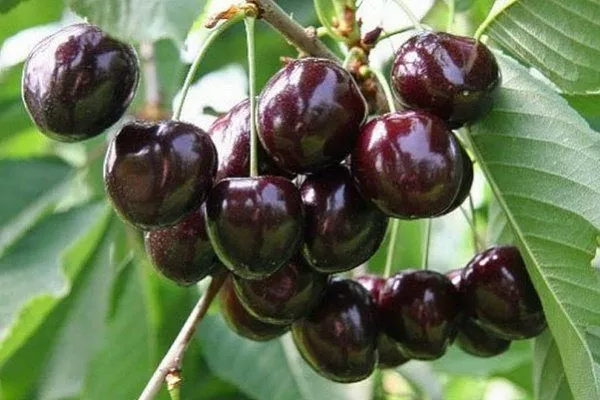
This variety was recently developed, but has already become popular among gardeners. With proper cultivation practices, Bryanskaya Rozovaya produces excellent fruit in the Moscow region. It was zoned for the Central Region in 1993. This variety is late-ripening. The tree has a broadly pyramidal crown. Pollinators include Iput, Revna, and Ovstuzhenka. A single tree produces 20-30 kg of cherries.
The drupes are round and pink. The skin has a speckled pattern. They weigh 4-5.5 cm. The flesh is yellow, with a characteristic cartilaginous texture. The juice is clear and colorless. Taste experts rated the fruit at 4.1 points. This variety is prized for its berries—very beautiful and tasty—their winter hardiness and resistance to fungal diseases. The fruit does not crack. The tree grows slowly, bearing fruit in the fifth year. The fruits are easily removed with the stems attached.
Stores well in the refrigerator for up to two weeks. It's a versatile tree. It tolerates spring frosts well, and the trunk is resistant to sunburn. It's highly resistant to moniliosis and coccomycosis.
Ovstuzhenka
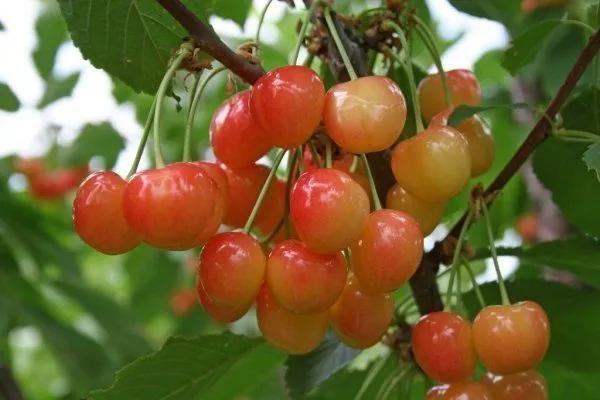
An early-to-mid-season variety. Listed in the State Register of the Central Region since 2001. Trees are short and vigorous. The crown is medium-dense, spherical, and slightly upright. The first fruits appear in the fourth to fifth year. A tree yields up to 16 kg of cherries. Self-pollination is very low—only 5%. Pollinators include Iput, Raditsa, Revna, Bryanskaya Rozovaya, and Tyutchevka.
The fruits are large, weighing from 4 to 6 g. The oval-round fruits are dark red and turn black when ripe. They do not crack even in high humidity. The berries are unusually sweet. The rating is 4.7. The variety is highly resistant to fungal diseases. Gardeners in Ovstuzhenka are attracted by the aesthetics and taste of the fruits, the compact and low-growing trees, the productivity, and the resistance to diseases.
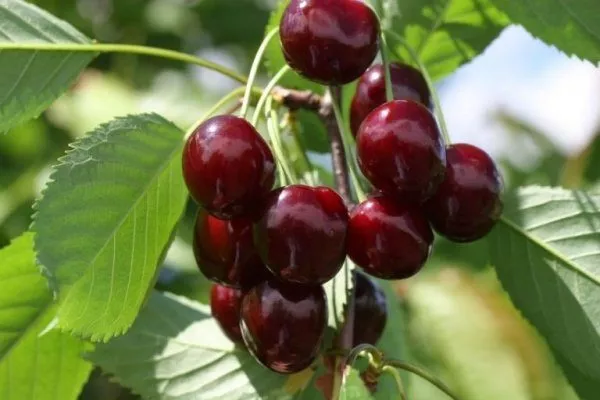
Odrinka
A mid-late variety. This relatively new variety was added to the Central Region register in 2004. The trees are medium-sized, with a medium-dense crown. They begin bearing fruit in the fifth year. Pollinators include Rechitsa, Ovstuzhenka, and Revna. The yield per hectare is 80 centners. The maximum yield is 220 centners.
The fruits weigh from 5.5 to 7.5 g. The round, dark-red drupes have dense red flesh. The flavor rating is 4.7. The trunk is resistant to extreme conditions, including sun and frost. Frost resistance is down to -34°C.
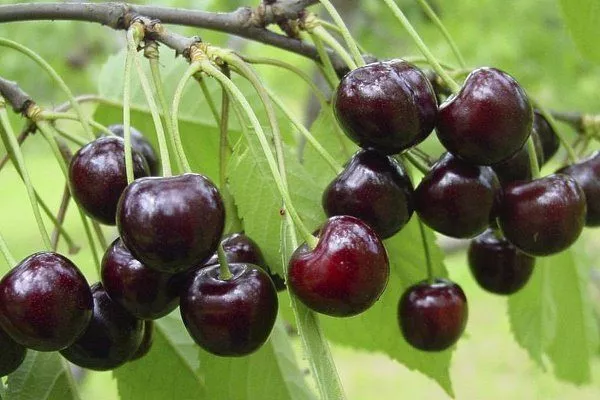
People's Syubarova
Unlike most cherry varieties, Syubarova's Narodnaya is self-fertile, with self-pollination rates approaching 90%. It was bred by Belarusian breeders. The tree is vigorous and tall—5-6 m—with a very wide crown. A single tree produces up to 55 kg of cherries. The first harvest occurs four years after planting.
The berries are dark scarlet with glossy skin. Each fruit weighs approximately 6 g. This variety tolerates frost and strong winds. Its strong branches can withstand heavy snow loads. The variety is generally undemanding of soil conditions and ripens evenly. It has innate immunity to coccomycosis and other fungal diseases.
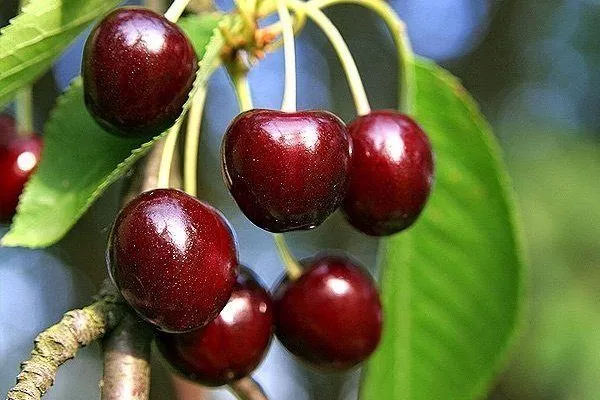
Chermashnaya
A relatively new, yellow-fruited variety. It has been included in the State Register since 2004. It is zoned for the Central Region. The trees are vigorous, medium-sized, and reach a height of up to 5 m. The crown is round-oval, slightly raised. The first harvest occurs in the fourth or fifth year. Young trees, 7 years old, yield up to 12 kg of cherries. Mature trees yield 30 kg. Yield: 85 c/ha. Requires pollinators.
The berries are yellow with a pink blush, weighing 4.4 g. They are small, but there are many of them. The flesh is firm, juicy, and tender. The berries have a sweet and sour taste. This is a dessert variety. The rating is 4.4. The buds have average winter hardiness. Overall winter hardiness is good. They are highly resistant to fungal diseases. A downside is their short shelf life.
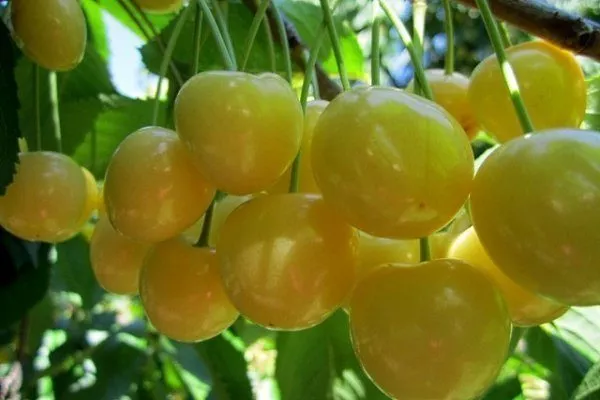
Teremoshka
A mid-season variety. The low-growing trees have a broad, rounded crown. Preferred pollinators include Bryanskaya Rozovaya and Ovstuzhenka. The yield per hectare ranges from 50 to 100 centners.
The fruits are dark red, weighing 5-6.5 g. They are sweet, scoring 4.7 on a tasting scale. Cherries are virtually unaffected by cracking in humid weather. Frost resistance reaches down to -34°C. They are highly resistant to fungi. The fruits are firm and transport well.
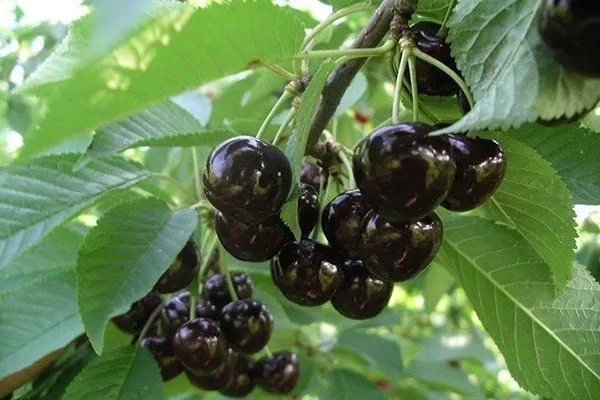
Leningrad Black
A mid-season variety. One of the first winter-hardy cherry varieties, it is grown even in the Non-Black Earth Region and in the northern Central Black Earth Zone. A medium-sized tree with a spreading crown. A tree yields 30-40 kg of cherries. The tree grows to a height of 3-4 m. Fruiting begins in the third year. Harvesting takes place in the second ten days of July. The variety is self-sterile; recommended pollinators are Iput, Revna, and Veda.
The fruits are sweet, black and red. They weigh 3-3.5 g. The flavor is traditional cherry, sweet to the point of cloying, with a slight tartness. Once ripe, they hold their shape for a long time. The fruits are medium to large. The flesh is dense and fibrous. Tasting score: 4.2 points.
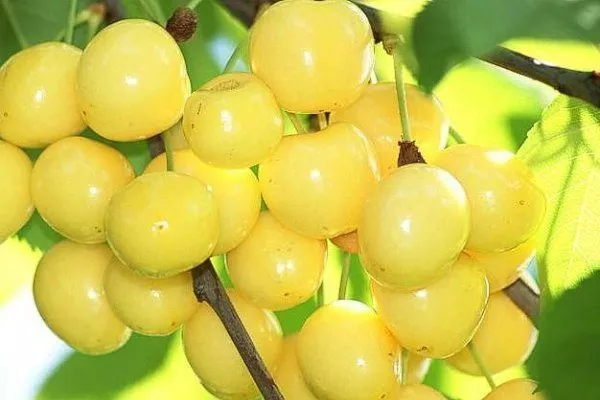
Homestead yellow
An early table variety. Self-fertile. The tree grows quickly, but does not begin to bear fruit until the sixth year. The variety has been zoned in the Central Region since 1998.
The fruits are yellow, large, and round, weighing 5.5 g. The flesh is cartilaginous, juicy, and has colorless juice. The flavor is sweet and sour. The rating is 4.7 points. The berries are attractive and do not crack in the rain. The buds are resistant to spring frosts.
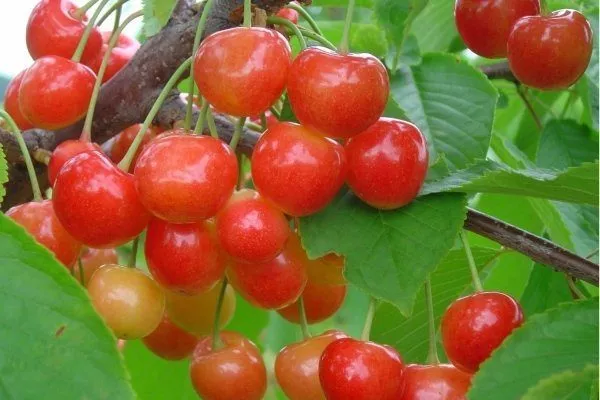
Fatezh
This mid-season variety was added to the State Register in 2001. It is zoned for the Central Region. Trees are medium-sized, 3-5 m, with spherical crowns. Harvest occurs in the fourth or fifth year. A tree yields 50 kg of cherries, or 300 centners per hectare. Pollinators include Revna, Raditsa, Ovstuzhenka, and Chermashnaya.
The drupes are medium-large and round. The color is reddish-yellow. The flesh is light pink, juicy, dense, and cartilaginous. Weight: 6 g. Taste rating: 4.7 points. The fruit separates dry from the stalk. Winter hardiness is above average. The buds are less frost-resistant than the branches and trunk. Resistance to fungal diseases. A disadvantage is a tendency to gummosis.
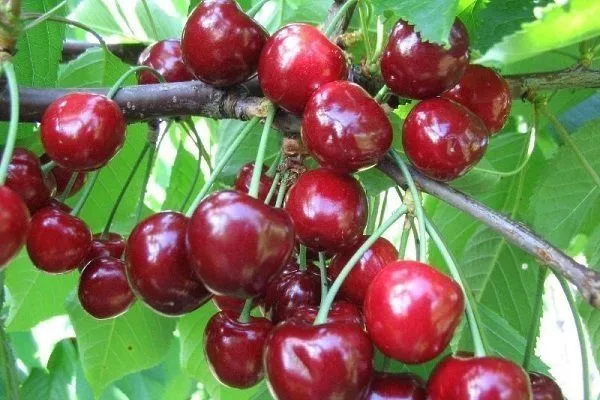
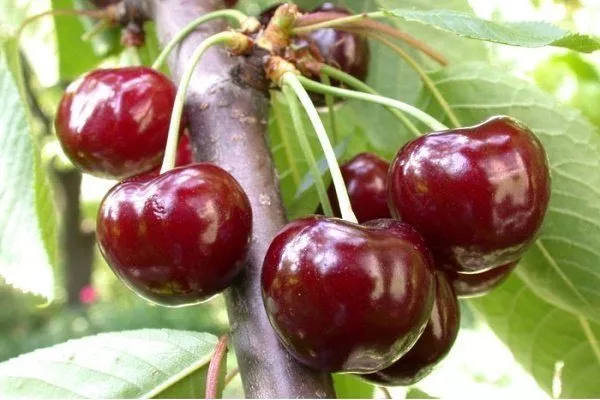
Valery Chkalov
This early cherry has long been known to gardeners. It was developed in the 1950s. The tree is distinguished by its tall stature—up to 6 m—and a thick trunk. It has a broad, pyramidal, moderately dense crown. It is medium-early, with fruiting beginning in the fifth year. Ideal pollinators include Aprelka, Iyunskaya Rannyaya, and Skorospelka. A tree produces approximately 60 kg of cherries. Some trees produce exceptionally high yields, yielding up to 170 kg of berries.
The fruits are large, reaching 6-8 g in weight. Their color is dark red. When ripe, the cherry becomes almost black. The stalk is firmly attached to the drupe. When the stalk is broken, the fruit releases juice. The semi-cartilaginous flesh is dark red with pink veins. The berries have a very good dessert flavor. This variety is ideal for canning, making delicious compotes. Frost resistance is average, down to -23°C (-23°F). Frost damage to the flower buds can result in the loss of up to 60-70% of the buds. The variety is susceptible to coccomycosis and gray mold. It is relatively resistant to other fungal diseases. This variety boasts large, tasty fruits, early ripening, and abundant yields.
Tyutchevka
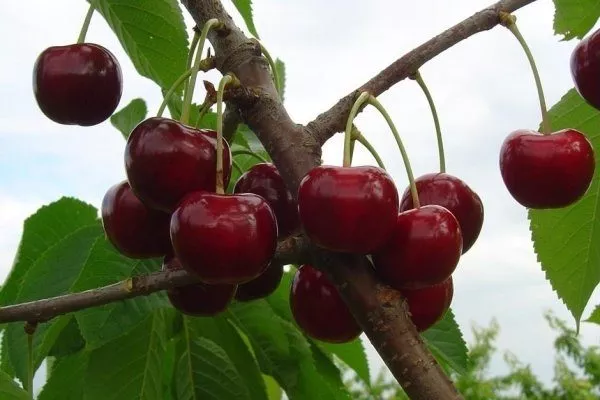
This late-ripening variety has very poor self-pollination—no more than 6%. Preferred pollinators are Ovstuzhenka, Iput, and Revna. It is characterized by high yields. The trees are medium-sized, fast-growing, with spherical, spreading crowns. The first berries appear by the fifth year of planting.
The dark-red fruits have dense, cartilaginous flesh. The average weight is 5.3 g. The tree can withstand temperatures down to -25°C (uncovered) and -35°C (covered). It has excellent flavor characteristics. The tasters gave it a near-maximum rating of 4.9 points. Its advantages include good storage and transport. Its disadvantages include sensitivity to moisture; overwatering can cause cracking. The drupes detach from the stems when dry. It has exceptional resistance to moniliosis and moderate resistance to other diseases.
Red Hill
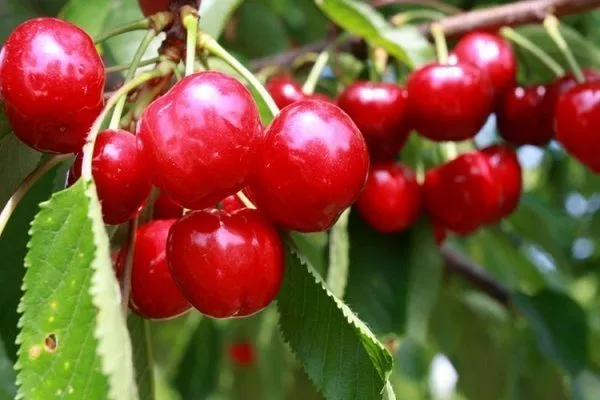
This early table cherry variety was bred in 2001. It is a fast-growing variety, producing its first fruits in the fourth year of planting. A single tree produces up to 45 kg of cherries. The "Krasnaya Gorka" trees are short, with a wide, rounded crown. The berry harvest time is mid-July. This self-sterile variety requires pollinators such as Ovstuzhenka, Raditsa, or Bryanskaya Rozovaya. Peak yields occur between 6 and 12 years of age. However, by age 16, the tree becomes old, yields decline sharply, and the tree is culled due to its age.
The fruits are round, gathered in bunches that hang densely on the branches. The flavor is sweetish, with a slight tartness. The color is golden, with a scarlet blush. Each fruit weighs 4-6 g. Transportability is satisfactory. The cherries are soft and juicy; refrigeration and special containers are required for transportation. The variety is quite winter-hardy.
Gronkavaya
An early, fast-growing variety. Ripens in late June. Bred in 1999, the first cherries appear in the fourth year. Self-sterile. Cherries such as Narodnaya, Krasavitsa, Iput, and Zhurba are used as pollinators. Yields 200 centners per hectare. A tree yields approximately 30 kg. Tree height is 4-5 m.
The fruits are heart-shaped, dark red, and weigh an average of 4.6 g. The stem detaches without releasing any juice. The seeds are small and easily separated from the pulp. The tasters' rating was 4.8 points. The cherry is resistant to coccomycosis and moniliosis. It is suitable for long-distance transport and has high drought tolerance. Frost resistance is high, reaching temperatures down to -27°C.
Jealousy
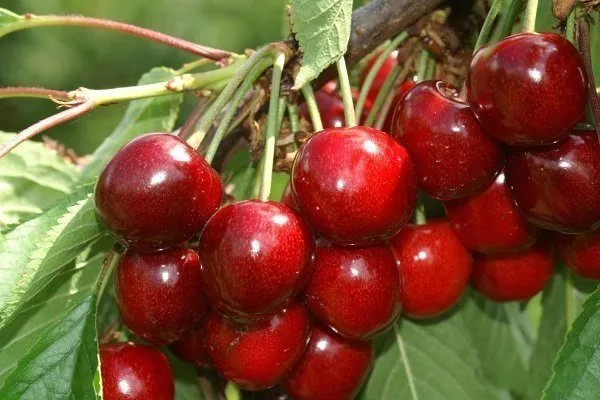
This mid-season cherry ripens in late June and begins bearing fruit in its fifth year. The trees are medium-sized, fast-growing, with pyramidal crowns. A tree produces 14-30 kg of cherries. 75 to 115 centners are harvested per hectare. They are pollinated by the Raditsa, Ovstuzhenka, and Venyaminova cherry varieties.
The dark red, almost black, fruits weigh 5-8 g. This beautiful, juicy, and sweet cherry received a 4.9 rating from tasters. The stalk peels off dry, without releasing juice. The variety is resistant to frost, fungal diseases, and fruit cracking.
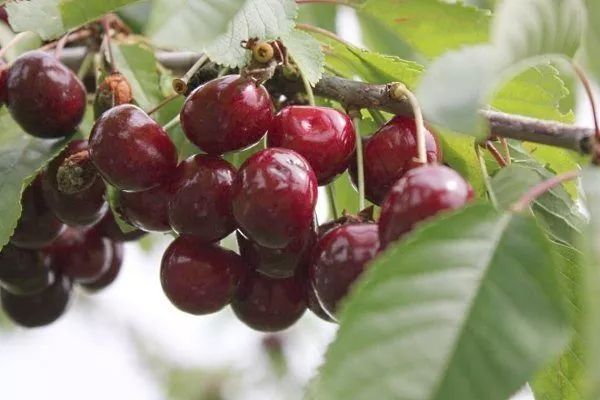
Orlovskaya pink
A dessert variety with a mid-season ripening period—mid-July. The tree grows to 3.5 m tall. The crown is pyramidal, flat and raised. It ripens early, bearing fruit in the third year. The yield per hectare ranges from 70 to 110 centners.
The round, pink cherries weigh approximately 4 grams. The flesh is pink, medium-dense, juicy, and sweet-tart. The tasters gave the cherries a 4.4 rating. They are relatively resistant to fungal diseases. Winter hardiness is average.
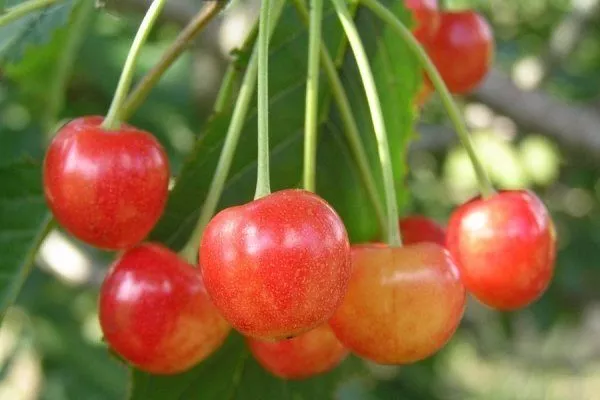
A gift for Stepanov
A completely new, mid-late variety—it was only added to the State Register in 2015. The fruit ripens by mid-July. The tree grows up to 3.5 m tall with a pyramidal crown. The harvest begins in the fourth year. It yields up to 80 centners per hectare. The tree weighs up to 60 kg.
The dark red fruits weigh approximately 4 g and have no subcutaneous spots. The berries are sweet in taste, with tasters rating them 4.9. The thin stems separate easily from the shoots. The fruits are prone to shedding, so they are picked immediately after ripening. Sweet cherries are suitable for preserves and desserts, and are delicious fresh. They are drought-resistant. Transportability is limited, as the fruits have thin skins and release juice easily.
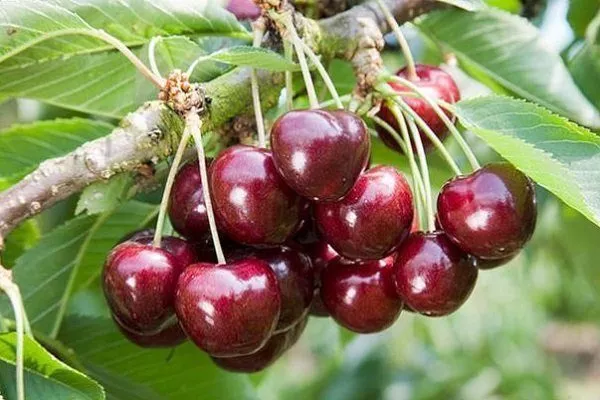
Planting and growing cherries in the Moscow region
Of all fruit trees, the cherry tree is the most demanding when it comes to growing conditions. It should be planted in well-lit, wind-protected locations. Its root system should be maintained at a comfortable moisture level.
- Test your soil for pH and nutrient content 6 months before planting.
- Add organic fertilizers (humus or compost) at a rate of 10 kg per 1 m² 3 months before planting.
- One month before planting, apply mineral fertilizers: superphosphate (100 g) and potassium sulfate (50 g) per 1 m².
More has been written about planting cherry trees in spring. here.
A brief overview of the specifics of planting cherries in the Moscow region:
- The tree is planted on the south side of a barrier—a building, a fence, or a firewall. To increase the surface's reflectivity, it is painted white.
- Neighboring trees must be at least 7 m apart.
- Seedlings are planted in the spring. Raised beds are formed for them. The planting site is prepared in the fall to allow the soil to settle and compact.
- The tree is not planted in lowlands - the proximity of groundwater has a detrimental effect on the cherry tree.
- The distance between adjacent seedlings is 5-6 m.
In the Moscow region, cherry trees are threatened by birds – rowan thrushes. To prevent the birds from eating the crop, various repellents have to be used. Yellow-fruited cherries are not attractive to birds, making them ideal for growing in the Moscow region.
Features of cherry cultivation in the Moscow region:
- Mulch after each watering. Avoid overwatering the soil, as this can cause root rot.
- Weeding is essential.
- In spring – fertilize with nitrogen fertilizers (30 g urea per 10 l of water).
- During flowering, fertilize with phosphorus-potassium fertilizers. Dissolve 30 g of superphosphate and potassium sulfide in a bucket of water. Add 0.8 kg of manure. A second fertilization is done in the summer, after harvest.
- In autumn, fertilize with humus – 4 kg per 1 sq. m.
- In spring and autumn – pruning in accordance with the age and condition of the tree.
- Root shoots are removed regularly.
- For prevention, spray with Bordeaux mixture.
To ensure cherry trees grow and bear fruit in the Moscow region, it's important to plant the most frost-hardy varieties or those zoned for the Central Region. By choosing the right variety and creating comfortable growing conditions for the tree, you're sure to reap the rewards.