
The Leto cherry tree exhibits excellent characteristics, making it an attractive growing option. Its low maintenance and disease resistance allow for minimal time and effort. With proper planting and care, it should be easy to maintain.
History of selection
It was bred in 1955 at the Far Eastern Research Institute of Agriculture. Its creator was scientist A. G. Kazmin. The variety was the result of natural pollination of sand cherry. In 1965, it was added to the State Register of Breeding Achievements of Fruit and Berry Crops.
Description of the culture
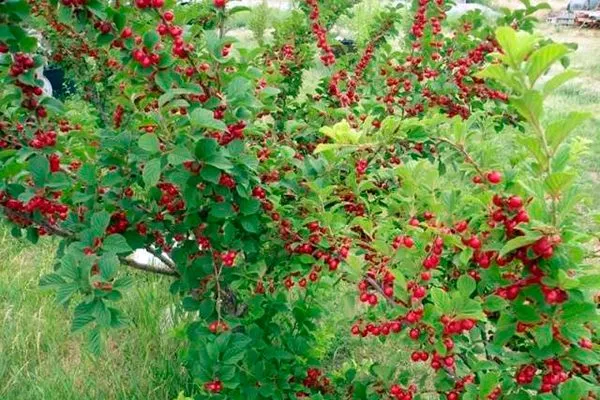
It grows as a bush and reaches 1.4-1.5 m in height. The brownish-gray, upright shoots are sturdy. The tree is covered with numerous green leaves. Other characteristic features:
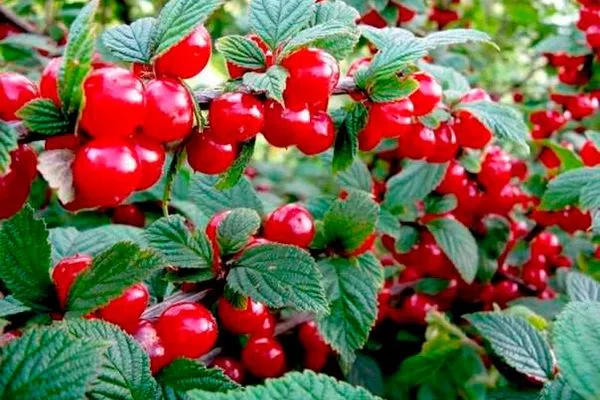
- Large fruits have a round-cylindrical or barrel-shaped form.
- A ripe fruit weighs approximately 3-3.3 g.
- Changes color from pink to light red during the period of technical maturity.
- The skin is dense, but elastic and glossy, with a slight fluff.
- The pulp is juicy, thick, tender and fleshy, has a sweet taste with a slight piquancy and sourness.
- Freshly squeezed juice has a pink tint.
- The stone is easily separated from the pulp.
Characteristics
This hybrid with felt-like characteristics is popular in agriculture due to its stability and maturity. Its genetics successfully combine the best characteristics of its parent varieties, giving it unique properties and qualities.
Drought resistance, winter hardiness
It has average winter hardiness, slightly lower than most other felt-like species. Fruit buds easily survive spring frosts. The bushes demonstrate relative resistance to moisture stress, making them capable of surviving dry periods.
Pollination, flowering period and ripening time
This self-fertile variety pollinates with its own pollen and therefore does not require pollinators. However, for best fruiting, it is recommended to plant related plants nearby, such as another Leto bush. It is characterized by abundant and short-lived flowering, lasting for two weeks from late May to early June.
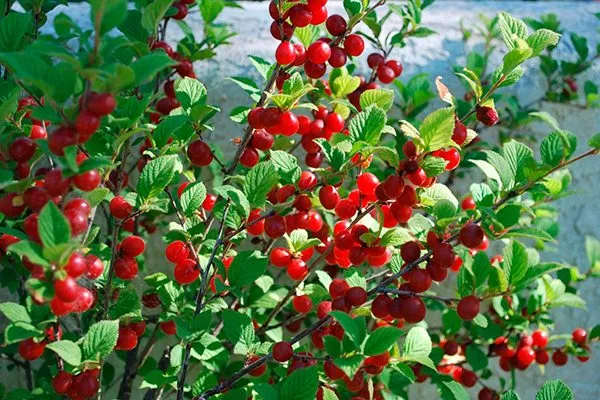
During the blooming period, it is covered with large, pink, single flowers. Ripening occurs late, and the harvest can begin around July 25th, but ripe berries can remain on the branches until the end of August without falling.
Productivity, fruiting
An important characteristic is its stable but average yield, beginning with fruiting in the second year. The berries ripen simultaneously, creating favorable conditions for harvesting. A mature plant can produce 7 to 8.4 kg of berries per season.
The pulp contains 9% sugar, 8.5% tannins, 0.7% various acids, and 0.6% pectin. Tasters rate the flavor at 3.5-4 points out of a possible 5.
Application of berries
This table variety offers a wide range of uses. The berries are excellent for eating fresh due to their pleasant flavor. They are also used in various preserves, such as jam, marmalade, and preserves.
They are used in desserts, including marmalade and pastila. They are a popular ingredient in beverages, including alcoholic ones.
Resistance to diseases and pests
It is characterized by high resistance to moniliosis, also known as monilial blight. It has relative resistance to "pocket disease," a serious problem for felt-bearing varieties.
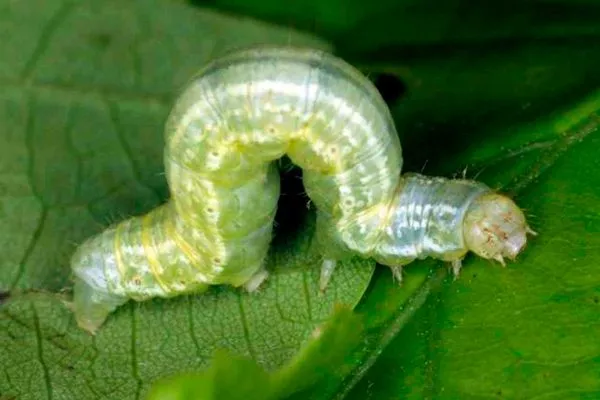
The codling moth is a weak point, capable of causing significant damage to the plant. Therefore, it is important to consider these characteristics and take appropriate measures to protect plants from the pest.
Advantages and disadvantages
Before planting a seedling, it's important to examine its positive and negative qualities to avoid any unpleasant consequences. The advantages include:
Among the shortcomings, gardeners note significant damage from the codling moth, average taste of the berries, and large size of the cherries.
Landing features
The best time for planting is early spring, before bud break. Fall planting in September is also possible. Seedlings purchased late in the season are recommended to be temporarily covered until the following spring. Choose sunny, dry sites, preferably on a slope or elevated area.
Seedlings are typically 1-2 year-old plants. High-quality seedlings are approximately 1 m tall, have several branches, and a well-developed root system. The foliage and bark should show no signs of disease or damage.
- ✓ Soil pH should be between 6.0-6.5 for optimal growth.
- ✓ The groundwater depth must be at least 1.5 m to prevent root rot.
The landing algorithm includes the following steps:
- Prepare a hole with a diameter and depth of about 50 cm.
- Fill the hole with a mixture of soil including rotted manure, lime, potassium and phosphate fertilizers.
- Shorten the roots of the seedling slightly, then dip it into loose clay, previously soaked in water.
- Lower the seedling into the hole strictly vertically, maintaining the same depth as it had in the nursery.
- Fill the root circle with soil mixture.
- Compact the soil around the seedling.
- Water the planting thoroughly, ensuring good coverage of the root zone.
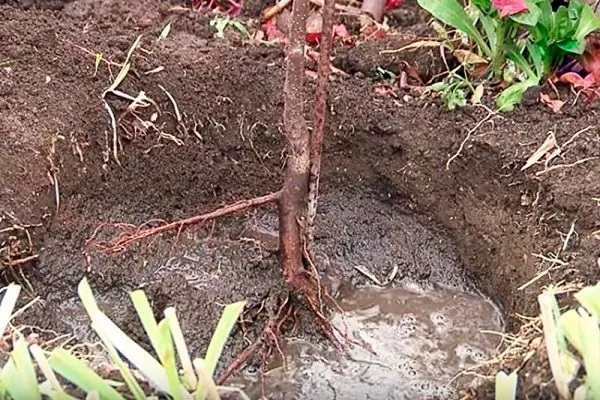
Mulch with peat. This will help regulate moisture levels and protect the roots from overheating and overcooling.
What crops can and cannot be planted next to cherries?
To ensure good growth and proper development, learn which crops can be planted next to cherries and which neighbors are undesirable.
Recommendations for neighboring plants:
- shrubs and trees;
- apples;
- pears;
- gooseberry;
- flowers: periwinkle, irises, violets and hosta;
- Vegetable crops: onions, tomatoes, garlic, herbs.
Subsequent care of the culture
Provide moderate watering, avoiding overwatering. Perform this procedure only during prolonged periods of dry weather. Fertilize annually, applying fertilizer to a depth of about 5 cm around the trunk. Spring fertilization with nitrogen-containing substances stimulates shoot growth, while autumn fertilization with organic matter (humus, manure) prevents excessive growth.
Summer pruning is carried out in several stages:
- Unbranched annual seedlings. When planting in spring, cut back to a height of 30-40 cm.
- Formation in the first few years. Remove weak shoots. Leave 4-6 strong branches at the base of the trunk for shaping.
- Rejuvenating pruning. From 10 years of age and beyond, perform regular rejuvenation pruning to maintain growth and fruiting ability.
Diseases and pests, methods of control and prevention
Although the crop is resistant to some diseases, it can be susceptible to certain problems. The table provides recommendations for managing them:
| Disease/Pest | Symptoms | Prevention and control methods |
| Pocket disease | Fungal spores germinate on branches and in ovaries, which, instead of fruits, form soft pods with spores inside. | Destruction of diseased parts of the plant and spraying with fungicides: Fitosporin-M, Horus, Skor. |
| Codling moth | The larvae feed on the pulp of the berries, causing the affected berries to stop growing and dry out. | Installing butterfly traps in the garden (containers with sweet compote mixed with glue).
Treatment with insecticides: Karbofos, Kinmiks, Decis, Alatar. |
| Rodents | The bark on the lower part of the plant is torn and gnawed. | Wrapping the trunk with a metal mesh with small cells.
Placing mouse poison baits around the trunk. |
Methods of reproduction
There are several ways to increase the number of seedlings in the garden. Gardeners recommend several propagation methods:
- By cuttings. Collect cuttings in June-July, when the shoots begin to mature. Use strong branches from the current year with three buds and three to four leaves. Root the cuttings in a mixture of peat and river sand or perlite. Treat the cut ends with rooting stimulants. Plant the cuttings at an angle 2 cm into the soil.
- Seeds. Remove the pulp from the seeds, dry them, and store them in a cool place. Prepare for planting in moist sand at the end of August. Sow the seeds in furrows two weeks before the first frost. Grow the seedlings throughout the season.
- By division. Dig up the bush on one or both sides. Divide the rhizome into several pieces. Replant them in separate holes.
- By layering. Bend one-year-old shoots to the ground in early spring. Cover them with soil, press them deeper, and secure them with staples. Mulch with peat to maintain moisture. Divide and plant the shoots in the fall.
| Method | Time to first fruiting | Success rate |
|---|---|---|
| Cuttings | 2-3 years | 70-80% |
| Seeds | 4-5 years | 50-60% |
| By division | 1-2 years | 85-90% |
| Layering | 2-3 years | 75-85% |
All of these propagation methods can be successful, but it is important to choose the option that suits your conditions and personal preferences.
Reviews
The Leto cherry has received many positive reviews from gardeners worldwide. It is renowned for its numerous positive characteristics, allowing for regular, large harvests. This is achieved with proper care and adherence to basic agricultural practices.