
The Lebedyanskaya cherry is an undemanding and easy-to-grow variety that has received many positive reviews. Even novice gardeners can grow it, as difficulties are rare. It produces fruit well and is disease-free when properly cared for.
History of selection and region of breeding
Created in 1990, the Lebedyanskaya cherry is the result of scientific research by scientists at the I.V. Michurin Institute of Horticulture. The primary goal of development was to create an ideal variety for the Black Earth Zone.
Obtained by mutation treatment of Vladimirskaya cherry seeds using the EK mutagen at a specific growth stage. It has successfully adapted to the conditions of central and southern Russia, Ukraine, and Belarus. It is widespread in cities such as Michurinsk, Voronezh, Rostov-on-Don, and Pavlovsk.
Appearance of the Lebedyanskaya cherry
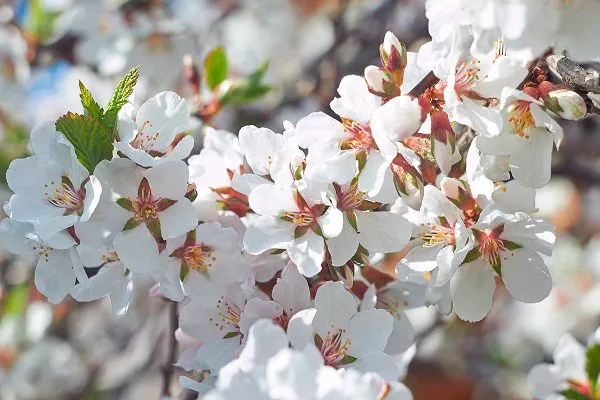
Gardeners plant fruit and berry trees not only for the ripe berries but also for decorative purposes. When the flowers open, the trees become a beautiful addition to the garden.
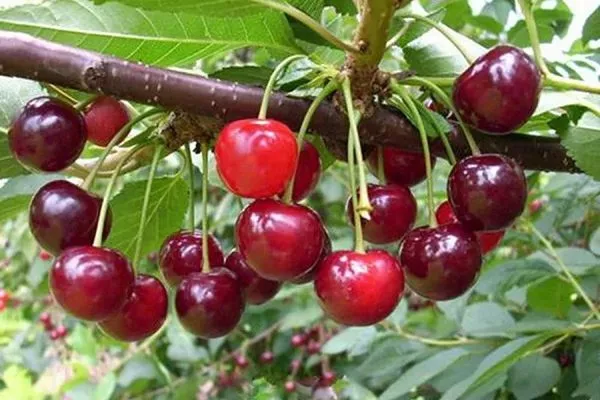
Tree
This fast-growing tree reaches a height of one meter in just one year. Detailed characteristics:
- It has impressive dimensions, reaching 3-3.5 m.
- It is distinguished by its pyramidal crown.
- Characteristic features include dense foliage and dark bark on the main branches and short trunks with a chestnut tint.
- The shoots are colored dark brown.
- The buds are large, have a round-ovoid configuration, and are slightly deviated from the branches.
- The shoots are covered with large, oval-round leaves, colored in a dark emerald hue.
- The foliage is glossy and double-serrated, with a smooth surface. There is no pubescence. Small, burgundy-colored glands are present at the ends of the leaf blades.
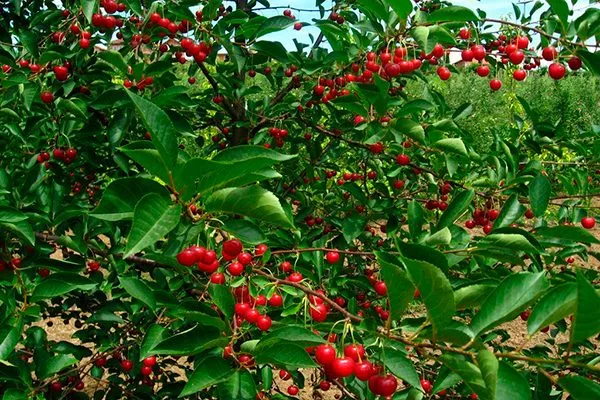
The leaf blades are elongated and weakly dissected. They fall late.
Fetus
Medium-sized berries weigh from 3 to 4.5 g. Other distinctive characteristics:
- The top part is rounded with a small depression at the stem, while the bottom part is pointed, creating a visual resemblance to hearts.
- They have a small ventral suture, and the stalk is elongated and easily separated from the branches.
- The colour is dark burgundy, without any spots, and almost black when fully ripe.
- The stone has a round shape and is easily separated from the pulp.
- The pulp is dark burgundy in color, very tender, dense, with abundant juice flow.
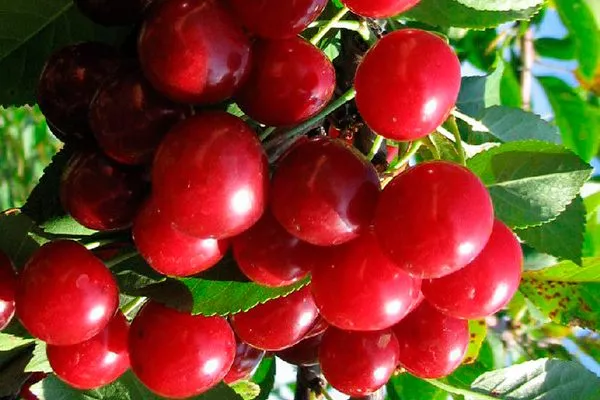
The chemical composition includes the following indicators:
- Sugar: from 11.0% to 11.64%.
- Acids: from 1.0% to 1.37%.
- Ascorbic acid: from 34.0 to 34.66 mg per 100 g.
Lebedyanskaya cherry variety: specifics, characteristics
Before planting a plant in your garden, it's important to study all its characteristics. Below is a detailed description of the crop.
Cherry blossom and fruiting
Flowering typically occurs in May, but timing can vary depending on climate and environmental conditions. Flowering may shift to either the first or second half of the month.
The berries ripen in the second half of July. If grown in hotter conditions, they can be harvested as early as early July.
Self-fertility and pollinators
The first harvest is collected after 4-5 years of cultivation. This variety doesn't have a strict harvesting cycle, and ripens uniformly, making harvesting easier. Harvesting is not protracted, which is an additional advantage for gardeners.
The crop is self-fertile, meaning it can produce fruit without the need for pollination from other plants. Planting several pollinator varieties, such as Zhukovskaya, Vladimirskaya, Turgenevka, and Morozovka, will significantly increase the yield.
Productivity and use
Ideal for cultivation in both commercial and private gardens, as well as for commercial sale. The fruits are excellent for fresh consumption and a variety of processing. This variety is easy to transport and has a long shelf life – the harvested crop stays fresh in the refrigerator for 15-20 days when stored in an unopened container.
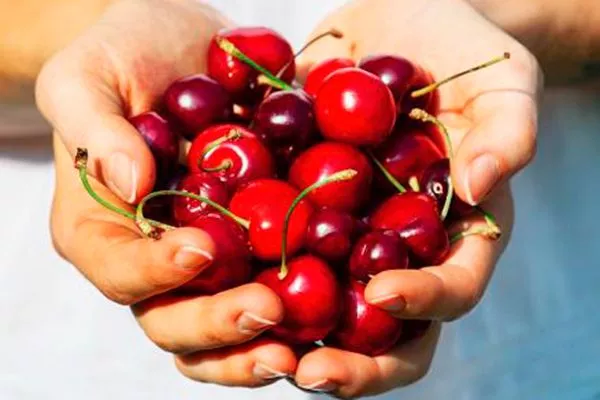
A single tree can yield up to 7 kg of berries, and with pollinators, this figure can increase by 2 or 3 kg. In commercial cultivation, the crop has demonstrated high yields, ranging from 60 to 80 centners per hectare.
Resistance to negative factors
Cultivation can be successfully carried out in almost all regions of Russia, with the exception of the coldest ones. The plant exhibits high adaptability to dry and hot climates and tolerates severe frosts well, provided there is sufficient snow cover.
It has good immunity to various pests, fungal, and viral diseases. It is moderately resistant to coccomycosis, but is not susceptible to holey spot, moniliosis, or anthracnose.
Necessary climatic conditions
It thrives under specific climate conditions, which are important to consider when growing it. Consider the following criteria:
- Temperature. It tolerates low temperatures well, but successful cultivation requires good snow cover, especially in cold regions. It prefers moderate and warm climates.
- Lighting. It loves bright sun. For full development and abundant fruiting, it's important to provide it with a well-lit location.
- Humidity. The variety tolerates dry periods, but regular watering during dry periods can be beneficial to maintain plant health and yield.
- Wind protection. Since the crop is often susceptible to wind damage, especially in exposed areas, protection from strong winds may be necessary.
Given these conditions and local regulation, the crop can thrive, delighting gardeners with a bountiful harvest and attractive fruits.
Advantages and disadvantages
This variety is aimed at the dessert and industrial sectors and is gaining popularity thanks to a number of positive characteristics. The following advantages stand out:
- early fruit bearing;
- productivity;
- taste and appearance of berries;
- transportability and long shelf life;
- versatility in use;
- self-fertility;
- endurance and resilience.
Features of cultivation
The site designated for planting must have certain characteristics to ensure successful growth and development of the plant. Helpful tips:
- Plant the plant in a sunny location, as even light shade can negatively affect the flavor of the fruit. A sunny location will promote better quality and flavor of the berries.
- Doesn't like stagnant water in the soil. The soil should be loamy, loose, and well-drained.
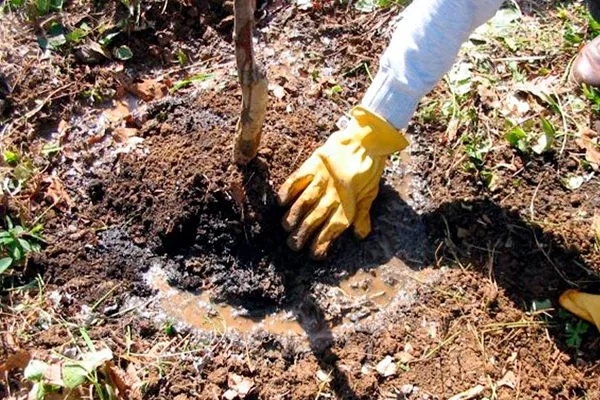
- When preparing the planting hole, enrich the soil with fertilizer sufficient for the first 3-4 years of cultivation.
- Planting should be done in early spring or the first half of autumn.
- The first pruning should be done after planting, shortening the tree to 50-70 cm. Forming a mature tree should be done annually in the spring before the buds open.
- Frequent watering and covering are recommended only until the first fruiting. Fertilizing should begin after this point. Apply fertilizer before and during flowering, during cherry ripening, and after harvest.
- 2-3 weeks before planting, deeply dig the area to a depth of 40-50 cm.
- Add organic fertilizers (10-15 kg of rotted manure or compost per 1 m²) and mineral fertilizers (100 g of superphosphate and 50 g of potassium salt per 1 m²).
- Check the soil pH and apply lime if necessary.
Diseases and pests
It exhibits outstanding resistance to various fungal diseases. It is resistant to common diseases such as moniliosis, anthracnose, and holey spot. Although its resistance to coccomycosis is rated as average, it can be prevented with preventative measures.
To prevent coccomycosis, spray the tree with a 0.3% copper oxychloride solution. This process is repeated three times: after flowering, after 2-3 weeks, and after harvest. Use Fitosporin to treat the affected plant.
Reviews
The Lebedyanskaya cherry has gained immense popularity among gardeners worldwide, including in Russia. This variety boasts numerous characteristics, positive reviews, and low maintenance. With proper care, it will reward you with a bountiful harvest and a strong immune system.