
The Queen cherry is a modern columnar variety. Its unique feature is that the bushes can be grown not only in open beds but also in large pots and containers, as their root system is not very developed. Despite this, the variety is frost-resistant and has excellent other characteristics.
Who developed the variety and when?
The exact date of its selection is unknown, but sources indicate that the Queen cherry appeared relatively recently (in this century). Dutch breeders worked on its development.
Description
Columnar cherries aren't typically tall, but the Korolev variety exceeded all expectations – the tree is considered tall. Generally speaking, the cherry tree is considered medium-sized.
The appearance of the tree
The height reaches up to 250 cm, and sometimes up to 300 cm. However, there are sources that say that the columnar tree of the Queen variety was 500 cm.
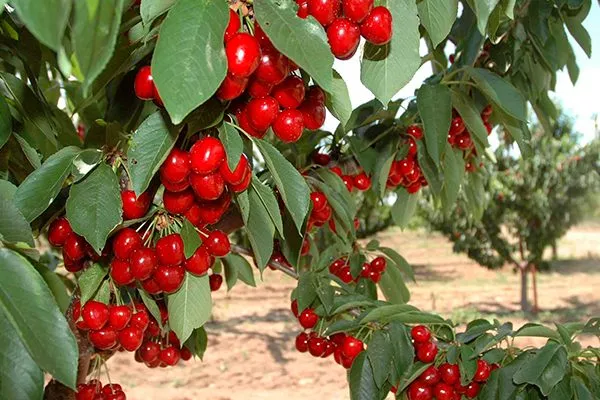
Other characteristic features of the plant:
- crown – compact and neat, its diameter is 70-80 cm;
- flowers – very fragrant, medium sized, colorful;
- crown shape – conical;
- foliage – strong;
- shoots – vigorous;
- standard – strong;
- leaves - dark green hue.
Fruits and their taste characteristics
The berries are characterized by a rich flavor and aroma—the pulp contains more sugar than acid. Therefore, cherries are versatile in their uses—they are enjoyed fresh, made into jams and compotes, juices and liqueurs, frozen, and dried.
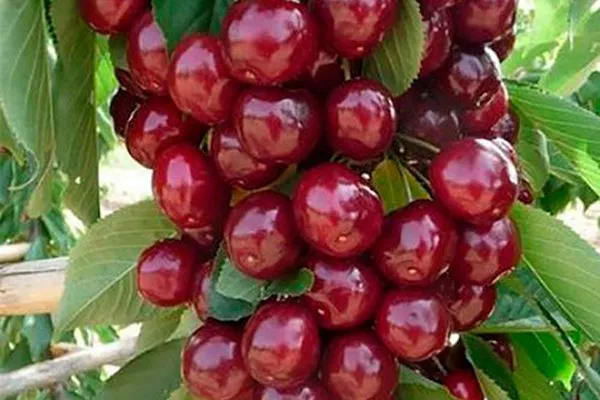
Other distinctive features of the fruits:
- size - medium, weight reaches up to 6-7 g, but larger specimens are also found (depending on the amount of sun and growing conditions);
- the color of the skin and pulp is the same – in deep red tones;
- separability of the drupe from the stalk – mild, no damage noted;
- bone – medium in size, easily separated from the pulp;
- form - rounded;
- root system – superficial, the shoots reach only 10-15 cm in depth;
- internal structure – with increased juiciness and tenderness, without coarse fibers;
- skin – smooth, very shiny, durable, so it does not crack during transportation, and the berries can be stored for up to 2 weeks.
Ripening period and yield
Belonging to the late-ripening group, the harvest begins on July 20th and lasts for three weeks. The tree blooms in May. Fruiting is early – ovaries begin to form as early as the second year after planting, and in cooler climates, as early as the third. The yield is good – a single tree produces 15 to 20-25 kg.
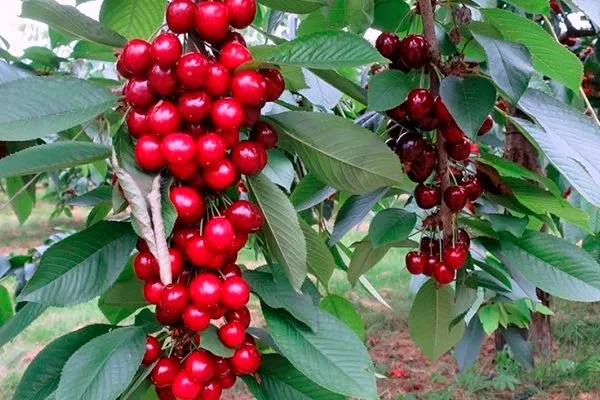
Growing regions
Columnar cherry is intended for cultivation in the central part of Russia, but now it is grown in all regions of the country – from the south to the Far East.
Basics of planting varieties
The Queen is partially self-fertile, so it requires pollinators. You can choose any variety, as long as the flowering period coincides exactly. Please note some varietal requirements for successful planting:
- there should be 100-150 cm between plantings and the nearest fence/building;
- the optimal location is sunny, but partial shade in the afternoon is also acceptable;
- drafts are excluded - they are especially dangerous in the winter period;
- groundwater – at a distance of 80-100 cm from the earth’s surface;
- the depth of the planting hole is about 40 cm;
- hole diameter – 50 cm.
- ✓ Soil pH should be between 6.0-7.0 for optimal growth and fruiting.
- ✓ The distance between pollinator trees should not exceed 50 meters for effective cross-pollination.
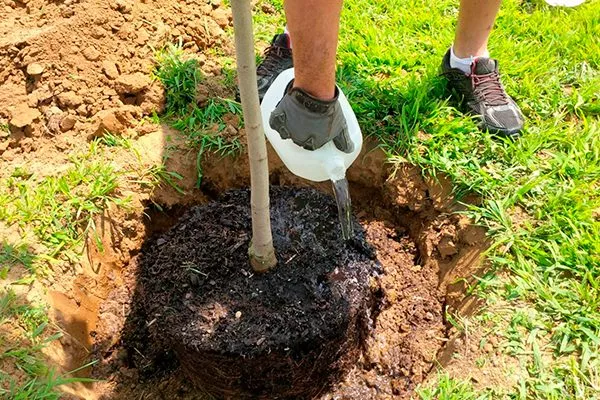
Care: watering, loosening, fertilizing
The main principle of care is to avoid deep loosening of the soil around the tree trunk. This is because the root system is shallow and located too high. However, it expands extensively.
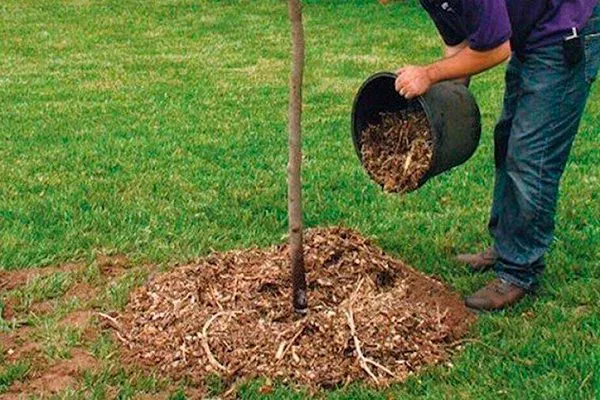
Other subtleties of cultivation:
- pruning and shaping the tree is not required; it is sufficient to carry out sanitary pruning in spring and autumn to prevent pest infestations and the occurrence of diseases;
- During the first two years, water the seedlings twice a month, adding 4-5 liters of settled warm water, then water them a maximum of 5 times a year;
- do not allow stagnation in the tree trunk circle - the variety does not tolerate severe waterlogging;
- Fertilizing is carried out in the standard way for cherry crops.
Before wintering, prepare the tree: whitewash the trunks with lime, including a small portion of the lower shoots, water the tree to replenish moisture, and mulch the area. If frosts below -20°C are expected, cover the trunk with burlap or agrofibre.
Advantages and disadvantages of the variety
Although the variety is not listed in the state register, gardeners note the many positive aspects of the Queen cherry:
Gardeners don't see any critical flaws, only noting the late ripening period.
The Queen cherry is truly regal, as its fruits are very sweet and beautiful, their glossy skin gleaming in the sun, maintaining their attractive appearance. This variety is easy to care for, making it suitable for any beginner. Just remember the most important rule: don't loosen the soil too deeply.