
Carmine Jewel is a frost-hardy cherry tree native to Canada. This variety has so many advantages that it simply couldn't be ignored by domestic gardeners and summer residents.
Description of the variety
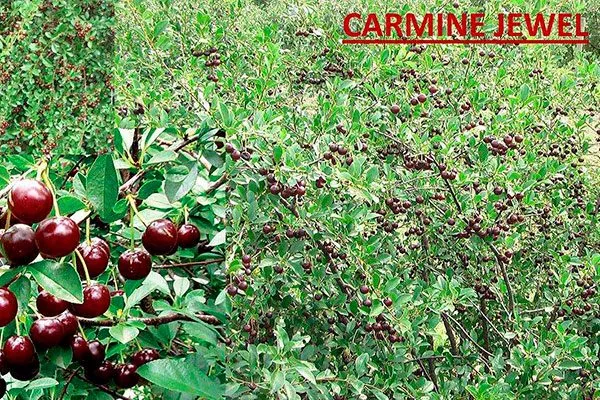
The Carmine Jewel cherry tree is significantly different from other varieties; it is short and compact. This cherry is often grown not only as a fruit tree but also as an ornamental, used to create hedges.
Tree
The Carmine Jewel cherry tree is a shrub-type variety. It grows up to 2 meters tall. It is compact and attractive, especially during flowering.
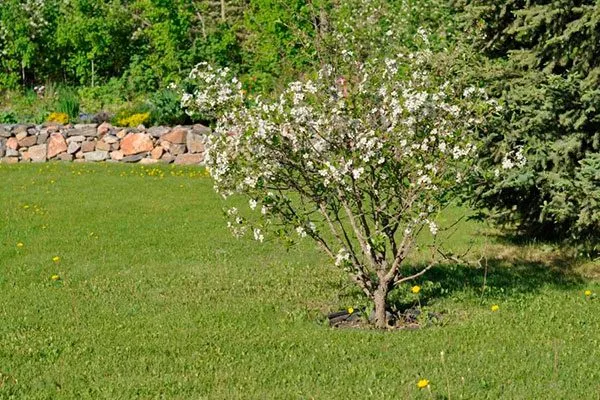
These shrub-like trees have a compact, not particularly spreading crown. Their appearance is very similar to that of dwarf trees. The branches are moderately foliated, and the leaves are oval or ovoid, dark green, glossy, and do not interfere with the ripening of the fruit. The flowers are white, small, and pleasantly fragrant.
Fruit
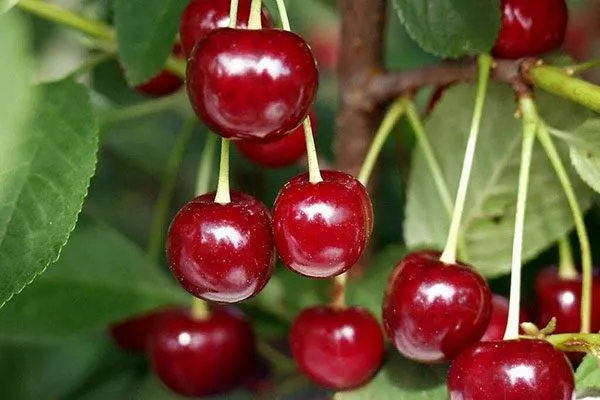
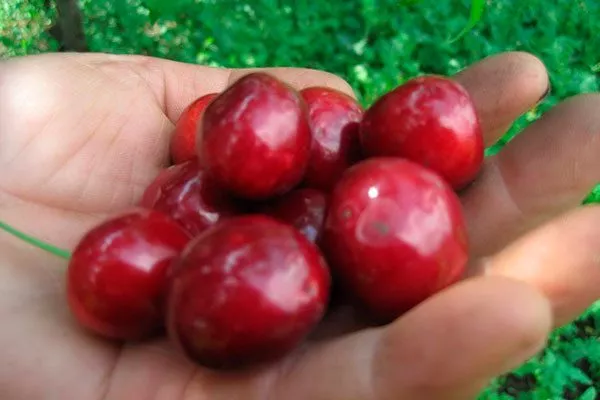
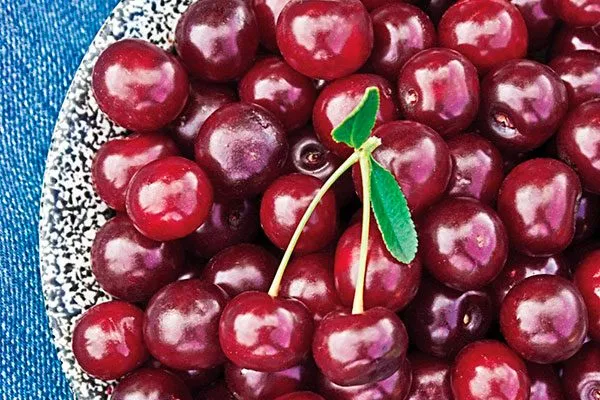
The fruits are large and attractive, with juicy flesh and a small stone. The average berry weight is 4-5 g. The shape of the fruit is round, regular, and slightly flattened. The skin is dense and carmine-red. When ripe, the berries are very beautiful, bright, and uniform.
History of creation
The Carmine Jewel cherry was developed in 1999 by breeders at the University of Saskatchewan in Canada. It was created using steppe and common cherry varieties as parent varieties. From these, the hybrid inherited its small size, frost resistance, high yield, and low maintenance requirements.
Characteristics
When developing this variety, breeders prioritized the plant's hardiness. And they succeeded: the variety is robust and easy to grow, yet very productive, making it a favorite among gardeners and summer residents.
Taste qualities
Carmine Jewel fruits have a rich, sweet flavor, completely devoid of astringency. They have a higher sugar content, almost twice the usual amount—14% versus 6-8%.
Ripening and fruiting
This variety has a medium ripening period. The berries ripen slowly and gradually. The fruiting period extends over approximately half a month, from mid- to late July. The fruits do not fall until frost.
Productivity and early fruiting
A single tree can yield approximately 4-8 kg of fruit. This isn't particularly high for a typical cherry tree, but for a small, almost dwarf tree like the Carmine Jewel, it's an excellent yield. With proper care, this variety can produce up to 15 kg of cherries.
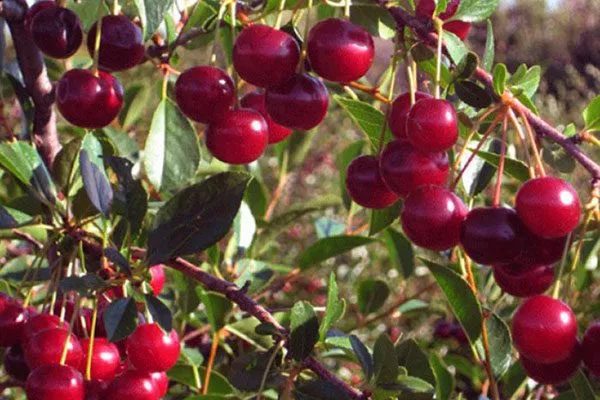
This variety is early-bearing; the tree begins bearing fruit 3-4 years after planting. Maximum yields are observed 7-8 years after planting.
- ✓ Almost half of the flowers have the ability to self-pollinate.
- ✓ Maximum frost resistance is achieved by 3-4 years.
Self-fertility
This variety is self-fertile, with excellent self-pollination capabilities, guaranteeing a high yield. Almost half of the flowers are self-pollinated.
Frost resistance
This variety is adapted to the harshest climates. Its frost tolerance rivals that of even the most frost-hardy domestic varieties. Canadian cherry can withstand temperatures as low as -45°C.
Carmine Jewel cherry trees not only tolerate low temperatures well, but also recover quickly from damage and particularly cold winters thanks to their enhanced root growth.
Pros and cons
Before planting the Carmine Jewel variety in your garden, it's helpful to evaluate all its advantages. It's equally important to learn about its disadvantages, if any.
No defects were found in the Carmine Jewel cherry.
Selection of planting material.
Saplings of this cherry tree are currently not easy to find—they are quite rare on the market. They must be purchased from specialized nurseries. This option also allows you to purchase a sapling that matches the varietal characteristics.
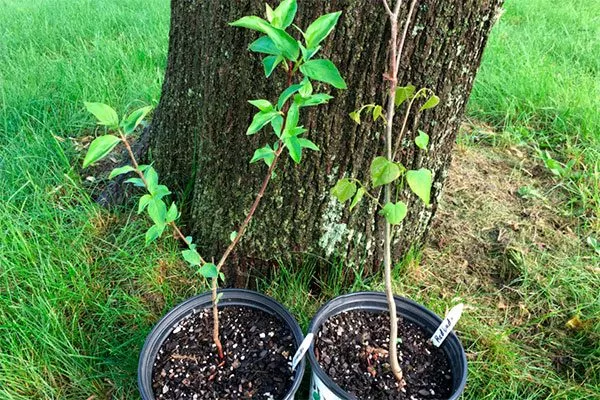
- ✓ Check for the presence of a budding site at a distance of 12-15 cm from the root collar.
- ✓ Make sure the bark of the seedling is healthy and smooth, without damage.
- ✓ The optimal height of a seedling should be 80-85 cm with 4-6 shoots.
For planting, select one-year-old seedlings. They take root and adapt to a new location better and faster than others. They should have a well-developed root system and healthy, smooth bark. The optimal height is 80-85 cm, with 4-6 shoots.
Preparing the seedling. The budding site is located above the root collar, 12-15 cm away. At this point, the trunk is slightly tilted to the side. If this is not the case, you are being offered a seedling instead of a seedling.
Landing features
To ensure that a cherry tree thrives and produces fruit throughout its life, it must be planted correctly, taking into account all the characteristics of the variety, its growing conditions, and other factors.
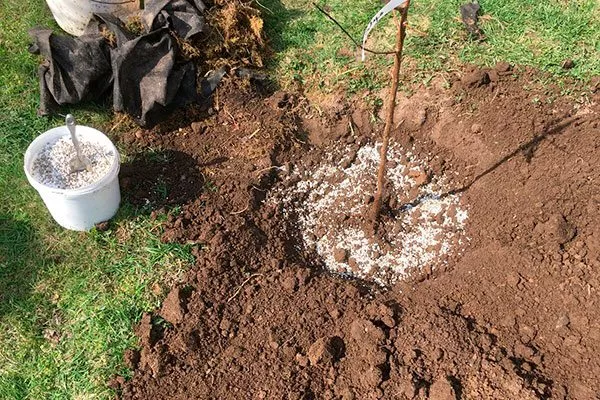
Landing features:
- Deadlines. In regions with a temperate climate and frosty winters, Carmine Jewel cherries, like other fruit trees, are planted in the spring, usually from mid-April to early May. In the south, this variety can also be planted in the fall, but not earlier than a month before the onset of cold weather.
- Selecting a location. Cherry trees grow best in level, well-lit areas, protected from drafts and piercing winds. It is not recommended to plant cherry trees in shadows from buildings, fences, or tall trees.
- Preparing the landing site. Dig the soil, adding well-rotted manure as you dig. Dig a hole about 0.8-1 m deep and wide. Fill it 2/3 full with garden soil, sand, and well-rotted compost. Add wood ash, mix thoroughly, and pile it into the hole. Drive a stake into the center.
- Preparing the seedling. Before planting, soak the root system in a solution of Epin, Kornevin, or another growth stimulant. Immediately before moving the roots to the planting hole, dip them in a clay slurry.
- Landing. It's carried out according to the standard procedure: the seedling is then watered with warm, settled water. Once the water has been absorbed, the area around the tree trunk is mulched with mown grass, leaves, peat, or straw.
If several cherry trees are planted, leave 3 m intervals between them.
The intricacies of caring for Carmine Jewel cherries
The Carmine Jewel variety is very responsive to care; if it is done correctly and regularly, then there will be no problems with growing this cherry.
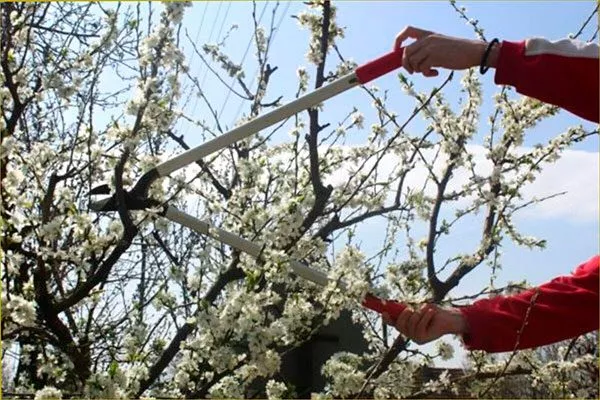
Care features:
- Watering. In hot weather, the trees are watered 2-3 times a week; in damp weather, watering is reduced to a minimum. During fruiting, the cherry tree is watered once a week. Each tree requires 40-50 liters of water.
- Top dressing. The variety responds well to organic fertilizers. Potassium-phosphorus fertilizers are recommended in summer, and nitrogen-containing fertilizers in spring.
- Trimming. The Carmine Jewel cherry tree has a shrub-like habit, produces abundant shoots, and requires regular pruning. In the spring, the tree is shaped and pruned to remove frozen and damaged branches.
- Loosening. After watering and rain, the soil around the tree trunks is loosened, while weeding is carried out. After loosening, the soil is mulched with peat, straw, or other loose materials.
- Diseases and pests. The variety has good immunity and is almost pest-free. For guaranteed protection, simply treat the tree with biological products several times during the season.
- Wintering. The variety is well adapted to the most severe frosts; however, it is recommended to cover the trees during the first years of life, as they only reach their maximum winter hardiness at the age of 3-4 years.
Cleaning and use
The fruits ripen gradually, initially turning ruby red, but are not yet edible. They are harvested only after they acquire a black color with a burgundy tint. Harvesting is done by hand, with the help of equipment, or mechanically.
The berries are shelf-stable and tolerate storage and transportation well. Under favorable conditions, they can be stored for up to three weeks. The fruits are delicious fresh and processed. They are used to make compotes, fillings and desserts, and winter preserves such as jams and jellies.
Reviews of the variety
The Carmine Jewel variety was bred specifically for areas with a sharply continental climate—due to the temperature differences between day and night, the cherries ripen especially sweet. The combination of frost resistance and excellent flavor makes this variety ideal for most Russian regions.