
The Kharitonovskaya cherry was developed by domestic breeders and has good potential for cultivation in regions with warm and temperate climates. This variety attracts gardeners and summer residents not only for its excellent taste but also for its hardiness, disease resistance, and resistance to harsh weather conditions.
History of selection
The variety was developed in the 1990s by breeders at the I.V. Michurin All-Russian Research Institute of Genetics and Fruit Plant Breeding. The authors were E.N. Kharitonova and O.S. Zhukov. Two cherry varieties were used in the study: Almaz and Zhukovskaya. The latter was bred in 1947 and was widely grown at the time in the central regions.
The interspecific hybrid "Padocerus-M," created by crossing cherry and Japanese bird cherry, was also used in the variety's development. The variety was added to the State Register in 1998 and is recommended for cultivation in the Central Black Earth and Central regions.
Description of the tree
The Kharitonovskaya cherry tree is medium-sized, reaching 2-3 meters in height. The crown is spherical, raised, and moderately dense. The tree is characterized by medium foliage. The branches are straight and russet-brown.
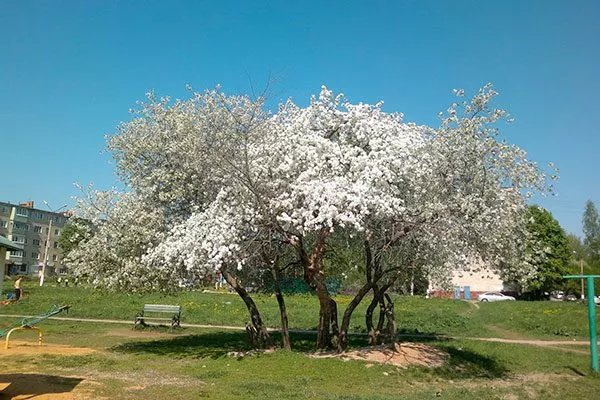
The leaves are straight and large, elliptical in shape, with a smooth surface, stipules, a serrated margin, and pointed tips. The color is dark green. The flowers are large, white, and form on last year's growth and on bouquet branches.
Description of fruits
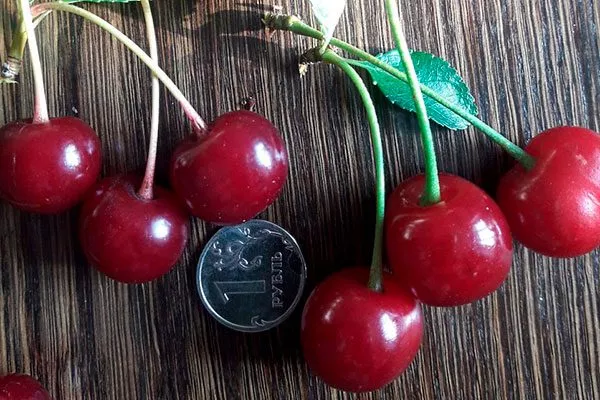
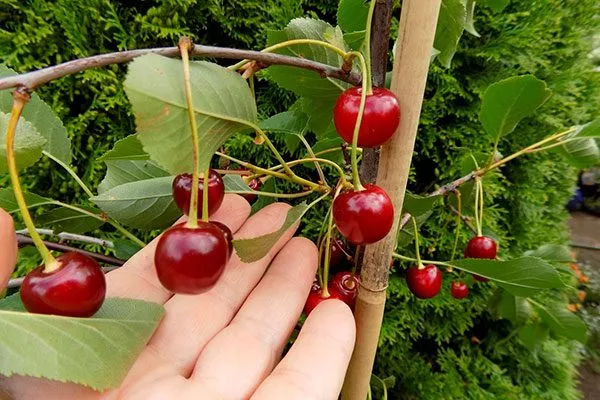
The fruits are large, uniform, and dark red. They become almost black when ripe. The diameter is 16-18 mm. The average weight is about 5 g. The shape is round. The skin is smooth and hairless. The juice is light red, and the flesh is very tender, with an orange tint. The seeds are oval and medium in size.
Characteristics of the variety
The Kharitonovskaya variety has good agronomic parameters, allowing it to be successfully grown in various regions of Russia.
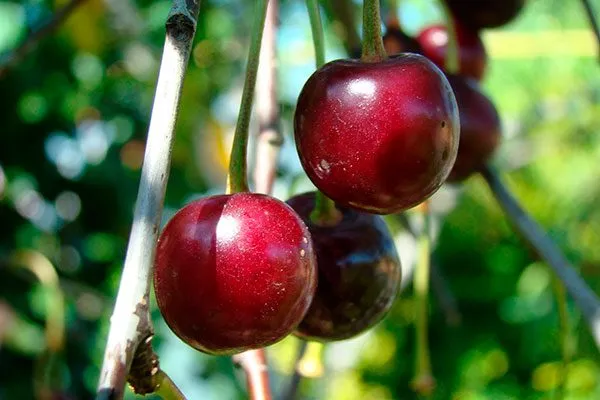
- ✓ The presence of a bird cherry flavor in the fruits, which is a unique characteristic of the variety.
- ✓ High resistance to coccomycosis and moniliosis, which reduces the need for chemical treatments.
Specifications:
- Productivity. One tree produces about 15-20 kg of cherries.
- Flowering time. Flowers appear at the end of May.
- Ripening periods. The variety has a medium ripening period, the fruits are picked from mid-July.
- Precocity. Fruiting begins in the fifth year after planting. Under favorable conditions, fruit may appear in the second or third year.
- Taste qualities. The fruits are sweet and sour with a subtle hint of bird cherry. Tasting score: 5 out of 5.
- Frost resistance - down to -35°C. In northern regions, cultivation is challenging due to the risk of flower buds freezing during harsh winters.
- Drought resistance - good.
- Disease resistance. The variety has high immunity, especially to ring spot, coccomycosis and moniliosis.
- Self-fertility — partial. The best pollinators are Vladimirskaya and Zhukovskaya. If pollinators are absent, only 5-10% of flowers produce fruit. To improve pollination, trees are sprayed with a weak solution of sugar or honey.
- Sugar content — 3%.
- Acidityь — 1.2%.
- Vitamin C content — 12 mg.
Advantages and disadvantages
Before planting the Kharitonovskaya cherry tree in your garden, it's worth evaluating all its advantages and disadvantages. This will help you determine whether this variety is suitable for your intended purposes.
Selection and storage of planting material
They should be purchased from specialized retailers or nurseries. Seedlings should have a certificate indicating the variety and age. It is recommended to choose 1-2 year-old seedlings. They should have developed roots, no damage, and light-colored tips.
There should be a thickening on the trunk, 5-15 cm from the root collar—the grafting point. The branches should be flexible, and the trunk should be smooth, free of gum.
Saplings purchased in the fall can be planted in the spring. To do this, dig a hole 30-35 cm deep in the garden, with one side sloped at 45°. Place the seedlings on this side, then fill the roots and a third of the trunk with soil, water, and cover with straw, then snow. Remove the seedlings in the spring, just before planting.
Landing features
Proper planting is essential for the successful growth and development of a cherry tree. The future cherry harvest largely depends on the successful planting location.
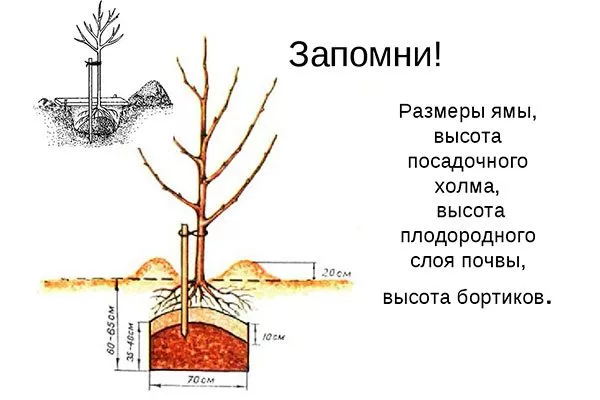
- ✓ The optimal planting depth for a seedling should be such that the root collar is 5 cm above ground level, which will prevent it from rotting.
- ✓ The distance between seedlings should be at least 4-5 meters to ensure sufficient space for the growth of the root system and crown.
Landing features:
- Disembarkation times. In central Russia, Kharitonovskaya cherries are best planted in the spring, before the buds swell. Bare-rooted seedlings planted in the fall are at high risk of dying.
In the south, it is recommended to plant cherries in October, and container seedlings from early spring to autumn, but no later than a month before the onset of severe cold weather. - Landing place. It should be spacious, well-lit throughout the day, and protected from northerly winds by a fence or other barrier. Elevated locations are preferred, with a slope of 8° to 15°. The maximum groundwater level is 2 m.
- Soil. It must be fertile, moisture- and air-permeable. Clay, rocky, sandy, and waterlogged soils are unsuitable.
- Neighborhood. The garden should be at least 3-3.5 meters away from neighboring trees, including pollinators. To attract bees and improve pollination, it is recommended to plant honey plants. Lungwort, thyme, and bellflowers are suitable for this purpose.
Good neighbors for the Kharitonovskaya cherry include strawberries, raspberries, grapes, roses, and gladioli. This cherry should not be planted near apple trees, carrots, lilies, daffodils, or irises. - Preparing seedlings. Before planting, the roots are sprinkled with Kornevin powder, which is then sprinkled into the hole where the roots will be. The seedlings, with their roots still attached, are watered, and after 10 minutes, they are removed from their containers and, along with the root ball, transferred to the planting hole.
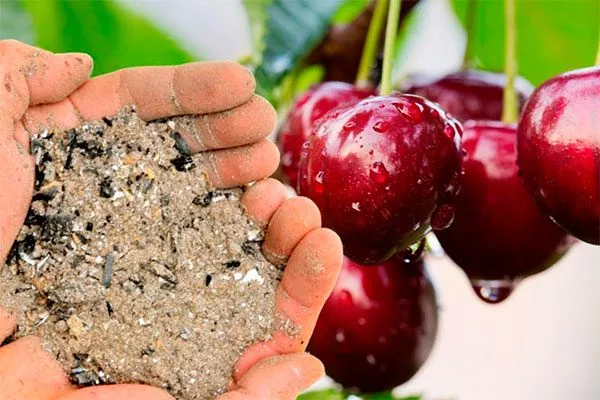
- Preparing the pit. The intervals between adjacent holes are 4-5 meters. Pollinators also prepare spots for tree pollinators at a distance of 5 meters. The hole is filled with fertile soil mixed with wood ash, humus, and superphosphate. A 0.8-meter-high support is placed on the side.
- Landing. The seedling is planted using standard techniques, but the root collar must be 5 cm above ground level. The soil is thoroughly compacted, then 20 liters of water are poured into a watering trench formed around the trunk. The soil is then mulched with peat, humus, or sawdust, and the seedling is tied to a support.
Care
The Kharitonovskaya cherry tree is easy to care for, even for beginners. Provided with the necessary growing conditions, the tree will bear fruit reliably and abundantly.
Care features:
- Watering. It is done as needed. The frequency and amount of watering depend on the weather and the age of the trees. Young trees are initially watered once a week, later once a month. The recommended watering rate for a young tree is 20 liters, and for a mature tree, 30 liters. In the fall, no more than two waterings are performed. A moisture-recharging watering is also performed in October.
- Top dressing. This variety is demanding of soil quality, but no fertilization is necessary in the first year. The nutrients already placed in the planting hole are sufficient. During the first four years, the tree requires a high nitrogen content. For example, urea can be applied at a rate of 30 g per square meter. Organic fertilizer is also recommended; apply 10 kg twice per season.
Fruit-bearing trees are fed annually with 10 kg of manure, 200 g of superphosphate, and 200 g of wood ash (per square meter). Nitrogen is added in the spring, and organic matter and potassium-phosphorus compounds are added in the fall. Every five years, the soil is deoxidized with lime, applied during the fall tillage. - Caring for the tree trunk circle. The soil beneath the crown is weeded and loosened after each watering, and mulched with hay or sawdust. To enrich the soil with nutrients, grasses such as lupine, clover, rapeseed, and mustard are sown between neighboring cherry trees.
- Trimming. The Kharitonovskaya cherry tree requires formative and sanitary pruning, which should be performed from the first years of life. Pruning helps shape the crown to make it as convenient as possible for harvesting and spraying. The tree is prone to basal suckers, which should be cut off at the ground level.
- Shelter for the winter. In the regions for which this variety is recommended (Central and Central Black Earth), there's no need to cover the tree for the winter; its frost resistance is sufficient to survive a frosty winter. However, protection from rodents may be necessary if there are hares in the area; the trunk should be wrapped in burlap or another suitable material.
Diseases and pests
The variety is resistant to many fungal diseases, but the risk of infection cannot be ruled out, especially under a combination of unfavorable factors. Most often, due to poor agricultural practices and poor weather conditions, trees are affected by rust.
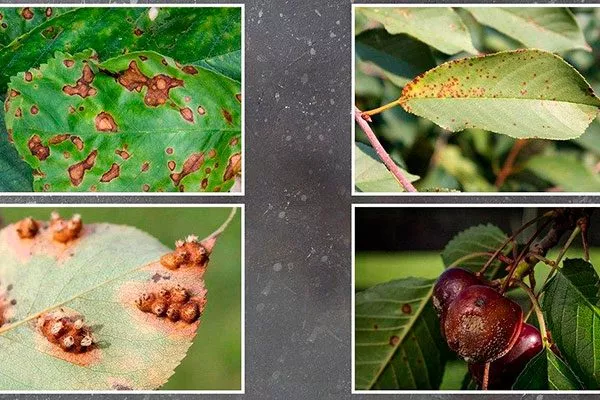
Rust is a fungal disease that causes reddish spots on the upper surfaces of leaf blades. Treatment is by spraying with copper-containing preparations. Regular and timely preventative maintenance, including cleaning around tree trunks, pruning, and spraying with Bordeaux mixture, is also important for prevention.
The most dangerous pests for Kharitonovskaya are aphids and cherry sawflies. They are controlled with insecticides, using the standard regimen for fruit trees. For minor infestations, spraying with a soap solution can also be used.
Scope of application
Kharitonovskaya cherries are grown primarily for their delicious fruit, which can be eaten fresh or processed. These cherries make excellent compotes, jams, juices, preserves, liqueurs, and wines, and they can also be used to make dried fruit.
The Kharitonovskaya cherry attracts gardeners with its unique flavor and low maintenance. This variety is very popular with gardeners, who often plant a cluster of these cherries to ensure a harvest not only for fresh eating but also for winter preserves.