
The "Children's" cherry is a popular felt-like variety grown successfully in various regions of Russia. It appeals to gardeners for its ease of care, hardiness, and excellent flavor.
Description of the Children's cherry
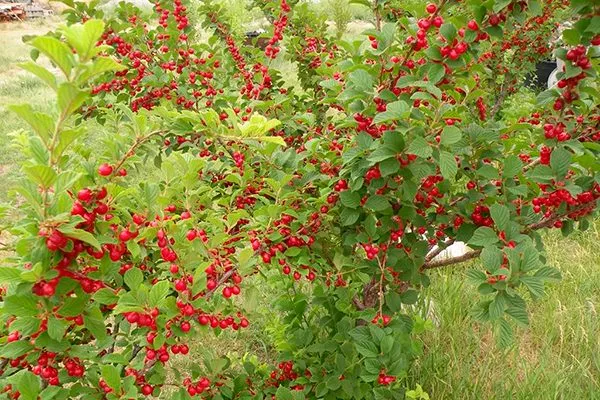
The "Children's" variety grows as a small bush. It's quite attractive and can be used not only as a fruit plant but also as an ornamental.
- Bush. It is a low-growing, low-growing tree, growing to a height of no more than 1.8 m. Its crown is broadly oval and of medium density.
- Branches. Perennials are gray-brown, densely covered with light-colored lenticels. Annuals are brownish-brown, pubescent.
- Leaves. Small, corrugated, and pointed. The edges are double-serrated. The leaves have a wrinkled surface and are slightly pubescent. The color is dark green.
- Flowers. White, medium-sized, saucer-shaped, with five petals.
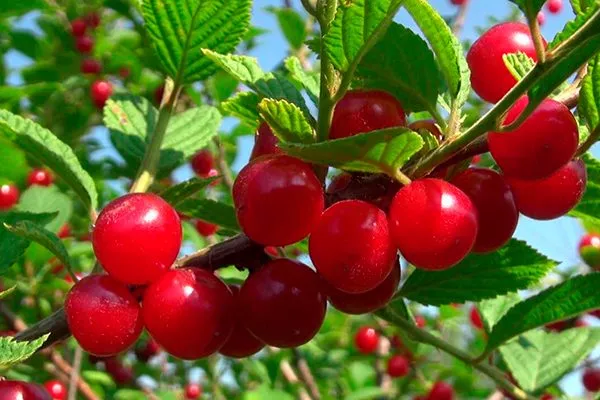
Description of fruits
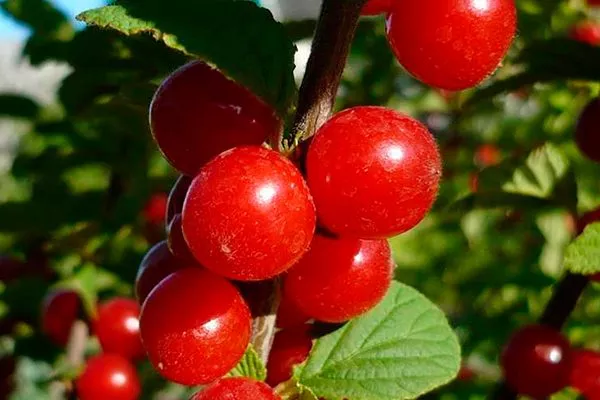
The fruits are medium-sized, round, and bright red in color. Average weight is 3.5 g. The skin is lightly pubescent and has a distinct ventral suture. The flesh is red.
Who brought it out?
The "Children's" cherry was developed by breeders N. A. Tsarenko and V. P. Tsarenko (Far Eastern Experimental Station of the All-Russian Research Institute of Horticulture) in 1986. They used the "Summer," "Rosovaya," and "Otbornaya" varieties in their development. The variety was added to the State Register in 1999.
Where can I grow the Children's cherry tree?
The Children's cherry tree is quite hardy and frost-resistant, so it can be grown in almost all regions of Russia, including the Urals and Siberia.
Characteristics of the variety
The Children's cherry has fairly good agronomic characteristics, allowing it to be grown without much effort in a wide variety of regions.
Specifications:
- Purpose - universal.
- Average yield — 10 kg from one bush.
- Transportability - low.
- Winter hardiness - high.
- Sustainability To diseases - average, can be affected by clasterosporium.
- Taste — sweet and sour, pleasant. The fruit has cartilaginous flesh.
- Tasting grade — 3.8 points.
- Early maturity — fruiting begins in the 4th year of life.
- Maturation fruits — from mid-July.
- Durability of wood — 18 years old.
This variety is self-sterile. Pollinators are needed for fruiting; without them, there will be no berries. Any variety of single or felt cherry will do.
Pros and cons
The "Children's" cherry tree has many advantages, making it a popular choice among gardeners and summer residents. However, along with these advantages, this variety also has a number of disadvantages that are worth knowing about before planting.
Landing
To ensure a cherry tree thrives, grows, develops, and bears fruit, it's important to plant it correctly. It's important not only to follow the planting procedure but also to choose the right location for the sapling and provide it with the most favorable growing conditions.
- ✓ The groundwater level should not be higher than 1.5 m from the soil surface.
- ✓ The soil must be well drained to avoid water stagnation.
Where to plant a cherry tree?
It's recommended to plant the "Children's" cherry tree in sunny, warm locations. A high elevation is ideal. The soil can be almost any size, but it should not be too saline, waterlogged, or acidic. In these cases, soil amendments (deacidification, drainage, etc.) will be necessary.
Planting dates
Cherry trees can be planted in either spring or fall. The former is preferred in regions with harsh winters, while the latter is preferred in the south of the country. Fall planting should be done no later than September, while spring planting should be done before the sap begins to flow.
- Check the soil pH; the optimal level for cherries is 6.0-6.5.
- Two weeks before planting, add compost or rotted manure to the soil at a rate of 10 kg per 1 m².
Preparing the landing site
In the selected area, dig a hole measuring 60 x 60 cm and 50 cm deep. The excavated fertile soil (top layer) is mixed with rotted manure (10 kg), and potassium (30 g) and phosphorus (60 g) fertilizers are added to the mixture. Part of the prepared soil mixture is poured back into the hole, filling it approximately 2/3 full.
If several cherry trees are being planted, then 2 m intervals are maintained between adjacent holes. The distance between rows (for mass plantings) is 3.5-4 m.
The landing process
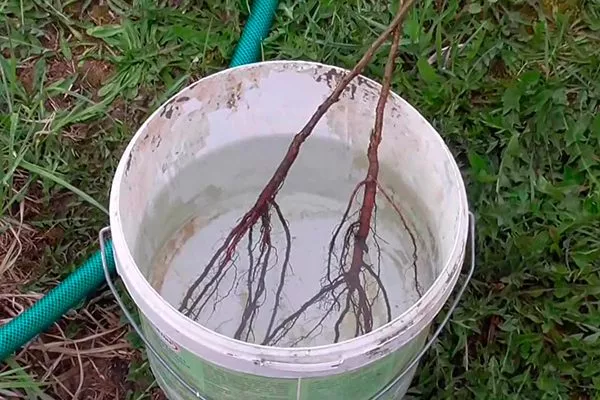
Place the seedling in the center of the hole, cover the roots, and compact the soil. Important: do not bury the root collar. Water the planted seedling generously with warm, settled water and apply mulch.
Care
Growing the "Children's" variety doesn't require much effort from gardeners and summer residents. Simply following a few agricultural guidelines will ensure the "Children's" cherry tree thrives and bears fruit.
Features of care for the variety "Children's":
- Watering. After planting, keep the soil moist almost constantly; it shouldn't dry out. Subsequently, water the tree much less frequently—during severe droughts and during the fruiting stage. On average, watering frequency in these situations is once a week.

- LooseningWeeds are regularly removed from the tree trunk area. The soil is loosened after watering and natural moisture to prevent a soil crust from forming, which prevents air from reaching the roots.
- Top dressing. This is done only in the third year after planting. In the spring, organic matter or dry nitrogen-containing compounds are applied. The granules are applied directly to the trunk area. In August, nitrogen-free complex fertilizers are applied. During this period, the plant requires potassium and phosphorus.
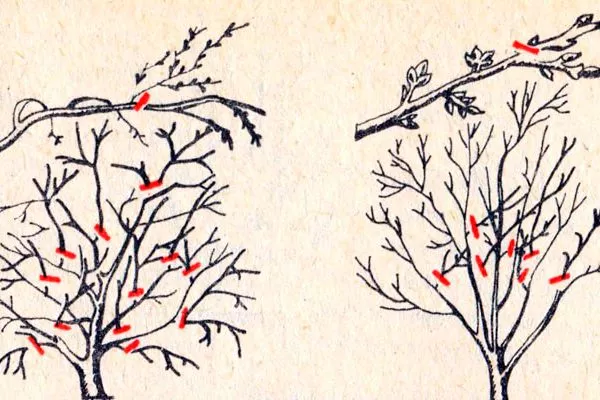
- Trimming. This begins in the second year of planting, in spring or fall. Diseased, dry, and damaged shoots, as well as those growing inward, are removed. Healthy shoots are shortened by a third. Rejuvenation pruning is recommended in the sixth year of life.
- Disease resistance. This variety is resistant to the main fruit tree diseases, but is not immune to various infections. Overwatering can cause moniliosis. To prevent infection, two preventative treatments with Bordeaux mixture should be carried out in the spring—before the flower buds open and after flowering.
The Detskaya cherry is suitable for those looking for low-growing varieties that can be used for both harvesting and landscaping. This felt cherry has several drawbacks, primarily related to its susceptibility to fungal infections, but with proper care, these are easily managed.