
Choosing the right cherry from the wide variety isn't always easy. Many gardeners have already come to appreciate the pleasant flavor and surprisingly early ripening time of the Morozova Dessert cherry. This allows harvesting to begin as early as early summer. It's important to pay special attention to the plant to ensure a high-quality harvest.
History of selection
The cultivar was developed in the 1980s at the I.V. Michurin All-Russian Research Institute of Horticulture and was named after the renowned plant breeder Tamara Vasilyevna Morozova. Information about the history of the breeding process can be somewhat controversial.
As a result of the application of the mutagenesis method, information appeared about its origin from Griot Ostheimsky No. 2, while in the catalogue of the All-Russian Research Institute of Fruit Crop Selection it is noted that it was obtained from a seedling of the Vladimirskaya cherry.
Appearance of the Morozova Dessert Cherry
Specially designed for desserts, it has a flavor reminiscent of cherries. This variety is very popular in regions with relatively mild climates and not too harsh winters.
Tree
It is characterized by medium growth. Light brown bark covers the trunk. The crown forms a fairly wide spread, formed by strong, spreading branches. The crown shape is close to spherical.
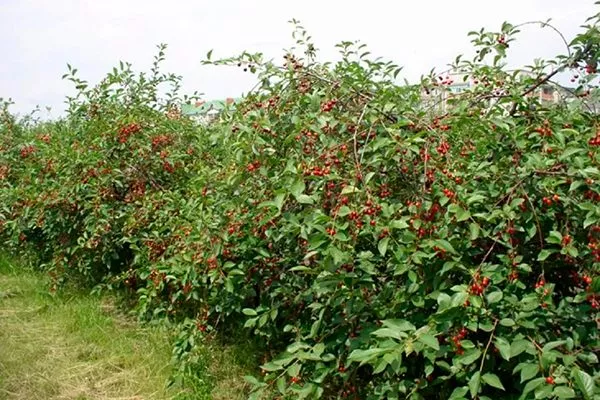
The tree is covered with a moderate number of leaves. The shoots are long and gray-green. A small number of lenticels form on their surface. The buds, rounded to ovoid in shape, are set significantly off from the shoot surface.
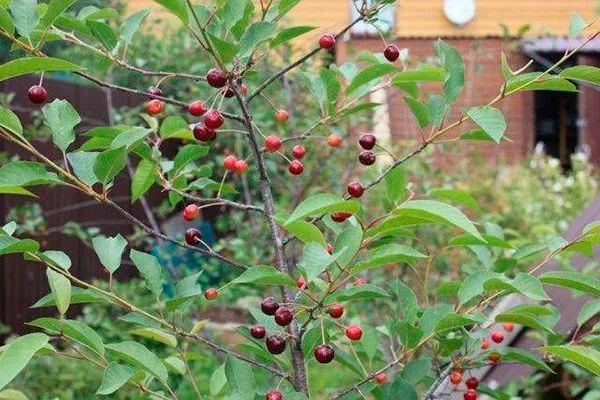
Fruiting occurs on both bouquet branches and one-year-old shoots. The medium-sized leaves are light shades of matte green, obovate in shape, and smooth to the touch, with a double-serrated edge. One or two small reddish glands can be seen at the base.
Fruit
They are distinguished by their large size, 1 cm in diameter and weighing 3.7-5 g. They have a sweet taste with minimal tartness, and are juicy, reminiscent of cherries. They are round, slightly concave at both the tip and base, with a barely noticeable seam along the sides. The skin and flesh are dark red, and the juice is red.
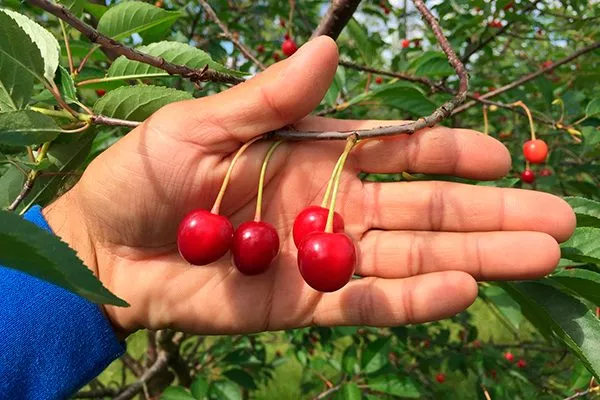
They have excellent transportability and can be stored in the refrigerator for a long time. They separate easily from the stem, and the separation is dry. The stone, round and light brown, separates easily from the flesh.

Brief description of the variety
Most cherry varieties thrive in warmer regions of Russia. However, there are varieties specifically adapted to northern climates and distinguished by high frost resistance. This includes the Dessertnaya Morozovaya.
Drought resistance, winter hardiness
It exhibits moderate drought tolerance, requiring regular watering: 1-2 times per month during hot summers. In the Central Black Earth region, it successfully survives the winter without additional shelter and demonstrates good frost resistance.
Pollination and pollinators
| Name | Disease resistance | Ripening period | Fruit size |
|---|---|---|---|
| Morozova's dessert | Average | Early | Large |
| Griot of Ostheim | High | Average | Average |
| Vladimirskaya | High | Late | Small |
| Student | Average | Early | Large |
It is classified as a partially self-fertile species. If the tree is grown alone, it typically produces only 7-20% of its fruit. To ensure effective fruiting, the presence of certain pollinators is recommended, including the following varieties:
- Griot (Ostheim and Rossoshansky);
- Vladimirskaya;
- Student.
Flowering period and ripening time
It is one of the earliest cherry varieties. Flowering and fruiting occur among the first in the season. In Michurinsk, where the variety was tested, harvesting begins in the second ten days of June.
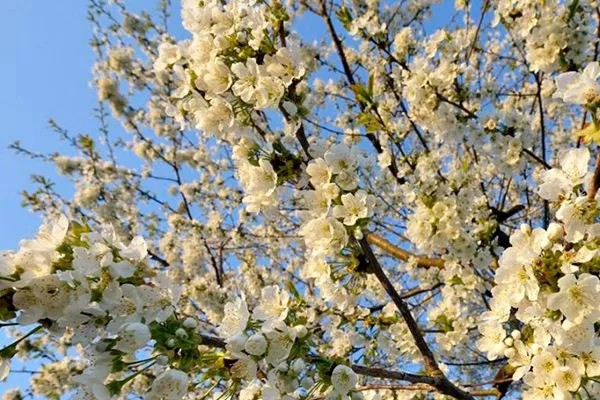
The inflorescences open in spring as large white rose-shaped flowers. The petals are rounded, and the stigma and stamens are of different heights.
Productivity, fruiting
Fruiting begins 3-4 years after planting. Monitoring studies have shown yields of 50-70 centners per hectare.
Application of berries
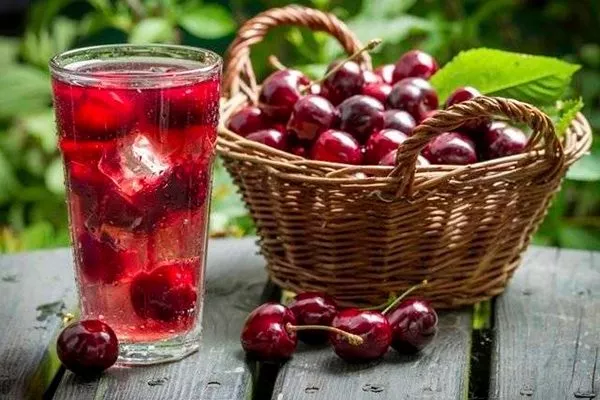
This is a table variety. The berries have an excellent dessert flavor. They are usually eaten fresh, but when used in jams and drinks, the flavor may become less pronounced. It is suitable for making fruit platters and multi-juices, adding its unique flavor and aroma.
Regions
It is designed for successful cultivation in the Central Black Earth region of Russia. Currently, the trees grow successfully in the southern and central regions of Russia, as well as in northern Ukraine. It is not suitable for more northern regions because it flowers early and is susceptible to recurrent frosts, even when young plants are protected.
Resistance to diseases and pests
Susceptible to pests. Resistance to coccomycosis is rated as high, but only if there are no infected trees nearby. During testing, a seedling was placed in an orchard where the fungal pathogen was present. As a result, resistance to coccomycosis dropped to moderate.
Advantages and disadvantages
Before planting, it's important to examine the crop's positive and negative qualities. It has many advantages:
Among the disadvantages, gardeners note limited immunity to diseases, the need for timely pruning to prevent exposed branches, and the need for pollinators.
Landing features
When planted correctly in the recommended region, it reveals its benefits. Please observe the following requirements:
- Recommended timing and selection of a suitable location. Plant seedlings in the spring, immediately after tilling the soil. This work should be completed before the buds begin to open, but it's best to prepare the planting hole in the fall.
The ideal location is on the south side of a building or fence, on a hill with a slight westward slope. Groundwater should be more than 2 meters above the soil surface. It prefers neutral soil rich in organic matter. - What crops can and cannot be planted next to cherries. The best neighbors are related pollinating varieties, but only if they do not shade each other and a distance of about 3 m is maintained between plants. It grows well with other stone fruits and grapes.
Avoid proximity to oak, maple, birch, and linden trees, as they emit substances that inhibit the growth of fruit trees. Fallen needles from conifers can acidify the soil, which is undesirable.
Oleander, blackberry, raspberry, and sea buckthorn, which produce numerous shoots, can compete for moisture and nutrients. Black currant is an undesirable neighbor. - Selection and preparation of planting material. Purchase seedlings from major garden centers to ensure their quality and compliance. Ideally, choose one-year-old plants around 80 cm tall and two-year-old plants up to 110 cm tall. The roots should be well-developed, and the wood should be light brown.
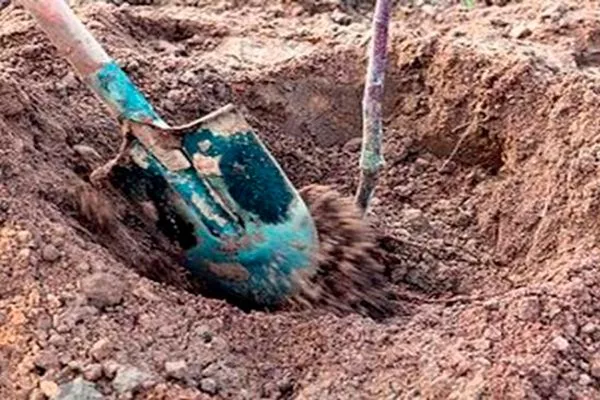
Avoid purchasing trees with excessively elongated trunks, as they may not survive the winter. - Landing algorithm. Prepare the planting hole in the fall. It should be approximately 40-60 cm deep and about 80 cm in diameter. When planting, secure a sturdy stake, center the cherry tree, and gradually fill it with fertile soil mix, compacting the soil firmly.
The root collar should be 5-8 cm above the surface. Form a border around the trunk with the remaining soil, then tie the seedling to a stake. Water the plant with 30-40 liters of water and mulch the area around the trunk, preferably with humus.
- ✓ The soil pH level should be strictly within 6.5-7.0 for optimal nutrient absorption.
- ✓ The distance between trees should be at least 3 meters to prevent shading and competition for resources.
Subsequent care of the culture
To ensure a bountiful harvest each year, it's important to follow certain care guidelines. Follow these basic care procedures:
- Whitewash. Whitewash the trunk in spring and fall before the first fork appears. This provides protection from sunburn, temperature fluctuations, and pests.
- Top dressing. No fertilizer is required during the first year after planting, as the soil is already enriched with essential elements. In subsequent years, fertilize as follows: in the spring, apply nitrogen-based fertilizers (20-30 g); in the fall, apply superphosphate (40 g) and potassium chloride (10 g).
In summer, use a solution of mullein with wood ash added. Add compost every 3-4 years. - Trimming. To increase yield, properly shape the tree's crown. Pruning should be done in early spring before bud break or in the fall after leaf fall but before frost. Remove dry, old, and diseased branches, encouraging the growth of new shoots that will produce fruit.
- Watering. Watering is important before flowering, during fruit formation, and after harvest. Water morning and evening, using 10-15 liters of water per tree. Loosen the soil to a depth of 10-12 cm after it dries.
- Preparing for winter. In the fall, protect the trunk from rodents, whitewash it to prevent damage, and create an additional protective layer of spruce branches tied around the trunk. Use a special protective net for convenience.
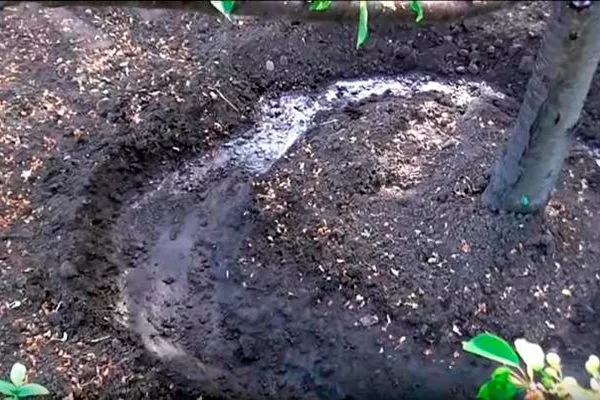
Follow these rules and you will be able to grow a crop with strong immunity, not susceptible to various problems.
Diseases and pests, methods of control and prevention
Pay special attention to preventing fungal diseases and ensure the crop is not attacked by insects. The plant may encounter the following problems:
| Disease/Pest | Symptoms | Treatment/Prevention |
| Coccomycosis | The disease manifests itself as the appearance of dark spots on the leaves, then holes form in their place, and in the summer the infected vegetative organs fall off. | Treatment includes application of copper-containing preparations to the green cone, and after the leaves have fallen, the use of iron sulfate.
Preventative measures include regular spring and fall treatments, timely removal of fallen leaves, and proper pruning. Avoid overcrowding. |
| Molinia | When affected by the disease, cherry trees look as if they have been damaged by high temperatures, flowers and leaves dry out, which can lead to the drying out of entire branches. | To combat the problem, remove the affected branches, cover them with garden pitch, and spray them twice with copper-containing fungicides at intervals of 2 weeks. |
| Aphid | Small black or green winged insects suck the cell sap from young shoots and leaves. | Treatment with a soap solution is recommended for a small number of aphids, and in case of severe infestation, the use of a preparation containing bifenthrin. |
| Cherry sawfly | The larvae chew holes in the leaves and cover them with mucous secretions. | To combat the pest, treat the tree with Actellic or another insecticide. Effective measures include preventing overcrowding, carrying out preventative spraying, and attracting birds to the garden. |
Reproduction
The crop is not propagated by the traditional method of root suckers. It is preferable to use green cuttings grafted onto the Vladimirskaya rootstock. The survival rate of these cuttings is approximately 70-75%.
Reviews
The Morozova Dessert cherry is a promising and sought-after variety, specifically adapted to central Russia. With proper care, it achieves strong immunity and regular fruiting.