
The Chernokorka cherry variety has been popular for decades in Russia and the former CIS countries. It is characterized by its exceptional sweetness, large berries, and very dark skin. However, this variety is best grown in warm climates—this is the only way to achieve the ideal flavor, color, size, and abundant harvest.
History of the variety's development
This cherry is a variety created in Ukraine using folk selection methods. The exact time and place of its origin remain unknown. Since 1974, it has been officially included in the list of varieties recommended for cultivation in the North Caucasus region of the Russian Federation.
External description of the variety
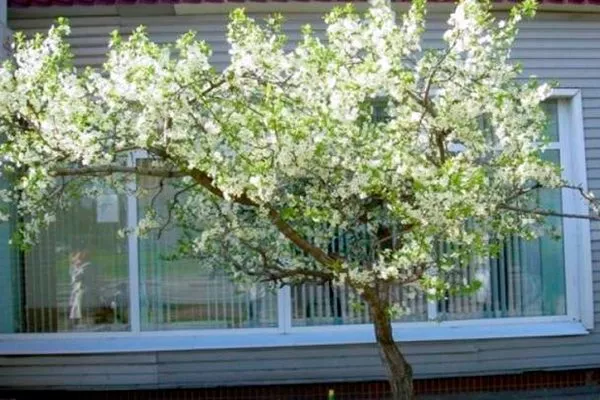
The plant's skeletal structure has a unique ability—it can take on the appearance of a tree or a bush, depending on how the crown is formed. However, this variety is classified as a bush.
Tree
The bush reaches a medium height of up to 250 cm, in rare cases the values reach 300 cm. Plant characteristics:
- crown – branched, not prone to thickening;
- its form is - rounded-flat;
- shoots – drooping type, but very strong;
- bark – dark brown;
- leaf blade – elliptical and oval, with serrated edges and pronounced veins, with a sharp end;
- leaf color – on the outer side the surface is dark green, on the inner side it is light green;
- flowers – snow-white, large in size and wide-open type, formed in one inflorescence of 2-6 pieces;
- petals – in the amount of 5 units
Fruits and their taste characteristics
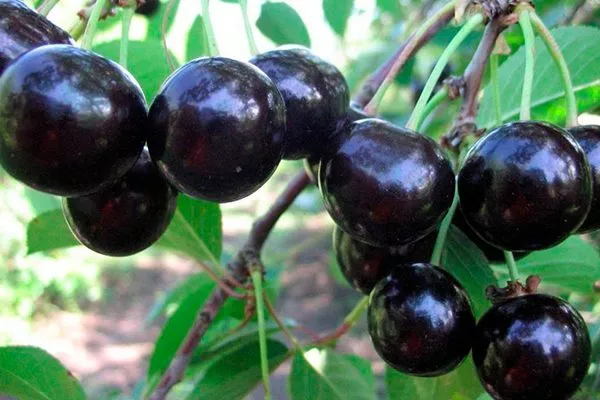
Felt cherries have a sweet flavor with a slight tartness in the aftertaste. Fruit Description:
- weight - varies from 3.7 to 4.5 g;
- form - oval-flat;
- pulp consistency – compacted;
- skin – glossy and thin;
- peel color – very dark burgundy, and at consumer maturity almost black, but from a distance it looks exactly like that;
- pulp – with increased juiciness;
- shade of pulp and juice – burgundy and red respectively;
- bone – small, occupying 6-7% of the total weight of the berry;
- separability of seed from pulp – excellent, which is usually not typical for felt varieties;
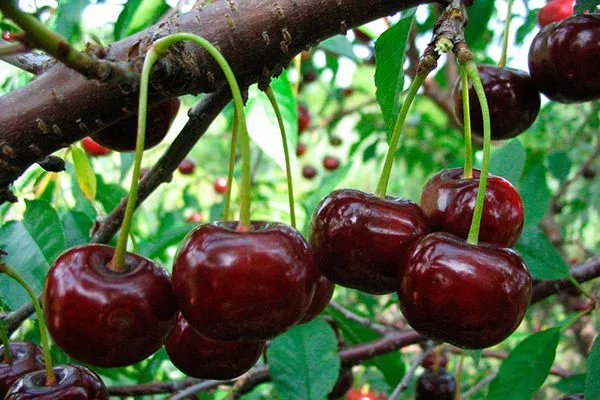
- peduncle – medium in length and thickness, firmly holds the berry from falling off;
- type of fetal detachment – wet.
Advantages and disadvantages
Like other plants, this tree has its pros and cons. It's worth starting with the disadvantages, as the most important is its low immunity to fungal diseases, which can ultimately damage all crops in the garden. Gardeners note that it is self-sterile and that the variety's high cold tolerance is only suitable for southern regions.
The advantages of Chernokorka cherry include:
Cherry Chernokorka: characteristics of the variety
Growing a tree requires careful attention to its specific planting and care requirements. The ability of shoots to self-repair after damage and frost is particularly noteworthy. But there are other characteristics that should be considered in advance.
- ✓ The optimal soil acidity for Chernokorka cherry should be within the pH range of 6.5-7.0, which is not indicated in the article.
- ✓ The distance between seedlings when planting should be at least 3 meters to ensure sufficient space for the growth of the root system and crown.
Resistance to winter and drought
The Chernokorka cherry tree is cold-hardy, but can only withstand short-term frosts. Prolonged cold can be detrimental to young trees, so this variety is better adapted to southern climates.
Black-bark rhododendron exhibits excellent adaptation to arid conditions (lack of moisture in the soil and air), requiring watering only after a month of no precipitation. However, autumn watering remains essential to ensure a successful wintering.
Flowering and ripening times
In the south, Chernokorka cherry blossoms begin blooming between April 20th and May 10th, depending on the temperature. The berries ripen by late June or early July, which is the average time for warmer regions. Fruiting continues for two to three weeks.
Self-fertility and pollinators
| Name | Disease resistance | Flowering period | Soil requirements |
|---|---|---|---|
| Lyubskaya | High | April-May | Neutral |
| Spreadable tray | Average | May | Subacidic |
| Donetsk resident | High | April | Neutral |
| Melitopol early | Average | April | Neutral |
| Aelita | High | May | Subacidic |
| Minx | Average | April-May | Neutral |
| Yaroslavna | High | April | Neutral |
| Anadolskaya | Average | May | Subacidic |
| Kharitonovskaya | High | April-May | Neutral |
| Bessey | Average | May | Subacidic |
| Generous | High | April | Neutral |
| Griot of Podbelsky | Average | April-May | Subacidic |
It lacks self-fertilization, necessitating the presence of pollinators nearby. Without cross-pollination, the variety's yield may be reduced to 5-7%. Recommended pollinators include cherry and sweet cherry varieties, including:
- Lyubskaya;
- The tray is spread out;
- Donetsk woman;
- Melitopol early;
- Aelita;
- Minx;
- Yaroslavna;
- Anadolskaya;
- Kharitonovskaya;
- Bessey;
- Generous;
- Griot of Podbelsk.
Productivity, fruiting
The first cherry harvests can be collected four years after planting in the orchard, and full fruiting begins in the seventh season. Yield depends on many factors: pollination quality, agricultural practices, and climatic conditions.
In the south, after a short spring, there is often intense heat, exceeding 30 degrees, which affects the Blackbark, despite its resistance to drought.
Peculiarities:
- With the right pollinators, proper pruning, fertilizing, and watering during drought, a mature tree can produce up to 60 kg of fruit.
- If pollination occurs with unknown varieties and the cherry tree grows without proper care, the yield may drop to 30 kg. Nevertheless, this is a fairly good yield for a small cherry tree.
The Chernokorka variety is characterized by stable fruiting with a tendency towards increasing yield, but as the tree ages, the number of berries collected decreases.
Climate conditions
This variety is characterized by increased fruiting and begins bearing fruit earlier, especially in the warm southern regions of the country. It can be cultivated in Polesia, with planting sites chosen at elevated elevations or on south-facing slopes.
In the harsher climate of the Central Black Earth Region, planting at the foot of gently sloping hills is preferable. Chernokorka cultivation is most successful in the southern part of the country, as this cherry variety is not very tolerant of temperature fluctuations.
Application of berries
The berries are known for their versatility. They are so aromatic and delicious that, when the harvest is small, they are often eaten fresh. However, when the fruit is abundant, they are used to create all sorts of preserves: jams, compotes, juices, and even homemade wine. Alcoholic beverages made from this cherry, particularly liqueurs, are particularly popular due to their rich aroma.
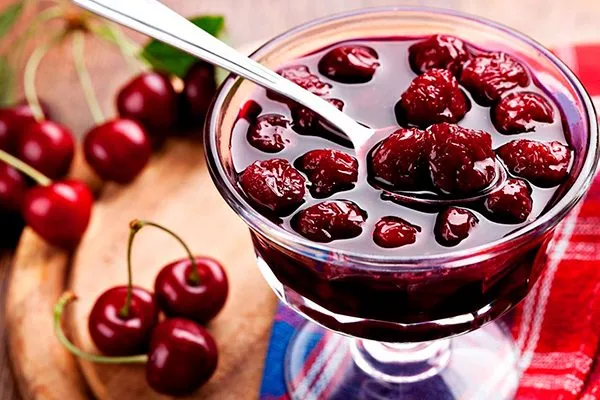
Although Chernokorka produces berries with a smooth texture, yielding up to 6.5-7 liters of juice from 10 kg, this variety is suitable for drying. However, keep in mind that direct sunlight can damage the quality, so it's preferable to use an oven or specialized dehydrators.
Resistance to diseases and pests
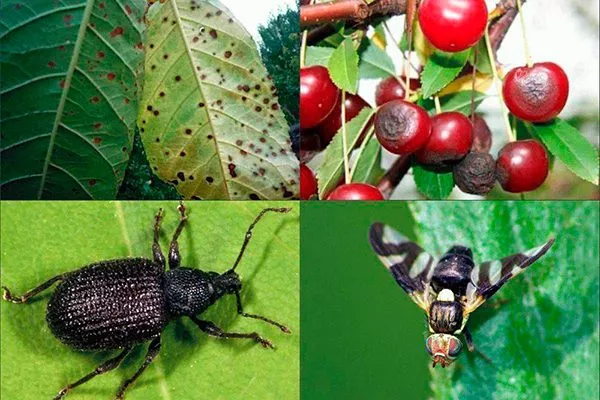
Despite its many benefits, Blackbark is prone to coccomycosis, requiring multiple treatments to prevent the disease from progressing. Furthermore, the trees attract pests, but these are usually easier to control.
Landing features
Prepare the soil for planting in the fall, after the leaves have fallen. This will give the plant enough time to establish roots before the cold weather sets in, and it will grow immediately once the weather warms up. Plants planted in the spring may not survive the short spring and subsequent heat typical of the south, and even increased watering won't help.
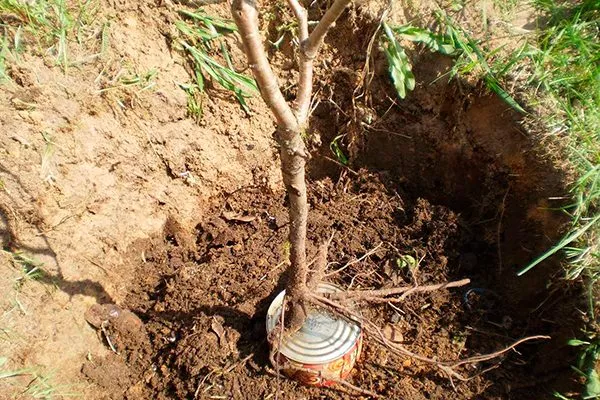
Important points:
- Cherry trees react extremely negatively to high groundwater levels. If the groundwater level is closer than two meters, drainage must be provided or a sloping site selected.
- Cherry trees should not be planted in the south by creating earthen mounds, because strong evaporation of moisture due to high temperatures will lead to a lack of water even with daily watering.
- The cherry tree needs sufficient light and protection from the wind, which can be both summer and winter.
- The soil for cherry trees should be loose and neutral in terms of acidity, even if it is black soil.
- It's recommended to plant pollinating varieties near cherry trees. Other stone fruit trees will also be beneficial. However, walnut trees, oaks, birches, and elms should be planted at a distance, as should black currants, which don't tolerate close proximity to cherries. Bushes with expansive root systems, such as raspberries or sea buckthorn, will compete for nutrients and moisture.
- After the seedling has adapted, it is worth mulching the area around the trunk; this will help protect the roots from overheating and retain moisture.
- It is optimal to plant one-year-old seedlings up to 80-95 cm in height, or two-year-old seedlings up to 100-115 cm in height, since taller plants may be overfed with nitrogen or stimulants.
Subsequent care of the culture
What to pay attention to when growing Blackbark:
- Watering of a young seedling should be abundant during the first autumn and the following season, and then as needed, especially during dry and hot summer periods.
- To maintain the vigor and fertility of cherries, both organic (manure, compost, peat faeces, humus) and mineral fertilizers are used, primarily those with a high content of nitrogen and potassium, and phosphorus is introduced in limited doses, but its role should not be underestimated.
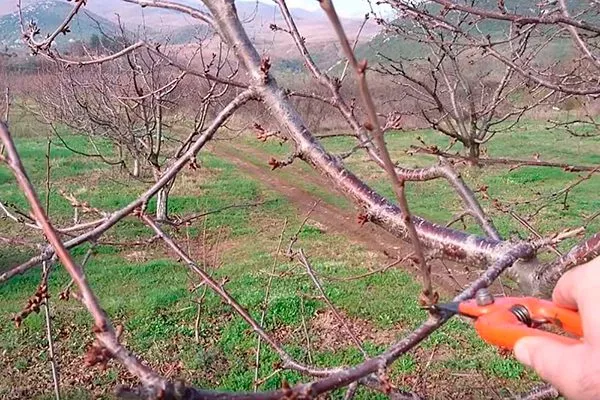
A key aspect of growing Chernokorka cherries is the timely implementation of formative shortening of shoots before the onset of sap flow, as well as sanitary pruning as necessary to prevent crown thickening and, as a result, fungal infections.
Diseases and pests
The most dangerous and common problems for this crop are:
- Coccomycosis. Signs include a yellowing of the foliage and the formation of spots on the leaf blades, which over time grow and develop into holes. To prevent this disease, promptly remove fallen leaves, perform formative and sanitary pruning, and carry out preventative treatments such as spraying.
To treat the disease, apply a copper-containing solution to the tree's green cone after the leaves have fallen. Before frost, spray the plant with a solution of ferrous sulfate. - Moniliosis. Signs include dried-out flowers and stems, deformed fruits, and cracks in the tree bark. Prevention and treatment are identical to those for the previous treatment.
- Cherry aphid. It attacks new leaves and stems, sucking their sap. As a result, all vegetative organs of the plant become deformed and sticky, after which they wither and dry out. To prevent these pests, control anthills, which act as protectors and spreaders of this harmful insect, and regularly prune.
If a large colony is invaded, it is necessary to treat the plant with insecticides. - Cherry fly. Insects attack the berries from the inside. As a result, they soften, begin to rot, and fall off. To prevent this, regularly prune the berries, remove all fallen leaves, and dig around the trunk in the fall. To get rid of them, treat the plant with insecticides.
Harvesting and storage conditions
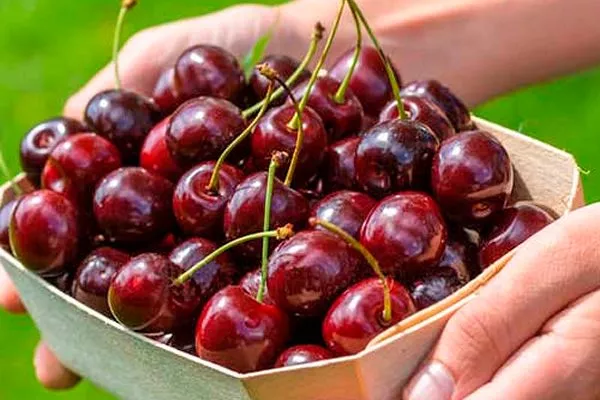
The fruits hold well on the stalk and do not fall off due to strong winds or accidental impacts, so the entire harvest can be picked in one go. Fresh berries can be stored in the refrigerator for up to 7 days.
Features of tree wintering
To increase cherry trees' resistance to winter cold, they are fed with mineral fertilizers starting in the second half of summer. In the fall, they are watered generously, and the tree trunks are mulched with manure, peat, or sawdust. Young trunks are protected from pests and the cold by wrapping them in protective materials, such as straw bundles or thick paper.
Methods of reproduction
Cherry propagation occurs in three ways:
- Seed.
- By vaccination.
- By cuttings.
| Method | Time to first fruiting | Complexity |
|---|---|---|
| Seminal | 5-7 years | Low |
| Graft | 3-4 years | High |
| Cuttings | 4-5 years | Average |
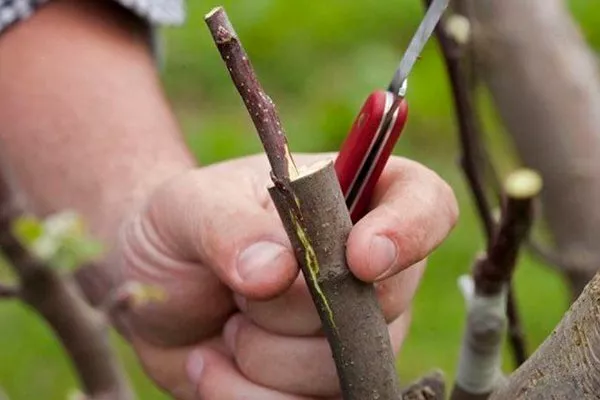
The last two types of propagation require experience and skill from the gardener, because the structure of the felt cherry differs from other stone fruits:
- The living (cambial) layer beneath the tree bark is very thin; it quickly oxidizes when exposed to air or water and dries out easily. The bark is also delicate and sensitive, so working with the shoots requires quick and precise work, using high-quality tools.
- In the Chernokorka cherry, all buds are simple and are divided into two types: they can be either generative (flower) or vegetative (growth), and the type can be accurately determined after blossoming.
Reviews
Chernokorka cherry is a tree-shrub variety that requires only standard care when growing. Don't forget about spring disease prevention, avoid overwatering, and plant the bushes in the sunniest locations.