
Sweet cherry is a fruit crop obtained by cross-pollinating cherries and sweet cherries. Today, thanks to selective breeding, this heat-loving hybrid successfully bears fruit in regions with harsh climates.
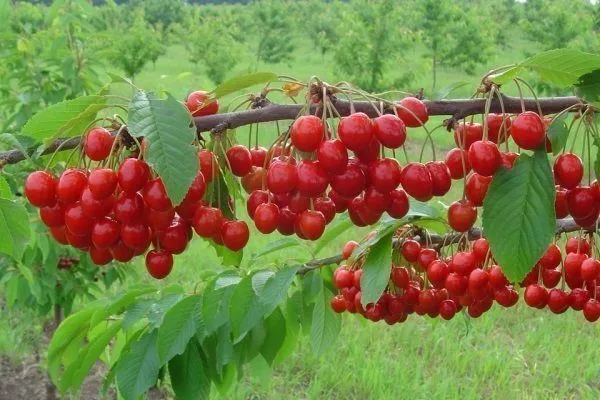
Duke's Features
Cherry and sweet cherry hybrids differ from their “parents” in many ways:
- Unlike their parental pairs, Dukes are self-sterile. They don't thrive on loneliness. To ensure hybrids bear fruit, localized cherry and sweet cherry varieties, known as pollinators, are planted nearby.
- Dukes themselves are ineffective as pollinators.
- In the central zone and in the Central Black Earth region, self-fertile cherries are usually used to pollinate dukes - Lyubskaya, Bulatnikovskaya, Molodezhnaya.
- The best pollinator for dukes is sweet cherry. Recommended pollinators for sweet cherry include 'Donchanka,' 'Priusadebnaya,' and 'Annushka.' The Iput cherry variety is considered ideal for pollination. Criteria for selecting pollinators for cherries
- ✓ Take into account the flowering times of the pollinator and the cherry tree; they must coincide.
- ✓ The distance between the cherry tree and the pollinator should not exceed 50 meters for effective cross-pollination.
You can read about the listed cherry varieties in next article.
- When purchasing Duke saplings, you also purchase a pollinator. A quality pollinator can pollinate more than a third of the tree's flowers—enough to ensure the tree is covered in fruit.
- Compared to cherries, dukes are more winter-hardy. However, they are not as winter-hardy as cherries. For this reason, in northern regions, they grow as bushes, and gardeners cover them for the winter to protect them from extremely low temperatures.
- Dukes are not fed throughout their life. Due to excess nutrients, the tree begins to develop rapidly, which, by expending energy on growth, does not have time to properly strengthen and prepare for winter. This leads to a lack of fruit or the death of the plant.
Another name for the sweet cherry is "duke." In the 17th century, a cherry-sweet cherry hybrid was developed in England and named "May-Duke," which literally means "Duke of May."
Description and characteristics
The cherry tree is small, with a compact crown. The branches, arranged symmetrically, are covered with elongated, glossy leaves. The inflorescences are white, and the fruits are cherry-red.
Duke, being an intermediate crop, combines the characteristics of two plants at once:
- Fruit. In appearance and taste, dukes are closer to cherries, but in size and sugar content they are similar to cherries.
- Leaves. Large, like cherries. Density, color, and shine – like cherries.
Cherry characteristics:
- Average weight of berries is 8-10 g.
- The taste is sweet, with a slight sourness.
- The first fruits appear in the 3rd year after planting.
- Average yield is 10-15 kg per tree per season.
Advantages and disadvantages of a hybrid
Each of the parent trees—cherry and sweet cherry—is good in its own right, but their hybrid also has its merits. The cherry tree's advantages include:
- Disease resistance. They are immune to moniliosis and coccomycosis, diseases that cause many cherry orchards to fail to produce crops for years. Some Duke varieties are almost immune to the cherry blossom fly.
- Excellent taste. Duke fruits have a remarkable flavor—a unique cherry flavor complemented by the sweetness of cherries.
- Large-fruited. The maximum fruit weight reaches 15-20 g.
- Frost resistance. The tree can withstand temperatures down to -24-26°C.
- Low maintenance. Fertilizing is virtually non-existent. Watering becomes minimal with age.
Disadvantages of cherries:
- The buds do not tolerate frost well enough and are prone to freezing.
- Poor transportability.
- Needs regular pruning as it tends to become overgrown.
What types of cherries are there?
The first cherry variety, "Beauty of the North," was bred by I. Michurin. The hybrid was distinguished by its excellent winter hardiness. It produced large, delicate scarlet berries—up to 10 grams—with creamy-yellow flesh. Following Michurin's lead, other breeders continued to develop winter-hardy cherry varieties.
Today, there are dozens of Duke varieties on the market, differing in ripening time, berry size, and frost resistance. Their yields are roughly the same—10-15 kg per tree—and depend primarily on growing conditions.
Let's look at the characteristics of popular Duke varieties in the table below.
Table 1
| Variety | Ripening period | Fruit weight, g | Taste | Peculiarities |
| Spectacular | average | 6-8 | sweet and sour, with a cherry aroma | Good transportability. |
| Excellent Veniaminova | mid-late | 6-8 | sweet and sour, dessert taste | Insufficient winter hardiness of flower buds. |
| Miracle Cherry | early | 9-10 | sweet, with a hint of sourness | The most popular variety. It's most similar to cherry. It requires warmth and is less winter-hardy than other varieties. |
| Night | average | 9-10 | sweet, slightly sour | Drought resistance, high immunity to coccomycosis. |
| Spartan | average | 5-6 | sweet, with a hint of sourness | Above average yield. High winter hardiness. |
| Fesanna | average | 9-10 | sweet, with a hint of sourness - excellent | It is distinguished by the exceptional quality and taste of its fruits – it is a benchmark duke. The tree is highly decorative. |
| Nurse | average | 7-8 | sweet, with a touch of sourness – considered the standard | High winter hardiness – both the tree and flower buds are not afraid of frost. |
The appearance of these cherry varieties can be seen in the photo below:
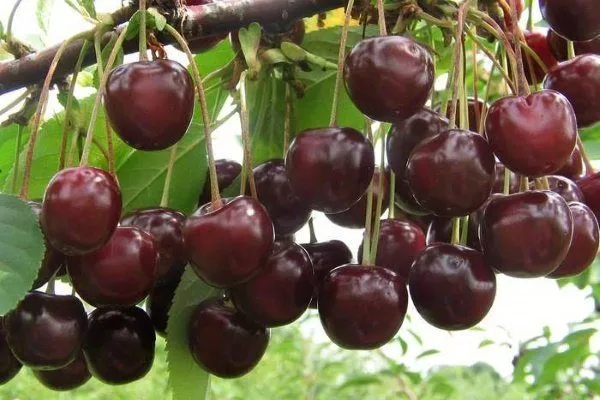
Duke "Spectacular"
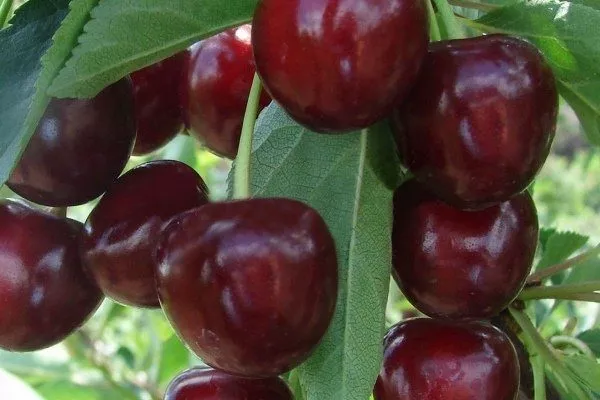
Duke "The Excellent Veniaminova"
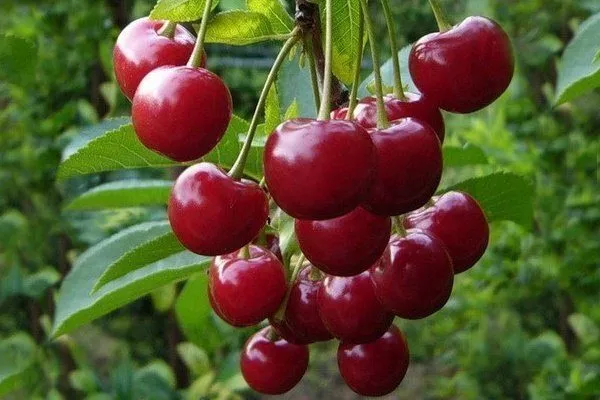
Duke "Miracle Cherry"
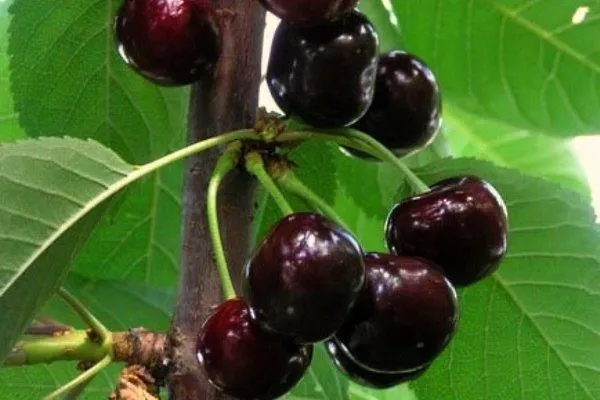
Duke "Night"
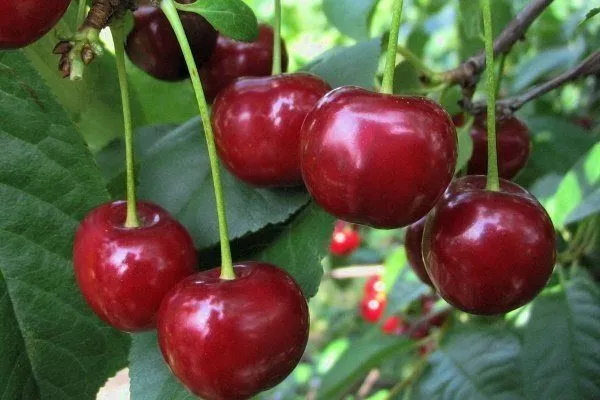
Duke "Spartanka"
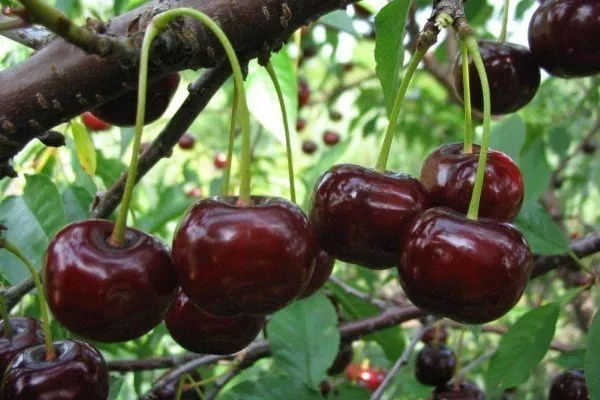
Duke of Fesanna
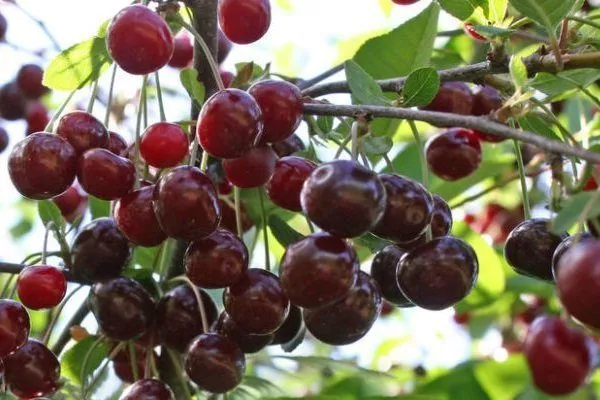
Duke "The Nurse"
Optimal regions for growing
Since breeders developed dozens of winter-hardy cherry varieties, they have become popular in virtually every region of Russia. When choosing a variety for planting, it's important to match its frost resistance—the lowest temperature it can withstand—with the typical winter temperatures in a given region. Depending on climate conditions, the plant's appearance—tree or bush—is determined.
The first sweet cherries didn't thrive even in the temperate climate, but today's varieties—hardy and frost-resistant—have spread far north. Today, duke cherries grow and bear fruit in the Leningrad, Nizhny Novgorod, and Novosibirsk regions, Siberia, and the Far East.
Landing
The key to properly planting cherry seedlings is maintaining proper spacing between adjacent plants and preparing the hole. All other cultivation practices are the same as for other fruit trees.
Choosing a location
When planting dukes, cherries and sweet cherries, it is recommended to select a site that meets the following requirements:
- Full sun all day. No shade, but partial shade is acceptable.
- The soil must be nutritious and avoid swampy areas.
- Elevated areas are preferable; the groundwater level should not be higher than 2 m.
- Protection from drafts and winds.
- There should be cherry and/or sweet cherry trees nearby for pollination.
- The minimum distance to neighboring crops is 5 m.
Dukes shouldn't be planted in lowlands. In winter, cold masses accumulate there, and in summer, the humidity is too high. The best option for dukes is areas with sandy loam soil and indirect, filtered light.
Acidic soils are neutralized with chalk – 1.5 kg per 1 square meter. Heavy clay soils are replaced during planting with fertile soil and sand, mixed in equal parts.
- Check the acidity of the soil; the optimal pH for cherries is 6.0-6.5.
- A month before planting, add 1.5 kg of chalk per 1 sq. m to the soil to neutralize acidity.
- For heavy clay soils, add a 1:1 mixture of topsoil and sand.
When preparing the soil for planting, you should adhere to the fertilizer standards for dukes - they do not like overly nutritious soils.
Purchasing and preparing seedlings
Cherry seedlings are prepared for planting in the same way as any other fruit tree planting material. They are soaked in water for 24 hours before planting, and then all damaged roots are trimmed with pruning shears.
When purchasing Duke seedlings, pay attention to:
- age and time of planting;
- variety;
- pollinators.
Seedlings aged 2-3 years are considered to have the best survival rate. Other recommendations for choosing planting material:
- the presence of a tag indicating the age of the seedling, variety, pollinator varieties and other details of agricultural technology;
- trunk – straight;
- the root system is developed, without signs of disease;
- the shoots are evenly colored, without gum or damage;
- the height of the main trunk is about 60 cm, the branches are shortened by a third - such signs indicate that the planting material has been properly prepared;
- The variety must be zoned in the region and suited to specific climatic conditions.
The health of the seedling roots is indicated by the white color of their cuts.
Duke seedlings should be purchased from nurseries or specialized farms that professionally grow fruit trees.
Planting in the ground
It's best to plant Dukes in early spring, once the soil has warmed to the right temperature. If you plant the seedlings in the fall, they may die without taking root. Fall planting is only suitable for regions with warm climates.
Features of planting Duke seedlings:
- The hole is prepared a month before planting.
- The distance between adjacent holes – if two or more cherry seedlings are being planted – is 4-5 m. This is sufficient so that the trees, when they become adults, do not interfere with each other.
- The size of the hole should be such that the root system fits freely into it.
- A drainage layer must be placed at the bottom of the hole to prevent water stagnation near the root system. A drainage layer of stones or broken bricks is used.
- A manure-soil mixture is poured onto the drainage. This mixture includes a fertile soil layer.
- The soil obtained from digging the hole is mixed with superphosphate (300-400 g), potassium sulfate (250-300 g) and ash (2-3 cups).
- If planting is carried out in low-fertility, depleted soil, compost or humus is added to the hole - one bucket.
- Place the seedling in the hole, spreading its roots. Cover it with soil so that the root collar and the ground surface are level. Avoid burying the seedling too deeply, as this can cause rot, which will kill the young tree.
- When the seedling is planted, water is poured under the root - 2 buckets.
Cherry tree care
Caring for cherry and sweet cherry hybrids is straightforward, even for novice gardeners. With minimal time spent on this undemanding tree, you can reap bountiful harvests of delicious berries. Unlike other fruit trees, Dukes don't require fertilizing, making care even easier.
Regularity of watering
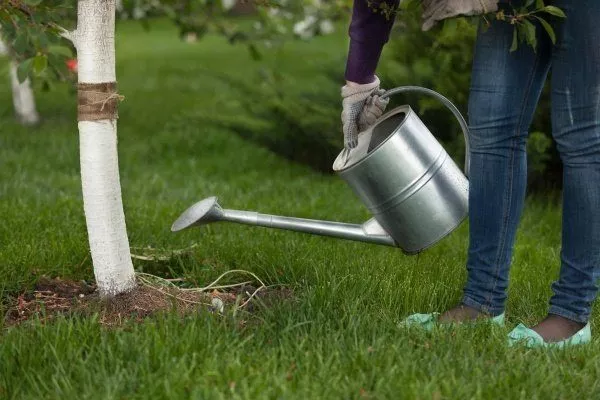
It is recommended to water newly planted young trees weekly. Water generously, using settled, not cold water. The older the tree gets, the less frequently it needs to be watered. Watering is essential for dukes, regardless of age. A mature tree requires approximately 20-40 liters of water. During periods of prolonged drought, the amount should be increased.
Like all stone fruits, cherries do not like frequent and abundant watering. Overwatering leads to root rot and cracking of the bark of the trunk and skeletal branches. Trees require more watering until they are five years old, after which the frequency of watering is reduced, depending on the weather.
The need for digging and mulching
To ensure the root system feels comfortable, two tillings per season are sufficient. Tilling oxygenates the soil and removes weeds. It is recommended to loosen the soil around the tree trunks after watering. Gardeners often sow green manure in their gardens to fertilize the soil. This is acceptable for duke berries, but with one condition: the trunk area must be under bare fallow.
To prevent the tree roots from overheating and to prevent moisture from evaporating from the soil too quickly, the trunk circle mulchThe recommended mulch is hay. Do not spread mulch on dry soil.
Top dressing
A major advantage of Dukes is that they require no additional fertilizing. Fertilizer is applied only when planting the seedling. Subsequently, the gardener no longer needs to fertilize them—Dukes thrive and produce fruit better in medium-nutrient soils.
Pruning and crown shaping
The first time the cherry tree is pruned is immediately after planting. The distance from the ground to the pruning point is 0.6 m. After trimming the top, the skeletal branches are trimmed. On two-year-old seedlings, the side branches are trimmed back by 1/3.
Until there's a harvest, the young trees grow vigorously. Once the first berries appear, growth slows. The crowns are thinned out promptly, as overcrowding leads to reduced yields. When pruning branches, consider the angle at which they extend from the trunk—the sharper the angle, the smaller the end that needs to be pruned.
Old trees undergo rejuvenation pruning every 5 years – shoots are removed from the entire crown – down to the level of four-year-old trees.
Diseases and pests
Among the fungal diseases that threaten dukes, the most dangerous and widespread ones are listed in Table 2.
Table 2
| Pests and diseases | Symptoms of damage | Control measures |
| Fruit rot | The fruits have characteristic rotten spots. This develops when the berry's surface is damaged, for example, after hail or due to pest damage. | Spray with fungicides 1-4 times over 7-10 days. For example, Topaz, Previkur, Skor, and others. Alternatively, use folk remedies such as ash, baking soda, garlic infusion, etc. |
| Powdery mildew | A white coating appears on the leaves; they become deformed, change color, and then fall off. | Prevent fruit damage by performing preventative spraying with Fitosporin-M. An iodine solution of 10 ml per 10 liters of water is also effective. Spray the entire tree, repeating the procedure every 3 days. |
| Leaf roller | Chewed and curled leaves. | They are treated with biological insecticides (Bitoxibacillin, Lepidocide) or chemicals (Ditox, Karbofos, Fufanon). |
| Cherry fly | Larvae develop in the fruits and eat away the pulp. | Treatment with universal chemicals (Sigmaen, Fufanon, and others) or folk remedies. They are repelled with herbal plants, sprayed with fragrant infusions, and caught with sticky traps. |
Preparing for winter
Modern Duke varieties are quite frost-hardy, so they don't require winter insulation—mulching the area around the trunk is sufficient. Hay or fallen leaves can be used as mulch. Varieties that are not particularly frost-hardy, grown in regions with harsh winters, are best insulated. Seedlings under five years of age should be insulated for the winter, regardless of the growing region.
Insulation of dukes:
- the crown is covered with thick and dense polyethylene;
- The tree trunk is covered with snow.
Many gardeners wrap the trunks of fruit trees, including Dukes, in burlap. Or they line them with spruce branches. This covering method achieves two goals: protecting the tree from frost and protecting it from rodents. Hares are a terrible threat to young trees, and the scent of pine needles effectively repels them.
Harvesting and storage
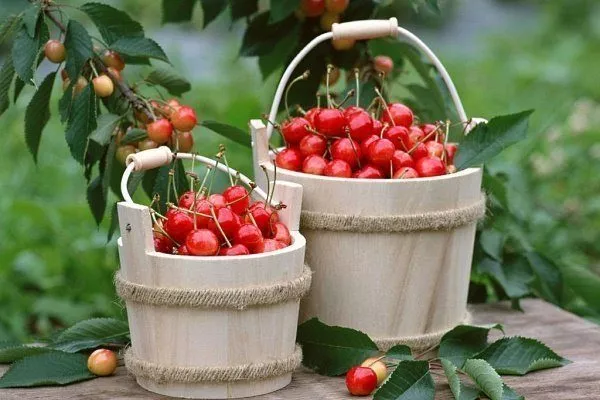
Cherries are ready to harvest in June or July, depending on the region's climate and the ripening time of the particular variety. The harsher the region's climate, the later the harvest.
The berries are picked without separating them from their stems—this prolongs their shelf life and allows for easy transportation. Duke berries are not very transportable, so storing them is not recommended—it's best to process them as soon as possible.
If you can't process the cherries right away, you can extend their life by storing them in the refrigerator. There's no need to wash them before storing them. Don't cover the containers. Cherries should be stored for no longer than two weeks. They can be used to make candied fruit, pastilles, jam, and liqueurs. They can also be dried and frozen.
What are the benefits of cherries?
In addition to their excellent taste, cherry fruits have several important beneficial properties, they are;
- have an antibacterial effect;
- have a beneficial effect on the gastrointestinal tract;
- prevent the growth of malignant neoplasms.
Gardeners' reviews
When deciding whether to plant cherries in your garden, and if so, which variety to choose, it's important to read reviews—of hybrids in general, and then of individual varieties.
Duke berries are a great opportunity to experiment and add variety to your garden. Thanks to new frost-hardy varieties, dukes are confidently making their way north, becoming accessible to gardeners in harsh climates. This easy-to-grow and hardy hybrid with abundant harvests is a coveted addition to any garden.