
The Bulatnikovskaya cherry is suitable for both novice and experienced gardeners. Given its numerous positive qualities, including strong immunity and excellent productivity, this variety is a good choice for planting even in small spaces. Proper care and minimal maintenance guarantee success and bountiful harvests.
Who developed the variety and when?
It was developed by Russian breeders at the All-Russian Research Institute of Horticulture and Nursery in the 1990s. It was included in the State Register in 2001. Its development was supported by specialists such as Kh.K. Yenikeev, S.N. Satarova, A.M. Mikheev, and other scientists.
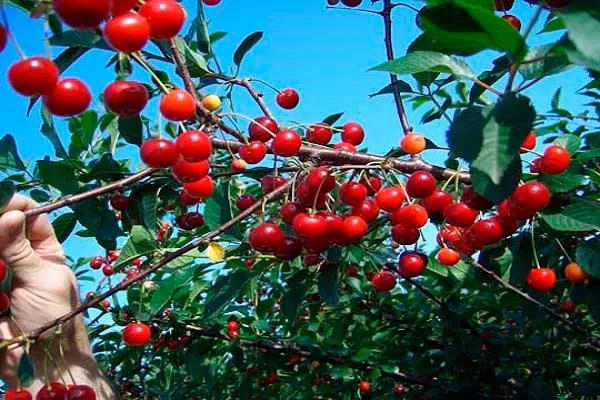
The variety is widely cultivated in the Central region of the country.
The appearance of the tree
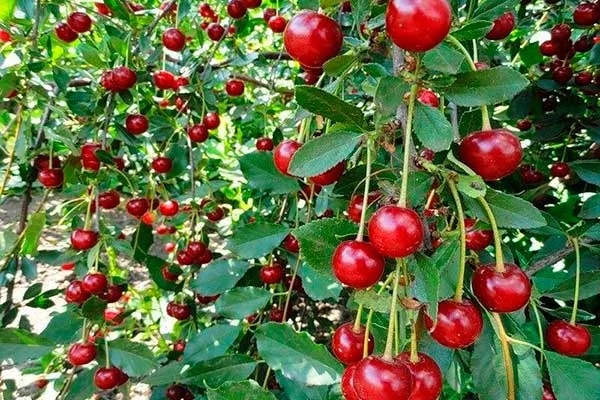
The plant is compact, reaching a height of 2.5-3 m. It has a slightly raised, rounded crown and strong, straight, brownish shoots with a small number of lenticels.
Other features:
- The leaves are medium-thick, obovate, dark emerald in color, and have a matte, slightly wrinkled surface.
- The root system is well developed.
- Flowering begins early, in early May, and lasts 10-14 days. During this time, small white flowers bloom on the tree, gathered in clusters of 4-6.
- The berries are formed mainly on bouquet branches.
Fruits and their taste characteristics
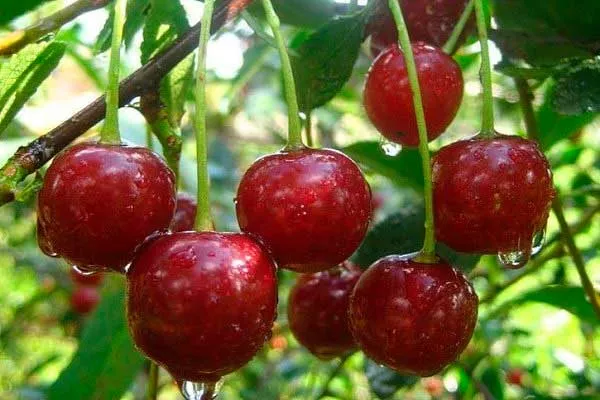
The cherries are medium-sized, weighing approximately 3-3.2 g. The drupes are round or slightly flattened with smooth, shiny skin of medium density, which is elastic and not tough.
Distinguishing features:
- The color is deep red, sometimes with a red-wine tint, without inclusions.
- The pulp is dense, fleshy, slightly fibrous, very juicy and red in color.
- The stone is medium in size and does not separate easily.
- The berries are held on short stalks, but when picked they come off with a small amount of pulp.
Self-fertility and pollinators
It is a self-pollinating variety. The tree does not require cross-pollination to bear fruit, making it suitable for growing in isolated plots.
Ripening period and yield
It is distinguished by its early fruiting—the first berries are harvested as early as the third or fourth year after planting. It bears fruit regularly, without interruption, with productivity increasing annually. This variety is mid-season, with harvesting beginning in the second half of July. The berries ripen unevenly, so harvesting occurs in two or three stages.
The yield is high – one adult tree produces an average of 10-12 kg per season.
Cherries tolerate transportation over short distances well and retain their commercial qualities and taste for a certain period of time.
Features of cultivation
Following planting and care guidelines will help you grow a healthy tree that can withstand frost and disease. It's important to follow certain recommendations.
Choosing a location
Choose a sunny, draft-free location. It's important to keep the groundwater level at least 3-4 meters above the surface. Stagnant water near the plant is unacceptable, as it can lead to root rot.
- ✓ The optimal soil pH for Bulatnikovskaya cherry trees should be between 6.5 and 7.0. Testing the soil's acidity before planting is essential.
- ✓ The distance between seedlings should be at least 3 meters to ensure sufficient space for the growth of the root system and crown.
Landing
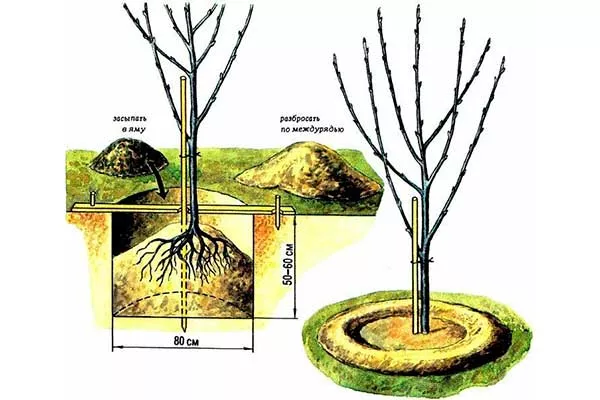
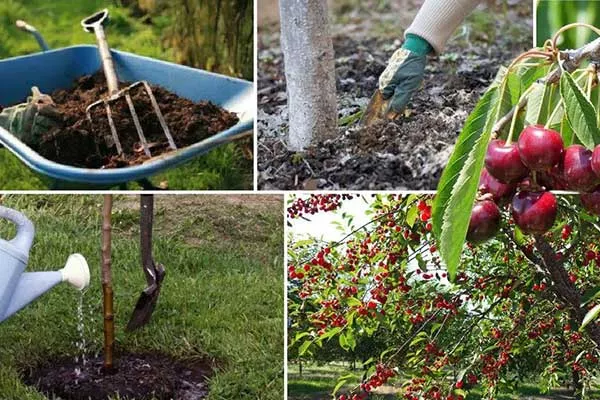
Two to three weeks before planting, dig a hole approximately 60-80 cm in diameter and 50-60 cm deep. Remove the topsoil and mix it with humus or compost (1:1), adding 200-300 g of superphosphate and 50-100 g of potassium fertilizer. If the soil is acidic, add 300 g of lime.
If there is a risk of stagnant water at the planting site, place a 10-15 cm thick drainage layer of crushed stone or broken brick at the bottom of the hole.
Step-by-step algorithm:
- Form a mound of soil in the center of the hole using the prepared fertilized mixture. Drive a wooden stake 1.2 m high into the hole.
- Place the seedling, spreading out the roots. Ensure the root collar (the transition from the roots to the trunk) is 5-7 cm above the soil level.
- Fill the hole with the remaining fertile mixture, carefully compacting the soil around the seedling to avoid air pockets.
- Make a depression around the trunk for water and water the plant with 20-30 liters of water so that the soil settles firmly.
- After the liquid has been absorbed, mulch the tree trunk circle with peat, humus or dry grass to retain moisture.
- Tie the seedling to a stake to protect it from the wind.
Care
Half of success depends on caring for the plant. By following basic agricultural practices, you can grow a strong and healthy tree that will bear fruit for 10-15 years.
Watering
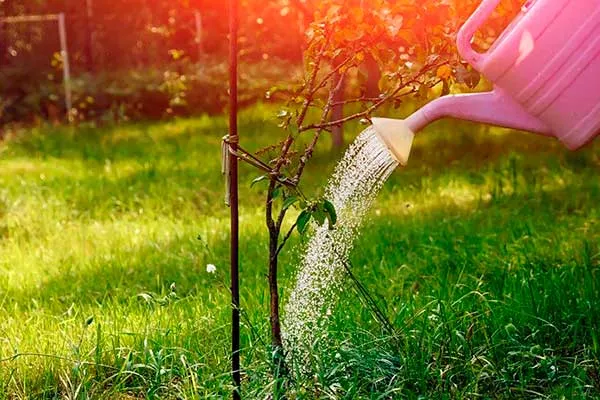
Water the plant when the top layer of soil dries out. Initially, water the roots every 1-2 weeks, depending on weather conditions. Later, reduce the frequency of watering but increase the amount of water. To conserve moisture, loosen and mulch the soil around the tree trunk.
Trimming
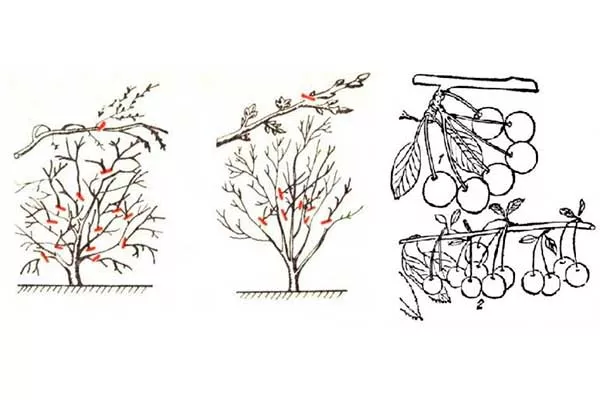
The Bulatnikovskaya cherry variety doesn't require formative pruning, but it does require sanitary pruning. Remove dead, deformed, or diseased branches. This promotes normal growth.
Top dressing
For successful growth and a consistent harvest, apply fertilizer regularly. Recommendations for timing and types of fertilizer:
- In spring (before flowering). Apply nitrogen fertilizers to stimulate growth. Use ammonium nitrate (20-30 g per 1 sq. m) or urea (30-40 g).
- After flowering. Use complex mineral fertilizers containing phosphorus and potassium to improve fruit set. Superphosphate (50-60 g) and potassium salt (30-40 g) are suitable.
- In summer (after fruiting). Use organic compounds, such as mullein or chicken manure infusion (1:10). This will help restore the plant's strength.
- In autumn. Fertilizers are important for preparing the tree for winter. Choose superphosphate (60-70 g) and potassium mixtures (30-40 g).
Diseases and pests
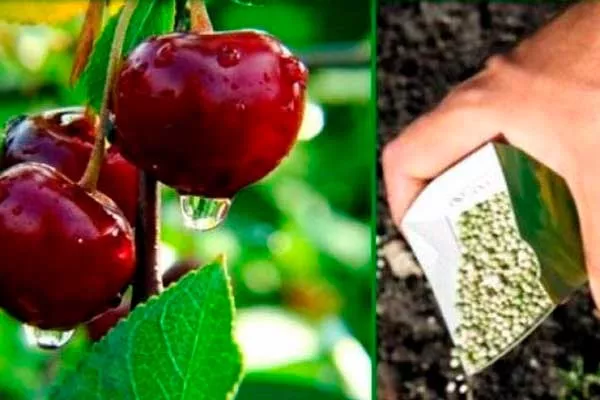
The crop is almost immune to coccomycosis, but can be affected by moniliosis. Treat any specimens showing signs of the disease with Bordeaux mixture or Horus, Cytoflavin, or Fitosporin-M solutions.
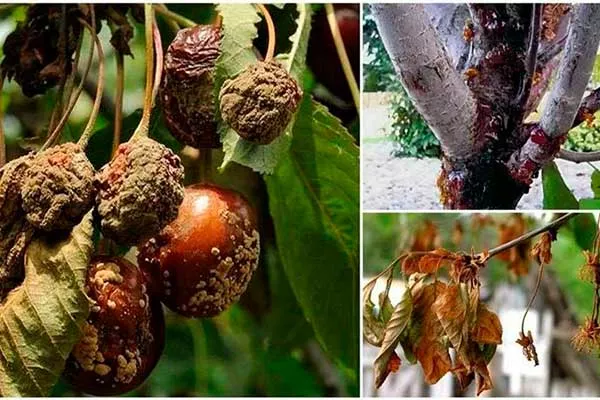
To prevent diseases, take preventive measures:
- Treat all pruning cuts with garden pitch.
- After the leaves have fallen, whitewash the trunk.
- Remove fallen berries in a timely manner.
- Spray trees with copper sulfate.
Winter hardiness
This variety is frost-resistant enough for the Central Russian region. The plants don't require additional insulation, but mulch the area around the trunk in late autumn.
Positive and negative qualities
Bulatnikovskaya cherry is highly valued for its excellent taste and abundant harvests.
Reviews
The Bulatnikovskaya cherry is one of the most popular varieties developed by Russian breeders. This cultivar combines excellent flavor and good productivity. Its disease resistance, frost hardiness, and ease of care make it an ideal choice for many regions of Russia. Proper and timely care is key.