
Brusnitsyna is the name of a bush cherry variety characterized by a mid-early ripening period. It is very popular among gardeners in the northern regions, and is most common in the Urals. It is prized for its low maintenance and increased frost resistance, its ornamental appearance, its abundant fruit production, and the remarkable flavor of its berries.
History of selection
The variety was developed by folk craftsmen, presumably amateur gardeners from the Urals. It is not listed in the Russian Federation State Register.
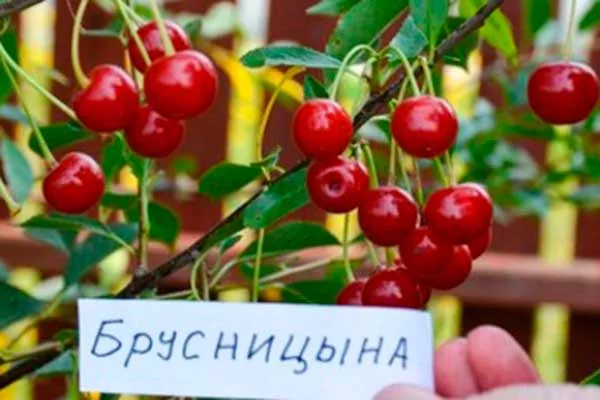
The appearance of the tree
This fruit tree is characterized by compact growth, a well-developed root system, and rapid growth. It has the appearance of a multi-stemmed bush, distinguished by its appearance:
- spreading;
- "height" - 1.8-2 m;
- number of trunks (skeletal branches) - 6-8 pcs.;
- an abundance of flexible and strong shoots extending from each skeletal branch and growing up to 30-35 cm in length;
- pyramidal crown shape, very dense, with dense foliage;
- leaves: pointed-oval, bright green, with a shiny surface;
- simple umbrella-shaped inflorescences, formed from 2-3 large white flowers, very fragrant.
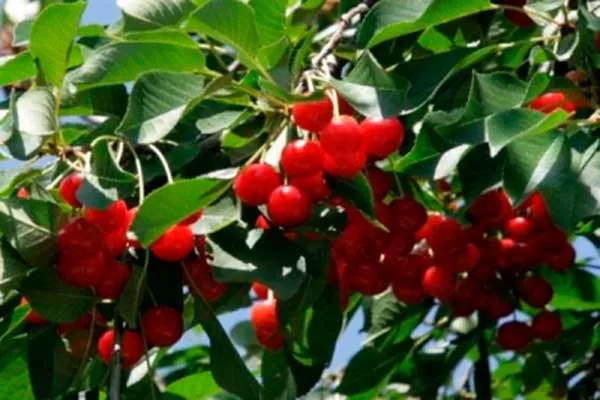
Fruits and their taste characteristics
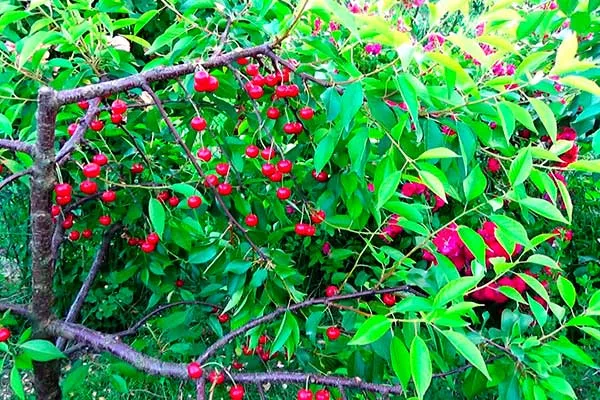
Brusnitsyna's harvest delights gardeners with its attractive appearance and excellent consumer qualities. Its fruits possess the following characteristics:
- weight—3.5-6 g;
- round shape;
- ideal smoothness of the skin, dense, glossy;
- its dark red color is uniform, without inclusions;
- fleshy pulp, distinguished by its fibrous, non-coarse texture, very juicy and aromatic;
- a stone that easily separates from the pulp.
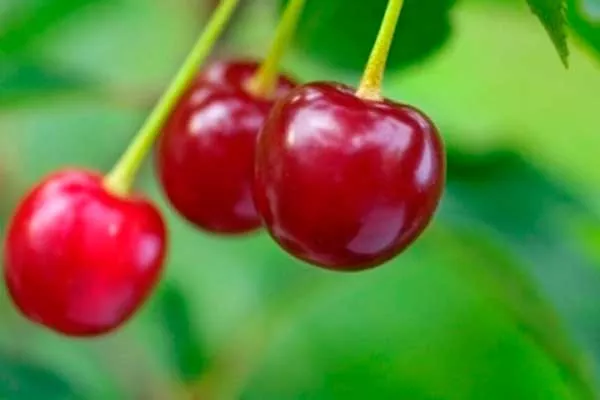
Thanks to their dense skin, the berries are not prone to cracking during ripening. They are removed from the stem with a dry finish, while the fruit remains intact.
Brusnitsyna cherries have a pleasant, refreshing flavor. They harmoniously combine sweetness with a distinct tartness. The pulp contains at least 15% sugar.
Characteristics
The variety has many excellent characteristics, which makes it so popular among gardeners in the northern part of the country.
Drought resistance, winter hardiness
The bush cherry is a hardy and undemanding plant. It can easily withstand the adverse climatic and weather conditions of its growing areas:
- severe frosts down to -40°C;
- drought.
Thanks to its vitality and resilience, the fruit crop is perfectly suited for cultivation in regions with cold winters and short summers.
Pollination, flowering period and ripening time
Brusnitsyna is a partially self-fertile cherry variety. It produces 40% of its yield on its own (without cross-pollination). Its productivity is enhanced by nearby donor trees of the following varieties:
- Lyubskoy;
- Lighthouse;
- Ashinskaya;
- Novels.
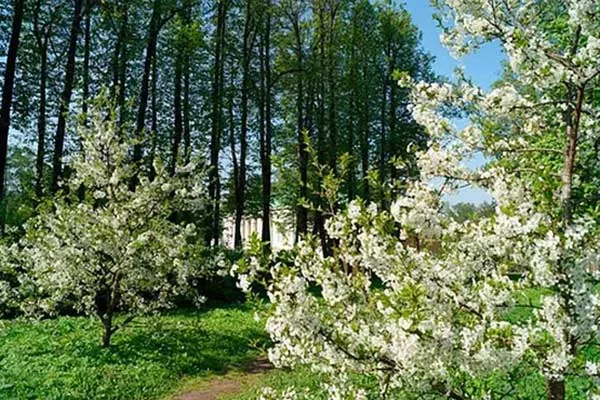
Bush cherry blossoms in May. The harvest begins after other garden varieties have finished fruiting. The berries ripen uniformly, beginning in the second half of July or early August.
Productivity, fruiting
Brusnitsyna trees are early maturing, producing their first berries in their second or third year. Gardeners can harvest 20 kg of fruit per plant.
Application of berries
Cherry of this variety is universal in its purpose:
- it is eaten fresh;
- added to summer fruit desserts;
- processed into juice;
- they make wine, liqueur, cordial, and liqueur (cherry liqueur);
- used for cooking compote, jelly, jam, confiture, syrup, marmalade and jelly;
- they make filling from it for pies and other pastry products made from dough;
- canned;
- dry;
- freeze.
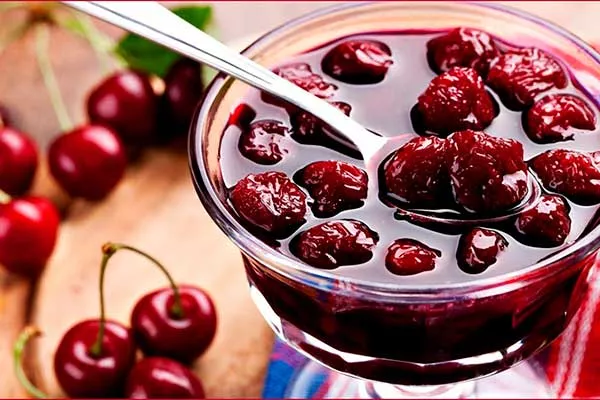
The berries are characterized by excellent shelf life (they can be stored in a cool place for up to 20 days) and transportability without significant losses.
Resistance to diseases and pests
This cherry cultivar is renowned for its robust health. Its trees rarely suffer from diseases or pests, and are not prone to damping-off.
Their incidence of fruit rot or coccomycosis is observed only when grown in flooded areas or during the season of prolonged rains.
Landing features
Plant Brusnitsyna cherries in your garden, following all the rules and advice from experienced gardeners. If done correctly, the seedling will quickly establish itself in its new location, grow, and delight you with its first berries in a couple of years.
Recommended timeframes
You can plant fruit crops on your garden plot at different times of the year:
- in spring;
- in the fall.
Experienced gardeners consider spring to be the best time to carry out this work in northern regions. Plant the tree after the air and soil have warmed up well. The optimal time is the second half of April, before the buds open. Over the summer, the seedling will take root and become strong enough for winter.
- ✓ Soil acidity levels should be between pH 6.0-6.5 for optimal growth.
- ✓ The depth of the fertile layer is at least 40 cm to provide the root system with the necessary nutrients.
Choosing a suitable location
To grow Brusnitsyna in your garden, select a plot with the following characteristics:
- sunny (if you plan to grow the crop in the northern regions) or shaded (in the southern regions);
- protected from gusts of wind and drafts;
- located in the southwestern sector of the garden;
- located near a wooden structure that will protect the plant from the icy wind in winter;
- elevated (you can’t grow cherries in a swampy lowland, they will get sick and wither there);
- with a groundwater level from 1.6 m to 2 m;
- with fertile, loose soil (sandy loam, loamy), well-drained, mixed with sand, non-acidic.
What crops can and cannot be planted next to cherries?
To ensure your planted cherry tree enjoys robust health and abundant harvests, it needs the right "neighbors." Nearby garden crops, including:
- hawthorn;
- cherries;
- honeysuckle;
- currants.
Avoid placing Brusnitsyna near tall apple trees, apricots, lindens, and spruces. Raspberries, gooseberries, and nightshades are the least favorable companions. Placing them near cherries puts them at risk of fungal attack.
Landing algorithm
Use a 1-2 year-old, strong, healthy seedling with well-developed roots. Its optimal height is 0.6-0.8 m. Soak its base in water for 10 hours.
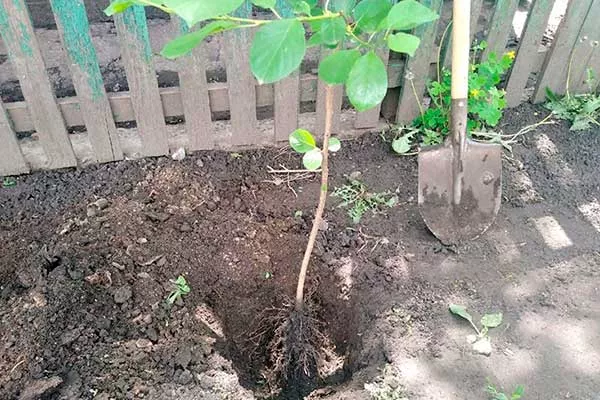
Planting bush cherry trees should be done step by step:
- Dig a hole measuring 60 x 60-80 cm (depth/diameter). If you're planting multiple plants, space the holes 3 m apart.
- Mix some of the soil removed from the hole with sand, compost, wood ash, and mineral fertilizers containing potassium and phosphorus.
- Drive a wooden stake into the center of the hole. This will serve as a support for the seedling.
- Pour the prepared nutrient soil mixture into the bottom of the hole, forming a mound.
- Water the plant with 20 liters of water. Wait until the soil is completely absorbed.
- Place the seedling at the top of the mound and spread out its roots.
- Cover them with soil, making sure the root collar is level with the ground.
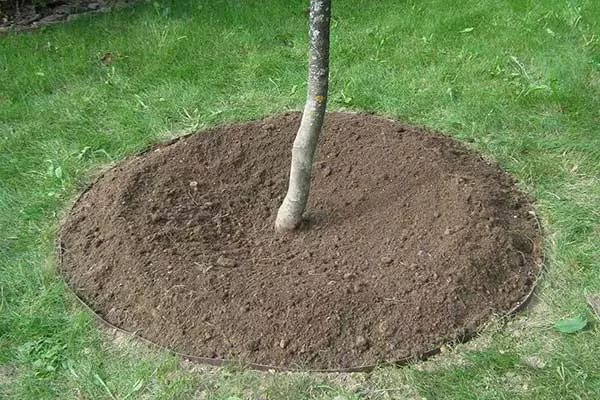
- Compact the soil under the seedling. Form a small depression around the trunk, 30 cm away from the trunk.
- Tie the plant to the support.
Don't water the Brusnitsyna cherry tree immediately after planting. Wait 3 days. After watering, cover the area around the tree's trunk with peat.
Subsequent care of the culture
Provide your fruit crop with proper care to ensure a consistently high yield. Regularly and promptly carry out the following activities:
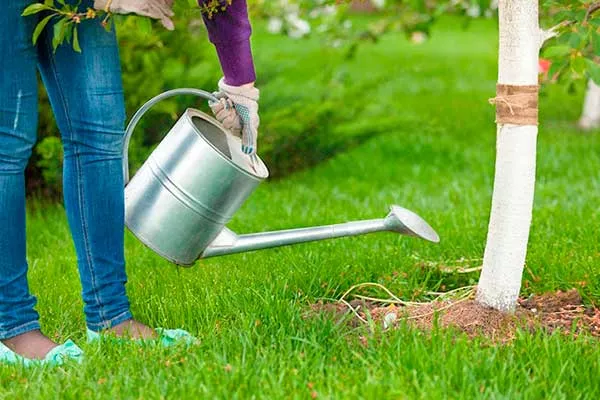
- WateringAlthough bush cherry is drought-resistant, it produces its best fruit in moderately moist soil:
- Be sure to water your annual tree-shrub at least once or twice a week on hot days and during extended periods without rain. Use 30 to 60 liters of water per plant, depending on its size. Don't overdo it. Stagnant moisture is harmful to cherry trees.
- If there's no precipitation in June and July, water the tree frequently. This is necessary for fruit ripening.
- In August, avoid watering fruit trees if there has been rainfall during the month. Otherwise, active shoot growth will begin, weakening the plant before winter.

- Loosening the soilLoosen the soil under the plant shallowly. Combine this with weeding.
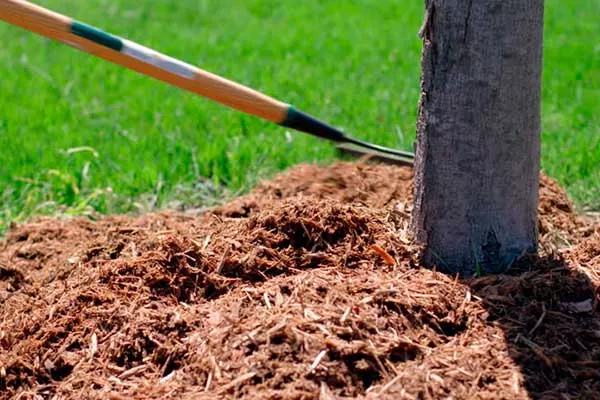
- Mulching the soil in the tree trunk circleThis measure helps conserve soil moisture. Use organic matter as mulch.
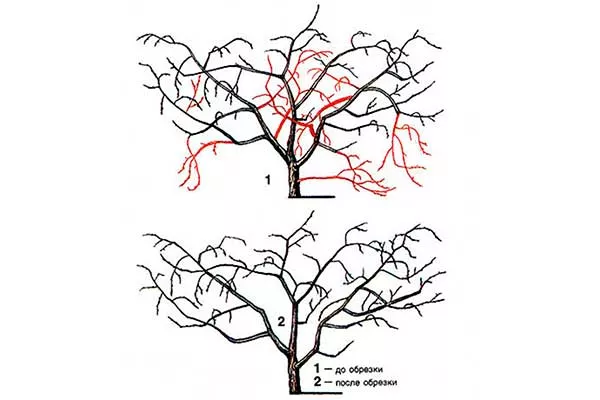
- Trimming. Brusnitsyna cherry requires sanitary pruning. In the spring, remove dead, diseased, frost-damaged, deformed, or broken shoots. In the fall, remove root suckers.
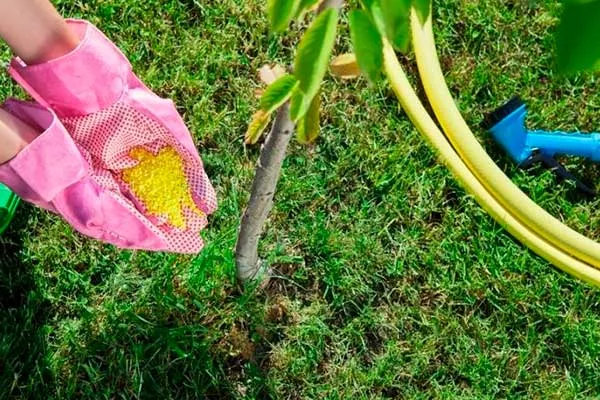
- FertilizationFertilize the bush starting in its second year. The nutrients added to the hole at planting are sufficient for a couple of years. Continue fertilizing the garden plant before flowering and during fruiting.
Use organic matter or ready-made mineral fertilizers. Cherry trees respond especially well to feeding with bird droppings, cow manure, and compost.
- Frost protectionBefore winter, insulate your cherry tree using spruce branches. Cover the root area with a thick layer of mulch.
Diseases and pests, methods of control and prevention
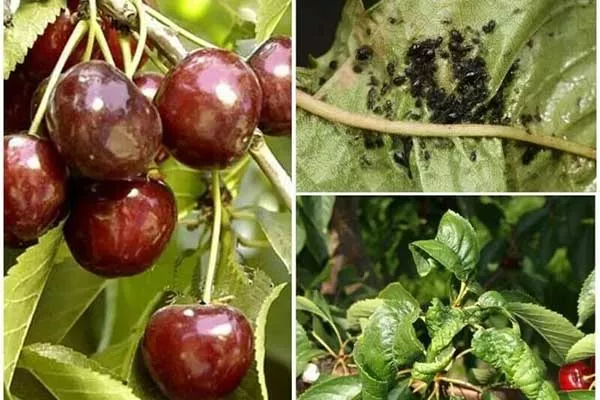
The Brusnitsyna variety is renowned for its robust immunity. Its trees are only susceptible to fungal diseases (coccomycosis, moniliosis) if exposed to excessive soil and air humidity for long periods. Pests that can pose a threat include cherry flies, flea beetles, and mites.
The best prevention of crop diseases is preventive treatments:
- early spring spraying with Skor;
- post-flowering treatment with Horus;
- use of Bordeaux mixture (concentration - 3%) before buds appear and after harvesting.
If a fungal infection has affected a bush cherry tree, remove the diseased branches, clean the wounds, and coat them with garden pitch. Then treat the tree with Bordeaux mixture or a fungicide such as Abiga-Peak or Topsin-M. Several sprayings will be required, spaced two weeks apart.
To prevent insect infestations, take preventative measures:
- remove fallen leaves from the area;
- cut off damaged shoots;
- remove plant debris from the garden area and burn it;
- loosen the soil under the cherry tree by turning over the soil layer (its thickness is up to 6-7 cm);
- Don't forget to inspect your plants periodically so that when the first signs of parasitic infestation are detected, you can apply an insecticide (Actellic, Iskra, Molniya) or a biological product like Fufanon or Fitoverm.
Positive and negative qualities
The Brusnitsyna bush cherry is popular among Ural and Siberian gardeners due to its many excellent characteristics:
Reviews
The Brusnitsyna cherry is an excellent variety bred by local artisans. It is ideal for growing in the northern regions of Russia, particularly the Urals and Siberia. It is prized for its hardiness, ease of care, excellent winter hardiness, and high yield. The fruits have a classic sweet and sour flavor and are excellent for fresh consumption and processing.