
The Ashinskaya cherry is a relatively young variety with excellent characteristics. Its appeal stems from its low maintenance requirements and ease of care. Its consistent, abundant annual fruiting and long lifespan make it a popular choice for gardens.
History of selection
This spontaneous hybrid between garden cherry and steppe cherry (bush cherry) takes its name from the district center of Asha in the Chelyabinsk region, where the selected material for breeding was collected. The authors are Russian scientists from the South Ural Research Institute of Fruit, Vegetable, and Potato Growing (SURIPP) in Chelyabinsk. Since 2002, it has been included in the State Register for the Ural region.
What kind of hybrid variety is this?
The hybrid is high-yielding and highly frost-resistant, making it ideal for cultivation in various regions of Russia.
Tree
A medium-sized, columnar tree reaching 2.5-3 m in height. Characteristic features:
- The culture is characterized by rapid growth, strong immunity and the ability to quickly recover.
- The crown is of medium density, abundantly covered with oblong dark green leaves with a slight sheen.
- The erect shoots are ash-brown in color and have a smooth surface.
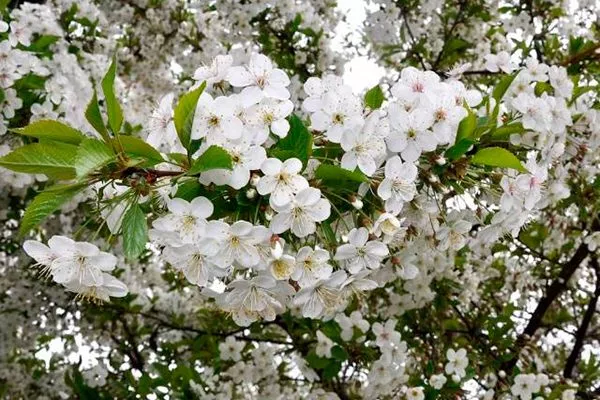
The flowers are small, emit a pleasant aroma, and form clusters of five each.
Fruit
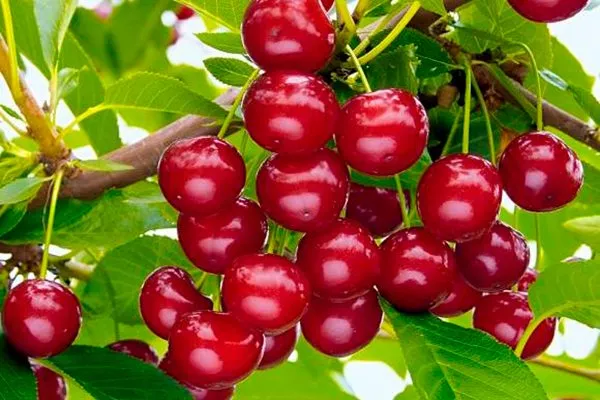
Medium-sized, each weighing approximately 4 grams. Distinguishing features of the berries:
- The shape is round-oval with a rounded tip.
- They are colored dark burgundy and have a weakly defined ventral suture.
- The pulp is dark red in color and medium in density, and the juice that comes out of ripe berries is red in color.
- They are distinguished by their excellent taste, where sweetness and sourness are harmoniously combined.
- Each berry contains a seed that is easily separated from the tender pulp.
- The composition includes 16.3% dry matter, 11.7% sugars and 1.8% free acids.
Characteristics of the variety
The Ashinskaya cherry is a winter-hardy variety that complements late-ripening harvests. The average tree lifespan is 35-40 years. This hybrid is ideal for both commercial cultivation and home gardening.
- ✓ Ability to quickly recover from frost without loss of yield.
- ✓ Partial self-fertility, which allows you to get a harvest even without pollinators, although in smaller quantities.
Drought resistance and winter hardiness
From its ancestor, the steppe cherry, the Ashinskaya variety inherited remarkable drought and frost resistance. It has moderate winter hardiness, withstanding temperatures down to -42°C.
The generative buds exhibit moderate frost resistance, while the flowers are more frost-resistant. If damaged by severe frost, the flowers recover quickly with virtually no loss in yield.
Pollination, flowering period and ripening time
It is partially self-fertile, and in the absence of pollinators, 20-50% of flower buds are fertilized. To increase yield, it is recommended to plant other stone fruit plants with similar flowering periods nearby. The buds open in the last ten days of May.
Productivity, fruiting
Fruiting begins in the fourth year and remains an annual occurrence for 30 years or more. The harvest ripens almost simultaneously in the last ten days of July and early August. The expected yield from a single mature tree ranges from 8-10 kg.
Application of berries
Excellent for processing. The berries are successfully used in making juices, preserves, compotes, and jams. They are also used in fruit salads and various baked goods.
Resistance to diseases and pests
It exhibits high resistance to coccomycosis. No other diseases or insect attacks have been observed.
Landing features
When choosing a site, it's important to consider the specific characteristics of the crop. Follow these guidelines:
- Recommended timeframes. The optimal time for planting is spring, when the soil is fully warmed but the buds have not yet opened. In central Russia, this usually occurs in April. Later planting is not recommended due to poorer seedling survival.
Avoid fall planting. It's best to bury the seedlings on the south side of the house or fence until spring, protecting them from frost. - Choosing a suitable location. When choosing a site, consider the mature tree's size and lifespan. Transplanting a mature tree to another location can be difficult and likely ineffective.
It's preferable to plant on the south side of buildings and fences, as the plant dislikes cold winds. The soil in the planting area should be neutral and not too heavy. - Neighborhood with other plants. Not all crops combine well. Stone fruit trees (cherry, sweet cherry, and plum) are ideal companions for Ashinskaya. They should be spaced at least 3 meters apart to prevent their crowns from intertwining.
Undesirable neighbors include oak, linden, maple, and some shrubs (gooseberry, sea buckthorn, raspberry, and light-loving varieties of currant). - Selection and preparation of planting material. Cuttings for future seedlings are best collected in early summer on a cloudy day, in the morning or evening. The cuttings should be 30-35 cm long. After dipping their ends 1.25-2 cm into a growth stimulator, plant them in nutrient-rich soil and cover with plastic wrap.
After two weeks, adventitious roots should appear, and after a month, difficult-to-root roots should appear.
- ✓ The seedling should be planted at a depth such that the root collar is 5 cm above ground level to prevent rotting.
- ✓ The distance between seedlings should be at least 3 meters to ensure sufficient space for the growth of the root system and crown.
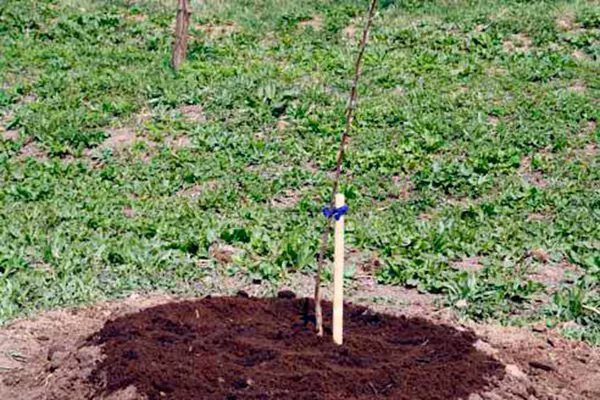
Landing algorithm:
- Prepare a hole in the fall measuring 60x60x60 cm.
- Save the turf soil to create nutritious soil.
- Drive a stake into the center of the hole to provide future support for the tree.
- Pour a layer of soil into the bottom of the hole in the shape of a hill so that the root collar of the seedling is 5 cm above ground level.
- Mix turf soil with humus in a 1:1 ratio and use to cover the roots of the seedling.
- Lightly compact the soil around it, forming a ring-groove 8-10 cm deep around the seedling.
Water the plant with 30-40 liters of water, and mulch the soil around it with sawdust or humus.
Subsequent care of the culture
It requires little care, but regular pruning, fertilizing, and watering can significantly improve yields. Follow these recommendations:
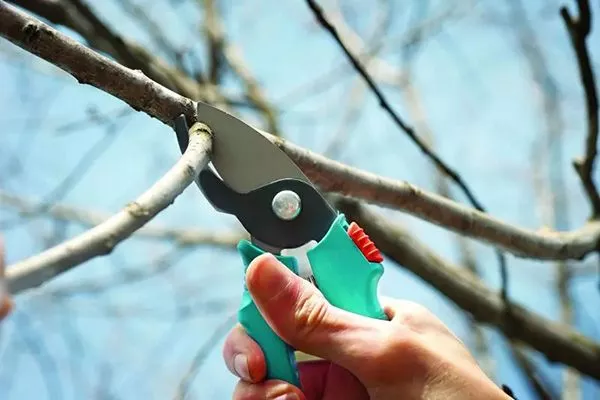
- Pruning is essential, as numerous shoots form, thickening the crown. Prune out dry, broken, and internal branches to facilitate harvesting. Remove basal shoots, as their excess may be unproductive.
- Water only during dry periods. Fertilize the plant with compost, peat, and wood ash, incorporating them into the tree's root system while digging.
Mineral fertilizers are only necessary on poor, sandy loam soils. For this, use superphosphate and potassium sulfate, diluted at a ratio of 20 g each per 10 liters of water. Apply this type of fertilizer in the fall approximately once every three years.
Harvesting and storage conditions
To preserve berries for a long time, pay special attention to the harvesting process. Pick the fruits carefully, trying to avoid damage. Pay special attention to removing the berries, including the stems. This does not apply to urgent processing of the harvest.
Methods of reproduction
There are various propagation methods available, each offering unique advantages. Let's take a closer look at each method:
- Cuttings. Take cuttings or layering from mature plants and use them to grow new specimens. Place the cuttings separated from the mother plant in prepared soil, where they will root and form roots. This method ensures genetic similarity to the mother plant.
- Seeds. Separate the seeds from the pulp, then plant them in soil and wait for them to germinate. This method ensures natural germination, but the process may take longer.
- By the undergrowth. This involves using naturally occurring shoots, or suckers, that form around the base of a mature plant. These suckers can be transplanted to a new location where they will continue to grow as independent plants.
- By vaccination. This is a method in which a rootstock is joined to another part, the standard, to create a single plant with the desired characteristics.
Each of these methods has its own advantages and can be chosen depending on specific conditions and your preferences.
Diseases and pests
It is highly resistant to fungal and viral infections, including coccomycosis. It is rarely attacked by pests. Proper care is necessary to maintain its health. Follow these recommendations:
- Cleaning up fallen leaves in autumn. Carefully remove fallen leaves annually. This prevents the growth of pathogenic fungi and bacteria, which can harm all parts of the plant.
- Whitewashing with lime in spring. During this period, begin whitewashing the lower branches and main trunk. Use a lime solution for this. This procedure helps prevent the development of diseases and prevents the spread of moss, which creates favorable conditions for the proliferation of pests.
- Treatment of damaged areas. After pruning, treat the damaged areas with a special antiseptic. This can be varnish or regular paint. This step helps prevent possible infection and promotes healing.
- Removing cut fragments. Remove all cut parts from the site and destroy them. This prevents the possible spread of diseases or pests.
Pros and cons of the domestic hybrid
It differs in taste and other characteristics. It is important to study the positive and negative qualities of the variety.
The main benefits of the plant include:
Among the disadvantages, gardeners note poor transportability and late ripening.
Reviews
The Ashinskaya cherry is popular due to its high yield and high-quality fruit production. To ensure proper development, it requires comprehensive care, including proper planting. Timely implementation of agricultural practices will ensure a strong immune system.