
The Apukhtinskaya cherry has been popular and in demand for many years. Its undemanding nature and frost resistance make it suitable for cultivation in various regions of our country with minimal risk of yield loss.
History of selection
The exact date of this variety's development remains unknown, but it was first discovered in the village of Apukhtino in the Tula region. It is believed that this variety arose through natural selection among the local population.
Description
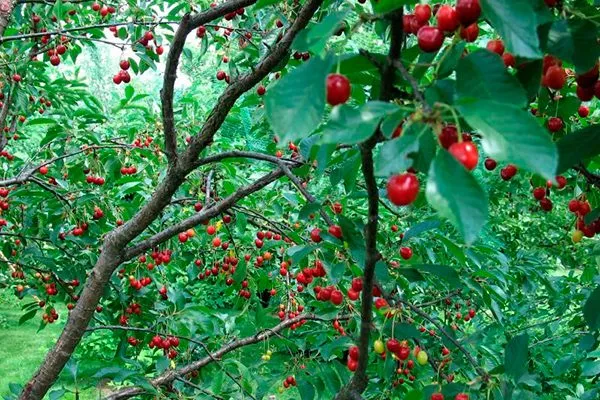
Apukhtinskaya's appearance is distinguished by its characteristic resemblance to shrub varieties with well-branched skeletal shoots. Its short, well-developed trunk, combined with its drooping, sparse crown, gives it a unique appearance.
Tree
This is a shrubby tree with a low-growing stem that reaches a maximum height of 3 m. Plant characteristics:
- The wide crown, rounded in configuration, with a diameter of approximately 2.5 m, is characterized by a dense arrangement of drooping branches, forming a compact structure.
- Thin shoots become exposed over time.
- The bark has a reddish-brown hue, the surface is shiny and smooth, and medium-sized light lenticels are visible on the shoots.
- Old branches usually acquire a grayish tint.
- The foliage is moderate. The light green leaves are elliptical with serrated edges. The leaf blade surface is smooth, with reticulated venation and a slight sheen. The leaves are slightly folded along the midrib.
- The petioles are normal and may have a weak anthocyanin coloration at the base.
The flowers are white and consist of five petals.
Fruits and their taste characteristics
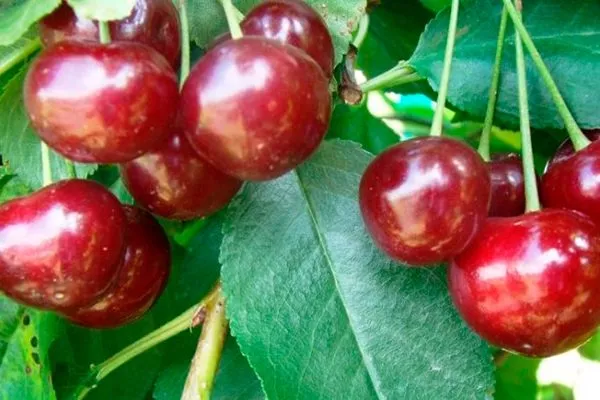
They weigh approximately 3-3.5 g and have a rounded, flattened shape with a wide central funnel. Other characteristics of the berries:
- They are colored dark red.
- The skin is thin and smooth.
- The pulp is ruby-red in colour, medium in density and has a bright classic flavour that combines sour and sweet.
- They have juiciness.
Characteristics of the variety
For many years, gardeners in various regions of Russia have been successfully growing the Apukhtinskaya cherry. It possesses numerous characteristics for which it is prized.
Drought resistance and winter hardiness
It has moderate winter hardiness and can easily withstand temperatures down to -20°C, which is average. In severe frosts, shoots may freeze, but they usually recover quickly in summer.
The plant tolerates long periods of drought well. During the first two years, while the fruiting plant is developing, it is important to avoid allowing the soil to dry out completely.
Flowering period and ripening time
Flowering occurs later, in June. Ripening occurs in the second ten days of August.
Self-fertility and pollinators
It is highly self-pollinating, so it does not require the presence of pollinators from other varieties. Selecting a suitable donor tree for this crop is challenging due to its delayed flowering time.
Productivity, fruiting
It exhibits high yields, typically yielding around 10 kg of cherries per plant, sometimes even up to 15 kg. A notable feature is the gradual increase in yield over time, reaching 20 to 25 kg.
Application of berries
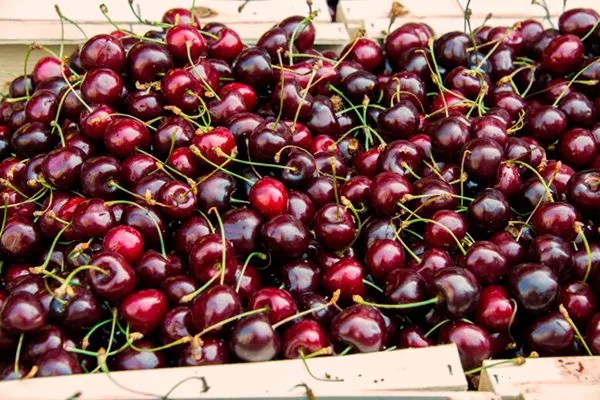
They are intended primarily for industrial use. They are excellent for making preserves, marmalades, and compotes. They can also be eaten fresh, but their pronounced sourness, sometimes with a hint of bitterness, can cause an unpleasant aftertaste.
Resistance to diseases and pests
It is characterized by high resistance to most diseases affecting fruit and berry crops. The plant is rarely susceptible to coccomycosis.
Landing features
The average lifespan is approximately 20 years, and replanting is not recommended. Therefore, before the procedure, it is important to carefully assess the surrounding environment and select a suitable location.
Helpful tips:
- Choose a location with adequate light, preferably on the south side, to ensure the tree receives full sunlight. Cherry trees thrive on light, and a lack of it can negatively impact growth and yield.
- Protect the crop from strong winds when choosing a site.
- Make sure there is good drainage to prevent root rot during periods of high humidity.
- The soil should be neutral or slightly alkaline. If the pH is high, neutralize the soil by adding lime or dolomite.
- Prepare the soil by adding compost or humus.
- Clear the area of weeds and other debris to prevent competition for nutrients.
- The optimal age for planting a seedling is considered to be two years. Choose specimens with a healthy root system, free from mechanical damage. Purchase seedlings free from signs of disease.
- ✓ The seedling planting depth should be such that the root collar is 5 cm above the soil level to prevent rotting.
- ✓ The distance between seedlings when planting in groups should be at least 3 m to ensure sufficient space for the root system to grow.
Step-by-step instructions:
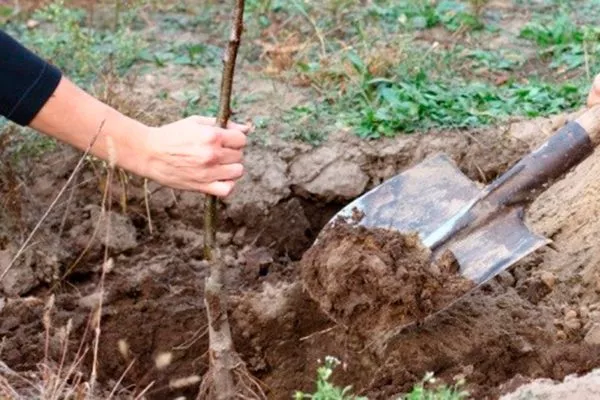
- Dig a hole approximately 0.6 m wide and deep.
- Mix the excavated soil with humus and add fertilizers (for example, superphosphate and wood ash).
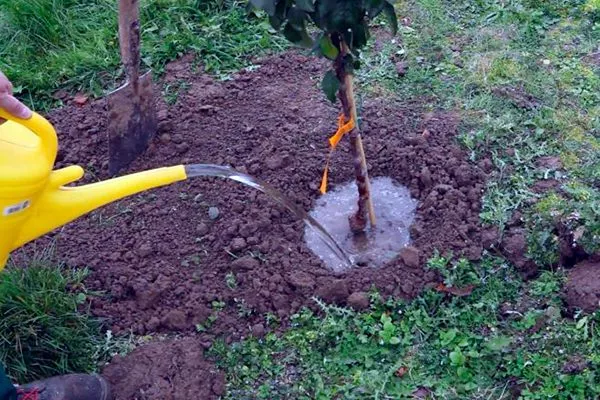
- Place the seedling in the center of the hole, spreading the roots around it. Add more soil if necessary. Make sure the root collar is level with the soil.
- Compact the soil around the seedling, avoiding the formation of air pockets.
- Water the planting area generously.
- Install a peg as a support and tie the seedling to it to provide support.
- Apply mulch around the trunk to retain moisture and reduce weed growth.
When planting in groups, maintain a distance of at least 3 m between adjacent seedlings.
Subsequent care of the culture
Apukhtinskaya has low growing conditions, making it easy to care for. Follow these basic care instructions:
- Watering should be adjusted according to the tree's age. During the first two years after planting, provide regular and abundant watering, especially during dry periods. Reduce the frequency in subsequent years, but ensure adequate watering during fruit formation and ripening.
- Top dressing includes stages of nitrogen fertilizers, organic liquid and complex potassium-phosphorus fertilizers at different periods of the season.
- Pruning is done to create a crown that's easy to harvest fruit and for preventative purposes. These stages include formative pruning, sanitary pruning, and thinning.
Harvesting and storage conditions
Harvest the berries when they are fully ripe. The ideal time for harvesting is when the fruit is fully ripe but has not yet begun to fall from the tree. Use special nets or cloths suspended under the trees to catch fallen fruit and prevent damage.
Create specific storage conditions. The optimal storage temperature is around 0°C. Pre-treat the fruit with sulfate salts to protect it from rotting and preserve its freshness for longer.
Methods of reproduction
There are several ways to increase the number of seedlings. Choose the method that suits you best:
- Cuttings. Take cuttings in mid-July, selecting green shoots located on the south side of the tree. Cut healthy cuttings about 15-20 cm long. Make sure each one contains several buds. Root them in the soil.
- Graft. Select the rootstock and cherry tree. They are usually grafted onto rootstocks of other cherry varieties. Select healthy seedlings. Prune them for grafting. Use the axil or copulation grafting method. Make sure the graft is securely and thoroughly secured.
- Root shoots. Select a mature, healthy plant. Isolate the root suckers that appear at the base of the mother plant. Carefully cut them off and plant them in prepared soil, providing adequate cover and moisture.
| Method | Rooting time | Success rate |
|---|---|---|
| Cuttings | 4-6 weeks | 60-70% |
| Graft | 2-3 weeks | 80-90% |
| Root shoots | 1-2 weeks | 90-95% |
Each of these methods provides effective ways of propagation, allowing you to choose the most suitable one depending on personal preferences and conditions.
Diseases and pests
It exhibits relatively high disease resistance, but despite this, infections can occur, especially in weakened or older specimens. Below are some potential problems and methods for controlling them:
- Scarab beetle. This pest, one of the main threats to cherry trees, lays eggs on the tree's bark, and the larvae feed on the wood and bark. To control the pest, regularly treat the tree with specialized insecticides.
- Codling moths. Insects enter cherry trees through natural folds on their surface. To protect against these pests, use special baits and traps, and treat the plants with insecticides.
- Mole cricket. A pest capable of causing damage to young seedlings. Regular soil loosening is recommended to detect and destroy mole cricket nests.
- Monilio. A fungal disease that affects fruits and branches. If symptoms are detected, remove affected parts and treat with fungicides.
- Shot rot. A bacterial disease that causes fruit rot. Preventative measures such as removing affected berries and treating them with antiseptics can help prevent the disease.
- Cherry fly. An insect that lays eggs in fruit, causing damage. Use traps and treat with insecticides.
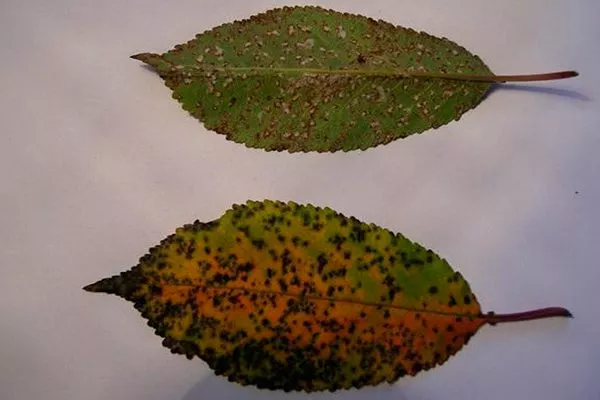
Effective pest and disease control requires a systematic and regular approach. Regularly inspect your plants and take appropriate measures as needed to ensure healthy growth and development, resulting in a bountiful, high-quality harvest.
Advantages and disadvantages
Before planting a new crop in your garden, familiarize yourself with its positive and negative qualities. Apukhtinskaya has the following advantages:
Gardeners do not identify any shortcomings of the crop.
Reviews
The Apukhtinskaya cherry attracts both novice and experienced gardeners with its numerous characteristics, including its low maintenance requirements and ease of use. It has a pleasant aroma and rich flavor, and delivers consistently high yields when proper cultivation practices are followed.