
The Anthracite cherry is a compact plant suitable for growing in small spaces. It has many positive qualities, including good frost and drought resistance. With proper care, the plant thrives and its immune system becomes stronger, reducing the risk of disease.
History of selection
It was obtained by selection from seedlings resulting from accidental pollination of the Shirpotreb Chernaya variety. The research was conducted by staff of the All-Russian Research Institute of Fruit Crop Breeding: A.F. Kolesnikova, G.B. Zhdanova, and T.A. Trofimova. It was added to the State Register in 2006 for the Central Region.
Description of the culture
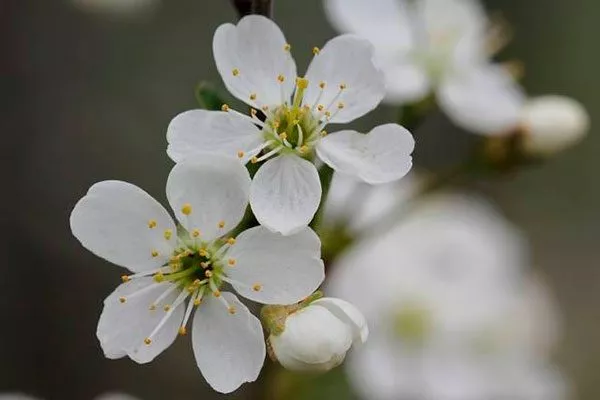
The Anthracite cherry attracts gardeners with its compact plants and beautiful bloom. A botanical description of the variety is provided below.
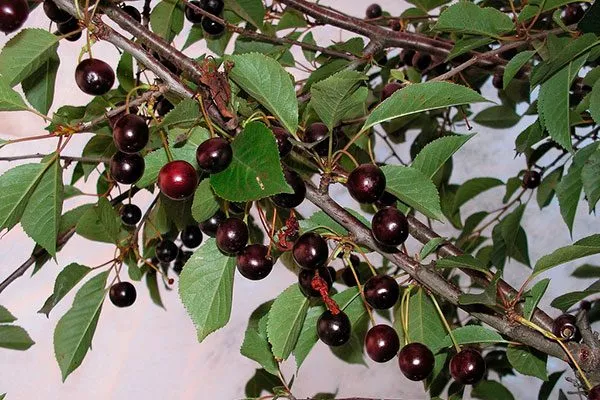
The appearance of the tree
It is characterized by a spreading but raised crown, reaching a height of up to 2 m. Distinguishing features of the plant:
- The branches are not abundant.
- The conical buds are small, extending up to 3 mm in length, and are closely spaced along the branch.
- The shoots are covered with long, elliptical leaves, dark green in color. They have a pointed tip and a rounded base, and are finely serrated.
- The petiole is long, reaching up to 12 cm in length, colored in a bright anthocyanin hue.
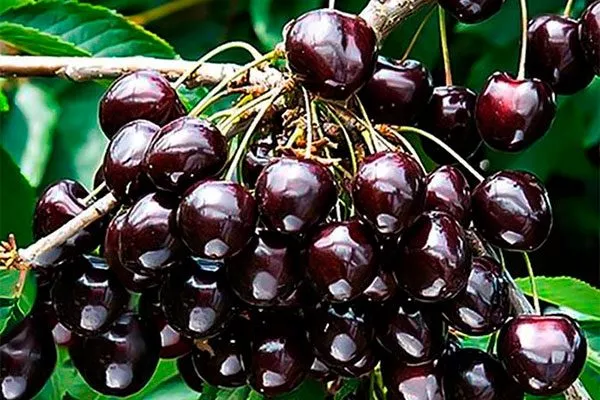
Fruits and their taste characteristics
They are heart-shaped with a wide fruiting funnel and a rounded top. Other characteristics of the berries:
- The peduncle is short, approximately 11 mm in length.
- Weight varies from 4.1 to 5 g.
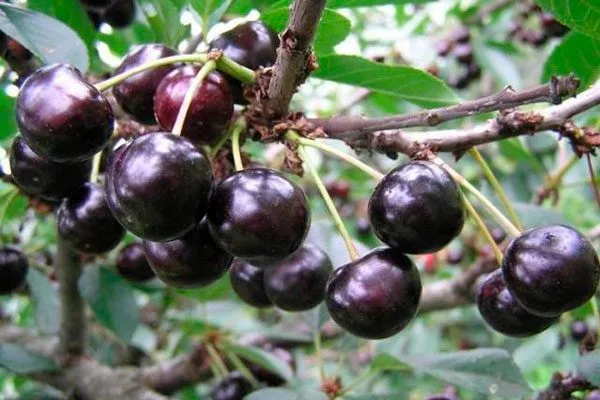
- The skin is dense but thin, and when ripe it acquires an intense dark red, almost black hue.
- The pulp is juicy, sweet and sour, dark red in color, of medium density.
- The berries contain 11.2% sugars, 1.63% acid and 16.4% dry matter.
- The yellow-cream stone makes up only 5.5% of the mass or 0.23 g and is easily separated from the pulp.
Characteristics
The variety's distinctive feature is its many positive traits, inherited from its parent plant.
Resistance to drought and frost
It can withstand typical winters in central Russia and thrives in the Moscow region. However, it cannot tolerate prolonged low temperatures. It requires placement near buildings to protect it from northern winds.
It is resistant to short-term droughts. Timely furrow irrigation is required to ensure a good harvest.
Pollinator species, best neighbors
It is partially self-fertile, allowing it to produce a harvest, albeit in small quantities. Without pollination stimulation, fruit formation will be insufficiently productive. To achieve a bountiful harvest, it is advisable to plant other fruit crops nearby.
The following varieties are considered the best neighbors for Anthracite cherry:
- Night;
- Chocolate Girl;
- Vladimirskaya;
- Lyubskaya.
Flowering period and ripening time
Flowering begins in mid- to late-second ten days of May. The berries ripen between July 15th and 23rd, but the exact ripening time may vary depending on climatic conditions.
Productivity, fruiting
Fruit ovaries form on bouquet branches and last year's shoots. Fruiting begins as early as four years after planting. This variety bears fruit for 15-18 years, after which yields decline.
With proper care, a tree can produce up to 18 kg of berries per season. During testing, the variety demonstrated an average yield of 96.3 centners per hectare. The maximum yield reached 106.6 centners per hectare.
Application of berries
The berries are used both fresh and processed to make a variety of compotes and jams. They can be frozen or dried for long-term preservation and subsequent culinary use.
Resistance to diseases and pests
It is moderately susceptible to moniliosis and coccomycosis. Regular inspection of trees during the growing season is important for the prevention and timely control of these diseases.
Advantages and disadvantages
Before planting a crop, be aware of its pros and cons to avoid difficulties during cultivation. Anthracite has many advantages:
Among the disadvantages, gardeners note the need for the presence of plants of the sweet cherry genus or other types of cherry near the bush for cross-pollination.
Landing features
For successful growing, choose the right location and time for planting. Follow these recommendations:
- Recommended timeframes. Plant bare-root seedlings in the spring. Container-grown trees can be planted until September.
- Choosing a suitable location. Placing the seedling on the south side of buildings is the best option. Avoid areas prone to strong drafts, stagnant water, and low-lying areas. It's preferable to plant the plant on a mound.
For optimal growth, loamy and sandy loam soils with a neutral pH are preferred. If necessary, amend heavy soils with sand, peat, or humus, and dilute acidic soils with lime. - Crops suitable for the neighborhood. Good neighbors include hawthorn, rowan, honeysuckle, elderberry, and currant, preferably growing in partial shade. Avoid growing near tall apple trees, apricots, lindens, birches, maples, raspberries, gooseberries, and nightshade plants.
- Selection and preparation of planting material. Purchase seedlings from specialized nurseries. Ideally, two-year-old specimens should have a trunk at least 60 cm tall, a stem 2-2.5 cm thick, and branches up to 60 cm long. The roots should be firm and undamaged.
- ✓ The soil pH level should be strictly within 6.0-7.0 for optimal nutrient absorption.
- ✓ The depth of groundwater is at least 1.5 m to prevent rotting of the root system.
Then follow the instructions:
- Before planting, wrap the roots in a damp cloth and immerse them in a clay mixture for 2-3 hours, adding a growth stimulator.
- Drive a stake into the prepared hole with the prepared substrate to tie up the seedling.
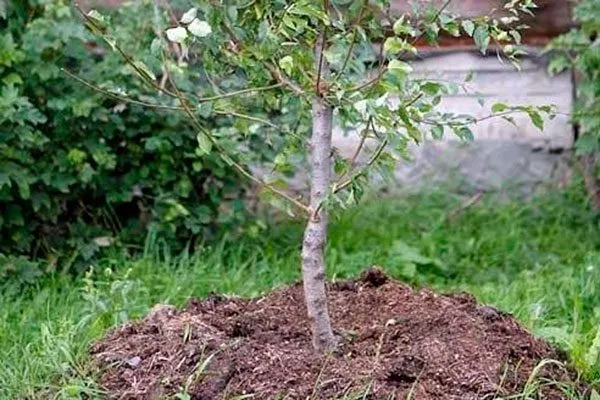
- Place the seedling on a mound, spreading out the roots, with the root collar 5-7 cm above the soil surface.
Subsequent care of the culture
Keep the soil loose to a depth of 7 cm and remove weeds regularly. For optimal tree growth, water once a week with 10 liters of water morning and evening.
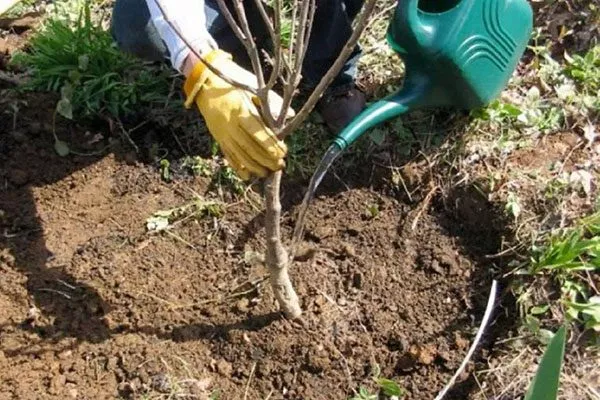
It's especially important to water the plant after flowering and during fruit formation. Stop watering when the berries are turning red.
In the 4th-5th year of growth, start applying fertilizers:
- Early spring - urea or saltpeter.
- During flowering - organic fertilizers.
- After harvesting - carbide by the non-root method.
Harvesting and storage conditions
The harvested fruit can be used in a variety of ways: fresh berries are eaten immediately after picking or preserved. The fruits can be frozen or dried for long-term storage. In winter, they are used to make compotes or as fillings for pies and desserts.
Features of tree wintering
Thanks to its frost resistance, this variety tolerates cold weather well and requires no special winter preparation. Before the onset of cold weather, apply mulch around the tree trunk. Use wood shavings to help retain moisture and warmth in the soil, protecting the roots from freezing.
Diseases and pests, methods of control and prevention
Despite its relatively robust immunity, the Anthracite cherry tree is susceptible to certain diseases and insect attacks. The table below suggests control and prevention measures:
| Disease/Pest | Signs | Methods of control | Prevention |
| Moniliosis | Shoots, ovaries and leaves look burnt. | Spraying with copper-containing substances in early spring, after flowering and in autumn. | Removing infected branches, burning fallen leaves and diseased shoots. |
| Coccomycosis | Red spots appear on the leaves, and grayish mycelial clusters are visible underneath. The foliage begins to wilt.
The infection can spread to branches and fruits. | Spraying with fungicides at the end of flowering and after harvest. | Treatment with Bordeaux mixture or copper sulfate in early spring. |
| Aphid | Colonies are observed at the bottom of curled leaves. | Treatment in early spring, after flowering and in summer with insecticides: Fitoverm, Inta-Vir, Actellic. | Spraying with Fufanon in early spring. |
| Cherry fly | Insect larvae damage fruits. | Treatment after flowering with the insecticide Fufanon. | Harvesting the entire crop immediately after it ripens.
Using baits such as sweet liquids (beer, kvass, compote, honey water, etc.) after flowering. Cleaning and destruction of damaged fruits. Deep autumn digging of the soil in tree trunk circles. |
- In early spring, before the buds open, treat the tree with a 3% solution of Bordeaux mixture.
- After flowering, treat with a fungicide to prevent coccomycosis and moniliosis.
- At the end of summer, after harvesting, repeat the fungicide treatment to prevent the autumn outbreak of diseases.
Reviews
The Anthracite cherry is a popular variety that can withstand frost and short-term drought. It produces large berries and a compact tree size, making it ideal for small plots. Adherence to proper agricultural practices directly impacts yield and plant health.