
The cherry tree with the feminine name Alisa is a common variety, known since Soviet times. It is a shrub-type cultivar with a felt-like habit and sweet fruits. Its characteristics are universal – it can be grown in various regions of the country and has good resistance to adverse factors and diseases/pests.
History of selection
Alisa is a long-established variety cultivated in the Russian Federation. It was developed in 1979, but was only added to the country's state register in 1997. Two authors, N. A. Tsarenko and V. P. Tsarenko, worked on the selection.
The work was carried out in the Far East (at the VNIIR experimental station). The Ogonyok variety was used as the maternal line for the crossbreeding, along with a pollen mixture from the Damanka and Peschanofoilochnaya cherries.
Description of the culture
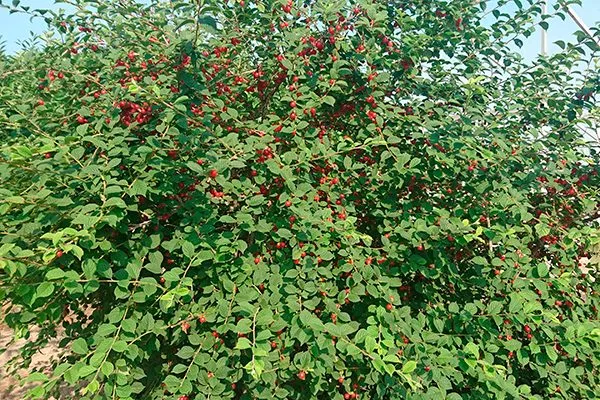
Alice is a low-growing cherry tree, but quite hardy. Its root system is robust and capable of retaining moisture for long periods of time. Therefore, the plant easily tolerates dry summers.
Appearance of trees
It is easy to recognize this felt cherry even in winter, as the tree has its own characteristics:
- Bush. The shrub reaches a maximum height of 140-160 cm, with an oval-spherical crown and a dense growth habit. The shoots grow at a moderate rate, and the branches are mostly erect and thick. The bark, when young, is a normal brown color with a slight pubescence, but becomes grayish with age.
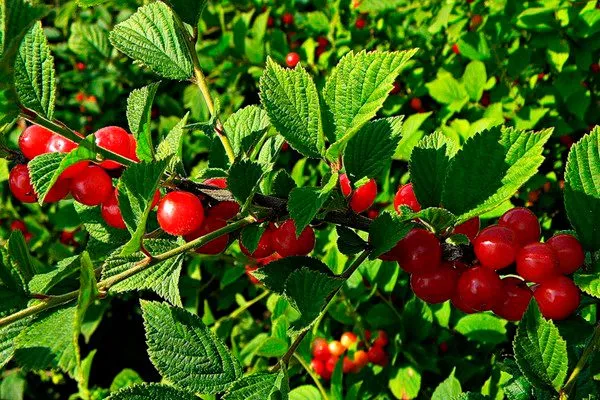
A distinctive feature is the formation of small, light-colored, tuberculate growths on the surface of older branches. These "lenticels" are arranged horizontally. The buds are small, pointed, and pubescent, set slightly off from the shoot. - Leaves. They are dark green in color, small in size, and elongated-oval in shape. The tip is pointed, and the edges are serrated. The surface is pubescent on both sides, and the blade is uneven, with a folded appearance. The petioles are short, reaching only 5 mm, of medium thickness, and also pubescent.
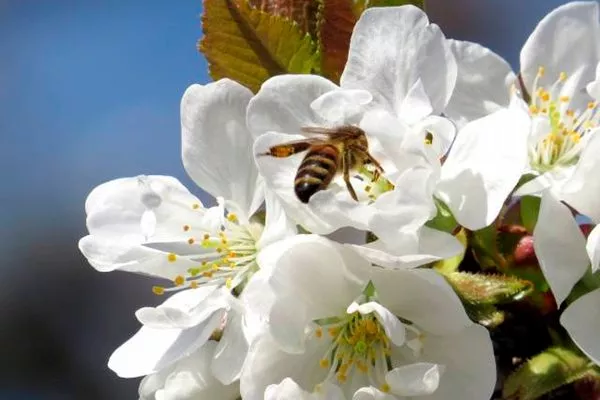
- Flowers. Medium-sized, spherical flowers. The corolla is about 2.5 cm, and the color varies from white to slightly pink. Five petals are arranged loosely.
- ✓ The presence of tuberculate growths on old branches.
- ✓ Pubescence of leaves and petioles.
Fruits and their taste characteristics
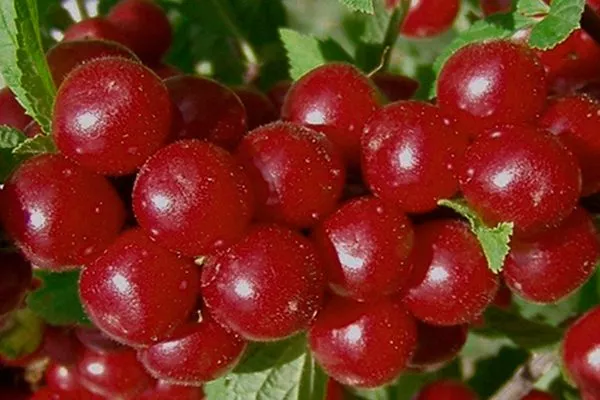
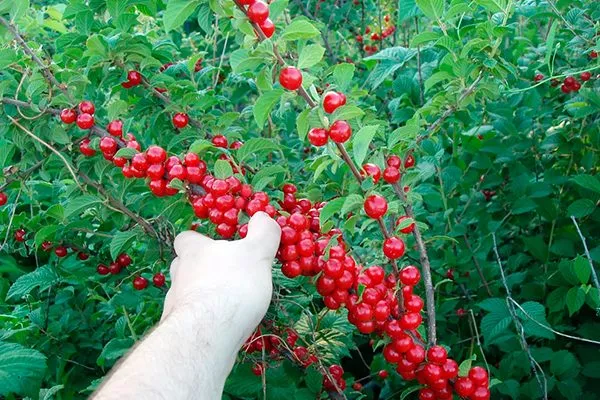
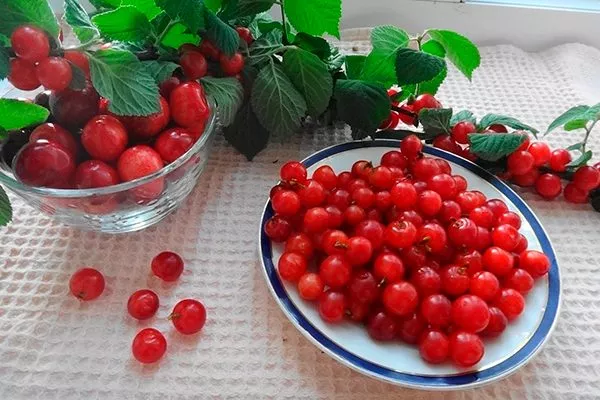
Felt cherries are considered large-fruited, as their berries weigh between 3.3 and 3.6 grams, sometimes even more. The pit weighs only 0.2 grams. Other characteristic features:
- shape – slightly elongated, the top is slightly beveled;
- berry sizes: 17-19 mm in length, 15-17 mm in width;
- the skin is thin, so the fruits cannot withstand long-term transportation; there is a fluff on its surface;
- the skin color is dark burgundy, and when fully ripe it is almost black, the pulp is red;
- abdominal suture - present in the form of a large strip;
- The pulp is very juicy, but dense and slightly fibrous, making it very difficult to separate from the stone.
Alisa's flavor is harmonious—mostly sweet, with 8.9% sugar and only 0.65% acid. It also contains 27.3 mg of ascorbic acid per 100 g. The pulp contains low dry matter—about 1.8%. Based on a tasting score, it received a 4.5 out of 5 possible points.
Characteristics
When the cherry variety was developed, it was intended to be grown in the Primorsky Krai region of the Russian Far East. Over time, the seedlings migrated to other regions of Russia, and as a result, it is grown throughout the country.
Self-fertility and pollinators
Alice is self-sterile, so it requires pollinators. The main requirement when choosing a pollinator is simultaneous flowering. This can be any felt cherry. But the most interesting thing is that this variety can also be pollinated by other stone fruit crops. For example:
- apricots;
- peaches;
- cherry plum;
- plum;
- almond.
When does it bloom and when does the fruit ripen?
Cherry trees are mid-season, beginning to bloom in May, and the harvest can begin in July, two months later. A maximum of two flowers are found in a single inflorescence. They are located along the entire length of the branch, both old and young.
Fruiting
The fruiting period lasts for 15-17 years, beginning in the third or fourth year after planting if own-rooted seedlings were used. When grafted seedlings are planted, fruiting is observed as early as the second year. This indicates the variety's early maturity.
Where and what are berries used for?
The fruits are detached from the stalk using a semi-dry method, so mechanical harvesting is out of the question. Cherries must be picked by hand.
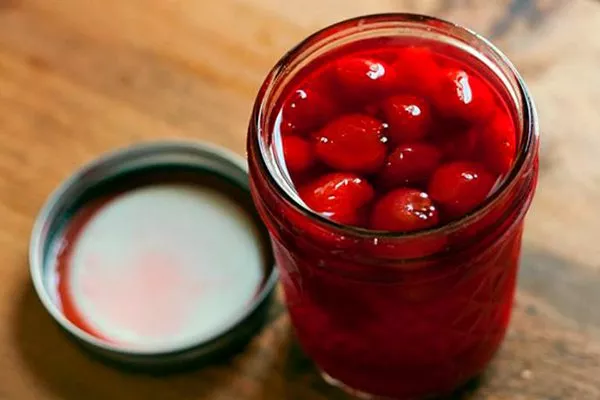
They have versatile uses. They are used to make compotes, preserves, jellies, and other similar dishes. The pulp makes a very rich juice and liqueur, as well as pastila and marmalade.
Resistance to frost and drought
The bushes easily tolerate frost, and if the shoots do get slightly frozen, they will recover on their own after a thaw. The variety is also resistant to sudden temperature changes, but only when mature. Young trees need to be protected. The bush is indifferent to drought and heat, so there's no need to worry about overwatering.
Black cherry Alice yield
Felt cherry is considered a high-yielding tree, as one mature bush can produce approximately 7-8.5 kg of fruit.
Resistance to diseases and pests
Alice exhibits maximum resistance only to coccomycosis; resistance to other diseases is moderate, particularly clasterosporium and moniliosis. The only pest that poses a threat is the pocket mite.
What plants are allowed and prohibited to be planted nearby?
Neighborhood plays a significant role—the main thing is that nearby crops don't absorb all the nutrients from the soil. The best neighbors are:
- felt cherries;
- cherries;
- peaches;
- nuts (except walnuts);
- apricots;
- plums;
- grape;
- elder;
- periwinkle;
- sedum;
- violet;
- onion;
- garlic;
- dill;
- parsley;
- salad.
Avoid planting roses, phlox, begonias, raspberries, gooseberries, tobacco, tomatoes, any type of pepper, coniferous shrubs, and trees nearby. Walnut trees, which release substances that can inhibit the development of felt cherry, are especially undesirable.
Advantages and disadvantages of the variety
Felt cherry 'Alice' is a versatile variety with many positive qualities:
But the variety also has its disadvantages:
.
Landing features
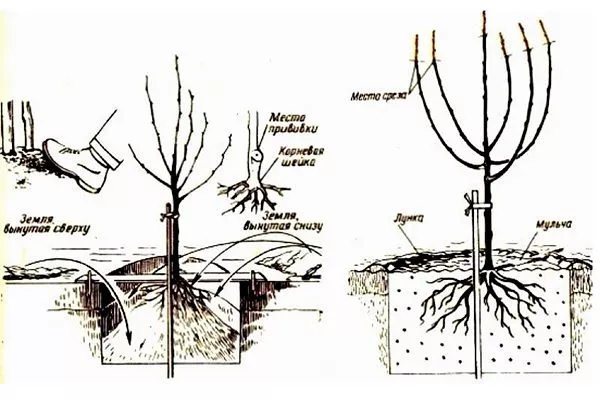
The planting algorithm is identical to the standard one, but there are some varietal characteristics that are important to consider:
- The best timing. Young Alice seedlings take root faster and adapt more easily in the spring. If planted in the fall, they may not have time to harden. However, if there's no other option, plant them 1-1.5 months before the first frost.
- Place. The variety prefers an abundance of sunlight – this is the only way the berries acquire the required amount of sweetness.
- Soil on the site. It should be neutral in pH. Acidic soil is strictly prohibited. The structure should be moderately loose and always well-drained.
- ✓ Soil pH level should be strictly between 6.0-7.0 for optimal growth.
- ✓ It is mandatory to have a drainage layer in the planting hole to prevent water stagnation.
Subsequent care of the culture
Care procedures include several classic actions, each with its own characteristics:
- Trimming. Sanitary pruning is carried out in spring and fall. The plant should be rejuvenated every 3-4 years, and the crown should be shaped during the first two years.
Watch our video to learn how to properly prune felt cherry trees:
- Top dressing. Fertilize Alice properly – strictly around the edges of the trunk area, ensuring there is no fertilizer near the trunk. Fertilize after flowering. The recommended dosage for 1 square meter is 6 kg of humus or other organic matter, 30 g of nitrogen, 70 g of phosphorus, and 20 g of potassium.
In early spring, it is useful to apply urea or ammonium nitrate, and in autumn, preparations based on potassium and phosphorus. - Watering. They should be moderate—the water should be absorbed within half an hour. If overwatering occurs, immediately add very dry fertile soil to the trunk area or spread perlite or other materials to ensure rapid absorption. Otherwise, fungal diseases will develop.
- Protection. To prevent insects from spreading along the tree trunk, whitewash it in the spring and fall. Before winter, it's important to protect the bark from rodents. To do this, you can wrap the trunks with non-woven fabric or surround them with spruce branches, reeds, raspberry stems, etc.
Diseases and pests, methods of control and prevention
No crop has exceptional immunity, especially if grown by a novice who makes mistakes in agricultural practices. Unfavorable weather conditions can also contribute to the development of diseases. Alice is most often attacked by the following pests and diseases:
| Problem | Signs | How to treat? | Prevention |
| Clusterosporiasis | Spots appear on the leaves, with holes forming in the center. As the infection progresses, it spreads to the shoots, forming ulcers. | The affected parts of the plant are cut off and destroyed, the bush is sprayed with biological preparations. | Bordeaux mixture is used at a concentration of 3%. |
| Moniliosis | Flowers, leaves and shoots wither. | Spraying with copper sulfate or copper-based preparations. | Spring treatment with fungicides or Bordeaux mixture. |
| Pocket tick | It localizes in the foliage, sucking the juice out of it and leaving behind warty growths. | The affected areas are treated with boiling water. | Watering with hot water is carried out before the buds open. |
Methods of propagation of felt cherry
Felt cherry is best propagated by cuttings, but there are other methods. Here's a brief overview:
- cuttings - cut cuttings from the middle part of the branch;
- layering that comes from the roots - carefully dig them out and replant;
- grafting - it is important to use appropriate rootstocks.
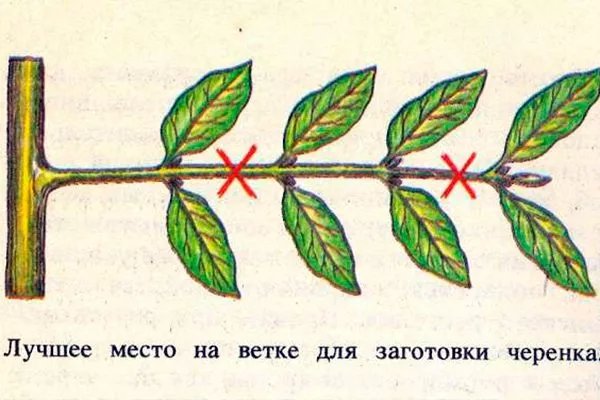
The best option is cuttings, as roots form quickly and the cuttings take root almost 100%.
Reviews
The Alisa felt cherry is considered a versatile variety, grown from the south to the north of Russia. It tolerates frost well, produces abundant harvests, and rewards with sweet, large fruits. The key is to follow proper cultivation practices and provide timely care for the bush.