
The Golden Drop plum is an old European variety that has remained popular among gardeners for 200 years. Its enduring fame stems from the combination of its amazing fruit flavor and its unpretentiousness and hardiness.
Breeding history
The Golden Drop plum was developed in Suffolk, England, over 200 years ago by gardener G. Coe. The variety was created by crossing two plums—the Egg Yellow and the Recolor Green. Synonyms for the name in English include Golden Drop and Yellow Drop.
The variety is zoned for cultivation in European countries, as well as in many former Soviet republics (Georgia, Moldova, and other countries with mild climates). In Russia, the Zolotaya Kaplya plum grows and bears fruit successfully in Crimea, Stavropol, and Krasnodar Krai.
Description of the Golden Drop plum
The tree is medium-sized and produces numerous shoots. Its maximum height is 6-7 m. The crown is rounded, with numerous shoots, ash-gray with a reddish tint.
Description of fruits
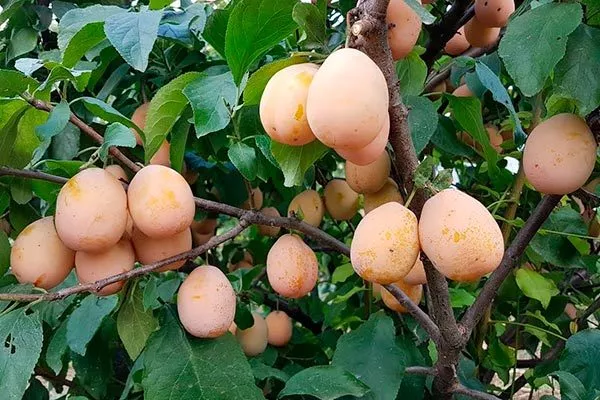
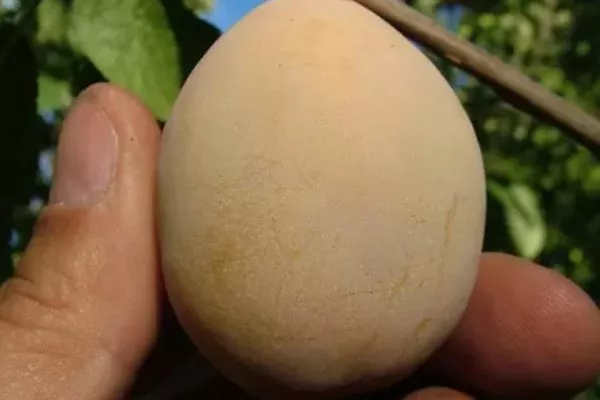
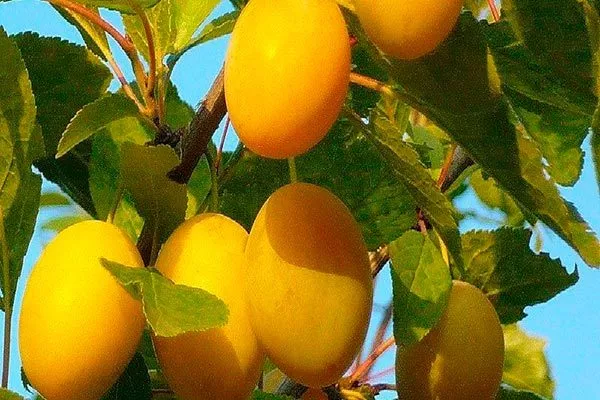
The fruits are oval, medium-sized, and weigh approximately 50-70 g. They are yellow in color and have a longitudinal ventral suture. The stalks are thick, and the skin is thin and strong. Small red specks appear on the yellow background—they appear on the sunny side. The surface of the fruit is covered with a waxy whitish coating. The seeds are large and flat.
Taste and purpose of fruits
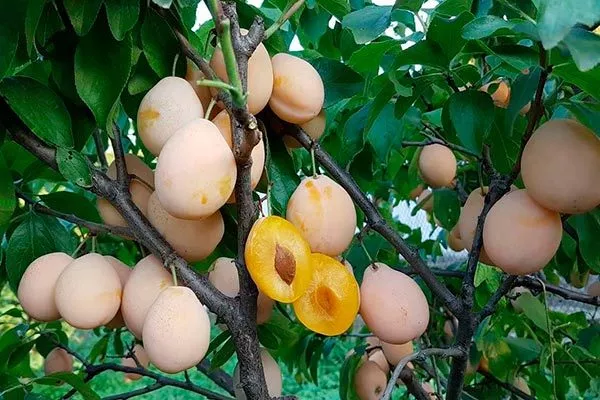
The Golden Drop plum is very juicy, with aromatic and tender golden-yellow flesh. The fruit has a sweet, pleasant flavor, becoming slightly tart near the pit. The sugar content reaches 14.5%.
This variety is distinguished by its high ascorbic acid content, with ripe fruits containing 9.5 mg per 100 g. Zolotaya Kaplya plums also contain a lot of vitamins B and K, as well as beta-carotene. Eating 100 g of plums immediately provides a person with the daily dose of silicon and boron. They are also rich in potassium, glucose, and pectin. The caloric value is 48-50 kcal per 100 g of fruit.
Characteristics
This variety is a domesticated plum and has a late ripening period. This plum is characterized by average winter hardiness; seedlings grafted onto cherry plum can withstand temperatures down to -35°C, while own-rooted trees can withstand temperatures down to -22°C. Yields are also average, with a tree yielding approximately 60 kg of plums.
Pros and cons
It's no wonder the Golden Drop plum has remained popular for two hundred years. It has many virtues, but the most important reason is, of course, the amazing taste and beauty of its fruits. However, the variety does have some drawbacks, which are worth knowing about before planting.
Planting a plum tree
Planting the Golden Drop plum takes into account the specific requirements of this crop and variety. The tree's subsequent growth and development depend on successful planting.
- ✓ The soil pH level should be strictly within 6.0-7.0 for optimal nutrient absorption.
- ✓ The root system depth requires a minimum distance of 1.7 m to groundwater to prevent root rot.
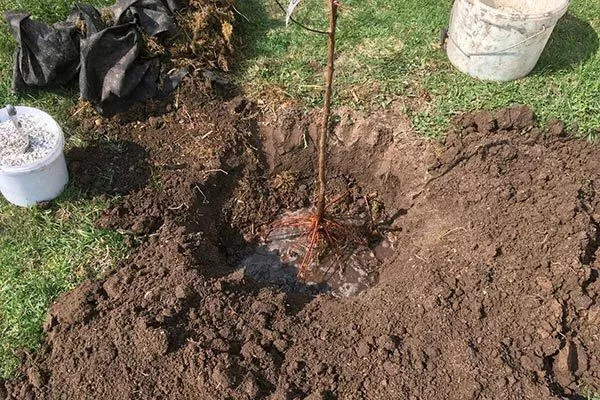
Landing features:
- The best time to plant plums in the south is autumn, about a month and a half before the onset of cold weather. In other regions, spring planting is preferred. Depending on the climate, planting is carried out between April and May.
- For planting, select seedlings no older than 1-2 years. The bark should be healthy, smooth, and free of defects and damage, and the root system should be healthy and well-developed. The approximate height of a one-year-old seedling is 130-160 cm.
- The planting site should be on a southern slope or near buildings or fences. The tree should receive good sunlight.
- The soil should be fertile, loose, and neutral in pH. Plums grow best in nutritious sandy loams, clay loams, and chernozems. The maximum groundwater level is 1.7 m.
- Saplings are planted at intervals of 4-5 meters. Holes measuring 50-60 x 80 cm are dug for planting. Crushed rock, expanded clay, and broken brick are added to the bottom of the hole to form a drainage layer. A mixture of fertile soil mixed with humus (5-6 kg) and mineral fertilizers, such as superphosphate (100 g) and potassium sulfate (50 g), is added on top.
- The tree is placed in the center of the hole, on top of the earthen mound. The roots are carefully spread out, then covered with garden soil so that the grafting site is above ground.
- The planted tree is watered with warm, settled water (20-30 liters per plant). Once the water has been absorbed, the area around the tree trunk is sprinkled with wood chips, mown grass, etc.
How to care for a tree?
Care for the Golden Drop plum is standard; for growth and fruiting, the tree requires regular watering, fertilizing, and pruning.
How to care for a plum tree:
- Young trees are watered weekly, with a recommended daily dose of 20 liters. Mature trees are watered infrequently, mainly during periods of drought. They also require increased moisture during the fruit ripening period.
- Fertilizers are applied in the second year after planting. In the spring, any organic matter (compost, humus, etc.) is applied. After the tree has finished flowering, it is fertilized with balanced mineral complexes. After harvesting, phosphorus-potassium compounds (superphosphate, potassium sulfate, etc.) are used to restore the plants' strength.
- Pruning is carried out twice a season. In the spring, before the sap begins to flow, gardeners focus on sanitary pruning and crown shaping. In the fall, sanitary pruning is repeated, removing all defective branches and thinning the crown, as the plant tends to become dense.
Autumn pruning improves crown ventilation and reduces the risk of fungal diseases. Plum trees are pruned only after the leaves have fallen. - After rain and watering, the tree trunk area is loosened to prevent a hard soil crust from forming. Weeds are removed at the same time. To reduce the frequency of weeding and loosening, the tree trunk area is mulched.
- Before wintering, clear the tree's trunk area of fallen fruit and plant debris, remove old mulch, and scrub the bark of lichens. The trunk and skeletal branches are whitewashed with a lime solution containing copper sulfate (300 g per 10 l). Whitewashing protects the tree from both pests and sunburn.
Pest and disease control
The Golden Drop plum, like most older varieties, is susceptible to fungal diseases. Under unfavorable conditions, the tree can be affected by rust, coccomycosis, brown spot, clasterosporium, and fruit rot.
A range of preventative measures can help prevent damage. It is recommended to promptly remove diseased branches and rotted fruit, and spray the crown with Bordeaux mixture and HOM in the spring and fall. All fruit trees in the garden should be treated with antifungal agents several times per season.
The Golden Drop plum tree's most common insect threats are aphids, gall mites, plum sawflies, and codling moths. To combat these pests, the tree is periodically sprayed with effective fungicides such as Inta-Vir, Actellic, Karbofos, Fitoverm, or similar products.
Harvesting and storage of crops
Harvesting is recommended in the mornings or evenings, when the daytime heat subsides, but only in dry weather. The fruits should be picked wearing gloves to avoid damaging the skin and waxy coating. Plums with blemishes and wormholes are processed.
- ✓ Humidity in storage should be maintained at 85-90% to prevent fruit drying out.
- ✓ Storage temperature should not exceed +6°C to slow down the rotting process.
Good fruits are stored in the refrigerator, placed in plastic bags (2-3 kg each) or in cardboard boxes, with a maximum of three layers. For the first month, the fruits are kept in a cool place, then transferred to fruit and vegetable boxes, where the temperature is maintained at +4…+6 °C.
Reviews
Despite competition and the emergence of new, more promising and interesting varieties, the Zolotaya Kaplya plum remains in demand in the southern regions of the country. They are drawn to the excellent taste, color, and size of the fruit; these advantages more than offset the need for regular fertilization.