
Yellow plums are less popular than traditional blue varieties. However, thanks to their sweetness, productivity, and ease of cultivation, yellow plum varieties are confidently gaining ground in gardens and homesteads across Russia. Let's find out which yellow plum varieties our gardeners are growing and the specific cultivation techniques for yellow-fruited varieties.
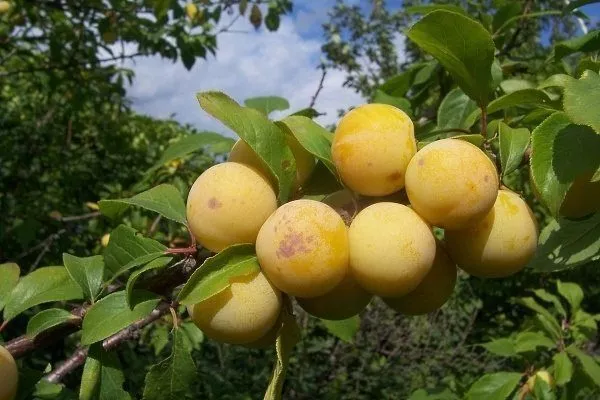
Features of yellow plum
Yellow plums, a hybrid variety of garden plum, are grown in much the same way as their blue and red counterparts. Breeders created the yellow plum subspecies by crossing cultivated cherry plums and wild plums/sloes. There are also varieties obtained through artificial selection.
The crossbreeding of a cultivated and a wild fruit tree resulted in a variety that is resilient to extreme growing conditions, hardy, and undemanding. At the same time, the yellow plums are exceptionally sweet, delicious fresh and in preserves—an excellent source for sweet preserves.
Advantages and features of yellow plum:
- The tree is shorter than blue/red plum varieties, reaching a maximum height of 7 m.
- Among yellow plums, many varieties are self-pollinating, but with the presence of pollinators, the yield increases several times.
Yellow plums are a low-calorie fruit widely used in weight-loss diets. 100 g of pulp contains 44 kcal or 181 kJ, which is 2% of the daily value.
Popular plum varieties
There are dozens of varieties of yellow plums on the market, each with a different ripening time, yield, and other characteristics. Yellow plums differ in:
- dimensions (range – 18-50 mm in diameter);
- taste characteristics;
- pulp structure, wateriness, etc.
| Name | Ripening period | Yield (kg per tree) | Frost resistance (°C) |
|---|---|---|---|
| Altai Jubilee | Mid-early | 30 | -40 |
| Yellow honey | Early | 40 | -30 |
| Early-bearing | Early | 10 | -40 |
| Yellow ball | Early | 15 | -50 |
| Yellow Hopty | Late | 12 | -30 |
| Golden large | Late | 27 | -25 |
| Compote | Average | 15-20 | -30 |
| Morning | Early | 15-30 | -20 |
| In Memory of Timiryazev | Late | 35 | -25 |
| Ochakovskaya yellow | Mid-late | 40-80 | -20 |
| Minsk | Late | 30 | -30 |
| Svetlana | Late | 30 | -25 |
| Early Loshitskaya | Early | 25-30 | -30 |
| Tatar yellow | Late | 15 | -25 |
| Egg yellow | Late | 40 | -30 |
Altai Jubilee
A mid-early, small-fruited variety. The base color is yellow-orange with a bright red blush. The tree is medium to tall (3-5 m), bearing fruit in the third year after planting. The variety is self-sterile. The average yield is 30 kg per tree. Preferred pollinators are Bluefree or Honey.
The fruits are very tasty, weighing 14-18 g. The diameter is 2.8 cm. The flesh is yellow, the skin is thin. In sunny summers, a reddish-pink blush appears on the yellow skin. Moreover, the redness can spread over the entire surface of the fruit, so much so that the yellow color is no longer visible. This is a very frost-hardy variety, suitable for growing in the Urals. It is resistant to clasterosporium. Disadvantages include inconsistent fruiting, susceptibility to seed beetles, and poor drought tolerance and transportability.
Yellow honey
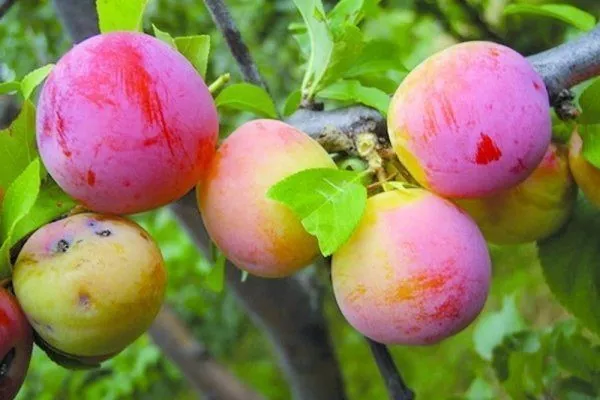
A large-fruited, early-ripening variety. The first plums are harvested as early as the third year after planting. This variety was developed in the 1950s by Ukrainian breeders. The trees are tall, with spreading crowns, reaching a height of 7 meters. The spacing between neighboring trees is at least 3 meters. Pollinators include Renclode Kuibyshevsky or Vengerka. The harvest ripens in mid-July or August, depending on the region. The first harvest occurs in the third year after planting. One tree produces approximately 40 kg of plums.
The fruits are spherical, weighing 40-55 g. The skin is dense and yellow. The flesh is the same color. The taste has a distinctive tartness. They are very tasty and aromatic, with a tasting score of 4.5 points. The variety is adapted to cold and drought. It is a universal variety. It is winter-hardy, reaching temperatures down to -30°C. It is reliably immune to most plum diseases. Its disadvantages include self-sterility and the tree's tall height, which complicates care and harvesting.
Early-bearing
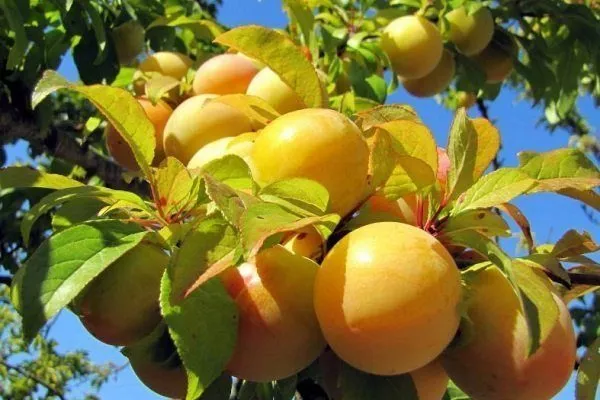
An early variety of yellow Chinese plum. Developed in the 1960s, these trees are medium-height with fan-shaped or rounded, spreading crowns. The fruits ripen in July and August. A tree yields approximately 10 kg of plums. The first harvest occurs in the third or fourth year. Optimal pollinators are the hybrid cherry plum and the red ball.
A dessert variety with medium-sized fruits. Weight: 25 g. The plum's base color is yellow, with a reddish tint. On the tree, the fruits typically vary in color intensity. The yellow, juicy, fine-grained flesh has a strong aroma and a sweet-and-sour flavor. Taste testers gave it a 4.5 star rating. It tolerates transportation well. It has very high frost resistance, down to -40°C. Drought resistance is also high. Disease resistance is moderate, and it is not affected by clasterosporium. A drawback is the intermittent nature of the harvest. Every 2-3 years, there is a break in fruiting.
Yellow ball
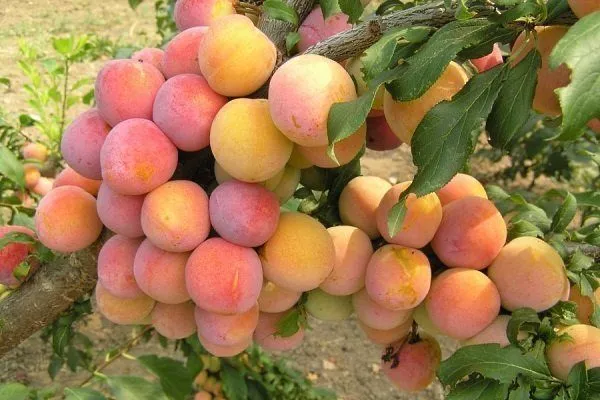
This early-ripening variety belongs to the Chinese plum subspecies. It blooms and ripens early. The tree grows to 3-4 meters, and during fruiting, it is covered with yellow plums that cling tightly to the branches, thanks to their very short petioles. From a distance, the tree resembles a sea buckthorn with very large fruits. This variety is early-ripening, producing a harvest by the third year of planting. Preferred pollinators are hybrid cherry plum or early-ripening yellow plum. The yield per tree is 15 kg.
The fruits are yellow and numerous, with a dense skin. They weigh 40-60 g. The flavor is pleasant, reminiscent of peach and pineapple. They are extremely frost-hardy, down to -50°C. They keep exceptionally well. They do not spoil during transportation, do not release juice, and do not rot. Disadvantages include low drought tolerance, root collar rot, and smaller fruits even with heavy harvests. Due to the large weight and number of fruits, the tree requires support by propping up its branches.
Yellow Hopty
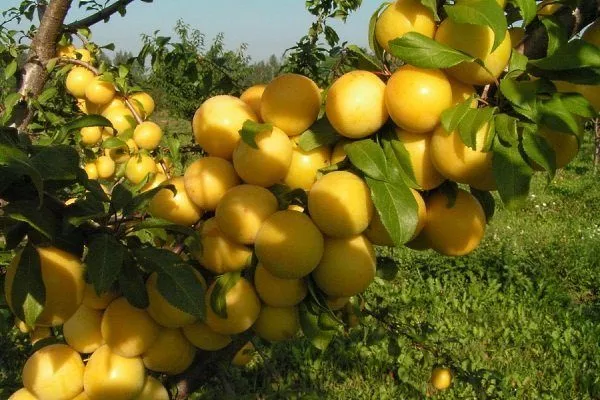
A yellow Chinese plum, bred in the 1930s in the Russian Far East. The tree is tall with a spreading crown. The harvest ripens in late August to early September. It bears fruit in the fourth year when planted from one-year-old seedlings. The average yield per tree is 12 kg.
The fruits are medium-sized, round, and slightly flattened, weighing 12-14 g, with a maximum weight of 20 g. They have a distinct seam or groove. The loose, juicy flesh has a sweet and sour flavor. The aroma is mild, but the taste is good. The fruit has a thin skin and a slightly bitter flavor that lingers in preserves. High winter hardiness and adaptability allow the variety to grow throughout almost the entire country. It is resistant to clasterosporium.
This variety doesn't transport well—the plums quickly lose their visual appeal and other marketable qualities. Other disadvantages include damping-off and self-sterility. They are also susceptible to seed beetle damage.
Golden large
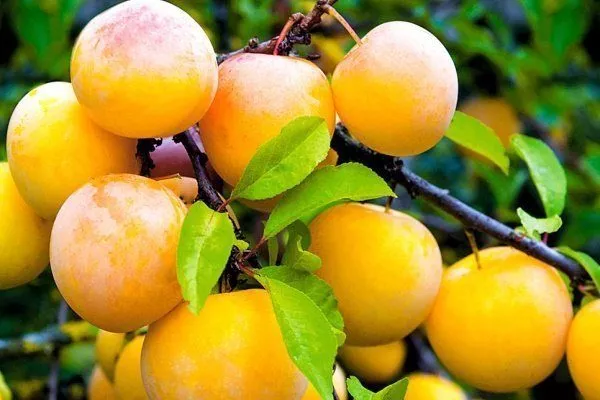
A late-ripening, partially self-fertile plum. The harvest begins in September. The tree is medium-sized, with a pyramidal crown. This variety is considered a high-yield cultivar—the branches are covered with rounded fruits that cling tightly to the branches. The "Mirnaya" or "Volzhskaya Krasavitsa" plums are recommended as pollinators. The tree yields up to 27 kg of plums. Fruiting begins in the fourth year.
The fruits are large, yellow with rosy sides, weighing approximately 40 g. The tender flesh has a sweet and sour taste. The tasters gave it a 4.8 rating. The surface of the fruit is covered with a light waxy coating. This variety is fairly frost-hardy, drought-resistant, and disease-resistant. It tolerates spring frosts well. Refrigerated, it can be stored for up to six weeks. This variety is suitable for intensively cultivated gardens.
Compote
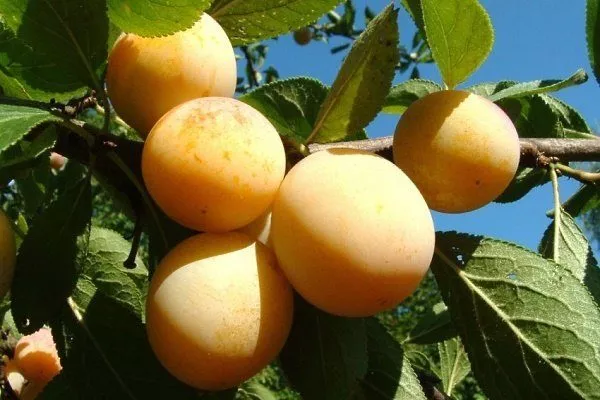
It has a bushy habit. It grows up to 3 m tall, with neat, slightly upright crowns. The first harvest occurs in the fourth or fifth year of life. The tree produces 15-20 kg of plums. The fruits are densely packed on the branches.
The fruits are yellow, round, medium-sized, uniform, weighing approximately 20-30 g. They resemble cherry plums in appearance. The flavor is sweet and sour, and the flesh is yellow. Advantages include stable yields, resistance to drought and frost, diseases, and pests.
Morning
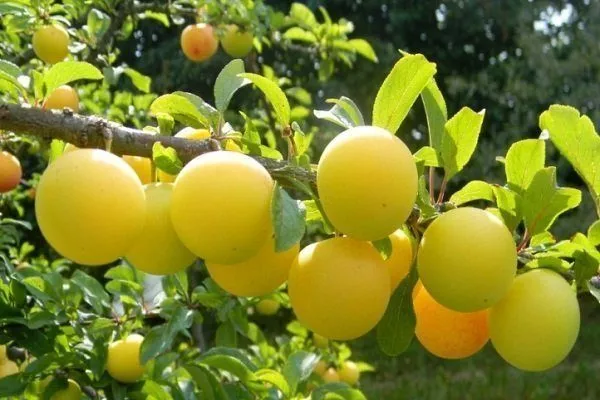
An early, highly self-fertile variety. Pollinators are not needed. The harvest ripens in early August. Fruiting begins in the fourth year. The maximum yield is 30 kg, with an average of 15 kg per tree. The tree lives for about 20 years.
The fruits are medium to large, weighing 20-30 g, with a maximum yield of 40 g. The oval plums are yellow-green in color. The variety is relatively disease-resistant and consistently productive. A drawback is that ripe fruits are difficult to distinguish from unripe ones. Another drawback is its poor winter hardiness; frost damages flower buds. The variety is suitable for industrial purposes, but not for intensive cultivation.
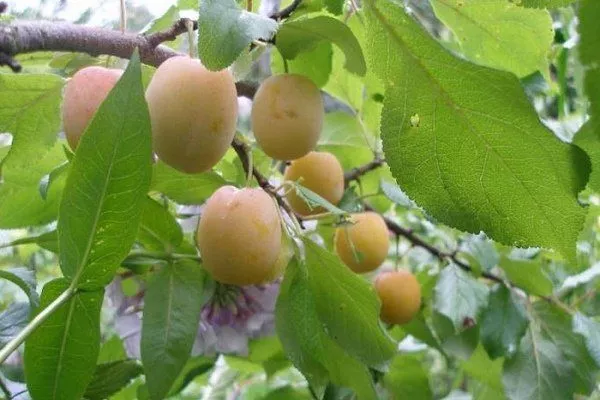
In Memory of Timiryazev
This late-ripening, self-fertile variety harvests fruit in late August. The tree grows up to 3 m tall, with medium-density crowns. Fruiting begins in the fourth year. A single tree can weigh up to 35 kg. Pollinators are recommended for increased yield.
The plums are large and oval. The fruit's base color is bright yellow, while the skin is pinkish-red. There are numerous spots under the skin. The seam on the side is barely visible. There is a waxy coating. The flesh is fine-grained, not particularly juicy, sweet and sour, with a faint aroma. The peduncles are short. Excellent transportability and storage quality. Immunity is satisfactory, drought resistance is moderate, transportability is high, shelf life is good, and the variety is suitable for all purposes. Cons: intermittent fruiting.
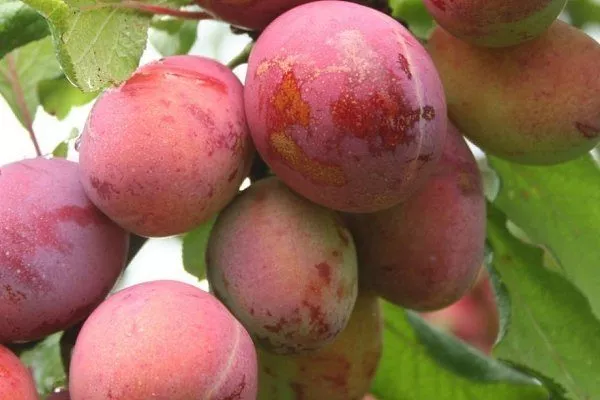
Ochakovskaya yellow
This is an old, mid-late variety. The fruits ripen in late August or early September. The trees are medium-sized, with narrow pyramidal crowns, reaching a height of up to 4 meters. This self-sterile variety often lags behind in flowering due to a lack of pollinators. Recommended varieties are Green Renklod and Ulena Renklod. A tree produces 40-80 kg of plums.
The plums are oblong-round, medium-sized—20-30 g. The skin is yellowish-green. These are exceptionally tender and juicy. They ripen evenly, but once ripe, the fruits fall quickly, and in rainy weather, they crack. The downsides include relatively demanding growing conditions and low frost resistance. The variety is often susceptible to frost, but recovers quickly.
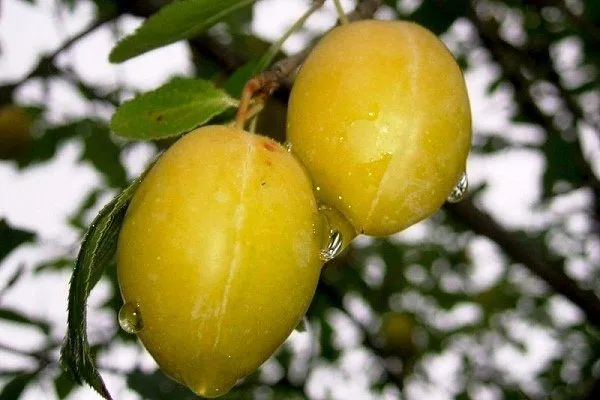
Minsk
A late-ripening, self-sterile variety. The trees are vigorous, with dense, rounded crowns. A mature tree can yield up to 30 kg of plums. Fruiting begins only six years after planting. The tree reaches its peak yield only in the tenth year after planting.
The fruits are ovoid, weighing 35-55 g. They are light yellow in color, with yellow flesh, juicy, and sweet. They are winter-hardy. A drawback is irregular fruiting and poor early maturity.
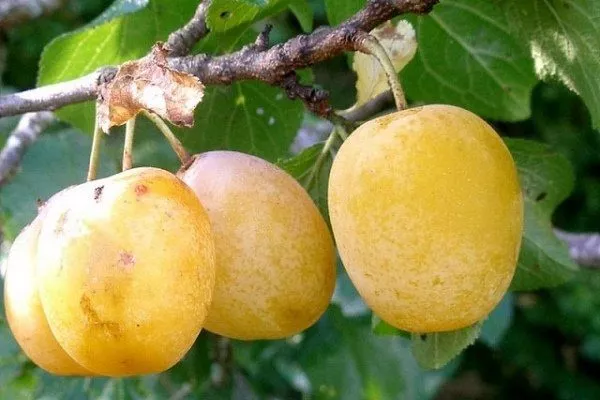
Svetlana
This is a late-ripening variety. Harvest begins in the first ten days of September. The tree is medium-sized, with a medium-dense crown. Preferred pollinators are Pamyat Finaeva and Zhiguli. Yields peak at 10 years, reaching 30 kg.
The fruits are yellow, round, and irregularly shaped. They are medium-sized. The average weight is 25 g, with a maximum of 35 g. The flesh has a delicate texture and a sweet and sour taste. The surface has a waxy coating. Frost resistance is good, and the flowers have average resistance to spring frosts. A disadvantage is a tendency to gum flow, and the seeds are difficult to separate from the flesh. The main pest is the codling moth. Drought resistance is average.
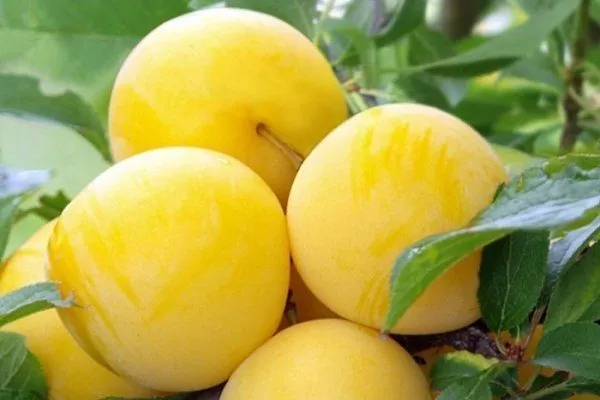
Early Loshitskaya
An early-ripening, self-sterile variety. Tree yields 25-30 kg. Fruiting begins in the fourth year after planting.
Medium-sized plums, weighing 35 g. The flesh is juicy, soft, and sweet, with a slight tartness. The flavor has honey notes. The fruit is yellow-green with a slight blush. High winter hardiness.
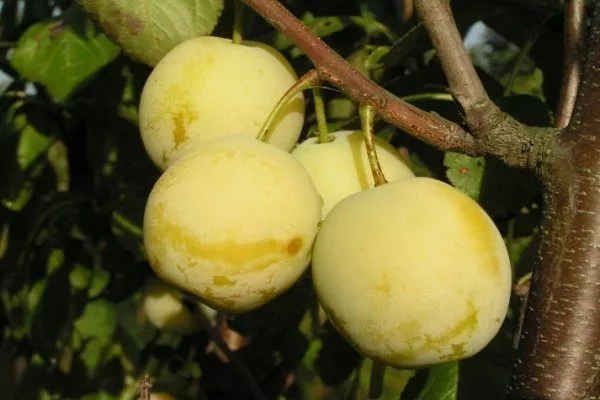
Tatar yellow
The trees are medium-sized, with broadly oval crowns of medium density. They begin bearing fruit in the fourth year. The harvest is in late August. Pollinators include Tenkovskaya Sinyaya, Rakitovaya, and Sineglazka.
This small-fruited variety weighs no more than 15 g. Its shape is broadly oval. The fruits are yellow, asymmetrical, and have a waxy coating. The skin is thin, and the flesh is yellow, medium juicy, with a sweet and sour taste. The variety tolerates drought well. A drawback is its low resistance to pests and diseases. Ripe plums tend to fall off. After harvesting, the fruits can be stored for about 10 days.
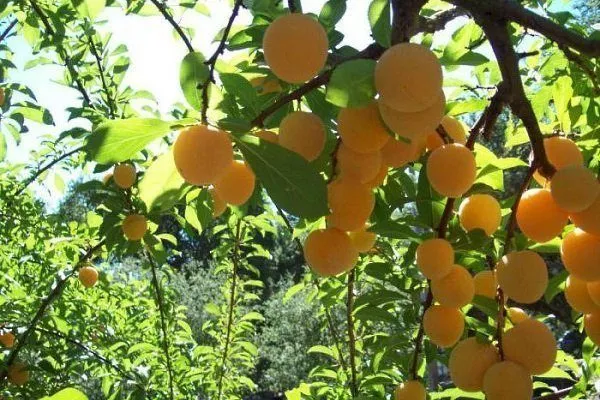
Egg yellow
A late-ripening variety with distinctive ovoid fruits. In addition to the yellow variety, there are also blue and red egg plums. The tree is tall, up to 6 m. Fruiting begins in the fifth to seventh year. Ripening occurs in early to mid-September. With proper care, the tree can yield up to 40 kg of plums.
The fruits are quite large—20-30 g—but not particularly tasty. The flavor is highly acidic. This variety doesn't like dampness; plums rot in humid weather. It's drought- and frost-resistant. It doesn't store well, keeping for no more than a week. This is one of the oldest varieties, so it has many drawbacks, including vulnerability to fungal infections.
Landing rules
Plums can be planted in either fall or spring. The planting procedure is the same for both, with a few minor nuances. If planting in the fall, prepare the site no later than two weeks in advance. If planting in the spring, prepare the soil and even the hole in the fall. Spring planting is done after the last frost has passed, and fall planting is done a month to a month and a half before the first frost.
- ✓ Check the root system for rot and mechanical damage.
- ✓ Make sure the seedling has at least three well-developed branches.
- ✓ Pay attention to the presence of live buds.
Yellow-fruited plums can bear fruit anywhere they can survive the winter, bloom successfully, and produce a harvest. The shorter the summer and the harsher the winter, the more difficult it is to grow yellow plums.
Requirements for the planting site of yellow plum:
- The optimal location on the site is the south or southwest side.
- Gentle southern slopes with good light, warmth, and aeration are preferred. A good option is planting on a south-facing side as a hedge.
- If the site is located in a lowland, seedlings are planted on mounds 0.5 m high and 2 m in diameter.
- It grows well in chernozems, gray forest soils, and light loams with neutral pH. Soils should have good water retention and air permeability.
Soil preparation and planting:
- The area is dug up to a depth of about a shovel blade.
- The planting hole is dug, taking into account the size of the root system. Typically, the hole is 70 cm wide and 50 cm deep.
- Add organic and mineral fertilizers. Place a 15 cm layer of humus or compost on the bottom. Add urea (20-30 g), superphosphate (30-35 g), and a glass of wood ash.
- After a certain amount of time, plant the seedling. If planting is in the fall, plant the tree 15-20 days later, once the fertilizer has saturated the soil.
- Mix compost with topsoil (1:1) and fill the hole with the upright seedling. When planting, it's important not to bury the root collar—it should be 3-5 cm above the soil surface.
- The soil is compacted tightly and the tree is tied to the support.
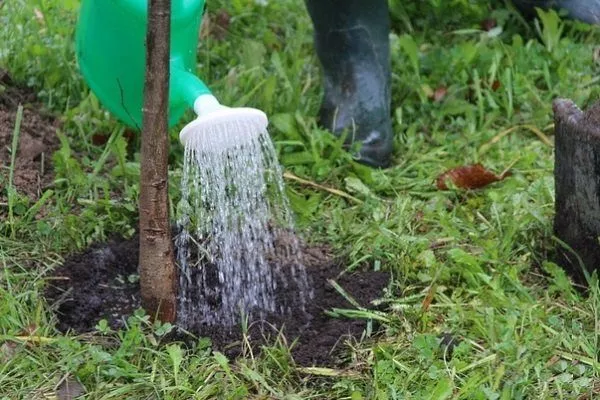
- Create a circular border to prevent water from spilling out, and water the seedling. The recommended watering rate is about 15 liters. Mulch the soil.
Yellow plums are best planted using one-year-old seedlings—they take root better and are less susceptible to disease. The recommended planting time for most regions of Russia is spring. A seedling planted in the fall often doesn't have time to establish itself before winter.
Subtleties of cultivation
Yellow-fruited plums, like any fruit tree, require some care. However, they don't require much effort from the gardener—the plum is a moderately labor-intensive tree. Water the seedlings as early as 10 days after planting, provided the weather is dry. Each tree requires 20-30 liters of water. Autumn-grown seedlings don't require any care until spring, but spring-grown ones require extensive care.
With proper care, plum trees can live up to 30 years. The heaviest harvests occur between 5 and 20 years of age. The first 4 to 5 years are the most difficult for both the tree and the gardener. However, after two harvests, the plum tree will become established, and care will be minimal.
Watering and fertilizing
Features of watering yellow plums:
- Plum is a moisture-loving tree. It requires abundant and regular watering – 100-120 liters/50-70 liters for mature/young trees.
- The last time the plum is watered is in September.
- After watering, loosen the soil. If mulch is used, loosening is not necessary. Mulch around the tree trunks with sawdust, straw, pine needles, grass clippings, etc.
Features of feeding:
- Plum trees are rarely fed – on average once every 2-3 years.
- Nitrogen fertilizers are typically applied in the spring, and potassium-phosphorus fertilizers in the fall. The rates are adjusted according to the tree's age. Typically, this amounts to tens of grams per square meter.
- Organic matter is added even less frequently—once every 3-4 seasons. This is done in late autumn. The norm is 10-12 kg of humus per 1 square meter.
Crown care
Methods of crown formation:
- Sparsely tiered. The new growth is pruned to shape the crown. Branches directed toward the center are removed, as are any excess branches that thicken the crown. A four-year-old tree should have 8-10 skeletal branches. To achieve this, only strong shoots extending at a 45-degree angle from the trunk are left. Shoots on all tiers are pruned by 1/3.
- Vase-shaped. In the second year, the main leader is pruned. Subsequently, leading branches that compete with the leader are removed to reduce the crown's height. Then, all unnecessary branches are removed—low-growing branches, those directed toward the center, vertical branches, and suckers.
Properly formed crowns allow good light penetration, and the tree produces abundant crops. A healthy, fruit-bearing tree grows 40 cm per year. In early spring, these shoots are reduced by a third. If the growth is 25-30 cm, the tree is not strong enough and should be thinned out by pruning the lower lateral branches back to 2-3 year-old wood. Older trees grow 10-15 cm and require rejuvenation pruning.
- ✓ Yellowing of leaves at an uncharacteristic time.
- ✓ Premature fruit drop.
- ✓ Slow growth of new shoots.
Mature plum trees actively develop root suckers. These suckers drain the tree's energy, so they must be removed by digging down to the rootstock—this is where the suckers are pruned.
If you cut off the shoots at ground level, several new shoots will appear in their place.
Root suckers can be useful. These root cuttings can be used to propagate plum trees by digging them up and replanting them in a new location.
Preparing for winter
Young seedlings, especially one-year-olds, need insulation:
- The branches of a young tree are collected into one “bunch”.
- Wrap the tree in foil or plastic.
- The trunk is covered with earth, forming a cone 50-60 cm high.
Mature trees also require pre-winter preparation: branches are supported to prevent them from breaking under the weight of snow. The lower part of the tree is covered with fallen snow.
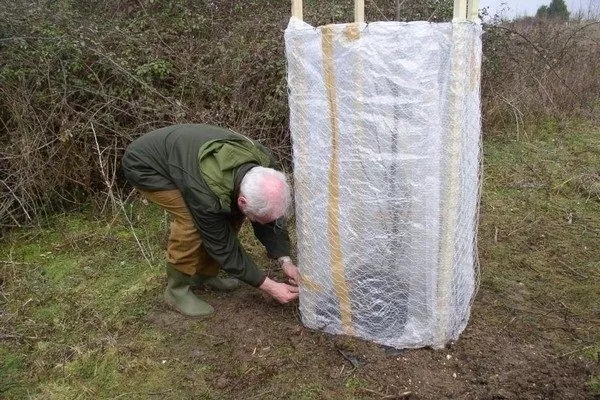
There is another option for insulating young seedlings:
- The branches are collected into a broom.
- They surround the tree with poles to form a “house”.
- The structure is filled with hay or covered with straw mats.
- They tie the structure with a rope.
When snow falls, an additional insulating layer appears. This structure reliably protects plum saplings from frost, wind, and sunburn. In winter, the trees face another threat: rodents. To repel them, peppermint is placed in the spaces between the poles.
Benefits of yellow plums
Yellow plums are a valuable product widely used in cooking, medicine, and the food industry. They are used to make molasses, jams, preserves, seasonings, wines, and other alcoholic beverages.
Yellow plums contain a lot of:
- vitamins – A, E, C, B1, B2, B5, B6, PP;
- minerals – potassium, calcium, phosphorus, magnesium, iron, silicon and others;
- plant fiber.
Fruits, fresh and dried, have a host of beneficial properties that make them attractive to consumers:
- protect blood vessels from cholesterol plaques;
- cleanse the intestines, improve its peristalsis;
- prevent atherosclerosis;
- lower blood pressure;
- strengthen the immune system;
- normalize weight;
- stimulate the gastrointestinal tract;
- remove excess fluid;
- maintain visual acuity;
- rejuvenate the body;
- improve the condition of skin, hair, nails;
- replenish iron deficiency.
Uses of yellow plum:
- Inclusion in fasting diets.
- Add to nourishing, rejuvenating and peeling masks.
- Drying, canning, dessert preparation.
Gardeners' reviews
The yellow plum is a highly productive and undemanding fruit tree with abundant harvests. Thanks to its ease of care, hardiness, and strong immunity, yellow plums are confidently gaining a place in private and farm gardens.