
The Yakhontovaya plum variety, renowned in the horticultural world for over twenty years, has earned a well-deserved reputation for high-quality and healthy fruit. It is ideal for growing in both home and commercial gardens. Its undemanding nature and tolerance to various climatic conditions guarantee delicious fruit even in adverse weather conditions.
History of selection
A new plum variety was developed at the Institute of Horticulture and Nursery Science in Moscow. Experts H. K. Enikeev, S. N. Satarova, I. V. Popova, and V. S. Simonov combined the advantages of the large-fruited Smolinka plum, renowned for its excellent flavor, and the highly winter-hardy Eurasia 21 hybrid, developed in the USA and boasting high yields, in a single plant.
Since 2003, the new variety has been undergoing testing at official variety testing sites, and in 2008 it was officially registered in the Register of Breeding Achievements of Russia for the Central Region.
Characteristics of the variety and description
The Yakhontovaya plum is a Russian-bred variety adapted to the conditions of the central Russian region. Key characteristics include increased frost resistance, the ability to withstand periods of drought, as well as impeccable productivity and regular fruiting.
The appearance of the tree
This plum variety grows to a height of 500-550 cm and is a sturdy tree. Its shoots are light brown and grow vertically, forming an elevated, spherical crown.
Other varietal characteristics:
- The elongated leaves with pointed tips and a light green matte cover provide a medium level of foliage.
- The difficulty in maintaining the shape and volume of the crown requires regular pruning and thinning.
- Plum blossoms begin on April 20th and continue until May 10th. During this time, the tree's crown comes alive, adorned with lush inflorescences, consisting of panicles of 6-8 white-pink flowers. The buds are remarkably resistant to late frosts.
- Fruits are formed on young shoots, bouquet branches and spurs.
- Under favorable conditions, the plum tree can bear fruit for 15 years.
Fruits and their taste characteristics
The plum variety is classified as a medium-sized and large-fruited fruit, characterized by the following qualities:
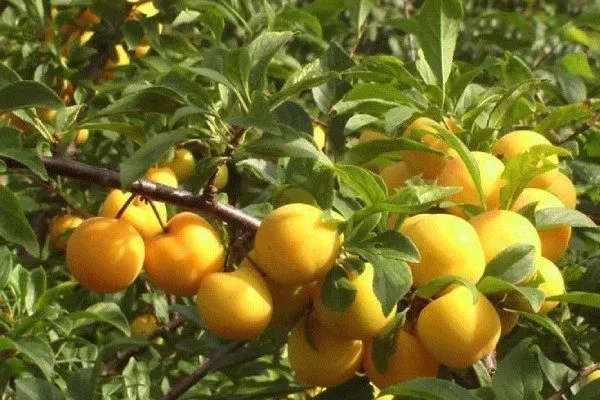
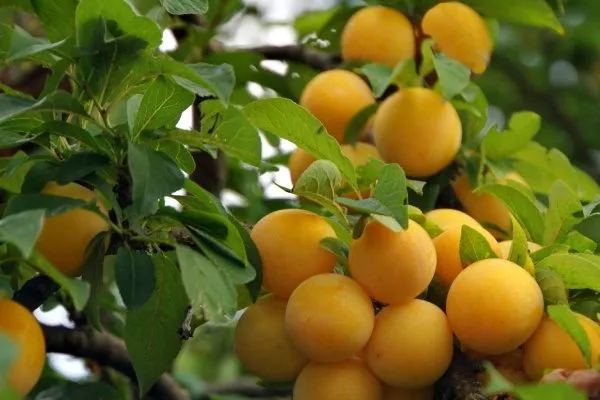
- The berries reach a weight of 30-35 g. These are good results for a plum crop.
- The shape is perfectly round, and ripe fruits are uniform. In the early stages of development, the fruit may be oval.
- The skin is quite thin, smooth, elastic and shiny, partially covered with a waxy film.
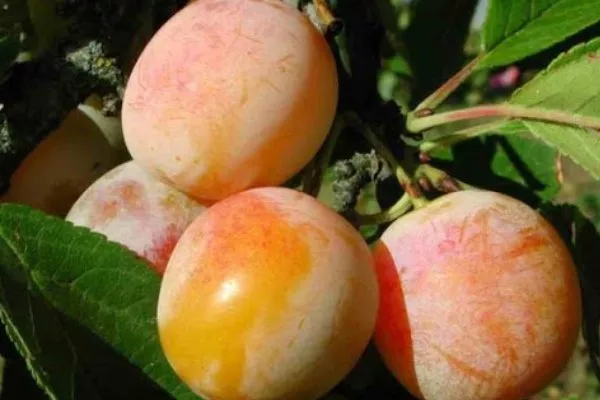
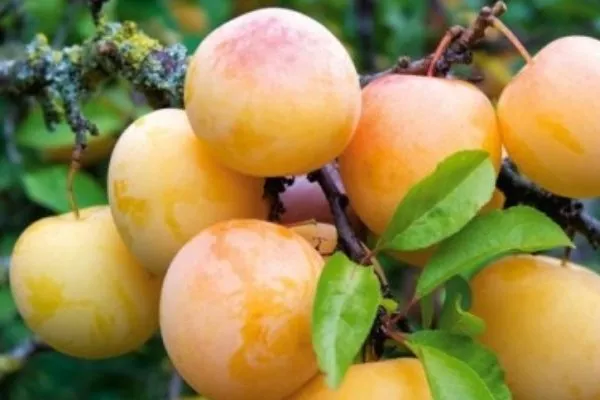
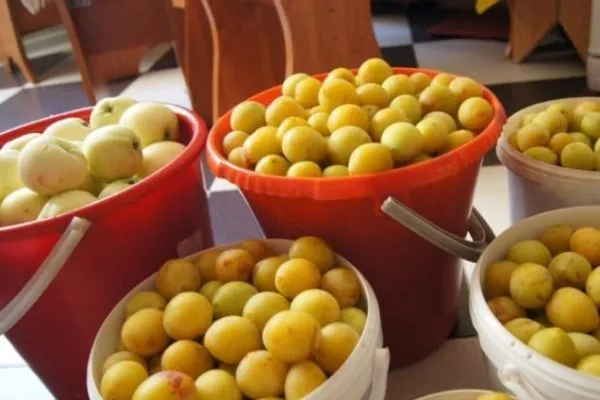
- As the fruits ripen, they acquire a greenish-yellow color, and when fully ripe, they become more intense—honey-yellow or golden-amber. In southern regions, the Yakhontovaya plum can acquire a delicate orange-pink hue due to sun exposure.
- Beneath the thin skin lies a light lemon-colored, tender, jelly-like and juicy pulp.
- The stone of this variety is small and easily separated from the inside.
- The taste is harmonious, with a balance of acidity and sweetness, distinguished by a distinct dessert aroma and purpose, for which tasters award it high marks (5 out of 5).
Beneficial properties
Plums are an excellent source of nutrients: they are rich in microelements and natural antioxidants, and also have high nutritional value.
Including plums in your diet helps strengthen the vascular system, purify the blood, and maintain proper functioning of the gastrointestinal tract.
Plum pulp is rich in the following components:
- dry weight is 15.3%;
- sugar content is 9.0%;
- acidity is 3.5%, and ascorbic acid is present in the amount of 14.5 mg per 100 g.
The glucose present in the fruit has a beneficial effect on mental health, helping to eliminate stress and depression, and also promotes normal sleep patterns.
Drought resistance, frost resistance
Plum trees are rated as moderately drought-tolerant. This plant is sensitive to both under- and over-watering. The choice of watering method depends on current weather conditions.
Prunus domestica Yakhontova has decent frost resistance. However, to ensure successful overwintering in the fall, additional measures to protect the tree are recommended:
- In winter, plum trees tolerate low temperatures very well, so adult specimens do not require additional insulation – high-quality mulching is sufficient.
- In the case of young plum trees, it is recommended to protect their trunks from frost during the first few years after planting using materials with high air permeability, such as burlap or agrofibre.
Self-fertility and the need for pollinators
| Name | Disease resistance | Flowering period | Soil requirements |
|---|---|---|---|
| Yakhontovaya | High | April-May | Average |
| Early ripening red | Average | May | Low |
| Hungarian | High | April | High |
| In Memory of Timiryazev | Average | May | Average |
Prunus domestica Yakhontova is a species capable of partial self-pollination. For this reason, it's advisable to plant donor trees in the garden. The varieties most suitable for cross-pollination include Skorospelka Krasnaya, Vengerka, and Pamyat Timiryazeva. Experienced gardeners recommend planting two or three pollinator plum trees.
Productivity, fruiting and ripening time
Ripening occurs in August. Yakhontovaya Ranevnaya plum is a fast-growing variety. The first fruits can be expected just three years after planting. This variety is characterized by year-round fruiting without interruption.
The productivity of this variety is impressive: in the first few years, a single tree can yield 25 to 30 kilograms of fruit, and in subsequent years, the yield can reach 50 kilograms. The overall yield is 323 centners per hectare, and according to some estimates, a single tree can yield 50 to 70 kilograms of plums.
Application of berries
Plums, one of the most popular fruits, can be eaten fresh or used as the basis for a variety of homemade preserves. They can be used to make not only exquisite jams and preserves, but also rich compotes and excellent sauces.
Important aspects of planting
The success of a plum tree's planting determines its future development and yield. Before planting, it's important to carefully examine the soil composition and moisture content in the selected area.
- ✓ The seedling planting depth should be such that the root collar is 3-5 cm above the soil level.
- ✓ The distance between trees should be at least 3 meters to ensure sufficient space for the growth of the root system and crown.
Recommended timeframes
The best time to plant Prunus domestica Yakhontova depends on the climatic conditions of a particular region:
- If there's a risk of early autumn frosts, it's best to delay planting until spring. It's recommended to plant plums when the soil has warmed up, but the buds have not yet begun to open.
- In warmer climates, plums are planted in the fall, when the trees have lost their leaves.
How to choose a site for planting?
The choice of a location for planting the Yakhontovaya plum is made taking into account the following criteria:
- presence of constant light;
- location in the south or west of the garden;
- use light, well-drained soil;
- eliminating the possibility of stagnant moisture formation in the soil.
Plums can grow in a variety of soil types, except acidic ones. The ideal location for plums is flat or gently sloping terrain.
What plants can and shouldn't be planted nearby?
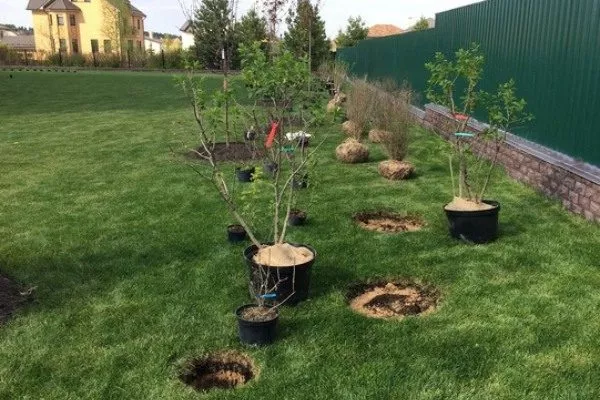
Plums are planted in groups of two or three different varieties, with a 300 cm gap between plants. This fruit tree does not do well near pears, cherries, and sweet cherries. However, it can easily grow near apple trees, raspberries, and currants.
Selection and preparation of planting material
Choose a young one-year-old seedling with a single stem, or a two-year-old seedling with a central trunk and side branches. The plant's rootstock should be fully developed and, preferably, treated with clay. The grafting site should be easily visible, 5-15 cm from the root.
It is not recommended to purchase trees that are 4 meters or older. Despite the popular belief that they will produce a harvest faster, this is not the case. Trees of this age often have pruned roots, which hinders their adaptation and can lead to delayed fruiting compared to younger, one-year-old trees.
The best seedlings are sold at the end of the season, and the remaining ones are often offered in the spring. Seedlings purchased in late fall can be temporarily buried until spring planting:
- a hole is dug in a closed part of the garden;
- the seedlings are laid at a slight angle, almost horizontally;
- cover the roots and a third of the trunk with soil;
- To protect plants from rodents, it is recommended to cover them with spruce branches on top.
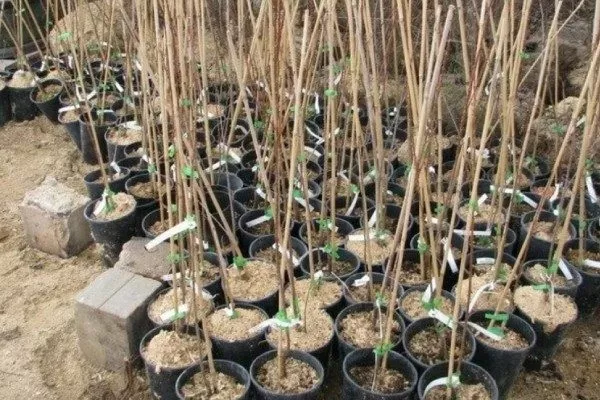
Immediately before planting, carefully inspect the plants, remove any damaged or unsuitable parts, and soak them in water for 24 hours. Add any rooting agent if desired.
Planting sequence
First, you need to dig a hole, fill it with soil, and leave it to settle. This process takes three weeks to two months. When planting Prunus domestica Yakhontova plum in the spring, you should dig the hole in the fall to avoid damage to the young plant due to soil settling.
The process of planting the Yakhontovaya plum tree at home includes the following steps:
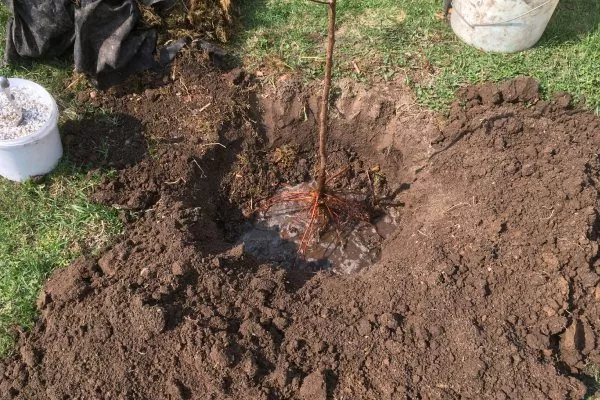
- Dig a hole that should be 60x60 cm in size and 70 cm deep.
- As a top dressing, prepare a mixture of fertile soil from the top layer with humus, adding superphosphate and potassium salt.
- Pour this mixture back into the hole.
- After the soil has settled, place the seedling in the hole.
- Distribute the tree roots evenly and cover them with the prepared planting soil mixture.
- Compact the soil around the seedling and moisten it with warm water.
How to care for the plum tree further?
Care measures are standard, but there are individual varietal requirements and subtleties.
Trimming
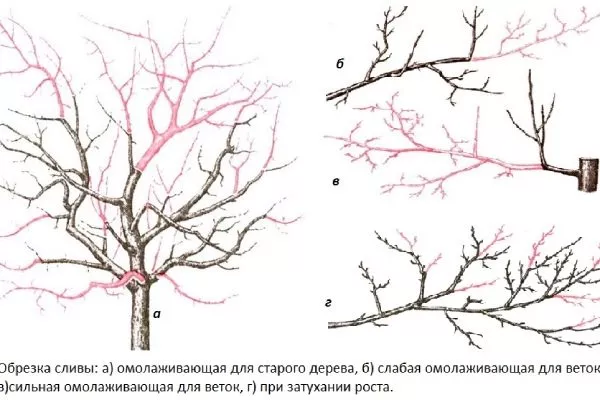
To avoid future plum tree care difficulties, a year after planting, the shoots should be pruned and the crown structure should be developed. This process should be carried out at a height of 35-45 cm from the ground, with 7-8 lateral branches remaining on the tree. Sanitary and age-related pruning should be performed annually.
There are four main pruning methods, depending on the purpose:
- Formative pruning – This is a primary procedure that must be performed during the first few years of a tree's life. It is performed in the spring and aims to shape the crown into the desired form—cup-shaped, pyramidal, or with a distinct layered structure.
- Regulatory pruning – This procedure is necessary for trees of any age and serves to balance their growth and fruiting. During this procedure, shoots growing incorrectly, upward or sideways, as well as those located within the crown, are removed.
- Maintenance pruning – Helps maintain the plum tree's attractive appearance. This process involves removing old branches, which are then gradually replaced with new ones.
- Sanitary pruning – This is a tree care technique aimed at restoring the tree. It is performed twice a year—in spring and fall—and involves removing damaged branches, such as those that are dead, broken, or affected by fungi and other diseases/insects.
| Type of pruning | Completion period | Target |
|---|---|---|
| Formative | The first 3-4 years | Creating a crown structure |
| Regulatory | Every year in spring | Maintaining a balance between growth and fruiting |
| Supportive | Every year in the fall | Removing old and unproductive branches |
| Sanitary | As needed | Removal of diseased and damaged branches |
Preparing for winter
In late autumn, before winter sets in, preparations begin for the overwintering of Yakhontovye plums. In dry weather, soil moisture is the first priority, but in rainy weather, this step can be skipped.
To protect trees, a number of actions should be taken:
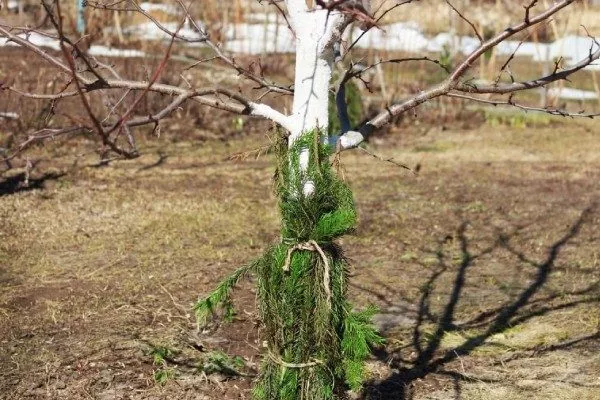
- Provide cover for the tree trunk.
- Spread a 10-20 cm layer of compost around the tree, depending on the upcoming frosts.
- If the tree is still young, it is necessary to add additional covering of agrofibre or burlap.
- To prevent damage from rodents, it is necessary to install protective nets or roofing felt.
Top dressing
To nourish the Yakhontovaya plum, apply fertilizer twice a year: during the spring and summer growth periods. The spring fertilizer consists of a solution of 10 liters of water and equal amounts of potassium salt, superphosphate, and urea (20-25 g each). In the summer, the fertilizer should be adjusted, removing the urea and adding tree bark.
Watering
Irrigation of the Yakhontovaya plum tree should be done three to five times per season, depending on weather conditions. Particular attention should be paid to watering during flowering and fruit harvesting periods, if these coincide with dry periods.
The amount of water required for the procedure depends on the age of the plant: for a young plant, 45-50 liters is enough, and for an adult, double the amount.
Caring for the tree trunk circle
Tree trunk care involves keeping the soil clean and loose. This is achieved by regularly removing weeds, loosening the soil, and adding mulch. The soil should be tilled to a depth of 8-12 cm at the tree trunk and 15-20 cm at the outermost part of the trunk circle.
Methods of control and prevention of diseases and parasites
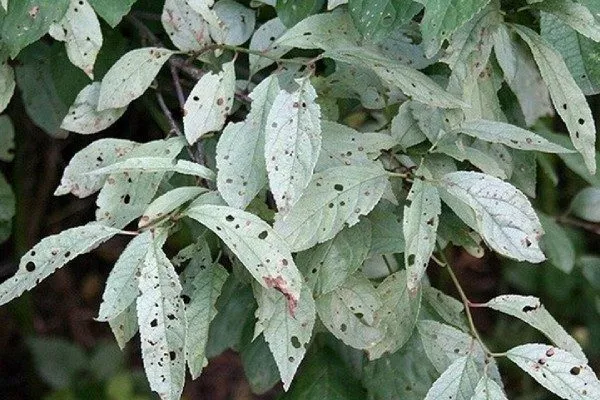
Prunus domestica Yakhontova is resistant to diseases and insects, but is sometimes susceptible to pathogens such as brown spot and moniliosis. Fufanon-Nova or Fitoverm are recommended for treating affected plants.
The exact ratio of ingredients must be followed according to the instructions and the solution must be applied by spraying. To achieve the desired result, repeat the procedure 3-4 times at intervals of two to three weeks.
Plum trees can become prey to various pests, including sawflies, fruit mites, codling moths, plum aphids, and leaf rollers. To combat these pests and restore the tree's health, you can use Fitoverm, Horus, or Aktara. To enhance the effect, it is recommended to add sulfur to the treatment mixtures at a dose of no more than 80-90 g.
Preventive measures:
- Before beginning garden maintenance, it's essential to thoroughly remove all damaged plant material. These materials should be destroyed immediately by burning, otherwise they could spread disease to all plants in the area.
- To prevent various diseases and pest attacks, it is recommended to regularly spray with both commercially available fungicides and homemade ones based on natural ingredients such as garlic, onion peel, dandelion, nettle, and others.
Harvesting and storage rules
Plums are picked on sunny days, a process divided into several stages. To maximize shelf life, plums are harvested five days before they are fully ripe. They are carefully packed in boxes in several layers, with shredded paper or sawdust placed between them, and then stored in a cool place.
At a temperature of 5 degrees Celsius and 90% humidity, berries can be stored for up to three weeks. At lower temperatures, the berries darken. Fresh plums have a unique flavor, but they can also be frozen, dried, used to make jam, compotes, juices, and even homemade wine.
Positive and negative qualities
Experienced gardeners highlight a number of advantages of the Yakhontovaya plum variety, including:
However, this variety also has its disadvantages:
To reduce the size, you can graft Yakhontovaya onto rootstocks such as felt cherry, VVA-1, Alexy or 2-17.
Reviews
The Yakhontovaya plum enjoys a competitive reputation among gardeners as a variety with great potential. This tree tolerates both low temperatures and drought, and is unaffected by pests and the most common stone fruit diseases. With proper cultivation practices and proper pruning, you can guarantee an annual harvest of large fruits.