
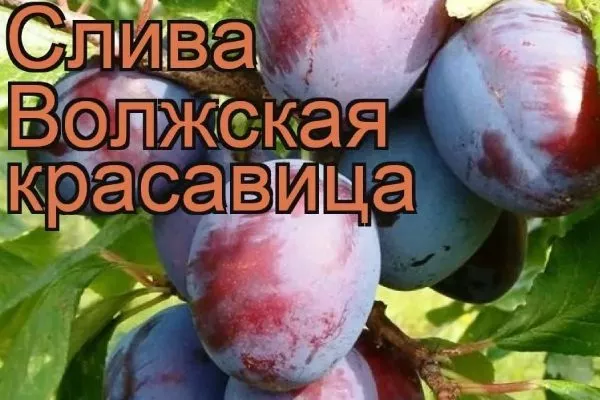
The Volzhskaya Krasavitsa plum is a popular variety, especially beloved in central Russia. It thrives in warmth and produces abundant harvests. Its fruits make an excellent fresh dessert and are perfect for any kind of processing.
Selection
The Volzhskaya Krasavitsa variety was created by renowned breeder E. P. Finaev at the Kuibyshev Agricultural Experimental Station in the mid-20th century. During the breeding process, numerous variants were tested, ultimately selecting the Krasnaya Skorospelka and Renklod Bove varieties as the parents.
Selection research was conducted in the 1930s, and it was only in 1965 that the Volga Beauty variety was officially registered in the State Register of the Soviet Union.
The concept of a plum
The Volzhskaya Krasavitsa plum is a hybrid variety. These plum trees are vigorous and robust, allowing them to grow quickly after planting. The fruit has moderate shelf life, allowing them to be stored for 12-15 days under favorable conditions.
The appearance of the tree
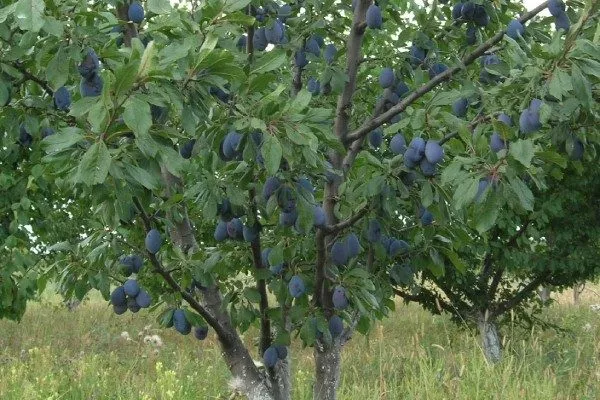
The tree is distinguished by its impressive size and volume, which distinguishes it from other plum varieties. This tree can reach a height of 600 to 700 cm.
There are also other varietal characteristics:
- The crown has an ideal pyramidal shape, which is ideal for a tree. This allows all leaves to participate evenly in photosynthesis, ensuring high energy efficiency.
- The bark of the tree has a smooth surface and a grey-brown tone.
- The branches are shortened, but strong and wide, which contributes to the stability of the crop on the tree.
- The leaves of this plum variety are large and wide, their shape resembles an egg, slightly narrowed on one side and significantly on the other, which gives them a resemblance to droplets.
- The leaf blade is decorated with numerous wrinkles resembling veins. Its color is almost uniform, ranging from light yellow-green to a rich dark green, depending on the plant's age and habitat.
- The fine texture of the leaves, despite the wrinkles, has a delicate matte sheen. The surface is covered with a slight fuzz, adding to their appeal. The leaf blade margins are slightly serrated, and the petiole, which serves as a support for the leaf, is thick and strong enough to ensure the foliage remains stable during gusts of wind.
Fruits and their taste characteristics
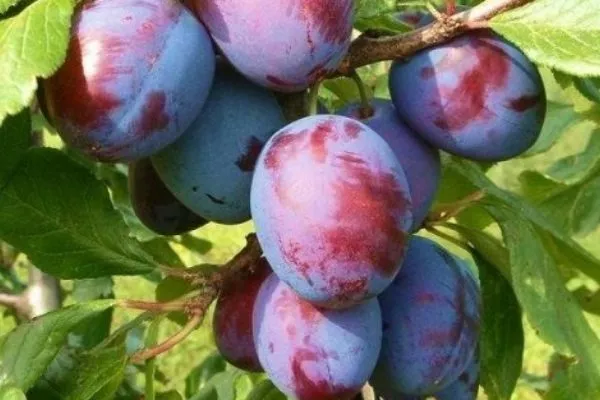
Volzhskaya Krasavitsa plums weigh approximately 35 grams, a fairly hefty figure for a plum. Their shape is somewhat different from that of regular plums: they are often slightly elongated and flattened, with a pronounced ventral suture, which can be barely noticeable in other varieties with smaller fruits.
Other characteristics:
- The stalks of these plums are strong, as are the leaf petioles, so they are not prone to premature fruit loss.
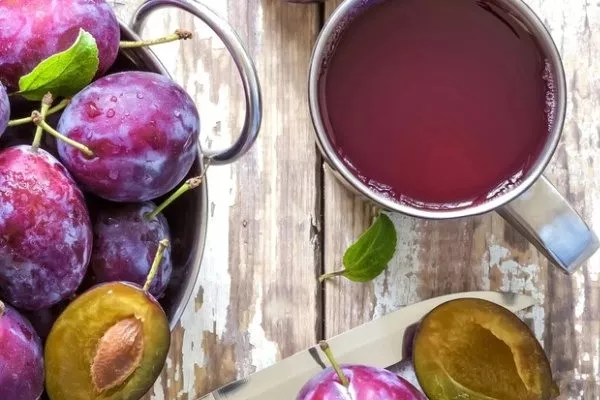
- The plums are a deep purple, with pinkish and lilac hues on their surface, further highlighting their superior qualities. A protective waxy coating is always present.
- The plum's flesh is the most valuable part of the fruit. It's soft and tender, with a wonderful balance of flavors, making it a memorable treat for lovers of both sweet and sour fruits (the skin contains more acid, so if you don't want to taste it, just the flesh is sufficient).
- The pulp of the fruit has a yellow-pink tint, although the juice, which is released in large quantities when bitten or broken, does not have this color.
- One of the additional benefits that will be especially valuable for those planning to make jam or compote from this plum is the ease of separating the pit from the pulp.
A large number of independent experts and professional gardeners, previously unfamiliar with this variety, awarded it 4.5 points out of 5 for taste in tasting tests.
Regarding the appearance of the fruit, the same group of experts gave a rating of 4.8 points on a five-point scale, which will undoubtedly please those who are engaged in gardening for subsequent sale.
Health benefits
The fruits of the Volga Beauty contain the following components:
- 22% – substances without water;
- 10.35% – carbohydrates;
- 1.95% – organic acids;
- 11.78 mg/100 g – vitamin C.
The fruits of this plant are rich in vitamins and microelements. Here are just a few examples of their beneficial properties:
- Vitamin C strengthens the immune system and helps fight various infections.
- Potassium important for regulating heart rhythm and maintaining water balance in the body.
- Fiber helps improve the digestion process and prevent constipation.
Drought resistance, frost resistance
The tree has a high drought tolerance, reflecting its love of sunlight. However, to achieve the best harvest, regular watering is recommended to avoid problems associated with soil moisture deficiency.
It is moderately frost-resistant, thanks to its thick bark. During cold periods, the plant's flower buds can freeze, causing them to fall off. However, these trees can tolerate temperatures down to -35 degrees Celsius.
Self-fertility and the need for pollinators
| Name | Ripening period | Disease resistance | Fruit size |
|---|---|---|---|
| Early ripening red | Early | High | Small |
| Kuibyshev blackthorn | Average | Average | Average |
| Peaceful | Late | High | Large |
| Zhiguli | Average | High | Large |
The Volzhskaya Krasavitsa plum is self-pollinating, but to increase fertility, it is recommended to pair it with other varieties that will act as pollinators. These plums bloom at the same time to ensure cross-pollination.
The best donors for the Volga Beauty plum include:
- Early ripening red.
- Kuibyshev blackthorn.
- Peaceful.
- Zhiguli.
The spacing between pollinator trees and the Volzhskaya Krasavitsa plum should be between 12 and 20 meters. Too little space can lead to crown closure, which will negatively impact tree growth. However, if the spacing exceeds 20 meters, cross-pollination may not occur.
Productivity, fruiting and ripening time
The Volzhskaya plum is undoubtedly the leader in yield, as evidenced by yields of up to 12-15 kg per young tree. With age, yields only increase, and by the age of ten, the tree reaches a minimum of 25 kg. The yield density is especially high during the season.
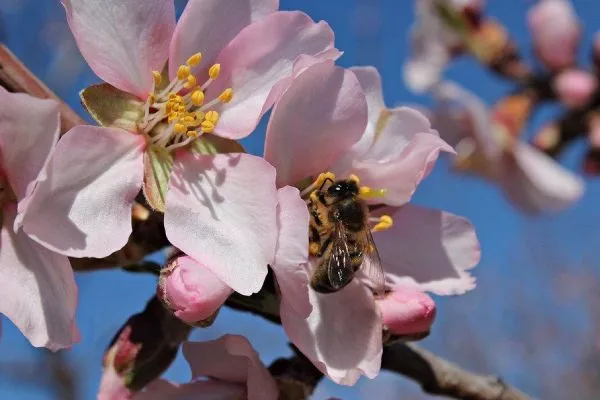
This variety is distinguished by its early ripening and flowering, beginning on May 10th, and fruiting on August 10th. Volzhskaya Krasavitsa produces a harvest every year, without resting, which is essential for commercial cultivation.
Application of berries
The berries are characterized by a high juice content and are ideal for making various desserts. The taste of the fruit can vary from sweet and sour to cloyingly sweet, depending on the degree of ripeness.
Volzhskaya Krasavitsa plums can be used to make dessert compotes, kissels, jams, preserves, and sauces, as well as for pie fillings and delicious charlotte cakes. Furthermore, this variety boasts excellent winemaking qualities.
Resistance to diseases and pests, growing regions
The Volga Beauty is resistant to various diseases and pests. It's important to remember the need for regular preventative maintenance to maintain the tree's health and protection.
Recommended growing areas include the Lower Volga, Middle Volga, and Central regions. Despite its limited growing area, this plum is grown throughout Russia, from southern Krasnodar to the cold Urals.
Features of planting operations
Despite the many benefits that plum has, its full potential is only realized if all planting rules and proper tree care are followed.
Recommended timeframes
The best time periods for successful development of the Volga Beauty plum from a seedling are autumn and spring:
- It is recommended to carry out autumn work in the last two weeks of September.
- Spring planting is optimal from mid-April to mid-May.
How to choose a site for planting?
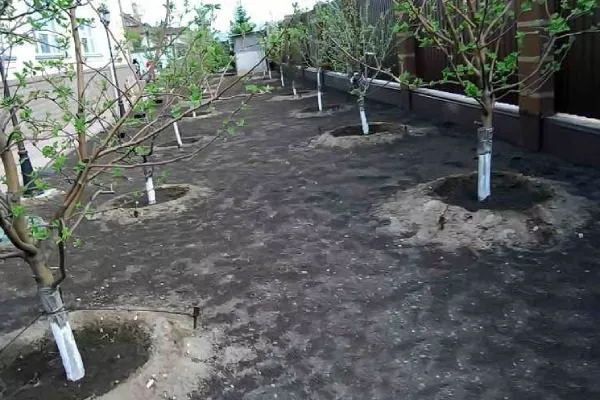
Optimal seedling placement is key to obtaining abundant harvests. The hybrid is ideal for planting on flat areas and gentle slopes.
The variety prefers warm conditions, so choose areas with abundant sunlight, while avoiding places exposed to strong gusts of wind.
What crops can and cannot be planted next to each other?
Studies have shown that this hybrid doesn't get along well with plants such as pears, apples, blueberries, and raspberries. However, it thrives especially well near maples and elderberries, which effectively combat aphid pests. Furthermore, other plum varieties can be ideal neighbors for it, as they facilitate pollination.
Selection and preparation of planting material
A variety of seedlings can be found in specialized stores, nurseries, and markets, but to purchase high-quality material, it is best to choose trusted retailers where the likelihood of mixing plant varieties is extremely low.
- ✓ The seedling must have a healthy root system without signs of rot or damage.
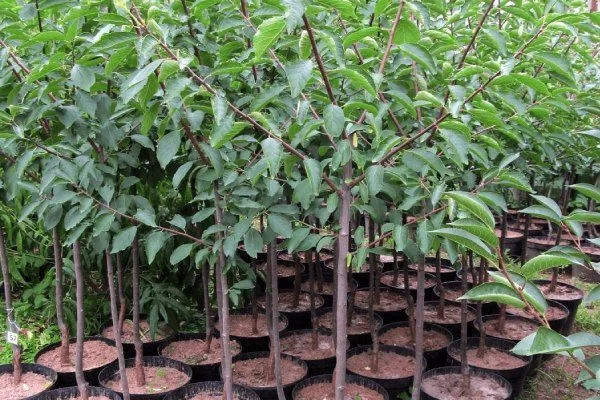
- ✓ Seedlings with a closed root system are preferable, as they take root better.
Criteria:
- The ideal option for planting are two-year-old seedlings with roots at least 10 cm long.
- It is important to carefully examine the roots: they should be slightly moist, without dry branches and without signs of damage to the bark.
What to do next:
- After purchasing, it's important to protect the root system until it's ready to be delivered home. For this purpose, it's recommended to use a damp cloth, which you should bring with you in advance. It's also a good idea to wrap it in plastic to retain moisture, especially if the trip is long.
- This plum variety doesn't tolerate being out of soil for long periods before planting. Therefore, if you're not yet ready to decide on a location, temporarily bury the seedling in the ground in your garden.
To do this, first dig a hole approximately 40-50 cm deep. The seedling is placed in this hole at a slight angle, not vertically. Then, the root system and the lower part of the trunk are carefully covered with soil, which should not be too tightly compacted to allow for easy removal later. - A couple of weeks before the main work (although it's best to do this 3-4 months in advance), prepare the garden. To do this, dig the soil, adding any organic matter if necessary (approximately 8-12 kg per square meter).
Planting sequence
Planting plums occurs in the following order:
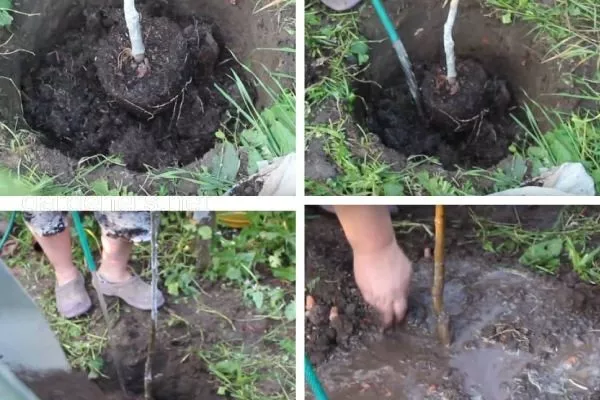
- Dig holes – their dimensions are 50-60 cm deep and 100-110 cm wide.
- After this, mix the soil dug from the hole with compost (if organic matter was added in the fall, then 5 kg is enough, if not, then add 12-15 kg), 250-350 g of superphosphate, 350-450 g of wood ash and 50-55 g of potassium chloride.
- Place a stake in the center of the hole to support the tree.
- Then, fill the hole 2/3 full with the resulting substrate. Place the seedling in the center, ensuring the root collar is 5 cm above ground level. Position the tree so that its north side faces the stake.
- Fill the hole with soil mixture and compact it lightly.
- Then, at a distance of 45-55 cm from the trunk, dig a ring-shaped furrow and pour 30 liters of water into it.
- After this, fill the space around the planting hole with organic fertilizer, such as manure with sawdust or simply humus.
- Tie the tree to the support.
How to care for the plum tree further?
For plums to grow healthy and produce a bountiful harvest, they require adequately moist soil. They also require careful maintenance, including regular soil aeration and weed control.
Watering and loosening the soil
It's important to keep the soil around the plum tree constantly mixed, which is achieved by loosening it. Weeds should be removed regularly.
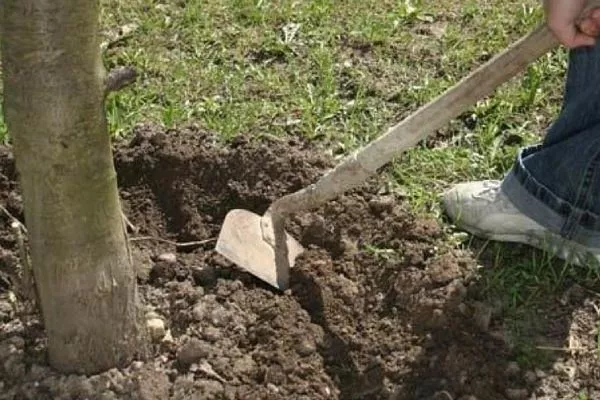
During the warm months, the soil should be loosened to a depth of 10 cm after watering, and in the fall, deep digging should be carried out to a depth of 20 cm, which helps combat pests that go into the soil for the winter.
During the growing season, the tree needs to be watered at least five times, with the final watering in October. To do this, dig a 10-cm-deep circular trench around the plum tree, following the crown's contour. After watering, return the soil to its original position, carefully filling the area around the trunk and covering it with a 15-18 cm-deep layer of mulch.
Fertilization
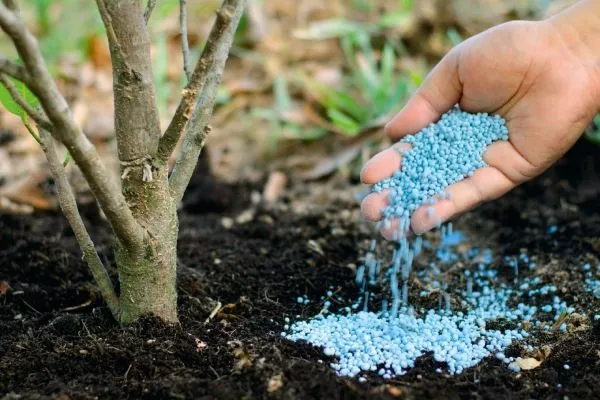
To ensure your tree bears fruit abundantly every year, it's important to ensure it receives all the necessary organic and mineral nutrients. It's recommended to use a mixed fertilizer (organic and mineral supplements) to achieve the greatest benefits for your tree.
Peculiarities:
- Compost and rotted manure are often used as key organic mixtures; 10-15 kg of each will be quite sufficient.
- Volzhskaya plum prefers acidic soil, so various fertilizers are used to correct its properties: chalk, slaked lime, dolomite flour, and wood ash. The most effective mineral fertilizer is dolomite flour, rich in potassium and magnesium. The recommended dose is 200-300 g of any of the above-mentioned substances, depending on the plant's size, applied once every three years.
- When it comes to minerals, give preference to seasonal, store-bought complexes. Dilute the preparations strictly according to the instructions.
Crown pruning
First, the plum tree is shaped, which includes pruning. If a one-year-old sapling has no crown, a section is removed starting from the base. If it does have a crown, the main shoot is pruned so that it is 20 cm higher than the other branches.
When working with a two-year-old tree, shorten the lateral branches by a third. In subsequent years, to maintain the plum tree's appearance, regularly prune it in March and October.
Preparing for winter
The Volga Beauty plum is frost-resistant, but to ensure optimal preservation during cold periods, it is necessary to follow certain recommendations:
- When the leaves have completely fallen, clear the ground around the trees and till it with a shovel to a depth of 15 to 20 cm.
- Young plum trees that haven't yet produced fruit should be protected from the cold using burlap or thick paper. Using plastic is not recommended.
- On mature plums, you should carefully remove dead, dry areas and those where various growths are present.
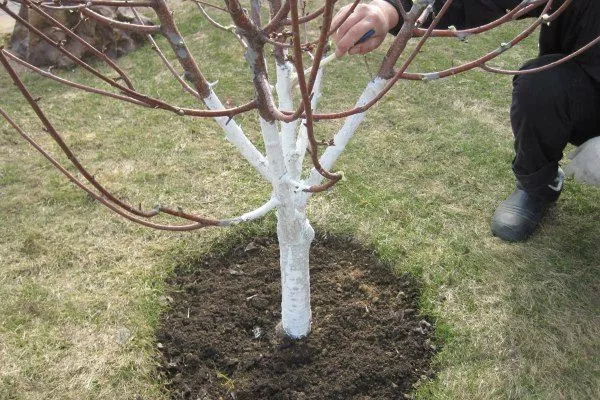
- Then it is necessary to carefully whitewash the trunk and branches of the tree twice to protect it from pests.
- In case of minor damage to healthy tissue, it is recommended to treat the damaged areas with garden pitch, which is easy to make yourself.
Protection from rodents
In winter, rodents often cause damage to tree trunks and roots. To prevent this problem, it is recommended to protect the plum tree. Straw, roofing felt, spruce and peppermint branches, and pieces of fabric soaked in creolin can be used for this purpose.
Methods of control and prevention of diseases and parasites
Despite its resistance to damage, the Volga Beauty can be subject to insect attacks and infection under unfavorable conditions:
- Fungal infections (marsupial disease, holey spot, moniliosis). To prevent the disease, spray with Bordeaux mixture before the leaves emerge. If the disease has already occurred, repeat the treatment every two weeks until complete recovery.
Alternatively, you can use fungicides. - Cherry elephant. The pest damages buds, fruit ovaries, and fruits, reducing yields. It is recommended to dig the soil before budding, and apply a 10% solution of malathion after flowering.
- Plum aphid. The insect causes leaves to curl and dry out. Preventative treatment with Bitoxibacillin in early spring is effective. After flowering, use Skor. Zircon can be used during the growing season.
Features of harvesting and storing crops
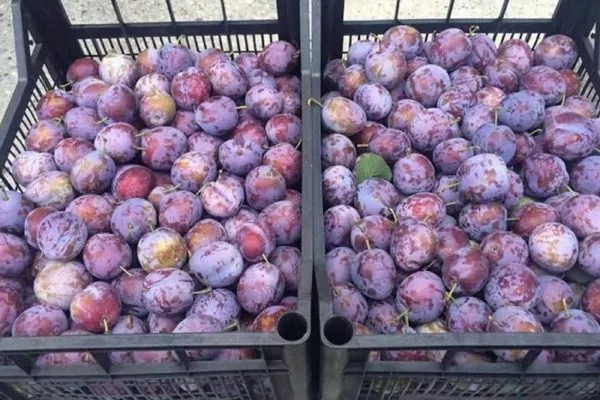
Plums are harvested in dry weather, when there is no rain. The fruit is placed in wooden or plastic crates in several layers, using paper as bedding. The harvest should be stored at 2-5°C and 85-90% humidity for two weeks.
To extend the shelf life of plums, they can be frozen. Carefully wash the fruit, dry it, and place it on a wooden tray in the refrigerator for several hours. Afterward, wrap it in plastic bags and place it in the freezer.
Methods of reproduction
The Volzhskaya Krasavitsa plum is ideal for home propagation by gardeners, eliminating the need for specialized nurseries. There are several methods for achieving this:
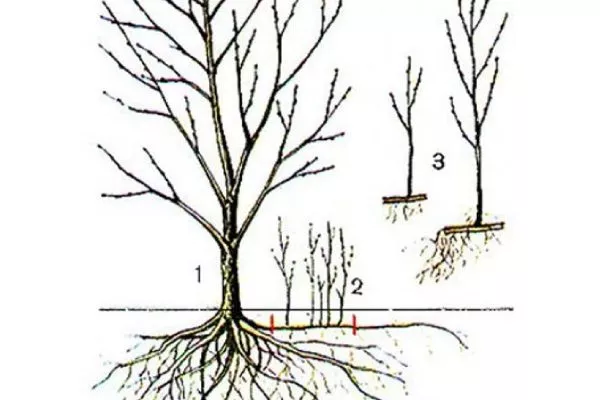
- Use of root shoots. Usually such shoots are removed, but when there is a need to propagate a variety, this method is one of the simplest.

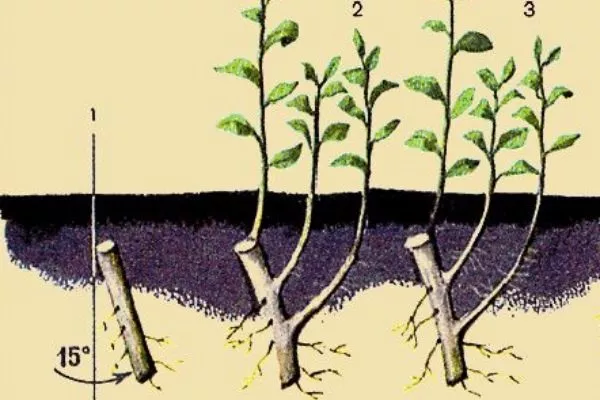
- Cutting method. Select young shoots 20-30 cm long. They are germinated in winter and then planted outdoors in the spring. Alternatively, they can be transplanted directly to their permanent location.
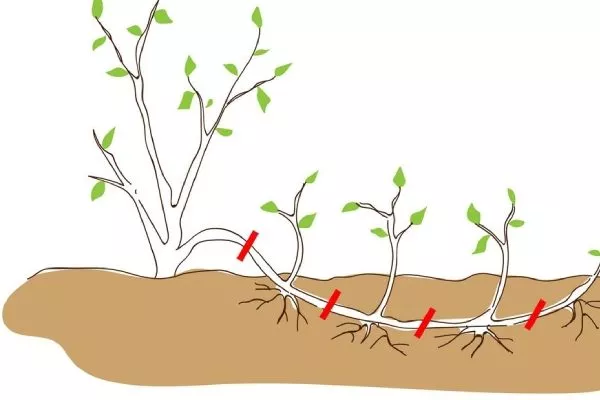
- Layering method. The lower branches are bent toward the ground and covered with soil. After the branches form roots, they are completely separated from the main plant.
Positive and negative qualities
Experts conduct research on the varieties by interviewing experienced gardeners who have already worked with this hybrid, which allows them to create a rating based on their feedback that briefly and clearly reflects all the pros and cons.
Among the advantages it is worth noting:
Negative aspects:
Reviews
The Volzhskaya Krasavitsa plum is an excellent choice for gardeners. It pairs perfectly with other plum varieties. Its juicy, purple-hued fruits will not only decorate your garden but also bring joy during harvest time. Excellent jams and pie fillings made from these plums promise a pleasant experience even on cold winter days.