
Volgograd plum is a cultivated variety named after its origins in the city of Volgograd. It is distinguished by its disease resistance, ease of cultivation, and exquisitely flavored fruits. This plum variety boasts increased winter hardiness and can withstand temperatures down to -30°C.
The origin of the Volgograd plum
This variety of domestic plum was developed at the Dubovsky support point of the Lower Volga Research Institute of Agriculture, which is a branch of the Federal Scientific Center for Agroecology, Integrated Land Reclamation, and Protective Afforestation of the Russian Academy of Sciences.
V. A. Korneev and R. A. Korneev were responsible for its creation. The variety was obtained by hybridizing two other plums: the Early Blue and the Summer Blackthorn. It was approved for widespread use in 1959.
The appearance of the tree
This tree variety forms a broad, pyramidal crown with moderate density. Young branches are straight and branched, gray-brown in color. Other varietal characteristics:
- The leaves are elliptical with a rounded base and a rich, dark green hue. They are short, pointed, slightly wrinkled, and have a matte sheen. The blade is concave, slightly pubescent, and has a rounded base.
- The petiole is medium in length and thickness, pigmented. The trefoils are also medium in size, deeply dissected, and fall late. The veins are small and yellowish.
- Flower inflorescences are represented by both single and double white buds of medium size.
- These trees are medium-sized and have a moderately dense crown. The bark on the trunk and large branches is dark brown and peels easily.
- Lenticels are few in number and yellowish.
- The buds are small, cone-shaped, brown.
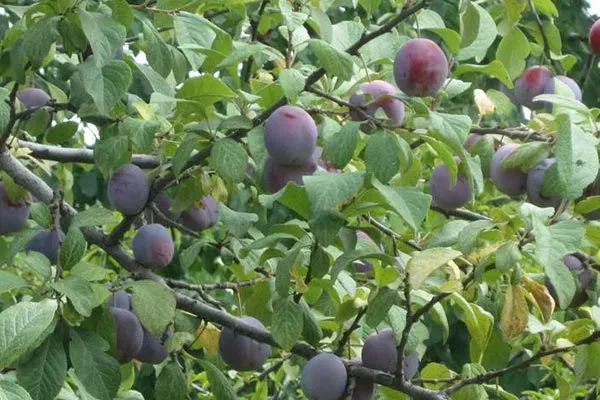
Fruits and their taste characteristics
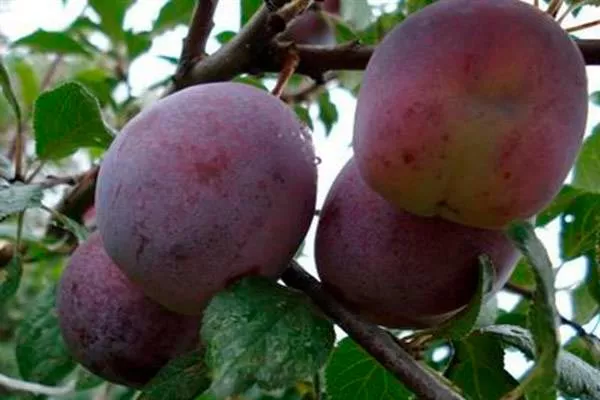
Plums of this variety are oval-shaped with a slight thickening, their weight varies from 30 to 50 g. Other indicators:
- The dark raspberry-colored skin of the fruit, with bright yellow markings, is adorned with numerous small dark purple specks. It is thin and covered with a bluish waxy coating.
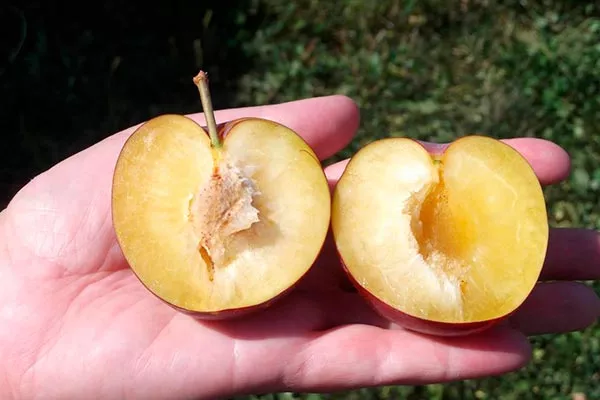
- The plum's interior is dense, fibrous and richly juicy; the flesh is a very different colour from the skin – it is orange.
- The shape of the fruit is oval-round, with a deep groove, the top is slightly deepened.
- The juice is colorless.
- The stone is medium-sized, elongated, but with a shortened neck, separating easily from the inside of the fruit. The ratio between the stone's weight and the total fruit weight is a maximum of 8%.
- The peduncle is firmly attached to the stone.
- The fruits are rich in dry substances, their share reaches 17%, sugars - 9.5%, acidity - 1.7%, and ascorbic acid in them is 9.35 mg per 100 g.
- The product is characterized by excellent transportability.
Varietal characteristics
'Volgogradka' has good resistance to various diseases and pests. It exhibits moderate resistance to clasterosporium leaf spot, a disease caused by a fungal pathogen.
The variety survives harsh winters well, making it ideal for the temperate climate zone of Russia and other northern regions.
Usage of Volgograd plum fruits
The Volgograd plum is versatile—it's perfect for immediate consumption after picking and also serves as an excellent raw material for a variety of products. In culinary arts, the Volgograd plum finds wide application:
- It's a wonderful ingredient for a variety of desserts. It can be used to make pies, cakes, cupcakes, mousses, puddings, and many other sweets. These fruits impart a unique flavor and texture to desserts, making them juicier and more flavorful.
- Ideal for canning, plums can be used to make jams, compotes, juices, and syrups. Plum jam has a delicate, slightly tart flavor, while juice and syrup promise a refreshing, rich aroma.
Canned products can be used to make cocktails, as a filling for pies and tarts, or simply enjoyed as a standalone dessert.
Ripening and fruiting
This fast-growing variety begins bearing fruit in the third or fourth year after planting. Flowering occurs in early May, and harvesting can continue until mid-August.
Product yield
The variety is renowned for its impressive yields. Four-year-old trees can yield around 12 kg of fruit, five-year-old trees up to 50 kg, and mature trees can yield up to 120-150 kg.
- ✓ The ability to self-pollinate, which is rare among plum trees.
- ✓ High yield already in the 4-5th year after planting.
Self-pollination and the need for pollinators
Plum is self-pollinating and can produce fruit without the help of other varieties. However, to achieve the highest yields, it is recommended to use pollinators such as Iyulskaya, Skorospelka, Krasnaya, Ispolinskaya, and Bogatyrskaya.
Volgograd plum cultivation technology
The variety isn't particularly demanding in cultivation, but despite this, it's important to plant it in accordance with agronomic requirements and regulations. Each variety has its own unique characteristics.
Selecting a landing site
Caring for a plum orchard doesn't require any special expertise or complex conditions. However, to ensure plum trees bloom and produce a harvest every year, you should choose a site with adequate sunlight and fertile soil.
Preparing the soil and planting seedlings
Before planting a plum tree, the soil must be thoroughly prepared. It should be enriched with organic matter and dug to a depth of 30 to 45 cm.
- ✓ The optimal planting depth for seedlings should be no more than 20 cm to avoid root collar rot.
- ✓ The distance between trees should be at least 4 meters to ensure sufficient space for the growth of the root system and crown.
Plum trees are planted so that there is 350-400 cm between them (ideally 500-600 cm), and the trees themselves are buried no deeper than 10-20 cm.
Caring for the Volgograd plum
To enjoy the fruits of the Volgograd plum, it's essential to carefully monitor its health. It's important to provide regular nutrition, including the use of organic and mineral fertilizers, as well as maintain optimal humidity levels and promptly protect the tree from insects and diseases.
By following all the care recommendations, you'll appreciate the richness of sweet and juicy plums, which can be eaten fresh or used to make jam, compotes, and more.
Subtleties of agricultural technology:
- Plum trees require regular watering, especially when they're flowering and bearing fruit. Don't forget about the need for moisture, especially during dry weather. However, avoid overwatering the soil, as this can negatively impact the plant's health, as the root system will rot and become susceptible to fungal attack.
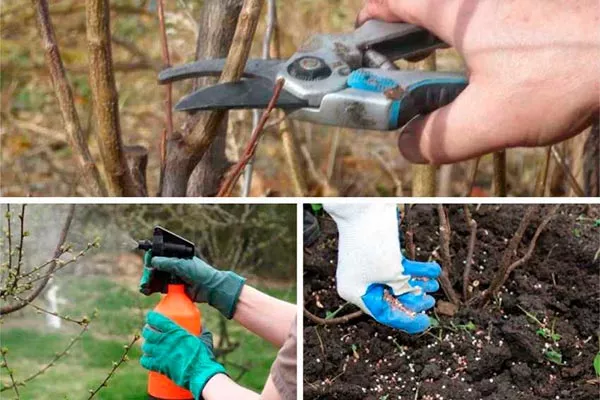
- Pruning the Volgograd plum tree promotes the formation of a harmonious and healthy crown. It is recommended to do this in spring or fall. Remove weak and damaged branches, shape the crown correctly, and stimulate the growth of new stems. Proper pruning also promotes denser/more abundant blooms, resulting in a higher plum yield.
- To encourage vigorous growth and healthy development of the Volgogradskaya succulent, remember to fertilize it periodically. During periods of peak growth, use organic and mineral fertilizers, following the instructions on the packaging. Avoid overdosing to avoid harming the plants.
- Preventing pest and disease damage is an important step. To ensure your Volgogradskaya plum tree remains healthy and free from pests and diseases, don't neglect regular inspections. If you notice any unsightly spots or other signs of disease on the leaves, act immediately.
Try to spray them with insecticides and fungicides in the spring, which is a preventative treatment.
Harvesting and storing the Volgograd plum crop
The time to pick Volgograd plums comes when they are fully ripe and have acquired a rich purple hue with a waxy coating. The best time to do this is morning or evening, when the fruit is not too hot.
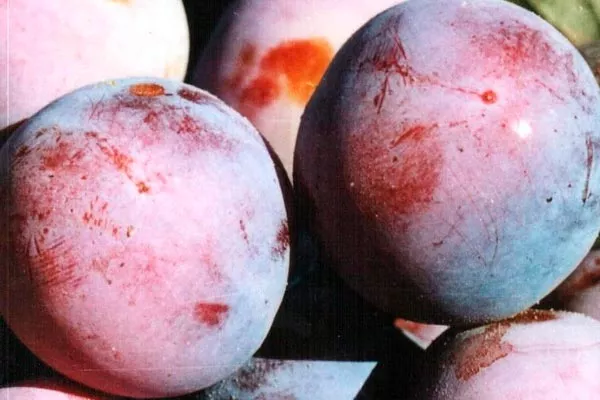
To ensure that fruits are stored for a long time, consider a few aspects:
- Careful handling and avoid applying excessive pressure when picking plums can damage the fruit and reduce their shelf life. It's recommended to handle the plums carefully, holding them by the base.
- After harvesting, carefully inspect each fruit and discard any that show signs of rot or damage (even small cracks in the skin) to prevent contamination of other fruits.
- For storage, plums should be placed in a cool place (temperature should not fall below 1-3°C) and in a dry container or plastic box, where the fruits are arranged in a single layer. Volgograd plums have a limited shelf life, but at this temperature they will keep for two to four weeks.
- To ensure plums retain their freshness and aroma throughout their storage period, it is necessary to periodically check the fruit for signs of damage and softening, remove unsuitable fruits, and ensure adequate ventilation in the storage area.
- If signs of decay appear, such as excessive softness and sliminess of the fruit, use it immediately or compost the fruit, which will be useful as fertilizer next year.
Plum propagation
To increase the number of plum trees in your garden, you'll need to choose the right method based on your preferences, capabilities, and confidence. Several techniques are suitable for this variety.
Through root suckers
This method is considered one of the simplest for propagating plum trees. It involves selecting the most suitable scion. The best option is one located the farthest from the main tree. It's important to remember that the shorter the scion, the faster it will adapt to its new location.
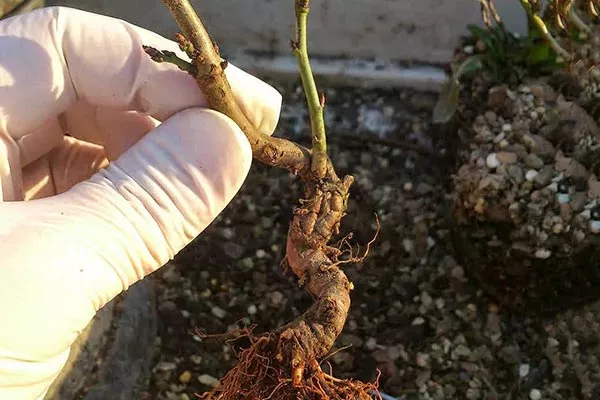
The preferred time to plant a cutting is spring, but experienced gardeners recommend growing it indoors first. Keep the young tree in partial shade and ensure the soil retains moisture.
Through the bones
This method doesn't require any complex knowledge, but it does have one significant drawback: it takes time. Your plum tree, grown from a seed, will most likely resemble its parent, but it won't grow into an exact clone.
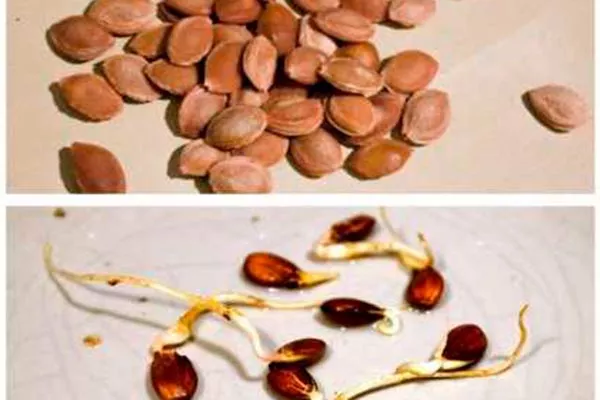
There are two approaches:
- First: The pit should be carefully wrapped in a moist environment, such as cheesecloth or sandy loam, and placed in a cool place, most often a refrigerator. The pit should remain in this condition from fall to spring, maintaining the necessary humidity to prevent it from drying out.
In the spring, move the seed into a pot and care for it like a regular plant, and in the fall, transplant it into open ground. - Second: You can stratify the seeds directly in the open ground, but this doesn't guarantee that all your seeds will survive. It may take at least two winters to see even one shoot emerge.
Green cuttings
This plum propagation technique is simple. In midsummer, select and prune a young shoot that already has 2-3 leaves. Some experienced gardeners recommend using growth promoters to treat this cutting.
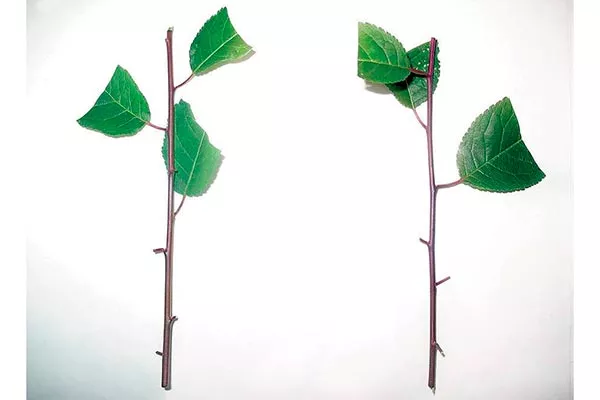
To plant the cuttings in the ground, dig a hole and fill it with peat mixed with sand and mineral fertilizer. After planting, provide them with greenhouse-like conditions for 30 days.
The grafting method for propagating plum
There are several options for grafting plum trees: cleft grafting, bud grafting, bark grafting, or bud grafting. However, keep in mind that the gardener must be proficient in this technique, otherwise all the work will be in vain.
Positive and negative qualities
The Volgogradskaya plum has excellent winter hardiness and drought tolerance, making it a valuable variety. But it also has other advantages:
The downside is that without proper care, the fruits may suffer from shrinkage, so it is important to remember to properly care for the trees.
Reviews
The Volgograd plum is an excellent variety that enjoys well-deserved popularity among gardening enthusiasts and experienced growers. Its excellent flavor and resistance to various adverse factors have made it an unrivaled leader for many years.