
The Victoria plum, widely known in Russia and Europe, has gained popularity due to its high productivity and ability to withstand cold periods. It is considered profitable for commercial horticulture and export. This variety pollinates other plums with intermediate ripening periods well.
History of origin
The origin of the Victoria plum is shrouded in mystery. Its homeland is traditionally associated with Great Britain. It is speculated that this variety descended from a self-seeded tree discovered in Alderton, in the (as it turns out) non-existent town of Sussex.
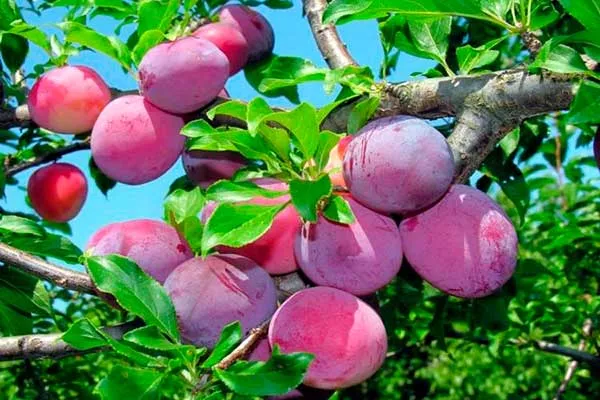
There's also other information: the first seeds were obtained in England as a result of an accidental cross between many plum varieties. The variety was originally called Sharps Emperor. In 1844, it became known as Queen Victoria. Today, the plum doesn't have the royal prefix. Victoria is popular both in Europe and in Russia.
Introduction to the variety
The variety is highly valued for its fruit-bearing capacity and quality, but requires careful care and preventative measures to protect against fungal diseases, to which it is sensitive.
Tree
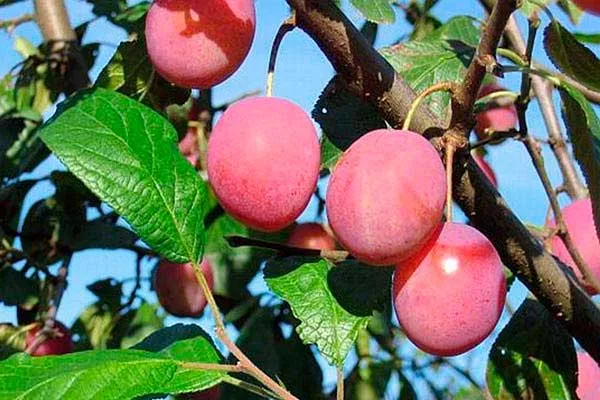
Victoria is a plant that reaches a height of 250-300 cm and has a spreading, rounded crown with graceful branches that tend to droop under the weight of their fruits.
Other varietal characteristics:
- The leaves have a light green tone with an olive tint, sharp tips and pronounced veins, creating the impression of a small density.
- The tree blooms in mid-May and continues until the end of the month. During this time, delicate pinkish-white buds with rounded petals appear on the crown, gathered in luxurious clusters of 3-5.
Fruit
Victoria fruits are ovoid in shape with rounded ends. They are distinguished by the following characteristics:
- They are quite large, weighing up to 45 g, but with excessive abundance of the harvest they can decrease to 30-40 g.
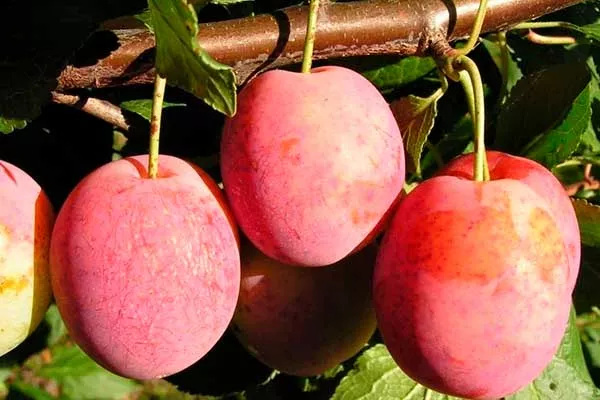
- The fruit's skin is pale golden in color, thick and tough, making it difficult to peel. However, this makes the variety excellent for transportation and shelf life.
- On the sunny side, the fruit takes on a wine-red hue, with rusty-gray dots visible within bright red circles. The entire fruit is covered with purple-red fuzz and a thick waxy coating.
- The ventral suture is small, but can be quite deep with thick edges dividing the fruit into two uneven halves.
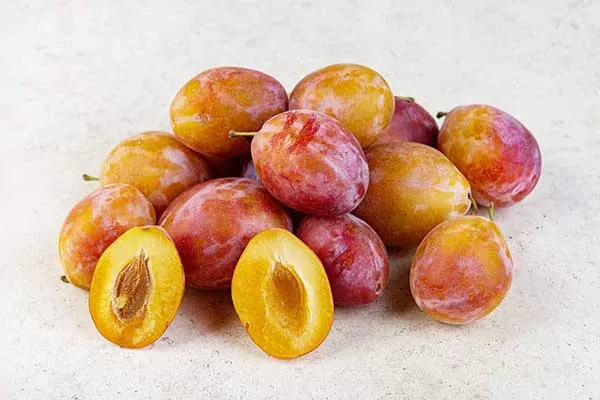
- The pulp is tender, orange-golden in color, and quite dense.
- The stone is quite large and separates from the fruit only after it is fully ripe.
- Victoria fruits have a rich aroma.
Features of taste and application
Ripe plums have a sweet flavor with a slight hint of acidity. In favorable years, when the fruits reach full maturity, their flavor is comparable to that of table plums.
Features to be aware of:
- Plums reach their peak flavor when they reach their darkest hue. At this point, their sugar content increases sharply, making them even more enjoyable to eat fresh.
- Plums contain 10.5% sugar, 0.9% acids and 2.7 mg of ascorbic acid per 100 g. Taste qualities are rated at 4.2 points out of 5.
- During periods of drought and low temperatures, the taste of plums may be somewhat reduced.
- If the tree is overloaded with fruit, the pulp may lose its quality properties, becoming less appetizing.
Plum fruits are widely used: they are eaten raw, dried for winter use, and used to make various homemade preserves – jam, preserves, compotes, and jellies.
When does it ripen and how does it bear fruit?
Victoria is distinguished by its fertility, which increases even more when planted alongside other plum varieties. A young tree begins bearing fruit in its third or fourth year.
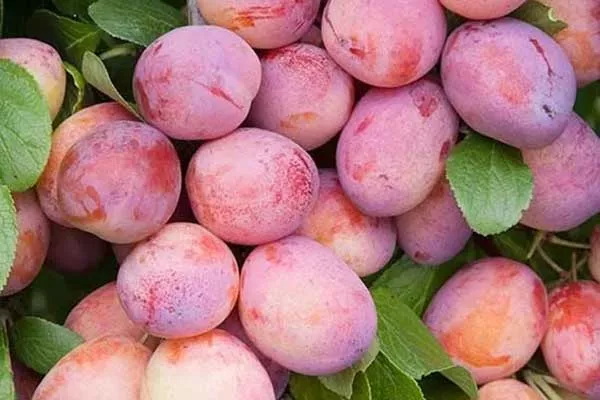
The fruit harvest period extends over two weeks. Plums do not fall from the tree spontaneously and can remain on the branches for a long time after ripening.
The first ripe fruits appear by the end of August, and the main harvest occurs in September. The ripe fruits ripen gradually, which extends the harvesting period over several weeks.
Productivity
One tree produces 40 to 50 kg of exquisite plums per season. The fruit is resistant to transportation and can retain its freshness and nutritional value for a short time.
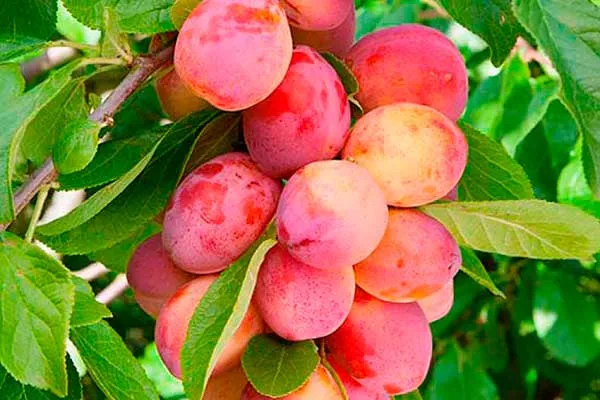
Plums have a shelf life of 7-10 days. They can stay fresh for slightly longer if picked from the tree before they're fully ripe, keeping the stems intact.
Self-fertility and the need for pollinators
| Name | Disease resistance | Flowering period | Soil requirements |
|---|---|---|---|
| Hungarian Ajan | High | Late April – early May | Average |
| Greengage | Average | Mid-May | High |
| Anna Shpet | Low | Beginning of May | Average |
| Peach | High | End of April | Low |
| Kirke | Average | Beginning of May | High |
Victoria plum is self-pollinating, making it easy to cultivate: no special placement of pollinators is required. Planting it alongside other plum varieties that bloom at the same time can increase yield and improve fruit quality.
Victoria is an excellent pollinator for such varieties of domestic plum as:
- Hungarian Ajan;
- Greengage;
- Anna Shpet;
- Peach;
- Kirke.
Resistance to frost and drought
The variety has average drought tolerance, which means it needs to be watered according to the recommended schedule to ensure a bountiful harvest.
It has average frost resistance, but can easily survive the winter under snow cover. However, young Viktora plantings may require additional protection.
Plum blossoms between May 12 and 30, so in cold regions the buds may be damaged by spring frosts.
Growing regions
The Victoria plum is ideal for gardeners living in the European part of Russia and the CIS countries.
For gardeners in the Urals and Siberia, cultivating this variety may require more effort, but they will appreciate the taste of the fruit if they provide the tree with frost protection.
Landing features
To obtain a large quantity of fruit, it's important to adhere to specific planting timings. Particular attention should be paid to the quality of the seedlings.
- ✓ The optimal depth of groundwater should be at least 150-180 cm to prevent root rot.
- ✓ To protect against spring frosts, it is recommended to use smoke bombs or water spraying during the flowering period.
When to sow?
In areas with cool climates, it is recommended to plant plums after the winter period - immediately after the snow melts and before the trees begin to flow sap.
In warmer regions, work is carried out in the fall – after the trees have become woody, which will allow the seedling to take root before the onset of cold weather.
Selecting a site for planting
When choosing a location for the Victoria plum, there are several key factors to consider:
- sufficient amount of sunlight;
- protection from moisture accumulation and cold air;
- groundwater depth of at least 150-180 cm;
- protection from the wind, for example, due to the presence of fences or buildings.
This variety prefers fertile soil rich in minerals. The tree grows more slowly in acidic soils. This can be improved by adding nutrient solutions during planting.
What plants can and cannot be placed near a plum tree?
To ensure that the tree bears fruit and develops according to varietal standards, pay attention to its neighborhood:
- Victoria plum should be kept at a distance of 4-6 m from hazel, various hazel trees, birch and poplar.
- It is not recommended to plant next to fruit crops – pears, cherries, peaches, as these plants compete for water and nutrients in the soil.
- Shade-tolerant plants such as tulips, primroses and daffodils grow well under the Victoria plum.
This variety grows well alongside apple trees and other plums. Currant, raspberry, or gooseberry bushes can be planted between the rows.
Selection and preparation of planting material
When purchasing seedlings, it's best to go to trusted sellers, preferably local gardening stores or nurseries. Pay attention to the quality of the planting material, checking for damage, mold, and other undesirable signs.
Select seedlings that are between one and two years old. If the tree's roots appear dry, soak them in water for three to five hours to restore them.
Landing algorithm
The process begins with preparing the site and digging a hole several weeks before the scheduled planting date. If planting is planned for spring, the hole should be prepared in the fall.
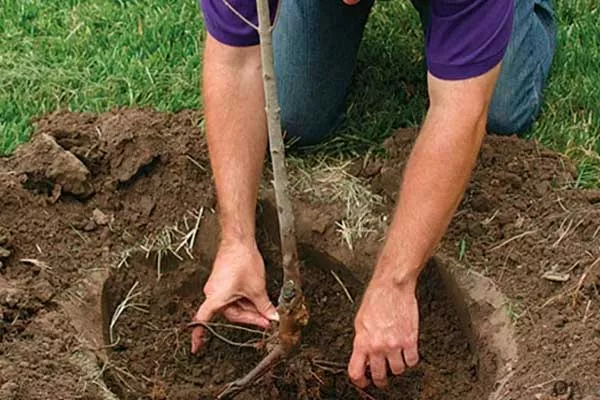
Preparing and planting seedlings:
- Dig a hole 55-65 cm deep and 65-75 cm in diameter. If necessary, place a layer of crushed stone at the bottom of the hole for drainage.
- In the center, install a wooden (metal will do) pole about 50-70 cm high above ground level.
- Place a layer of fertile soil, peat and compost in equal proportions at the bottom of the hole.
- After this, fill the hole with soil, forming a small hill.
- Place the seedling on it, carefully spreading the roots. There should be a gap of about 3-4 cm between the root collar and the bed level.
- Carefully cover the tree roots with substrate and water thoroughly.
- Place peat mulch around the tree trunk.
Aftercare of the tree
Victoria requires careful care, which implies regular implementation of agricultural measures throughout the tree’s entire development cycle.
Watering schedule
To ensure the health of a fruit tree, it is necessary to monitor the soil moisture level in the trunk area, especially during periods when precipitation is rare or absent.
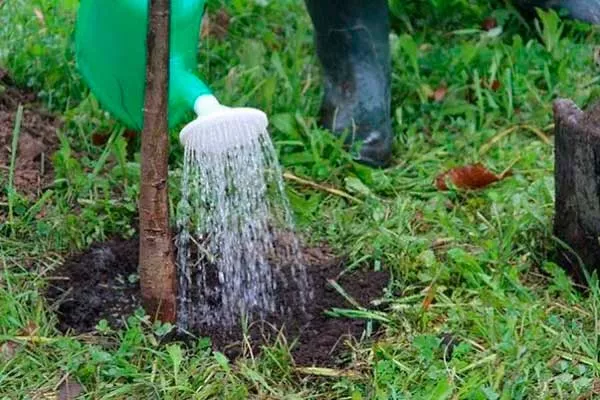
Particular attention should be paid to flowering and the beginning of fruiting, as well as to autumn watering before wintering, using water that has been pre-heated and settled.
Timing of fertilizing
Nutrients are critical for plums to ensure normal growth and yield. A fertilizing schedule should be strictly followed:
- Before budding begins It is necessary to apply 20 liters of nutrient solution per adult plant (a young plant needs 2 times less), consisting of 20 liters of water, 60 g of urea and the same amount of potassium sulfate.
- During the ripening period Plums should be fertilized using a solution made from nitroammophoska (120 g) and urea (90 g) mixed with 30 liters of water. This dosage is intended for a mature tree.
- After cleaning For each harvest, prepare a solution containing 60 g of potassium sulfate and 8 g of superphosphate, 20 liters of water - for each plant.
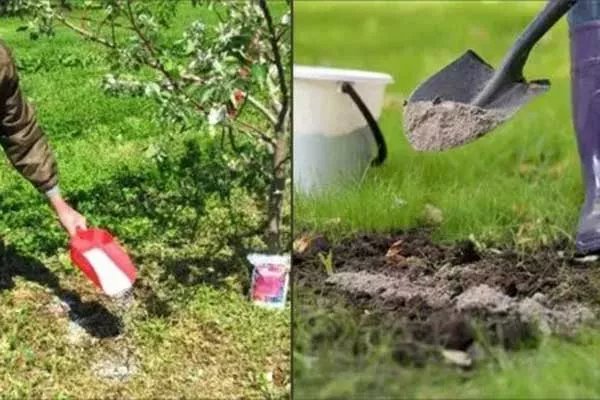
Plum trees are very sensitive to nutrient deficiencies in the soil. If leaves turn yellow or greenish-yellow, this indicates a nitrogen deficiency. Brown foliage indicates a potassium deficiency, while curling and wavy edges and veins indicate a magnesium deficiency.
Trimming
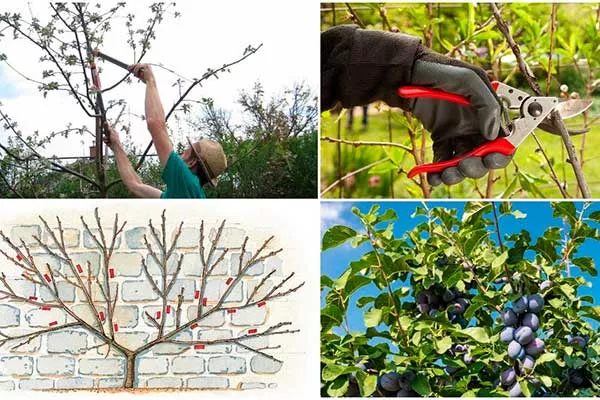
To achieve optimal fruiting, plum trees require regular pruning, removing excess shoots and improving their structure. Creating a multi-tiered crown is recommended. In spring and fall, remember to clear the tree of damaged, frozen, or dead branches.
Preparing for the winter period
Victoria doesn't have exceptional frost resistance, so preparatory measures before winter are crucial. In the fall, several important tasks should be completed:
- Deepen the soil around the trunk, adding the necessary fertilizers.
- Conduct irrigation for the purpose of moisture pumping.
- After the foliage dies back, perform sanitary pruning, removing any branches affected by disease or that have dried out over the summer. Treat the cuts with garden pitch, and burn the cut shoots and fallen leaves.
- Place a layer of humus at least 5-8 cm thick around the tree. You can also use dry grass or peat as mulch.
- The trunk and skeletal branches of young plums must be protected with a bag.
- To prevent damage from rodents, the tree should be covered with spruce branches.
- After the onset of winter, cover the tree with a small dome of snow.
Diseases and pests, methods of control and prevention
Plum is susceptible to fungal infections and parasitic attacks, especially if it is not properly cared for, which can lead to a weakening of the plant's immune system.
| Disease | Method of struggle | Processing period |
|---|---|---|
| Fruit rot | Treatment with Bordeaux mixture | Before flowering and after harvest |
| Cocomycosis | Spraying with copper oxychloride | At the first signs of illness |
| Moniliosis | Fungicide treatment | During the growing season |
If a tree is infected with disease or attacked by pests, without immediate action, both the harvest and the health of the trees themselves can be undermined.
Common problems include:
- Fruit rot – The appearance of gray spots with brown fungal spores. To combat this, treating the wood with Bordeaux mixture is recommended.
- Cocomycosis – The formation of red spots on the leaves, which expand over time and can lead to leaf drop. Spraying the foliage with copper oxychloride can help neutralize the infection.
- Moniliosis – The formation of small dark spots on the fruit. This problem can be solved by treating with fungicides.
- Hawthorn - A butterfly that destroys foliage, flowers, and buds. To protect the plant, it is necessary to apply insecticide sprays in a timely manner.
- Cherry moth – Caterpillars that feed on buds and leaves. A solution of Nitrofen is used to control this pest.
Harvesting and storing fruits
To pick plums from the tree, choose a dry day and a time before midday, when the morning moisture has evaporated. The process can also be performed late in the evening, when the sun's rays are less intense.
To keep fruit fresh longer, store it in a dark place with a temperature no higher than 5 degrees Celsius and humidity of 80%. Under these conditions, your harvest will retain its flavor and nutrients for 10 days or more.
Positive and negative qualities
The key advantages of this plum variety include:
At the same time, when choosing the Victoria variety, one should also take into account its disadvantages:
During prolonged drought or sudden cold snaps, the fruit's flavor may lose its distinctive character. Furthermore, a tree overloaded with fruit may lose its flavor, making the pulp less appetizing.
Gardeners' reviews
The Victoria plum is one of the most popular varieties, earning numerous positive reviews from gardeners. To ensure a high-quality harvest, it's important not only to choose this variety but also to follow all the recommended growing practices. It does have its drawbacks, however: it's susceptible to fungal diseases.