
The Vika plum, a Chinese variety, is versatile and renowned for its impeccable productivity. This variety is the result of breeding efforts in Siberia and stands out for its ability to withstand cold winters and ripen early. However, the yellow fruit is sensitive to extreme cold, drought, and pests.
History of origin
The Chinese cultivar (not a hybrid) Vika was created at the Siberian Horticultural Research Institute, named after M.A. Lisavenko, where research was conducted in Altai. Its developer was M.N. Matyunin.
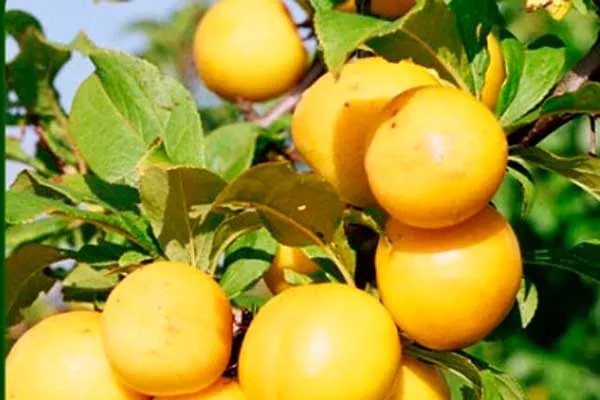
The Vika variety was obtained through natural pollination of Skoroplodnaya, from which the most resilient plants were selected and named Vika. In 1999, it was registered in the state register.
Introduction to the variety
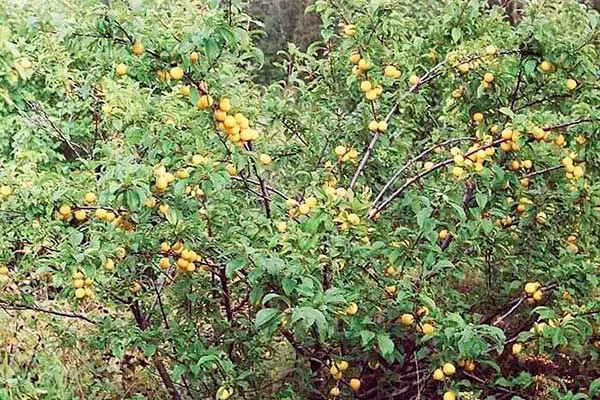
The plum tree thrives particularly well in the low mountains of Altai. Its branches are positioned at 50-70 degree angles, which ensures a strong crown and reduces the risk of fractures.
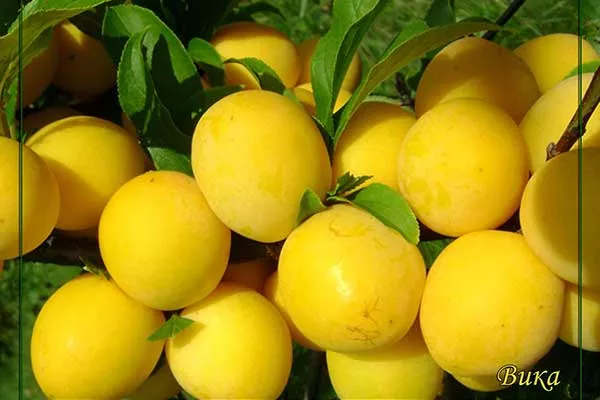
The crown of the Vetch tree is sufficiently strong, not too dense in structure, and durable, which makes it resistant to adverse conditions.
Tree
The plants are short, with a crown that resembles a loose circle. The main type of fruiting branches are bud-bearing. Other varietal characteristics:
- The branches are slender, slightly curved, sometimes straight, yellowish-brown, with a small number of small lenticels growing at an angle from the main shoots.
- Vegetative buds are cone-shaped, while fruit buds are oval-shaped.
- The leaves are medium-sized (8-11 cm long, 3-5 cm wide), elliptical, with a narrow base and a pointed tip, and dark green in color. The leaf blade is slightly compressed longitudinally, uneven, not pubescent, and directed downwards, with a serrated edge.
- The leaf petiole is medium-sized, anthocyanin-stained, and the glands are light. Each bud contains 2-3 buds, which open before the leaves emerge.
- The corolla of the flower resembles a cup, the buds are snow-white, and the petals are narrow-oval, whitish, small (length 7 mm, width 4 mm), with wavy edges, freely arranged.
- There are 16-17 stamens, the stigma is at the same level as the anthers, and the sepals are narrowly oval-elongated.
Fruit
The plum is shaped like an egg, with a barely visible seam at the bottom. The skin is smooth, and the interior is slightly dry and light yellow. The pit is small and oval, easily separated from the soft part of the fruit.
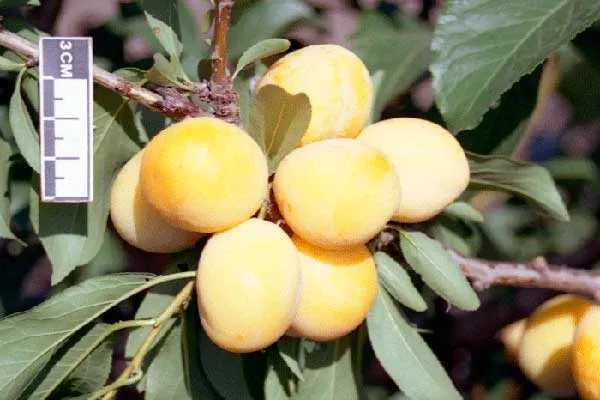
Plum Vika also has other characteristics:
- ovoid shape with an elongated apex;
- dimensions: height 40 mm, width 30 mm;
- weight within 14-15 g;
- peel color is bright yellow;
- the skin is smooth;
- The pulp is light yellow, fibrous, of medium fat content.
Taste and application
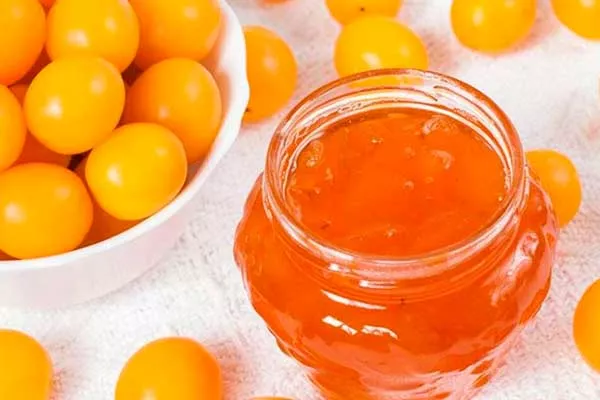
This variety is versatile. It can be enjoyed fresh as a dessert, or used in homemade preserves, such as compotes, jams, jellies, and other dishes.
When does it ripen and how does it bear fruit?
The Vika plum is distinguished by its excellent fruiting. It begins producing its first ripe fruits as early as the third year after planting, and the tree becomes even more prolific with age. The main harvest period occurs in early August.
Productivity
An average mature tree can yield 10-14 kg of plums, and up to 180 centners per hectare. The fruits of this variety are attached to shortened stalks, requiring some effort to harvest.
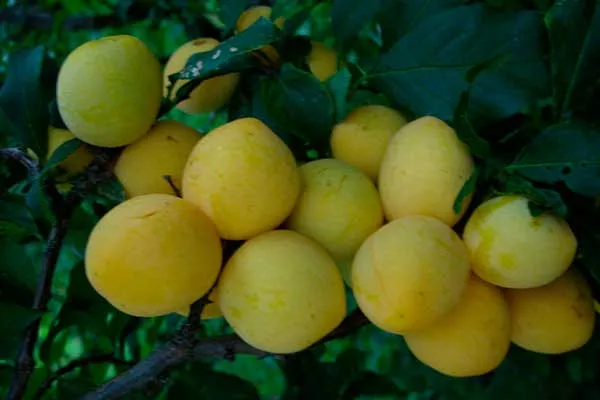
Thanks to their high resistance to premature fruit drop, plums remain on the branches well until they are perfectly ripe.
Self-fertility and the need for pollinators
| Name | Disease resistance | Flowering period | Soil requirements |
|---|---|---|---|
| Altai Anniversary | High | Early | Average |
| Peresvet | Average | Average | Low |
| Mountain woman | High | Late | High |
| Xenia | Average | Early | Average |
| Drooping | Low | Average | Low |
The Vika variety is not self-pollinating and requires donor trees, such as a domestic or Chinese plum. Effective cross-pollination requires trees that bloom at the same time.
The most optimal options for donor drains:
- Altai Anniversary;
- Peresvet;
- Mountain woman;
- Xenia;
- Drooping.
Drought resistance, frost resistance
Vetch is not particularly drought-tolerant, so the irrigation system should be tailored to the amount of precipitation. Particular attention should be paid to watering during flowering and fruit ripening.
The moisture resistance of the buds and wood of this plum is at an acceptable level, but to improve it, you can resort to an additional protective coating.
The variety is sufficiently cold-hardy for central Russia, able to withstand temperatures down to -40°C. However, if temperatures in your region can drop below this level, the Vika variety's yield potential will be significantly reduced.
Growing regions
Vetch cultivation is traditionally associated with the Altai region, where the harvest time and expected yield were determined. However, this variety has also been zoned for Eastern and Western Siberia, meaning it has undergone many years of testing in these climates.
- ✓ The optimal soil acidity for the Vika plum should be between pH 6.0 and 7.0. Outside this range, the tree may not thrive.
- ✓ The distance between trees when planting should be at least 3 meters to ensure sufficient space for the growth of the root system and crown.
Landing features
Vika plums are planted in the spring or fall, depending on local climate conditions. During the preparatory period, the planting site is prepared, and the soil mixture is improved if necessary.
Recommended planting periods
In southern regions, the preferred time for planting is October, when trees enter a period of slow sap production. This gives the plant time to establish roots and withstand the winter cold.
In cooler climates, planting is postponed until spring, when the soil has warmed sufficiently. However, the work should be completed before the trees begin to bud.
Choosing a suitable location
When choosing a location for a drain, there are a number of factors to consider:
- sufficient natural light;
- ensuring the absence of stagnant moisture;
- location in the southern or western direction;
- soil fertility and drainage.
The Vika plum should be planted on a hill or level ground. It thrives best in chernozem soils. Sandy loam or light loam soils are preferred for their structural composition.
The best and worst neighbors
The best neighbors for the Vika plum include cherry, sour cherry, and cherry plum trees. Maintain a distance of at least 5 meters from apple and pear trees.
It is not recommended to plant near tall trees such as birch, poplar, or linden. Avoid raspberry bushes, blackberry bushes, or currant bushes of any kind.
Suitable planting material and its preparation
Select young annual plum seedlings. When purchasing, carefully inspect the seedlings:
- a healthy specimen has a well-developed root system;
- There should be no signs of rot, mold, cracks or other damage.
The landing process
For Vika plums, dig a hole a month or two before the planned planting. If planting is planned for spring, preparatory work on the pit should be done in the fall to allow for soil settlement.
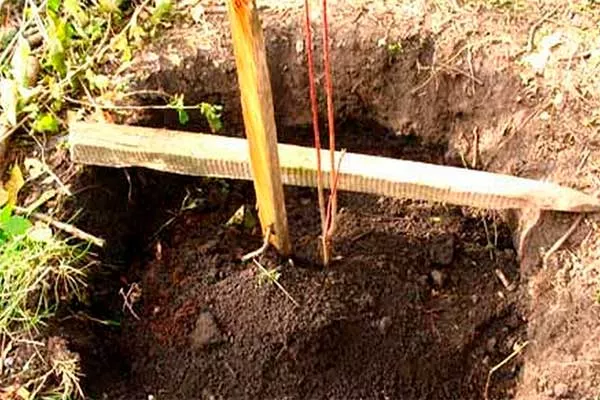
The planting scheme is as follows:
- At the chosen location, dig a hole with a diameter of 60-65 cm and a depth of 65-75 cm.
- Then install a stake made of wood or stainless steel.
- Mix black soil and compost in equal proportions (you can use humus or rotted manure), add 180-220 g of superphosphate and 40-45 g of potassium salt.
- Pour this substrate into the hole and leave it to settle. It's best to cover it with plastic wrap.
- Before planting, carefully spread the fertile soil to form a hill.
- Place a plum tree seedling on the mound, carefully straighten the root shoots and cover with soil.
- Compact the soil thoroughly and water generously.
How to properly care for a plum tree?
To obtain normal yields, it is necessary to follow the basic requirements of agricultural technology:
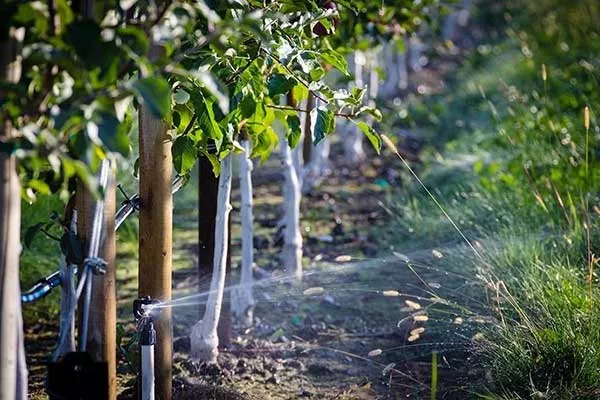
- Water three to five times during the growing season, paying particular attention to the flowering and fruit ripening stages. However, excess soil moisture can be harmful to the plant. It is recommended to use 8 to 12 liters of water per tree.
As the plum tree ages, its water requirements increase to 50 liters. To reduce the frequency of watering, it is useful to mulch the soil with peat or organic fertilizer.

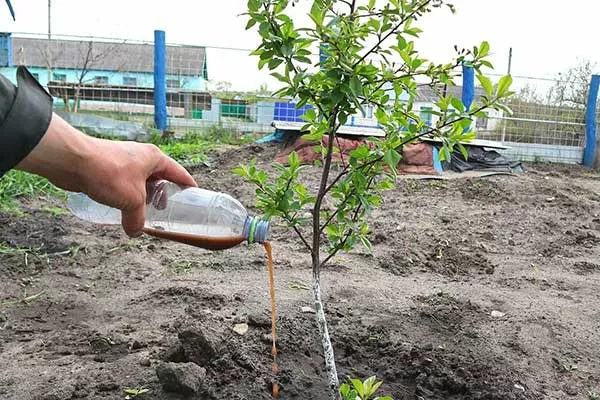
- If nutrients were added to the planting hole during planting, the first full feeding should begin two years after planting. Watering can be combined with feeding, adding 50-60 g of potassium and phosphorus compounds per 10 liters of water.
In the spring, the tree should be fertilized with manure. Every three years, the soil around the trunk should be dug over and 10-15 kg of compost added per square meter.
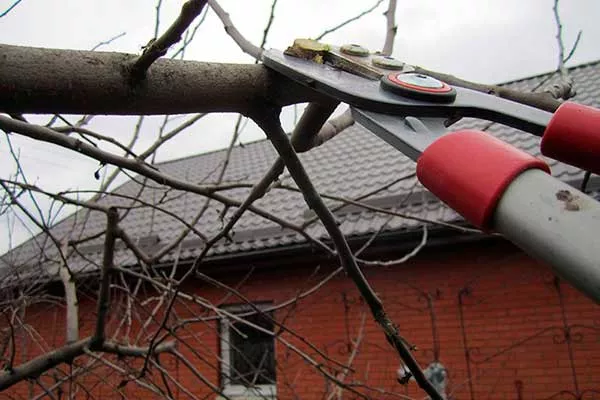
- The Chinese plum requires light pruning. In the spring, remove branches damaged by cold and wind. In the fall, trim back any dried branches.
- To protect the tree during the winter, it's recommended to carry out a series of simple procedures: moisture-replenishing watering and mulching with compost. For young trees, create frames and attach burlap to them. The plantings are covered with spruce branches.
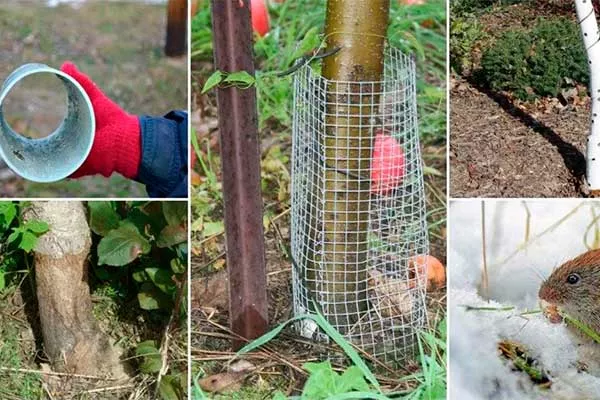
- To prevent damage to the trunk by rodents, it is protected with a casing made of a metal pipe or tin sheets.
Methods of combating possible diseases and insects
The variety is more or less resistant to plum diseases and pests, but under unfavorable conditions it can suffer from the following damage:
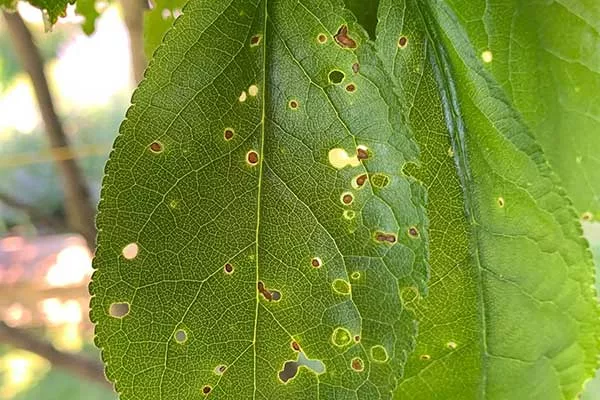
- Clusterosporiasis. Brown spots with black edges appear on the leaves, and cracks appear on the trunk. Copper sulfate or a fungicide called Hom are recommended for disease control.
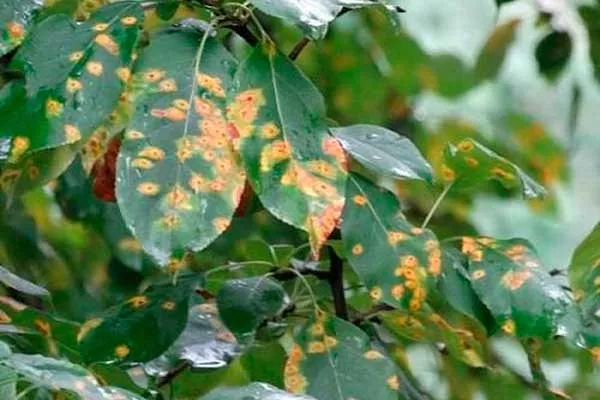
- Coccomycosis. Fungal colonies on the plant's leaves appear as small brown marks, while a whitish, flour-like coating can be seen on the underside of the leaves. To combat the disease, spraying the fruit with Abiga-Peak or Horus herbicide solutions is recommended.
| Disease/Pest | Vika plum resistance | Recommended control measures |
|---|---|---|
| Clusterosporiasis | Average | Treatment with copper sulfate in early spring |
| Coccomycosis | Low | Spraying with fungicides at the first signs of disease |
| Plum aphid | Average | Application of insecticides before flowering |
To prevent disease, take the following measures:
- Preventive treatment of plants.
- Carrying out pruning of plum trees.
- Clearing the area of fallen leaves.
Among the pests, the following insects pose a danger:
- Seed-eating caterpillars destroy the fruit from the center, causing plums to fall. To protect the trees, spray them with Actellic insecticide.
- Plum aphids cluster on the leaf surfaces, causing them to curl and dry out. To protect the trees, treatment with a special concentrate called Nitrofen is recommended.
Preventive actions:
- Removal of basal branches.
- Removal of exfoliated bark.
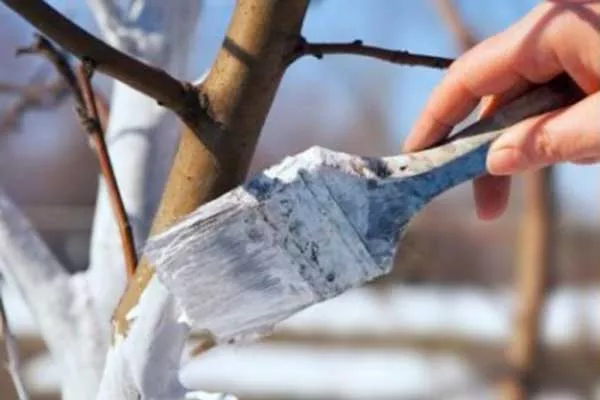
- Painting the plum tree trunk with special paint or lime.
Positive and negative qualities
The benefits of the Vika plum variety include:
However, Vika is not as drought-resistant, requiring watering, and is not resistant to severe frosts without protection. Other disadvantages of the Vika plum include:
Gardeners' reviews
The Vika variety is a reliable Siberian cultivar that produces a bountiful harvest. Care consists of regular watering and fertilizing. The plant is relatively frost-resistant, but requires additional protection during cold periods.