
The Velichavaya plum is a large-fruited domestic variety with excellent agronomic characteristics. It tolerates Russian frosts well, produces high yields, and is generally very hardy.
Who and when bred the Velichavaya plum?
The Velichavaya plum variety is a domesticated variety. Its creators are Russian breeders V.S. Simonov, V.A. Vysotsky, and S.N. Kulemekov. The new variety was developed at the VSTISP in collaboration with the Fitogenetika Scientific and Production Center for Biotechnology.
The Velichavaya variety was created through interspecific hybridization of the Narach and Kubanskaya Kometa plums. It was approved for cultivation in 2011.
Description of the tree
The Velichavaya plum tree is medium-sized, with a rounded-oval, slightly raised crown of medium density. The maximum height of this tree is 3 meters. This plum tree is characterized by rapid growth, with straight, brownish-brown shoots.
- ✓ The shoots are straight, brownish-brown in color, which distinguishes them from other varieties.
- ✓ The leaves have a wrinkled, matte surface with wavy, serrated edges.
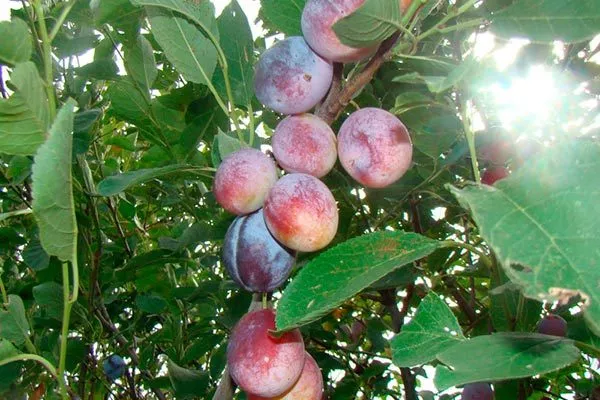
The leaves are small, wide, oval, and pointed. The leaf blades have a wrinkled, matte surface, and wavy, serrated edges. The flowers are small, double, and white.
Description of fruits
The fruits of the Velichavaya plum are quite large, fully corresponding to the name of the variety.
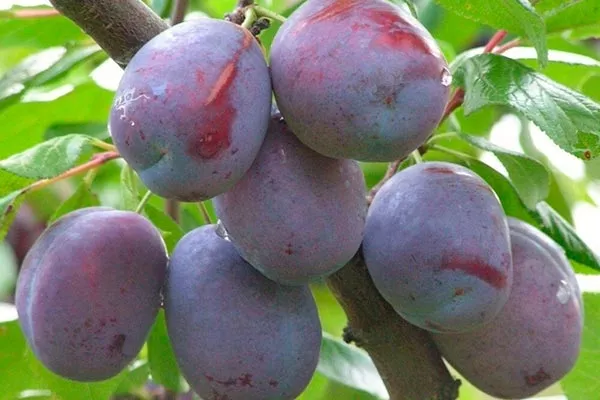
Brief description of fruits:
- shape - oval-round;
- base/covering color - yellow/purple-brown, marbled, with blurred stripes;
- subcutaneous points - almost absent;
- the pulp is orange, juicy and fibrous;
- the skin is rough, smooth, with a waxy coating of medium density;
- the stone is small, with average separation from the pulp;
- weight - 50-55 g.
Taste and purpose
The fruits of the Great Plum have a pleasant, sweet-tart flavor. The sweetness is predominant, with a slight tartness. The aroma is medium-intensity. The tasting score is 4.5 out of 5. Ripe fruits are suitable for desserts and table use; they can be eaten fresh or used for processing.
Frost resistance and other characteristics
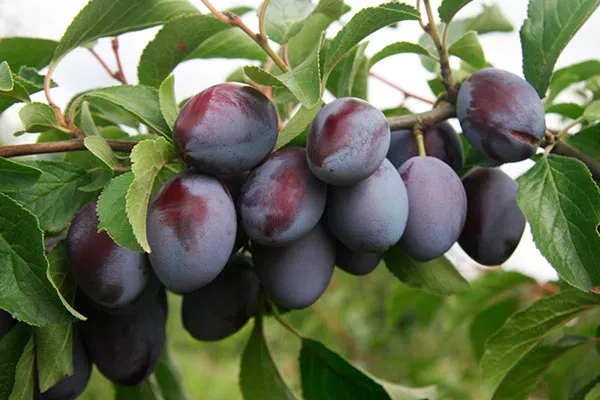
The Velichavaya plum is very frost-resistant, easily surviving temperatures as low as -40°C (-40°F). This late-ripening plum variety begins bearing fruit four to five years after planting. It produces fruit every year, without interruption. The tree blooms in April-May, and the fruit ripens late, in late August.
Pros and cons
The Velichavaya plum has many advantages that are appreciated by gardeners and summer residents. Before planting this variety, it's helpful to familiarize yourself with all its pros and cons.
Planting a tree
When planting the Velichavaya plum, it's important to consider the variety's growing conditions. These conditions determine the tree's growth and development, as well as the quality of its fruiting.
- ✓ The soil should not only be sod-podzolic, but also have a pH level of 6.5-7.0 for optimal growth.
- ✓ The depth of groundwater should not exceed 1.5 m to avoid rotting of the root system.
Landing features:
- The Velichavaya plum grows best on sod-podzolic loams, drained and limed.
- Choose a well-lit, sunny or partially shaded planting site. When planting multiple trees, maintain a 3-4 m spacing between them.
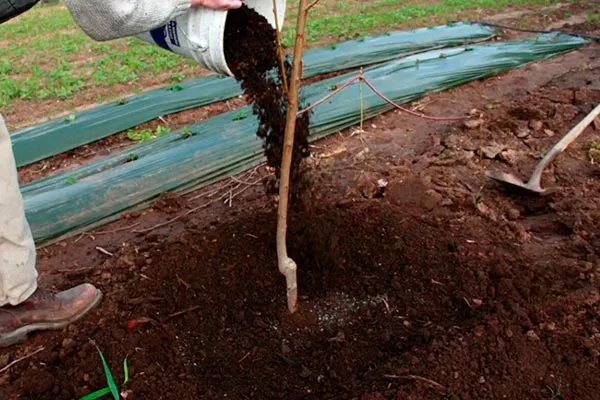
- In the fall, if planting is planned for spring, the soil is carefully dug over. Also, in the fall, planting holes are dug 60 cm in diameter and 50–60 cm deep. If planting is planned for fall, the holes are prepared several weeks in advance.
- The seedling is planted using standard techniques: a hole is filled with a nutrient-rich mixture and raked into a mound. The seedling is placed on top, the roots are spread out, and then covered with soil. The planted seedling is watered generously, and the area around the trunk is mulched with humus, which helps retain moisture and inhibits weed growth.
Care instructions
To produce high-quality and abundant annual harvests, the tree requires care throughout the year.
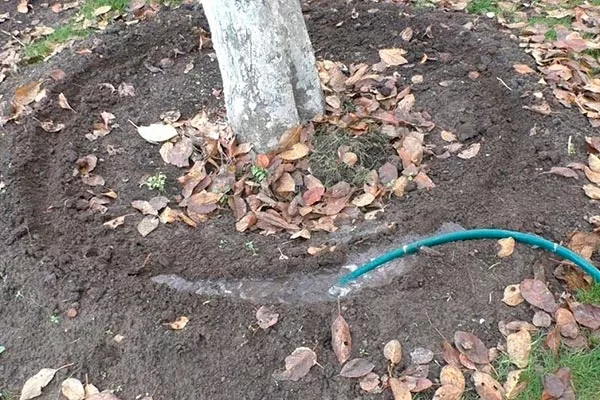
How to care for the Velichavaya plum throughout the seasons:
- Pruning is done in early spring, and a little later, the soil around the tree's trunk is dug up, adding nitrogen fertilizer. The tree is then sprayed with Bordeaux mixture or other fungicides. Watering is done as needed—30-50 liters per tree. At the end of May, organic matter is added, and the area around the tree's trunk is mulched with peat, straw, or grass clippings.
- In the summer, after the tree has finished flowering, another fertilizer, either organic or mineral, is applied. Watering is important during this period, especially in dry weather.
- In the fall, water the plum tree to recharge it with moisture. To speed up recovery after fruiting, apply potassium-phosphorus fertilizers to the roots. Next, prepare the plum tree for winter by removing dead bark, moss, and lichen, and whitewashing the trunk and skeletal branches. Sanitary pruning is performed, first coating the cuts with copper or iron sulfate, and then with garden pitch.
- In anticipation of winter, young trees are covered with burlap or other suitable material. Larger trees do not require insulation; simply sprinkle the area around the trunk with humus.
Diseases and pests
The Velichavaya plum is resistant to diseases and pests, but under unfavorable conditions, combined with poor cultivation practices, the tree is at risk of moniliosis, cytosporosis, and gummosis. To combat these, standard preventative measures and broad-spectrum fungicides are used.
Harvesting Rules
The fruits are harvested when they reach the desired size, acquire the color appropriate to the variety, and become firm and juicy. Plums can be picked when fully ripe for eating, and for storage and transportation.
Wear gloves when picking the plums to avoid damaging the skin and rubbing off the waxy coating. Harvesting is best done in the morning or evening, when it's not hot or rainy. If the plums are exposed to rain, they should be dried in the shade before storing. Under favorable conditions, harvested plums can be stored for up to 20 days.
Reviews
The Velichavaya plum is an excellent choice for any garden, suitable for both small garden plots and large-scale cultivation. Its fruits have excellent flavor and an attractive appearance, and the tree is easy to grow and doesn't require much time or effort.