
The Utro plum is a yellow-fruited variety appreciated by gardeners in the temperate climate zone. This productive variety captivates its owners with its flavor and abundance of large yellow plums. Let's find out what else makes the Utro variety special and how to grow it in a temperate climate.
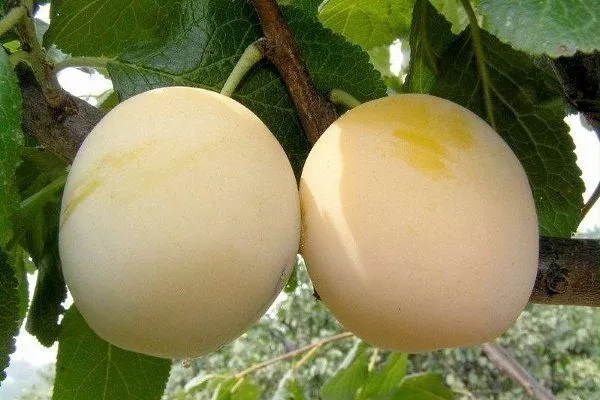
plum variety "Morning"
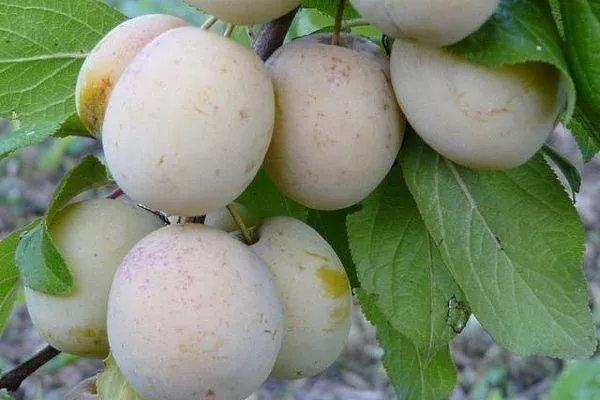
The skin of the 'Utro' plum variety has a waxy coating
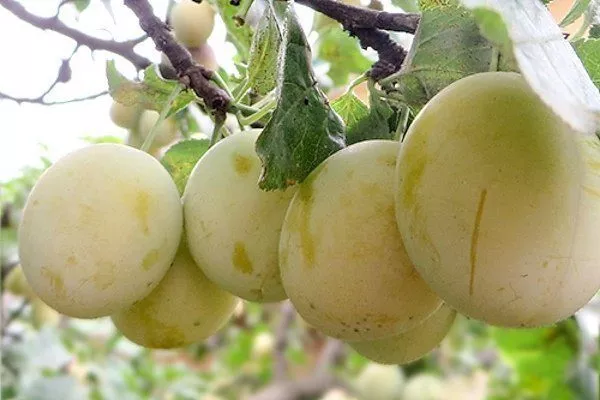
The "Morning" plum is very juicy
Origin of the variety
This variety was developed by Russian breeders from the All-Russian Selection and Technological Institute of Horticulture and Nursery. "Utro" was created by crossing "Skorospelka Krasnaya" and "Renklod Ullensa." The variety is recommended for the Central Region and was registered in the State Register in 2001.
Description of the tree and fruits
Description of the tree and fruits of the Utro plum:
- Tree. A medium-sized tree with a spherical, slightly raised crown. Average height: 3-3.5 m. Foliage and crown density are average. Leaves are rounded-oval, with serrated edges.
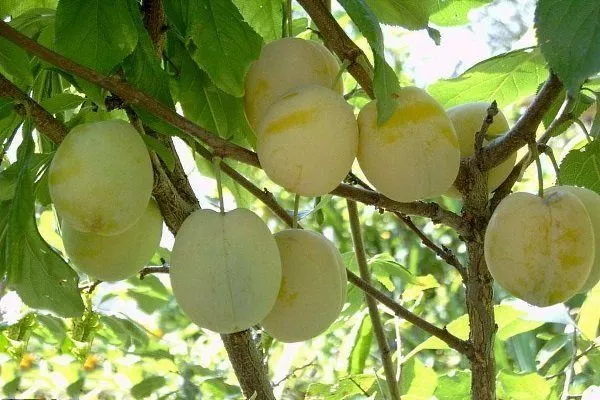
- Fruit. Oval, medium to large, weighing from 20 to 40 g. The base color is greenish-yellow. Fruits exposed to sunlight develop a pink tint, known as a "blush." The skin is smooth, pubescent, and has a waxy coating. The yellow flesh has a pleasant, sweet-and-sour flavor. Tasting score: 4 out of 5. The stalk is medium-length and peels off dry.
The sugar content in the fruits of the plum "Utro" is 8%, which is almost half as much as in the sweetest varieties, for example, Hungarian.
Features and qualities
The Utro variety is an early-ripening variety—the tree blooms in mid-May, and the first plums ripen by early August. This plum is an early-bearing variety, with fruits ripening as early as the fourth or fifth year after planting. The tree has a short lifespan of about 20 years.
One of the variety's key characteristics is the difficulty in identifying ripe fruits. As they ripen, the plums barely change color, requiring a touch test to determine ripeness.
Resistance to diseases and pests
The variety is resistant to most diseases affecting stone fruit crops, including clasterosporium, fruit rot, and moniliosis. Susceptibility to aphids and codling moths is high, and susceptibility to other pests is moderate.
Productivity
The Utro variety produces 15-30 kg of plums annually. Every four years, the Utro plum takes a short break from fruiting—there are some fruit on the tree, but not many.
Like many plums, the "Utra" plums ripen unevenly. This is especially convenient for amateur growers, as harvesting is spread out over almost a month. Orchard owners have the opportunity to enjoy plums for a long time and prepare preserves gradually as the fruit ripens.
Frost resistance
This variety is not frost-hardy. Even moderate frosts can damage the tree, as its shoots often freeze in winter. However, this drawback is offset by the plant's rapid recovery. The tree tolerates spring frosts well, with flower buds suffering virtually no damage.
The variety's growing area is limited to the Central Region—Moscow, Kaluga, Tula, etc. It is not recommended for cultivation in more northern regions, such as Siberia and the Urals, as it lacks frost resistance.
Drought resistance
The variety isn't particularly drought-tolerant, with drought tolerance being moderate. The tree requires regular watering; without timely irrigation, yields are reduced, and some fruits may fall prematurely.
Pollination
The variety is self-fertile, which is one of its main advantages. For the tree to bear fruit, additional pollinators are not needed. However, the "Utro" plum itself is often used to increase the yield of other varieties.
Subtleties of planting
The entire subsequent life of the tree depends on proper planting—choosing the right location, preparing the seedling, determining the right timing, and other agricultural nuances. By following the correct planting conditions, a gardener lays the foundation for the tree's future productivity and resilience.
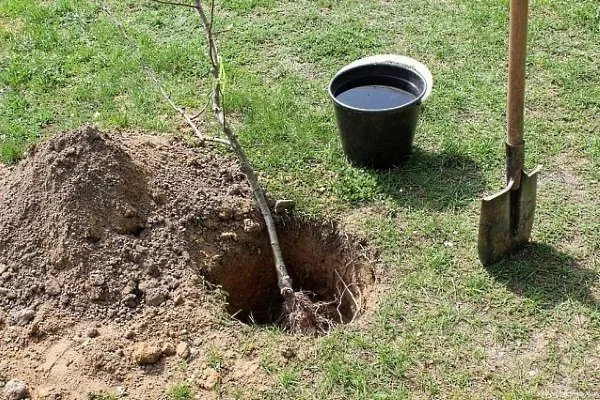
Basic requirements
Requirements for planting plum Utro:
- Deadlines. Seedlings are planted in spring or fall. Spring planting occurs before the buds open, before the sap begins to flow. In fall, seedlings are planted a month or a month and a half before the first frost, in September or October.
- Lighting. Choose a sunny, well-lit location, protected from drafts and strong winds. Always plant the plum tree on a south-facing surface, preferably near a building or fence. Allow at least 3 meters between the plum tree and any obstacles, such as a wall, fence, etc.
- Humidity. Avoid planting seedlings in low-lying areas, as moisture accumulates there, which is harmful to plum tree roots. The root system should not be flooded by groundwater. The minimum root depth is 1.5 m.
- Soil. The optimal option is loose and fertile soil, loamy or sandy loam, with neutral acidity.
- ✓ Soil pH should be between 6.0-6.5.
- ✓ The distance between trees is not less than 3 meters.
- ✓ The depth of groundwater is no higher than 1.5 meters.
In a site with unfavorable conditions, the plum will get sick and bear fruit poorly.
Neighboring cultures
Plums are not recommended for planting near stone and pome fruit trees. The following are considered unfavorable locations:
- Cherries. If not for their susceptibility to the same diseases, this would be an ideal neighbor, as the crops don't affect each other's yields. Unfortunately, they can infect each other with various diseases, such as coccomycosis.
- Pear. This tree gets along well with all fruit crops. Pear and plum suffer from different diseases, but the former eventually suppresses any of its neighbors—growing a strong fruit tree near a pear is virtually impossible. Read about plum diseases and their treatments. here.
- Cherries. It doesn't mix well with any fruit crops. The cherry tree's crown blocks light from reaching other trees, negatively affecting their growth and fruiting.
You can plant an apple tree next to the plum tree, but only a small one – a dwarf one, so that it does not create a lack of sunlight for the former.
Elderberry can be a beneficial neighbor for plums, as it repels aphids, one of the main plum pests. Maple is another good neighbor for plums. However, it should be kept from becoming overgrown; it should be regularly pruned. A low-growing tree will have a positive effect on plum yield. Blackcurrants, raspberries, and gooseberries are recommended between plums and other fruit trees.
Soil preparation
The optimal time for planting plum seedlings is spring. The soil and planting holes are prepared in the fall. Excessively waterlogged areas are raised by 60 cm, providing additional drainage. Clay and sandy soils are enriched with nutrients. If the soil is highly acidic, it is reduced by liming.
It's best to prepare the holes in the fall. If this isn't an option, allow 2-3 weeks between digging the holes and planting the seedling to allow the soil to settle. The hole should be 60 cm deep and 60-70 cm in diameter. Add humus to the fertile soil removed during digging—about 20 cm of the top layer—in a 2:1 ratio. The mixture is then poured into the hole.
It's advisable to enrich the fertile soil mixture with fertilizer. The optimal composition for one tree is:
- humus – 2 buckets;
- superphosphate – 200 g;
- potassium sulfide – 100 g;
- wood ash – 300 g.
When planting, consider the type of seedlings—they come with bare roots and closed roots. Containers are sold in containers and are easy to plant at any time—spring or fall—without removing the soil from the root system. This planting method minimizes stress on the tree. Open-root seedlings are planted only in the spring. For the winter, they are dug in and covered with burlap.
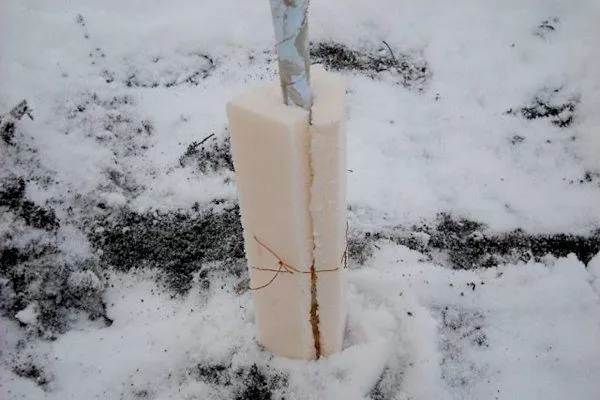
Preparation of planting material
When choosing a seedling for planting, pay attention to the condition of the root system and bark. It's best to avoid purchasing one if it exhibits the following:
- mechanical damage or stains;
- traces of pests.
- ✓ The presence of at least 3 main roots with a length of 25 cm.
- ✓ No signs of disease on the bark and leaves.
- ✓ The seedling should be no more than 2 years old for better survival.
It's best to choose seedlings that are 1-2 years old—they take root better than older specimens. The root system should be well developed.
When purchasing a bare-root seedling, pre-planting preparation is necessary. Before planting, the exposed roots are soaked in water for 12-24 hours.
Planting instructions
When planting, the hole is already prepared. It's dug and filled 2/3 full with nutritious soil mixture. Step-by-step instructions for planting a plum tree called "Utro":
- A wooden support is driven into a pre-prepared hole.
- Place the seedling in the hole, spreading the roots evenly across the mound of potting soil. The stake should be on the south side to protect the seedling from sunburn.
- Carefully cover the seedling's roots with soil. Tamp the soil down occasionally by hand to ensure there are no air pockets. Shake the seedling periodically for the same purpose. The root collar should be 5-7 cm above the soil level.
- The soil around the seedling is compacted. A depression with raised edges is dug around it to allow for watering.
- The seedling is tied to the stake with a soft material, such as twine. Wire should not be used, as it can damage the young tree.
- The tree is watered. Once the water has been absorbed, the soil is mulched with peat or compost.
Do not add fertilizers to the hole, as they may burn the roots of the seedling.
Caring for a planted tree
If a tree is planted in the fall, all agricultural activities are postponed until spring. Saplings planted in the spring require immediate care.
Features of caring for a planted tree:
- Watering. Compared to mature trees, seedlings require increased moisture. Watering should be done weekly. Heavy rains may necessitate adjustments to the watering schedule. Water seedlings with lukewarm water, which should be warmed by the sun. It's important to maintain a balance when watering: the soil shouldn't dry out, but standing water shouldn't be allowed.
- Trimming. If a seedling is planted in the spring, its top is trimmed. Pruning is done in the spring and fall to shape the crown.
- Top dressing. If planting was done with the addition of fertilizers, then the tree does not need to be fed for the first two years.
- Preparing for winter. The seedling is covered with spruce branches, and the area around the trunk is mulched with a thick layer of humus or compost. It is wrapped in fine-mesh metal mesh to keep out rodents.
The first flowers to appear on the tree are plucked to conserve the plant's energy. In the first few years, all energy should be directed toward growth and expansion, not fruiting.
Features of caring for an adult tree
As the tree grows, its care needs to be adjusted. Watering decreases, but more time is spent on pruning and pest control. Most importantly, a mature fruit-bearing tree requires regular fertilizing—without it, a good harvest is impossible.
Watering and fertilizing
The Utro plum is a moisture-loving variety. Regular watering is necessary, as the soil dries out. During droughts, watering frequency increases. The watering rate depends on the tree's age. At a height of up to 2 m, a tree requires 20-40 liters of water. At a height of over 2 m, 50-60 liters. After each watering, loosen the soil around the trunk, and then mulch sawdust, freshly cut grass, straw.
Two years after planting, the tree requires regular fertilizing with mineral and organic fertilizers. Plum tree fertilizing:
- Before flowering, add urea and potassium sulfate - 40 g each.
- During the ripening period, add nitrophoska and urea - 30 g each.
- After harvesting, add superphosphate and potassium sulfate – 30 g each.
- Before winter, the tree is fertilized with organic matter. The most readily available fertilizer is manure. During the fall tilling, organic and potassium-phosphorus fertilizers are added. To 15 kg of rotted manure, add 1 kg of wood ash and 0.5 kg of superphosphate.
Pruning and crown shaping
Crown-shaping pruning is carried out in spring and fall. The optimal time is spring, before the sap begins to flow. While shaping the crown, branches that have dried out and frozen over the winter are pruned.
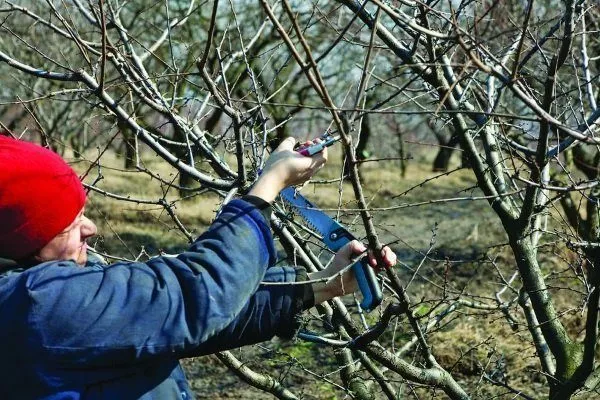
Pruning begins in the first year of life, shortening the main stem. In a two-year-old sapling, branches are pruned before it reaches one year of age.
Other features of pruning the Utro plum:
- When cutting branches to a ring, no stumps are left.
- Branches growing inward and upward are removed.
- Root suckers are actively removed—4-5 times per summer. They drain the mother plant's energy, reducing yield.
- To reduce the risks associated with gum flow and fruit rot, pruning is carried out as early as possible - before the leaves open, or in the summer, after the end of night frosts that negatively affect the damage caused by pruning.
- Pruning is done with a sharp knife or saw. Large cuts must be treated with garden pitch.
Wintering and shelter from rodents
The "Utro" variety isn't the most frost-hardy, so the tree requires winter protection, especially in its first few years. For the winter, the tree is covered with agrofibre, with any snow that subsequently falls being trampled down. When snow falls, shake it off the branches, leaving only a light coating.
One-year-old seedlings can be covered with branches, hay, and tied with rope. Young trees are wrapped in several layers of paper. Mature trees are insulated in various ways: by digging up the soil and sprinkling it with compost, whitewashing the trunk and skeletal branches, and covering the area around the trunk with burlap and plastic film. To protect against rodents, use fine-mesh wire mesh wrapped around the trunk.
Diseases and pests
The Utro plum is quite resistant to diseases and pests, including the most common ones. It has good resistance to fruit rot and clasterosporium, aphids, and codling moths.
To prevent tree infection, a number of measures are taken:
- Before the buds open, dig up the soil in the tree trunk circle;
- Damaged branches are cut off and burned in a timely manner;
- spraying with Fufanon, Inta-vir and Iskra-bio;
- If the tree is affected by fruit rot, the fruit is destroyed and the tree is treated with 1% Bordeaux mixture.
Common diseases of the Utro plum and how to control them:
| Disease | How to fight? | Prevention |
| Moniliosis | Spray during flowering with Skorom, Switch, or Fitoflavin. Alternatively, treat with an ash and salt solution or an iodine solution. | Timely fertilization with phosphorus-potassium fertilizers, removal of debris in the tree trunk circle, destruction of affected fruits. |
| Scab | Spraying with Skor, Raik, Horus. | Treatment before bud break with 1% Bordeaux mixture. |
| Red spot | Before and after flowering, as well as after harvesting – spray with Topaz, Skor, Oxyhom. | Before the buds open, treat the tree and the trunk circle with a 1% copper sulfate solution. |
Common pests of the Utro plum and how to control them:
| Pest | How to fight? | Prevention |
| Plum sawfly | Spraying with horsetail or wormwood infusion. Treatment with Lepitocide and Entobacterin. | Digging up the soil in the fall. Before the buds open, treat with insecticides. |
| Plum gall mite | After flowering, spray with a solution of Tedion or colloidal sulfur. | Maintaining favorable neighborhoods. Avoiding close proximity to birch trees, peaches, and other crops susceptible to spider mites. |
Harvesting, storage and processing of crops
The Utro variety, with its compact tree, makes harvesting easier for gardeners. However, it's still impossible to gather all the fruit without a stepladder. Bending the branches during harvesting is not recommended, as they are very fragile and easily damaged.
If cracks or breaks occur, these branches should be removed, which will negatively impact future harvests. Shaking the tree is also not recommended, as fallen fruit, especially overripe ones, may burst.
If plums are being harvested for eating or immediate processing, they are picked ripe. However, gardeners must be careful not to pick unripe fruits. If plums are to be transported or stored, they are picked unripe. In the refrigerator, these fruits, while ripening, can remain marketable for up to two weeks. After that, they become soft and lose their sweetness.
The Utro variety is considered versatile—its fruits are delicious fresh and preserved. The sweet green-yellow plums make excellent jam, preserves, and marmalade. These plums also freeze well.
Gardeners' reviews of the "Utro" plum
This variety should appeal to gardeners in temperate climates; it's not suitable for regions with harsher climates. The Utro plum is a striking example of a yellow-fruited variety; it's productive, hardy, and easy to grow, and its fruits are sweet, juicy, and delicious.