
The Ussuri plum is a very frost-hardy variety, widespread in the southern Far East and Manchuria. It is considered the northernmost plum variety, producing small fruits and average yields, but its frost resistance is unmatched among its peers.
The history of the Ussuri plum
The Ussuri plum is considered a variety of the Chinese plum and shares its genetic basis. Unlike the Chinese plum, the Ussuri plum is not found growing wild. It is believed to have originated from a feral plum discovered in the 19th century in the southern Primorsky Krai.
This is a shoot of a feral plum tree that may have remained in Primorye after the ancient Bohai civilization, which settled in the Far East many centuries ago. The semi-wild plum was discovered by the Melnikov and Bezrukov brothers in 1868. They transplanted the shoots to their plots and then moved to the village of Nikolskoye, now called Ussuriysk. From here, the spread of the Ussuri plum began.
Description of the tree
The Ussuri plum tree is medium-sized. The average height is 3 meters, but some trees reach 4-5 meters. In harsh conditions, the Ussuri plum typically grows to 2.5 meters, no more.
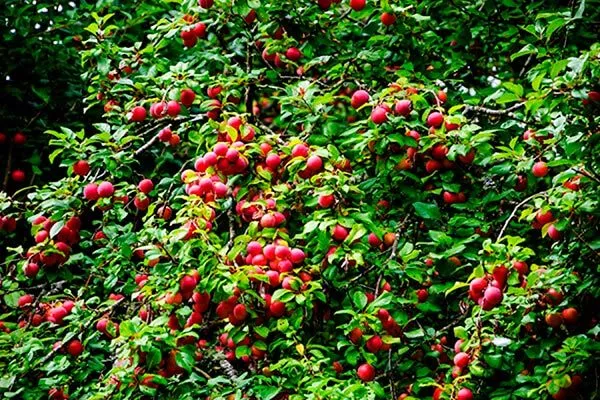
The tree's crown is broadly pyramidal, usually dense but sometimes sparse. The branches are crooked and gray, while the shoots are sturdy and gray-brown. The leaves are corrugated, obovate, rounded, or broadly lanceolate. The upper and lower surfaces of the leaf differ in color, the latter being lighter and pubescent.
The leaf petioles are short and slightly reddish. The flowers are small, white, and very fragrant. During flowering, they completely cover the branches. The tree lives for 30 to 30 years or more.
Description of fruits
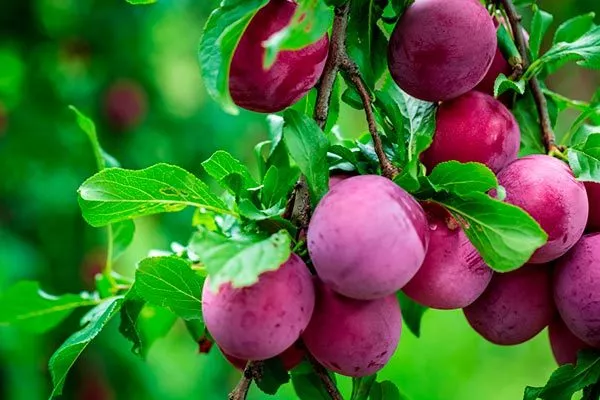
Ussuri plums produce medium-sized fruits, sometimes even small ones—their size varies greatly depending on the variety. Ussuri plum varieties also differ in fruit color and shape. The smallest varieties weigh 2-3 grams, while the largest varieties weigh 20 grams.
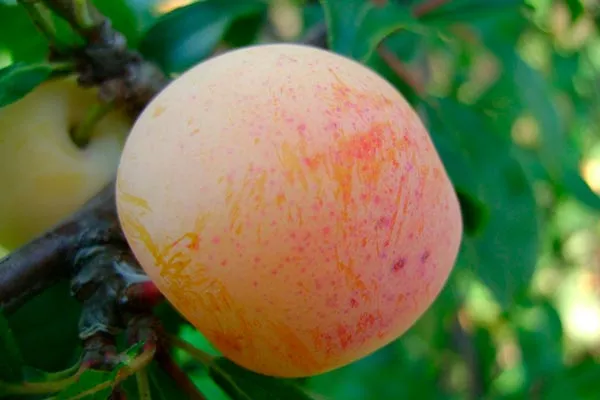
The fruit's shape can range from round to oblong with a pointed tip. Yellow plums are most common, but there are also green, red, almost white, black, and variegated varieties. The surface is usually waxy and free of hairs.
The fruits have a ventral suture, which is usually barely noticeable. The flesh is juicy and can be yellowish, greenish, or reddish.
Taste and purpose
The Ussuri plum's flavor is typically pleasant, sweet or sweet-tart. Varieties with sour, astringent, and slightly bitter fruits are very rare. The flesh is typically sweet, but the skin imparts a slightly sour taste.
Characteristics
The Ussuri plum is very frost-resistant, making it suitable for cultivation in virtually all regions of Russia. It can withstand temperatures down to -50°C, and its shoots and buds remain frost-free even in the harshest winters. The average yield of a mature tree is 20-25 kg.
Varieties
| Name | Frost resistance | Fruit size | Productivity |
|---|---|---|---|
| Red ball | High | Average | Average |
| Sissy | High | Small ones | Low |
| Oryol souvenir | High | Large | High |
| Covenant | High | Average | Average |
| Commonwealth | High | Large | High |
| Pioneer | High | Small ones | Low |
| Hope of Primorye | High | Average | Average |
| Pacific | High | Large | High |
| Manchurian prune | High | Small ones | Low |
| Yellow Hopta | High | Average | Average |
| Red-cheeked | High | Large | High |
| Shershnevskaya | High | Small ones | Low |
| Manchurian Beauty | High | Average | Average |
| Baikal | High | Large | High |
| Chemal blue | High | Small ones | Low |
The Ussuri plum is widely used in breeding to produce super-frost-resistant plums. Breeders have developed a huge number of varieties of this plum.
Certain varieties are recommended for each region:
- For the middle zone: Red Ball, Nezhenka, Orlovsky Souvenir and others.
- For the Volga-Vyatka region: Testament, Commonwealth, Pioneer and others.
- For Primorye and Khabarovsk Krai: Hope of Primorye, Pacific, Manchurian prune and others.
- For the Urals and Southern Siberia: Yellow Hopty, Krasnoshchyokaya, Shershnevskaya and others.
- For Siberia: Manchurian beauty, Baikal, Chemal blue and others.
Pros and cons
The Ussuri plum, along with its many advantages, invaluable for gardeners in regions with harsh climates, also has a number of disadvantages that are important to know about before planting.
Planting nuances
Despite its hardiness and undemanding nature, the Ussuri plum has some growing conditions requirements. Therefore, it's important to plant it correctly, as its future growth and fruiting depend on this. Planting is usually done in the spring.
- ✓ The soil acidity level must be strictly neutral (pH 6.5-7.0), deviations lead to growth inhibition.
- ✓ The soil must have high air permeability, avoid dense, clayey soils.
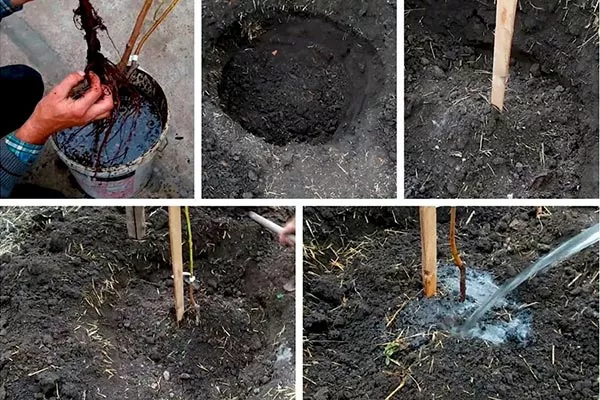
Landing features:
- Plum trees are best planted in sunny, warm areas protected from cold winds. They can be planted in elevated areas, on a south- or southwest-facing slope. Avoid lowlands and ravines, as well as areas near walls and fences, or anywhere where snow accumulates, as it can cause bark rot.
- To avoid the root collar from rotting, the tree is often planted not in holes, like most fruit trees, but on mounds or raised beds that can accommodate almost all of the seedling's roots.
- Fertile, loose soils with a neutral pH are preferred. Acidic soils must be deacidified with lime, wood ash, or dolomite flour. Otherwise, the plum tree will lag in growth and drop unripe fruits.
The Ussuri plum grows worst on waterlogged, marshy, and dry, rocky soils, as well as on overly dense, acidic soils. - Planting holes are prepared 3-4 weeks in advance. They should be 60-80 cm in diameter and 80-100 cm deep. The poorer the soil quality, the larger the planting hole should be. A drainage layer of crushed stone or broken bricks is placed at the bottom.
In sandy soils, the holes are made wider to increase the volume of fertile soil in the root zone, and in clayey soils, they are made deeper to replace the clay with fertile soil. The hole is filled with rotted manure (15 kg), to which superphosphate (400 g) and wood ash are added. The seedling roots are covered with ordinary soil. - A irrigation trench is dug around the perimeter of the planted tree, into which 20 liters of water are poured. Once the water has been absorbed, the area around the tree trunk is mulched with peat or straw-like manure. The sapling must be tied to the support with a figure-8 rope loop.
How to care?
To produce a bountiful and high-quality harvest, the Ussuri plum requires specific care. This care affects the tree's health, its ability to bear fruit, and the taste of its fruit.
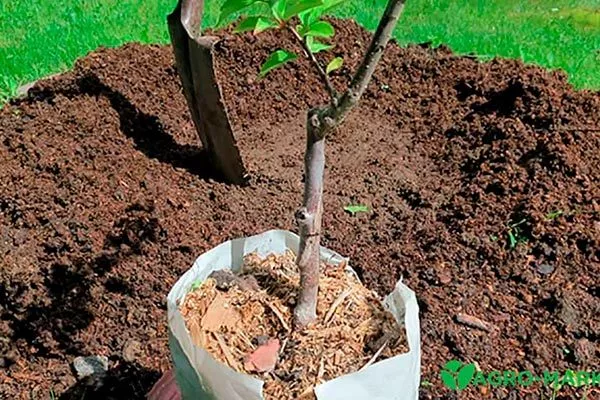
How to care for Ussuri plum:
- The tree needs regular watering because it thrives on moisture. However, it doesn't tolerate overwatering, so watering depends on the weather and soil conditions. It's especially important to water the tree during the periods of fruit set and ripening.
- In the first year after planting, seedlings are not pruned to allow for better root development. Crown formation begins only in the second year. In spring and fall, sanitary pruning is performed, removing damaged, dead, and diseased branches.
- The tree is fed starting in its second year, with nitrogen fertilizers applied in the spring and phosphorus-potassium fertilizers in the fall. Organic matter such as rotted manure, humus, and compost are recommended. If the soil is poor, add manure and peat compost. Fertilize the tree annually for the first five years of its life, then every other year thereafter.
- Wood ash is scattered around the perimeter of the crown. This is done after watering or rain. This procedure promotes pit growth.
- In spring, it is recommended to rake away snow from the tree trunk circle to prevent rotting and decay of the root collar.
Diseases and pests
The Ussuri plum has average immunity to major diseases and pests. It can be affected by diseases such as clasterosporium leaf spot, coccomycosis, root canker, sooty mold, rust, and fruit rot. Bordeaux mixture, Oxychom, HOM, Skor, Topaz, and other fungicides are used to combat these diseases.
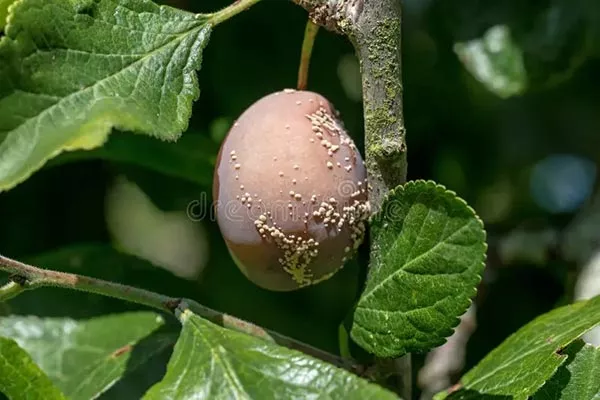
The following insect pests pose the greatest threat to the Ussuri plum: codling moth, aphids, leaf rollers, and sawflies. To combat them, use folk remedies (onion-garlic infusion, ash-soap infusion, etc.) or appropriate insecticidal preparations, such as Iskra, Karbofos, Aktara, and Fufanon.
How to harvest and preserve crops
It's recommended to pick Ussuri plums when they're technically ripe, while they're still fairly firm. Ripe fruits become too soft and don't store well—they should be eaten immediately or processed.
- ✓ The fruits are ready for picking when the skin becomes matte rather than glossy.
- ✓ Easy separation of the stalk from the branch is a sign of technical ripeness.
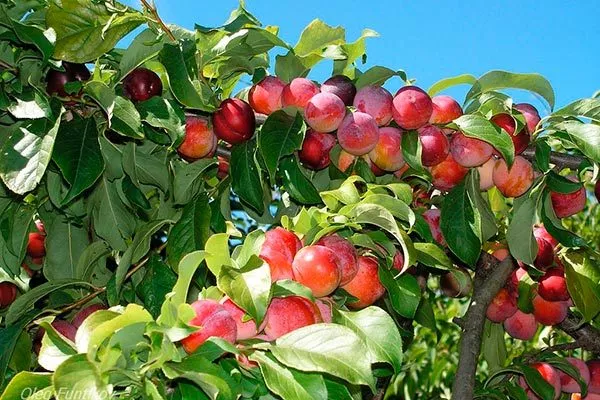
Plums are picked carefully by hand, without shaking the trees. To ensure longer shelf life, the fruit is picked with the stems attached. Harvesting is carried out in dry weather. It is also advisable to avoid rain for several days before harvesting.
Reviews
The Ussuri plum is of great interest to gardeners who grow fruit trees in harsh climates. It may also appeal to those who enjoy small plums without the cloying sweetness, but it's important to remember that this plum variety dislikes overwatering and dampness.