
The Black Tulskaya plum variety is distinguished by its late ripening period and is deservedly loved by gardeners due to its fragrant and juicy fruits, high productivity, and disease resistance.
History of selection
This unique Tula plum variety has a long history. Its characteristics were first described in the 1950s by the renowned horticultural and agronomic expert Georgy Yakovlevich Serebro. The Tula Black plum is the result of folk breeding.
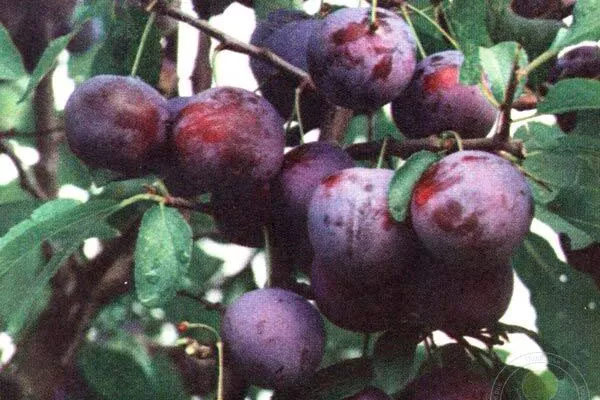
Scientists have concluded that it originated as a lucky seed grown from the seeds of an unknown plum variety, which then began to actively spread from garden to garden.
However, there is an alternative theory that the variety may have been obtained through cross-pollination of the Hungarian plum. Unfortunately, there is no information about the second parent variety.
Interestingly, this plum boasts many names:
- Bryansk late;
- Tula prunes;
- Winter blue;
- Meshchovsky prunes.
Despite its common name, this variety has nothing in common with Hungarian plums and does not produce true prunes. Its composition is more similar to that of blackthorns, and the dried berries make an excellent compote.
The concept of a plum
The Tulskaya Chernaya variety is a type of domestic plum. These fruits are distinguished by their excellent transportability and can withstand mechanical stress without cracking.
The appearance of the tree
The Tula Black tree's appearance attracts gardeners with its compact, neat growth habit and its even, oval, dense crown. The tree's height can range from 250 to 450 cm. The branches are covered with dense, lanceolate foliage of a rich, dark green color.
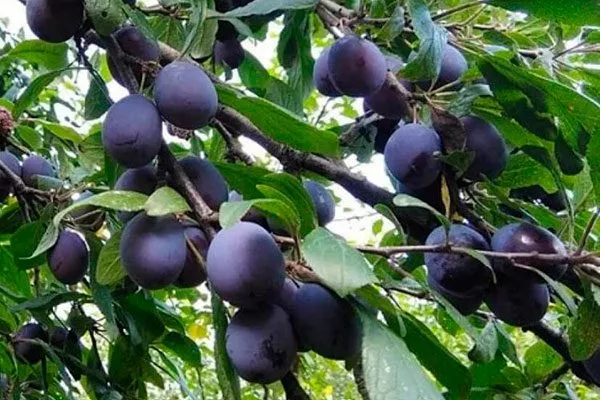
Plum blossoms produce white buds, which can be individual or part of umbels of 3-5 flowers. Both male and female flower stalks can be found on a single tree.
Fruits and their taste characteristics
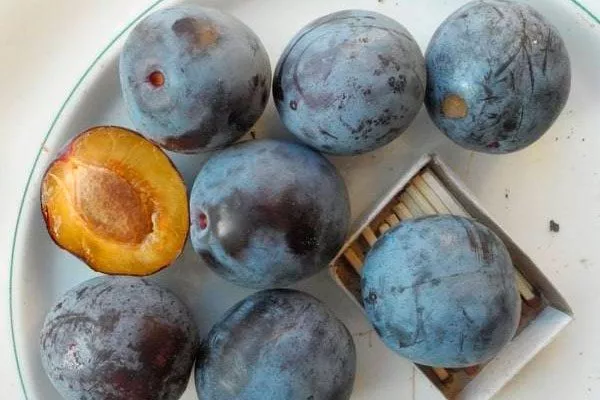
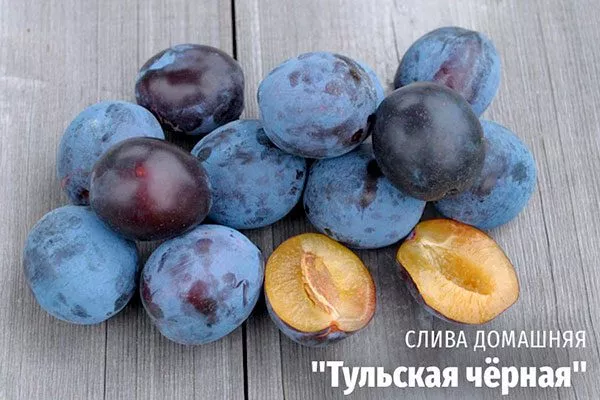
Plums are not particularly large in size, typically weighing around 18-22 g, although occasionally specimens weighing up to 30 g are found. Their shape resembles a rounded oval, with a barely noticeable ventral suture.
Other varietal characteristics:
- The skin of plums has a thin and compact texture.
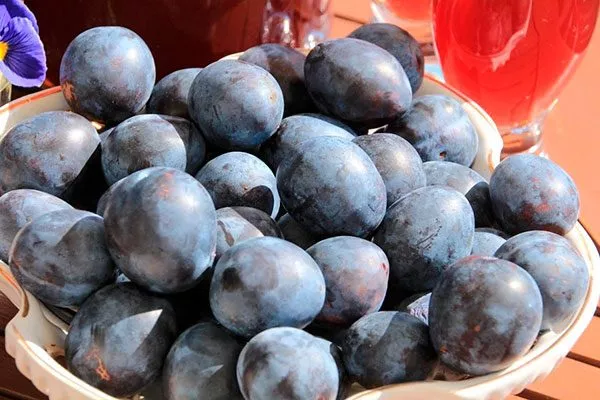
- The color varies from dark blue to almost black, but sometimes a reddish tint is present.
- The Tula Black variety can be distinguished by the characteristic blue-grey waxy coating on the surface of the fruit.
- The plum's dense flesh has a medium density and is at the same time distinguished by its increased juiciness and sweetness.
- The color of the pulp ranges from yellowish-green to green.
- Plums are sweet, but the tartness of the skin brings out their distinctive flavor. These fruits are delicious eaten fresh, but are most often used in preserves, such as jams, jellies, dried fruits, and more. On a flavor scale, the fruits received a rating of 4.1 out of 5, which, unfortunately, is not very high.
- ✓ Characteristic bluish waxy coating on the surface of the fruit.
- ✓ Self-fertility, which is rare among plums.
Beneficial properties
Fresh fruit will provide the maximum beneficial effects on the body. The organic acids found in plums, as well as important micronutrients, help strengthen the immune system, normalize digestion, and maintain a healthy heart rhythm.
Characteristics of the variety
Key features of the Black Tulskaya plum variety include its resistance to adverse weather conditions, fertility, and resistance to certain diseases.
Resistance to drought and frost
The Black Tula plum doesn't tolerate water shortages very well. Drought causes unripe fruits to fall to the ground.
The tree quickly recovers from a cold winter. Although the variety can withstand temperatures down to -35 degrees Celsius, sudden temperature fluctuations after a thaw can cause damage to the tree.
Pollinators of the Black Tula plum
This variety is self-fertile and doesn't require additional pollinators for a stable harvest. This is one of its main advantages. However, planting another domestic plum nearby can double the fruit yield.
Productivity, fruiting and ripening time
The Tula black plum is a late-bearing fruit tree. This fruit tree begins to produce fruit within 4-5 years of planting, and grafted trees bear fruit even earlier.
Flowering occurs in late May, and harvesting time runs from August 20 to September 10. This variety is renowned for its productivity: a single tree can yield up to 12-14 kg of delicious fruit during the first few years of fruiting. Later, yields increase to 35-40 kg.
Uses of berries
From the Tula black plum you can prepare:
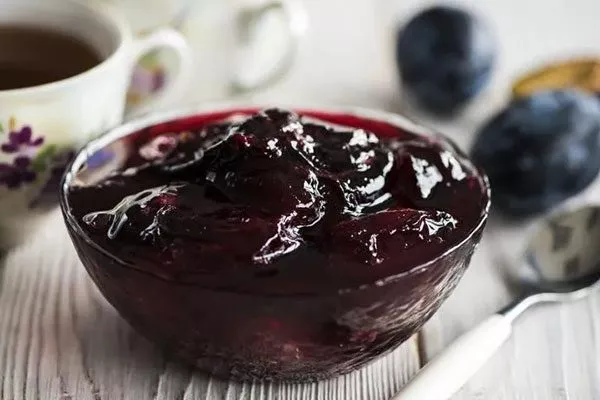
- jam and jellies;
- juice;
- alcoholic beverages;
- a variety of culinary products, including baked goods, desserts, as well as sauces and marinades for meat and fish.
Resistance to diseases and pests
One of the cultivar's attractive features is its resistance to certain diseases and pests. The tree is resistant to clasterosporium and fruit rot.
Growing regions
This plum variety is not only widespread in the Tula region, but also finds its fans in the Moscow region, where it is widely cultivated, as well as in the Kaluga region and many territories of the Northwestern region of Russia.
Landing features
Proper planting practices directly impact a tree's health and fruiting. Plum trees do not tolerate transplanting, so it's important to carefully follow all the rules from the start.
Recommended timeframes
The climate of the area is a key criterion when choosing the time for planting:
- In the Moscow region and surrounding areas, it's recommended to plant plum trees before the buds begin to open. This will give the young tree time to establish itself before the onset of winter and its fluctuating temperatures.
When preparing for planting, focus on the snowmelt. Work can begin 5-7 days after the snowmelt. It's important to complete the work two weeks before the tree begins to sap. Missing this deadline can impact the plum tree's survival. - Fall planting is advisable in areas with mild winters and ground freezing that doesn't reach the root system. Trees should be planted before the cold weather sets in. October is considered the optimal month for planting a garden.
If you buy seedlings with a protected root system, they can be planted at any time of the year.
How to choose a site for planting?
Choosing the right location for your plum tree is key, as it is the amount of sunlight that determines the unique flavor of the fruit.
To do this:
- It's important to select areas with adequate sunlight. If the plum grows in the shade, its fruits will have a sour texture.
- It is important to take into account that a tree that loves warmth should not be exposed to strong winds, so it is advisable to place it near a house or fence.
- The ideal soil for plum cultivation is moist loam, as the tree is very sensitive to moisture stress. A good option is to plant the plant in areas with a gentle slope, where the groundwater is 100-140 cm below the surface. Growing plums in waterlogged areas is not recommended, as this can lead to their death.
- To successfully plant plums, avoid fields with heavy, acidic, or alkaline soils. In such conditions, plum roots will grow shallowly, which will lead to damage during frosts and a lack of oxygen. Sandy soils, despite their depleted nature, quickly lose moisture. A low-lying site is prone to flooding and can attract cold air currents.
Consider the location of other fruit trees in the area. To prevent plum trees from becoming overshadowed and competing with other plants for moisture, space the trees at least 300 cm apart.
What crops can and cannot be planted next to each other?
Near the Black Tula plum, you should avoid the following plant species:
- walnut;
- hazelnut;
- fir;
- birch;
- poplar.
It is not recommended to plant plums and pears next to each other, especially if they are located at a short distance from each other.
Black Tula plums can be planted in the same area as apple trees and black currants without any negative consequences. Thyme, tulips, daffodils, and primroses can be added to the mix.
Selection and preparation of planting material
Choosing high-quality planting material will ensure not only a bountiful harvest, but also longevity of your plantings:
- the highest chances of successful survival are in seedlings aged one to two years;
- a one-year-old tree has no root branches, while a two-year-old tree has three to five;
- the tree trunk must be straight, with smooth bark that is free from wrinkles and damage;
- To ensure the health of a seedling, ask the seller to demonstrate it by cutting a small piece of bark - green wood under the skin indicates the tree is alive, while brown color indicates unsuitability;
- The root system must be developed, which is confirmed by the presence of a strong central root and three lateral shoots covered with auxiliary thin roots, and all must be elastic, without rotten and broken areas, and also without growths.
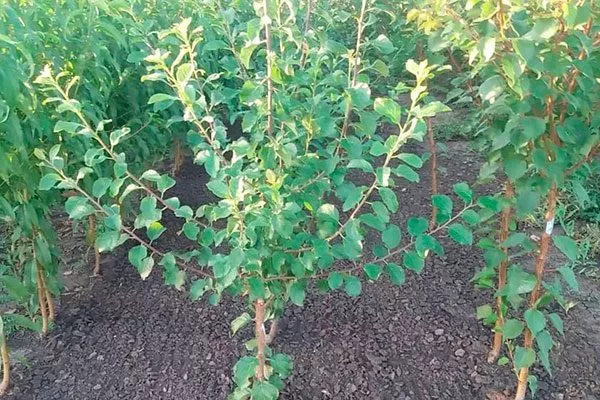
During transportation, the root system must be protected from drying out. This can be done by wrapping the roots in a damp cloth and placing them in a plastic bag, leaving the bag slightly open.
To prepare a plum tree for planting, soak its roots in water for 24 hours. After that, if the tree's root system is in good condition, you can begin the planting process.
Planting sequence
Initially, the garden area is prepared, which requires standard actions:
- If the soil substrate has an acidic reaction, liming is recommended.
- For light soils, it is recommended to add 350-450 g of lime per 1 sq. m, while for heavy soils this rate is doubled.
- Repeat this procedure every 4-6 years.
- Lime should be poured to a depth of at least 25-30 cm.
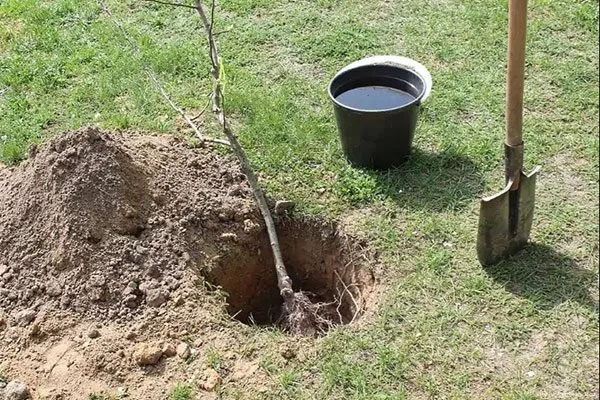
The planting hole should be prepared in advance to allow the nutrients to be distributed throughout the entire area. Preparation typically begins six months before the intended planting date, but if time is short, the process can be sped up:
- Mark the boundaries of the hole by digging a hole 60-70 cm deep and 70-80 cm wide. Preserve the topsoil, setting it aside.
- Place a tall stick in the center of the hole to protect the seedling from sunlight and provide a secure anchor.
- Add 15-20 kg of rotted manure or compost and 450 g of nitrophoska to the set aside soil.
- Mix well and fill the hole. Then moisten it by pouring 10 liters of water per hole.
- Preparatory work should be carried out well before the planned planting.
The landing algorithm is simple:
- Form a small mound of soil in the center of the dug hole. Then place the plum tree in place and arrange the plum tree roots around the perimeter of the mound, avoiding any twisting or kinking.
- Holding the tree by the trunk, carefully fill it with soil, then water it and wait until it is completely absorbed.
- After the water has drained, the plum tree's root collar should remain 5 cm above the soil level—check this. If it's too low, carefully lift the plant higher. If the collar is too high, and some roots are still exposed, add a little more soil until it reaches the correct level and gently compact the soil.
- Make an earthen ridge with a diameter of approximately 40-45 cm around the seedling.
- Moisten again by pouring 20 liters of water per plant.
- After the water has been absorbed, cover the tree trunk circle with a layer of mulch to retain moisture.
- ✓ The seedling planting depth should be such that the root collar is 5 cm above the soil level.
- ✓ The distance between trees should be at least 300 cm to avoid competition for resources.
How to care for the plum tree further?
Caring for the Tula Black plum variety doesn't require much effort, but don't ignore the basic rules to avoid losing a future harvest.
Trimming
There are two main types of pruning for this plum variety: formative and sanitary, which must be performed annually. The former is performed in the following sequence:
- In the first years after planting, it is necessary to cut the main shoot of the tree so that it is 20-30 cm higher than the growing branches.
- From the age of two, the crown begins to form with narrow tiers. The three strongest branches should be left, pruned to 50-60 cm. It's important that the central trunk still exceeds the other branches.
- From the age of three, the second tier of the crown begins to form, which is located 40-45 cm higher than the previous one and consists of two branches.
- At the age of four, a third tier is added in a similar way to the previous one.
- Starting at age five, only those branches that contribute to excessive crown density should be pruned. This procedure is called thinning.
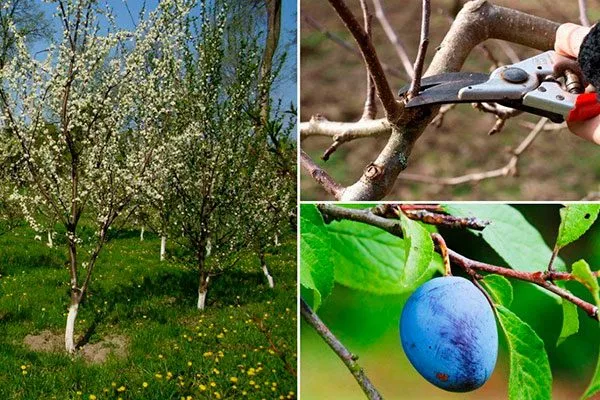
Sanitary pruning of this variety is performed as needed, regardless of the plant's age. This includes removing damaged or diseased branches. It is also recommended to remove basal shoots, which negatively impact the tree's nutrition and development.
Preparing for winter
Optimal care for fruiting plums of the Black Tulskaya variety includes preparation for the winter period, which begins in October:
- First, clear the soil layer around the tree from fallen leaves and carefully dig it up to a depth of 20 cm.
- Then moisten the tree trunk circle using 70-90 liters of water.
- Protect the tree with a layer of sawdust or cover it with a 10-centimeter layer of peat.
Fertilizing and watering
Young trees, especially in their first year, require special attention to watering. To ensure healthy growth and root development, each tree during this period requires 4-6 liters of water every 4-5 weeks. Weather conditions should be taken into account when planning your irrigation schedule.
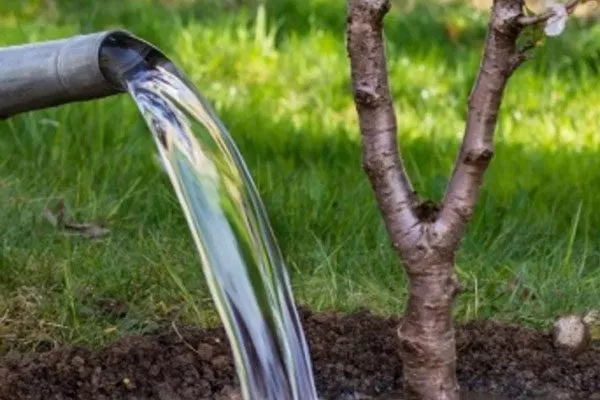
Mature fruit-bearing plums have their own watering regime:
- during budding;
- two weeks after flowering;
- during the formation of ovaries;
- during the period of fruit filling;
- after harvesting;
- Moisture-recharging watering in October, but if the weather is too rainy, this stage can be skipped to avoid the formation of swamps near the trees.
Since the Tula Black plum is compact, 20-30 liters per tree is sufficient to meet its water requirements. Drip irrigation is an excellent choice, as it provides a gradual and uniform flow of moisture into the soil.
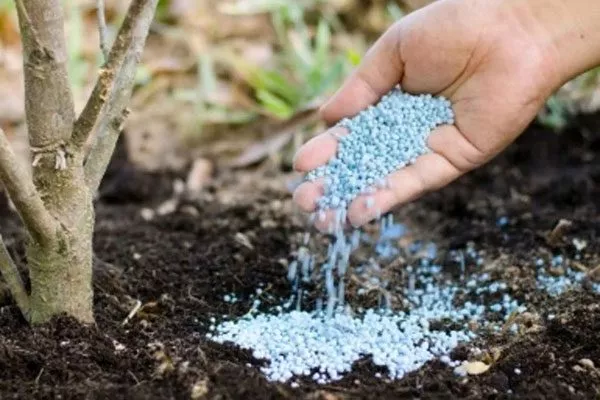
Fertilizer added to the planting hole is sufficient for two years. After that, it's time to begin providing additional nutrition. To ensure the plum tree grows and bears fruit, three additional feedings are required during the growing season. Organic and mineral fertilizers are used.
Protection from rodents
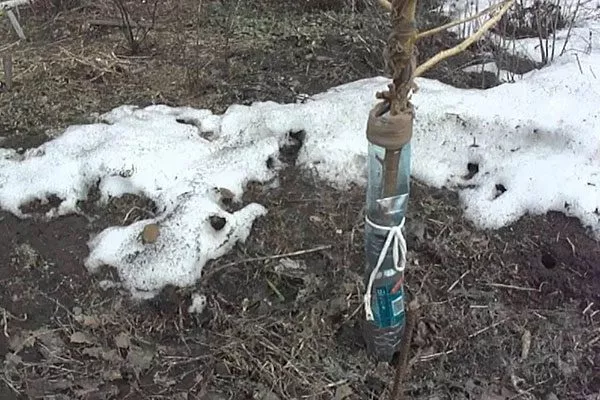
To protect the plant from rodent attacks, treat the trunk with white paint or lime. Then wrap it in a layer of roofing felt, fiberglass, or a material that reflects sunlight.
Methods of control and prevention of diseases and parasites
The Black Tula plum is resistant to clasterosporium and fruit rot. However, this variety may be vulnerable to a number of other diseases and pest attacks:
- pockets – flattening of the fetus occurs, and copper oxychloride is used for treatment;
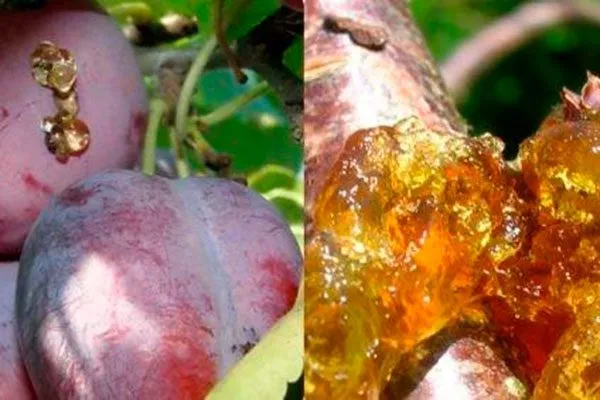
- gum flow – wounds form on the bark, from which an infected thick liquid flows out; treatment involves copper sulfate;
- dwarfism – the virus affects the leaves and buds, and there is only one way to get rid of the problem – burning the tree;
- moniliosis – The green mass is wilting, the tree needs to be treated with Bordeaux mixture.
Black Tulskaya plums most often encounter problems in the form of plum stem borer, yellow sawfly, and codling moth:
- To combat the spider mite, it is recommended to use Chlorophos, Karbofos or Mospilan, mixing them with water according to the instructions.
- These same remedies are also effective in combating yellow sawfly.
- Chlorophos is effective in protecting plums from codling moth attacks; it is usually applied in mid-June.
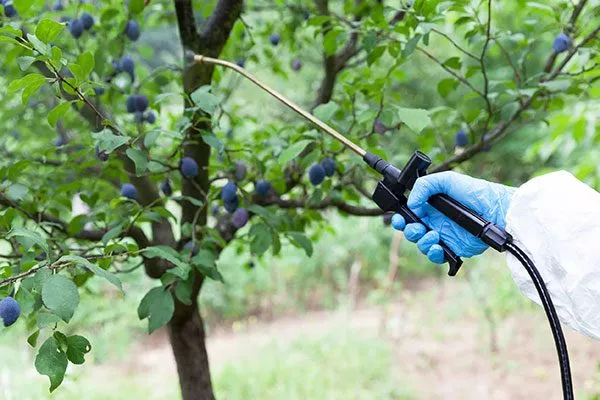
Timely application of fertilizers and removal of damaged fruits will help prevent pests from affecting plums.
Harvesting and storage rules
Plums develop a rich color first, and their sweetness arrives later. They need a little time to reach their ideal state. This usually occurs in the first ten days of September and continues until the end of the month. The fruits travel well, especially if the stems are intact.
Methods of reproduction
The Tula black plum is a specimen capable of propagation by two methods: cuttings and root suckers.
Positive and negative qualities
This variety has a number of advantages:
Reviews
The Black Tula plum has won the hearts of many gardeners thanks to its productivity, excellent flavor, and resistance to a number of diseases. Like all fruit crops, it requires careful care. But by following all care recommendations and a set schedule, you can enjoy its harvest for many years to come.