
The blackthorn plum, or sloe plum, is a fruit tree created by crossing a plum and a blackthorn. The hybrid inherited the hardiness and beneficial properties of the fruit from the wild shrub.
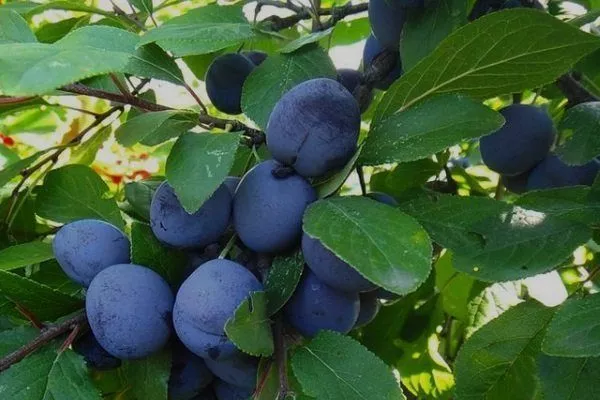
The blackthorn (Pninus insititia) is currently considered a subspecies of the common plum
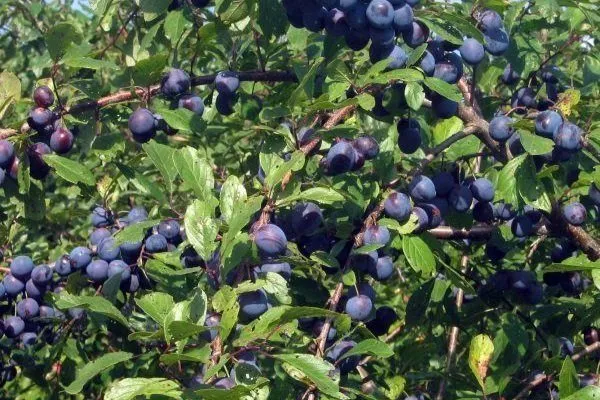
Blackthorn bush
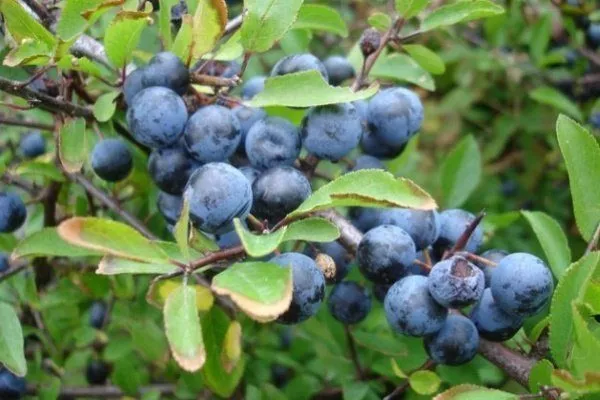
The blackthorn is a large shrub, often thorny.
What is special about blackthorn?
The blackthorn plum didn't appear through the efforts of breeders, but rather through natural crossbreeding. Later, having appreciated the hybrid's advantages, people began developing new varieties. The blackthorn, like the sloe, belongs to the Rosaceae family, a member of the plum genus.
Previously, the blackthorn was considered a variety of blackthorn. It was called dessert blackthorn or sweet blackthorn. The botanical description of this plant is very similar to that of blackthorn:
- Appearance. A thorny, branching shrub up to 4 m tall. The leaves are small – 4-5 cm, oblong-elliptical in shape, with serrated edges.
- Bloom. Blooms profusely. The flowers are snow-white, solitary, 2-3 cm in diameter. They open before the leaves.
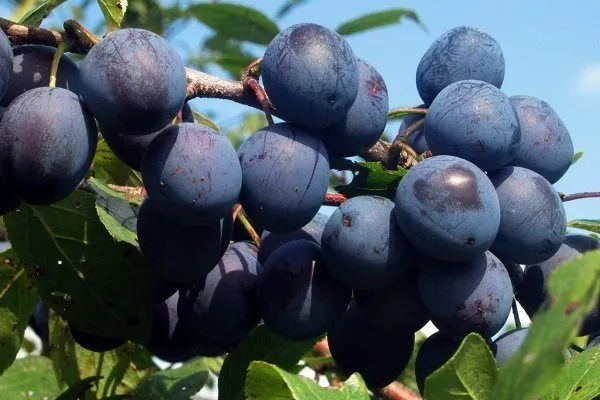
- Fruit. Spherical, dark blue or black, with a waxy coating. The dense flesh has a sweet and sour, tart flavor. The fruit weighs 15 g and is 4 cm in diameter. Inside is a pit.
Features of blackthorn:
- It bears fruit reliably and abundantly. The fruits ripen in August-September. Once ripe, they don't fall off, clinging firmly to the branches until winter.
- It can withstand temperatures down to -40°C. It is one of the most frost-resistant fruit crops.
- It thrives in harsh climates and unfavorable terrain. It can grow in even the poorest soils.
- Immune to diseases. Not affected by pests.
- High hardiness. Drought-resistant, roots recover quickly from frost, and the bark is not damaged by sun.
The longer the damsons hang on the branches, the sweeter they become and the less astringent they are.
Blackthorn tolerates any natural disaster or hardship, but the only thing it avoids is salty, marshy soil. This plant produces numerous shoots, so it is not recommended to plant valuable crops near it.
Differences between blackthorn and damson
Blackthorn is a shrub with healthy but tasteless fruits. By crossing it with plums, the tart fruit's value was enhanced by plum-like sweetness. Meanwhile, virtually all of the blackthorn's beneficial properties were passed on to the damson.
Unlike blackthorn, damson plums are much larger, sweeter, and juicier, and most importantly, they're less tart. Blackthorn plums aren't as prickly as blackthorn, making them much easier to pick. Blackthorn and blackthorn plums have similar chemical compositions. The only significant difference is their sugar content:
- in blackthorn – 5-6%;
- in blackthorn – 12-14%.
Distribution area and climatic features
The damson plum's homeland is Southwest Asia. The hybrid first appeared in Syria, where it was known as the "Damascus Plum." The damson plum was then brought to England, from where it spread throughout Europe.
The tree, possessing unique frost and drought resistance, can thrive in the most extreme conditions. Today, the hybrid is widespread, and as a fruit tree, it is grown in Europe, India, North America, Western Asia, and North Africa.
Varieties of blackthorn
The blackthorn is often confused with the sloe, and many consider it a wild plant. In fact, this hybrid has long been used in cultivated fruit growing and has many varieties. The main distinguishing feature of the best blackthorn varieties is their exceptional cold resistance and yield.
Let's look at the main varieties of this fruit plant:
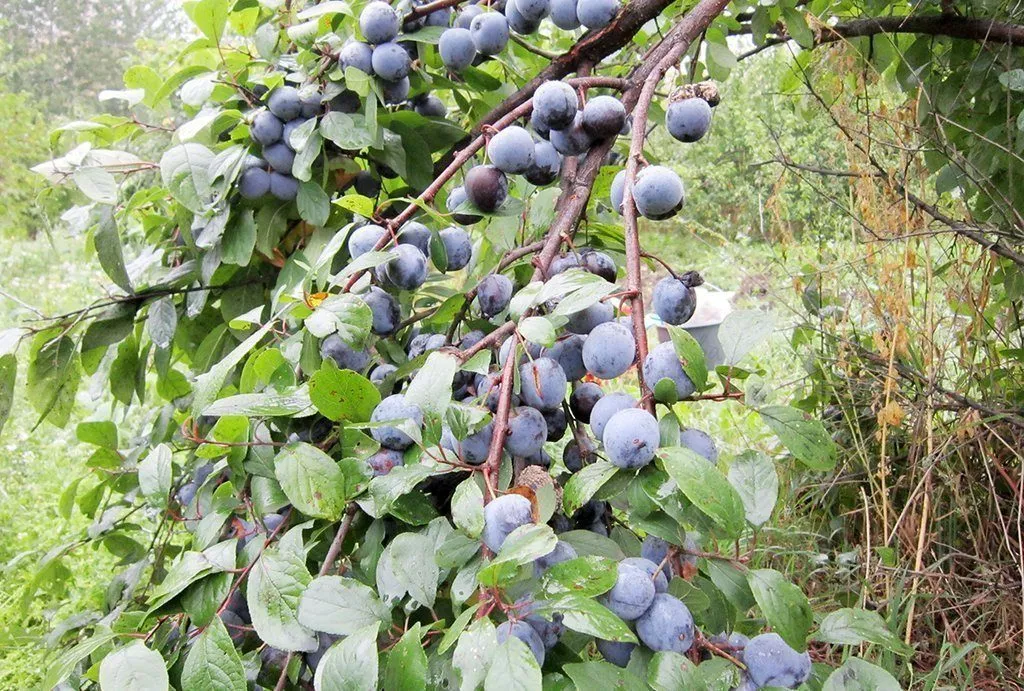
Burluksky Blackthorn
Large-fruited blackthorn
Uzbek blackthorn
Tenkovskaya blue blackthorn
Early Large-fruited Blackthorn
Characteristics of the main varieties of blackthorn:
| A variety of blackthorn | Yield, kg | Other features |
| Burluksky | 20-25 | The fruits ripen in September. The tree is short, and the fruits are dark purple. |
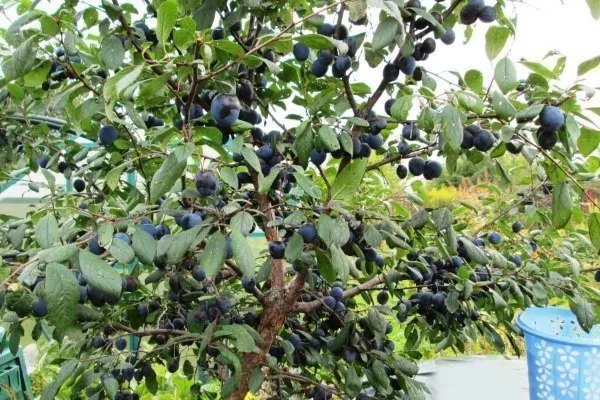
| Large-fruited | 25-30 | A self-fertile variety. Harvest occurs in September. Tree height is 3-3.5 m. The fruits are purple, oval-round, tart, and sweet and sour. |
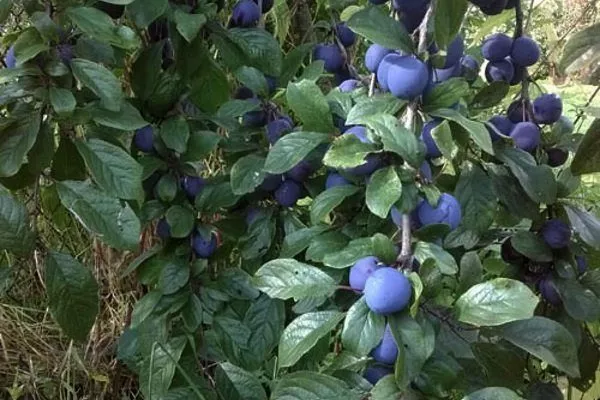
| Uzbek | 20-25 | Ripening in September. The fruits are purple-black. |
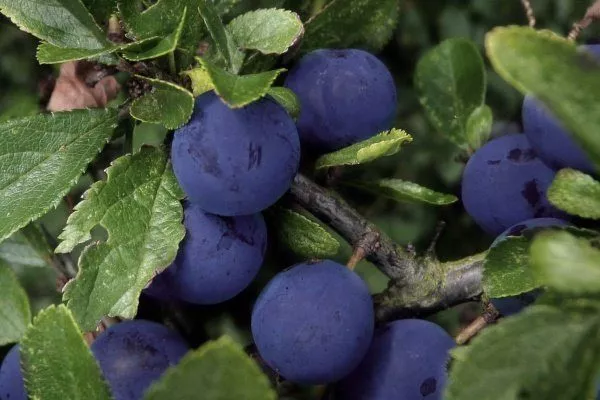
| Tenkovskaya blue | 12-14 | Ripens in September. Sweet and sour purple fruits. Tree is medium-sized. |
| Large-fruited early | 11-13 | The fruits ripen in August. The tree grows up to 2.5 m tall. The fruits are dark purple and slightly tart. |
Other varieties of blackthorn:
- Autumn. A late-ripening variety. A vigorous tree with medium-sized, oval-round fruits. The fruit is blue, with green flesh.
- Volzhsky. A delicious self-fertile variety. The fruits are dark blue and lose their tartness as they ripen.
- Solyanovsky. A large-fruited, high-yielding and winter-hardy variety with tasty fruits and a slight astringency.
- Super-abundant. A low tree with black-blue fruits. An early-bearing variety.
- Garden Blackthorn No. 2. A winter-hardy, productive variety. The fruits are tasty and large.
Benefits and harms
Blackthorn is very easy to grow—the tree requires little care. However, the fruits of the blackthorn are extremely nutritious, and are its main value. They contain amino acids, minerals, vitamins, pectin, coumarins, tannins, and monosaccharides.
Benefits of blackthorn:
- improving the functioning of the cardiovascular system;
- vasodilation, prevention of blood clots;
- normalization of the gastrointestinal tract;
- removal of waste and toxins;
- preventing the accumulation of radioactive elements in the body;
- improving metabolism;
- increasing immunity.
Blackthorn fruits are a low-calorie product, so they are actively used in diets.
The gardener shows the fruits of the blackthorn in his video and talks about how he eats them:
Blackthorn fruits can cause allergic reactions. They can also harm people:
- with increased acidity of the stomach;
- with exacerbation of chronic gastritis or stomach ulcer.
Blackthorn isn't exactly tasty—it's very tart—but it makes excellent preserves, such as jams and compotes. The berries can be dried and frozen, and the leaves can be added to tea. In European cuisine, blackthorn is used to make seasonings and sauces.
You shouldn't eat damsons without counting them. Nutritionists recommend not eating more than 200 grams of damsons per week. These 200 grams should not be consumed all at once, but rather in 2-3 doses, every other day or two. Eating damsons on an empty stomach will cause an upset stomach and diarrhea.
It is forbidden to eat blackthorn seeds, as they contain a large amount of toxic components that can poison the body.
How to plant blackthorn?
Blackthorn is propagated primarily vegetatively, with seeds used only for breeding purposes. The most popular propagation methods are:
- root shoots;
- cuttings;
- vaccination.
Own-rooted seedlings, usually obtained from root suckers, are the most prized. Let's take a closer look at the planting process of blackthorn seedlings.
- ✓ Check the root system of the seedling for rot and mechanical damage.
- ✓ Make sure the seedling has at least three healthy branches.
Site selection and land preparation
Planting damsons requires selecting and preparing a site. However, this doesn't require much effort—this crop grows beautifully in any corner of the garden. Moreover, damsons are often used as an artificial fence, planted along the boundaries of a plot. Damson plantings also protect other trees and shrubs from the wind.
- Two months before planting, test the soil for acidity.
- Apply lime if soil pH is below 5.5 and mix thoroughly into the top layer of soil.
- A month before planting, apply organic and mineral fertilizers according to recommendations.
Damsons aren't picky about soil, but they grow especially well in clay soils. The soil is prepared in late autumn, at least 1.5 to 2 months before planting. The soil is then dug over and fertilized.
For 1 sq. m. the following is contributed:
- manure – 8 kg;
- superphosphate – 50 g;
- potassium salt – 30-40 g.
All fertilizers are thoroughly mixed with the tilled soil. It's a good idea to test the soil for acidity. If the pH is less than 5.5, add lime.
How to get seedlings?
The most popular method of propagating blackthorn is from own-root cuttings. These are most easily obtained from root suckers, which are collected in the spring or fall. The healthiest and strongest plants, located farthest from the trunk, are selected—these have a better-developed root system and are easier to separate without damaging the mother plant.
After digging up the shoot, examine its roots. If they're developed, the cutting can be transplanted to its permanent location; if not, it needs to be nurtured further. Cuttings intended for further nurture are trimmed to 20-25 cm and placed in nutritious soil. By the following fall, the seedling will be ready for transplanting. This is a simple and affordable method for obtaining seedlings, but it's not suitable for large-scale cultivation—the volumes are too small.
A more productive, but also more complex, method of producing seedlings is grafting. Rootstocks are grown first—for example, winter-hardy plum or felt cherry.
Planting seedlings
The optimal age for planting blackthorn seedlings is 2-3 years. They are usually planted in the spring. The best time for planting is late April to early May.
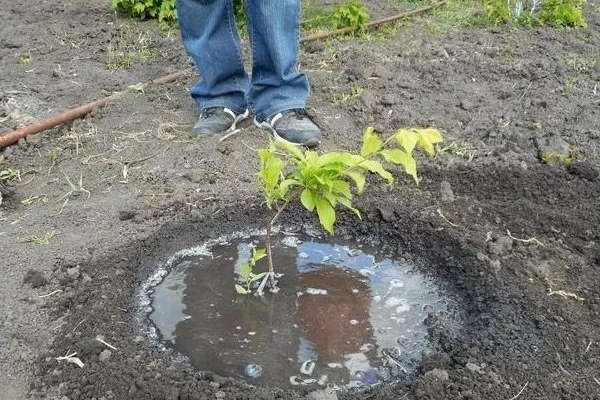
The order of planting blackthorn:
- In the prepared area, dig holes, the width and depth of which are adjusted to the size of the roots. Standard dimensions are 50 cm deep and 70 cm wide. The distance between holes is 4-4.5 m. Add 5 kg of compost, a cup of ash, a handful of lime, 100 g of superphosphate, and 40 g of potassium sulfate to the holes. Mix all ingredients beforehand.
- The fertilizer mixture is covered with soil on top so that the hole is half filled.
- The seedlings, treated with a root growth stimulant, are placed in a hole with the roots spread out to the sides.
- Cover the roots with fertile soil and carefully compact it so that 2-3 cm remain from the root collar to the surface of the ground.
- Water generously and mulch the tree trunk circle.
- The crown is pruned so that the height of the seedling from the ground surface does not exceed 80 cm.
To prevent blackthorn from creeping across the site, an artificial barrier is created for the root growth – sheet iron or slate is buried a meter deep..
Agrotechnical measures
The blackthorn is an easy-to-care-for plant; its care consists of standard procedures that require minimal time and effort. Blackthorn is cared for in much the same way as plums, but with a simplified approach.
Soil care
The soil around the tree trunk is periodically loosened to improve moisture and oxygen penetration. When loosening, be careful not to overdo it; deep tilling can damage the roots, which can lead to disease and even death.
Is fertilizing required?
Blackthorns produce their first harvest in the third or fourth year. This is when they begin to be fed. Fertilizer is applied in the fall—at the end of October—during tillage, per square meter:
- manure – 5 kg;
- superphosphate – 50 g;
- potassium sulfate – 20 g.
Before applying fertilizer, weed the soil and dig it thoroughly. After applying fertilizer and digging again, mulch the soil with straw, sawdust, and fallen leaves.
Fertilizers can also be applied during the spring and summer seasons. Recommended feedings include:
- Early spring. Nitroammophoska - one tablespoon per tree (can be dissolved in water).
- After flowering. Superphosphate and potassium sulfate - one teaspoon per 10 liters.
- After fruiting. Wood ash – 250 g.
Irrigation and its cycles
When young, blackthorn trees are watered, like other fruit trees, once or twice a week, depending on the weather. Mature trees are watered as needed. The plant is drought-resistant, and even if a gardener misses a few waterings, it won't significantly impact the tree's health or the yield.
Tree pruning
Gardeners often neglect to prune blackthorn. This leads to the overgrowth of branched shoots. The plant is then trained to have a sparse, tiered crown or a bushy habit.
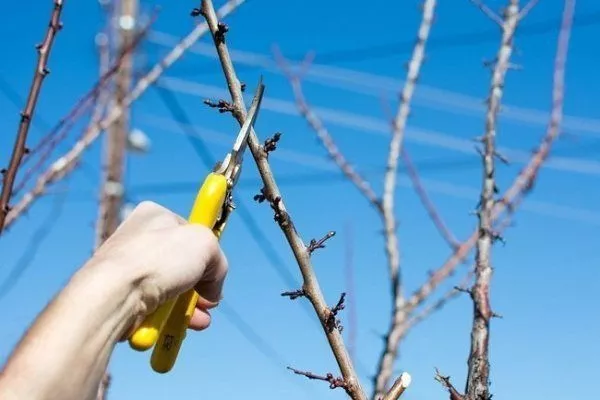
Pruning is the most labor-intensive aspect of blackthorn care. The plant is pruned three times per season:
- at the end of March;
- at the end of June;
- at the end of July.
In order to maintain the given shape and support the tree’s productivity, pruning is carried out:
- Sanitary. Remove all damaged, diseased and dry branches.
- Rejuvenating. This is done to prolong the plant's life. Several fruiting branches are pruned, and after a year, the remaining skeletal branches are shortened by a third.
- Thinning. It helps prevent thickening, which prevents light from reaching the fruit. If the plant is bushy, leave no more than 4-5 fruiting branches.
- Molding. This type of pruning is carried out if the plant is used as a hedge or to give the crown an attractive appearance.
When bushes age or freeze, powerful shoots help rejuvenate and restore the plant.
Wintering of blackthorn
Blackthorn tolerates frost so well that it doesn't require insulation. However, protection from rodents who want to gnaw on the bark in winter is necessary. To prevent hares and other bark-hungry creatures from damaging the tree, its trunk is wrapped with roofing felt or barbed wire.
If it happens that the blackthorn does freeze, it quickly recovers thanks to its trunk shoots.
Diseases and pests
Blackthorn is relatively resistant to stone fruit diseases, but like any tree, it is not immune to infection. However, there are no pests that can significantly harm blackthorn.
Blackthorn diseases and measures to control them:
| Disease | Symptoms | How to fight? |
| Fruit rot | The disease begins with the wilting of young shoots. Subsequently, the fruits become spotted and rot. | Treatment with copper and iron sulfate. |
| Plum pockets | This is a fungal disease that occurs in high humidity. The fruits become unusually large and deformed. They are seedless, and the flesh does not match the varietal characteristics. | Spraying with Bordeaux mixture - first during flowering, then during the period of fruit formation. |
| Sharka | It is accompanied by the appearance of white streaks on the leaves. The fruit pulp is tough and inedible. Indented circles and lines are visible on the fruit itself. | Timely removal of pests, pruning with disinfected tools. |
| Dwarfism | The leaves become deformed and small. | This viral disease is very difficult to treat, so affected trees are uprooted and burned. To prevent infection, use clean gardening tools when pruning. |
Harvesting and storing blackthorn
The harvest signal is a change in the fruit's appearance—they are picked when the skin darkens to the typical color of the variety. The fruits, picked from the tree, are stored in two layers in small boxes, each holding no more than 10 kg.
The harvesting time depends on the further purpose of the fruits:
- for fresh consumption or for processing – in the phase of technical maturity;
- for transportation - before technical maturity, as soon as the fruits become soft and begin to color.
Fresh blackthorns can be stored:
- in the refrigerator – 3 months;
- in a cool place – 1 month.
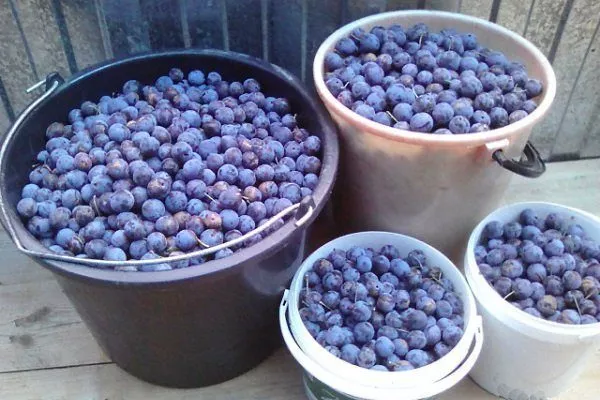
How and where are the fruits used?
Unlike other fruits, damsons are eaten fresh sparingly. They are preferred for processing, drying, freezing, and other uses. But these healthy, blue-black fruits have other uses as well:
- Traditional medicine:
- Fresh blackthorn fruits eliminate nausea during toxicosis;
- compresses from mashed fruits are used to treat wounds, calluses, skin inflammations, and suppurations;
- Eating fresh fruits eliminates bad breath – blackthorn has antiseptic properties and helps combat various dental problems.
- Cooking. They are added to dishes as an acidifier. The French pickle damsons to create a product similar to olives.
- Food industry. They make vinegar and use it in the production of alcoholic beverages. Activated carbon is produced from the seeds.
- Pharmaceuticals. They produce drugs for the treatment of diseases of the kidneys, genitourinary system, digestive tract, and oral cavity.
Gardeners' reviews
The blackthorn is a versatile hybrid worthy of a place in any garden. This small, hardy, and undemanding tree will not only reward you with valuable fruits but also decorate your plot, protect fruit trees from the wind, and serve as a beautiful hedge.