
The Stanley plum belongs to a popular subspecies of the domestic plum, the Hungarian plum. This American variety has remained popular for over a hundred years. Russian gardeners have been familiar with the Stanley plum for 30 years. Let's find out what makes this variety so appealing and where it can be grown.
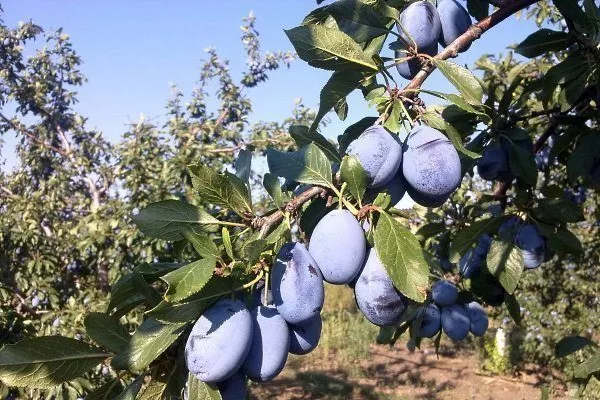
plum variety 'Stanley'
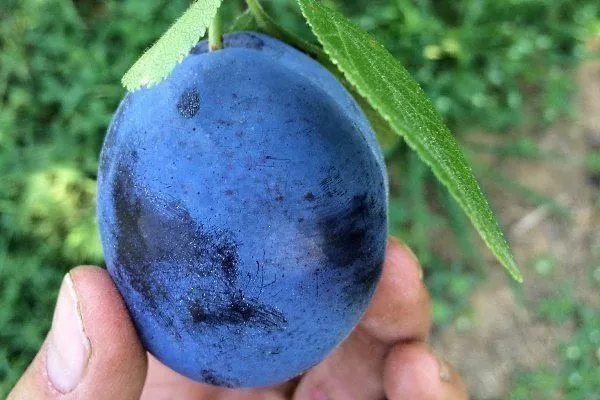
Hungarian plum 'Stanley'
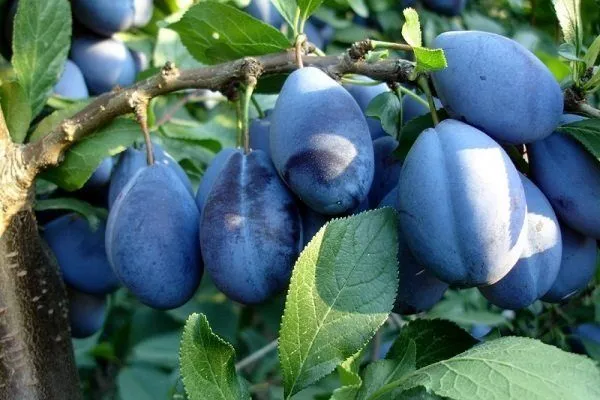
'Stanley' is one of the best in terms of fruit quality.
Where did the plum variety come from?
Stanley is of American origin—it was developed in the United States in the early 20th century by crossing the "Azhan" Hungarian and "Grand Duke" varieties. It was registered in the Russian State Register in 1983. It is zoned only for the North Caucasus region, but due to its high frost resistance, Stanley is also grown in more northern regions.
Stanley plum is classified as a subspecies of Hungarian plum. It inherited the best traits from its parents: large fruit (from "Duke") and abundant fruiting (from "Azhanskaya"). Today, the Stanley plum is often used as a donor of valuable agronomic characteristics; the variety is widely used in breeding.
Description of Stanley
Botanical and agronomic features:
- Tree. About 3 m tall, with a rounded-oval crown and a straight trunk. The shoots are sparsely thorny.
- Fruit. Asymmetrical, oval-elongated, with an elongated neck. The dark purple skin, with brown subcutaneous spots, is covered with a thick layer of waxy coating. The suture is clearly visible. Average weight is 40 g. Particularly large specimens reach 60-100 g.
The yellow, loose flesh has a granular, fibrous texture. The skin adheres tightly to the flesh. The pits are oblong, with pointed ends. While ripe plums can be easily removed, unripe plums are more difficult to remove. The fruits form on last year's growth or on cluster-type branches. - Leaves. 7-8 cm long, 5 cm wide, rounded, bright green. The edges of the leaves are serrated.
- Flowers. Large – about 3 cm in diameter. Saucer-shaped, petals white, smooth.
- Pollination. The variety is partially self-fertile – it needs pollinators to achieve high yields.
- Precocity. The first harvest is in the 4th year after planting the seedling.
What Stanley is valued for:
- High commercial quality. The tree produces numerous large, tasty fruits that transport well. This combination of qualities makes Stanley an ideal commercial variety.
- Versatility of fruits. Stanley plums, as befits a Hungarian plum, are distinguished by their sweetness. Professional tasters rated their flavor at 4.7-4.8 points. They contain almost 14% sugar and 0.71% acid. Stanley plums are suitable for any purpose – they can be eaten fresh, canned, frozen, and, most importantly, made into prunes.
Evaluations of tasters of Stanley fruits and products made from them:
| What was assessed? | Tasters' rating in points (max – 5) |
| Fresh fruits | 4.7 |
| Frozen fruits | 4.8 |
| Prunes | 4.5 |
| Juice | 4.6 |
| Canned fruits | 4.5 |
| Compotes | 5 |
What qualities does a plum have?
Stanley is an old, proven variety. Since its discovery, dozens of new varieties with improved characteristics have emerged. However, this American-bred Hungarian remains popular among both amateur gardeners and breeders. This is due to Stanley's excellent agronomic characteristics.
An overview of the Stanley variety can be seen in the video below:
Productivity
Stanley is an exceptionally productive variety; even among Hungarian grapes renowned for their abundant fruit production, it stands out for its productivity. Gardeners harvest 50-60 kg of fruit from a single tree. However, to produce such a high yield, the tree requires optimal agricultural conditions and fertile soil. In commercial cultivation, the variety yields 18 tons per hectare.
Drought resistance
This variety is not drought-tolerant; its drought tolerance is average. To ensure a bountiful harvest of large plums, the Hungarian plum Stanley should not be left without water during dry summers. Without water, the fruit becomes tasteless and falls off en masse.
Frost resistance
The variety isn't exceptionally frost-hardy. It falls into the medium category, with the maximum short-term frost it can withstand without damage being -34°C, and the long-term frost being -25°C. Regions where winter temperatures drop below this mark are not suitable for the American plum.
Resistance to diseases and pests
The variety is resistant to plum blight, one of the most dangerous diseases, as well as holey and red spot (clasterosporium and polystigmosis). The most dangerous disease for this Hungarian plum is moniliosis (gray mold). Stanley is also frequently attacked by plum aphids.
The need for pollination
Being partially self-fertile, Stanley requires pollinators. Partially self-fertile trees produce only 5-15% of the total fruit set; the rest is produced through cross-pollination. Without nearby pollinating trees, Stanley will produce fruit, but pollinators blooming at the same time will significantly increase the tree's yield.
The best pollinators for Stanley are plums:
- Empress;
- Bluefree;
- Chachak Lepotica.
Does the variety have any disadvantages?
We've already established that this variety, compared to many Hungarian plums, doesn't tolerate drought well and is susceptible to aphids and moniliosis. Stanley has another drawback: it's very demanding of soil. To produce plenty of tasty fruit—the ideal raw material for prunes—the variety requires not only moisture but also nutrition.
Stanley literally "sucks" nutrients from the soil. Gardeners must compensate by constantly feeding the voracious plum. If Stanley is deprived of organic and mineral support, its fruits become smaller and sour. Also, with a nutritional deficiency, resistance to gray mold decreases.
All about Stanley's landing
Stanley has specific requirements regarding its growing location, soil characteristics, and timing. To ensure the seedling successfully takes root, grows, and develops, all planting considerations must be taken into account.
Climate and conditions
The Stanley plum, with its average frost resistance, is suitable for growing in areas with warm to moderately cold winters. This variety thrives not only in the southern regions of the country but also in the central part of the country. If grown further north, the plum may freeze during prolonged frosts.
Optimal planting times
In southern regions, seedlings can be planted at any time—spring or fall. However, in temperate climates, spring is preferred, as seedlings planted in the fall often don't have time to harden for the winter.
Planting times:
- Spring. Planting should be done before the sap begins to flow, preferably immediately after the snow melts.
- Autumn. One to one and a half months before the onset of persistent frosts.
If a seedling is purchased late in the fall and there's no point in planting it before winter, planting is postponed until spring. The seedling is "preserved" by being buried in the ground, covered with spruce branches, and later, with snow. It is removed from the trench in the spring, just before planting.
Landing site and its preparation
Requirements for the Stanley plum planting site:
- Good sun exposure. The surface is level or slopes south/southwest.
- No drafts or gusts of wind.
- The groundwater level is no closer than 1.5 m to the surface.
- Fertile soils with a neutral pH. Plums do not grow well in heavy clay soils; they prefer fertile sandy loams or loamy soils with good drainage.
- ✓ The soil pH level should be strictly within 6.0-6.5 for optimal growth and fruiting.
- ✓ The depth of groundwater is at least 1.5 m from the surface to prevent rotting of the root system.
Low-lying areas are not suitable for plums, as moisture accumulates there, which contributes to bark rotting.
Prepare the soil and planting hole in advance, preferably in the fall if planting in the spring. For fall planting, prepare the hole two weeks in advance. Prepare the soil before frost. Stanley trees are large and require a feeding area of at least 8-10 square meters. The recommended planting pattern is 3x4 meters.
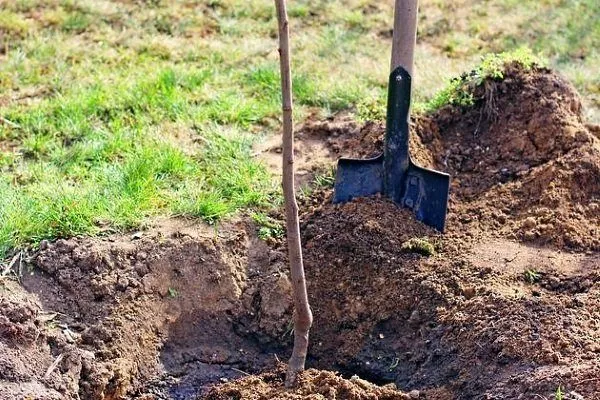
The size of the hole depends on the soil fertility. Preparing holes for different soil types:
- Fertile soils. Planting holes in fertile soils are dug 60 cm deep and 80 cm wide. The top layer is removed and set aside. It is mixed with compost (1:1) and poured into the hole, which has a pre-dug bottom.
- Poor soils. Here, the holes are made larger to accommodate the nutritious soil mixture. The hole dimensions are 100 x 100 cm. The sod is removed, chopped, mixed with manure (2 buckets) and ash (1 liter), and the mixture is placed in the hole. Fertile soil is taken from another location and added to fill the hole halfway.
When planting, place the following in the hole:
- humus or compost – 7-10 kg;
- superphosphate – 100 g;
- potassium salt – 20-30 g, or wood ash – 200 g.
On poor soils, the above doses are doubled.
Stanley, like other Hungarian roses, will not grow well in acidic soils. If the pH is not right, add 700 g of dolomite flour or a liter of eggshells to the soil mixture prepared for the planting hole.
The hole prepared for planting must be covered, for example, with a slate sheet, polyethylene film, roofing felt, or another waterproof material.
Selecting and preparing a seedling
When choosing a seedling, consider the climate of the region. In warm climates, own-rooted seedlings can be planted, while in colder regions, rootstock-based seedlings are preferable.
Signs of a healthy seedling:
- The roots must be in perfect condition—free from damage, rot, and signs of fungus. Seedlings with a dense, long root system are preferred.
- The branches are whole, strong, and flexible. There should be no dry or damaged areas.
- ✓ The presence of at least three main roots with a length of 20 cm to ensure good survival.
- ✓ Absence of mechanical damage and signs of disease on the bark and root system.
The optimal age for planting a seedling is 1-2 years. It should not have any leaves.
If the seedling was purchased in a container, it is removed from it and transferred directly to the planting hole with a lump of soil.
Preparing the seedling for planting:
- It is recommended to soak the seedling roots in a potassium permanganate solution a couple of days before planting. Keep the solution at room temperature. Add a rooting stimulant. The seedling roots can also be treated with Heteroauxin, which improves plant survival. Crush two tablets and dust the root system with the resulting powder. You can also treat the roots with Epin, Kornevin, or potassium humate.
- Three to four hours before planting, soak the seedling's roots in a slurry of manure and clay. The mixture should have a creamy consistency and not drip from the roots.
Buy seedlings from specialized nurseries that grow varietal fruit trees.
Good and bad neighborhoods with cultures
Any fruit tree can grow near the Stanley plum tree. The main thing is to leave at least 3 meters between the plum tree and its neighbors. Stanley trees do particularly well with cherries and sweet cherries. They don't do so well with apples, pears, and other fruit trees. Planting berries near plum trees is not recommended.
Step-by-step instructions for planting
It's easier to plant seedlings with two people—a helper will hold them upright while you fill the hole. Planting a Stanley plum seedling:
- The substrate in the hole is moistened. Once the substrate is saturated, a support is installed – it should be 30-40 cm longer than the seedling.
- The seedling, prepared for planting, is placed on top of the formed mound, with the roots straightened. The hole is filled with soil, filling the spaces between the roots. To achieve this, the soil is compacted periodically.
- When the hole is filled, check the position of the root collar - it should be 5-7 cm above the ground surface.
- The tree is watered with three buckets of water. This water is poured not at the root, but into circular furrows dug at some distance from the trunk. Once the water has been absorbed, the area around the trunk is sprinkled with peat, straw, or grass.
- The tree is tied to a stake. All shoots on it are shortened by a third.
How to care for a tree?
The Stanley plum requires year-round care from gardeners. It's not difficult, but it does require precise and timely execution. In summer, the tree is watered and fertilized, pruned and insulated in the fall, and in spring, the trunks are whitewashed, sprayed, fertilized, and pruned. Winter care consists of shaking snow off the branches.
Care immediately after planting
During the first year, the seedling doesn't require any additional feeding; it only requires watering, loosening the soil, and weeding. As needed, it is treated with pest and disease control agents and insulated.
The most important agricultural measure for a seedling planted in the spring is watering. A young tree is watered weekly, using 10-20 liters of water.
Irrigation scheme
Trees are watered without waiting for the soil to dry out. The recommended watering rate is 50-60 liters per square meter of crown projection. The soil should be moistened to a depth of at least 40 cm during watering.
Approximate watering times:
- during the period of ovary formation;
- two weeks before harvesting;
- after harvesting the fruits;
- Autumn moisture-recharging irrigation is carried out in October.
During droughts, the frequency of watering increases. The watering rate for plum trees also changes depending on their age. A young tree requires about 3 buckets of water, while a mature tree requires 6-8 buckets.
Fertilizer
The first feeding is done in the second year after planting the seedling.
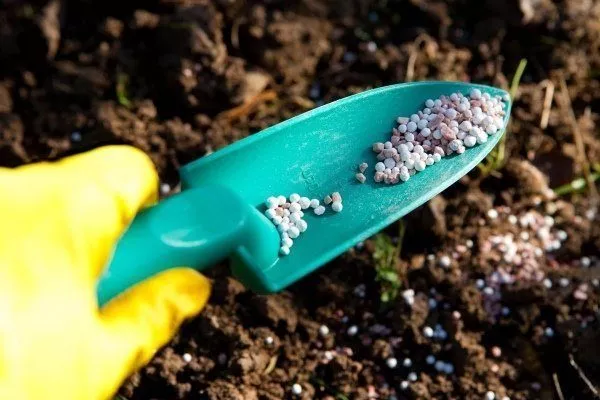
Plum does not tolerate chlorine, so fertilizers should not contain potassium chloride or ammonium chloride.
Fertilizing plum Stanley:
- In spring, add manure (10 kg per square meter), potassium sulfate (70 g), superphosphate (100 g), and urea (25 g) to the soil. This mixture can be replaced with a complex fertilizer such as nitroammophoska, azofoska, or diammophoska. For plum trees older than 5 years, increase the fertilizer application by 50% (except for phosphorus and nitrogen).
- Before flowering, apply potassium nitrate and urea (45 g each). Alternatively, prepare a spray solution (45 g per 10 liters of water). Alternatively, water with an ash solution (1 cup per 1 liter of water).
- In summer, repeat the feeding, replacing Nitrophoska with potassium sulfate. Alternatively, apply a complex plum fertilizer such as Yagodka, Ideal, etc.
- Once fruiting is complete, add potassium sulfate and superphosphate (30 g each) to the soil. Add humus every 2-3 years (10 kg per 1 sq. m).
A poorly growing tree is sprayed with a yeast solution - 1 kg per 10 liters of hot water, and left for 4-5 hours.
The nuances of pruning
Crown formation begins 3-4 years after planting. The optimal crown for the Stanley variety is a sparse, tiered crown. Spring pruning tips:
- During planting, each branch of the seedling is reduced by 1/3.
- In the second year, the five strongest shoots are left—they should be located at approximately the same height. They are reduced by 1/4. The central shoot should be 10-15 cm higher than the last branch.
- The second tier is created in the same way – from 3-4 branches. Four to five buds are left on each skeletal branch.
- The third tier is formed from 2-3 branches. The branches decrease in length from bottom to top, creating a pyramidal crown.
In summer, crown thinning continues, removing basal shoots and damaged branches. Only the main stem is prohibited. In autumn, shoots damaged by pests and diseases, as well as dead branches, are pruned. The central shoot is shortened if necessary, but not more than by 1/4.
Every 5-6 years, rejuvenation pruning is performed: branches older than three years are shortened by two-thirds. To ensure a productive harvest, the rejuvenation process is spread out over 2-3 years, with branches being shortened gradually.
Wintering and protection from rodents
The Stanley plum tolerates cold well, but young trees are recommended to be insulated. Furthermore, for trees of any age, whitewashing the trunk is recommended—covering it with a solution of slaked lime mixed with copper sulfate and office glue.
To protect the trunk from the cold, wrap it in any breathable material—regular burlap or nylon tights will do. Black material is unsuitable, as it can cause sunburn. To further protect the trunk from rodents, enclose it with wire mesh.
Insulation options:
- Wrapping. The trunk is wrapped several times with burlap or other material. Spruce branches are placed between the layers, and the resulting structure is securely fastened.
- Covering with a box. If the tree is small, you can cover it with a cardboard box, filling the empty space with sawdust, pine needles, or newspapers.
- "The Hut". They make a frame out of willow twigs driven into the ground. Hay, leaves, and straw are piled on top. Then the "hut" is covered with roofing felt.
To insulate the roots, the trunk layer is mulched, creating a 6-7 cm layer. A 20 cm high mound is thrown near the trunk.
Pest and disease control
Hungarian plums have a relatively high immunity to many diseases common to stone fruits. However, if cultivation practices are improper or other adverse factors arise, the trees are not immune to diseases and pests.
Diseases of the Stanley variety and their control:
| Disease | Symptoms | Methods of control |
| Rust | Brown spots, covered with spores, appear on the leaves. The leaves dry out and fall off. | During the summer, spray the tree with a 1% Bordeaux mixture 2-3 times. Remove nearby junipers, as they are often the source of the disease. |
| Moniliosis (fruit rot) | Flowers turn brown and dry up. Then the leaves and young fruiting branches wither. The fruit develops brown rot. On affected branches, the bark cracks, and gum oozes from the cracks. | Prune diseased branches back to healthy wood. Spray the tree with 2% nitrafen in early spring or fall, after the leaves have fallen. Copper oxychloride (80 g per 10 liters) or 1% Bordeaux mixture are also needed. In the fall, dig the soil, removing leaves. |
Pests of the Stanley variety and their control:
| Pest | What does it do? | How to fight? |
| Plum aphid | It sucks the plant's juices, colonizing leaves, stalks, and shoots. It does not curl the leaves. | Before bud break, treat the tree with 3% nitrafen. After bud break, treat with Karbofos, Fufanon, etc. |
| Plum thick-legged | Ten to twelve days after flowering, the spider mite lays eggs in the soft seed of the ovary. The larvae eat away the kernel. The damaged fruits fall prematurely. | Spray with insecticides such as Karbofos, Metaphos, Fufanon, and others. This is done immediately after flowering, and then 10-12 days later. |
| Plum sawfly (black and yellow) | During flowering, females lay eggs in the calyx. When the ovary forms, larvae emerge and consume the fruit. | The same treatment is used for the water lily. Two sprays – before and after flowering. |
When and how to harvest?
The harvest time varies by region. In the temperate zone, it's late August to early September. Harvesting is done in stages, with the crop being harvested in 2-3 batches. Harvesting takes place in dry weather. If the fruits are to be transported, they are picked slightly underripe. Avoid climbing on the Stanley's branches, as they are fragile; it's best to use a ladder.
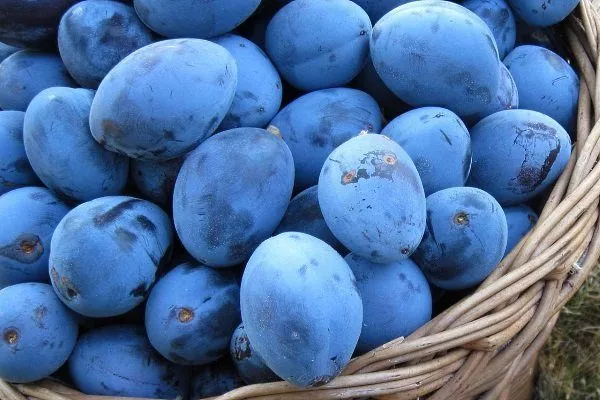
Overripe fruits become soft, acquire an unpleasant taste, and fall to the ground. Therefore, it's important not to skip harvesting. Picking begins with the lower branches, gradually moving toward the top. When picking, try not to rub off the waxy coating—this helps the fruit retain its freshness.
Storage and processing features
Stanley fruits keep fresh in the refrigerator for 6-7 days. This variety is not suitable for long-term storage; the fruits must be processed. Preserving options:
- Conservation. They cook jam, preserves, marmalade, and prepare compote.
- Freezing. Washed plums are placed in special freezer-safe bags. They have a shelf life of 6-8 months. After this period, the plums do not spoil; they only become more sour.
- Drying. The plums are soaked in a hot baking soda solution for 30 seconds. Rinse and place in the oven for 3 hours. Leave the oven door slightly ajar. The temperature is 50°C. The cooled plums are dried for another 5 hours at 70°C. Finally, they are dried for another 4 hours at 90°C. This method produces the most delicious prunes. They are stored in paper bags, wooden boxes, or glass jars.
- Alcoholic drinks. Stanley fruits make good tinctures, liqueurs, and plum wine.
Stanley plum reviews
The Stanley plum is a wonderful, time-tested variety. Its main advantage is its large, sweet plums, which make excellent prunes. This is an old variety, susceptible to many diseases and pests, making it challenging to obtain a decent harvest. But the effort will be well worth it, as the reward is 60-80 kg of plums with unique characteristics.