
Thanks to breeders, cherry plums have been developed that easily adapt to even the harshest climates. Gardeners can grow cherry plums that ripen at different times, from July to September. Let's look at the most popular varieties, classifying them according to various characteristics.
Self-fertile cherry plum
These varieties are convenient because they don't require pollinators. They bear fruit on their own, without the need for "neighbors" that ripen at the right time.
| Name | Ripening period | Yield (kg per tree) | Frost resistance |
|---|---|---|---|
| Traveler | Early ripening | 30-40 | High |
| Monomakh | Early ripening | 25-30 | High |
| Kuban Comet | Mid-early | 40-50 | High |
Traveler
An early-ripening cherry plum, bred by crossing the Chinese plum and the Tauride cherry plum. This variety is often used as a pollinator. The trees are medium-sized and bear fruit in the third year of planting. Ripens in early July. 'Traveller' rarely gets sick and is frost-tolerant. Watering is essential during drought.
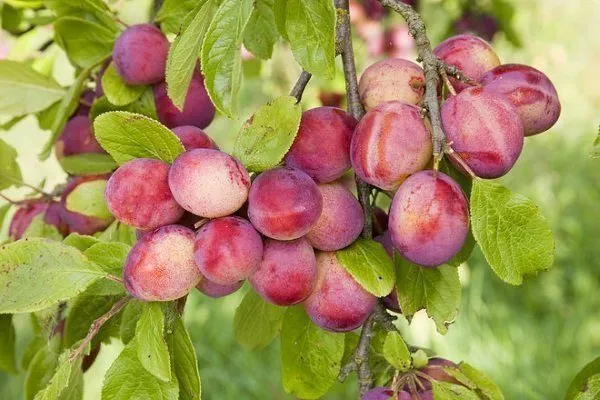
The fruits are spherical, slightly widened at the base, and medium in size. The skin is yellow, while the outer layer is dark red with a purple tint. The flesh is orange and medium-juicy, with a hint of banana flavor. They weigh 18.5-28 g. Cherry plums should not be allowed to become overripe, as they will quickly fall off. A drawback is damage during transportation. The annual yield is up to 40 kg.
Monomakh
Belongs to the early-ripening category. The trees are frost-hardy and short, reaching up to 2 meters. 'Monomakh' is one of the earliest ripening varieties. Fruiting is abundant every year.
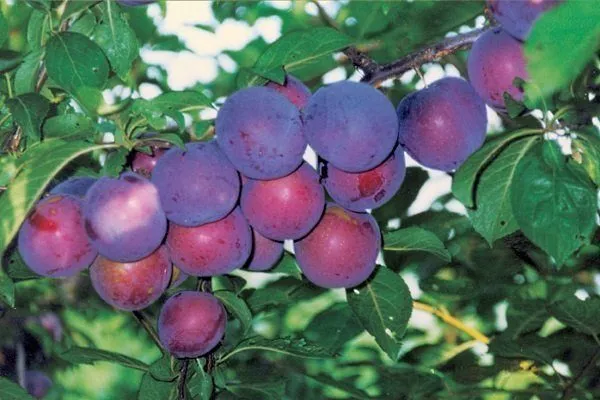
The fruits are medium-sized, have a good flavor, and an easily removed pit. They weigh 25-30 g. The skin is purple. The unusual shape resembles a royal hat, hence the name. The annual harvest is 30 kg.
Kuban Comet
This winter-hardy, mid-early ripening variety is the result of a union between the Pionerka cherry plum and the Skoroplodnaya plum. The tree grows up to 3 meters tall, with a sparse, wide crown. It produces its first cherry plums just a couple of years after planting. It tolerates temperatures down to -25 to -30°C. Watering is required during drought.
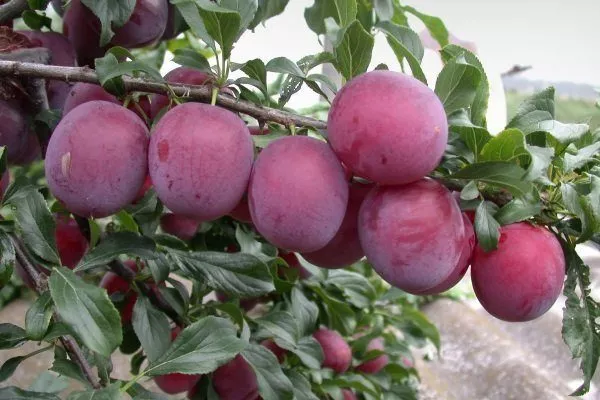
The cherry plum is round-ovoid and reddish-burgundy. Its thin skin has a waxy coating. The taste is sweet and sour, with a hint of apricot. The flesh is deep yellow and juicy. The pits are difficult to remove. The average fruit weight is 30 g, but can reach 40-45 g. It transports well. The yield per tree is up to 40-50 kg per year.
Frost-resistant varieties
Before planting cherry plum, compare its frost resistance with the extreme cold temperatures typical for a given region. The variety should be able to withstand both frosts and spring frosts. Some varieties tolerate low temperatures better than others.
| Name | Ripening period | Yield (kg per tree) | Frost resistance |
|---|---|---|---|
| Carmine | Mid-early | 30-40 | High |
| A gift to St. Petersburg | Mid-season | 40-60 | High |
| Ruby | Early ripening | 40-50 | High |
| Rocket Seedling | Early ripening | 30-40 | Very high |
| Vladimir Comet | Mid-season | 30-40 | High |
| Timiryazevskaya | Early ripening | 30 | High |
| Early-bearing | Mid-season | 30-35 | Very high |
Carmine
A winter-hardy cherry plum with a mid-early ripening period. The trees are medium-sized with spherical, moderately dense crowns.
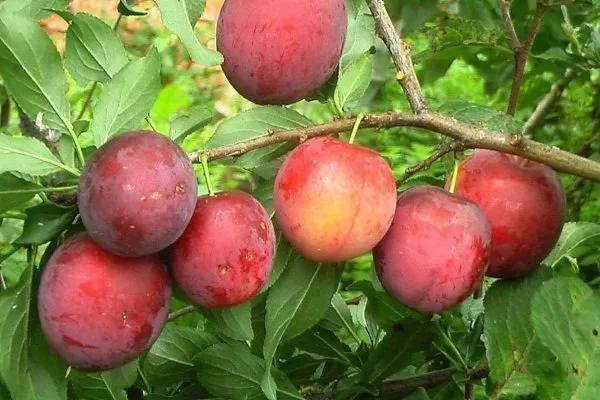
The fruits are small, weighing an average of 15 g. They are round, dark scarlet in color, with yellow flesh and colorless juice. The pulp is firm, slightly tart and sweet. Separating the seeds from the pulp is easy. Trees yield 30-40 kg.
A gift to St. Petersburg
This self-fertile, frost-hardy cherry plum has a very decorative appearance and tolerates unstable climates well. It is a full-bodied, densely foliated variety with consistent harvests. Ripens in mid-August. Cherry plums such as 'Seyanets Rakety' and others are used as pollinators.
The medium-sized, slightly elongated fruits are pale orange in color. They weigh up to 20 g and have an excellent dessert flavor. The variety is resistant to fruit diseases. The average annual yield is up to 27 kg. Cherry plum harvest is up to 60 kg.
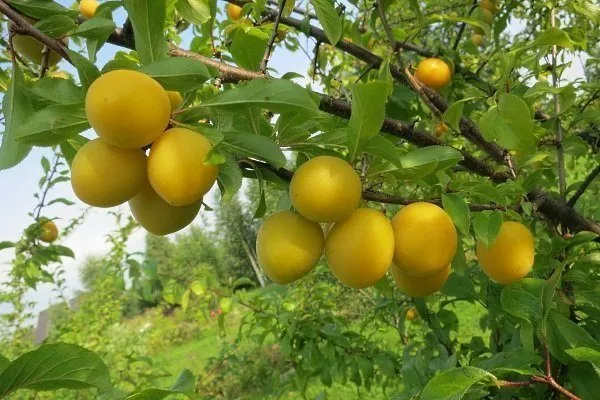
Ruby
A winter-hardy variety from the early-fruiting category. Trees are above average in size. Crowns are broadly oval and moderately dense. "Ruby" cherry plum rarely gets sick and has a good immunity. Harvesting begins in July. It tolerates frosts as low as -40°C (-40°F).
The fruits are medium to large, spherical, and slightly flattened. They weigh approximately 25 g. They are dark red in color, with a shiny, firm skin. The flesh is orange, medium-firm, fibrous, fragrant, sweet, and moderately juicy and acidic. The pit is difficult to remove. The yield is 40-50 kg.
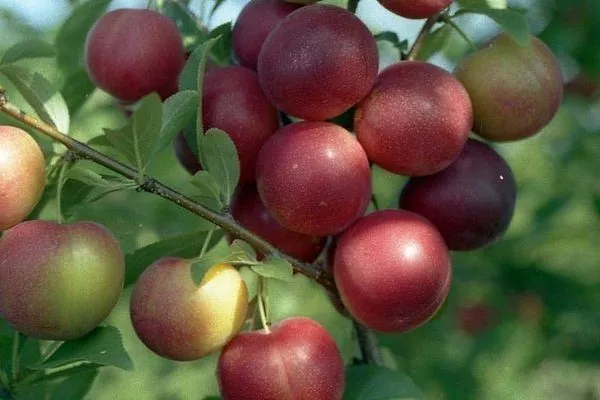
Rocket Seedling
An exceptionally frost-hardy cherry plum, it can withstand temperatures as low as -35°C without damage. The tree grows up to 2 meters tall. It is considered one of the best cherry plum varieties growing in the Urals.
The fruits are large, round, and pointed at the end. They weigh up to 30 g. The skin is red. The yield is up to 40 kg. The taste is standard.
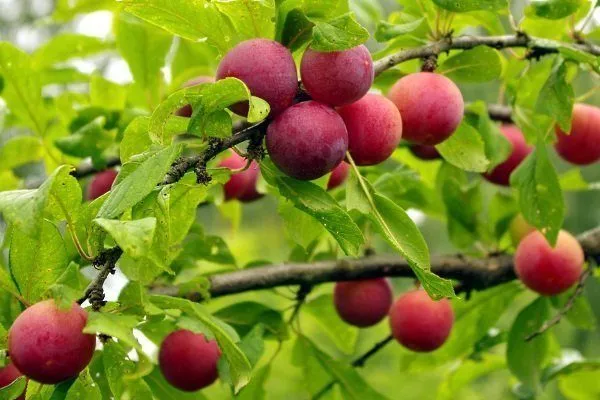
Vladimir Comet
A self-fertile, frost-hardy variety, recently developed. It is still not widely grown among gardeners and has not yet been registered. The trees are medium-sized, with rounded-oval crowns. Ripening time is average.
The fruits are heavy, up to 30 g. They are ovoid. The color is burgundy, and the skin is covered with a waxy coating. The flesh is orange. The flesh is medium-firm and does not separate easily from the pit. This variety is early maturing and quickly increases its yield. The yield is 30-40 kg.
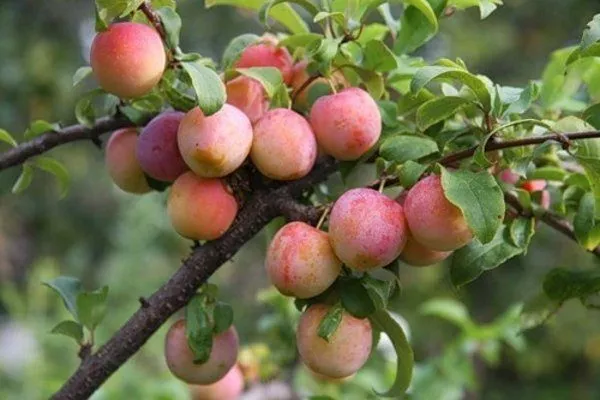
Timiryazevskaya
This self-sterile variety was created by open pollination of another cherry plum cultivar, the Kubansky Comet. The tree reaches a maximum height of 3 meters. It has a spreading, conical crown. The tree bears few leaves and ripens very early.
The fruits are small and ovoid. The smooth, shiny skin is dark burgundy. They have delicious, yellowish flesh. The flavor is sweet and sour, harmonious. The fruit weighs 25 g. The flesh is fibrous and loose. The seeds are small and easily separated. The variety is resistant to fungus. The average yield is 30 kg.
Early-bearing
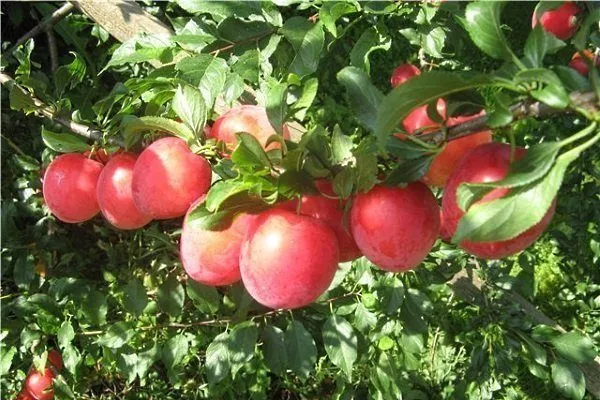
A mid-season variety that can withstand severe frosts—down to -40°C. The trees are medium-sized, early-bearing, with spreading crowns that are not prone to dense growth. The fruit ripens in the second ten days of August. Drought-tolerant, pollination required.
The fruits are medium-sized, weighing 25-28 g. They are round, with a barely noticeable ventral suture. The skin is thick with a thin layer of wax. When ripe, the fruits range in color from yellow to red and orange. The flesh is yellow, with a rich aroma and dessert flavor. The yield per tree is 30-35 kg.
Early varieties of cherry plum
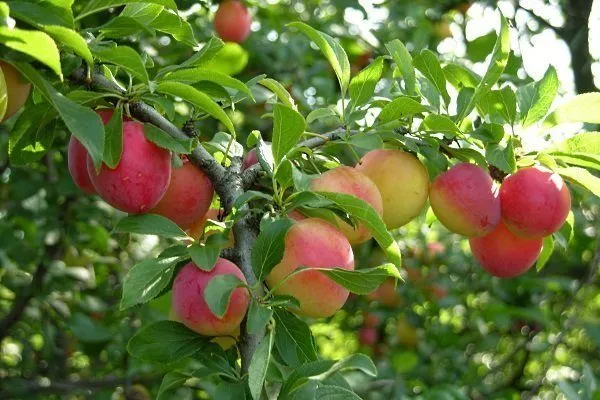
Fruit varieties are classified into three groups based on ripening times: early, mid-season, and late. Ripening times also depend on the growing region—the same variety may ripen earlier in southern regions and later in northern ones. Early varieties include cherry plum, which ripens in July-August.
| Name | Ripening period | Yield (kg per tree) | Frost resistance |
|---|---|---|---|
| July Rose | Very early | 30-40 | High |
| Found | Early ripening | 30-40 | Average |
| Flint | Early ripening | 30-40 | Average |
| Vetraz | Early ripening | 35-40 | Average |
| Nesmeyana | Early ripening | 30 | High |
| Sonya | Early ripening | 30-40 | High |
July Rose
An early-ripening variety. Ripens very early, in late June. This early-ripening cherry plum is one of the first to bear fruit. Harvests are regular, without interruption. Winter hardiness and drought tolerance are excellent. It is highly resilient and adapts easily to a variety of climates.
A large cherry plum, weighing up to 30 g. The plum is ovoid. The skin is dark red, rough, and waxy. The yellow flesh is dense and fibrous, with a sweet and sour taste. The pits are easily separated. The yield is not uniform. The fruits are suitable for canning and are delicious fresh. One tree produces 30-40 kg.
Found
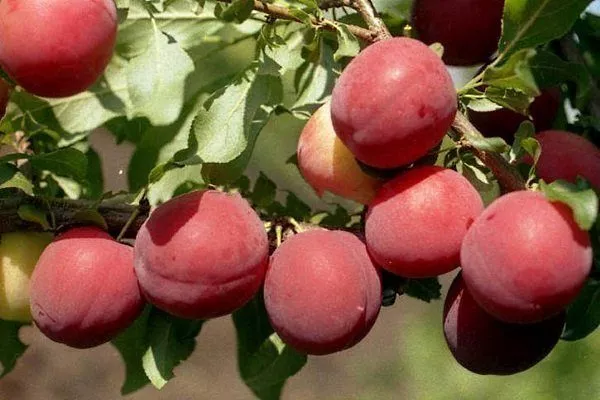
This cherry plum is self-sterile. The crown is flat-rounded, moderately dense. The tree height is 3-5 m. Gardeners harvest the first cherry plums in the second or third year after planting. This variety is suitable for central regions. Its immunity is average. The fruits ripen in the second ten days of July.
The fruits are large, burgundy or purple. The juicy, dense flesh is yellow or orange. The interior of the cherry plum is fibrous, not particularly juicy. It has a dessert-like flavor. The average fruit weight is 30 g. When ripe, "Naydena" plums do not crack. And if the fruit does fall, it remains firm thanks to its strong shell. The shape is ovoid. The seeds are small and difficult to separate. A tree typically yields 30-40 kg of cherry plums. Harvests of up to 100 kg have been recorded.
Flint
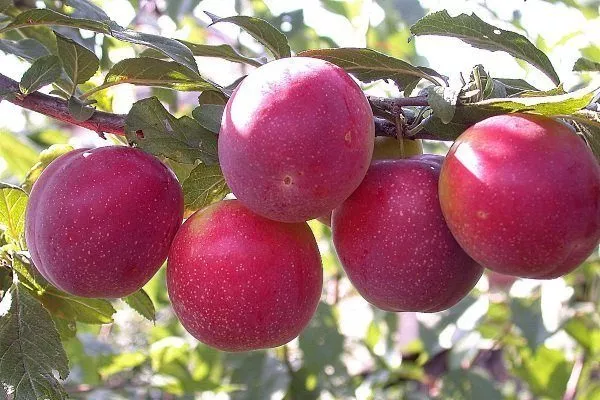
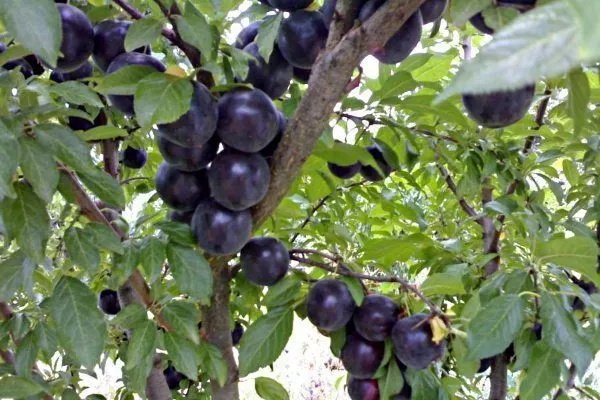
The variety is self-sterile. It ripens in late July. Trees grow to 3-5 meters in height. The crowns are dense and spherical. Winter hardiness is normal; "Kremn" tolerates dry periods and is relatively disease-resistant.
The fruit weighs 20-25 g. The flavor is sweet and sour. The base color is yellow, while the outer color is dark purple. There is no ventral suture. The shape is oval. The seeds are difficult to separate. The fruits do not fall off for a long time. They store well – under favorable conditions, they can be stored for up to 3 months. The fruits are especially valuable for canning and transport well. A tree can yield 30-40 kg.
Vetraz
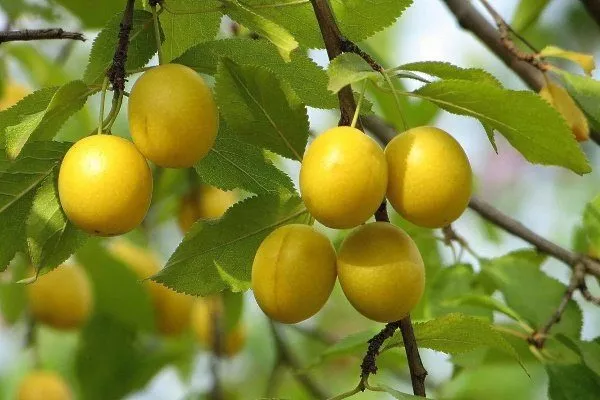
Trees reach 3-5 m in height. Their crowns are sparse, rounded, and spreading. The first fruits appear in the second or third year after planting. The variety is self-sterile. The best pollinators are the cherry plums Solnyshko, Kometa, and Lodva.
The fruits are round-ovoid or oval-round. The color is light yellow. There is no blush on the skin. The taste is pleasant, slightly sour-sweet. Inside, the cherry plum is greenish-yellow, slightly loose, juicy, and slightly fibrous. The pits are difficult to remove. Average weight is 20 g. Maximum weight is 25-20 g. The annual harvest from a tree is 35-40 kg of cherry plum.
Nesmeyana
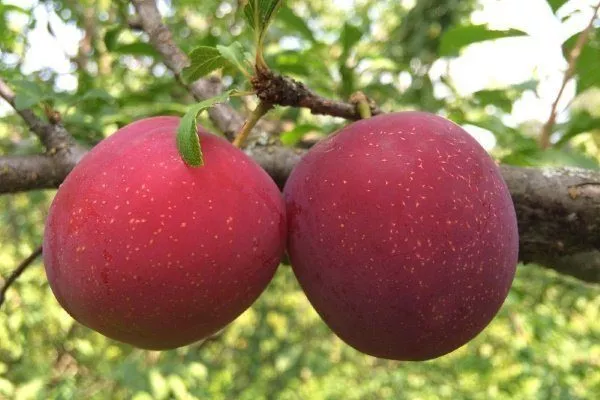
One of our gardeners' favorite varieties. Developed in 2005 by Moscow breeders. The trees are tall—5-6 m—with dense, spreading crowns. The fruit ripens in July. The variety is frost-hardy and suitable for temperate climates.
The fruits are round, with dense, reddish skin. They weigh 30-35 g. The skin is dotted and striped. The flesh is light pink and fibrous. The taste is sweet and sour. The seeds are easy to remove from the flesh. This variety is medium-yielding, yielding up to 30 kg of fruit. Disadvantages include rapid fruit drop after ripening, self-sterility, and susceptibility to certain fruit diseases.
Sonya
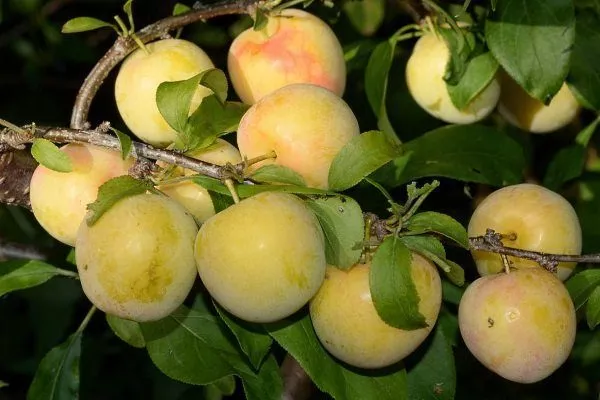
A Belarusian early-fruiting cherry plum, bred by crossing Mara plum and a mixture of pollen from various plums. Plants are medium-sized (up to 3 m) with a flat, rounded, drooping crown. Fruiting occurs in the second or third year after planting. Winter-hardy, it tolerates temperatures down to -25°C. Ripens in late August.
The fruits are very large, spherical, and yellow. The average weight is 45 g. The skin is light green with a red blush. The flesh is medium-firm, yellow, and has a sweet-sour taste with a pleasant aroma. The variety is immune to clasterosporium. The fruits do not fall off immediately when ripe. One tree produces 30-40 kg of cherry plum.
Mid-season varieties
Mid-season cherry plum varieties ripen in mid- to late August.
| Name | Ripening period | Yield (kg per tree) | Frost resistance |
|---|---|---|---|
| Peach | Mid-season | 50 | Average |
| Chuk | Mid-season | 25-32 | High |
| Gift garden giant | Mid-season | 30 | High |
| Lama | Mid-season | 50 | High |
| General | Mid-season | 20-25 | High |
| Columnar | Mid-season | 30-50 | High |
| Tsar's | Mid-season | 25-26 | Average |
Peach
A fast-growing, large-fruited cherry plum. The trees have rounded crowns with medium foliage. Ripens in early August. Peach cherry plum is self-sterile and requires pollinators.
The fruits are reddish-burgundy, sweet, juicy, and aromatic, weighing up to 70 g. The main characteristic of this variety is its peachy aroma. The skin is thick, with white dots and a waxy coating. Ripe fruits are greenish-yellow, with a reddish-orange outer layer. The pits are easily removed. Mature trees yield up to 50 kg.
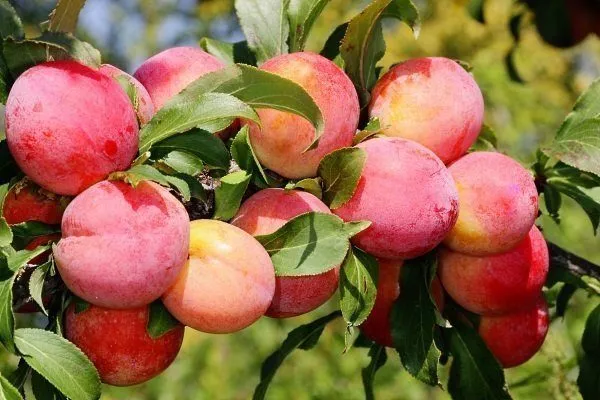
Chuk
A fairly old variety, developed in 1978 by crossing the Skoroplodnaya Chinese plum and the Otlichnitsa cherry plum. It ripens in August. The tree grows to a height of 3-4 m, is compact, frost-hardy, and resistant to diseases and drought. Pollinators are required.
The fruits are quite large and have a sweet and sour taste. Weight: 28 g. Shape: round-ovoid. Color: dark burgundy. The flesh is orange and fairly firm. The seeds are difficult to remove. Annual yield: 25-32 kg.
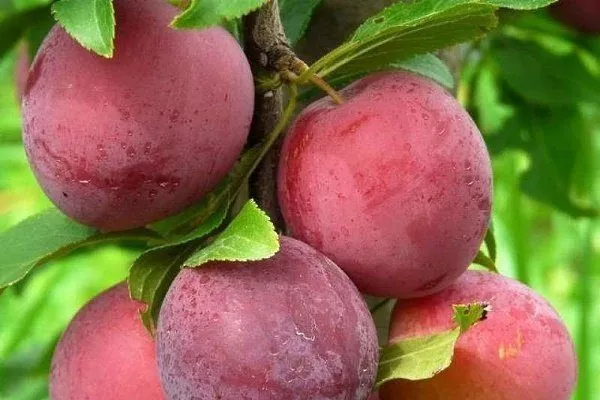
Gift garden giant
This mid-season, frost-resistant variety belongs to the Russian plum family (a hybrid cherry plum). It was developed by Crimean breeders. The trees are low-growing, with flat, moderately dense crowns. Ripens in late July to early August.
Weight: 30-35 g. Color: purple, covered with a thick layer of wax. The inside of the fruit is yellow, with red skin. The fruits are firm, not juicy, and have a sweet and sour taste. Cherry plum "Giant Garden Gift" freezes well. Trees produce 30 kg of fruit.
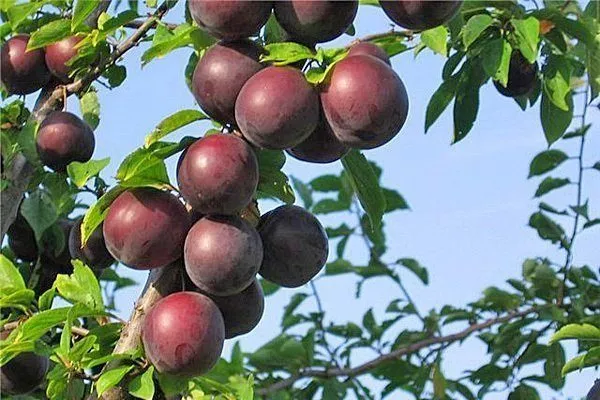
Lama
A high-yielding variety that requires cross-pollination. Ripens in late August. The trees are short, reaching 2 meters. The first cherry plums appear in the second or third year of planting. Suitable for cultivation not only in temperate climates but also in Siberia and the Northwest. Its immunity and drought tolerance are high. Mara cherry plum is recommended as a pollinator.
The plums weigh 30-40 g. They are sweet and sour, round-oval. The color is initially purple, then burgundy, and by autumn, almost black. The pits are easy to remove. The flesh is reddish-pink, medium-dense, fibrous, and crunchy. A single tree can yield up to 50 kg of cherry plum.
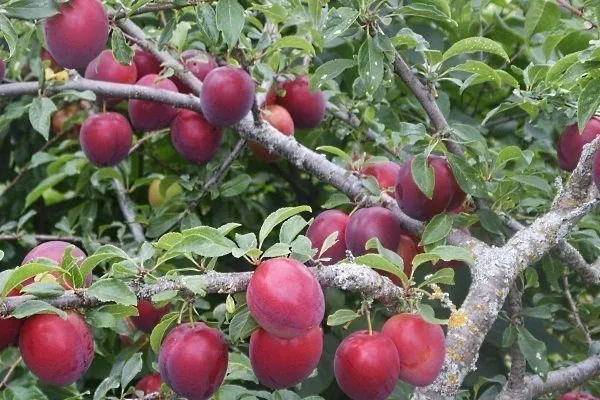
General
Cherry plum with very large fruits. The trees are tall, 4-5 m, sometimes reaching 6 m. The crowns are narrowly pyramidal, medium-dense, and become rounded over time. The plant lives for 45 years. Frost resistance is excellent, and drought tolerance is average.
The fruits are slightly elongated, dark red, and pleasantly fragrant. They are very large—up to 60 g—and have a sweet and sour flavor. The color is a rich red-blue-black. The aroma is pleasant. The solitary arrangement of the fruits is a characteristic of this variety. A tree can yield 20-25 kg of cherry plum.
Watch a video review of this cherry plum variety below:
Columnar
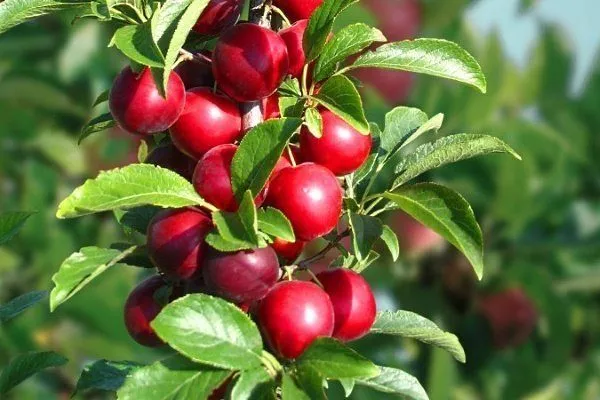
A large-fruited cherry plum from the mid-season group. Neat trees grow to 2.5-3 m in height. Ripens in August. Cons: self-sterility. Suitable for temperate climates and the Moscow region. Highly disease-resistant. Frost-hardy to -30°C.
The fruits are large, sweet and sour, weighing up to 40 g. They are oval in shape and deep red in color. The skin is firm and elastic. The flesh is medium-firm. They transport easily. A tree yields 30-50 kg.
Tsar's
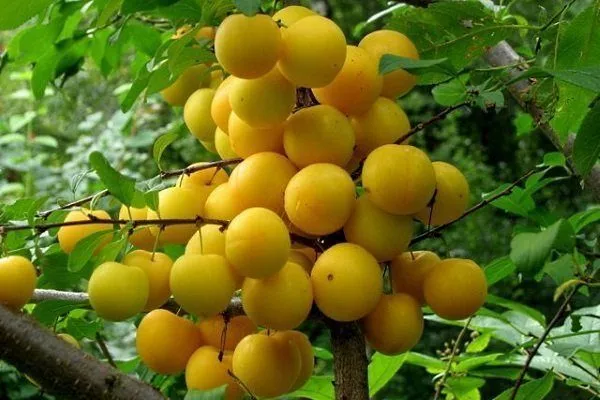
This early-bearing variety produces fruit in the second year. Trees reach up to 3 meters in height. The crowns are rounded and medium-dense. Fruit is ready in early August. It is moderately frost-resistant and is almost disease-free. A drawback is the intensive growth of shoots. Pollination is required.
The fruits are medium-sized, weighing 20-26 g. The cherry plums are a rich yellow, with a soft yellow flesh. They are very tender and juicy. The tartness is barely noticeable, making them very sweet. They are easy to transport and retain their marketable appearance. One tree produces up to 25-26 kg.
Late-ripening cherry plum
Late-ripening varieties ripen in September. Ideal for winter storage.
| Name | Ripening period | Yield (kg per tree) | Frost resistance |
|---|---|---|---|
| A gift to Primorye | Late-ripening | 30 | Very high |
| Mara | Late-ripening | 25 | Very high |
A gift to Primorye
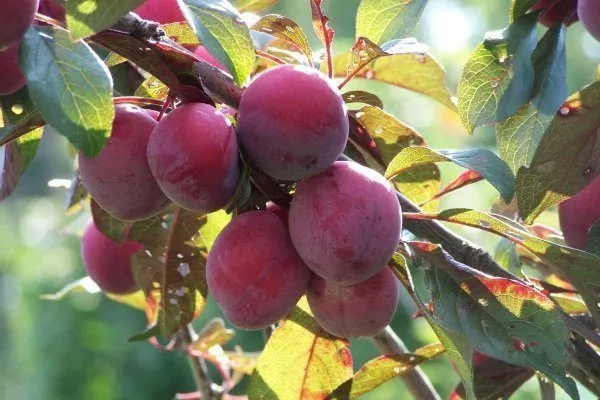
The tree grows to 3-4 m tall, with a moderately dense, broadly pyramidal crown. Fruit ripens in early September. Suitable for growing in Siberia and the Far East. High disease resistance. Requires pollinators.
The fruits are large, weighing up to 35 g. They are oval-elongated and purple in color. The reddish flesh is sweet and sour and fibrous. This variety tolerates harsh winters well and does not like dampness. Cherry plums yield up to 30 kg. Branches break when overloaded.
Mara
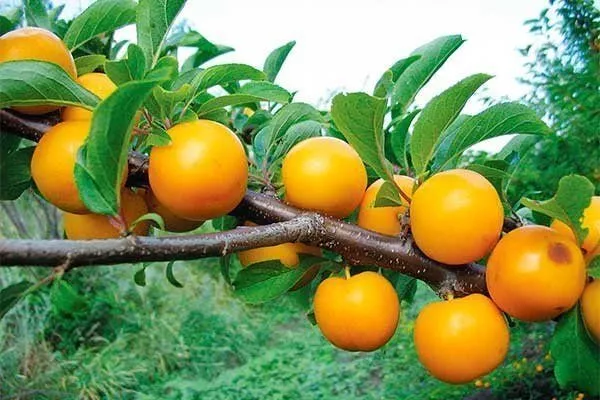
A variety bred from cherry plum and Chinese plum. This late-ripening cherry plum is frost-resistant (down to -38°C) and highly resistant. It is often called the "Russian Plum." The first harvest occurs in the second or third year. The tree lives up to 50 years.
The fruits have a dessert-like flavor and soft, sweet flesh (containing up to 10% sugar). The color is yellow-orange. The shape is round, slightly flattened. The flavor has hints of grape. Separating the seeds is difficult. They weigh up to 23 g. They have a long shelf life – at room temperature, they can be stored for 15-20 days. Each tree produces up to 25 kg of cherry plum annually.
Large-fruited cherry plum varieties
One of the variety's characteristics, particularly prized by gardeners, is the large size of its fruits. Large fruits make harvesting and processing easier and faster. The average yield per tree is 50 kg.
| Name | Ripening period | Yield (kg per tree) | Frost resistance |
|---|---|---|---|
| Huck | Mid-late | 35-40 | Average |
| Abundant | Early ripening | 45-60 | High |
| Tent | Early ripening | 35-40 | High |
| Globe | Mid-season | 40-50 | Average |
| Cleopatra | Mid-season | 25-35 | Average |
| Scythian gold | Early ripening | 25-35 | High |
Huck
This mid-season variety represents a relatively new crop, often referred to as the "Russian plum." It was created by crossing Chinese plum and wild cherry plum. The trees are medium-sized, with a sparse, flat, rounded crown.
The fruits are large, ovoid, and asymmetrical. They weigh approximately 30 g, with a maximum weight of 45 g. The fruit is yellow with a pink blush and a slight waxy coating. They transport well. The flesh is dry and fine-grained. The pits are difficult to remove. Yield: 35-40 kg per tree.
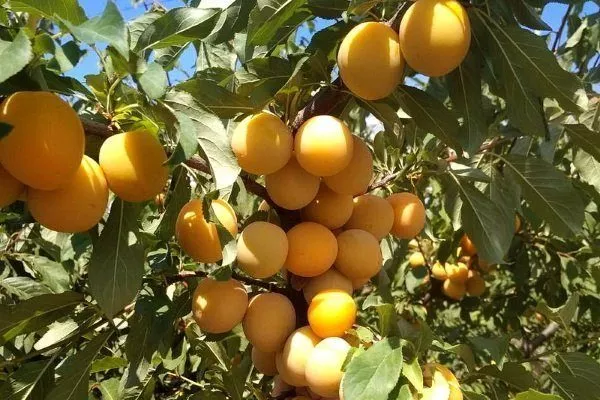
Abundant
An old table plum variety, developed in the 1960s. It's an early-ripening variety. Suitable for regions with harsh climates. It establishes quickly and bears fruit in the second year after planting. The cherry plums "Obilnaya" and "Globular" are recommended as pollinators. The trees are short, reaching a maximum height of 3 m. They live no more than 30 years.
The fruits are large, yellow, and round, weighing 30 g. They have a slight reddish-purple tint. Their thick skin prevents them from cracking when overripe and prevents them from bruising during transport. They have a waxy coating. The flesh is soft yellow, fibrous, and firm. The taste is sweet and sour, with a hint of Muscat wine. Harvest: 45-60 kg.
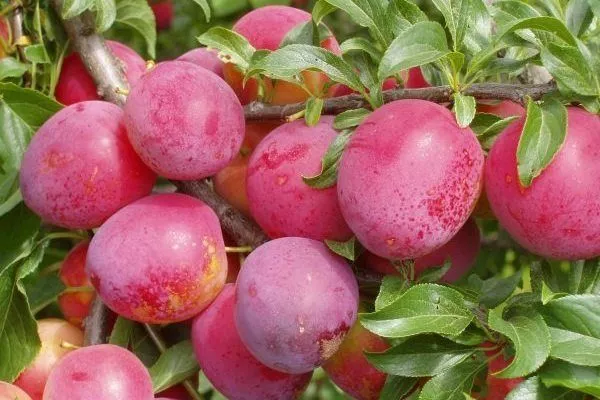
Tent
This is the result of a union between Fibing and cherry plum. This early cherry plum is considered one of the best for the temperate climate. However, 'Shatr' has one drawback: self-sterility. The trees are standard, fast-growing, and begin bearing fruit by the fourth year. Fruit ripening is uneven and protracted.
The fruits weigh 35-40 g. The color is purple, the flesh is yellowish-green. The flesh is moderately firm and very juicy. Separating the seeds is difficult. It has good winter hardiness and does not dent during transportation. The average yield per tree is 35-40 kg.
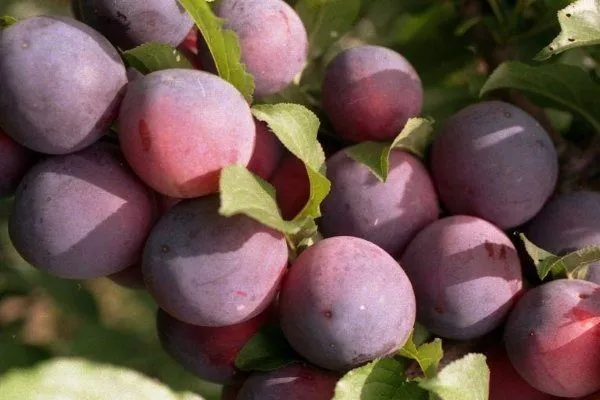
Globe
This is one of the largest-fruited varieties. The plants are medium-sized, with a medium-density, elliptical crown. Ripening occurs in late August. Winter hardiness is average. Disease resistance is average.
The fruits are large and round. Average weight is 40-60 g, with some specimens reaching 100 g. The purple skin is waxy and has numerous white spots underneath. It has a dessert-like flavor with a slight tartness. The pit separates easily. Fruits are easy to transport. Trees yield 40-50 kg.
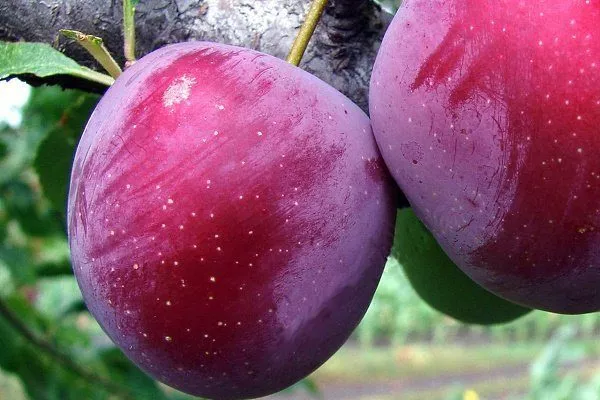
Cleopatra
This partially self-fertile cherry plum ripens in August. It bears fruit continuously. With cross-pollination, the yield increases two- to threefold. The trees are medium-sized (3-4 m). The first fruits appear in the fourth year after planting. The tree lives up to 60 years. The variety has high immunity to pests and diseases.
The fruits have a reddish-purple skin. The flesh is firm and red. They weigh 30 g. They are suitable for various purposes, including freezing. Their heat and drought tolerance are average. A tree yields 25 to 35 kg of cherry plums. Cherry plums, once picked, can be stored at normal temperatures for up to 1.5 months.
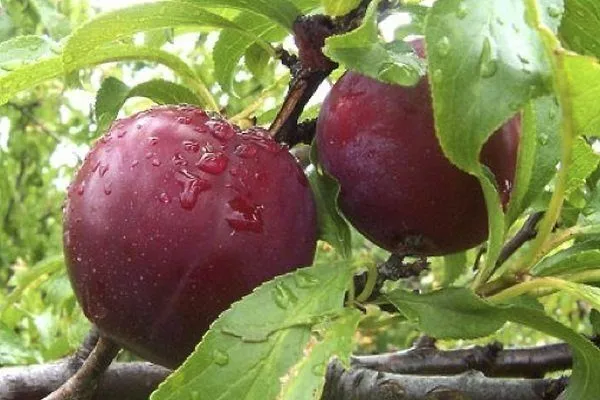
Scythian gold
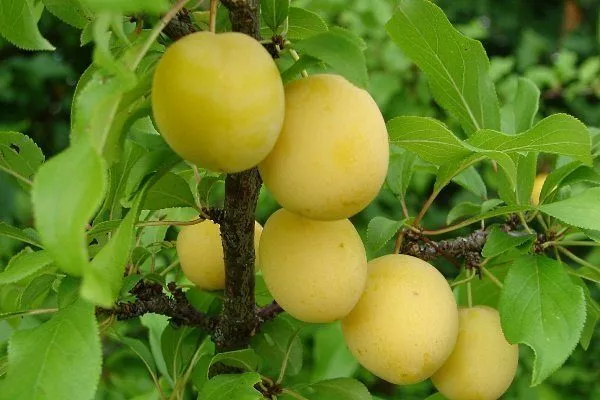
This variety is considered one of the best cherry plums developed by Russian breeders. This early, large-fruited cherry plum was bred in 2005. The tree grows up to 3 meters tall. It bears fruit in mid-July or later. Additional pollination is required.
The fruits are a sunny yellow, very sweet. The flesh is yellow, juicy, and moderately sweet. Fruit weight is up to 35 g. The shape is oval. The fruit has a high immunity. It does not transport well. The trees are resistant to sudden temperature changes. The yield from a single tree is up to 35 kg.
Classification of the best varieties
| Classification | Average fruit weight, g | Yield, kg per tree |
| Early | ||
| July Rose | 25 | 30-40 |
| Vetraz | 20 | 35-40 |
| Found | 30 | 30-40 |
| Flint | 20-25 | 30-40 |
| Nesmeyana | 30-35 | 30 |
| Sonya | 45 | 30-40 |
| Average | ||
| Peach | 50-60 | 50 |
| Gift garden giant | 35 | 30 |
| Chuk | 28 | 30 |
| Lama | 30-40 | 50 |
| General | 40-50 | 20-25 |
| Columnar | 40 | 30-50 |
| Tsar's | 20-25 | 25 |
| Late | ||
| A gift to Primorye | 35 | 30 |
| Mara | 20-23 | 25 |
| Large-fruited | ||
| Huck | 45 | 30-40 |
| Abundant | 30 | 45-60 |
| Globe | 40-60 | 40-50 |
| Tent | 35-40 | 35-40 |
| Cleopatra | 30 | 25-40 |
| Scythian gold | 30-35 | 25-35 |
| Self-fertile | ||
| Monomakh | 25-30 | 25-30 |
| Kuban Comet | 30-45 | 40-50 |
| Traveler | 20-28 | 30-40 |
| Frost-resistant | ||
| Carmine | 15 | 30-40 |
| Ruby | 25 | 40-50 |
| A gift to St. Petersburg | 18-20 | 40-60 |
| Vladimir Comet | 25-30 | 30-40 |
| Rocket Seedling | 25-30 | 30-40 |
| Timiryazevskaya | 25 | 30 |
| Early-bearing | 25-28 | 30-35 |
- ✓ Consider not only frost resistance, but also resistance to spring frosts, which can damage flowers.
- ✓ Pay attention to soil requirements: some varieties prefer light sandy soils, others - clay soils.
When planning to plant cherry plums, be sure to check their frost tolerance and compare it with the lowest temperatures in your region. Choose varieties with regionalized temperatures, and then select the cherry plum that appeals to you based on yield, flavor, fruit shape, or color.