
Snow White is a frost-resistant variety Chinese plum, bred specifically for regions with harsh climates. The tree is small and attracts attention with its decorative early blooms. The plums have a vibrant color, tender flesh, and a pleasant sweet flavor. The fruits are versatile: suitable for fresh consumption and home processing. With proper care, bountiful harvests are guaranteed.
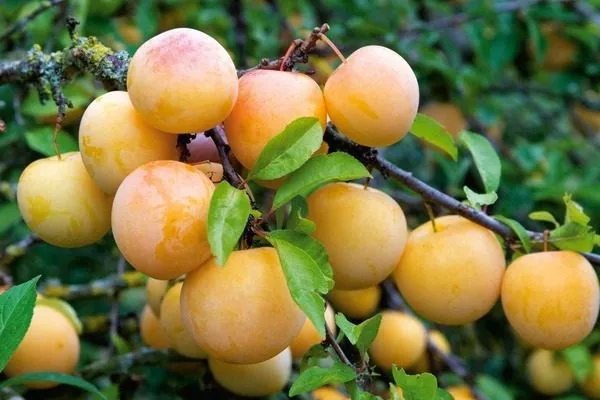
Description of the variety
Snow White is the result of targeted selection conducted by K.K. Mullaianov. The scientist sought to create a variety resistant to the harsh winters of Siberia and the Urals without losing its flavor or appearance.
The tree is frost-resistant, yet sensitive to care: with regular care, it produces large plums and increases productivity. The plant reaches 2-2.5 m in height, and its spreading crown does not exceed 4 m in diameter. Annual shoot growth is approximately 50 cm.
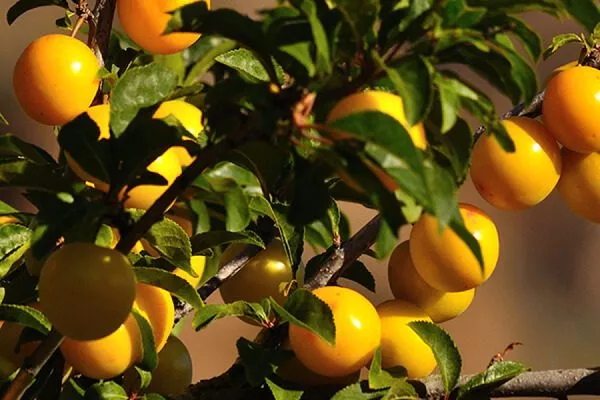
Distinctive features of the variety:
- leaves - elongated, dark green, with a smooth glossy surface;
- plums – round configuration;
- skin – thin;
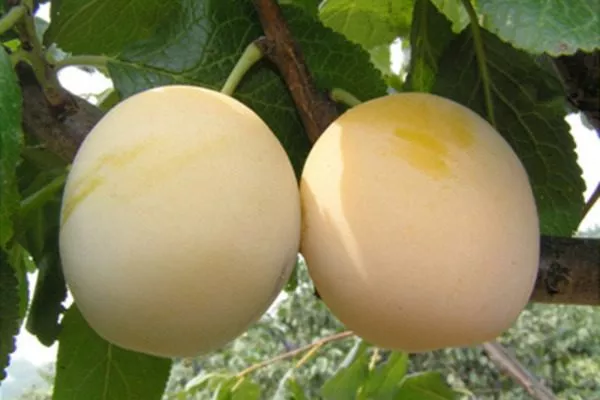
- main color – light yellow, with a dense white waxy coating;
- weight - reaches 30 g with moderate load on the branches: the fewer ovaries, the larger the fruits.
Flowering is early, even before the leaves appear, and snow-white flowers are formed on shortened peduncles.
Characteristics
Belosnezhka is a mid-season plum: the fruits reach full maturity by the last ten days of July or early August. Fruiting begins in the third or fourth year after planting a one-year-old seedling. With proper cultivation practices, the trees show consistent productivity – 20 to 30 kg per plant.
Landing
When planting a garden with the Snow White variety, it's important to consider a number of agronomic nuances that directly impact the seedling's survival, development, and future productivity.
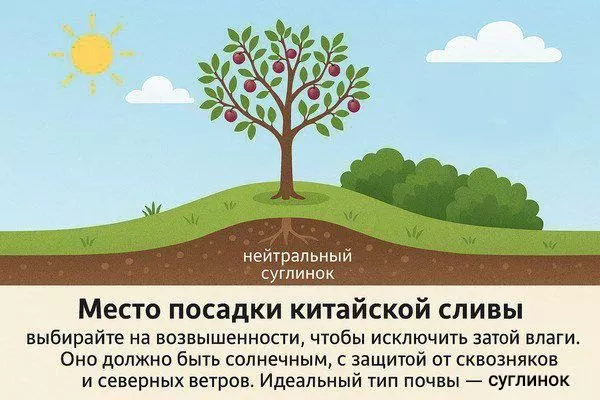
Basic planting recommendations:
- Place Select a site on elevated ground to prevent waterlogging and root stagnation. The site should be sunny, protected from drafts and northerly winds. The ideal soil type is neutral loam with good air and water permeability.
If necessary, lime the soil or loosen it by adding sand. - Seedling Choose a plant with a well-developed root system. The roots should be 30 cm long, with numerous small shoots, and no thickenings, growths, or damage. When cut, the root should be light-colored and vibrant. A sign of the correct variety is the characteristic yellowish-green shoots.
One- and two-year-old trees purchased from specialized nurseries are optimal.
Planting stages:
- Fill the dug hole with nutrient substrate: fill a third of the hole with a mixture of humus, superphosphate and potassium fertilizers, mix thoroughly with the soil and form a mound in the center.
- Place the seedling, carefully spreading out the roots, and cover them with soil.
- Firm the soil and water well.
- Mulch the surface with humus to retain moisture and protect the root system from temperature changes.
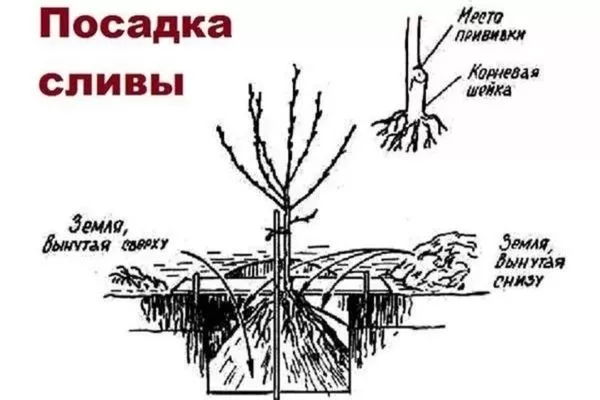
You can learn about all the nuances of planting plums and their successful cultivation. Here.
Care
Agricultural practices require a systematic approach: adherence to them determines both the tree's viability and its ability to produce a full harvest each year. Despite its claimed frost resistance, the plant is sensitive to a lack of attention during the growing season.
Basic care measures:
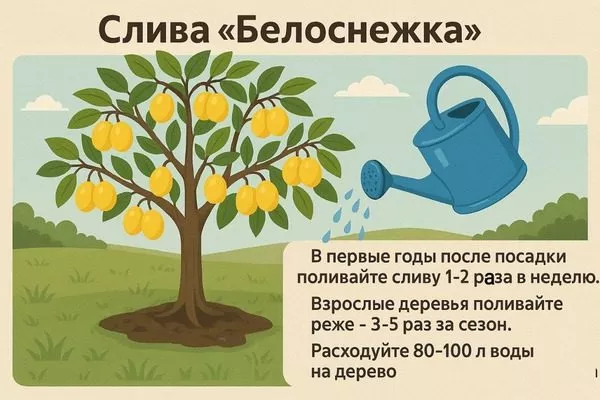
- Watering Watering should be moderate and regular, especially during the flowering and fruiting phases. Stagnant moisture, especially in areas without drainage, causes root rot.
- Loosening The soil under the tree requires constant watering to prevent a dense crust from forming. After irrigation or rain, it's helpful to mulch the root zone with humus, straw, or compost—this will retain moisture and improve the soil structure.
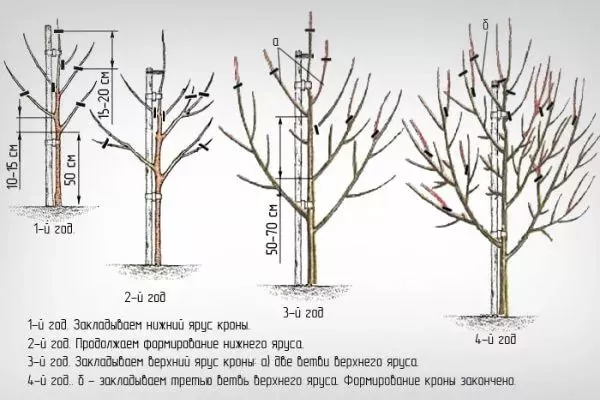
- Trimming Carry out pruning in early spring: prune out dry, frozen, and thickening branches. Formative pruning maintains the crown's compactness and ventilation, which positively impacts fruiting and disease prevention.
- Top dressing are important for abundant fruiting. The crop responds favorably to them. The optimal scheme:
- in the spring – nitrogen fertilizers (urea, saltpeter) stimulate the growth of green mass and shoots;
- during the period of budding and fruit setting – complex compositions with potassium and phosphorus support crop formation;
- in autumn – only phosphorus-potassium preparations to prepare plants for winter, without the use of nitrogen.
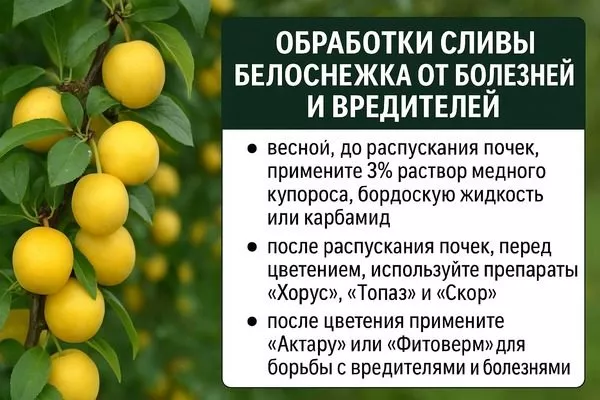
- Protection from diseases This includes both prevention and timely treatment. In spring and fall, it's advisable to spray with Bordeaux mixture. Read more about plum diseases. HereAt the first signs of fungal infections (for example, clasterosporium or moniliosis), use systemic fungicides.
- Winter protection This is especially important for young seedlings: mulch the area around the trunk and hill up the base of the tree. In areas with harsh climates, covering the tree with spruce branches or agrofibre is recommended to prevent freezing.
Pros and cons
Reviews
The Belosnezhka plum combines winter hardiness, good productivity, and attractive fruits with excellent flavor. With proper cultivation, the tree grows quickly, delights with abundant blooms, and produces bountiful harvests. This variety is easy to care for, but requires important agricultural practices and preventative treatments.