
The Red Skorospelka plum is a favorite among gardeners due to its resistance to weather changes. This variety is ideal for home gardens, as its fruits are suitable for a wide variety of purposes. Although the Red Skorospelka plum is versatile, its fruits are not as desirable for large-scale gardening due to their lack of commercial appeal.
Excursion into selection
Its origins are linked to folk breeding—it is hypothesized that it is a descendant of the Common Hungarian Cactus. It entered the information system of the N. I. Vavilov All-Russian Institute of Plant Industry in 1926 from a nursery once established by Regel and Kesselring.
After successful varietal testing in 1947, Skorospelka Krasnaya was zoned for regions such as the Northwest, Central, Central Black Earth, and Middle Volga.
Plant characteristics
A mature red plum tree can grow up to 350 cm in height and has a haystack-shaped crown that reaches 300-350 cm in width. Other characteristic features of the variety:
- The trunk is light gray or pale brown in color and can be smooth or slightly rough.
- The main branches grow relative to the trunk at an angle of 30 to 50 degrees, demonstrating a fairly straight growth pattern.
- The shoots of this plum have a green tone with brownish pigmentation and can reach a length of 30-50 cm, with a slight bend.
- Characterized by medium-sized buds, slightly pressed, brown in color and located 1-3 units per node.
- The leaf blades are medium-thick, oblong-ovate, slightly depressed, medium-sized, green in color, and have a smooth, glossy surface. The leaves are bare on the upper side and slightly hairy on the underside.
- The leaves have single-serrated margins, a pointed tip, and a wedge-shaped base. The petiole is green and not very long.
- The blooming buds combine a medium-open shape with broadly oval petals and a corolla diameter of 24-25 mm. The flower contains 20-25 stamens and an oval, non-drooping ovary.
Fruits and their taste
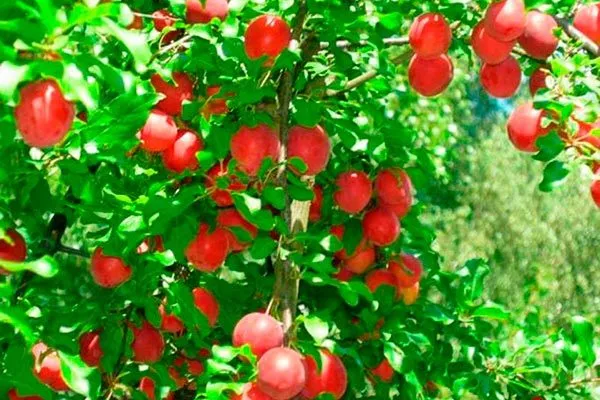
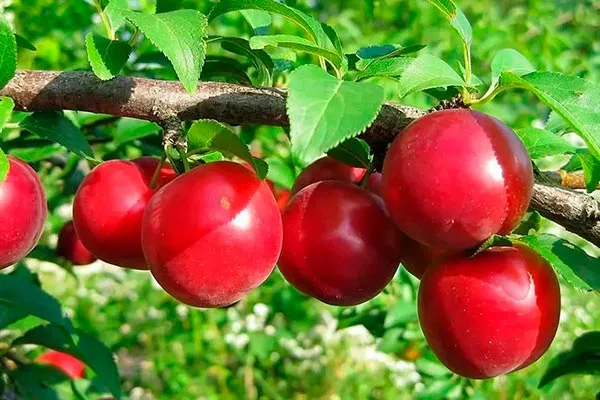
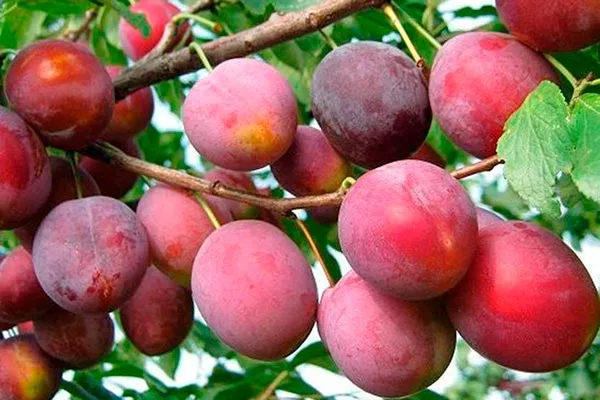
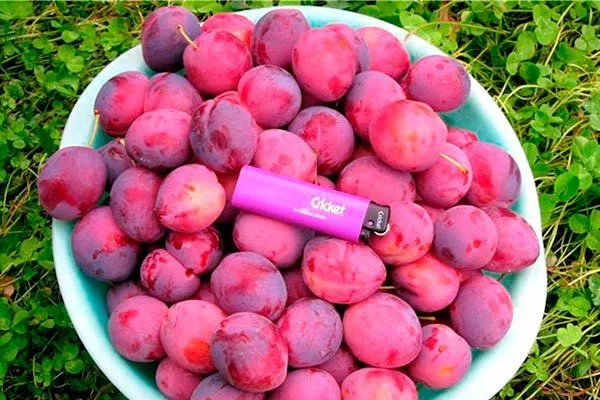
These fruits are small, weighing between 15 and 20 grams each. Their shape resembles an irregular oval, and their color ranges from pinkish-red with a bluish sheen to raspberry-purple. Numerous small spots are visible on the surface. The skin is transparent and easily peeled, without fibers, and of medium consistency.
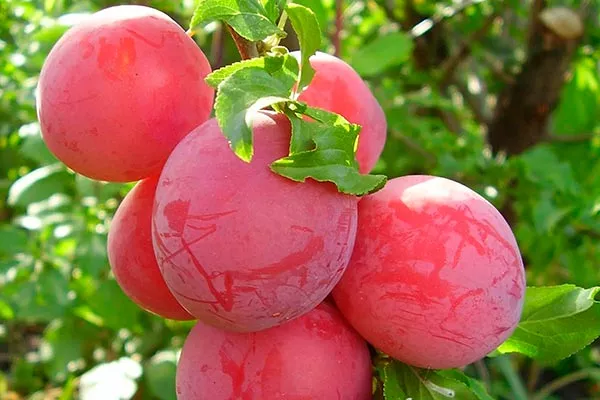
However, the flesh of these plums consists of fine fibers and is moderately dense, with a moderate sugar content. The taste is sweet and tart, with a subtle aroma. The pit is small, and the flesh separates easily.
Characteristics of the variety
Fruiting occurs on branches over two years old. Flowering occurs between May 12 and 15. The trees bear fruit for 25 years, and can reproduce through root suckers.
Resistance to cold and drought
The red early ripening variety is distinguished by its increased cold resistance and can withstand even the harshest frosts, reaching -35 to -38 degrees Celsius. Flower buds, however, are less tolerant of low temperatures.
If there's insufficient moisture, trees can lose their fruit. The best yields with high-quality fruit are achieved in soils of average fertility, moderately fertilized, and well-drained.
Pollination
| Name | Cold resistance | Flowering time | Ripening time |
|---|---|---|---|
| Moscow Hungarian | High | Mid-May | End of August |
| Ochakovskaya black | Average | Beginning of May | Mid-August |
| Nikolskaya white | High | Mid-May | End of August |
| Collective farm greengage | Average | Beginning of May | Mid-August |
| Hungarian Pulkovskaya | High | Mid-May | End of August |
| White Winter | Average | Beginning of May | Mid-August |
To increase the yield of berry crops that tend to self-pollinate, it's necessary to ensure access to pollen from other sources. On average, 5-15% of flowers produce a single berry. To enhance this process, mixed plantings are recommended: pollinators should be planted near Skorospelka Krasnaya.
Among the most effective varieties are:
- Moscow Hungarian.
- Ochakov black.
- Nikolskaya white.
- Collective farm greengage.
- Hungarian Pulkovo.
- White Winter.
Productivity, ripening time and fruiting
The plum tree opens its buds in late May. Ripe berries can be harvested from August 15th until October 10th-12th, depending on the climate of the region. Young trees begin bearing fruit six years after planting, and grafted trees begin bearing fruit three years after planting. This variety promotes annual fruiting.
The transition of the plum tree to the fruiting phase indicates a sharp increase in yield:
- At the age of 5 to 10 years, the Skorospelka Krasnaya plum yields from 3 to 10 kg.
- At maturity (from 10 to 25 years) – from 10 to 35 kg from each tree, while individual specimens can produce up to 45-50 kg of berries.
Scope of application of berries
Plums, both fresh and dried (especially prunes), as well as drinks made from them using the pulp, have a mild laxative effect and are recommended for constipation and intestinal weakness. Plums are easily digested.
Benefit:
- Helps reduce cholesterol levels in the body.
- These fruits are useful for kidney diseases and arterial hypertension.
- They promote faster urination, which helps remove excess water and sodium.
- Fruits help create new blood cells and improve the functioning of the stomach and intestines due to their ability to cleanse the stomach.
- Used for problems associated with excess bile or elevated body temperature.
- They strengthen the liver and purify the blood, removing toxins from the body.
- Dried plums have an antipyretic effect.
This variety can be eaten fresh or processed, although the quality of canned plums is not always satisfactory. A sour taste indicates that the fruit is not yet ripe.
Use of the variety in breeding
Using the Skorospelka Krasnaya variety, over 30 different hybrids and varieties were bred, among which the following stand out: Severnaya Vengerka, Dubovchanka, Volzhskaya Krasavitsa, Mirnaya, Tambovsky Renclode, Iskra, Pamyat Timiryazeva, Severyanka, Rekord, etc.
Geographic distribution
The "Skorospelka Krasnaya" variety is successfully cultivated in several regions of our country. This variety is particularly valuable for horticulture in the northern and northwestern regions. It demonstrates good reproduction results in the Central Black Earth Region and along the Central Belt.
Landing features
A carefully selected planting site for red plums is key to a productive and healthy tree. The ideal location is a slightly elevated site with full sun and soil, preferably loamy or black soil.
Optimal timing
Spring is the best time to plant seedlings if the root system is exposed. For container-grown plants, the best time is from spring to mid-autumn.
Which area is considered the best?
If the plum conditions are not optimal, this can lead to a decrease in the sugar content of the fruits and a reduction in their quantity.
Considering that this crop is not resistant to winds and drafts, it is preferable to plant it in close proximity to buildings (for example, near houses, sheds, between bathhouses and fences).
The ideal location for planting Krasnaya Skorospelka is a sunny spot protected from the north by a brick wall. This will provide additional protection from cold winds and help warm the seedlings.
The Red Skorospelka plum tree does not tolerate excessive waterlogging in the soil (some waterlogging is acceptable), so if there is a risk of flooding the tree's root system, drainage work is recommended or the plant should be planted at a higher elevation. Otherwise, the plum tree may become stunted, unhealthy, and even die.
Desirable and undesirable neighborhoods
The best neighbors for plums are apple and pear trees, which help each other fight pests and diseases. They create a harmonious community, where each tree supports the other, promoting a better harvest.
But the worst neighbors for this variety are cherries and sweet cherries, which can become a source of spreading diseases such as coccomycosis.
When planning your garden, carefully consider the choice of neighbors for your plum tree to ensure comfortable conditions for growth and fruiting. Gardening experts recommend planting cherry plums nearby to improve the yield of Skorospelka.
Working with planting material
It is recommended to purchase Skorospelka Krasnaya seedlings that are one to two years old, with well-developed root mass and at least three shoots.
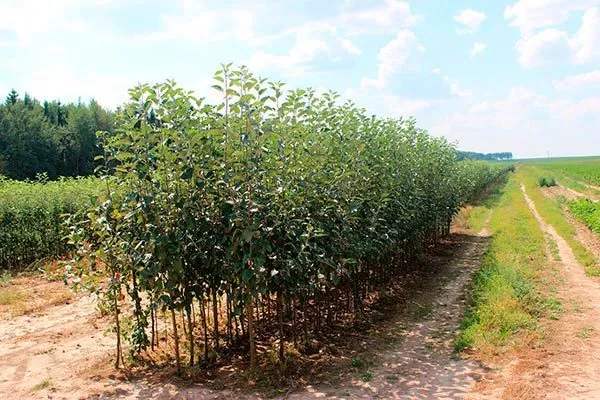
When purchasing a tree in the spring, it's important to begin pruning the branches immediately. To ensure successful adaptation and continued growth, the roots should be soaked in warm water with a rooting stimulant.
The landing process
The distance between medium-sized individual trees is 350 cm, and between rows, 100 cm more. It's important to follow standard planting recommendations, especially paying attention to the root collar—it should be raised approximately 5–6 cm above the ground to ensure the root collar is at the correct height after the soil settles.
When planting, add organic fertilizer, potassium sulfate, and a mineral complex to the hole beforehand. Do not add nitrogen fertilizers at this time.
How to properly care for a tree?
In the first year after planting, 80–90% of the buds should be removed. This will allow the plum tree to focus on adaptation and building strength.
In subsequent years, after fruiting begins, remove ovaries at 3–4 cm in diameter to regulate yield. This action increases the size and sweetness of the fruit remaining on the tree and helps control crop cycles.
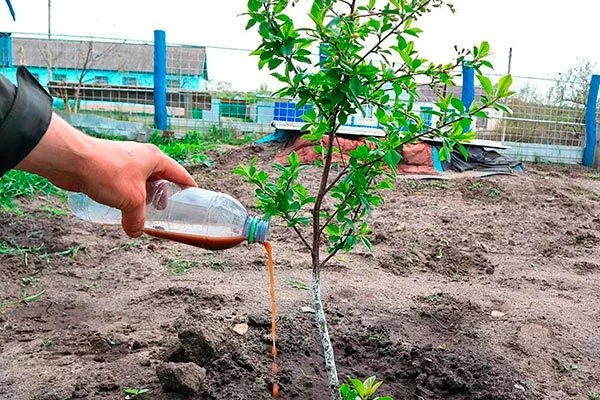
Fertilizing and watering should be moderate:
- The soil should be moistened to a depth of 30–40 cm. Moisture is especially important during key periods of tree development: during ovary formation and seed ripening (2–3 weeks after flowering).
- Fertilizer application follows a standard pattern: nitrogen is used in spring, potassium in summer, and superphosphate in autumn.
To prevent the formation of basal shoots, they should be removed immediately at the ground surface so that they do not take nutrients from the tree.
Methods of control and prevention of diseases and parasites
Red plums aren't typically a target for insect pests, but they can attract mice and other rodents. To protect the tree from these pests, it's recommended to coat the trunk with lime and cover it with nylon tights (the material must be breathable and waterproof, so plastic film or roofing felt are not suitable).
To repel mice, it is worth installing a system specially designed to combat rodents.
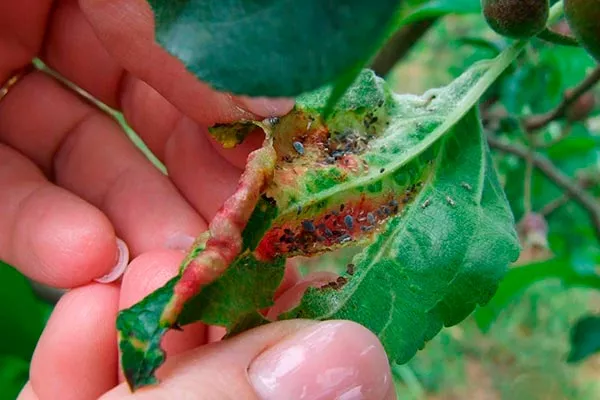
The risk of damage from clasterosporium and aphids is high, and the following symptoms may appear on plants:
- With clasterosporium, small brown spots appear on the leaves, which then turn into holes; severely damaged leaves may fall off prematurely;
- Plum aphids stick tightly to leaves and young shoots, sucking the juice out of them, without the leaves curling.
In the event of plant disease or pest infestation, fungicides and insecticides are used to control them. Standard preventative measures should be followed, regardless of the presence or absence of signs of damage.
Harvesting and storage rules
Freshly picked fruit can be stored in the refrigerator for one month, frozen fruit will stay fresh for up to 6 months, and dried fruit will retain its nutritional value for 12-18 months.
Methods of reproduction
Plum, like many fruit trees, can be propagated in several ways. One of the most common methods is grafting, which allows the plant to retain all its varietal characteristics. Other techniques also exist:
- cuttings, when new plants are rooted from healthy plum branches;
- layering, by deepening part of the branch into the soil and watering it periodically.
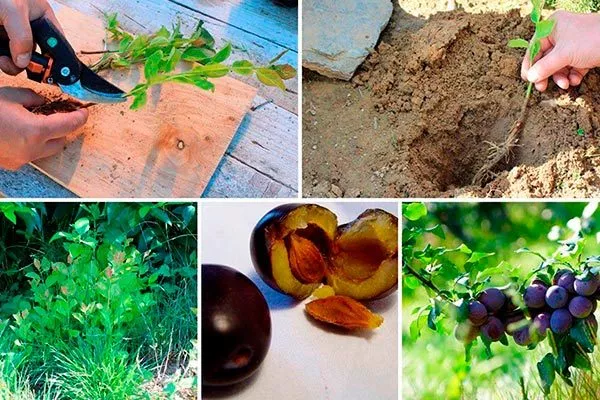
Each of these methods has its own characteristics and is suitable for different conditions and gardener's goals.
Positive and negative qualities
The key advantages of this variety include:
The disadvantages of this variety include the low quality of the product during processing (fresh fruits retain a better taste), as well as the need to attract plum pollinators to ensure flowering.
Reviews
The Skorospelka Krasnaya plum is a medium-sized, winter-hardy tree with a rounded crown. This variety is partially self-fertile and produces best when grown alongside the Moskovskaya Hungarian and Kolkhoz Renklod plums. A mature tree can produce up to 40 kg of fresh, juicy plums, which last for up to a month.