
The Siny Dar plum is a small-fruited domestic variety popular with gardeners in the central regions. This domestic plum is hardy and versatile, suitable for commercial cultivation, and is also an excellent honey plant.
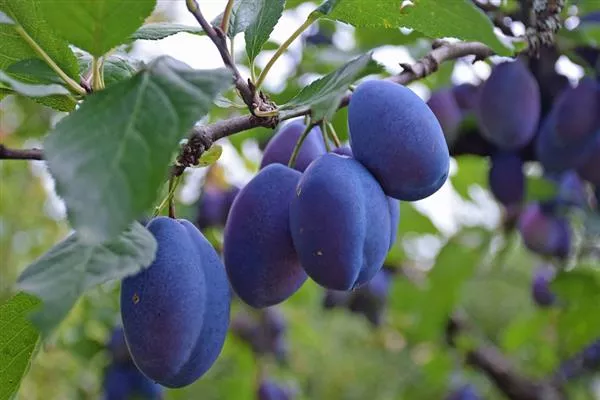
The history of the Blue Gift plum
The Blue Gift variety was developed at the All-Russian Selection and Technological Institute of Horticulture and Nursery in 1992. The variety was approved for use in 2001. Authors: Satarova S.N., Simonov V.S. The variety was obtained by crossing the Timiryazev Memory and Ochakovskaya plums.
Description of the tree
The Siny Dar plum tree is medium-sized, reaching a height of 3 meters. The crown is oval, upright, and not very dense. The tree has medium foliage. The shoots are arched, pubescent, and grayish-brown.
- ✓ Above average drought tolerance, which is rare for plums.
- ✓ Flowering characteristic: flowers appear before leaves, which increases the risk of frost damage.
The leaves are dark green and lanceolate. The surface of the leaf blades is slightly wrinkled, and the edges are serrate. The undersides of the leaves are pubescent. The flowers are cup-shaped and medium-sized.
Description of fruits
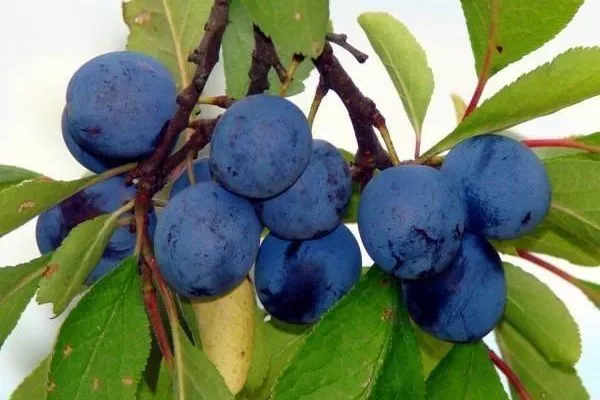
The "Siny Dar" plum is quite small and deep purple. Each fruit weighs approximately 14 g. These plums are oval in shape, with a barely visible ventral suture. The surface is smooth, with a dense waxy coating on the skin. The flesh is dense, greenish-yellow, and has a granular, fibrous texture.
The flesh is moderately juicy. The surface is pubescent. The stalk is firm and medium-length. The oval-shaped seeds account for 7.1% of the fruit's weight.
Taste and purpose
The fruits contain 8.5% sugars and 0.99% acids, with a sugar/acid ratio of 8.6. This confirms that the small Siny Dar plums have a sweet and sour taste, but the sweetness still predominates. The tasting score is 4. The fruits are rich in vitamin C—7.17 mg/100 g.
The fruits have versatile uses. They can be eaten fresh or used for various preserves. The small, sweet and sour plums make wonderful jams, compotes, sauces, and juices, and they can also be used to make preserves or marmalade.
Characteristics
The Blue Gift plum is a mid-season variety. It blooms in mid-May, and the first fruits ripen in mid-August. The tree begins bearing fruit in the fourth year after planting.
This variety is partially self-fertile and produces fairly good yields. A single tree yields approximately 13 kg of fruit. The maximum yield is 35 kg per tree. The variety is characterized by moderate winter hardiness (down to -35°C) and heat resistance.
Pros and cons
The small-fruited "Siny Dar" variety is a favorite among our gardeners for good reason. Despite its small fruits, this plum is very popular; its many advantages completely outweigh its minor drawbacks.
Planting nuances
The Blue Gift plum is very compact, making it suitable for even the smallest of spaces. Just be sure to avoid planting it near tall trees or cherry trees.
- ✓ Soil pH level should be strictly between 6.0-7.0 for optimal growth.
- ✓ A fertile soil layer depth of at least 40 cm is required for the development of the root system.
Features of planting plum Blue Gift:
- This variety grows best in loamy and sandy loam soils with neutral pH. These soils should be sufficiently loose and nutritious. Soil structure and composition are adjusted during autumn tilling.
Organic matter (compost, humus, etc.) helps improve soil fertility, sand can be used to make the soil looser, and wood ash or slaked lime can be used to reduce acidity. - In southern regions, planting is carried out between September and October; in areas with harsh winters, spring planting is preferred.
- It's best to plant plums in an elevated location, with the groundwater level no higher than 1.5 meters. Avoid shade. Choose a well-lit location, preferably on the south side of the house. Leave the tree 3-4 meters away from the wall of the building or fence.
- Good neighbors for the Blue Gift plum are cherry plum, apple tree, and other plum varieties.
- The ideal age for a seedling is 1-2 years. It should have healthy roots, viable buds, and non-flaking bark. Before planting, the roots are immersed in water or a growth stimulant solution, and immediately before planting, they are dipped in a clay-manure slurry.
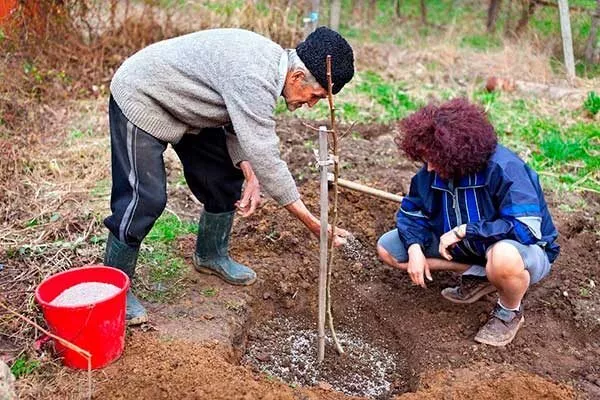
- A hole with a diameter of at least 70 cm is dug for planting, but the depth can be relatively shallow—about 40-50 cm. A support is driven into the hole, and a nutrient mixture made from the top layer of fertile soil, humus, and mineral fertilizers is poured inside.
How to care?
The Blue Gift plum requires standard care. It's low-maintenance, but to ensure good yields and maintain the tree's health, it requires some attention.
Care features:
- Watering frequency depends on the weather and soil conditions. During the first three years, the tree is watered once every two weeks. Initially, 10 liters of water are poured under each tree, then 20-30 liters. In the fall, a moisture-replenishing irrigation is performed.
- Periodically, the area around the tree trunk is loosened and weeded, and then mulched with organic matter, such as straw or mown grass.
- Fertilizing begins in the third year after planting. In the spring or fall, add organic matter—5-7 kg per tree—and mineral fertilizers during tillage.
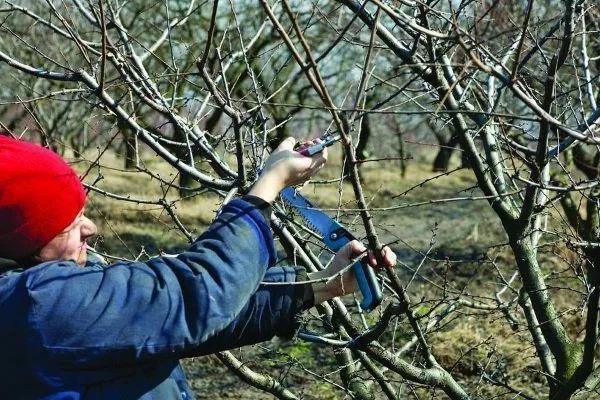
- In spring and fall, sanitary pruning is performed, removing frozen, broken, dry, and diseased branches. Crown shaping is usually done in the spring.
- Before wintering, the area around the trunk is covered with a thick layer of peat or straw. Immediately before frost, the trunk and skeletal branches are covered with netting to protect against rodents. Young trees can also be wrapped in burlap or a more modern covering material.
Diseases and pests
The variety is resistant to most common diseases, but under unfavorable conditions, there is a risk of clasterosporium. To prevent the disease, treat the tree with a 1% solution of Bordeaux mixture. Skor, HOM, Horus, and other fungicides are used for treatment.
Aphids pose the greatest threat to the tree, as they are quite resistant to codling moths. In case of widespread infestations, use Aktara, Confidor, Actellic, and other pesticides. To prevent the spread of pests, remove all fallen leaves in the fall, strip the bark, and spray with insecticides in early spring.
How to harvest and preserve crops
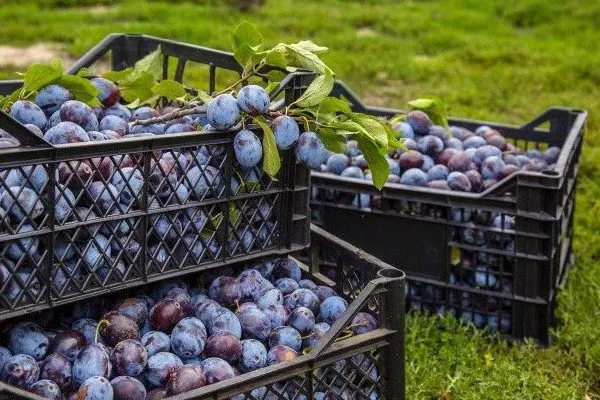
The plums are harvested when they have acquired the color characteristic of the variety, are soft to the touch, sweet, and juicy. The fruits are carefully removed from the branches, without squeezing them or rubbing off the waxy coating. Harvesting plums with the stems on helps them last longer.
Plums are harvested in dry weather. If it rains before harvesting, the fruit will taste watery. Plums are stored in boxes lined with paper. Place them in a cool, dark place, such as a cellar, where they can keep for several weeks. However, plums for storage should be picked when they are technically ripe.
Reviews
The Blue Gift plum is an ideal choice for those who don't care about the size of the fruit and avoid cloying sweetness. This small tree will provide you with at least a bucket of delicious plums with a balanced sweet and sour flavor each year.