
The Sharovaya plum is a winter-hardy Chinese plum, delicious and attractive in every way. This domestic variety is relatively new, but already quite popular among gardeners and amateur gardeners.
The history of the Sharovaya plum
The Sharovaya plum is a dessert and table variety. It was bred at the A.K. Chaika Federal Scientific Center of Far East Agrobiotechnology. Author: L.G. Setkova. The Sharovaya plum was approved for cultivation in 2011.
The Sharovaya plum originates from Primorsky Krai and was bred specifically for this region. The manufacturer also provides approximate harvest times and average yields for this region.
Description of the tree
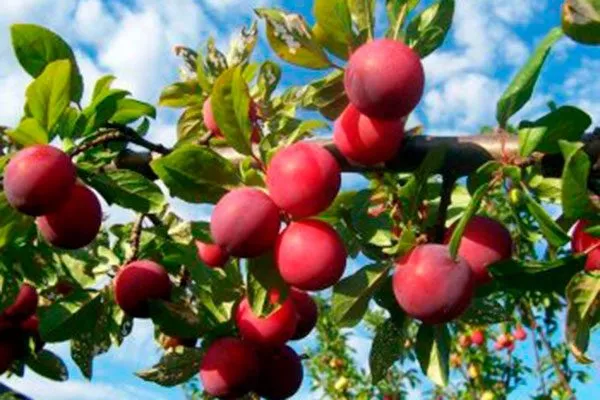
The Sharovaya plum tree is medium-sized, with a small, spherical crown, and is classified as a semi-dwarf. The shoots are yellowish-green and densely covered with lenticels. The leaves are quite large, shaped like concave boats, light green in color, and have finely serrated margins.
Description of fruits
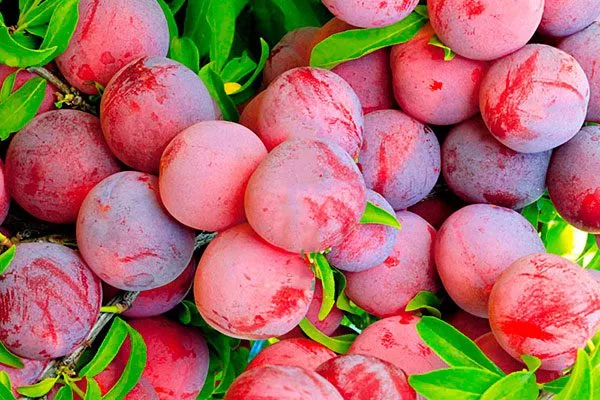
The fruits of the Ball plum are quite large, even and smooth, covered with a light waxy coating.
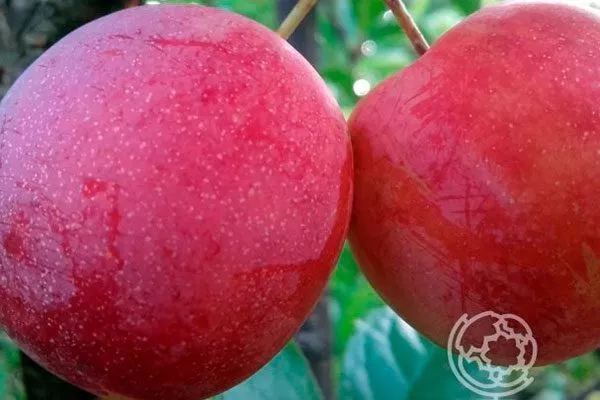
- ✓ Characteristic pineapple aroma of the fruit.
- ✓ Semi-detached stone, which is rare for plums.
Description of fruits:
- shape - round;
- weight - 30 g;
- color - dark burgundy, with white dots under the skin;
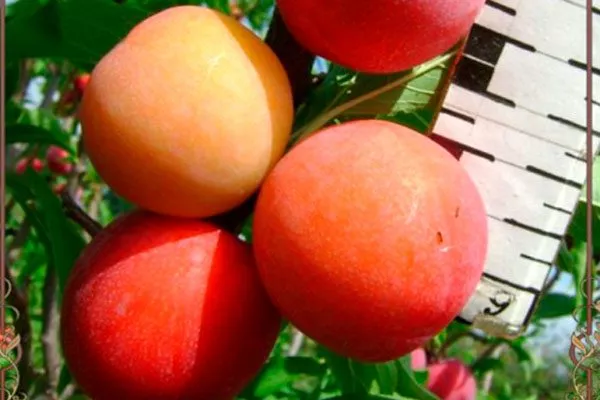
- the pulp is juicy and tender, fleshy, yellow in color;
- aroma - with pineapple notes;
- the skin is oily;
- the stone is semi-detached.
Taste and purpose
The taste of the fruit is sweet and quite good; tasters rate it at 4.3-4.5 points on a five-point scale.
Main characteristics
The Sharovaya plum is a self-fertile, early-ripening variety. It is winter-hardy, withstanding temperatures down to -40°C. The tree begins to bear fruit 2-3 years after planting. The average yield is 20 to 30 kg. The variety is resistant to fungal diseases and pests.
Pros and cons
The Sharovaya plum has many advantages that make it popular among gardeners. However, the variety does have some drawbacks, which it's advisable to be aware of before planting.
How to plant a plum tree?
Plum trees can be planted in spring or fall. However, fall planting is recommended only in the south of the country, where winters are quite mild. In other regions, spring planting is practiced, as it is more productive and safer for the seedlings.
- ✓ The soil pH level should be within 6.0-7.0 for optimal growth of the Sharovaya plum.
- ✓ The depth of groundwater is at least 1.5 m from the surface.
Landing features:
- The soil is prepared in advance and dug in the fall (if planting in spring). Fertilizers are added during the digging to increase fertility, and if the soil is acidic, acidifiers such as dolomite flour or wood ash are added.
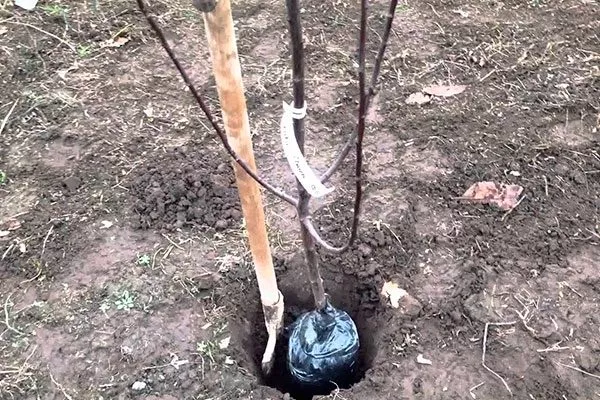
- A hole is dug for planting. This is done in advance to allow the soil mixture to settle. Approximate dimensions are 60 x 70 cm. Space adjacent holes 3 meters apart. The topsoil is mixed with humus or peat. A support for the seedling is placed in the center of the hole.
- The seedling is placed in the hole, its roots carefully arranged on the slopes of the earthen mound. The hole is then filled with ordinary garden soil and compacted. The root collar should be 3-5 cm above the soil surface. The seedling is tied to the support with soft twine.
- The planted tree is watered with warm, settled water. Once it has soaked in, the area around the trunk is covered with mulch.
Care Features
The Sharovaya plum requires special attention immediately after spring planting. When planted in the fall, the seedling establishes itself and goes dormant, requiring no care until spring. Watering and timely pest control are especially important for young seedlings in the spring.
How to care for a plum tree:
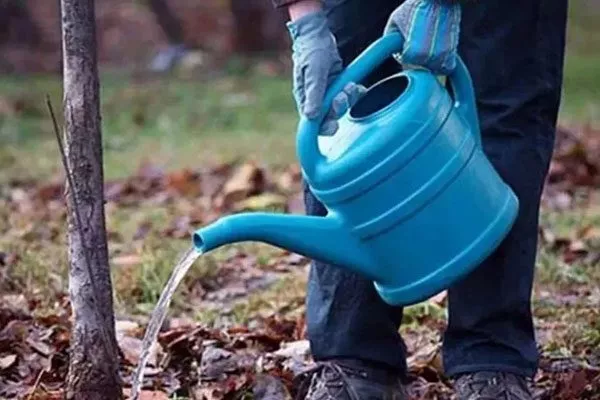
- When watering, the soil should be saturated to a depth of 40 cm. In the first half of summer, a mature tree requires 50 liters of water; during the fruiting period, the amount is increased. On average, plum trees are watered once every 2-3 weeks, depending on the weather. Avoid overwatering, as this leads to the development of fungal diseases.

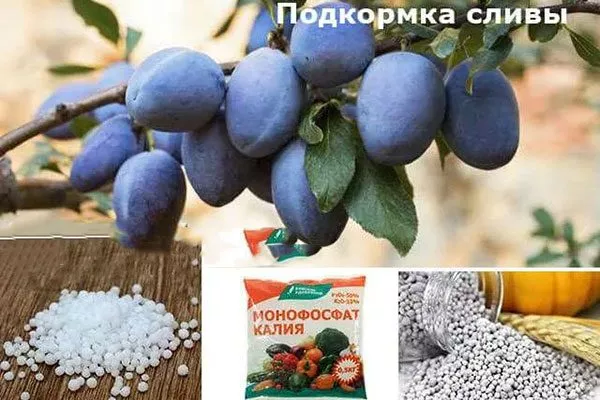
- Mineral fertilizers are applied beginning 3-4 years after planting. In the fall, potassium and phosphorus fertilizers are applied during tillage. In the spring, after the tree has finished flowering, nitrogen fertilizers are applied, and in the summer, infused cow manure is applied. To ensure good fruiting, root and foliar feeding with nitrogen, potassium, and magnesium is also performed.
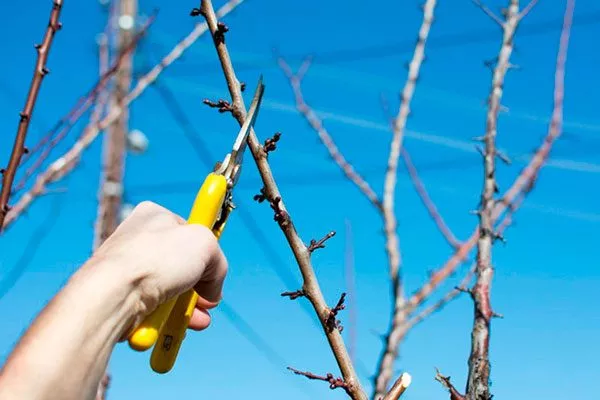
- The tree is pruned regularly in spring and fall, removing dead and broken branches. In spring, the tree's crown is also shaped, and it's important to promptly remove root suckers.
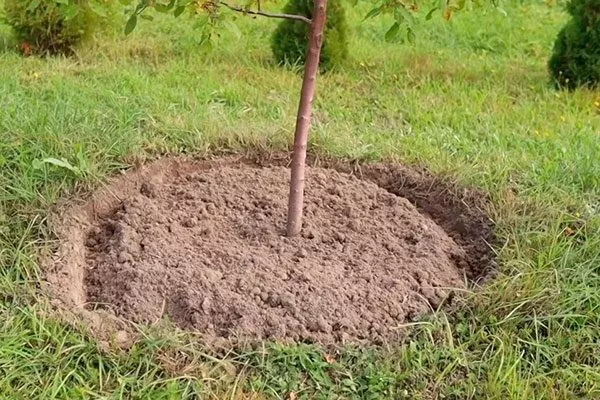
- The tree's trunk area is loosened and weeded periodically, removing weeds. However, this must be done with extreme caution, especially during the first few years of life, otherwise the surface roots can be damaged.
Prevention of diseases and pests
The Sharovaya plum is highly resistant to most diseases, particularly holey spot and rubella. Its resistance to fungal diseases is moderate. Protection against moniliosis, rust, and spotting is required. Trees are also susceptible to gummosis.
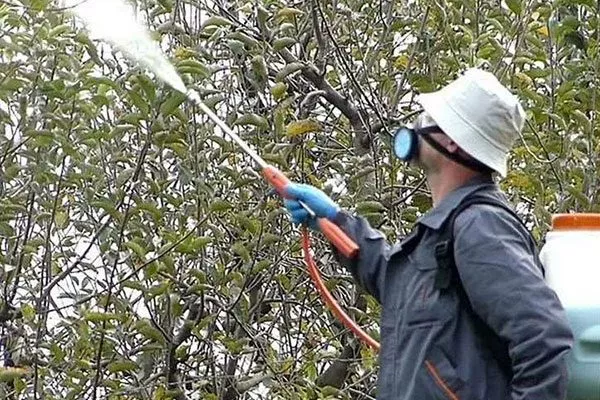
The variety is not susceptible to pest damage, but may be susceptible to attack during large infestations. Among the most dangerous pests are the plum sawfly, plum codling moth, and aphids. Standard insecticides are used to control them.
Harvesting
Plums should be picked on time to ensure they store and transport well. They are best picked when they are technically ripe, in dry weather. Wear gloves when picking the fruit to avoid rubbing off the waxy coating.
If it rains and the plums are picked wet, dry them in the shade. Fruits with spots or worms are not suitable for storage. Place the plums in boxes lined with paper. Store the plums in a cellar or refrigerator.
Reviews
The Sharovaya plum is a regionalized Far Eastern variety that can be successfully grown in other regions. It easily withstands temperatures as low as -40°C (-40°F) and consistently delights gardeners with high yields.