
Sharafuga Bella Gold is a unique fruit tree that has gained popularity due to its productivity, exquisite fruit flavor, and undemanding growing conditions. This variety is an excellent choice for lovers of exotic fruits that require little maintenance.
The origin of the plum
The idea for this unique hybrid undoubtedly belongs to the renowned American breeder Floyd Zaiger. His innovative creation is also known as Bella Gold. Sharafuga is a variety that includes several cultivars: Velvet Sunrise, Bella Royale, Cerise, and Gold.
The concept of a plum
Sharafuga Bella Gold is an innovative fruit tree variety, a cross between apricot, plum, and peach. It thrives in temperate climates.
If you follow the basic rules of planting, care, and crown formation, the tree promises annual harvests of huge, aromatic fruits.
Features of wood
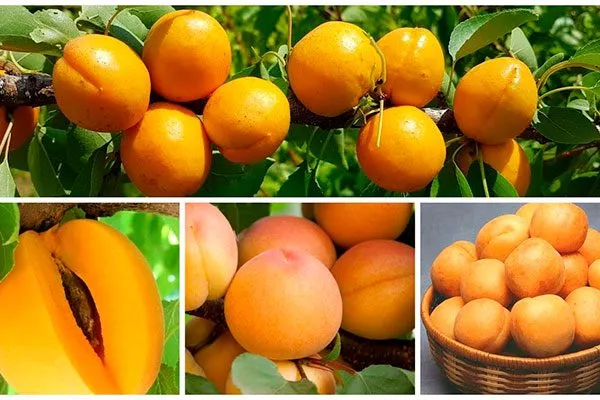
Bella Gold Sharafuga is distinguished by its harmonious, slightly widened crown, which facilitates the process of care and harvesting of fruits; it reaches a height of 300 to 400 cm, with an average growth rate.
Its crown is spherical in shape, visually reminiscent of a plum with elements of apricot, and the branches have thorns, while the leaves have a unique curl.
Varietal characteristics of fruits
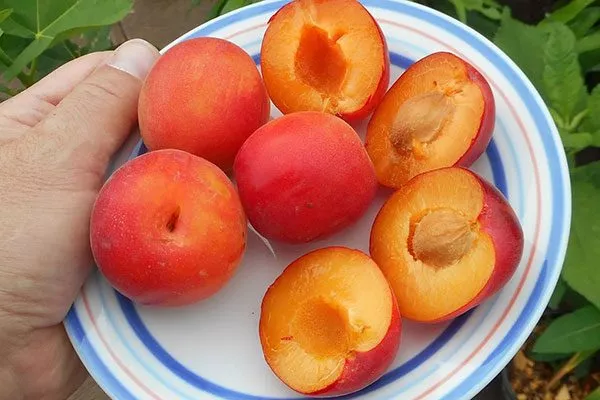
Bella Gold sharafugi fruits are round and golden-yellow with a noticeable blush. Each exotic fruit weighs between 50 and 70 grams and is impressively large, reaching up to 6-7 cm in diameter.
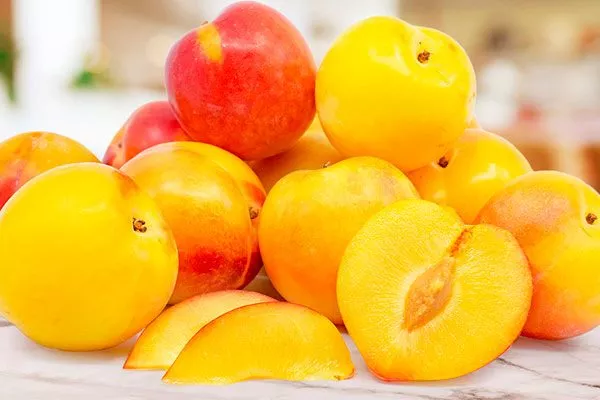
The flesh is characterized by its increased juiciness, yellowish hue, and delicate aroma. The pit separates easily from the flesh, and the pit itself resembles a peach pit.
Subtleties of taste
The flesh of these fruits is sweet, with delicate aromatic notes of plum and apricot. They withstand transportation well and can be stored for a long time.
They are used fresh and are also an excellent raw material for making compotes and jams.
Characteristics of the variety
This new hybrid is designed for the climate of central Russia and is a key source of food and shelter for a variety of insects and birds.
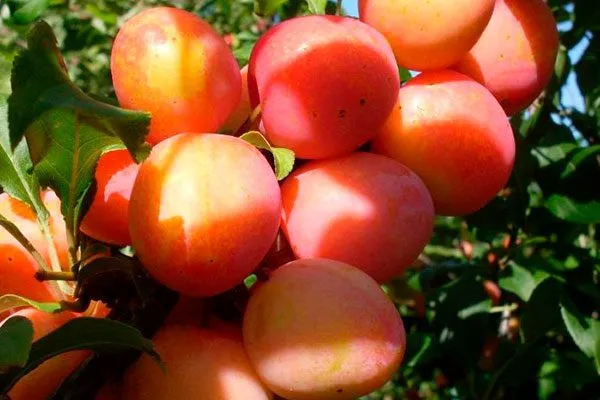
The berries of this variety provide food for birds, and the leaves and flowers attract bees and other pollinating insects. They remain on the bush for a long time, not falling off immediately after ripening.
Productivity
It is distinguished by its significant productivity: a single tree can yield at least 25 kg of berries per season. The maximum recorded yield is 40 kg.
Flowering and ripening
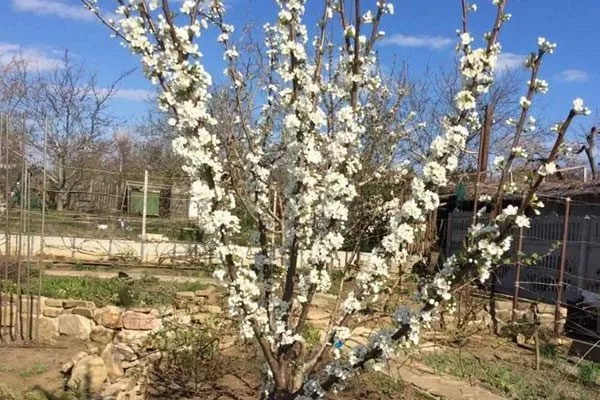
The Bella Gold sharafuga blooms in May, and the first ripe fruits appear in August or early September. Ripe fruits are resistant to falling and cling firmly to the branches. It's best to pick them by hand, as shaking the branches can damage the fruits and shorten their shelf life.
Features of fruiting
Sharafuga Bella Gold is self-pollinating, but to improve the quality and quantity of the harvest, it is recommended to plant it alongside other varieties. The first fruits can be expected 4-5 years after planting, and a stable harvest begins in the 8th or 9th year.
Frost resistance of Sharafuga Bella Gold
It has good frost resistance and can withstand temperatures down to -30-35 degrees Celsius. Even if some branches are slightly frost-damaged, the tree quickly recovers and continues growing after spring pruning.
Due to its ability to withstand short-term frosts down to -3 degrees after the leaves have blossomed, the Bella Gold sharafuga can be cultivated in the central regions of Russia.
Keeping quality
The fruits retain their quality for 10-15 days after picking. Their firm skin and dense flesh ensure they can withstand long-distance transportation without losing their flavor or appearance. The key is to pack them properly in perforated boxes, in one or two layers.
Features of cultivation
To grow sharafugi, choose a place that is in the sun, but protected from gusts of wind by the walls of buildings or trees.
In southern regions, you can try growing this hybrid in partial shade. A site where snow accumulates near the bush is preferable. The thicker the snow cover, the better the chances of a successful wintering of the sharafuga.
Landing
The hybrid dislikes low-lying areas and high humidity, where cold, moist air and water can accumulate. The ideal water table should be no more than 200 cm below the soil surface. It is important to ensure good drainage to prevent root rot.
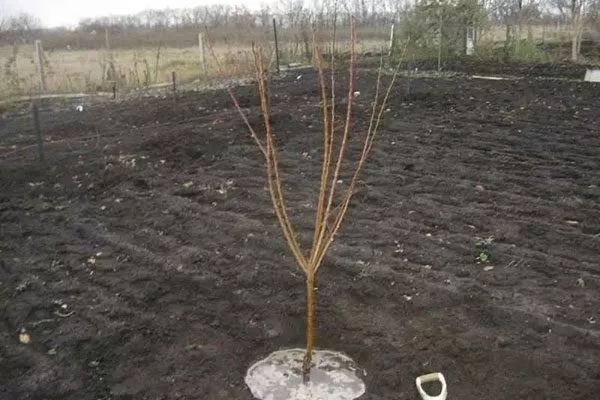
- ✓ The depth of groundwater should be at least 200 cm to prevent root rot.
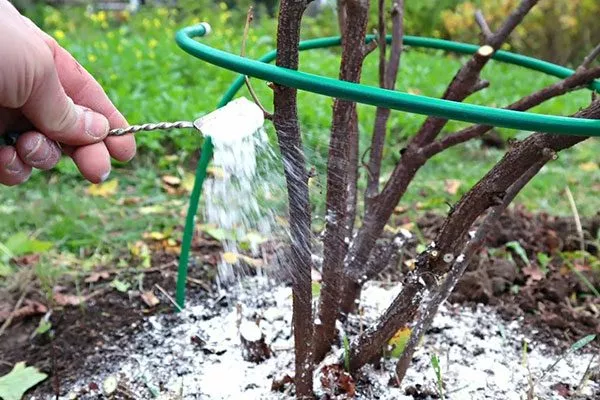
- ✓ The soil should have neutral acidity, which is corrected with slaked lime.
Other important factors for the variety:
- The soil for sharafugi should be rich in minerals, with a loose layer, well-moistened and have a neutral acidity.
- The site is prepared in the fall by tilling the soil and adding fertilizer. If the soil is highly acidic, lime is used to reduce it. For each square meter of the allocated area, it is recommended to apply 80-90 g of superphosphate, 35-40 g of potassium sulfate, 9-12 kg of compost, and 500 g of slaked lime (if necessary).
- The minimum distance between plants is 4-5 meters.
- The planting procedure for sharafugi involves preparing a hole 65-70 cm deep and 85-90 cm wide. To ensure drainage, a layer of crushed brick or gravel should be placed at the base of the hole.
- Before planting in the soil, the root system of the seedling must be soaked in a special solution that promotes root formation.
- After planting, the tree is watered generously and the trunk circle is covered with a layer of soil mixed with peat.
Care activities
Tree care requires simple agricultural operations:
- Watering. Hybrids require watering with warm water, which should be allowed to settle before use. Water the plant as needed when the top layer of soil is slightly dry.
Overwatering can lead to root rot. In spring, when rainfall is frequent, watering is not necessary. During dry periods, regularly moisten the soil, adding 15-20 liters of water under each tree. - Fertilizers. Adding mineral and organic fertilizers significantly increases the tree's fertility. In the spring, before buds appear on the branches, the sharafuga is fed with organic matter. When the tree begins to form buds, it is fertilized with ammonium nitrate and a nitrogen mixture, which promotes foliage growth.
During the budding period, the tree is enriched with superphosphates and potassium compounds, and to stimulate fruit ripening, manganese, selenium, potassium and calcium are added to the soil.

- Soil loosening. This action is necessary regardless of the use of mulch to ensure the soil around the tree trunk is permeable and oxygenated. Loosening should be done after each watering or natural precipitation.
- Trimming. Sharafuga is characterized by rapid growth at the beginning of its life, adding about 55 cm in height per season, so its crown must be properly shaped:
- In spring, before the tree begins to produce leaves, its branches are cut back by about half their length.
- Typically, this process is combined with sanitary pruning, which involves removing diseased or damaged branches.
- All areas where cuts were made should be treated with potassium permanganate or garden pitch.
- Winter shelter. Despite the Bella Gold variety's good frost resistance, in areas with extreme climate fluctuations, it's important to protect the tree's root system. In the fall, the trunk is covered with a 15-18 cm layer of soil, and a protective layer of sawdust, peat, or compost is placed around its base.
How to prepare sharafugi cuttings?
If you already have this variety in your garden, don't forget that you can expand your garden by taking cuttings from your own tree. This eliminates the need to spend money on expensive planting material. This can be done in the fall.
Key rules:
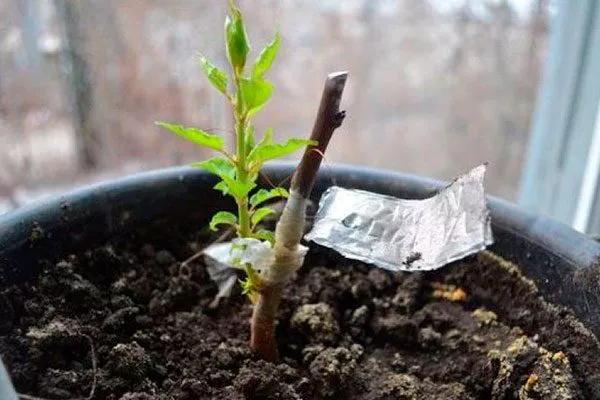
- Take cuttings about 20 cm long, making sure each has three healthy buds.
- The leaves should be removed, the roots carefully wrapped in damp natural cloth, and then protected with a plastic bag to prevent moisture evaporation.
- An alternative method of storing cuttings is to place them in a box with damp sand, which should be regularly watered from a container with a spray bottle.
- During the entire cold period, planting material should be stored in a cool basement or refrigerator, while it is important to ensure complete absence of light.
- With the arrival of spring warmth, you can begin planting cuttings in pots and placing them on the windowsill for rooting.
- When the roots grow, they are placed in any rooting agent for 24 hours.
Cuttings are planted according to the classic scheme.
Diseases and pests
Bella Gold is a variety of Sharafuga that is disease-resistant and requires minimal protection. However, in unfavorable climates and other factors, plants may be susceptible to attack by the peach leaf curl pathogen. Among pests, sawflies and leaf beetles pose the greatest threat to Bella Gold.
Precautions:
- During the growing process, burns, fungal infections, and rodent attacks may occur, so in spring and autumn it is recommended to treat the tree trunk and branches with white limestone-based paint.
- Spring treatment of damaged bark will help protect it from disease. All defects should be thoroughly cleaned, and the removed cambium destroyed by burning.
- Fallen leaves, mulch residue, and rotting fruit must be removed from the tree trunk area to prevent the development of diseases and pests that can breed in such debris.
- To protect the hybrid from insect attacks, you can apply foliar treatments using onion or garlic infusions. In case of a large pest infestation, it's advisable to use insecticides.
- If white spots or the rough texture typical of peaches appear on the leaves of the hybrid, it is necessary to spray with fungicides.
Harvesting Bella Gold and using the fruits
Harvesting takes place from August 15th to September 10th-12th, when the fruits reach full ripeness and acquire a vibrant yellow-orange color. Care must be taken when harvesting to avoid damaging the branches.
Rules and requirements for fruit harvesting, storage and use:
- It is recommended to pick the fruit whole with the stems, as picking without them can lead to rapid depletion of juice and decomposition.
- Ripe fruits are placed in small boxes, separated by layers of paper or straw.
- Transportation should be without sudden movements and impacts.
- Bella Gold fruits have good keeping quality and can be stored in the refrigerator for 2-3 weeks.
- For longer storage, they are frozen or preserved in the form of compotes and jams.
- When fresh, they make a delicious and aromatic dessert.
- The fruits are used to make exquisite jams, purees, mousses, and jellies; the variety makes an excellent addition to fruit salads.
- Bella Gold brand fruits, frozen or canned, retain their flavor and nutritional value. These products are available year-round and can be added to baking recipes or used to make milk drinks.
Positive and negative qualities
Gardeners choose the Bella Gold sharafuga not only for its exotic flavor and aroma. This hybrid has a number of attractive qualities. Here are a few:
Among the disadvantages often mentioned are:
Gardeners understand that growing fruit trees from seeds is a difficult task. Cuttings are a more popular and preferred method of propagation.
Gardeners' reviews of the Bella Gold sharafuga
Sharafuga Bella Gold is a medium-sized hybrid that combines the best qualities of peach, apricot, and plum. Its berries are not only sweet but also fibrous, making them resistant to transportation. These fruits retain their quality well both fresh and canned.