
The most unusual of all hybrids, the Sharafuga (or Nectacotuma) has recently become increasingly popular. It is distinguished by its frost resistance, early fruiting, and unusual flavor. Read more about this "strange" fruit, its characteristics, varieties, and the main stages of planting and caring for the tree below.
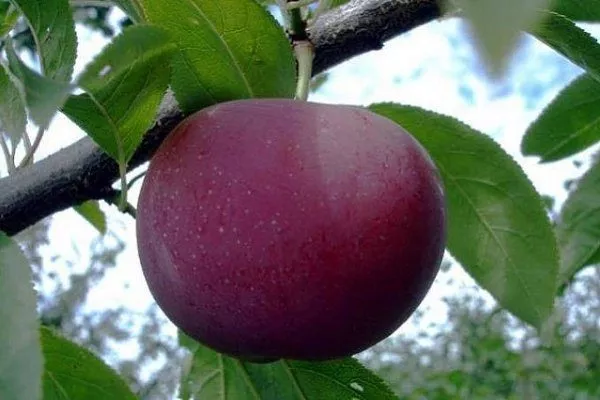
The Sharafuga variety is a hybrid of plum, apricot, and peach.
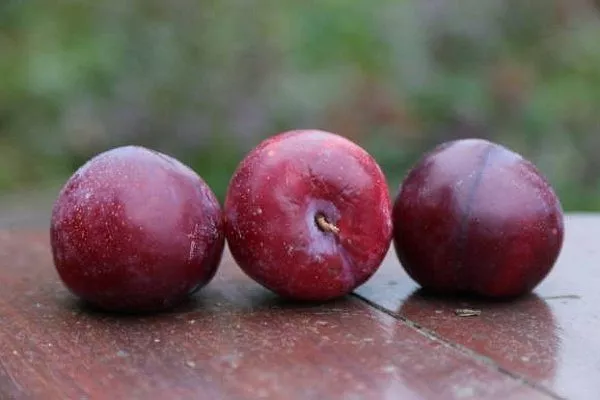
The Sharafuga hybrid has increased resistance to diseases
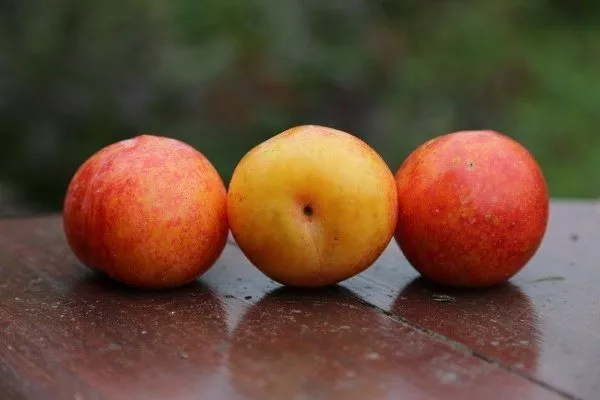
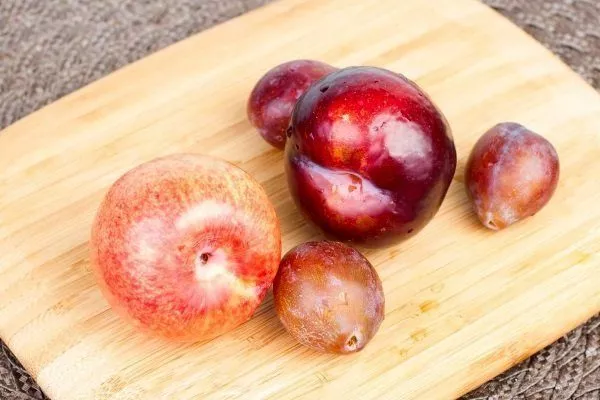
Depending on the variety, Sharafuga is colored purple or orange.
What is a sharafuga?
This hybrid has three heat-loving "parents"—peach, apricot, and plum. But, unlike them, the plant itself is frost-resistant and thrives in cooler conditions. It is grown both in the south and in temperate climates.
Externally, the tree resembles a common plum, with the same leaves and thorns. The shape and size of the fruit are inherited from the apricot, while the pit has a distinctive peach-like pattern and separates easily from the flesh.
The fruit's flavor depends on its ripeness. Unripe specimens taste like plum, while ripe ones have an apricot-like flavor. The flesh is sweet or slightly tart, juicy, and pleasant.
Origin of the hybrid
American biologist Floyd Zeiger spent 30 years developing this hybrid. This renowned breeder earned the nickname "the father of exotic fruits" by pollinating fruit trees in his orchard by hand with a cosmetic brush. He believed that since apricots, peaches, and plums all belong to the plum subfamily, they could crossbreed.
Description
What does the Sharafuga tree look like? It's a compact tree with a spreading, medium-density crown. Its shoots grow 50-70 cm each year. It resembles a plum in appearance. The branches have thorns. The leaves have curling, like those of a peach.
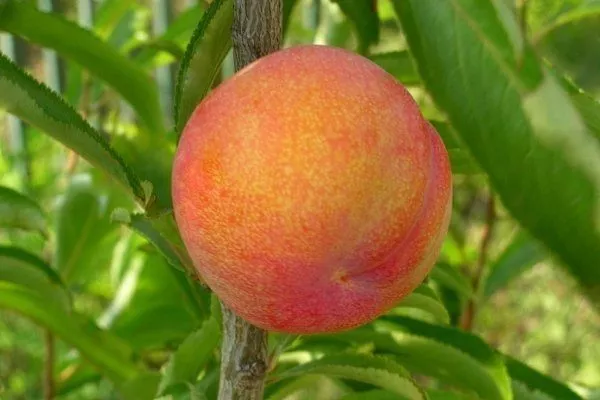
The fruits are large (6-7 cm) and more apricot-like in shape. Depending on the variety, the skin is purple or orange. The apricot aroma is subtle. The fruits do not fall off, ripen in late August or early September, and have a universal value. They are eaten fresh, but also used to make compotes, jams, and preserves. They travel well over long distances.
Characteristics
Unlike its southern parents, the Sharafuga can withstand temperatures down to -26°C and short-term frosts down to -30°C, as it has a more plum-like quality. If shoots freeze, they quickly recover in the spring. It grows well in central Russia. Fruiting begins 3-4 years after planting. Maximum yields are observed in trees 8-10 years old.
Types of sharafugi
| Name | Frost resistance | Ripening period | Fruit color |
|---|---|---|---|
| Bella Cerise | up to -26°C | end of August | bluish-violet |
| Bella Royale | up to -26°C | end of August | bluish-violet |
| Bella Gold | up to -26°C | end of August | yellow |
| Velvet Sunrise | up to -26°C | end of August | violet |
This hybrid is very poorly represented on the market. Trusted sellers only offer two varieties, which differ in fruit color: bluish-purple and yellow. The purple fruits have red flesh with yellow veins and taste more like a tart plum. The yellow fruits, with orange spots scattered across the skin, are sweeter and closer to apricot, although their texture is still plum-like.
In America, where the Sharafuga was originally bred, there are the following varieties:
- Bella Cerise and Bella Royale — for commercial sales;
- Bella Gold — a variety exclusively for home cultivation with yellow fruits;
- Velvet Sunrise - with purple ones.
Advantages and disadvantages
The advantages of culture are:
- frost resistance;
- high yield;
- resistance to diseases and pests;
- excellent appearance and taste of fruits;
- their transportability.
But there are also many disadvantages:
- the hybrid does not produce seeds;
- prefers only fertile soils, fertilizing when growing sharafugi is a necessary procedure;
- seed material is more expensive than conventional crops;
- It is essential to monitor soil moisture;
- For better fruit set, plant a plum or apricot tree near the sharafuga tree, which bloom at the same time. The sharafuga tree usually blooms at the same time as the pear tree, so early varieties are selected.
Landing features
Experts recommend purchasing seedlings from reputable nurseries; other plum and apricot hybrids are often sold under the guise of Sharafuga.
- ✓ The presence of living, flexible roots without signs of rot or dryness.
- ✓ Bark free from cracks, stains or signs of pests.
- ✓ The presence of several healthy buds ready for growth.
Basic requirements
As mentioned above, sharafuga grows in temperate climates. While in the south it is planted both in the fall and spring, in the central and northern regions with colder climates, spring planting is the best solution.
Choose a sunny, level, or slightly elevated location for the seedling. Most importantly, it should be protected from cold winds. Cold air and dampness should not stagnate in the area. Planting in a low-lying area leads to the development of fungal diseases.
The optimal soil structure for this crop is air- and moisture-permeable and fertile. If the soil is acidic, it should be limed first. Apply 300 g of slaked lime per square meter.
The soil is prepared in advance of planting—in the fall. Once the seedling's location has been determined, the soil is dug deeply and several buckets of humus and mineral fertilizers—35 grams of potash and 70 grams of superphosphate—are added.
Planting instructions (step-by-step)
To grow a sharafugu, follow these instructions:
- In the spring, 2-3 weeks before, dig a hole measuring 80x80x80 cm;
- Drainage made of broken bricks or medium-sized pebbles is placed at the bottom to prevent water stagnation;
- They drive a stake in so that it rises 50 cm above ground level;
- Fill the hole with fertile soil, forming a mound. This can consist of equal parts peat, humus, and prepared soil from the hole;
- The plant is placed on the mound and the roots are straightened;
- They fill the hole and compact the soil;
- The trunk of the seedling is tied to a peg;
- Water generously;
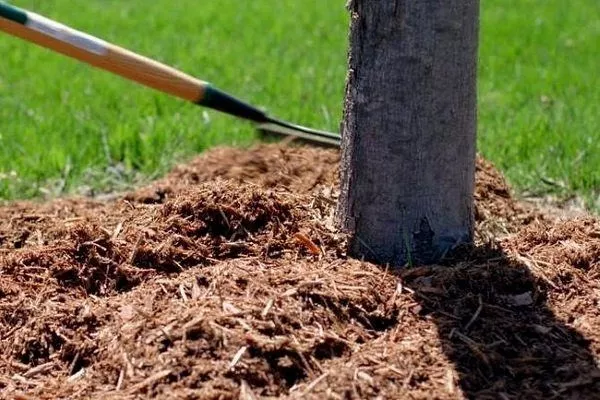
- The tree trunk area is mulched with organic matter—rotted manure, hay, or grass clippings. This agricultural technique helps reduce moisture evaporation, improve soil structure, and enrich it with nutrients.
Agricultural technology
To obtain a harvest from a tree, care is provided, which includes proper watering, timely application of fertilizers, and soil care.
Watering the plant
The frequency of watering depends directly on weather conditions. If the spring is wet, water only during the hottest period. Otherwise, water several times a spring.
It's best to water the sharafuga, like a plum, by sprinkling. Alternatively, dig a 15-cm-deep trench around the circumference 0.5 m from the trunk and pour 2-3 buckets of water per square meter into it.
What, how and when to feed?
Fertilizing is a mandatory part of Sharafuga cultivation. It is applied throughout the growing season.
In spring, after the snow melts, fertilize with nitrogen fertilizers. In summer, from the first half of June to the end of July, feed the tree with potassium and nitrogen fertilizers to promote fruit growth and ripening. Apply one to two foliar sprays with the same fertilizers.
Soil care
After watering or precipitation, the soil is loosened and mulchIf the garden is old, the soil under the trees is dug with a pitchfork and shovel. Around the trunk, a depth of 5-10 cm is sufficient; the further away from the trunk, the deeper the digging—up to 15 cm. The area around the trunk is regularly cleared of weeds.
Other care and cultivation activities
Sharafuga grows quite quickly, so in early spring, before the sap begins to flow, all annual shoots are cut back by half. At the same time, sanitary pruning is carried out, removing dried, broken, and diseased branches.
Diseases, pests and protection
All hybrids are resistant to diseases and insects. The Sharafuga variety is the only one with a tendency toward leaf curl, inherited from the peach variety.
But preventative measures are best. Whitewashing the trunk and skeletal branches with lime will help prevent sunburn and pests. The plant is whitewashed twice a year—in spring and fall.
To prevent pests from appearing in the fall, thoroughly clear the tree trunk area of plant debris, fallen leaves, and fruit. All collected natural debris is burned.
At the first signs of disease or pests, folk remedies are used. Spray the tree with a garlic or onion infusion. If insect populations are large, chemical insecticides will be necessary, and if diseases develop, fungicides.
Harvesting, storage and processing of crops
The ripening time of the harvest depends on the region. In warmer regions, the fruits ripen in August, while in northern zones, they ripen in early September. Because the fruits hold well on the tree, they are harvested by hand. Avoid shaking the branches. Hitting the ground damages them, which negatively impacts their shelf life.
The fruits are perfect as a filling for pies, and they can be used to make delicious compotes and amazing jams.
Gardeners' reviews
Since the hybrid is not well known, reviews about it are quite contradictory:
The Sharafuga hybrid is a true find for lovers of exotic fruits. With proper planting and care, the tree will produce juicy fruits with an interesting flavor.