
There are many self-fertile plum varieties, and the best of them are discussed below. A detailed description of the characteristics and features of the variety will help the gardener choose the right one.
| Name | Ripening period | Tree height | Fruit size |
|---|---|---|---|
| Alexey | late-ripening | up to 1.5 m | average |
| Hungarian Korneevskaya | mid-late | medium-sized | above average |
| Soviet Greengage | mid-season | medium-sized | large |
| Zarechnaya early | early ripening | medium-sized | large |
| Bogatyrskaya | late-ripening | medium-sized | large |
| In memory of Timiryazev | mid-late | tall | average |
| Anna Shpet | late-ripening | medium-sized | large |
| Moscow Hungarian | late-ripening | medium-sized | small |
| Egg blue | mid-season | tall | average |
| Gigantic | mid-season | tall | very large |
| Kuban dwarf | mid-season | short | average |
| Oryol Dream | early ripening | medium-sized | large |
| Memory of Finaev | late-ripening | short | average |
| Viola | late-ripening | medium-sized | average |
| Early ripening red | early ripening | medium-sized | small |
| Morning | mid-season | medium-sized | average |
| Blue Bird | mid-season | medium-sized | average |
| Yakhontovaya | early ripening | tall | average |
| Chemal blue | mid-season | medium-sized | small |
Alexey
A late-ripening domestic plum, ripening between September 10th and 15th. It is characterized by its low growth, with the tree reaching no more than 1.5 m in height. The medium-sized fruits (20 g) are elongated and pear-shaped. The skin is dark purple with a thin layer of bloom.
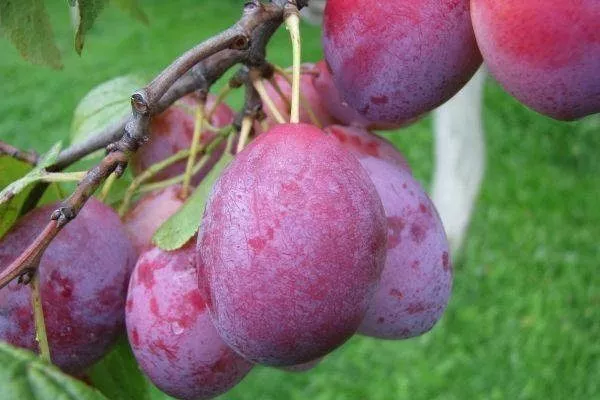
The plum tree bears fruit regularly and reliably. Its yield, winter hardiness, and disease resistance are average.
Hungarian Korneevskaya
A Hungarian plum variety with a mid-late ripening period. It is a medium-sized tree with a loosely dense, rounded crown. It begins bearing fruit in the third to fourth year. The plum fruits are uniform, oval, slightly pointed, purple, and covered with a thick bloom. The fruit size is above average (35 g).
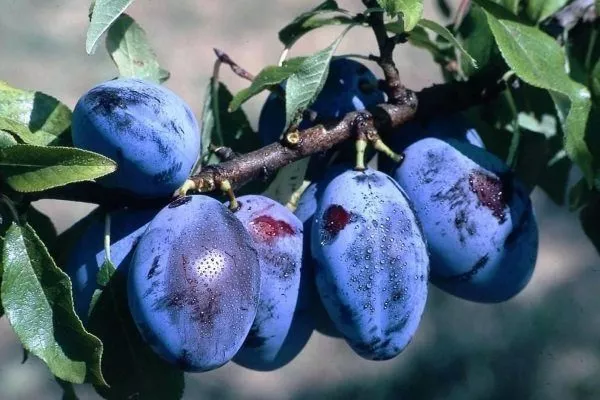
Harvest ripening is influenced by weather conditions, so it has a prolonged period from August 10th to the first ten days of September. Fruiting is annual and regular. The yield is average—up to 30 kg. The variety is valued for its high winter hardiness, good drought tolerance, and disease immunity.
To learn more about other varieties from the Hungarian group, please visit This article.
Soviet Greengage
This is a partially self-fertile, mid-season variety. The harvest ripens in late August. This medium-sized tree thrives in garden plots located in the Central Black Earth Region, where it produces the highest yields and the largest fruits.
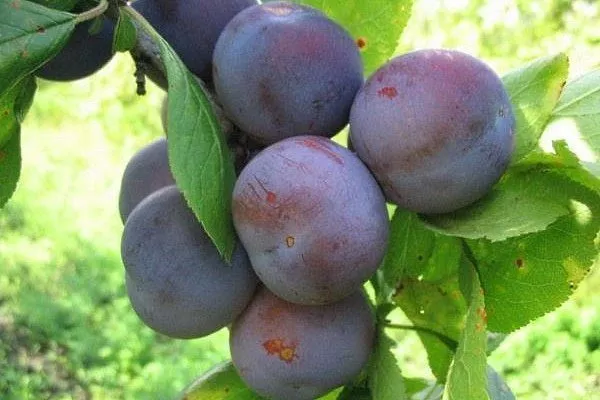
The first fruits are harvested after four years. They are large (33-40 g), reddish-purple, and covered with a thick, bluish waxy coating. The plant is resistant to frosts down to -30°C, but is prone to the disease polystigmosis.
Zarechnaya early
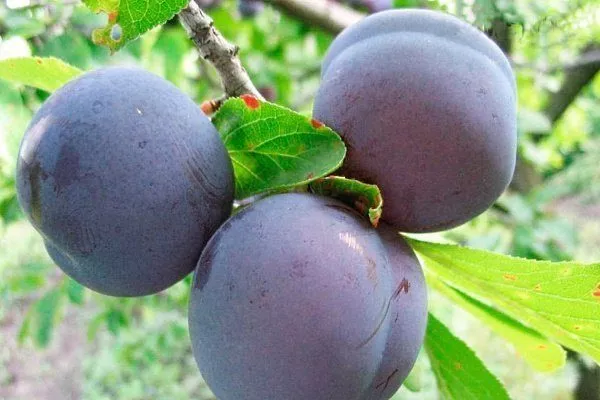
An early-ripening, highly winter-hardy variety. This is a medium-sized tree with arching shoots. The yield is above average, and the fruits ripen evenly. Ripe fruits can be enjoyed by the end of the third ten days of July. They are large (40-50 g) and have an attractive oval shape. The skin is dark purple with a thick waxy coating. Subcutaneous dots are visible throughout the surface.
The first fruits will be available for tasting in 2-3 years. The variety has average disease resistance.
We recommend reading the article about What diseases does plum have?.
Bogatyrskaya
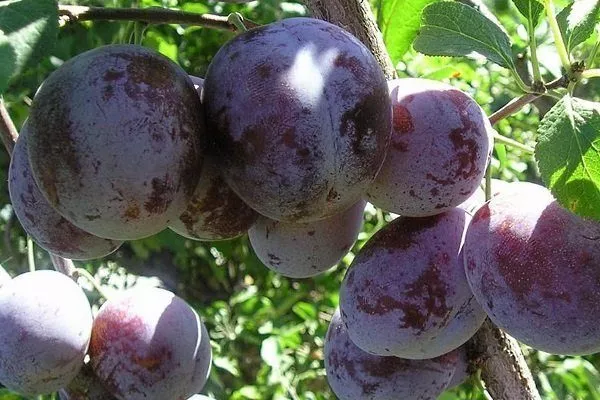
A late-ripening variety. This medium-sized plum begins to bear its first fruit after 4-5 years. It is a high-yielding variety with regular fruiting. A 5-6-year-old tree can yield up to 70 kg of fruit. The fruits are large (up to 40 g), elongated-oval, and inky with a waxy coating.
Ripe fruits are easily identified by their color, as they become almost black. The plum has above-average winter hardiness and is resistant to diseases and pests.
In memory of Timiryazev
This variety has a mid-late ripening period. Its key characteristics—winter hardiness, disease resistance, and drought tolerance—are average. This plum is tall, making it challenging to care for and harvest. It begins bearing fruit in the third to fourth year.
The plums are medium-sized, weighing no more than 25 grams. They are elongated-ovoid and bright yellow, covered with a thick layer of milky bloom. Most of the surface is covered with a pinkish-red blush, speckled, and numerous subcutaneous spots. The yield is high—over 30 kg per tree.
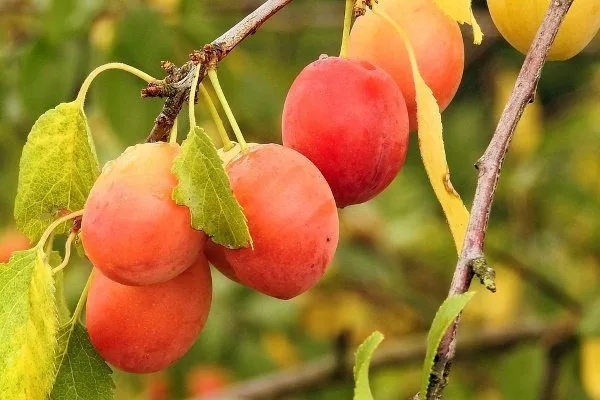
The fruits are picked in the first half of September, but fruiting is irregular - the tree requires a period of rest.
Anna Shpet
An ancient, high-yielding plum variety, known since 1946. It is a medium-sized plum (up to 4.5 m in height) with a pyramidal or oval crown. The first fruits form after four years if the tree is planted from a two-year-old sapling.
The fruits are large with a barely visible ventral suture. The skin is blue-black with a brick-brown tint. Numerous subcutaneous gray spots are visible on the surface with the naked eye. The fruits are covered with a waxy coating that rubs off easily.
Disease immunity is average. The same can be said about winter hardiness. Ripe fruits are not prone to falling and are harvested in the fall, in late September or early October.
Watch the video below for a review of the Anna Shpet plum variety:
The variety is undemanding to soils and is resistant to drought.
Moscow Hungarian or Tsaritsyn Hungarian
An ancient variety with a late ripening period. Ripe fruits are harvested in the second half of September. However, the first fruits will have to wait, as the plum tree begins bearing fruit in the seventh or eighth year. The harvest is unaffected by the vagaries of the weather. The fruits do not crack in rainy weather. Yields are above average, and the plant bears fruit annually.
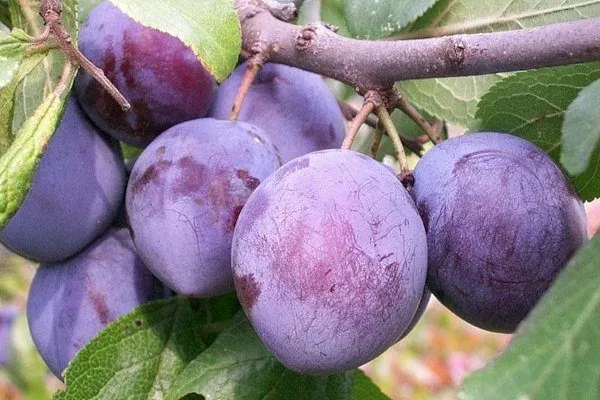
The tree is medium-sized and produces a large number of suckers, which must be removed promptly. The fruits are small (28 g) and asymmetrical, ovoid. The ventral suture is clearly visible. The rough skin is violet-purple and covered with a blue-violet bloom.
The flesh has a mediocre flavor—sweet and sour with a slight bitterness. The fruits are transportable. Winter hardiness and disease resistance are average.
Egg blue
A mid-season variety of domestic plum. Its drawback is the tree's height, which can reach 6 meters. Fruit is harvested from August 17th to 26th, with an average yield. Fruiting begins in the fifth year, but irregularly. The plant requires rest in some years.
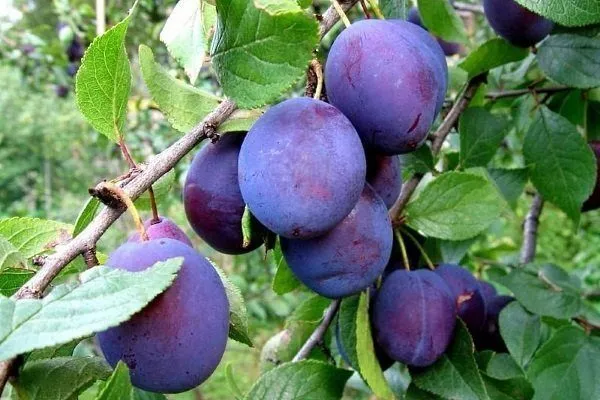
The fruits are medium-sized, weighing no more than 28 g. They are egg-shaped, but unevenly sided. The color is blue-violet with a thick waxy coating. They exhibit high winter hardiness and average drought tolerance. The variety is susceptible to clasterosporium leaf spot and pests such as codling moths and aphids, but is immune to fruit rot.
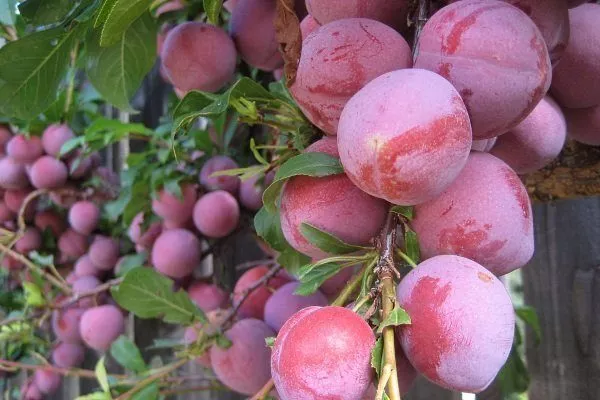
Gigantic
A plum variety originating from America. It is also cultivated under cover in northern Russia. The tree is tall (up to 4 m) with a dense pyramidal crown. The first fruits can be tasted after three years, and a year later, up to 40 kg of ripe fruit can be harvested. When grown in southern regions, the plums have a sweeter flavor and juicier flesh.
The plums are very large (up to 60 g)—a characteristic reflected in the variety's name. Their shape is obovate. The skin is thick, bright pink, and covered with a bluish bloom. This is a highly frost-hardy variety, withstanding temperatures down to -34°C, but its drought tolerance is low and it is also susceptible to moniliosis.
Kuban dwarf
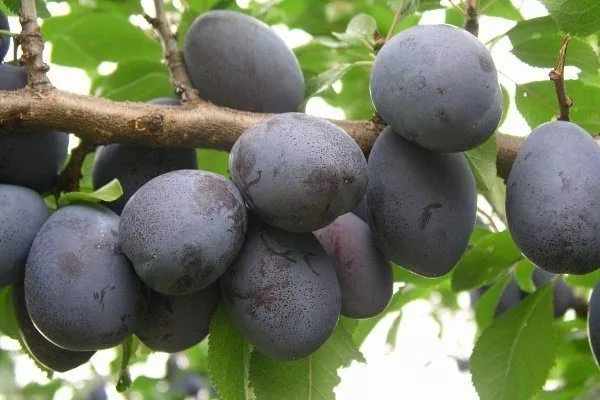
A mid-season variety, the first fruits appear in the third or fourth year. This is a high-yielding plum that produces fruit reliably every year. Another advantage is the tree's low height, which significantly facilitates care and makes harvesting more enjoyable, as the fruit is harvested in early August.
The fruits are medium-sized (27 g), oval, and unevenly shaped. They are resistant to cracking and easy to transport. The skin is dark purple with a thick waxy coating. They have high disease resistance and winter hardiness, but moderate drought tolerance.
Oryol Dream
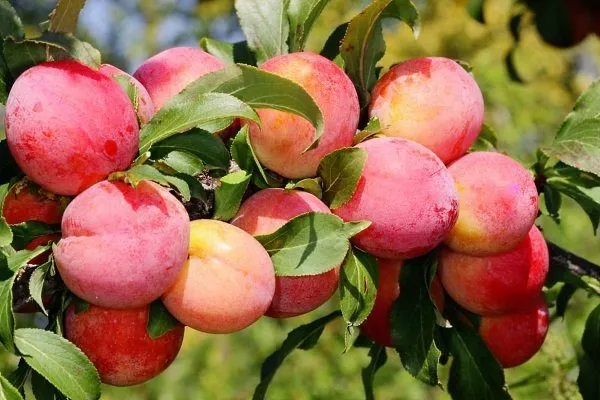
Partially self-fertile, early maturing a variety of Chinese plumThe harvest is in the second half of August. The tree is medium-sized. The first fruits appear in the third year. They are large (40 g), round, red, and covered with a waxy coating.
The yield is average. This plum has one unfortunate characteristic: as the yield increases, the fruits become noticeably smaller. It has high winter hardiness, and is resistant to clasterosporium.
Memory of Finaev
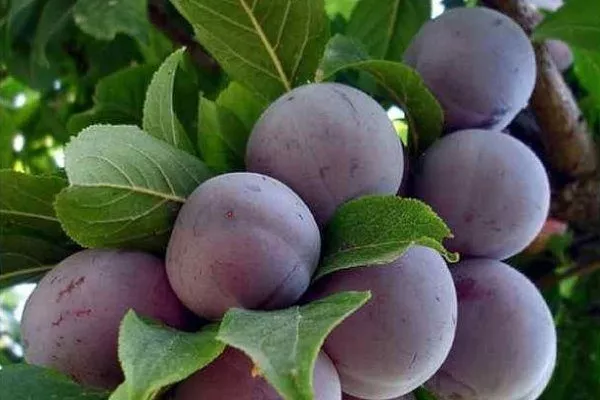
A late-ripening variety. Another low-growing plum, it grows slowly and reaches a maximum height of 2.5 m. It begins bearing fruit in the fifth or sixth year. It produces fruit annually, harvested between September 3rd and 6th.
The fruits are medium-sized (22 g), round, blue, and covered with a waxy coating. They are easy to transport. This variety is highly winter-hardy, but even if damaged by frost, the tree quickly recovers, is immune to diseases, and is virtually unaffected by insect attacks. Drought resistance is average. During dry and hot periods, the fruits tend to fall off heavily.
Viola
A late-ripening variety. Ripe fruits are harvested from August 28 to September 5. The tree is medium-sized with a sparse crown. It begins bearing fruit in the 3rd or 4th year. The yield is average. The fruits are uniform in size, oval in shape and medium in size (up to 20 g).
The harvest is stable and annual. Its drawbacks include heavy fruit drop during hot and dry periods. On the other hand, it is winter-hardy and drought-resistant, and is rarely susceptible to disease and insect attacks.
Early ripening red
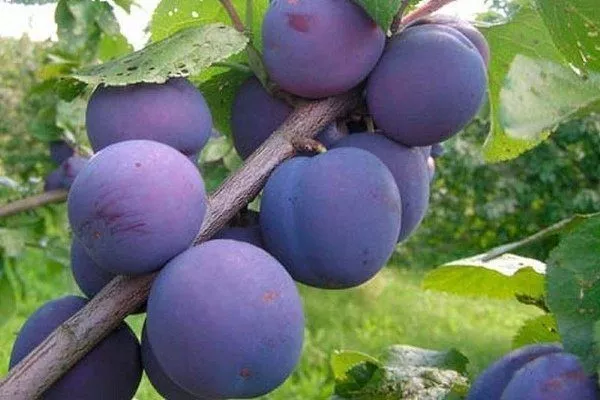
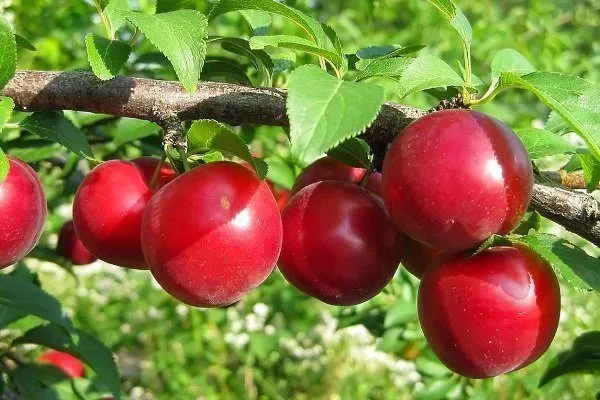
A partially self-fertile, early-ripening variety of domestic plum. Depending on the growing zone, the fruit ripens between the second half of August and early September. This is a medium-sized tree, reaching 3.5 m in height. The fruit ripens unevenly, and is prone to shedding. They are small, weighing no more than 15 g. The skin is pinkish-red with a slight waxy coating.
In favorable years, the yield is 25-40 kg. Ungrafted varieties can take a long time to produce fruit, as the first fruits only form after 5-6 years. Grafted varieties produce fruit in the 3-4th year. This frost-hardy variety can withstand temperatures down to -38°C, but is susceptible to clasterosporium.
It has excellent adaptive abilities and reproduces by root suckers.
Morning
Another variety of domestic plum, but with a medium ripening period. Fruits Morning variety The trees ripen unevenly in early August. The tree is medium-sized. The first fruits are harvested after four years. However, it doesn't bear fruit every year; it needs a rest period every four years.
The yield is high—over 30 kg. The fruits are medium-sized (25-40 g), oval in shape, with a weakly developed ventral suture. The skin is yellow-green, with a pink tan on the sunny side. The fruits are covered with a light waxy coating.
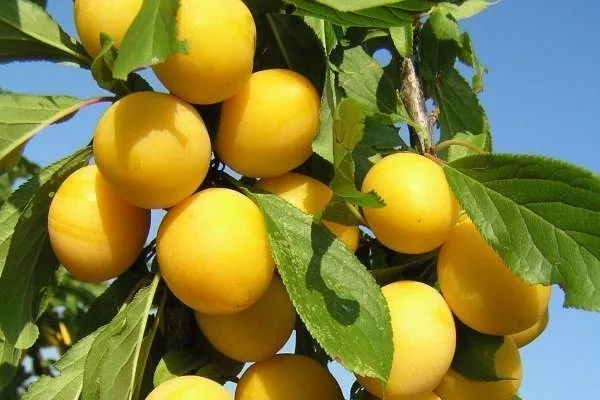
Ripe and unripe fruits are practically indistinguishable from each other.
Among the advantages, it should be noted that the plant has good regenerative capacity and disease resistance. However, the same cannot be said about the winter hardiness of flower buds. They can be damaged by severe frosts during the winter. Drought tolerance is average.
Blue Bird
A mid-season variety. The tree is medium-sized. It begins bearing fruit after 4-5 years. The fruits are medium-sized (26.5 g), blue in color, and covered with a thick bloom.
The plum tree produces a regular harvest, which begins in mid-August. The variety boasts high winter hardiness and disease resistance.
Yakhontovaya
Plums are partially self-fertile, meaning that to achieve a higher yield, pollinators must be planted nearby. Otherwise, yields will be lower.
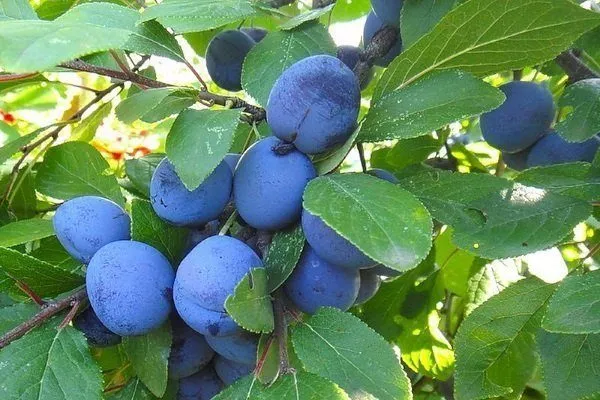
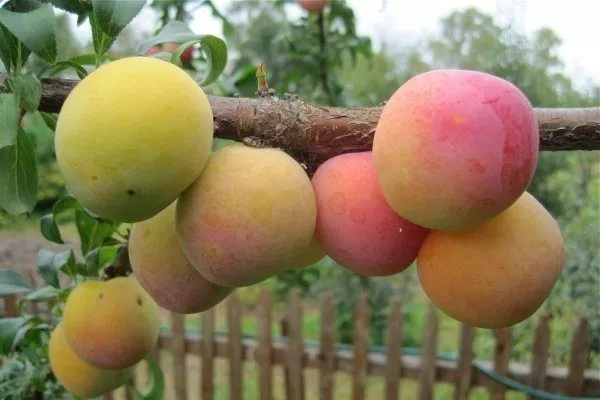
This plum is an early ripening variety—ripe fruits are harvested in late August and are recognizable by their bright golden color. A speckled blush appears across the entire surface.
The tree is vigorous and fast-growing, reaching a height of 5.5 m. However, by grafting it onto dwarf varieties, its height can be adjusted. The first harvest occurs after 3-4 years. Fruits weigh up to 30 g. The variety is winter-hardy, drought-resistant, and immune to fungal diseases.
Chemal blue
A mid-season Chinese plum variety. The tree is medium-sized. The crown shape changes with age: in young plants, it is pyramidal, becoming more spreading as the tree matures. The first fruits appear in the third year. They are quite small (up to 17 g), dark burgundy with a dense bluish bloom.
High winter hardiness. The variety has average resistance to fungal diseases, is susceptible to moniliosis and damping-off, and is drought-intolerant.
The video below provides an overview of the Chemalskaya Sinyaya plum:
Comparative characteristics of varieties
The table below presents the main characteristics of self-fertile plum varieties:
| Name of the variety | Recommended growing region | Productivity | Fruit size | The taste of the pulp |
| Alexey | Central | average | average | sweet and sour |
| Anna Shpet | North Caucasian, Lower Volga | high | large | sweet with a pleasant sourness |
| Bogatyrskaya | Lower Volga | high | large | sweet with honey notes |
| Hungarian Korneevskaya | Central Black Earth | average | above average | sweet |
| Moscow Hungarian (Tsaritsyn) | Central | above average | small | sweet and sour with bitterness |
| Viola | Middle Volga | high | average | sweet and sour |
| Zarechnaya early | Central Black Earth | above average | large | pleasant sweet and sour |
| Gigantic | suitable for almost all regions | high | large | sweet and sour, the further south the growing region, the sweeter the taste becomes |
| Kuban dwarf | North Caucasian | high | average | sweet and sour |
| Oryol Dream | Central Black Earth | average | large | sweet and sour |
| In memory of Timiryazev | Central, Middle Volga | high | average | from sweet and sour to bland |
| Memory of Finaev | Middle Volga | average | average | sweet and sour |
| Soviet Greengage | Central Black Earth, North Caucasian, Middle Volga | high | large | sweet and sour |
| Blue Bird | North Caucasian, Lower Volga | average | average | sweet and sour |
| Early ripening red | Northwestern, Central, Central Black Earth, Middle Volga | above average | small | sweet and sour, low in sugar |
| Morning | Central | high | average | sweet and sour |
| Chemal blue | West Siberian, East Siberian | average | small | sweet and sour with a tart taste |
| Egg blue | Central | average | average | sweet and sour, with a stronger sweetness |
| Yakhontovaya | Central | high | average | sweet and sour |
- ✓ Consider the climatic conditions of your region to select a variety with suitable winter hardiness.
- ✓ Pay attention to the variety’s resistance to diseases common in your area.
- ✓ Consider the size of the site and choose varieties with a suitable tree height.
Features of growing self-fertile plums
To ensure normal growth and fruiting, adhere to the following rules when caring for a self-fertile plum:
- Landing place. A sunny site should be slightly elevated or have a deep water table, protected from cold winds and drafts. It's best to plant seedlings in the spring to allow them time to take root.
- Top dressing. Self-fertile plums don't require much fertilizing—applying organic or mineral fertilizers once every 2-4 years is sufficient. The latter, such as superphosphate and potassium, are added to the soil by watering, after dissolving them in water.
- Crown formation. Pay special attention. When planting a tree, immediately shorten all shoots by 1-2 buds. The main shoot, depending on the height of the seedling, can be shortened by 30 cm.
Next, the one-year-old plum trees are trained to form a proper crown. Strong, sturdy branches are selected and formed into 3-4 tiers. Each tier should have 2 to 6 branches, with the lower tier having more branches and the number of shoots decreasing as you move up.
Further pruning is of a sanitary nature - diseased, broken, and dried branches are removed or cut off. - Watering. The plant prefers moist soil. Water the trees regularly throughout the growing season, once a month. If the weather becomes hot in summer, increase the frequency of watering. Water the plant in September, when rainfall is low, to allow it to store sufficient nutrients before winter.
In winter, shovel a lot of snow against the tree trunk to protect it from freezing. Protection from rodents will also be necessary if they are frequent visitors to your property.Overall, self-fertile plums are an excellent option for gardeners, especially those with limited space to plant a garden.
- ✓ The 'Alexy' variety is characterized by its low growth, which makes it ideal for small areas.
- ✓ 'Vengerka Korneevskaya' has an extended ripening period, which allows for a longer harvest.
- ✓ 'Soviet Greengage' requires protection from polystigmosis, which is important to consider when choosing a variety.
Self-fertile plum varieties are extremely popular among gardeners because they don't require additional pollinators. With the right variety and proper care, your plum orchard will reward you with abundant harvests and delicious fruit.