
The Soviet Greengage plum is a common variety in the Central Black Earth region, grown by gardeners for decades. It is prized for its early ripening, large fruit, excellent flavor, and suitability for commercial cultivation.
Who developed the variety and when?
The author is Russian breeder A. Ya. Voronchikhin, representing the Rossoshansky Zonal Experimental Horticultural Station. To create the new variety, the scientist crossed the Renklod Ulyanishchev plum with the Rekord plum. In 1986, her creation was approved for use.
The appearance of the tree
The Soviet Renklod fruit tree is characterized by its low growth rate. The tree reaches its maximum trunk height in its 15th year, reaching 3 meters at this age.
Other external characteristics of the plum variety include:
- broadly pyramidal or broom-shaped crown, sparse, with few leaves;
- smooth grey-brown bark with numerous longitudinal cracks covering the trunk;
- branches: straight, with short internodes and purple-brown color, with dense pubescence;
- foliage: oval or elongated-oval, with a pointed top and serrated edge, leathery, glossy dark green on the outside, hairy light green on the back, convex along the central vein;
- inflorescences consisting of 2 small white flowers with round corrugated petals.
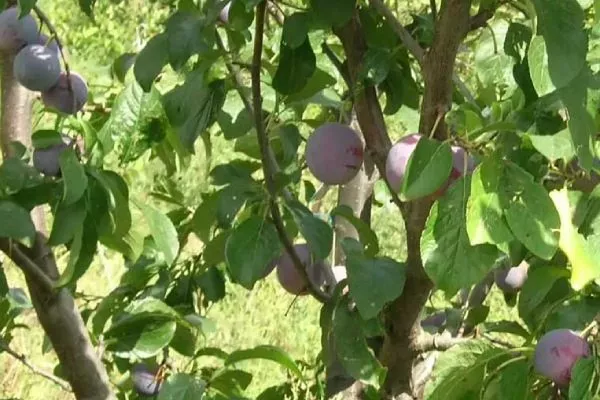
The tree has a rather unsightly appearance due to its sparse crown. Visually, it resembles an inverted broom. Because of its sparse foliage, the fruit receives plenty of light and warmth, allowing it to ripen faster than many other plum varieties.
Fruits and their taste characteristics
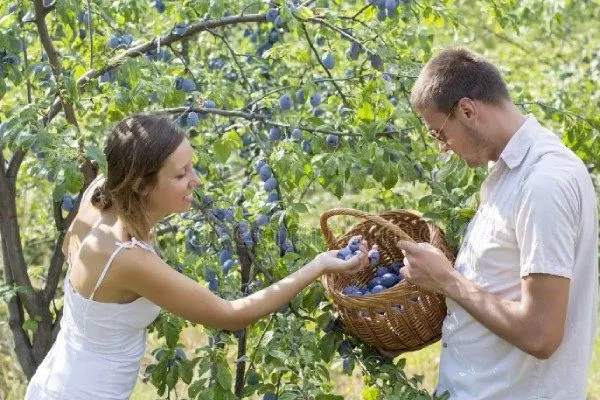
The Renklod Sovetsky plum harvest delights gardeners with its attractive appearance and high consumer qualities. The fruits are large and beautiful. They possess the following characteristics:
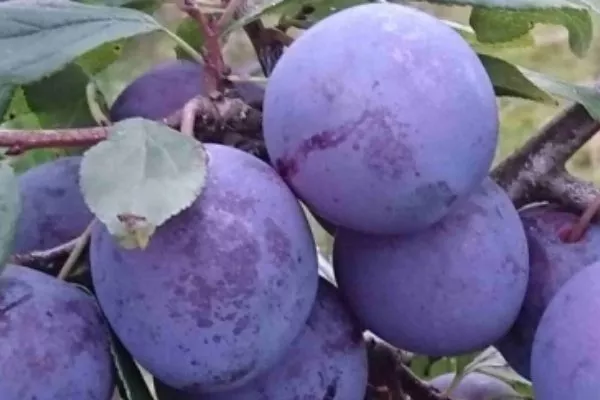
- weight - 41.5 g (there are also very large specimens, weighing 80 g);
- height/diameter - 4.3 cm/4.3 cm;
- typical for the Renclode variety, a regular spherical shape, for which flattening of the sides is not characteristic;
- the presence of a small but clearly defined abdominal seam on the side;
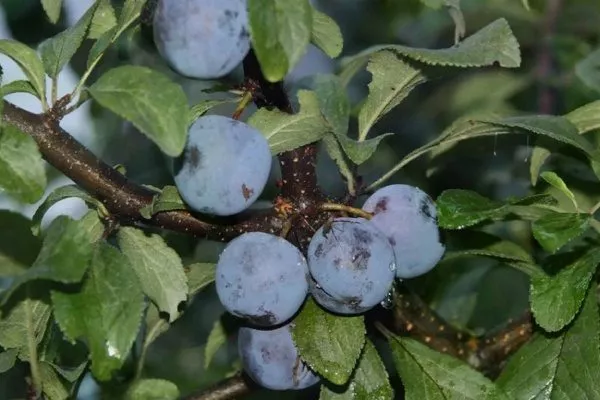
- cover skin with a dark purple color and a green undertone;
- the presence of a thick layer of bluish waxy coating on the surface of the skin;
- juicy, brownish-yellow flesh of a dense consistency (in overripe plums it softens and becomes loose);
- with a medium-sized oval stone that is easily separated from the pulp.
The flavor of the Soviet Renclode grape is excellent. Its flesh is sweet, but not cloying, with a pleasantly refreshing tart note. The variety's tasting score is 4.5 out of 5.
The plum's remarkable flavor is due to its balanced composition. The fruit's essential nutrients are as follows:
- sugars - 9.2%;
- titratable acids - 1.7%;
- vitamin C - 7.7 mg/100 g;
- pectins - 0.3%;
- dry matter - 14.1%.
Application
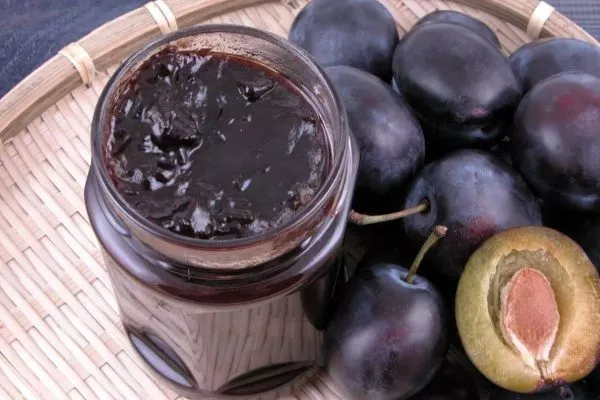
The fruit harvest is intended for fresh consumption. Plums are also suitable for processing into juice or puree, and for making jam, jellies, jelly, and summer desserts.
Self-fertility and pollinators
| Name | Ripening period | Disease resistance | Fruit size |
|---|---|---|---|
| Soviet Greengage | early | moderate | large |
| Blackthorn greengage | average | high | average |
| Early ripening red | early | high | small |
| Pulkovo Hungarian | late | moderate | large |
| Moscow Hungarian | average | high | average |
| Eurasia 21 | early | high | large |
The Soviet Greengage is self-fertile. Its trees produce fruit even when other plum varieties are unavailable in the garden. Experienced gardeners resort to cross-pollination to increase its yield and the fruit's consumer appeal.
They plant the following types of fruit crops nearby:
- Blackthorn greengage;
- Early ripening red;
- Pulkovo Hungarian;
- Moscow Hungarian;
- Eurasia 21.
Chinese plum is not suitable as a pollinator neighbor for Soviet Renclode trees.
Ripening period and yield
Plum trees of this variety bloom in May. They begin to produce fruit starting in their fourth year (sometimes as early as the fifth). The fruits ripen in the first half of August. Gardeners in the southern part of the Central Black Earth Region harvest them en masse on the 10th of the month. Each tree yields an average of 33.6 kg.
The yield of a variety depends on the age of the fruit crop:
- A plum tree that is 4-5 years old produces 9.7 kg of fruit;
- 33.6-40 kg – yield of a tree older than 8 years.
The maximum yield obtained during state trials was collected in the climatic conditions of the Central Black Earth Region: 50-60 kg/stem.
Growing regions
This plum variety has been approved by the Russian State Register for cultivation in the following regions:
- Central Black Earth;
- Middle Volga;
- North Caucasus.
The Soviet Greengage is most widespread in the Voronezh, Belgorod and Rostov regions of the country.
Frost resistance
This fruit crop pleases gardeners with its good winter hardiness. Its trees easily withstand temperatures down to -34°C. In snowy winters, they require no shelter (with the exception of young, fragile seedlings). In the southern Central Black Earth Region, plums are not susceptible to freezing, and their flower buds are not damaged during the winter.
How to plant correctly?
Plant the Renclode Soviet plum tree in your garden in spring or fall. Fall planting is preferred. Plant the tree before the cold weather sets in, giving it one month to establish roots and adapt to its new location. In risky farming areas, plant it in spring.
Select a location in your garden for growing a plum tree that has the following characteristics:
- sunny, located in the southern sector of the site;
- windless;
- protected from drafts;
- without stagnant moisture (groundwater should be at a depth of 1.5-2 m);
- with breathable, fertile soil that has a neutral acidity (if the soil in your garden is acidic, you will need to dilute it with dolomite flour, chalk, lime or wood ash before planting the plum).
- ✓ The depth of groundwater should be at least 1.5-2 m to prevent root rot.
- ✓ The soil should be pre-limed 2-3 months before planting to achieve neutral acidity.
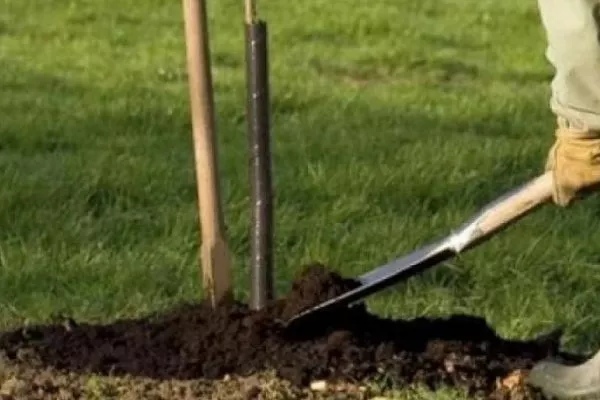
Dig a hole a few weeks (or months) before planting the plum tree. Measure 50x50x65 cm. If you plan to buy several seedlings, space the holes 3 m apart. Line the bottom with crushed rock, pebbles, or broken brick. Place a stake in the center.
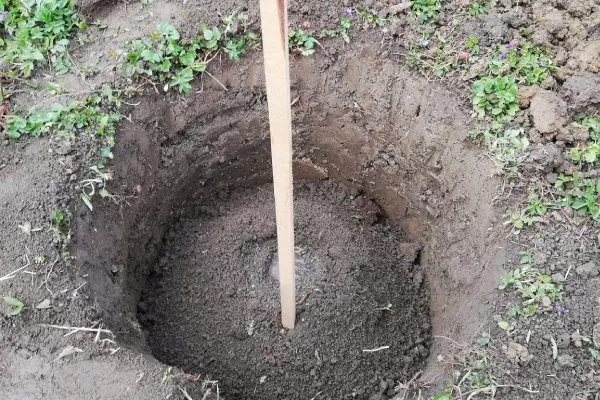
Fill the hole 1/3 full with a soil mixture consisting of the following components:
- topsoil (soil taken from the hole);
- organic matter: humus, compost;
- river sand;
- mineral fertilizers (give preference to Superphosphate).
Soak the seedling roots for 1.5 hours in water with Kornevin added. Then, proceed with planting immediately. Follow these steps:
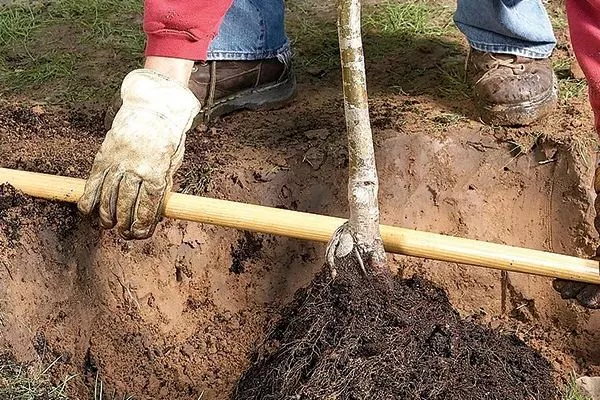
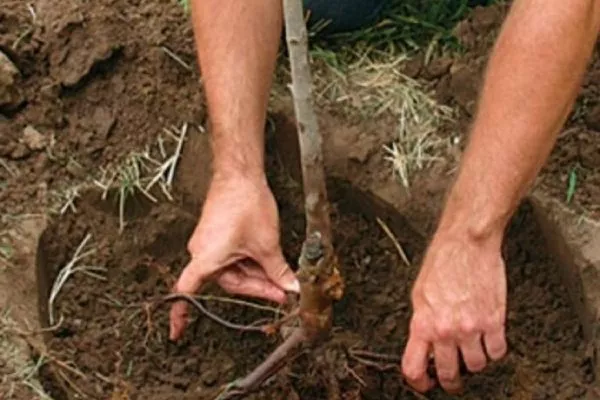
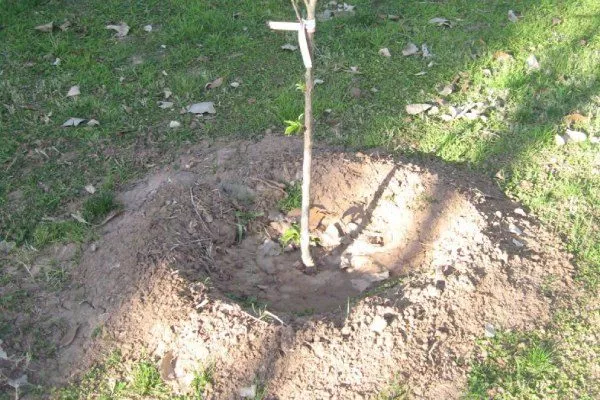
- Place a plum seedling on a mound of soil mixture consisting of garden soil, mineral and organic fertilizers so that its root collar rises above the ground surface by several centimeters.

- Straighten out its roots.
- Cover them with the top fertile layer of soil without fertilizers.
- Firm the soil under the tree. Create a soil ridge around the edge of the tree to prevent water from spreading during watering.
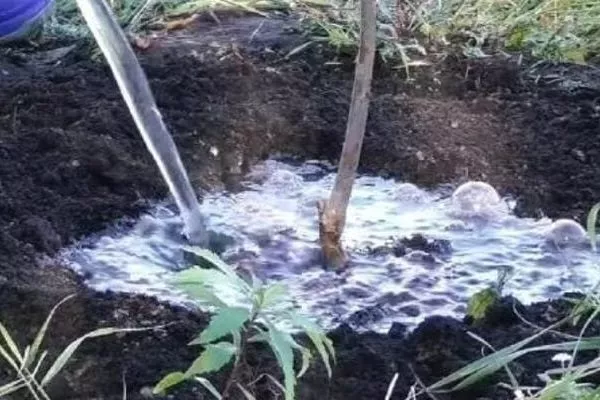
- Water the plum tree generously. Use 30-40 liters per 1 seedling.
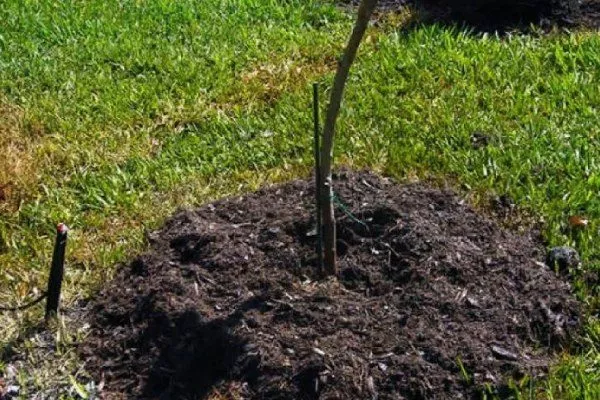
- Mulch the tree trunk area with a 5 cm thick layer of humus or mild peat. You can also use straw or grass clippings as mulch.
Tree care
Carry out the necessary tree care procedures to ensure proper growth and development, as well as abundant fruiting:
- pruning;
- watering;
- application of fertilizers;
- protection from pests and diseases;
- loosening the tree trunk circle;
- removing weeds under a plum tree;
- installation of supports under branches during the period of fruit ripening.
Watering
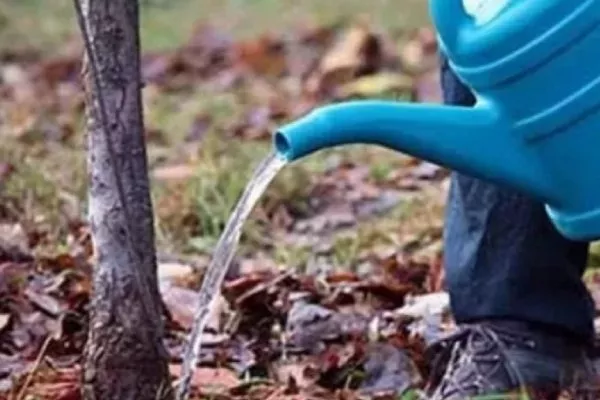
Moisten the soil under the tree 3-5 times during the season, using 30-40 liters of water per square meter of the tree's trunk circle. Watering intensity depends on the weather, the age of the plant, and the ripening time of the harvest. Water the plum tree more generously during the following periods:
- after flowering;
- during the formation of fruit ovaries;
- after the formation of the stone is complete (during this period the fruits begin to actively grow and gain weight).
After moistening the soil around the tree trunk, mulch it with sawdust, straw, or pieces of cardboard. This will prevent rapid moisture loss. It's also a good idea to loosen the soil around the plum tree, remove weeds, and remove root suckers 4-5 times during the summer season.
Top dressing
For the first two years, the plum tree receives sufficient nutrients from the planting hole. Afterward, fertilize the fruit tree, alternating mineral fertilizers containing nitrogen, phosphorus, and potassium with organic matter.
Follow the fertilizing schedule:
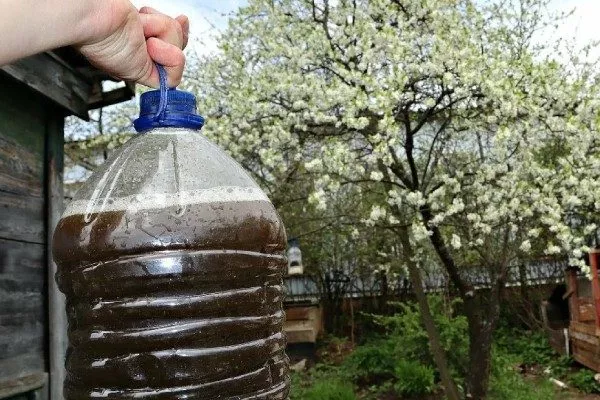
- in April, 10 days before flowering use urea for the tree (the consumption rate is 15-20 g per 1 sq. m of the trunk circle) or water it with slurry diluted with water in a ratio of 1:3;
- after the plum blossoms in May add double superphosphate (18-20 g/sq.m), potassium sulfate (30 g/sq.m), urea (15 g/sq.m);
- at the time of fruit ripening water the tree with a urea solution (24 g per 10 l of water) with the addition of nitrophoska (45 g) or a solution of bird droppings (1:10);
- after harvest Feed the fruit crop with Superphosphate (51 g/sq.m), potassium sulfate (24 g/sq.m).
To improve the fertility of the soil where the Redgold tree grows, use green manure. Sow them around the plum tree's trunk every 2-3 years. Use mustard, phacelia, and vetch. Sow them in July and incorporate them into the soil in the fall (when they bloom).
Trimming
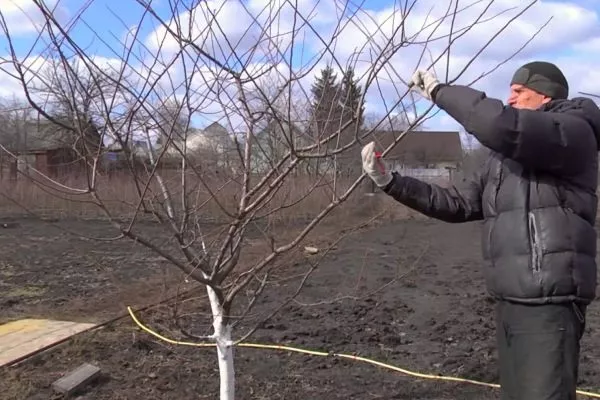
The Soviet greengage requires careful formative pruning. After spring planting, shorten the seedling to 0.8-0.9 m. Next, try to form a sparse, tiered crown. Instead of skeletal shoots, leave only semi-skeletal ones to make it easier to replace dead branches with new (young) ones.
Form the crown of a plum tree, following these rules:
- make the top open for better illumination of the interior space of the crown;
- When the plum tree reaches a height of 2.5 m, bend the central conductor, directing it to the east side, and tie it to a branch located below;
- branches growing inside the crown should be cut “to the ring”, remove all branches growing at an acute angle;
- one-year-old shoots whose length exceeds 70 cm should be shortened by a third;
- Do not shorten annual growth that has not reached 70 cm in length;
- thin out the overgrown shoots;
- shorten the remaining branches by a third of their length;
- do not shorten new growth (if the crown thickens, it is better to completely remove it “to the ring”).
Diseases and pests
The variety exhibits resistance to many fruit crop diseases, particularly moniliosis and clasterosporium (moderately resistant). During years of widespread fruit crop infestation, polystigmosis (Polystigmosis) significantly affects the fruit crop.
With insufficient care and unfavorable growing conditions, plum trees suffer from fungal infections and pest infestations (codling moths, aphids, mites, sawflies, leaf rollers).
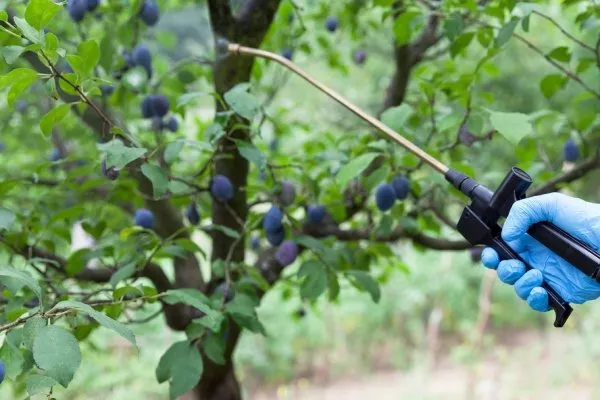
Preventative crown treatments can help prevent this problem. Follow these schedules:
- in spring (before buds open) Spray the crown with a solution of N30 (500 g in 10 l of water) to protect the tree from fungal infection and parasite infestation: California scale insects, aphids, spider mites, rose leaf rollers, and fruit moth caterpillars;
- during the period from bud break to the end of flowering Spray the tree on the white buds with Fufanon, Alatar, or Aktara to control sawfly larvae, spider mites, aphids, and leaf-eating parasites. Add 100 g of sulfur to the insecticide solution to prevent infection of the fruit crop;
- in summer Carry out 3-4 preventative treatments of the tree with Fufanon or Fitoverm, keeping an interval of 14 days between treatments, to protect the plum from codling moth, mites, and fungi.
In the fall, collect all fallen fruit, dry leaves, and other plant debris from the tree trunk area. Remove them from your garden and burn them. They may contain parasites and pathogens.
Storage of the harvest
Pick plums from the branches as they ripen. Collect any rotten ones in a separate container and destroy them. Do not leave them on the tree. Harvest carefully, being careful not to remove the waxy coating from the fruit. Pick the fruit with the stems attached to improve shelf life.
Store the harvested fruit in the refrigerator (in the crisper drawer). It will stay fresh for up to 2 weeks.
Advantages and disadvantages
The Renclode Soviet variety is popular with domestic gardeners due to its numerous advantages:
The variety also has several disadvantages:
Reviews
The Soviet Greengage plum is a popular variety among Russian gardeners, developed by a Russian breeder nearly 40 years ago. It remains popular due to its self-fertility, high yield, large fruit size and excellent flavor, as well as its excellent storage and transportability.