
The Renclode Kolkhozny plum is renowned for its frost resistance, good productivity, and excellent taste. Since its introduction, it has gained popularity among many gardeners due to its ease of care and resistance to various pests and diseases. By following proper cultivation practices, you can reap bountiful harvests.
Historical background
It was bred by the famous breeder I. V. Michurin in Russia in 1899, and he obtained the seedling in 1890. The first fruit appeared only ten years after planting.
It is a hybrid obtained by crossing a South African variety with local varieties—the blackthorn and the green renclode. It has been included in the State Register of Breeding Achievements since 1947.
Habitat
To optimize the highest yield, it is recommended for planting in the following regions: Central (Kaluga, Lipetsk, Oryol regions), Northwest (Leningrad, Pskov regions).
Description of the species
Before growing the crop in your garden, it's important to carefully familiarize yourself with the variety's characteristics and features. Kolkhozny Renklod has many positive qualities.
What does a tree look like?
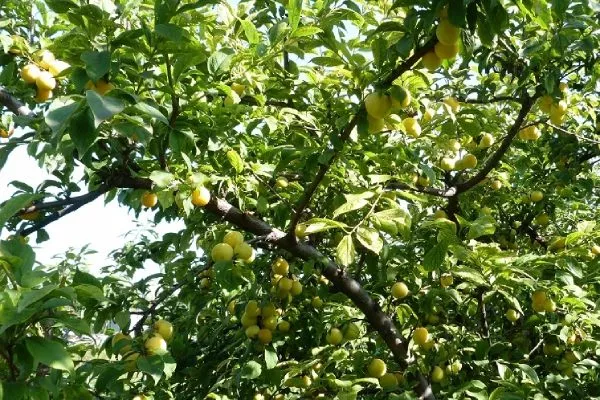
The plant reaches a height of 2.5-3 m. It has moderate to medium vigor, with a rounded, spreading crown that becomes more flattened as fruiting begins under stress. The bark is smooth and gray. The density of branches and foliage is moderate. The shoots are reddish-brown.
Leaves and flowers
The leaves are light green, oval-elliptical in shape, with wavy edges. They are medium-sized, with a flat leaf blade. The flowers are delicate, small, and milky white.
Fruit
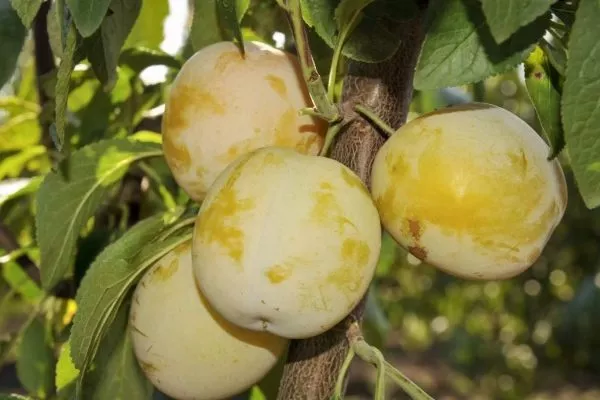
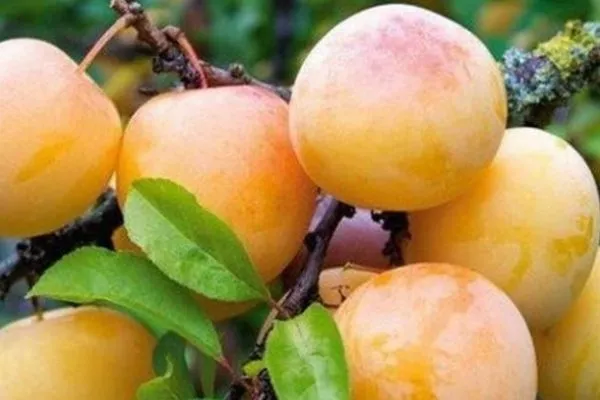
The fruits are yellow-green with a bluish-gray waxy coating. Distinguishing features:
- Weight - varies from 18 to 24 g.
- Bone - easily separated.
- Pulp – juicy, moderately dense.
- Peduncle – light green in color, 2 cm long, attached rather weakly.
- Peel - with a slightly bitter taste.
- Taste - sweet and sour.
Application of fruits
With their sweet and tart flavor, plums are ideal for fresh consumption. What are the fruits used for?
- Conservation. They are used to make preserves, compotes, and jellies. Their natural sweetness and aroma make these preserves especially delicious.
- Bakery. Add to pies, muffins and other desserts, giving them juiciness and rich flavor.
- Drinks. They make juices, liqueurs and cordials that are very refreshing on hot days.
- Culinary dishes. They are used in various recipes, including meat dishes, where they impart an interesting sweet and sour taste.
Fruits are used in the production of various food products such as yoghurts and desserts.
Frost resistance, drought tolerance
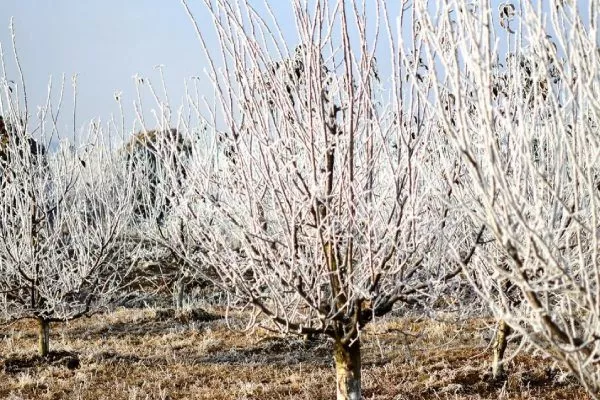
The tree is frost-resistant, and normal winter conditions do not threaten its productivity. However, in Russia's harsh winters, extremely low temperatures can cause weak branches to freeze and die, and partial freezing of the wood can occur, but flower buds remain unharmed.
Sudden temperature fluctuations don't cause significant damage to the plant. Even if significant losses occur, it can recover within 1-2 years and produce a good harvest again. The crop is resistant to sunburn and can withstand prolonged heat and drought.
Pollination and pollinators
| Name | Disease resistance | Ripening period | Fruit size |
|---|---|---|---|
| Hungarian Moscow | High | Average | Average |
| Hungarian Pulkovskaya | Average | Late | Large |
| Large-fruited blackthorn | High | Early | Small |
| Eurasia 21 | Average | Average | Large |
| Early ripening red | Low | Early | Small |
| Blackthorn greengage | High | Late | Average |
| Volga beauty | Average | Average | Large |
This variety is self-sterile and requires the presence of pollinators. For planting nearby, choose the following varieties:
- Hungarian Moscow;
- Hungarian Pulkovskaya;
- Large-fruited blackthorn;
- Eurasia 21;
- Early ripening red;
- Blackthorn greengage;
- Volga beauty and others.
Yield indicators, fruiting and harvesting times
It's an early-bearing variety, and fruiting begins in the fourth to fifth year of life. The hybrid has good productivity, and this depends largely on the plant's age:
- 6 years – about 6-8 kg;
- 8 years – 9-18 kg;
- 11 years – up to 39-51 kg.
The fruits ripen around August 20th to 25th and it is best to harvest them in stages, depending on the degree of ripeness.
Storage
To ensure long-lasting freshness, pick plums with the stems attached. When harvesting, it's important to preserve the waxy coating, which protects them from adverse environmental factors. Use only undamaged plums. After harvesting, sort them and carefully arrange them in spacious wooden crates.
Store the harvest in a dark room with a temperature of approximately 2°C. The maximum storage period, if all recommendations are followed, is one month. Remember to check the fruit periodically for rot.
Landing
When choosing a seedling, inspect it carefully: the roots should be alive and strong, and the trunk should be straight and undamaged. Mechanical damage may indicate fungal diseases.
- ✓ The presence of live, white roots at least 10 cm long.
- ✓ Absence of mechanical damage and signs of disease on the trunk and roots.
Follow these recommendations:
- The best time for cultivation is mid-spring, which ensures the best chance of rapid rooting. Fall planting is possible, but the likelihood of successful overwintering is reduced (if necessary, it can be well covered).
- Choose a quiet, well-lit location, as this plant prefers plenty of light for good yields. Prefer a southern exposure, avoiding shade from tall trees. At least two pollinator varieties should be nearby.
- The plant does not tolerate strong winds and drafts, so place it close to low buildings for protection, but not in the shade.
- Criteria for selecting soil for planting: good water and air permeability, acidity within 6.5-7 pH, high fertility.
- Groundwater must be deep enough to prevent root rot.
- Prepare the hole in the fall or 2-3 weeks before planting. The hole size is 50 x 80 cm. The distance between trees should be at least 3 m.
Step-by-step algorithm:
- Mix the removed soil with 7-10 kg of humus or compost, 100 g of wood ash, and 50 g of lime (if needed to reduce acidity). Fill the hole, first driving a stake into the south side to support the seedling.
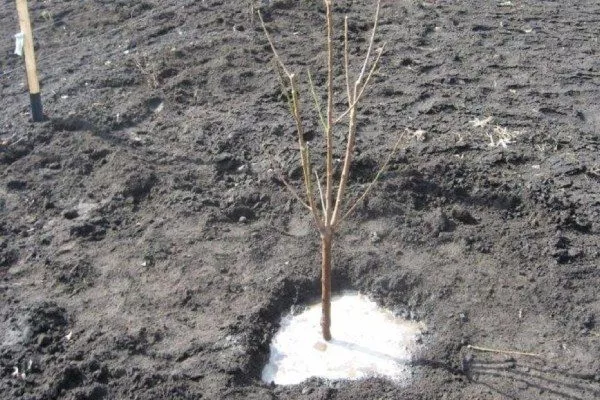
- Make a small mound in the center of the hole and place the plum tree on it, spreading the roots evenly. Carefully fill in the remaining soil mixture, making sure to fill all the gaps. The root collar should be 5-6 cm above ground level.
- Dig a trench for watering around the seedling, about 40 cm deep, and mulch the soil.
Water the seedling generously, and in dry weather, repeat the watering procedure as needed.
Caring for the crop
Caring for plum trees is crucial to ensure healthy growth and abundant fruiting. Adhering to proper agricultural practices will help prevent potential problems, ultimately guaranteeing a bountiful harvest.
Watering
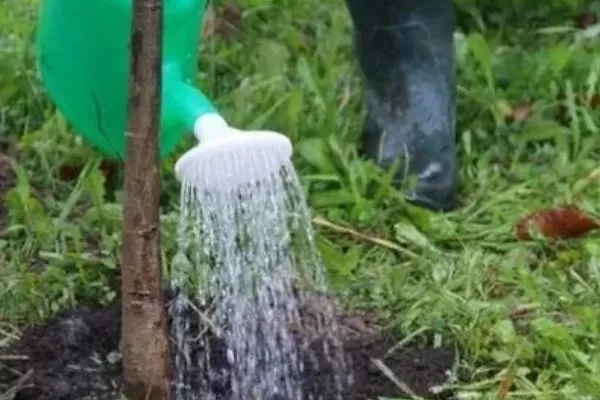
The Kolkhozny Renklod is a variety that requires adequate moisture, as both the quality of the fruit and the overall health of the plant depend on regular watering. Water until the buds begin to set, and thoroughly loosen the soil before each watering.
A young seedling requires 30-50 liters of water, while a fruiting plant requires 8-10 liters. Mulch the soil to prevent moisture evaporation. A prolonged drought can cause leaves to turn yellow and fall off.
Trimming
Prune in spring or summer to avoid damaging the plant. In the first year after planting, shape the tree's crown by identifying the main branches, leaving at least 40 cm between them. The main shoots should be at the same angle.
Over the next three years, prune the main branches and continue shaping the crown, and by the fifth year, it will be fully formed. From then on, only sanitary pruning will be necessary. Maintain the crown's density and treat the cuts with garden pitch after each pruning.
Loosening
Loosen the soil both before and after each watering. Clear the area around the trunks of weeds and undergrowth, as they can negatively impact yield. Repeat this process at least five times per season.
Top dressing
During the first year of life, the tree does not require fertilizer. Three times a year (in fall or winter), add organic matter such as compost or humus. In spring and summer, use nitrogen-containing fertilizers to stimulate growth. Fertilizers containing boron, iron, potassium, and calcium improve the tree's health.
Preparing for winter
The plant is frost-resistant and rarely requires winter shelter, except for young seedlings. Available materials, such as sawdust, spruce branches, straw, or dry grass, are suitable for protection.
Diseases and pests
The crop exhibits good insect resistance and is rarely susceptible to fungal diseases, including gummosis. For prevention, carry out seasonal measures:
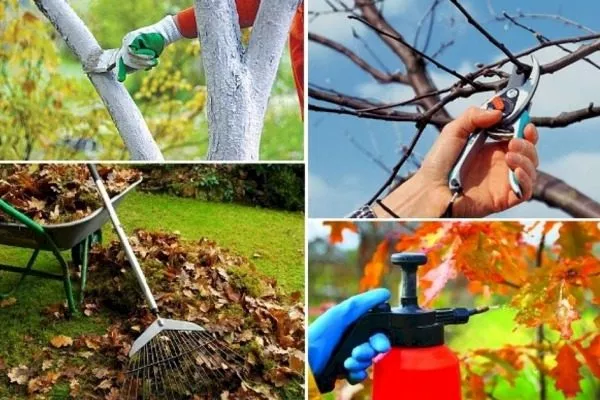
- In spring and autumn, spray with Bordeaux mixture or another fungicide before the leaves open.
- In autumn, apply urea to prevent clasterosporium.
- Treat the cuts with lime milk with the addition of copper sulfate after pruning.
Perform all chemical treatments no later than a month before fruiting, and preferably even earlier. Common pests include sawflies, codling moths, and aphids, which can infest the fruit and bark of the tree. Remove damaged fruit and loose bark promptly.
To control insects, use:
- Benzophosphate 10% against sawfly in autumn.
- Insecticide Actellic or soap solution at the initial stage to combat aphids.
- Chemical insecticides for the destruction of codling moth.
Carry out treatment before flowering or after fruiting, strictly following the instructions and observing safety rules.
How to propagate plum?
There are several ways to increase the number of seedlings in your garden. Use popular methods:
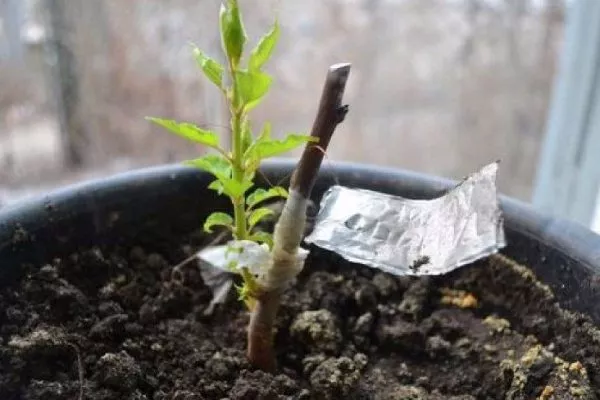
- Cuttings. In early summer, select healthy, one-year-old shoots. The cuttings should be 15-20 cm long with 2-3 nodes. Root them: place them in water or plant them in moistened soil, covering with plastic to create a greenhouse effect. The cuttings will root in a warm location, at temperatures of 20-25°C. Roots will appear in 2-4 weeks.

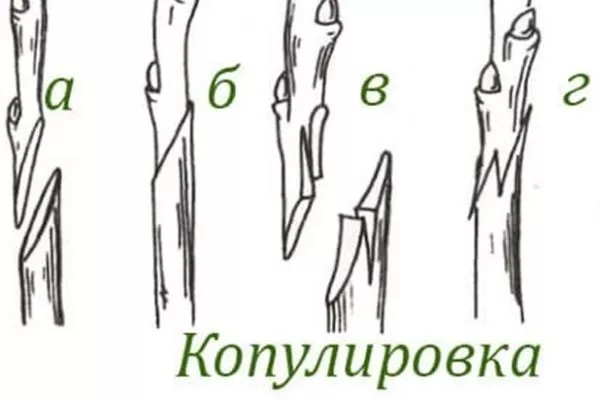
- Graft. Choose disease- and pest-resistant varieties, such as European plum or blackthorn. Use grafting techniques. Perform this procedure in the spring, when the sap begins to flow. Treat the grafting area with garden pitch to protect against infection.
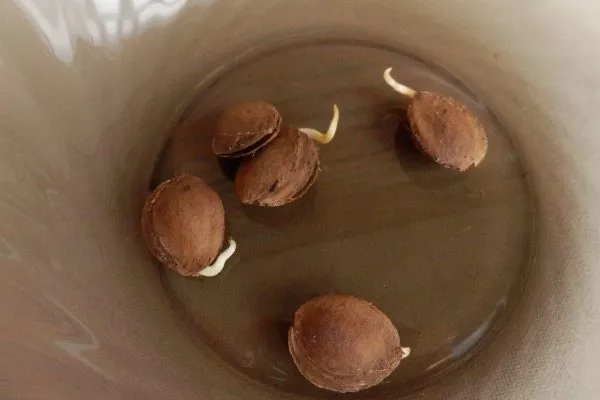
- From the bone. After harvesting, remove and dry the seeds. Before sowing, stratify them: store them in the refrigerator at 0-5°C for 2-3 months to improve germination. Plant them deep in prepared soil in early spring. The first shoots may appear within a few weeks.
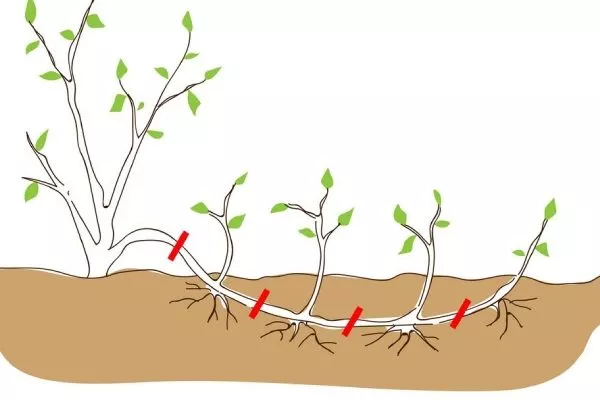
- By layering. Select a healthy, flexible shoot and bend it to the ground. Cover it with soil, leaving the tip exposed. Rooting occurs within one to two seasons, after which detach the shoot from the main plant and transplant it to its permanent location.
- ✓ The substrate temperature should be maintained at +20-25°C for optimal root formation.
- ✓ The air humidity under the film should be at least 85% to prevent the cuttings from drying out.
Each of these methods has its own characteristics, so the choice of propagation method depends on conditions and personal preferences.
Positive and negative qualities
Carefully study the advantages and disadvantages of the crop to avoid potential difficulties. The Kolkhozny Renclode has many advantages:
Among the disadvantages of the crop, gardeners note the shedding of fruits during late harvesting, the formation of abundant shoots near the trunk, and self-sterility.
Reviews
The Renclode Kolkhozny plum is an excellent choice for both beginner and experienced gardeners. The plant boasts excellent varietal characteristics and numerous positive qualities, making it highly valued in our country. By following basic agronomic guidelines, you can achieve high yields and maintain the plant's health for many years to come.