
The Renclode plum is a group of varieties belonging to the Prunus domestica species. The main distinguishing feature of all Renclode plums is their fruit's taste, which has led to their popularity. Renclode plums, with their pleasant dessert flavor and attractive appearance, are consistently popular with consumers.
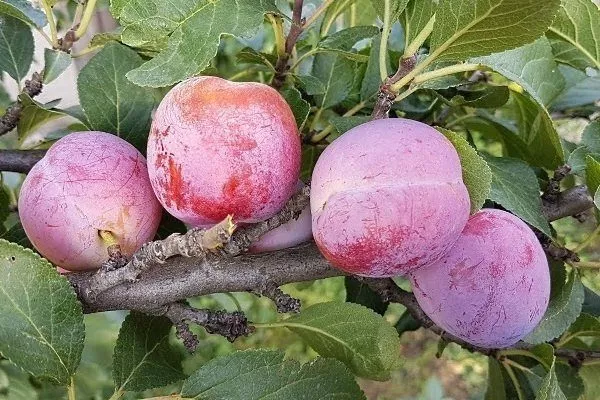
Origin of Renclode
Greengage, like other plums, is a product of natural selection of blackthorn and cherry plum. It is an old variety, known to Western European gardeners since the 16th century. Greengage is considered to have originated in France. The name comes from Queen Claudine (Claude). The literal translation of Reine Claude (French) is "Queen Claude."
It is believed that all greengages originated with the Greengage, one of the most ancient varieties. However, this has not been definitively established.
Description of the species
Common characteristics of all greengages:
- Tree. They reach a height of 5-7 m. The crowns are rounded and spherical. The branches are initially reddish-brown, turning gray as they mature. The leaves are slightly hairy and veined.
- Fruit. The shape is spherical or ovoid. The diameter is up to 4-5 cm. The taste is sweet, dessert-like. Under the thin skin is tender, juicy, "marmalade-like" flesh. The skin has a thin waxy coating that rubs off with a light touch. The coating is rough to the touch. Weight is from 10 to 50 g, depending on the variety. Varieties come in a variety of colors, including light green, yellow, burgundy, blue, dark purple, and other shades.
Advantages and disadvantages
Advantages of the Renklod plum:
- Excellent taste characteristics and visual appeal of the fruits.
- Good agrotechnical characteristics – frost resistance, immunity, drought resistance.
- High yield.
- High early fruiting – trees bear fruit in the 3rd-4th year after planting.
- Undemanding to soil composition.
- Resistance to fungal infection.
- Universal purpose of fruits.
- The variety of flavors and quality characteristics of the fruits is varied – there are sweet, sour, juicy, aromatic varieties, varieties with super-tender flesh, and others.
Flaws:
- Most varieties are self-sterile – in order for the trees to bear fruit, they need additional pollinating varieties.
- Fruiting may be interrupted, but there is no strict periodicity.
- Dependence of crop yield on external conditions – weather, fertilizer, etc.
- Tendency to root rot in high humidity conditions.
- Vulnerable to drafts.
- Not all varieties have high frost resistance - many freeze at minus 30 degrees.
- When plums are overripe, they fall off and spoil – it is important to harvest the crop on time.
- If the weather is damp or, on the contrary, there is drought, the fruits grow small.
- To keep the tree's size within the specified limits, it has to be pruned regularly.
- The branches are fragile – they break easily due to the weight of the fruit, under the weight of snow, and under the influence of the wind.
Growing regions
The Renclode family of varieties is widespread in regions with a wide range of climates. They are found in sunny Greece, Italy, and Spain, and they also grow in central Russia, while frost-hardy varieties grow in Siberia and the Urals. Although Renclode is a heat-loving variety, Russian gardeners actively grow it—dozens of varieties in this group are zoned for cultivation in Russia.
Greengage thrives best in the southern Russian climate, where this group of varieties is most common. Greengage is not recommended for growing in areas with winter temperatures below -25°C.
What varieties of Renclode are there?
The Renclode group includes dozens of cultivars, each with distinct tree and fruit appearance and agronomic characteristics. Among the Renclode cultivars, there are cultivars with varying ripening times.
When choosing a Renclode, consider not only the taste, color, and size of the fruit, but also the variety's ability to grow and bear fruit in specific climate conditions. Let's look at several popular Renclodes.
| Name | Tree height | Fruit weight | Ripening period |
|---|---|---|---|
| Presidential | 4 m | 55-60 g | Mid-September |
| Green | 6-7 m | 20-35 g | August |
| Tambovsky | 4 m | 20 g | Beginning of September |
| Tenkovsky | 3 m | 15-20 g | Mid-September |
| Karbysheva | 4.5 m | 35-50 g | The second half of August |
| White | 4.5 m | 30-40 g | End of August |
| Yellow | 5-6 m | 20-30 g | August |
| Blue | 3 m | 35-40 g | August |
| De Beauvais | 4 m | 40-50 g | September |
| Soviet | 3 m | 40 g | End of August |
| collective farm | 3 m | 20 g | Mid-August |
| Early | 6 m | 40-50 g | Beginning of August |
| Ulena | 6 m | 45 g | End of August |
| Leah | 3 m | 12 g | Late August – early September |
Presidential
This late-ripening variety is partially self-pollinating, meaning it requires pollinators. The fruits ripen in mid-September. They bear fruit very early, in the third year after planting. The trees are medium-sized and fast-growing, reaching heights of up to 4 m. Their winter hardiness is sufficient for cultivation in temperate climates. Yields gradually increase, from 15 to 45 kg of plums per tree. Recommended pollinators include: Hungarianand Edinburgh plum.
The fruits are round-oval, slightly flattened. They weigh 55-60 g and have a thick waxy coating. The flavor is sweet and sour. The flesh is thick, yellow-carrot-colored. The pit is oval, easily separated from the flesh. The skin is dense, even rough, making the fruits easy to transport over long distances. The plums retain their shape well after canning.
Other advantages of the "Presidential" variety include winter hardiness, early fruiting, regular fruiting, and good transportability. Disadvantages include susceptibility to many diseases and vulnerability to pests. If the summer is cool and damp, there's a risk that the fruit won't ripen.
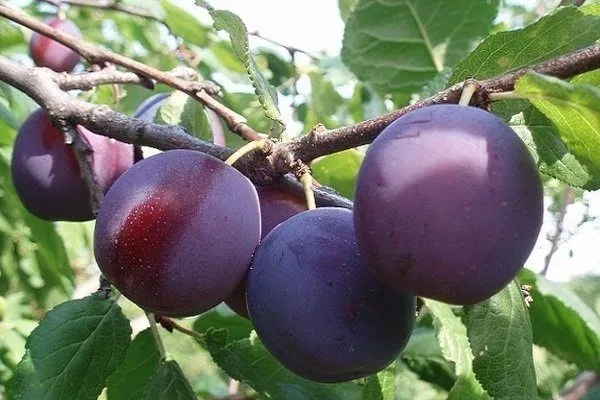
Green
This ancient variety is considered the progenitor of all other greengages. It is a recognized standard of French selection. The trees are tall, reaching 6-7 meters in height. The crown spreads to 6-7 meters. The trunk bends repeatedly during growth. Final ripening occurs in August. The variety is self-sterile and requires pollinators, such as the greengage Altana, Hungarian, Victoria, and others. The yield is high – 30-50 kg per tree.
The fruits are not particularly attractive, but they are very sweet and juicy. They weigh 20-35 g. They are spherical, slightly flattened. They are greenish-yellow in color, and the thin skin is dotted with numerous spots. The flesh is juicy, sweet, and translucent.
This variety is easy to grow in almost any soil. However, it does not tolerate high humidity, as it can rot. Its immunity is average. It prefers open space and good light. It can be propagated by seeds, as the tree retains all its varietal characteristics. It can also be propagated by suckers and basal cuttings.
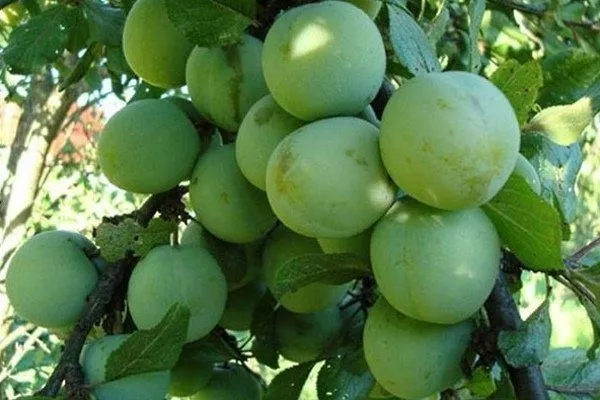
Many summer residents don’t know that on their plots there is an old variety of Green Renclode – they call it “green plum”.
Tambovsky
This variety was created by crossing the Green Renclode and the Red Skorospelka. Trees grow up to 4 meters tall with a spreading crown. They are best planted next to Kolkhozny or Green Renclode, Red Skorospelka, and other varieties. A single tree yields 15-20 kg of fruit. Ripening occurs in early September. The first harvest occurs in the fourth year after planting.
The fruits are not particularly large, weighing about 20 g. They are oblong in shape and dark purple in color. They have numerous subcutaneous spots. The surface is covered with a thick, bluish-gray coating. The yellow-orange flesh has a slightly tart flavor, with less sweetness than acidity. The fruits are primarily used for canning and winemaking.
This variety is frost-hardy compared to other greengages. It tolerates temperatures down to -30°C. However, this frost resistance mostly affects the flower buds; the shoots are damaged by frost at lower temperatures. A drawback is its vulnerability to clasterosporium.
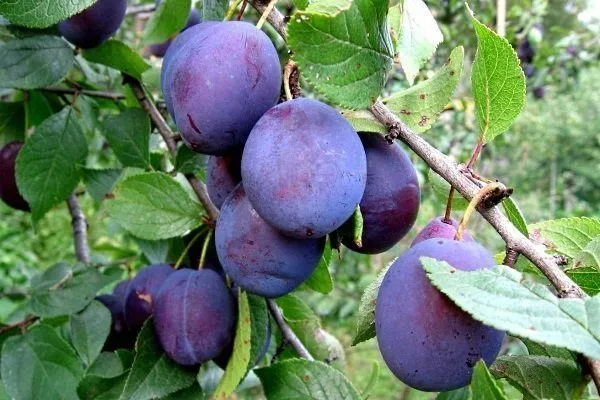
Tenkovsky
Another name for this variety is Tatar. The tree is low-growing, about 3 m tall, with a neat, spherical, and not too dense crown. The first harvest occurs in the 4th or 5th year of growth. The fruits ripen by mid-September. Recommended pollinators include Sineglazka, Eurasia 21, Skorospelka Krasnaya, Tatarskaya Zheltyaya, and damsons.
The plums are round and purple in color, with a bluish tint on the skin. They weigh 15-20 g and are asymmetrical. The flesh is grainy and loose, with a yellowish tint. The flesh is not juicy and has a sweet and sour taste.
Frost and drought tolerance are average. Risks include rust, clasterosporium leaf spot, and slimy sawfly infestations. Spring frosts often damage flower buds.
Karbysheva
This variety was developed by Ukrainian breeders. It ripens in the second half of August. The tree is fast-growing and requires regular pruning. It is a self-sterile variety; its best pollinators are Early Renklod and Hungarian Donetsk.
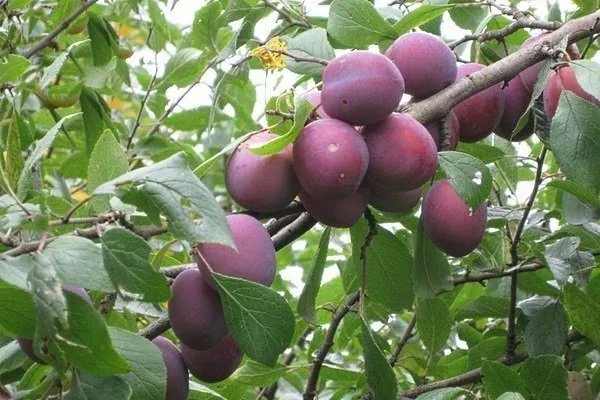
The plums on young trees grow large, weighing around 50 g. As the tree ages, the plums become smaller, weighing around 35 g. The plums are spherical in shape, with a dense, bright red skin. When overripe, the plums turn slightly purple with a bluish tint. The flesh is yellowish-brown, with a dessert-like flavor and a pleasant aroma. The tasters' rating was 4.8 points.
Frost resistance is average, withstanding temperatures down to -20°C. In severe frosts, the tree freezes. A disadvantage of this variety is its poor transportability.
White
This variety ripens in late August. The tree is medium-sized, up to 4.5 m. It bears fruit early, producing its first fruits as early as the third year after planting. Self-sterile, pollination is required. Suitable varieties include Green Renclode, Altana, and Donetsk Hungarian.
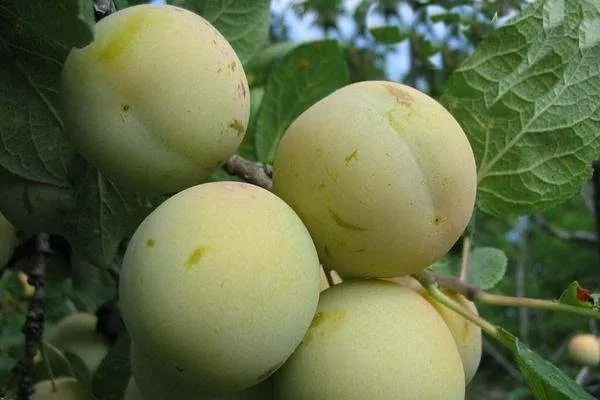
The matte white fruits have excellent flavor and clear juice. Their light color gives them a unique appearance. The flesh is tender and colorless. The plums weigh 30-40 g and are very tasty.
The variety is highly frost-resistant and tolerates prolonged droughts well. It can withstand temperatures down to -30°C. Fruits of this color tend to produce unsightly preserves, so this variety is more often used fresh.
Yellow
Trees reach 5-6 m in height and grow very quickly. The crowns are wide and not dense. The yield from a mature tree is 20-30 kg, while from a young tree it's 10 kg. Mirnaya, Tula Black, and Egg Blue plums are used as pollinators. Fruiting begins in the fourth year after planting.
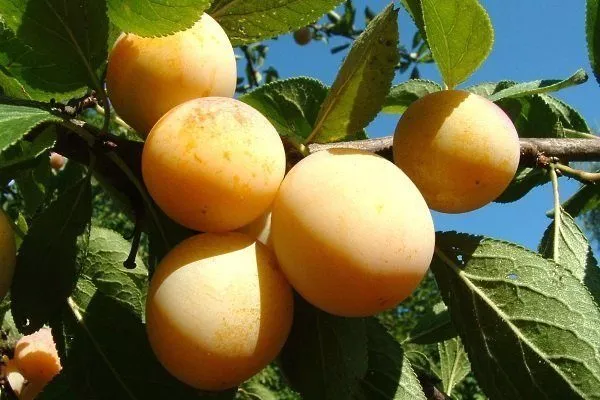
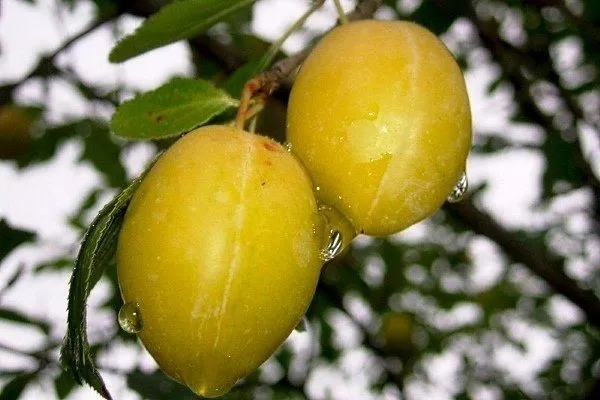
The fruits are a pleasant yellow color, with a slight green tint. They are almost perfectly spherical, only slightly flattened on the sides. The flesh is very juicy, with a sweet and sour taste. Tasting score: 4. Weight: 20-30 g. The skin is covered with a thick waxy coating. This variety leads greengage varieties in vitamin C content.
The fruits are easily transported. Their winter hardiness is the highest for greengage varieties, down to -25°C. They are suitable for growing in the Moscow region and throughout the central part of the Russian Federation.
Blue
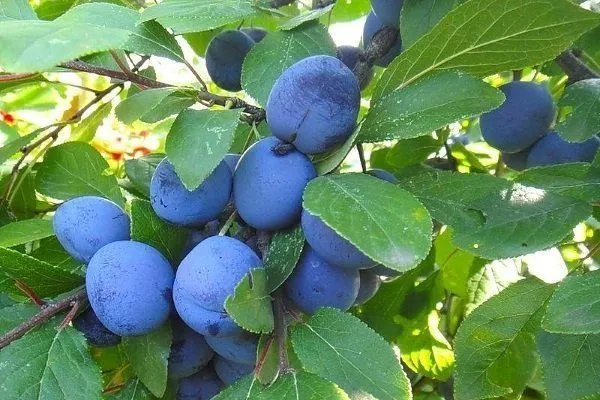
A self-fertile variety with moderate frost resistance. The first fruits appear in the third year. Trees grow slightly over 3 m tall. The crowns are oval, untidy, of medium density, and sparse. The yield per tree is 30 kg.
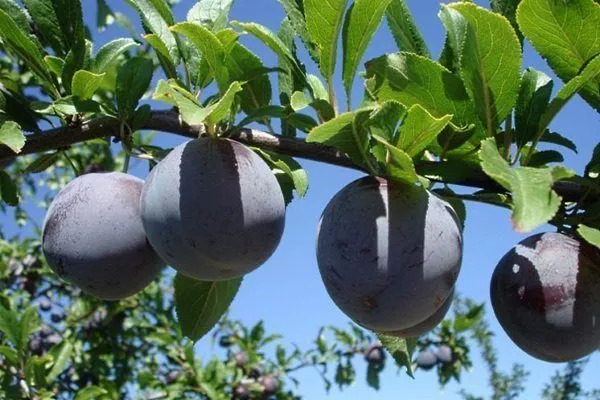
The fruits weigh 35-40 grams or more. The lemon-colored flesh has a slightly tart taste. The skin is purple-blue, with a bluish bloom on the surface. The fruits are elliptical, slightly flattened on the sides.
High resistance to insects, fungi, and viruses. Cold hardiness down to -30 degrees Celsius. Fruiting annually, without interruption. Grown primarily in southern Russia. The only thing they are not suitable for is compotes.
De Beauvais
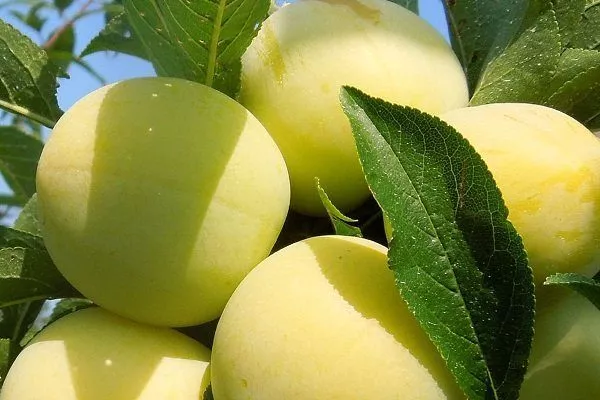
The plants are self-fertile, medium-sized, and fast-growing, with a sloppy crown. They require high levels of heat and light. They ripen in September. Once ripe, the fruits do not fall off, remaining on the branches for three weeks. The yield of a 10-year-old tree is 50 kg, and that of a 15-year-old tree is up to 100 kg.
The yellow-green fruits have a dessert-like flavor. The flesh is sweet, with a hint of nutmeg. The thin, firm skin has a dense, silvery coating that rubs off easily.
This heat-loving variety is grown in Crimea, the Caucasus, and the Krasnodar region. To produce a good harvest, it requires a warm autumn. The fruits are transportable and resistant to codling moths. In rainy summers, the fruits split and rot.
Soviet
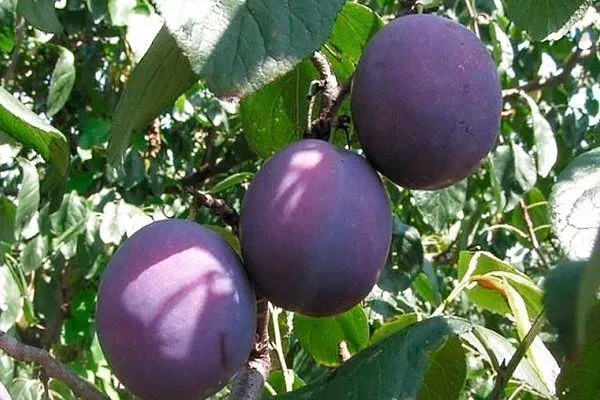
This variety was developed in the 1980s for cultivation in temperate climates. The first harvest occurs in the fourth year after planting. Plants grow over 3 meters tall. Foliage is moderate, allowing light to reach the fruit. Ripening occurs in late August.
Yields increase gradually, from 15 to 40 kg. Fruits weigh approximately 40 g. The shape is spherical. The color is inky purple, with a bluish-gray waxy coating on the skin. The flesh is amber, sweet, with a slightly tart flavor. Tasting score: 4.8 points.
When frozen, the fruits become loose and mealy, but the flavor remains unchanged. This versatile variety can be used for any kind of preserves, except compotes, which cause the fruits to lose their shape. The variety's main drawback is its vulnerability to polystigmosis.
collective farm
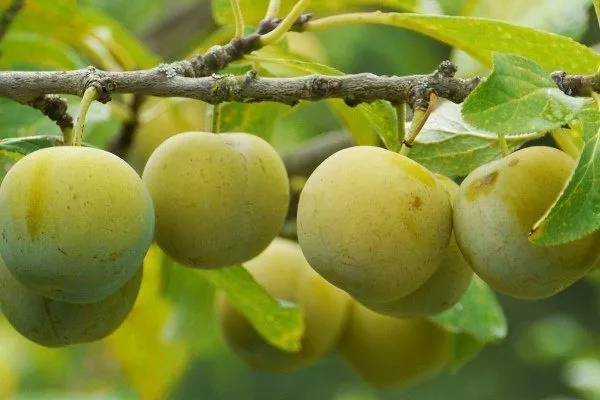
This variety was created by I. Michurin. It was obtained by cross-pollinating Green Renclode with blackthorn. It is common in the central and southern regions of Russia. It grows up to 3 m tall, with a flattened, spherical crown that is not densely packed. The plums ripen in mid-August. Yield increases gradually, from 20 to 40 kg. The best pollinators are: Eurasia 21, Early ripening.
The fruits are harvested as soon as they ripen, otherwise they will fall off. The fruits are asymmetrical and yellow-green in color. Grayish spots appear under the skin. Each fruit weighs up to 20 g. The flesh is greenish, tender, and has a sweet and sour taste. Tasting score: 4. The fruits are versatile.
Ten percent of the fruit grows on shoots from the previous year, and 90% on young branches. It is highly frost-resistant, withstanding temperatures down to -35°C. A frozen tree recovers within two years. A downside is its poor resistance to fungal diseases. The gum may leak.
Early
An early-ripening variety developed by Ukrainian breeders in the 1950s. This variety ripens earlier than other greengages and thrives in the steppe zone. The trees are medium-sized, with rounded crowns. The plant height is 6 m. Ripens in early August. The first plums ripen even earlier. The best pollinators are Early Donetsk and Karbysheva Greengage.
This variety is distinguished by its large fruits, weighing 40-50 g. They are spherical in shape, slightly flattened on the sides. On young trees, the fruits grow even larger. The plums are a soft yellow color, and the flesh is aromatic and pleasant to the taste. The skin is lightly pubescent and has a waxy coating. It receives a tasting score of 4.5 points. The flesh has a distinct plum aroma.
The variety is drought and frost resistant. Fruiting is abundant and uninterrupted. The fruits become small in dry conditions. A drawback is that the pit is difficult to separate from the pulp. It transports well. Plums are harvested slightly unripe for sale.
Ulena
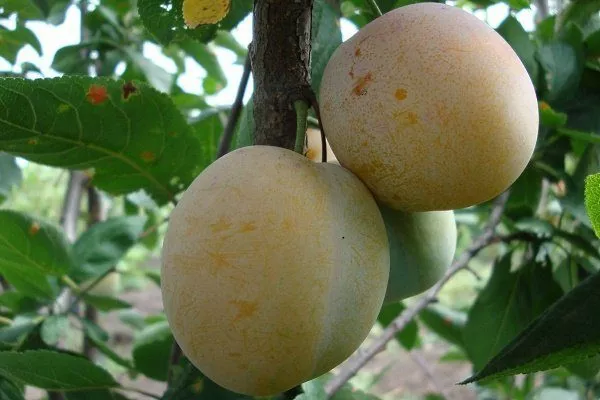
This variety originates from the south of France. Its origin is unclear. It is believed to be a Green Renclode that has grown wild and adapted to its habitat. In Russia, it is only found in the collections of breeders or fans of exotic varieties.
Fruiting begins in late August. The shape is spherical, sometimes slightly elongated. The fruits are bright yellow, with a possible pinkish-orange blush on the sun-facing side. They weigh 45 g and can be stored without refrigeration for 5 days. They are very tasty and aromatic, with a tender, melting flesh.
Highly disease-resistant. Tolerates moderate frosts. Prefers southern regions with a subtropical climate. A drawback is poor separation of the seeds from the pulp.
Leah
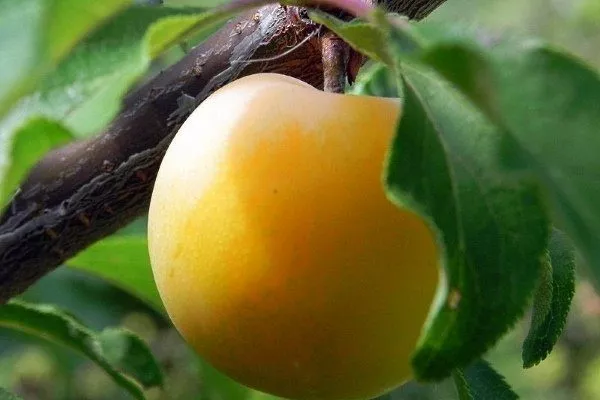
This is a fairly old variety with small fruits, cultivated since the early 20th century. Ripening occurs in late August or early September. The first harvest occurs in the third year after planting. Peak yield occurs at 10 years of age. The average yield is 15 kg per tree. Pollinators include Renclode Lenya and Skorospelka.
The plums weigh 12 g. The color is golden yellow, with numerous spots on the skin. The flesh is loose, yellow, and sweet and tart. The fruits have a long shelf life under favorable conditions—up to 25 days. The fruits ripen en masse.
Highly resistant to various diseases. The variety is susceptible to black canker and gum disease. Disadvantages include difficulty in pitting and low winter hardiness. At very low temperatures, the tree can suffer severe frost damage. The tree lives for 25 years.
How to grow Renklod plums?
It's recommended to plant Renclode seedlings in the spring, before the buds open. Site requirements:
- loose and fertile soil with a neutral reaction;
- good sunlight;
- elevated location;
- low groundwater level;
- protection from gusty winds and drafts;
- there should be no cherry plum, blackthorn, or Chinese plum.
- ✓ The pollinator variety must bloom at the same time as the main variety.
- ✓ The distance between trees should not exceed 50 meters for effective pollination.
Landing algorithms
The planting hole for spring planting is prepared in the fall. The hole is 60 cm deep and 80 cm wide. Fertile soil is placed to the side. Then, a soil mixture is prepared from the fertile soil layer and fertilizer.
Composition of soil mixture for one tree:
- fertile soil;
- humus – 2 buckets;
- superphosphate – 50 g;
- potassium sulfide – 30 g.
The soil mixture is poured into the pit and covered with a waterproof material. If the hole isn't prepared in the fall, this is a disadvantage, but not a critical one—this can be done in the spring, a couple of weeks before planting. Preparing the holes in the spring results in less nutritious soil.
Step-by-step instructions for planting seedlings:
- Place 2 pegs in the hole for support.
- The tree is lowered into the hole so that its root collar is 6-7 cm above ground level.
- When covering the roots of the seedling with soil, shake it from time to time to ensure there are no voids between the roots.
- The soil is trampled down, and a depression with a small earthen ridge is made near the trunk to prevent water from escaping.
- The seedling is tied to the stakes with soft material so as not to damage the trunk of the seedling.
- Water generously. The norm is 30-40 liters.
Watering and fertilizing
Greengage does not respond well to excess moisture; moderation is essential. Water the tree 5-6 times per season. Use warm, settled water. The watering rate depends on the tree's age, ranging from 3-4 to 8-10 buckets. After watering, loosen the soil, and remove root suckers several times during the summer.
Fertilizing the tree begins only in the third year. How to fertilize:
- Before flowering, add a mixture of ammonium nitrate – 25 g, potassium salt – 40 g, mineral fertilizers – 300 g.
- During the flowering period, pour in a urea solution – 20 g per 10 liters of water.
- After flowering, add diluted mullein and superphosphate – 50 g.
- After the plums have ripened, the tree is watered with urea (4 tbsp) and nitrophoska (6 tbsp) - they are dissolved in water (20 l).
- In June – urea 1%.
- In the fall, when digging, add 15 kg of manure, 150 g of superphosphate, and 50 g of ammonium nitrate. Also, add 160 g of superphosphate and 110 g of potassium sulphate, dissolved in 20 litres of water, to the soil.
Crown formation and sanitary pruning
Greengage pruning is best done in the spring, before the leaves emerge. This is called sanitary pruning. Summer pruning, in early June, is also recommended. During this period, young shoots that thicken the crown are pinched.
Pruning the Renclode plum tree depending on its age:
- Year one. To form a spherical crown, identify 10 skeletal branches. They should be spaced approximately evenly and angled at 45 degrees from the trunk.
- Year two. Trimming growths up to 25 cm.
- Year three. Shorten shoots growing from skeletal branches and the main conductor to a length of 30 cm. The remaining growth is cut to 15 cm.
- Year four. By this time, the crown has already formed. All that remains is to perform sanitary pruning and monitor the crown to prevent it from becoming too dense.
Pruning is done with sharp, disinfected tools such as pruning shears, a garden saw, or a knife. All cuts are treated with garden pitch or slaked lime.
Wintering of a tree
Young seedlings need insulation; in anticipation of winter, they are covered with spruce branches, hay, or paper. Mature trees can be protected with whitewash. It is also recommended to add a layer of humus or sawdust around the trunk. The minimum thickness is 10 mm. To protect against rodents, the tree trunk is wrapped in fine-mesh metal mesh.
In regions with harsh winters, greengage requires protection. The tree's branches are tied together and then wrapped in breathable fabric. The trunk is wrapped in a breathable material, and then covered with wire mesh.
Pest and disease control
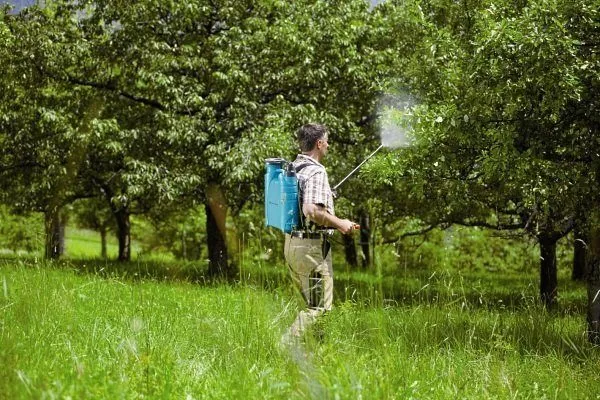
Greengage is often affected by fungal infections. To protect trees from infection, they are regularly treated with copper-containing preparations:
- HOM;
- Bordeaux mixture;
- with copper sulfate.
Plum is processed three times per season:
- early in spring;
- during bud formation;
- after flowering.
If the infestation is severe, the number of sprayings increases. Prevention can help reduce the risk of infection:
- autumn digging of the soil in the tree trunk circle;
- dispose of fallen leaves in a timely manner;
- install trapping belts for insects;
- the crown is thinned regularly.
- ✓ Yellowing of leaves in the upper part of the crown may indicate a lack of nitrogen.
- ✓ Leaf curling and spots may be a sign of a fungal disease.
Common diseases of the Renclode plum and control measures:
| Pest | What's the harm? | What to do? |
| Plum codling moth | The caterpillars gnaw passages in green shoots and eat out the pulp of plums. | After flowering, spray with a saturated salt solution—0.5 kg dissolved in 10 liters. After harvesting, spray the tree with 10% benzophosphate. |
| Plum aphid (reed aphid) | They suck the juices from leaves and young shoots. | Prune shoots with aphids and destroy them. Spray with a soap solution: 60 g of laundry soap per 10 liters of water. Treat with chemical insecticides before and after flowering. |
| Plum moth | It entangles fruits and leaves in a web. They dry out, spoil, and fall off. | Spray with Chlorophos. |
| Plum sawfly | After hatching from the eggs, the larvae eat away the flesh of the ovaries. Plums affected by the larvae fall before ripening. | Spray with insecticides before and after flowering - Metaphos 10%, Karbofos, Fufanon, Mospilan. |
For more information on plum diseases and their treatment, look for here.
Common diseases of the Renclode plum and control measures:
| Diseases | Symptoms | How to treat? |
| Moniliosis | A fungal disease that causes fruit rot, characterized by wilting of the inflorescences. Brown spots appear on the leaves, and the fruit is covered with white mold. | The tree is sprayed with Horus 3%, and the soil in the trunk circle is also treated with it. |
| Gum flow | The bark becomes thin and a sticky, amber-colored liquid flows out of it. | Remove the leaking gum, clean the affected area with a knife, and then treat it with garden pitch. |
Features of Reproduction of Renclodes
You can propagate the Renclode plum in any of the following ways:
- Seeds. This method is typically used for growing rootstocks. Large, healthy fruits are selected. The pits are washed and removed, and then soaked in water for four days. The water is changed regularly, and the pits are stirred. Then they are removed, dried, and placed in a glass jar.
When it's time to plant, the seeds are mixed with moistened sand or sawdust and left for 180 days. Temperatures range from 1 to 10 degrees Celsius. Once the seedlings have grown, they are transplanted into open ground. - By vaccination. The procedure is carried out during the active growing season. Suitable times are April-May or July-August. Grafting is done behind the bark or in a cleft.
- Root shoots. In the fall, the root connecting the mother plant to the shoot is severed. In the spring, the shoots are removed along with their roots for transplantation to a permanent location.
- By root cuttings. Scheme of propagation by cuttings:
- The roots of a young tree are dug up at a distance of 1 m from the trunk; for mature trees – 1.5 m.
- The length of the dug out roots is 15 cm, the width is 1.5 cm.
- Cuttings dug in the fall can be stored until spring in trenches 50 cm deep, covered with peat and sand. Alternatively, they can be stored in a basement, under a layer of sawdust.
- In April, prepare the soil by mixing peat with sand (1:3).
- The cuttings are planted at an angle in the prepared soil and covered with plastic wrap.
- The tops of the cuttings are buried 2 cm deep and sprinkled with peat or sawdust.
- Until shoots appear, the cuttings are protected from the sun and moistened.
- If several shoots appear at once, then choose the strongest one.
- During the season, the plant is fed with nitrogen fertilizers 3-4 times.
- For the winter, the shoots are taken to a warm room, growing to 1-1.5 m. By spring, the trees will be ready - they can be planted in a permanent location.
Reviews from experienced gardeners
The Renclode plum grows and bears fruit without problems in areas with mild winters, but thanks to frost-resistant varieties, the plum with “marmalade” flesh can also be grown in central regions.