
This variety was developed in the late 19th and early 20th centuries by English breeders and immediately gained popularity among gardeners in Western Europe. However, domestic breeders also prefer this variety due to its taste and ease of care.
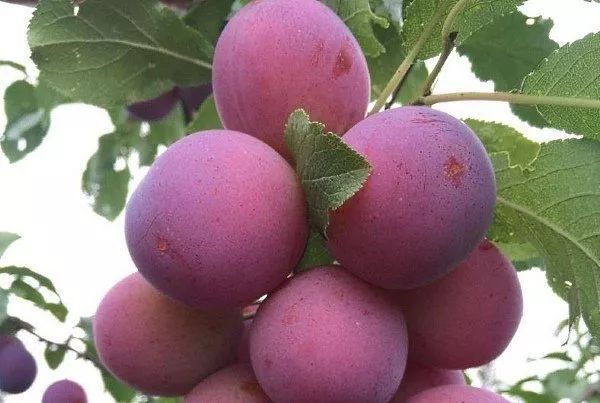
plum variety "President"
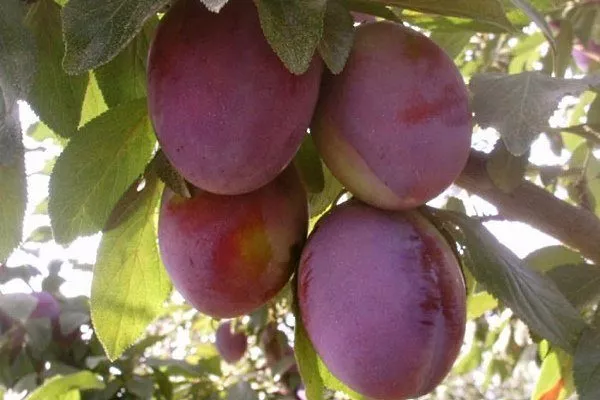
The 'President' plum has many advantages, from high yields to drought resistance
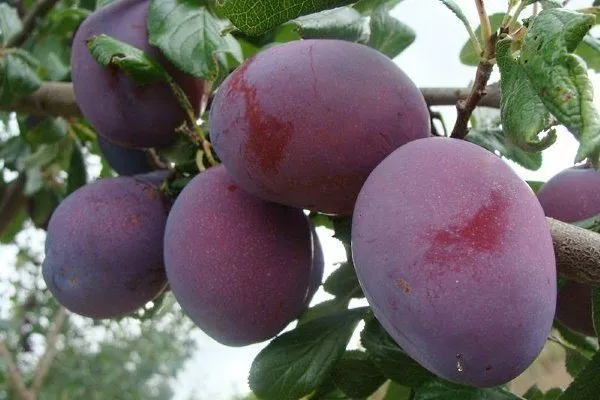
"President" has excellent taste
Description of the variety
This plum variety attracts attention with its characteristics:
- adapt to forest-steppe conditions;
- rapid growth;
- resistant to infections;
- transportable.
Tree
The 'President' has a significant distinguishing feature: its crown is not columnar. Its lateral shoots grow extensively. This variety is considered medium-sized, as a mature tree can reach up to 3.5 m in height. After planting, the seedling quickly adapts and grows up to 40 cm per year. Initially, the tree's crown resembles a pyramid, but with age, it expands laterally, forming a dense crown ball.
Also, "The President has the following tree characteristics:
- the color of the bark of the trunk and branches is gray-green;
- plum shoots are straight and not very thick;
- the color of the shoots is red-brown;
- petiole size – medium, color – white;
- leaf color – dark green;
- the shape of the leaves is large and slightly concave at the base;
- Over time, sheets may become covered with a waxy coating;
- the leaves are smooth on the back side
- In spring, inflorescences appear, which are collected into umbrellas.
Fruit
The fruits of this variety are distinguished by the following characteristics:
- weight – from 50 to 70 g;
- shape – round;
- the skin color of an unripe plum is green, while that of a ripe one is deep blue;
- the skin is of medium thickness with a waxy coating;
- at the base of the fruit there is a depression with a wide pit;
- the stalk is of medium thickness and length, which facilitates the process of picking the plum from the tree;
- pulp color – yellow or greenish-yellow;
- the stone is medium-sized, oval, with an elongated tip;
- the taste is sweetish, with a hint of sourness;
- the juice is colorless and sweet;
- plums contain ascorbic acid, potassium, protein, carbohydrates and organic fiber, which have a positive effect on blood vessels and blood pressure;
- Plums can retain their beneficial properties even after processing.
Characteristics of the "President"
The 'President' tree has characteristics that distinguish it from other varieties. Therefore, pay attention to these characteristics to avoid problems during harvest.
The gardener provided a review of the "President" plum variety in his video below:
Productivity
The 'President' variety is distinguished by its relatively early fruiting period—five to six years from planting. From this age onward, and up to about ten years, the yield can reach 17 kg of fruit, and after that, a single tree can yield up to 40 kg of fruit, which is quite a significant amount. With maximum attention to the tree's health and condition, the yield can increase to 70 kg.
Winter hardiness and drought resistance
The 'President' variety is considered extremely resilient to both cold winters and very hot summers. For example, during the harsh winter of 1968-1969, the trees suffered a frost level of 1, while in 1978-1979, the frost level was 3.3. This means the average frost level is 2, which is quite low.
Pollination
| Name | Yield (kg per tree) | Ripening period | Disease resistance |
|---|---|---|---|
| President | 40 | September | Average |
| Stanley | 50 | August | High |
| Kuibyshevskaya blackthorn | 30 | September | High |
| Joyo | 35 | August | Average |
| Peaceful | 45 | September | High |
| Rival | 40 | August | Average |
| Early ripening red | 25 | July | Low |
| Greengage Altana | 50 | August | High |
| Amers | 30 | September | Average |
| Katinka | 35 | August | High |
| Vision | 40 | September | Average |
| Early Kabardian | 45 | July | High |
| Temple Greengage | 50 | August | High |
| Rush Gestetter | 30 | September | Average |
| Rival | 40 | August | Average |
Pollination of fruit trees is the key to a good harvest, but before planting different species next to each other, it is important to know which varieties will have a beneficial effect and whether the maximum yield can be achieved.
'President' is a highly self-fertile tree, but it can also be combined with certain varieties, including:
- Stanley;
- Kuibyshevskaya blackthorn;
- Joyo;
- Peaceful;
- Rival;
- Early ripening red;
- Renklod Altana;
- Amers;
- Katinka;
- Vision;
- Kabardian early;
- Temple greengage;
- Rush Gestetter;
- Rival.
Ripening time
By mid-May, flowers already appear on the trees, but the fruits ripen quite late—in hot summers, this occurs in the second ten days of September. In cool summers, the fruits can ripen by the end of September or even by the beginning of October.
Transportability and shelf life
Firm fruits with tough skins withstand transportation well. Neither their quality nor appearance suffers during transport, even if the fruit is still unripe, which is why many use this variety for sale—the fruit retains its marketable appearance. If harvested in early September, it can be safely transported over even the longest distances.
Unripe plums can be stored in cellars or warehouses for up to 14 days. If the fruit was picked ripe, its shelf life in the refrigerator is 5-7 days.
Resistance to diseases and pests
This variety lacks disease immunity, so the tree requires additional treatment and care. It has moderate resistance to the following diseases:
- Moniliosis – is a fungal disease. Spores overwinter on the tree bark or are carried by the wind. Plum trees become infected with moniliosis during flowering – the leaves turn brown and fall off, and the fruits soften and become covered with white mold, after which they begin to mummify. To prevent this, treat the tree with a 3% solution of Horus before flowering or 15-20 days after. As a preventative measure, regularly prune, promptly collect and burn infected fruits, and remove dead bark and whitewash from the trunk.
- Gum flow – Sticky, stringy streaks and cracks appear on the plum tree trunk, and the bark becomes thin. In this case, apply fertilizers that will strengthen the tree's stability. Apply according to the fertilizer schedule. As a preventative measure, treat the pruning cuts with garden pitch or red oil paint.
- Plum dwarfism – a fungal disease that plums contract during grafting. The disease causes stunted growth, brittle and thinning leaves, and possible premature death of the plum tree. There is no cure; the plum tree must be uprooted and burned. Carefully examine planting material and purchase it only from experienced gardeners or nurseries to avoid this disease.
Pests harmful to trees:
- Plum shoot moth – a moth that lays eggs at the base of buds and pupates in early June-July. Fruit buds wilt, leaves become chewed and shriveled, and buds and shoot tips become covered in webs. Treatment with Chlorophos (a chemical compound) is effective against plum moth; apply this treatment in late April-May, when buds begin to open. Loosening the soil between rows and around the trunk in early summer helps prevent the pest.
- Plum pollinated aphid – slows seedling growth and prevents new buds from forming. Ovaries begin to dry out and wither, and fruits fail to fill out, remaining small and wrinkled. Mineral oil treatments (0.2-0.3 liters per square meter) help control the problem. Apply in early spring, before the sap begins to flow. As a preventative measure, remove root suckers, dead bark on the trunk and skeletal branches, and whitewash the trees annually.
- Plum codling moth – damages the fruit's petioles and gnaws through the fruit. This prevents plums from filling out, causing them to ripen prematurely, rot, and fall off. Codling moths can be controlled with a pine concentrate (2-4 tablespoons per 10 liters of water). Treatment should be carried out during the growing season, if necessary. As a preventative measure, loosen the soil around the trunk, remove old bark from the trunk and skeletal branches, prune damaged shoots, and burn fallen fruit.
You can read about other diseases that plums can have in this article.
Peculiarities
As a fairly old and reliable variety, "President" has its own characteristics, thanks to which people have come to love it so much.
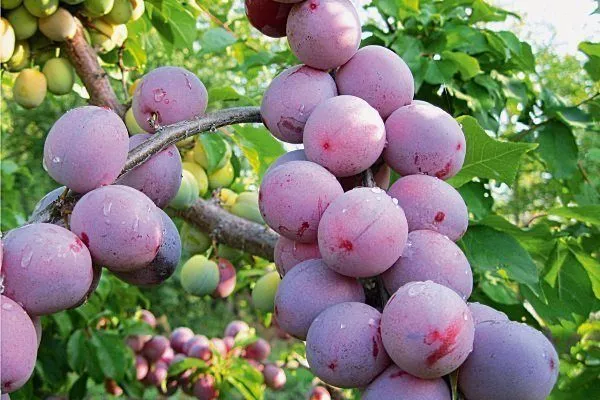
Climate and regions of cultivation
The "President" plum thrives in a wide variety of locations across the country, from the far south to the Far East. It can be found in Siberia and the Urals. This plum is equally popular in other CIS countries, particularly in Ukraine and Moldova.
Application of berries
First of all, plums can be eaten fresh, however, the huge advantage of the "President" is that it can be used for all types of processing:
- compotes;
- jam;
- fruit purees and soups;
- jelly;
- marmalade;
- plum juice.
Plums can also be pickled and dried. Plums are also highly regarded for their dietary properties – they are low in calories and are included in anti-obesity diets. Canned plums are also recommended for those with cardiovascular diseases and gastrointestinal disorders.
Planting and caring for the President plum
Any variety requires proper care to obtain an excellent result in the form of a rich harvest.
Planting dates
When choosing between spring (March - early April) and fall (late September - October) planting, the choice is based on soil conditions—it should be loose, crumbly, and allow a spade to penetrate the soil easily—and the air temperature should be at least 12 degrees Celsius.
Gardeners often choose spring planting because it allows the seedlings to take root and grow faster. Furthermore, if the trees are planted in northern regions, they won't be vulnerable to night frosts. If the tree is planted in spring, fruiting begins a year earlier.
Priming
"President" is a fairly versatile variety, as it's not picky about soil conditions and can thrive in virtually any soil. However, if you're aiming for maximum yield, pay special attention to your soil selection.
Choose loamy, permeable, and moisture-retentive soils, as they always yield more. If the soil is highly acidic (which is easy to determine if plantain, wood sorrel, or oxalis grows abundantly in the area) or if there is waterlogging, it should be limed. Do this in the spring, before digging the plot.
To lime the soil, take slaked lime, chalk, shale ash or wood ash and scatter it over the ground at a rate of half a kilo per square meter, after which you can begin digging.
To improve the soil structure, you can apply lime – this will make the soil more permeable to air and moisture, activate the beneficial microorganisms present in the soil, and enrich it with calcium and magnesium.
When choosing wood ash as a liming material, use 1-2 buckets per 10 square meters to neutralize the effects of aluminum and iron.
Choosing a location
Plant the plum tree on an open, sunny, level surface so that the tree can receive enough sunlight, which is necessary for the fruit to be sweet.
Also, with a lot of sun, a dense tree like the President plum will dry out quickly even after very heavy and torrential rains and morning fogs.
An open area is important for air circulation, as constant ventilation reduces the risk of fungal infections, which thrive in high humidity, which is necessary for their reproduction and vital activity.
Since the tree is drought-resistant, places with groundwater at a level of up to 1.5-2 m are well suited, since waterlogged soils will lead to rotten roots and weaken the tree.
Planting material
Select seedlings in the fall, because at this time they no longer have foliage and any defects, such as rotten roots or damaged bark, can be easily seen.
- ✓ Check the root system for rot and mechanical damage.
- ✓ Make sure the bark is healthy and free of cracks and spots.
Buy seedlings only from local gardeners you know or whose quality you trust. Buying directly from local nurseries is important because these trees are already adapted to the local climate, so they'll survive transportation without problems and establish themselves more quickly.
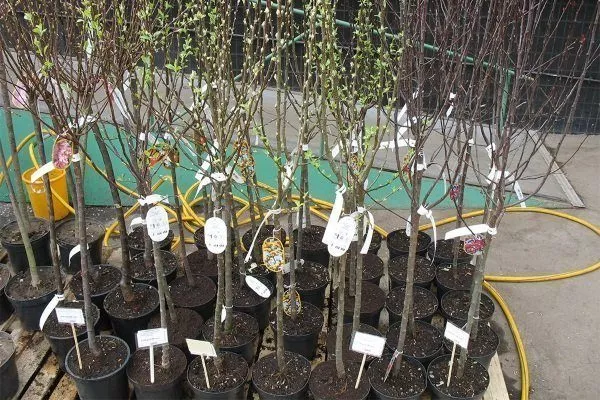
When spring comes, carefully examine the seedlings - if you find that their roots have dried out, then place them in water for 1-2 days, and use pruning shears to trim off all damaged or slightly rotten roots.
To protect the roots, dip them in a clay slurry just before planting. This is necessary to prevent burns from coming into contact with fertilizer. This slurry can also be made from earth.
- Check the soil acidity level before planting.
- Lime the soil if necessary using wood ash or other materials.
- Add organic fertilizers and superphosphate 2 weeks before planting.
Site preparation
If the seedling can be purchased in the fall, the hole should be prepared in the spring, approximately two weeks before planting. Mix the excavated soil with 15-20 kg of organic fertilizer and 400-600 g of superphosphate, then fill the hole halfway with this mixture. Also, add a layer of gravel or sand to the bottom to help the soil warm up faster—this will positively influence the development of the root system.
Step-by-step planting process
In general, the process of planting a plum seedling consists of the following algorithm:
- Dig a hole 40-50 cm deep and 80 cm wide. Each hole should be 2-2.5 m apart, with rows separated by 3-4.5 m of free space.
- Scorch the end of the wooden stake to prevent it from rotting over time.
- Place a stake in the hole.
- Plant a seedling.
- Spread the roots out so that they fill the entire hole.
- To distribute the soil evenly, shake the roots of the seedling.
- Place the seedling so that the root collar is 2-3 cm below the ground surface.
- Tie the seedling to a stake and leave it there for 3-4 years. Place the stake on the north side.
- Water the plum with 30-40 liters of water.
- Mulch the tree trunk area (50-80 cm) using sawdust, dry grass, or soil. The layer should be 10-15 cm thick.
Watering
As noted earlier, this variety is drought-resistant, meaning it doesn't require constant watering even in very high temperatures. However, watering "President" is still necessary and important, especially during the growing season.
Drip irrigation can be used for watering, because this method has certain advantages, making the watering procedure convenient:
- may not be present on a permanent basis;
- do not flush more than twice a month;
- since water is supplied directly to the root zone, there is a resource saving of up to 60-80%;
- favorable conditions are created for the development of the root system, because there are no longer conditions for oxygen deficiency in the soil;
- You can combine both watering and fertilizing at the same time;
- the system operates even at low pressure;
- the yield increases by 1.8-3.5 times, because the plant immediately responds to the appearance of a favorable climate in the area of its root zone;
- The spread of diseases is reduced because the leaves and stems remain dry.
To achieve the best effect, you can first dig special grooves around the trunk, no more than 10 cm deep.
In the last month of summer, reduce the amount of watering so that the tree stops growing, goes dormant during the winter, and produces a good harvest the following year.
Top dressing
To improve the quality of the harvest and the tree's resilience, it's important to add the necessary organic and mineral fertilizers regularly and on a timely basis. For fertilizers to be effective, it's important to know when and how much to apply to the plum tree's soil.
- Fertilize a two-year-old tree only in the spring, using 20 g of urea or 25 g of ammonium nitrate. An alternative to nitrate is 60 g of ammonium sulfate.
- Fertilize in this manner until the tree is five years old, after which you can make changes to the feeding schedule.
- For mature plums, continue to use urea, but in a higher dosage – 25 g.
- As an alternative to urea, treat the soil with superphosphate at a dosage of 60 g. The dosage when using double superphosphate should be half as much.
- Add 20 g of potassium chloride or take wood ash, which will require a larger amount - 200 g.
- For an adult plum tree, use up to 10 kg of organic fertilizer per year.
- In the fall, apply either superphosphate or double superphosphate—75 and 40 g, respectively. You can also fertilize with potassium salt—30 to 40 g—or wood ash—350 g.
Trimming
The gardener needs to prune and shape the crown to prevent it from becoming too dense – during the fruiting period, the branches droop under the weight of the fruit, resulting in the crown becoming wide and spreading.
The video below shows how to prune the "President" plum variety.
There are three ways to prune a tree:
- Formative – Used in the first three years of a plum tree's life, at the beginning of summer. Shorten the side shoots and all tall shoots by 20 cm. If this pruning is performed regularly, by the fourth year the plum tree will form a two-tiered structure containing approximately six skeletal branches. If pruning is performed correctly, the branches attached to the central shoot will grow at a 45-degree angle.
- Rejuvenating pruning – This type of pruning is performed only on mature trees, with the exception of very dense crowns. Reduce the length of the central shoot by 1/3, and the length of the skeletal branches and lateral shoots by 2/3. If the trees grow in southern regions with warm nights, this type of pruning should be performed immediately after fruiting has finished. If in northern or central regions, it is better to postpone pruning until the first month of spring.
- Sanitary – helps maintain healthy branches. Completely prune out any broken, frozen, or diseased branches to prevent the spread of infection. This will allow the pruned branch to regrow. This procedure is performed during the growing season.
Preparing for winter
Despite its good frost resistance, certain measures must be taken.
Protection from rodents
Since the "President" tree also grows in the forest-steppe zone, this means that during winter, large-scale rodent infestations are possible in orchards. They begin to gnaw at the skeletal branches located at the base of the tree, damaging the portion of the tree located underground. The following measures can help solve this problem:
- Whitewash the trees in the fall to give the bark a bitter taste.
- Fence the area around the perimeter using fine metal mesh.
- Rub the trunks with lard mixed with tar.
- Scatter peat chips soaked in kerosene or creolin around mature trees.
- Before the onset of frost, wrap the trunks with fiberglass. Use spruce and juniper branches for the same purpose. But before spring arrives, when sunny days begin to appear more frequently, be sure to remove all protective gear.
- Wrap the tree trunk with synthetic stockings.
- Trample the snow around the plum tree several times, compacting the soil in the trunk circle.
Whitewash
Trees are usually whitewashed in late autumn, before frost sets in. Whitewashing should be done on the trunk and skeletal branches, as it helps:
- disinfect the bark and destroy all fungal colonies or eggs of harmful insects;
- adds a bitter taste to the bark, which makes it uninteresting to rodents;
- increases the overall stability and vitality of the tree;
- helps to recover from sweating.
Purchase aniline paint or water-based paint for whitewashing—0.7-1 liter is enough for one tree. These paints can last up to a year on wood.
You can also make your own whitewash solution: add 2-3 kg of lime, 300 g of copper sulfate, and 1 kg of clay to a bucket of water. If you're whitewashing a mature tree, add an additional 1 liter of office glue for durability. For very young trees, it's best to whitewash with chalk.
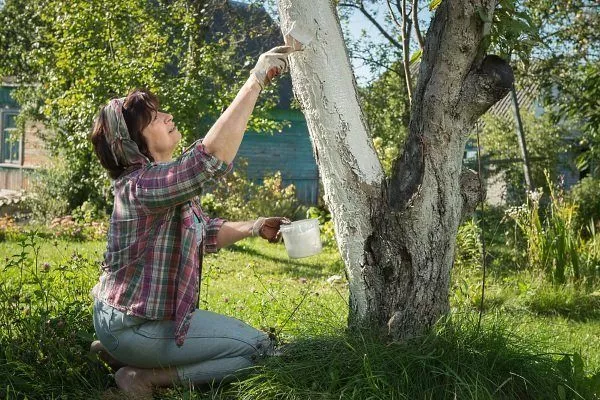
If you notice cracked bark or diseases in early spring, be sure to whitewash the trees.
Advantages and disadvantages of the variety
Now that we've fully examined all the properties of the President plum, we can separate its advantages and disadvantages:
Advantages:
- the tree exhibits excellent frost resistance qualities, as it is able to withstand cold temperatures down to -30 degrees;
- high level of drought resistance;
- fruiting begins early - in the 5th year of life;
- stable and rich harvest – from 20 to 40 kg of fruit can be collected from a tree;
- self-fertility – the tree is capable of producing fruit without additional pollinators;
- trouble-free transportation and storage of fruits;
- the relatively small size of the tree makes it possible to plant it compactly and in large quantities in one garden;
- excellent resistance to biological aggression.
Flaws:
- It is necessary to additionally fertilize the tree, since it has no immunity to diseases;
- requires frequent pruning of branches, as they become thick very quickly;
- the branches are not very strong, which can lead to breakage under the weight of the fruit;
- prone to gum flow;
- It is necessary to harvest the plums on time, since very ripe plums fall off, and unripe ones have worse taste qualities.
The President plum is a wonderful cultivar for cultivation due to its impressive characteristics. Its cold tolerance, high yield, and other advantages make it a favorite among farmers and gardeners. President is especially prized for its rapid growth and excellent flavor.