
Pruning plum trees in the fall requires following certain rules. The most important thing is to remember to treat the cut areas to protect the plant from infection and death. Follow all the recommendations, and you'll have a beautiful plant that will delight you with abundant harvests.
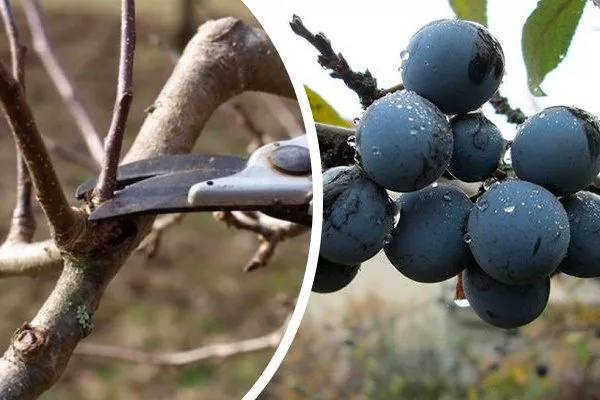
Why prune plum trees in autumn?
Experienced gardeners note that after this procedure, the shortened branches do not break under the weight of snow and easily withstand strong gusts of wind. Plum pruning is necessary to reduce the number of buds that consume nutrients, which accelerates the maturation of the wood.
After taking this measure, ventilation and illumination of the crown improve, which contributes to an increase in yield, and branch growth also increases in the following year.
When do you prune plums in the fall?
Autumn is the most favorable time to prepare trees for winter and fruiting next year. Begin pruning after the leaves have fallen, approximately from mid-September to October 15th, as the plant needs time to prepare for winter. Pruning too late risks freezing the tree.
Plum Tree Pruning Tools
Prepare the working tool to avoid damaging the plum and improve the working process.
Prepare the following supplies in advance:
- garden tools (pruning shears, hacksaw, loppers);
- ladder;
- gloves;
- glasses;
- garden var.
Classification of plum pruning
In the fall, plum trees undergo various pruning procedures. This must be done correctly to avoid causing serious damage to the plant.
Regulatory pruning
With this procedure, you can form a beautiful crown and at the same time increase the yield of the plum tree.
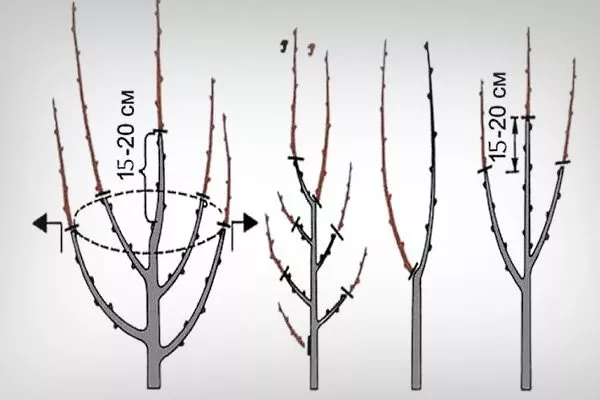
To do everything correctly, remove the buds located at the base of the tree, then cut back the shoots and branches that create a dense crown. When performing maintenance pruning on a young plant, pinch off the top of the tree just above the fifth bud.
Sanitary pruning
Plum trees especially need sanitary pruning to ensure optimal future growth. Begin pruning old, dry, and damaged branches in the plant's third year. Avoid deformed shoots and those that don't bear fruit.
It's equally important to pay attention to branches growing inward or too close to each other. Remove them to ensure proper ventilation and better growth.
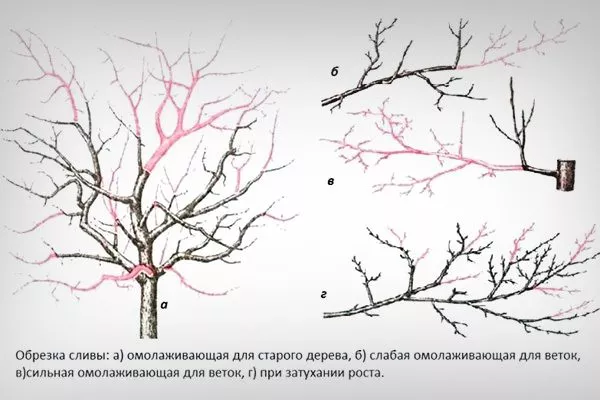
Rejuvenating pruning
This procedure is necessary to promote better development of lateral shoots. The process does not require much time or effort.
Follow the instructions:
- Cut off dry branches and those growing inside the crown.
- Shorten other branches by 1/3.
- Remove all root suckers.
Tiered, sparse crown
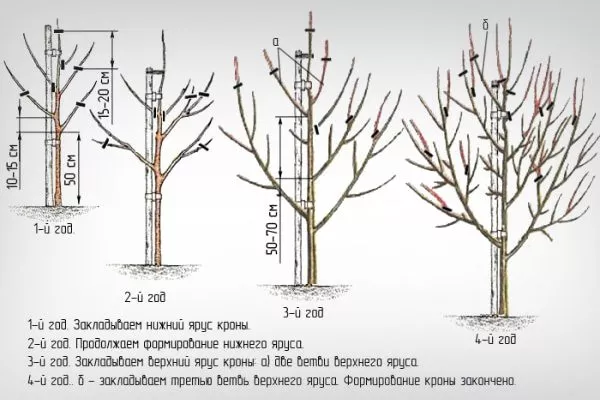
The most popular method for shaping plum trees is to create a tiered, sparse crown. The only drawback of this type of pruning is that it takes several years to complete.
To properly shape the crown, you need to start with the skeletal branches of young plum trees. Avoid removing branches that grow opposite each other. Prune shoots at each level. The result will be a plant with a crown that allows light and air to pass through.
Bush formation
You can use a plum tree for ornamental purposes and train it as a shrub. In this case, you'll need to prune the plant over several years.
Step by step procedure:
- In autumn, trim the skeletal branches, leaving a length of about 40-45 cm.
- Cut all shoots on the trunk up to a height of 30 cm to the ring. Shorten the second-order shoots that have grown to a height of 10-15 cm in the same manner.
- In the third year after planting, perform sanitary and regulatory pruning in the spring. To further shape the bush, remove last year's growth, leaving shoots about 50 cm long.
Watch the video on how to shape a fruit tree into a bush:
Cup-shaped crown
To form a cup-shaped crown, the plum tree seedling is already in the period landings Shorten, leaving a central conductor 50-60 cm high. When forming the plum crown in the shape of a bowl, the skeletal branches of the tree should emerge from one point or maintain a distance of 5-7 cm between shoots.
Further recommendations:
- In the second year after planting the plant in its permanent location, leave 3-4 symmetrically spaced side shoots and allow them to develop freely. By the end of the season, each main branch will have 2-4 new branches. Pinch out the top in July.
- In the third year, prune the tops of the main branches and side shoots one by one. Shorten one well-developed and conveniently located branch by 8-12 buds – this will be the one that will produce this year's fruit. Cut the branch below back to 2-3 buds, and shorten the next branch again by 8-12 buds.
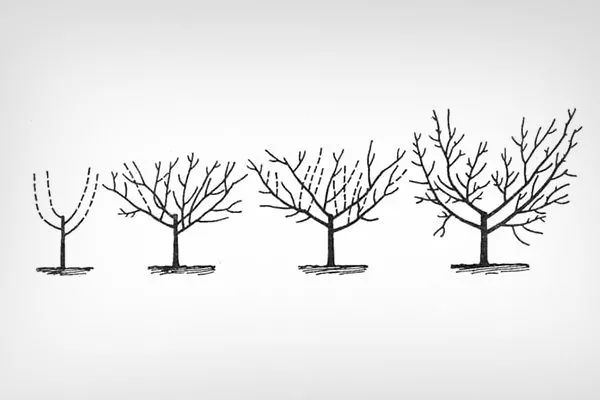
After that, you'll only need to perform maintenance pruning. With a bowl-shaped crown, plum trees often require support, especially during the fruiting season.
Methods of forming plums
There are several basic methods for shaping plum trees in the fall. You can find them below.
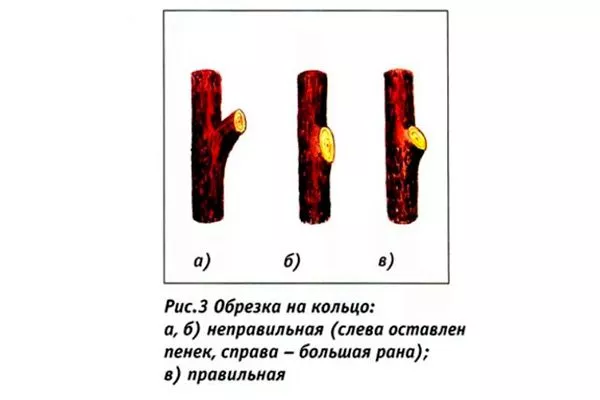
On the ring
The technique involves cutting off a plant branch so that a “ring” is formed at the shoot site.
This will remove any excess shoots. Make the cut along the circumferential growth, but be careful not to create a stump.
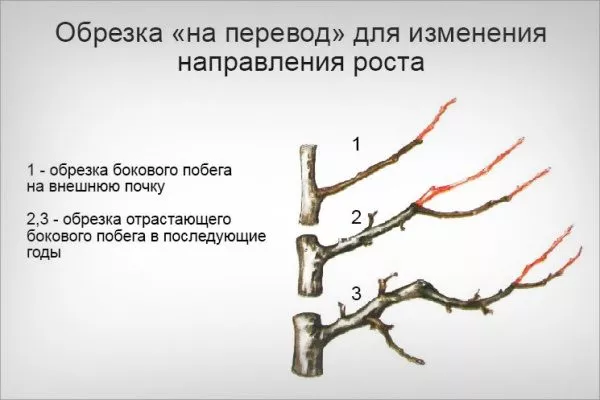
On the lateral shoot
In this case, prune branches from the old crown. This technique is necessary to stimulate the development of new lateral shoots on the plant. By trimming lateral shoots, you can extend the plum tree's fruiting period for several years.
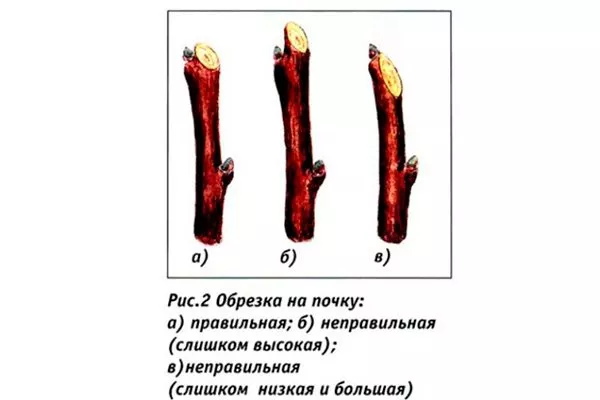
On the kidney
Pruning to the bud in the fall is done to direct the growth of shoots in the right direction and to form the crown in the spring.
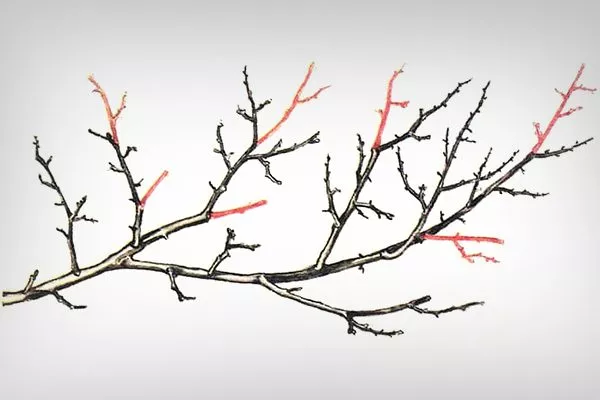
Prune on one-year-old shoots. Cut the branch at a 45-degree angle just above a bud to keep it in the desired direction.
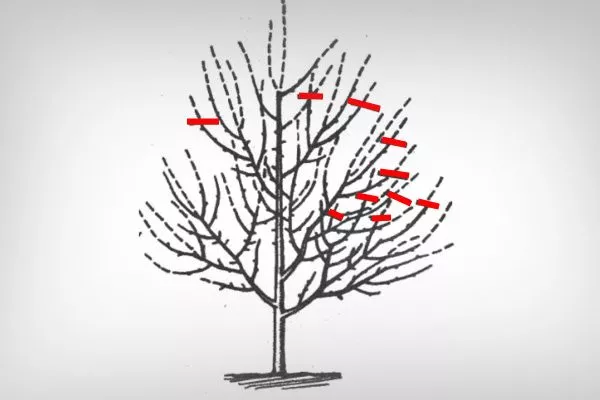
Step-by-step fall pruning instructions for beginners
For beginning gardeners, it's recommended to use the simplest pruning scheme in the fall. The pruning algorithm is quite simple:
- Cut off dry branches, as well as those shoots that grow in one direction and interfere with each other.
- Get rid of broken branches and those that cannot support the weight of the fruit.
- If the top has grown too long, trim it.
- Remove competing branches. These are shoots growing in the same direction. Also, prune out any branches that are crowding the crown by growing into it.

- Prune branches that are growing too quickly. This will thin out the plum tree's crown, allowing for ventilation.
- ✓ Use only garden varnish based on natural resins, avoiding synthetic analogues that can interfere with tissue respiration.
- ✓ The thickness of the pitch layer should be at least 2-3 mm for effective protection against infections and pests.
Pruning seedlings
Perform this procedure when planting the plant in the ground in the fall. This will allow the underdeveloped rhizome to fully saturate the remaining branches with micronutrients after transplanting. Leave no more than four strong shoots, which will later become the plant's skeleton.
For planting in the ground, it's acceptable to use a 1-year-old plum tree or a 2-3-year-old one. The latter type of tree takes root much better and is also more disease-resistant.
Special rules:
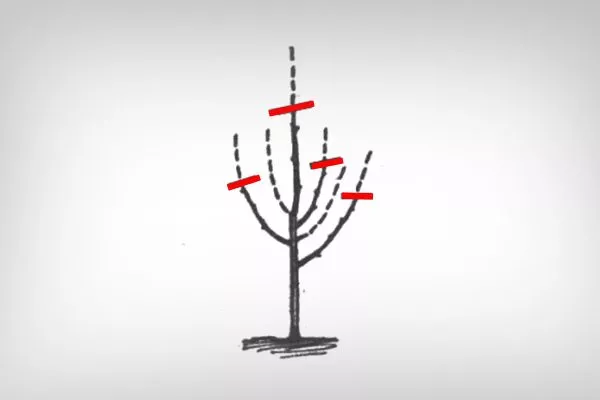
- Seedlings experience uneven shoot growth, causing them to stretch, reaching up to 20 cm in length. Therefore, pruning is important. Prune the central conductor once a year – shorten the trunk by 1/3 and the scaffold branches by 2/3. It's equally important to thin the crown around it to ensure the main branch remains the leader in growth.
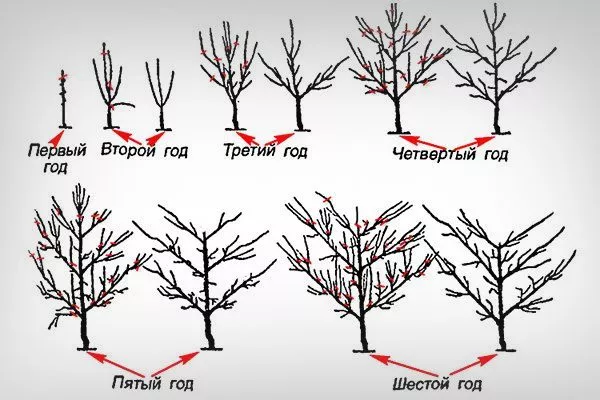
- In the first year, establish a skeleton. To do this, remove excess branches growing inward. Then, prune as you would a mature tree:
Algorithm for pruning young plum trees
A tree is considered young until it reaches five years of age. During this period, the crown develops and several skeletal branches emerge. Formative pruning is usually performed in the spring. This allows the fruit tree time to adapt. However, it can also be performed in the fall.
Gardeners often choose to train young plants in several layers. Follow these instructions:
- In the first year after planting, mark the tree's trunk zone. Typically, this is 50-60 cm from the ground.
- Count 5-7 buds above the mark and cut the branch above them.
- The remaining buds form the very bottom of the plant for the next season.
- Select several of the healthiest shoots from the remaining shoots, extending at least 60 cm from the main trunk. Cut off the remaining shoots that extend into the trunk area.
- Begin forming the next tier in the 3rd or 4th year. This tier often consists of two branches, spaced 25-30 cm apart from the lower branches.
If you wish, you can form a third tier using the same algorithm.
Pruning old plum trees in autumn
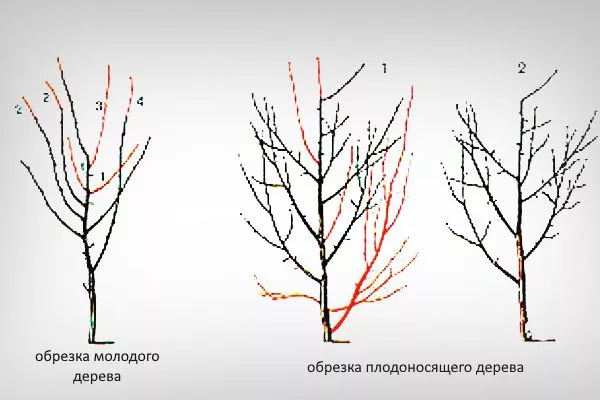
Pruning old plum trees requires rejuvenating treatments, but no more than once every five years. Experienced gardeners also recommend spreading this process out over several years. This will reduce stress on the plant.
If a tree's growth has stopped, it needs rejuvenation. Follow these steps:
- Remove several skeletal branches, but sometimes just one is enough. It all depends on the plant's strength. The fewer shoots you remove, the easier it will be for the fruit tree to cope.
- To ensure a straight cut, prune branches in opposite directions to each other. Otherwise, a heavy branch may break under its own weight. This can have negative consequences for a mature plant.
- Be sure to clean the cuts and treat them with garden pitch. New shoots will appear in these areas next season.
- Select no more than 4 of the most powerful branches, and trim the rest closer to summer.
Rejuvenation pruning is considered a traumatic procedure for plum trees. Traditionally, the process occurs in early spring to allow the plant time to adapt to the warmer weather. Fertilize the tree after pruning using liquid fertilizers.
Autumn pruning of columnar plums
Columnar plum It doesn't grow large, and has a weak, pointed, pyramidal apex. Its distinctive qualities include early maturity, abundant fruiting, and excellent fruit flavor.
Pruning involves pruning the trunks to 2-3 buds if growth is poor, removing side branches longer than 20 cm, and removing all but the strongest shoots. Columnar plums don't require any special training, making them especially popular with novice gardeners.
Rules for care after pruning
Training fruit trees is a challenging process that even a novice can handle. However, the process itself is not as important as the comprehensive care of the plant in the future.
If the foliage on the crop has turned yellow, the plum looks unattractive, and the yield has decreased, pay more attention to the crop.
Complete care consists of the following:
- Cleaning the cut area. Treat the cut with a sharp knife.
- Processing of the cut. To do this, use garden pitch or drying oil, otherwise the plant may become infected.
- Fertilization. Provide simple fertilizers to ensure the tree develops well and bears fruit.
- Water thoroughly (40-50 liters of water per mature tree) within 48 hours after pruning to reduce stress.
- Apply phosphorus-potassium fertilizers (100-150 g of superphosphate and 50-70 g of potassium sulfate per tree) a week after pruning to stimulate root formation.
After pruning, the plant needs strength to heal, so use complex fertilizers to ensure complete recovery. Only with proper care will you be able to reap a bountiful harvest in the future.
Common mistakes
Beginner gardeners often make mistakes when pruning in the fall. The most common ones are:
- Pruning too late. You should begin pruning excess branches at least a month before the onset of cold weather. This is how long the plum tree needs to heal. Pruning too late risks the plant's death.
- Pruning the plum tree before leaf fall. Pruning fruit trees during the growing season is very stressful. If you make a mistake, the tree can die.
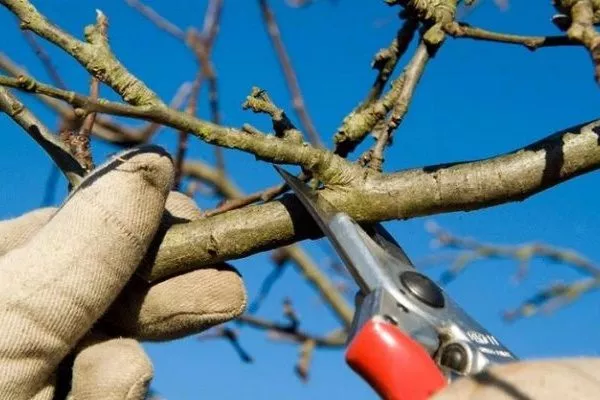
- Untidy cuts. To minimize damage to the plant, cuts should be made properly, avoiding chipping. When cutting a thick branch, first make a small cut from the bottom. Be sure to use only well-sharpened garden tools.
- Cutting a large number of branches at once. This often leads to the death of the plant. Don't prune too many branches at once; it's better to spread the process out over several seasons.
- The sections are not processed. If you forget to treat the cut, this can lead to infection and subsequent death of the plant.
An equally common mistake is haphazard pruning. Remember, you can't prune every shoot indiscriminately. First, create a plan and follow it.
Answers to frequently asked questions
When to prune plum trees after harvesting?
It's too early to prune immediately after all the fruit has been harvested. At this stage, the tree hasn't yet entered dormancy, meaning there's a risk of causing damage. Removing excess, damaged, and non-fruiting branches is necessary after the leaves have fallen. In different regions of Russia, this typically occurs in mid-September or October.
When to prune a plum tree in September?
It's not always possible to begin pruning during this period. If the plant still has foliage, it's best to postpone pruning until later. The main thing is to avoid causing damage to the plant. In this case, you can prune in the spring rather than injure the tree, which risks its death due to stress before winter.
When to prune plum trees in Siberia?
In the Siberian Federal District, experienced gardeners recommend performing this procedure in early fall. If for some reason you haven't had time, reschedule the process for spring. If the tree's pruning wounds don't have time to heal before the frost sets in, it may simply not survive the winter.
Shaping a plum tree's crown is not easy, but it's an important maintenance procedure that shouldn't be neglected. If you prune the tree incorrectly, you'll get a poor harvest. To avoid mistakes, understand how and when to prune plum trees in your garden.