
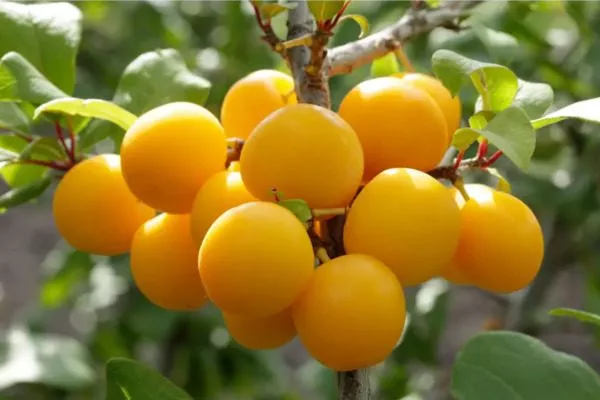
Podgornaya is the name of a plum variety characterized by early ripening and excellent winter hardiness. Its signature feature is the ornamental appearance of the tree, laden with beautiful yellow fruits, a true gem in any garden. It is suitable for growing both in the ground and in tubs or containers.
General information
This fruit variety was developed by Russian breeders specifically for temperate continental climates. It is highly adaptable, allowing it to be grown in a variety of conditions, including regions with cold winters.
This variety belongs to the early-ripening plum category. The main technical characteristics of Podgornaya are as follows:
- the time for harvesting fully ripe fruits is the end of July, the beginning of August;
- The productivity rate is low, up to 22 kg from 1 trunk.
This yellow-fruited variety is characterized by good immunity. It is sufficiently resistant to fungal infections and pests, allowing gardeners to avoid the use of chemical insecticides/fungicides and obtain an environmentally friendly harvest. Read on to learn about plum diseases and how to solve them. Here.
Appearance and growth characteristics
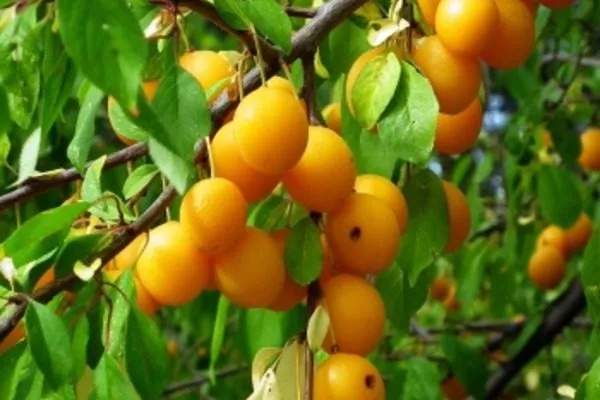
The Podgornaya plum tree is considered a low-growing plum. Its height ranges from 1.2 m to 1.4 m, making it much easier to care for and harvest.
The description of the plant's appearance includes the following features:
- crown: wide-round shape, quite compact, does not require frequent pruning;
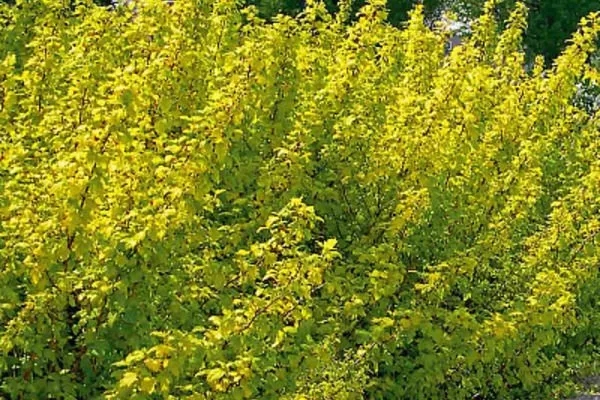
- foliage: thick, medium in size, with a pointed top, rich green with a glossy sheen, dense (in autumn it changes color to gold);
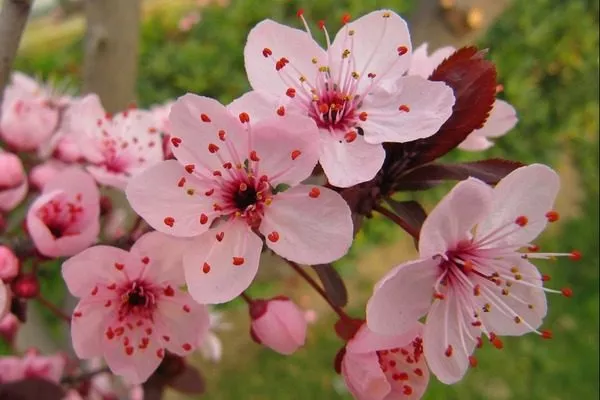
- flowers: white in color with a pinkish base, fragrant, giving the plant a special decorative effect during the flowering period, which occurs in the second half of April or the beginning of May.
The average annual growth rate is 15-20 cm. This ensures the tree maintains a beautiful shape and compact crown with minimal effort from the gardener.
Gardeners value the Podgornaya plum not only for its delicious harvest but also for its usefulness in landscape design. This small tree is highly decorative. It fits beautifully into plant arrangements, adds color to the garden, and serves as a decorative feature. Its lifespan is 15-20 years.
Fruits and their uses
The harvest of this variety is distinguished by its excellent consumer qualities. Despite its small size, the fruits have a neat, round shape and beautiful color.
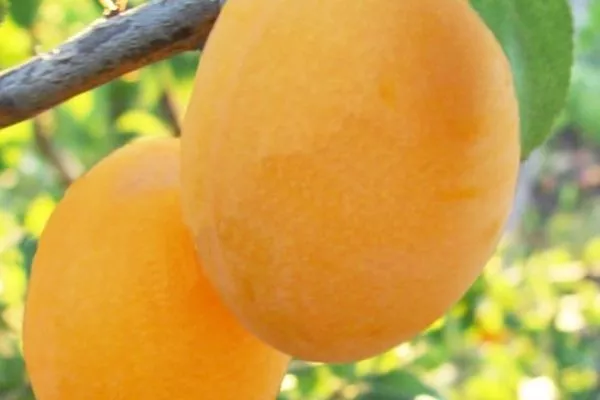
They are characterized by external data:
- weight - 10-15 g;
- smooth skin;
- bright sunny color (rich yellow);
- pulp: juicy, with a tender consistency, easily separated from the stone.
The fruit's tasting qualities are excellent. Experts describe its flavor as harmonious, combining a nectar-like sweetness with a pleasant, refreshing acidity.
Podgornaya's harvest has versatile uses. Plums are eaten fresh as a healthy summer dessert, used to make juices and purees for baby food, jams, marmalades, preserves, compotes, and pie fillings. Housewives also preserve them for the winter, drying them, and freezing them.
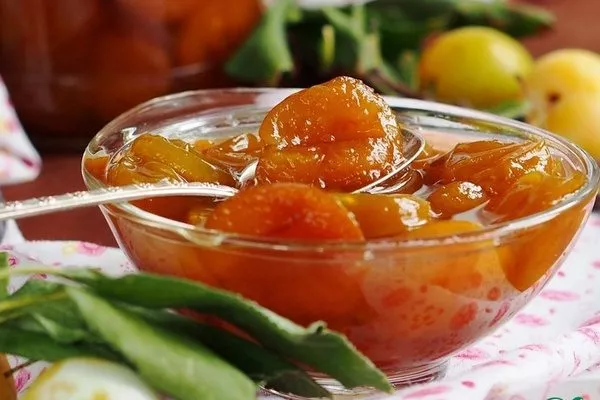
The shelf life of ripe yellow fruits ranges from 7 days (under normal conditions) to 10 days (in the refrigerator).
Resistance to external factors
This ornamental variety delights gardeners with its hardiness and undemanding nature. It withstands the vagaries of the weather:
- frosts down to -35°C;
- warm, snowy winters;
- thaw (the plant is not susceptible to root collar damping off);
- temperature "swings" during the cold season;
- spring frosts.
Thanks to its excellent cold resistance, the tree can be grown in areas with harsh climates and sparse snow cover. Proper insulation of the trunk and surrounding area is essential.
Planting and care
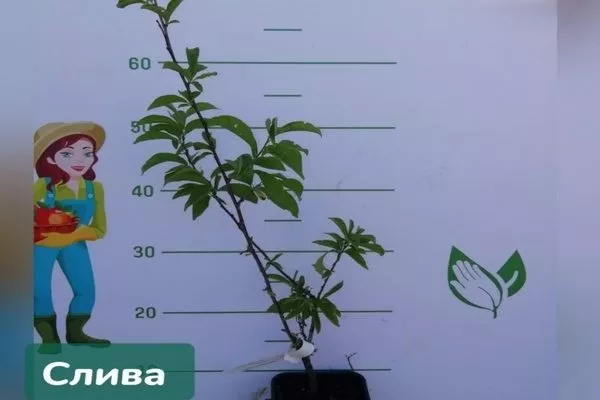
If you plan to grow a yellow-fruited variety in your garden, familiarize yourself with the proper agricultural practices. Following them will ensure the crop's good health and yield. Read more about planting and caring for plums. Here.
Planting dates
Plant a Podgornaya tree, purchased from a trusted seller (preferably a nursery), in your garden within the following timeframes:
- in April before bud break;
- in September-October before the cold weather sets in (in the south of the country, planting in November is acceptable).
In warm climates, gardeners practice this autumn procedure. Its advantages: the plant doesn't suffer from the scorching sun and roots well in moist soil, allowing it to survive the cold season.
Landing site
To ensure the Podgornaya seedling takes root well in your garden and grows quickly, choose the right planting location. It should meet the following requirements:
- be well lit and warmed by the sun for 1 day (light partial shade is also acceptable);
- protected from gusts of wind and drafts;
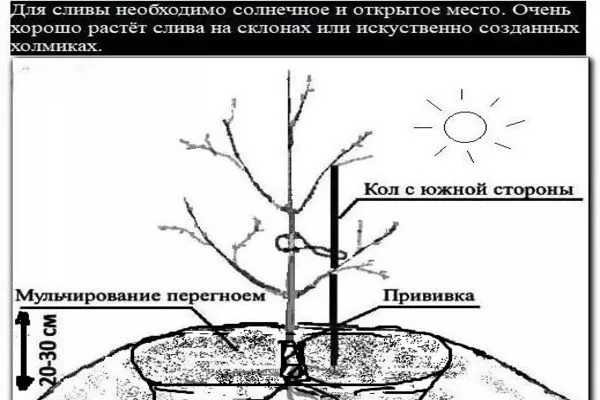
- located on an elevated area (in a lowland, fruit crops will suffer from dampness and cold);
- not swampy (there should not be a close occurrence of groundwater), without close proximity to a reservoir or well;
- not shaded by tall trees and buildings (distance - at least 3 m, location - on the south side of a large object);
- with fertile loamy soil, well-drained, moderately moist, neutral or slightly alkaline (with a pH of 7.0-7.5).
Preparing for landing
In the fall, if spring planting work is planned, or 14-20 days before it is carried out in September-October, carry out the following activities:
- digging up the soil on the site (processing depth - 30–35 cm);
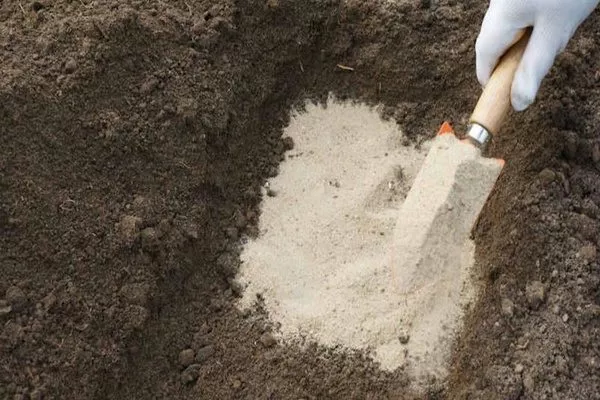
- application of fertilizers: humus (consumption rate - 5-6 kg/sq. m), wood ash (100 g/sq. m), superphosphate (40-60 g/sq. m);
- preparing the planting hole: give it dimensions of 60×60×60 cm, line the bottom with crushed stone or broken brick, fill with a mixture of turf soil with humus and sand (2:1:1), install a peg to tie up the tree (it should rise above ground level by 0.5 m);
- Water the hole generously and let the soil settle.
If the soil in the area you've chosen for planting yellow plums is heavy and compact, improve its structure by adding coarse sand. If the soil is highly acidic, consider adding dolomite flour or chalk.
From a nursery, choose two-year-old Podgornaya seedlings with well-developed roots, healthy and strong, or container-planted trees (with a closed root system). The former will need to be prepared for planting:
- inspect;
- remove damaged or dry root segments (cut them down to healthy tissue);
- soak in water for 12-24 hours, adding a growth stimulator or antiseptic.
Landing
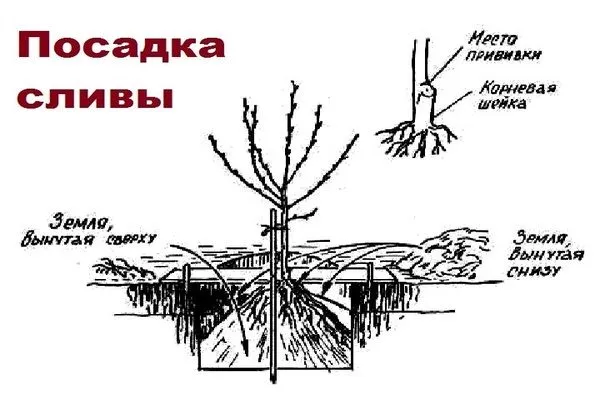
Carry out the work of transplanting the yellow-fruited plum tree into your garden, strictly following the step-by-step instructions:
- Place the seedling on a mound of fertile soil mixture, which should occupy 2/3 of the volume of the planting hole.
- Spread the roots. Cover them with soil without adding fertilizer. Do not bury the root collar. It should be 3-5 cm above the ground.
- Compact the soil around the trunk so that there are no voids left inside.
- Tie the seedling to the support using soft material.
- Water the plum tree generously. Use at least 20 liters of water per trunk, settled and warmed in the sun.
- After the moisture has been absorbed, carefully loosen the soil around the tree trunk and mulch it with organic matter (sawdust, compost, peat).
Trimming
The Podgornaya plum requires shaping in the first few years of its life. This ensures good tree productivity and helps maintain its ornamental appearance. Perform this in spring or fall, before or after the growing season.
It consists of the following manipulations:
- removing excess shoots in order to stimulate the growth and development of the trunk, strengthening it;
- formation of skeletal branches;
- giving the crown the correct shape (ideally it should be round).
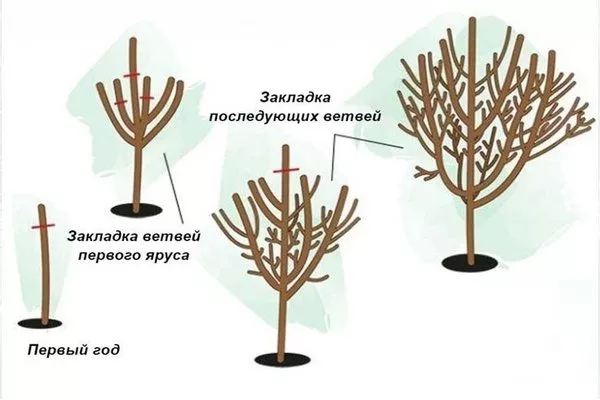
Fruit trees also require sanitary pruning. Perform this after the snow melts. Before bud break, remove all unproductive branches: dead, frozen, broken, or showing signs of disease or pest damage.
Fertilizers
The Podgornaya plum tree benefits from the addition of organic and mineral nutrients. Follow the fertilizing schedule:
- before budding use nitrogen fertilizers (saltpeter, urea) to stimulate the growth of green mass;
- after the crop has flowered use a potassium-phosphorus mixture or a mineral complex, carry out foliar treatment by spraying the tree's foliage with a solution containing microelements such as boron, zinc, and magnesium;
- in the fall, after harvesting ripe fruits, apply fertilizer again, which is characterized by a high content of phosphorus and potassium (it should not contain nitrogen).
Irrigation
During the first month after planting your plum tree, pay special attention to watering. Water regularly and sparingly. If the weather is dry, moisten the soil under the young tree at least once every 5-7 days.

Water the mature plant once the weather becomes consistently warm. Repeat the process as the topsoil dries. During hot months, water Podgornaya once every 10-12 days. Use 30-40 liters of warm, settled water (preferably river water) per trunk.
Take care of the trunk circle of the fruit tree, which includes the following mandatory measures:
- weed removal;
- loosening the soil;
- mulching.
Preparing for winter
When growing yellow plums in areas with a harsh climate, pay special attention to preparing them for the cold season:
- hill up the lower part of the trunk;
- mulch the tree trunk circle with a thick layer of peat, sawdust or humus, cover it with spruce branches;
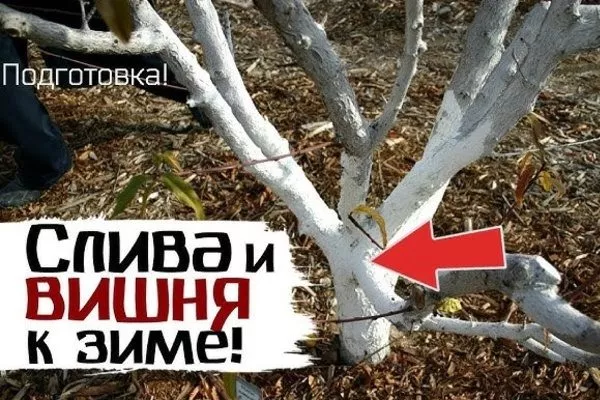
- whiten the trunk, insulate with burlap or agrofibre;
- Use a net or roofing felt to protect against rodents (make a protective structure out of the material around the lower part of the trunk).
Features of autumn planting of fruit tree seedlings
If you live in the south of the country, you can safely plant in the fall (October or early November). In warmer climates, winters are milder, and seedlings have time to adapt to the new conditions before the cold weather sets in.
Please take into account the following nuances:
- plant plum trees 3-4 weeks before the first frost;
- Provide it with protection for the winter by mulching the root zone and constructing a shelter for the seedling.
Pros and cons
Gardeners have come to love this varietal variety of the crop for its many undeniable advantages, such as:
Podgornaya also has several significant disadvantages that every gardener planning to grow it should be aware of:
Reviews
Podgornaya is an excellent early-ripening yellow plum variety, ideal for growing in the south and central regions of Russia. It is popular with gardeners for its low maintenance, good winter hardiness, and high ornamental value. Its harvest is distinguished by its attractive appearance and dessert flavor, and it is versatile in use.