
The red-leaved 'Pissardi' plum, with its unusual appearance, serves as a decorative fruit and is ideal for winter preserves. This variety is quite easy to grow and plant in your garden, provided you know a few tips.
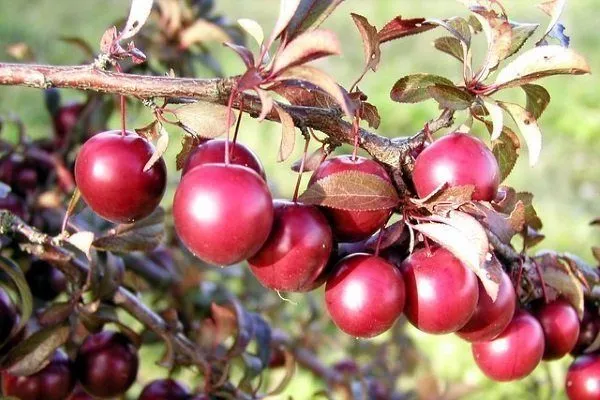
plum variety "Pissardi"
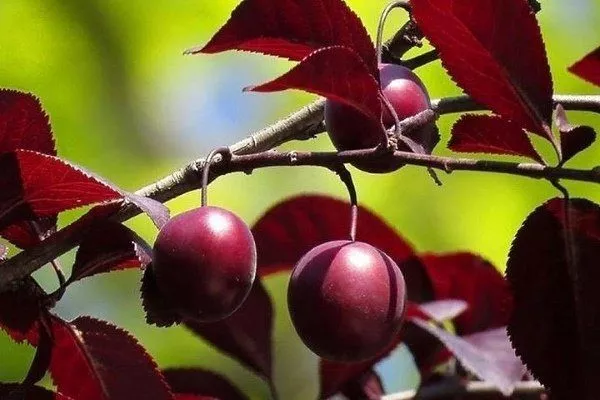
The Pissardi plum variety is valued for its decorative qualities
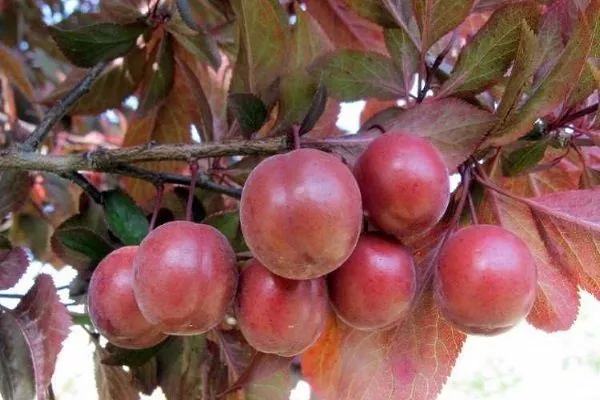
Although the fruits of the Pissardi plum are not large, you can still get a good harvest
Description of the variety
This variety's appearance makes it easy for gardeners to recognize it among other varieties. It's a member of the Rosaceae family. Let's take a look at its characteristics.
Tree
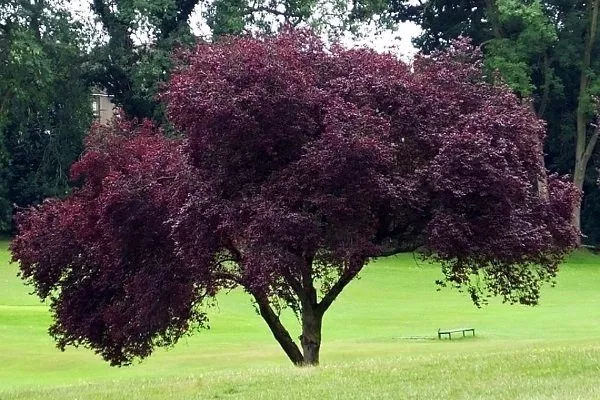
It has a decorative appearance. It attracts attention due to its spreading crown, which has given it another name – the spreading plum. It is characterized by the following features:
- height - from 5 to 9 meters, but there are also giants, up to 12 meters in height;
- dense, spreading crown;
- shoot color – red;
- the bark of the shoots is smooth and dark;
- the trunk is short, brown in color;
- Every year the shoots grow by 20-25 cm;
- leaves are oval;
- leaf length 5-7 cm;
- alternate arrangement of leaves;
- the color of the leaves is crimson or red;
- the color does not change during the growing season;
- leaf length – from 4 to 6 cm;
- Soft pink buds appear in April.
Fruit
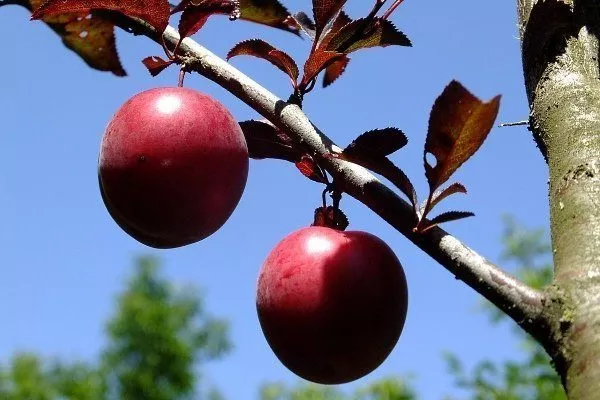
The fruits of the Pissardi plum are distinguished by the following characteristics:
- rich harvest;
- fruit size – 3 cm;
- weight ranges from 20 to 30 grams;
- round in shape and similar to cherry plum;
- fruit color – dark cherry;
- taste – sour and tart;
- inside there is a large oval-shaped bone.
How did the variety appear?
The variety's origin is Iran. Its name comes from the botanist Pissardi, who imported it and then brought it to Western Europe, particularly Paris. Gradually, the red-leaved plum spread throughout Europe, including Russia.
Varieties of the variety
| Name | Tree height | Leaf color | Fruit size |
|---|---|---|---|
| Early Pissardi | 7 meters | bright red | 3 cm |
| Cystene | 2 meters | red | 3 cm |
| Pissardi dark purple | 6 meters | dark purple | 3 cm |
Scientists are still unsure whether this variety is classified as a fruit or berry crop or an ornamental. Currently, several varieties of this unusual cultivar are recognized:
- Early Pissardi – grows up to 7 meters, has medium foliage, thin shoots, bright red color.
- Cystene – a hybrid of Pissardi and sand cherry. This small tree, up to 2 meters tall, is highly frost-resistant, which is why it is often planted in more northern regions.
- Pissardi dark purple – grows up to 6 m in height and has the lowest frost resistance. It can only be planted in frost-free regions.
Where does it grow?
In natural conditions it grows in the following regions:
- in the mountains of Western Asia;
- Abkhazia;
- Western Georgia;
- Adjara.
What are Pissardi's characteristics?
Gardeners choose Pissardi depending on their taste preferences and the main characteristics of the variety.
Edibility of fruits
Pissardi plums are juicy, dark cherry-colored drupes. They are edible, but not everyone will enjoy them, as their flavor is sour and tart. Despite their rather unappealing taste, the plum contains a wealth of beneficial micro- and macronutrients.
Flowering and pollination
The variety begins blooming around April. The flowering period ends about a month later, when the tree is already covered in leaves. At this time, the flowers turn a soft pink and bloom on a similarly shaded stalk.
As the flowering period comes to an end, the flowers turn brown, the stamens are a bright crimson hue, and the flower diameter is 2.5 cm. Plum flowers are considered very beautiful, and they also have a very pleasant scent.
Plums begin to ripen in August and can remain on the tree until October. The life cycle of the Pissardi plum tree depends on the growing region and can last from 35 to 90 years.
Pissardi requires pollinator trees to produce a bountiful harvest. Suitable for this purpose are:
- Chinese plum;
- other varieties of Pissardi.
Drought and frost resistance
Plum thrives in temperate climates—the tree easily copes with drought and heat, and does not like excessive moisture, so it is not recommended to plant it in areas close to water bodies.
It has low frost resistance; prolonged and extremely severe frosts are not suitable for it, as they are difficult and painful for the tree, so plant the plum in warm and sunny areas.
Transportability and storage
Harvesting plums 4-5 days before they're fully ripe will help them survive transportation better. However, if you're using plums for compotes or preserves, it's best to wait until they're fully ripe.
Productivity and fruiting characteristics
Pissardi plums are highly productive, with a single tree yielding approximately 15 kg of fruit. The plums remain on the tree for almost the entire warm season.
Pros and cons of the variety
Although plums do not have amazing taste qualities, they nevertheless have a number of advantages:
- the fruits hang on the branches for a long time;
- an unpretentious and unpretentious tree in care;
- the foliage, inflorescences and fruits have a beautiful decorative appearance;
- It is able to adapt to unfavorable conditions, which allows this variety to be grown within the city limits;
- is resistant to a large number of fungal infections and other diseases.
And a number of disadvantages:
- not the most delicious fruits;
- low level of frost resistance;
- the tree does not tolerate gusty winds and drafts;
- There should not be other plants nearby, as the plum does not accept neighbors.
Use in landscape design
This variety is very popular among landscape designers – it is perfect as a contrasting planting when creating landscape compositions, as this red-leaved beauty looks very impressive against a background of green trees and shrubs.
This plant is also used in landscaping alleys, parks, gardens, and city streets. It is a permanent component of both single and group plantings. Pissardi is often paired with cypress or acacia, as the combination creates a very striking effect.
The gardener explains and demonstrates how to use the red-leaved plum 'Pissardi' in landscape design in his video below:
Preparation and planting
Since Pissardi is an unpretentious variety, planting and subsequent care require little effort—simple guidelines are sufficient to ensure high-quality growth and a rich, stable harvest.
We recommend that you also read the article about How to plant and grow a plum tree.
Place and dates
Pissardi thrives on sun and heat. Plant the trees on the south side of the garden, away from strong winds and drafts, and avoid other trees blocking the plum. Be sure to measure the groundwater level—it shouldn't exceed 1.5 meters below the bottom of the hole, as Pissardi dislikes excess moisture. If this is unavoidable, use expanded clay drainage.
- ✓ The depth of groundwater should be at least 1.5 meters to prevent root rot.
- ✓ The distance to the nearest trees or buildings should be at least 5 meters to ensure sufficient space for growth.
Plant trees before the buds swell in the spring, as this will give the plants a chance to establish roots in the soil before the cold weather sets in. However, this doesn't mean autumn is unsuitable for planting. September is considered optimal, as the cuttings will also have time to adapt to the environmental conditions.
Neighborhood of cultures
This variety doesn't thrive in close proximity to other plants, as it prefers solitude and open space. Make sure the tree isn't surrounded by unfriendly neighbors. The following crops should be planted at a distance of at least 5 meters:
- berry bushes;
- evergreen tree varieties;
- apple trees.
You can't plant next to:
- red-leaf raspberry;
- pear.
Selecting and preparing a seedling
Planting material for this variety is divided into own-rooted and grafted. When choosing between open-rooted and closed-rooted varieties, choose the former, as they are more developed and have better rooting and growth potential.
Although nurseries may sell even large-sized trees (saplings 5 years old or older), don't rush into purchasing them in the hopes of a faster harvest. It's common for seedlings of this age to have clipped roots, indicating that they'll take another couple of years to establish themselves, during which time younger seedlings will catch up and overtake them in development.
When choosing a seedling, consider the following points:
- Pay attention to the level of root system development. Plum trees aged 1-2 years should have 3 to 5 main roots 25-30 cm long.
- The best time to choose planting material is in the fall. If you bought a seedling in early fall, plant it immediately, without waiting until spring. If you bought it in late fall, dig it in.
Planting instructions
Planting a seedling doesn't require a lot of investment or resources. You only need a standard set of tools and materials:
- shovel for holes;
- soil loosening agent;
- fertilizers;
- water;
- soft rope;
- a peg to tie the cutting.
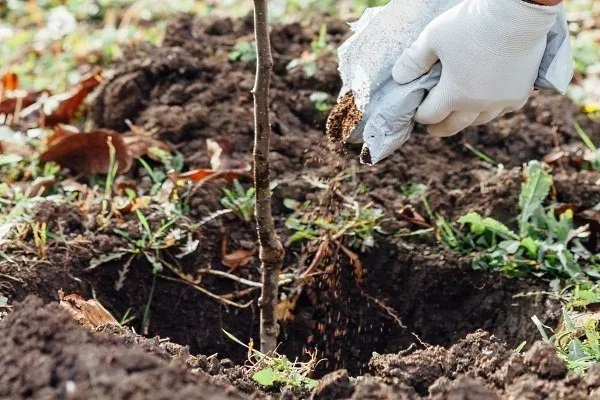
The planting process occurs in the following order:
- Prepare a hole measuring 50x70 cm (do this 2 weeks before planting), fill it with a fertile layer of soil that has already been mixed with compost and leave it in this state for 2 weeks.
- Install the landing stake.
- Place the seedling on the north side of the stake.
- Straighten the roots and place them in the hole so that the root collar is 3-5 cm above ground level, after which the roots can be covered with soil.
- Compact the ground.
- After completing the planting process, tie the plum tree to a stake, mulch the soil and water it well.
Care Features
Caring for the Pissardi plum is largely the same as caring for similar deciduous plants.
Watering
Even considering the growing region and its tolerance for drought, plum trees should be watered regularly and generously. Ideally, this should be done weekly from the second half of spring until the onset of autumn frosts, pouring up to 60 liters of settled, warm water onto the planted tree.
Top dressing
In the first year after planting, plums do not require fertilizer, but in the second year, adding fertilizer is a mandatory procedure, and depending on the time of year, the feeding schedule will change:
- Autumn. Fertilize with humus, spreading half a bucket per square meter, and potassium fertilizers (potassium sulfate, potassium nitrate, potassium chloride, etc.).
- Spring. Use sodium humate or nitrogen fertilizers, which help speed up the growth of annual shoots.
- Fruiting period. Additional fertilizers from urea.
- In the second year after planting, apply 50 g of nitrogen fertilizer in early spring to stimulate growth.
- In mid-summer, add 30g of potash fertilizer to improve drought tolerance.
- In autumn, add 5 kg of humus under each tree to prepare it for winter.
Wood processing and soil care
Always maintain good soil management: loosen the soil to allow the roots to receive oxygen, as the red-leaved plum's root system is shallow and requires constant access to oxygen. Remove weeds around the trunk. Loosen the soil after each watering. This procedure will help eliminate weeds that can cause damage to the plant, especially in the first few years.
Mulch the soil in spring (to warm the root zone and make it work actively) and in autumn (to prevent the root system from freezing during severe cold weather).
Tree pruning
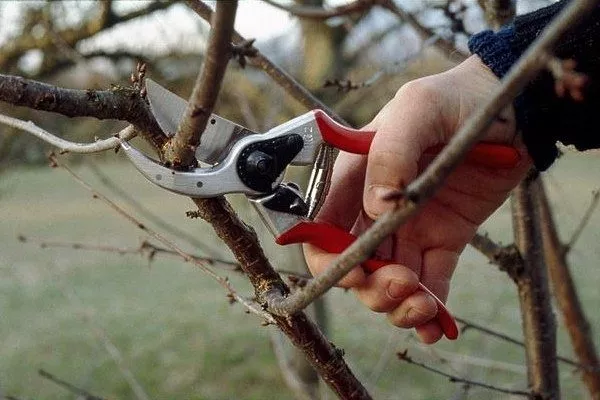
Tree pruning should be carried out according to schedule in the spring. Use both formative and sanitary pruning—the latter is especially important, as the tree should be free of diseased or dead branches before flowering.
If thickets form, sanitary pruning will help remove them and ensure normal access to sunlight.
If the tree shows signs of disease or parasites, pruning can be done at any time of year, as the main goal of this activity will be to save the tree.
Diseases and pests
Despite its good resistance to diseases and pests, it can still be susceptible to infection. The most common diseases of the Pissardi plum are:
- Powdery mildew – You can fight it with the help of fungicides.
- Trunk necrosis – can be detected at an early stage and all affected areas must be cut off immediately.
There are also several pests that can cause problems. This plum variety is susceptible to leaf rollers and fruit moths. Chemicals (such as bitoxibacillin and dendrobacillin) sprayed on the tree and surrounding area are effective against them.
To avoid such problems, you should follow a number of simple rules:
- Trim trees on time.
- Collect and remove all affected tree parts rather than abandoning them.
- Mulch the soil and remove weeds regularly.
- Fertilize and monitor the tree's immunity.
- Treat with insecticides.
To combat rodents such as hares and mice, tree trunks need to be treated with whitewash or a rosin solution.
Reproduction
Pissardi can be propagated in several ways:
- Seeds.First, sort through them, choosing the largest and healthiest ones. After cleaning them, soak them for four days, changing the water frequently. Once the seeds are dry, mix them with sawdust or sand and store for six months at a temperature of 0 to 10 degrees Celsius. After this process, the seeds can be planted in soil to a depth of up to 70 cm. This is usually done in the spring or fall.
- Root shoots – In the fall, cut off the root that connected the shoot to the adult tree, and in the spring, dig up the resulting seedling and plant it in another place.
- Root cuttings – Cut roots measuring 1.5 x 15 cm at a distance of 1 m from a young tree and 1.5 m from a mature tree. Prepare the area in the fall by adding up to 9 kg of humus per square meter, and in the spring, dig and level the soil again. When the outside temperature reaches around 5 degrees Celsius, you can plant the cuttings. Leave a few buds on the surface, water, and mulch the soil with fertilizer.
What feedback do gardeners give?
Pissardi is considered a more ornamental variety, growing in southern regions and enjoying great popularity among landscape designers. Its unusual appearance helps create a unique style, and the fruits are a source of beneficial vitamins and other nutrients.