
The Michurin Peach plum is distinguished by its early ripening period and high frost resistance, making it an ideal choice for central Russia. Its large, juicy fruits with a pleasant sweetness are perfect for both fresh consumption and preserves. This variety is characterized by stable yields and a strong immune system.
History of variety selection
At the beginning of the 20th century, renowned breeder Ivan Michurin set himself the goal of improving the Royal Rouge plum by creating a variety more resistant to cold and climate change. This is how work on the new variety began.
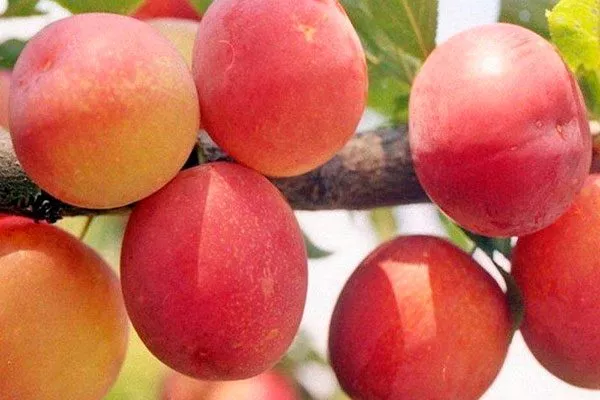
As early as 1921, the Michurin Peach plum was released, quickly capturing the attention of gardeners around the world. Thanks to careful selection, it not only successfully adapted to various climatic conditions but also surpassed its predecessor in a number of characteristics.
Description of plums and trees
The plant is considered medium-sized: its height usually does not exceed 4 m. The leaves are large, oval, with a rounded and slightly blunt end.
Features and distinctive characteristics of the fruits:
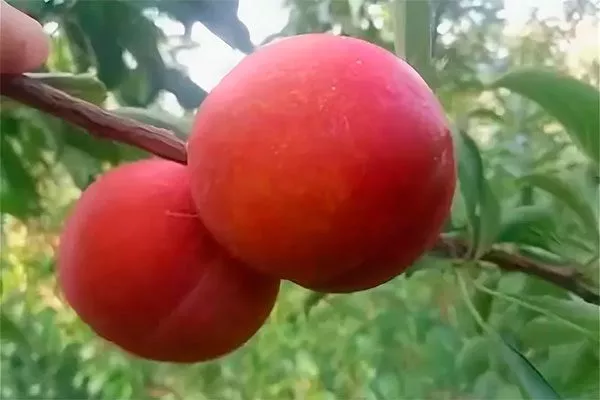
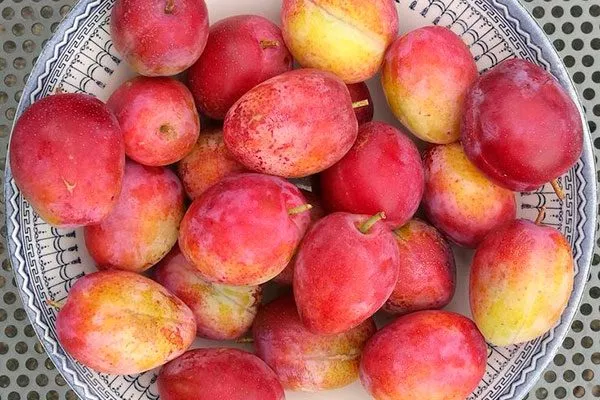
- They stand out for their impressive size – they reach 4-4.5 cm in length, and their weight varies from 50 to 60 g, sometimes reaching 70 g.

- The shape can be either round or oval, with a barely noticeable groove.
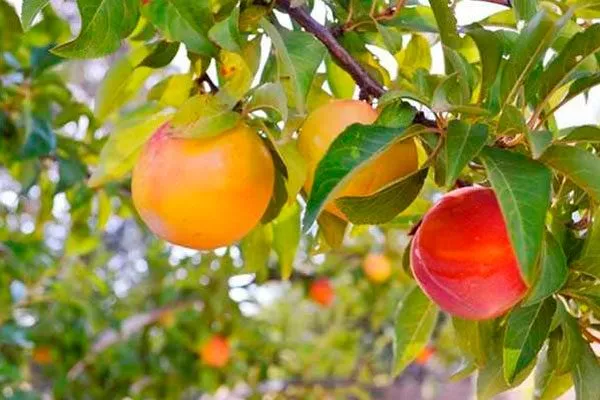
- The base color is yellow with a green undertone, and a bright orange blush appears on the sunny side. The skin is thick, with a characteristic bluish waxy coating.
- The flesh is juicy, tender, and pleasantly textured, with a greenish-yellow hue. The pit separates easily, making it convenient for processing. The flavor is balanced, sweet and sour.
Characteristics of the variety
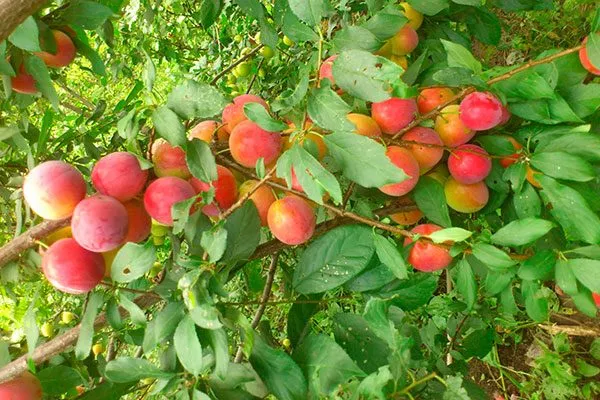
The Michurin Peach plum is distinguished by its large, aromatic fruits, good productivity, and other unique qualities. For over a hundred years, this variety has remained in demand due to its combination of high commercial quality, low maintenance, and versatile fruit.
Main characteristics:
- Drought resistance, frost resistance. The plant thrives in warm and moderately mild climates. It is tolerant of dry periods, especially with regular watering on hot days.
In regions with a cool climate and short summers, the Michurin plum adapts well. - Plum pollinators. This is a self-sterile variety, so pollinators are needed to produce a harvest. Best results are achieved when planted next to varieties such as 'Vengerka,' 'Renklod,' 'Mirabelle Nancy,' and other plums with similar flowering periods.
The tree blooms in July, and the fruits ripen at the end of August - beginning of September, when the harvest begins. - Productivity and fruiting. The plant is noted for its early fruiting—the first plums can be harvested within 5-6 years of planting. The tree reaches its peak yield by the fifteenth year, with a single tree capable of yielding up to 50 kg of juicy, sweet fruit.
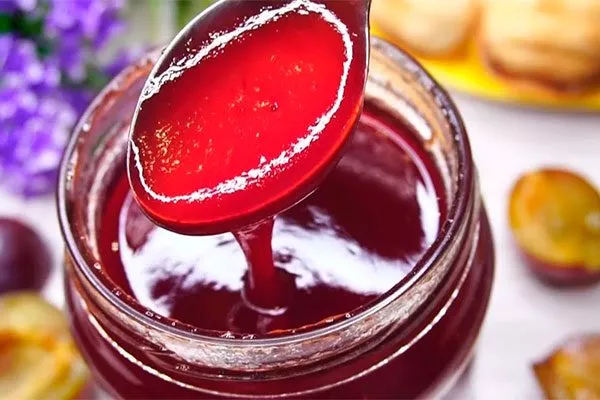
- Scope of application of berries. The fruits are versatile in use: they are eaten fresh with pleasure, and are also used to make jams, preserves, and compotes.
At room temperature, plums do not spoil for up to 4 days, and in the refrigerator they can be stored for about a month without losing their taste.
- Resistance to diseases and pests. The variety can be attacked by various insects and suffer from diseases, but has good resistance to their harmful effects.
Regular care and a range of preventative measures significantly increase the tree's resistance and help avoid serious damage.
Planting a plum tree
Growing a plum tree doesn't require much effort—following a few basic rules will ensure proper and successful operation. Even novice gardeners can easily handle it.
Recommended timing and selection of a suitable location
Plum seedlings are best planted in the spring, after the threat of frost has passed. Prepare the planting holes in advance, in the fall. Rooting in the fall is not recommended: young trees don't have time to establish themselves and grow strong before the cold weather sets in, increasing the risk of freezing.
Basic requirements:
- The Michurin Peach Plum prefers a sunny, draft-free location, so plant it on the south side of the plot.
- For normal root development, the tree needs more space—nearest plantings and buildings should be at least 5 meters away. Plum trees need ample space to ensure other plants don't interfere with their growth.
- In northern regions, be sure to choose a location with maximum sun exposure and protection from the wind when planting. Although the variety tolerates cold well, additional protection will help the tree adapt more easily to changing climate conditions.
What crops can and cannot be planted next to each other?
Certain crops are considered good neighbors for the Michurin Peach plum. The following plants can grow nearby:
- apple;
- currant;
- raspberry;
- gooseberry.
To naturally fertilize the soil, plant annual plants under the plum tree; as they die in the fall, they enrich the soil with nutrients.
Selection and preparation of planting material
To plant a plum tree, you'll need some basic tools and materials. Before you begin, gather everything you need:
- shovel;
- soil loosening tool;
- fertilizers;
- water.
Choosing the right planting material is the key to successful cultivation. Please note a few important points:
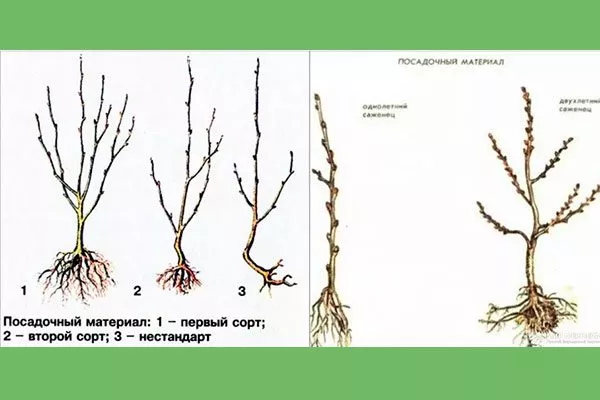
- Age of the seedling. Buy 1-2 year old trees – they take root more easily and begin to bear fruit faster.
- Root health. They are firm, without dry, rotten, or damaged areas. Ideally, the roots should be moist and elastic.
- Condition of the trunk and branches. The trunk is straight, free of cracks, disease, and pests. The bark is smooth, with no dried or frozen areas.
- Buds and branches. They are alive, not over-dried, and show no signs of disease.
- Absence of diseases and pests. Check the seedling for spots, plaque, rot, and insects.
To properly prepare a plant for planting, follow a few important steps:
- Inspect the roots and, if necessary, remove any damaged, dry, or overly long roots to encourage new growth. If they are too dry, soak the seedling in water for 6-12 hours.
- Treat the root system - to protect against diseases, soak it in a solution of fungicide or diluted clay with mullein (mash) for 30-60 minutes.
Landing algorithm
Creating optimal conditions for the growth of the Michurin Peach plum begins with proper planting, where site selection and soil quality play a key role.
This variety prefers fertile, well-drained soil without stagnant moisture, so it is important to check the depth of the groundwater.
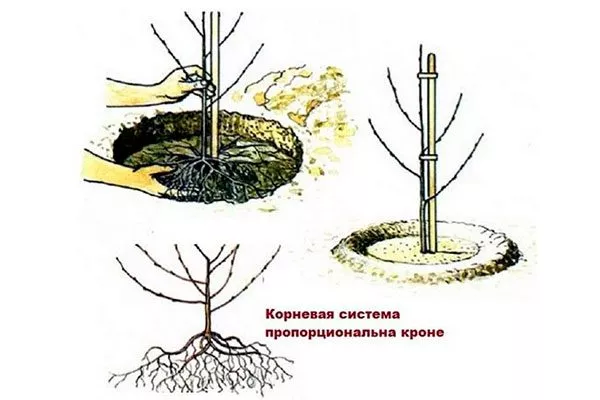
By following a simple sequence of steps, you will ensure the tree grows quickly and produces a good harvest:
- The hole for the seedling should be at least 50 cm deep and 70 cm in diameter. Dig the hole in advance – in the fall.
- Mix the extracted soil with compost, charcoal and other fertilizers to enrich the soil.
- Place a stake about 1 m high at the bottom of the hole to which you will tie the seedling – this will provide it with additional resistance to the wind.
- Carefully straighten the roots, placing them approximately 5 cm from the bottom of the hole.
- Cover the seedling with prepared soil in layers, carefully compacting each one.
- After planting, moisten the tree with 20 liters of water.
Two years after planting, remove the stake to which the seedling was tied so as not to restrict the growth of the tree.
Aftercare of plum
Particularly in the first months after planting, it's crucial to strictly adhere to basic agricultural practices. Caring for the crop not only promotes good growth but also increases productivity.
Fertilization and soil care
To effectively utilize the soil in the garden, it's recommended to plant currants or gooseberries between young plum trees. By the time the tree begins to bear fruit (in 6-7 years), the bushes will have yielded fruit, after which they can be removed and replaced with honey plants or strawberries.
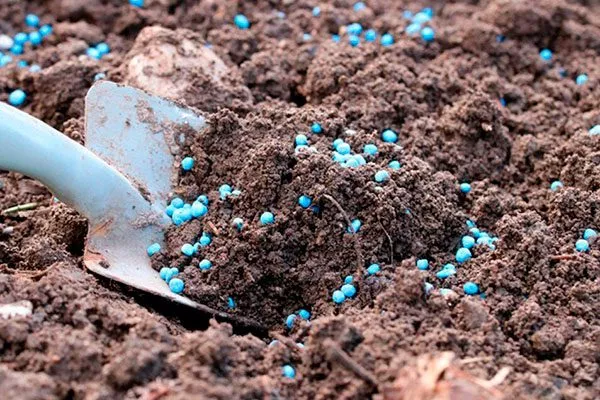
Maintain the soil in the tree trunk circle in two ways:
- black steam – Weed and loosen the soil regularly (2-3 times a month);
- natural turfing – Mow the grass 3-5 times per season, leaving it in place as mulch.
For normal growth and a good harvest, plums require organic and mineral fertilizers. Follow this schedule:
- In the first 1-2 years after planting, do not feed the tree - it receives nutrition from substances added to the planting hole.
- Starting in the third year, apply urea during spring tillage at a rate of 20-25 g per 1 square meter of the trunk circle. If the plum tree bears fruit regularly, fertilize annually. In the fall, apply 10-12 kg of organic matter (manure or compost), 55-60 g of superphosphate, 20-25 g of potassium salts, or 200-250 g of wood ash.
- At the age of 15-20 years, when fruiting reaches its maximum, increase the amount of organic matter by 1.5-2 times, and leave the doses of mineral fertilizers the same.
- After applying fertilizer, dig up the soil around the tree trunk immediately: to a depth of 15-20 cm at the periphery and 10-12 cm near the trunk. You can apply organic and mineral solutions simultaneously.
- In spring and summer, plum trees may require additional nutrition, especially before flowering. Chicken manure or poultry manure diluted with water at a ratio of 1:9 is suitable for this purpose. Use 5-6 kg of this solution per tree.
- When using mineral fertilizers, apply potassium nitrate (20 g per 10 liters of water), using 20-30 liters for a young tree and 40-60 liters for a mature tree. Apply the fertilizer into circular furrows around the perimeter of the tree trunk, 15-20 cm deep.
- In years with a low harvest, do not use autumn fertilizers, and in summer - only once, to avoid excessive growth of shoots and a decrease in the formation of flower buds.
Watering
Plum requires uniform soil moisture, since its roots are in the upper layer, and the tree reacts sharply to drought.
Key recommendations:
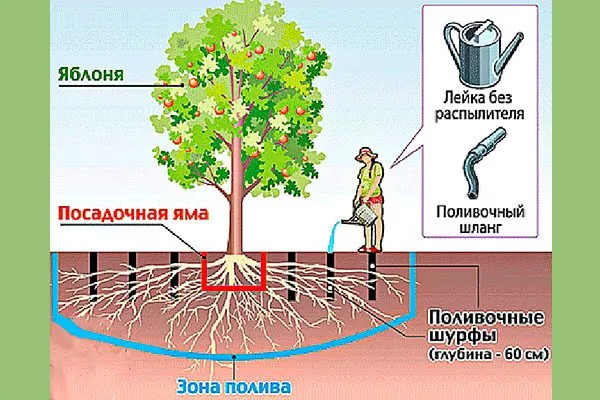
- Young plants require 5-6 waterings of 20-40 liters of water each in summer, and a moisture-recharging watering of 60-80 liters in autumn to successfully prepare for winter.
- Water fruit-bearing trees 3-5 times per season. It's especially important to water plums in the spring during shoot growth and flowering, and in the summer during fruit set and ripening.
- If there's insufficient moisture, shoot growth slows, ovaries fall off, and fruits become smaller and fall off. During hot summer days, be sure to water the plum tree, using 40-60 liters of water. Afterward, mulch the soil with peat to retain moisture.
- Overwatering is just as harmful as drought – it can cause fungal diseases of fruits, autumn shoot growth, and even repeated flowering, which weakens the tree and reduces its winter hardiness.
Pruning and shaping the crown of a young tree
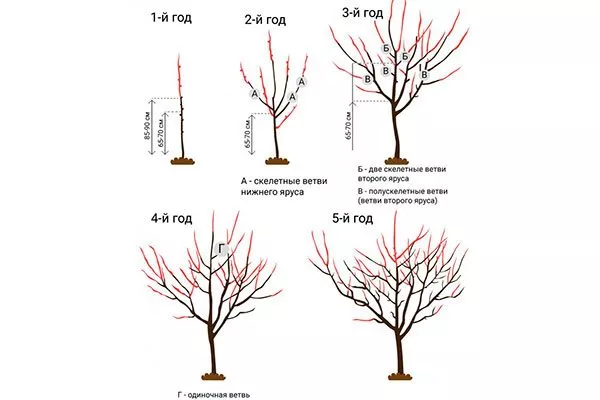
Avoid pruning branches during the first year. Nurseries typically prune seedlings heavily, and additional pruning will slow down root recovery.
Requirements and recommendations:
- Young trees aged 3-4 years grow very quickly – shoots can reach up to 2 m in a season. To prevent the crown from becoming too elongated, pinch back in the summer when shoots reach 35-45 cm in length.
- To properly structure the crown, use a leader form with a central leader and two tiers of main branches. Each tier should have 3-4 shoots, and the distance between the first-order branches in the upper tier should be 45-60 cm.
When the tree reaches a height of 2-2.5 m, shorten the central stem by cutting it back to a side branch. Form a low trunk—about 20-30 cm—to increase the tree's winter hardiness. - Carry out this procedure in the fall or early spring (March). After severe winters, additional sanitary pruning in May is allowed, and diseased branches can be removed throughout the season as needed.
- Fruit thinning is another important type of pruning. If the harvest is excessively abundant, perform the procedure twice: once when the plums reach the size of a hazelnut and form a pit, and again when they double in size. Leave 6-8 cm between the fruits to improve their quality and size.
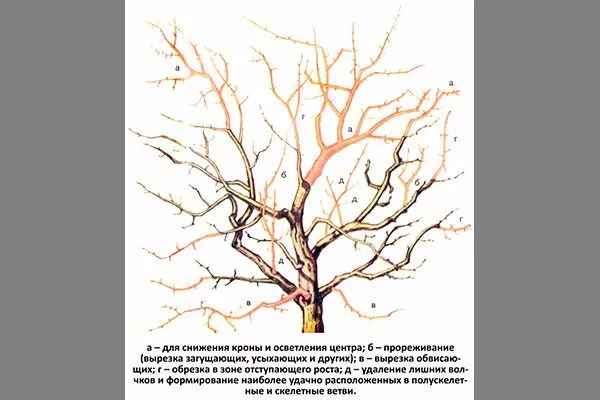
During the full fruiting period, thin the crown regularly, removing any branches that are crowding or growing incorrectly. Three to five times during the summer, prune root suckers at the base to prevent them from weakening the tree. Cover any exposed roots with soil afterward.
Preparing for winter
The Michurin Peach plum is not particularly winter-hardy and often suffers from freezing in central Russia, as well as being poorly suited to severe winter frosts. Therefore, to protect the tree over the winter, it needs to be insulated.
Basic requirements:
- Wrap the trunk and main branches with spruce branches, burlap, roofing felt, reeds, or other similar materials that also protect against rodents.
- Cover the tree trunk circle with a 25-30 cm layer of sawdust or peat.
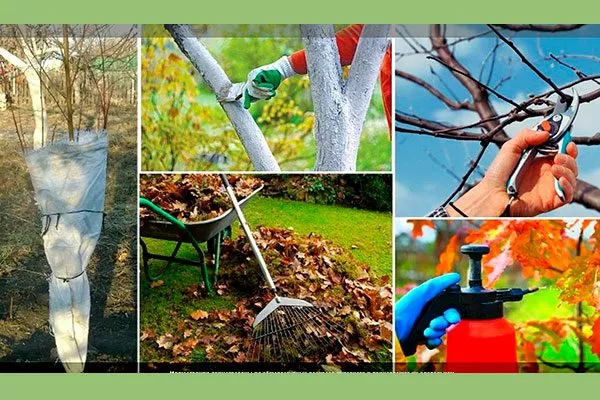
In addition to freezing, damping-off—the death of the bark and cambium at the base of the trunk—is a danger in winter. This occurs during frosts caused by loose, deep snowfall (15-20 cm or more), under which the temperature remains around 0°C. Regularly compact the snow around the trunk, thoroughly packing it down 3-4 times over the entire area.
Diseases and pests, methods of control and prevention
The culture is characterized by good immunity, but under unfavorable conditions or improper care it can be subject to some misfortunes.
Common diseases and parasites:
| Disease/Pest | Symptoms | Methods of control |
| Gum flow (gummosis) | Gum streaks appear on cracks and cuts in the bark. Weakened or frozen trees are usually affected.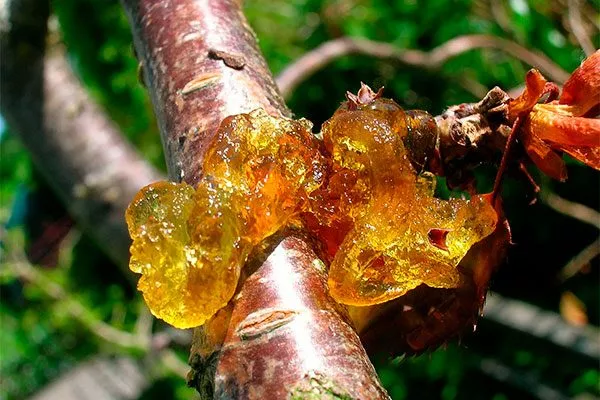 | Follow proper agricultural practices. Treat wounds with a 1% copper sulfate solution and cover them with petrolatum. Remove severely damaged branches. |
| Hollow spot | Pale brown spots with a reddish border appear on the shoots, which then crack and release gum. Leaves become covered with holes and, in severe cases, dry out. Fruits develop purple, sunken spots that eventually turn brown.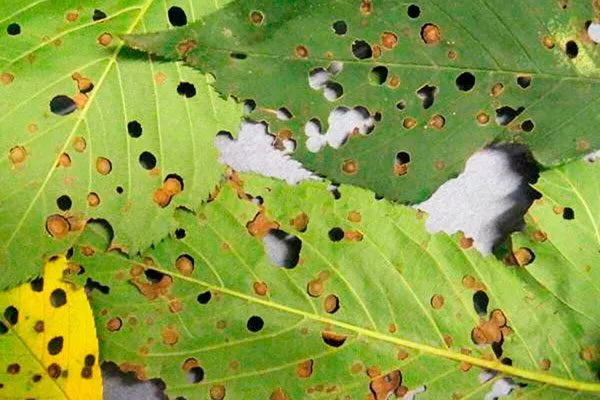 | Spray with nitrafen (2%) or Bordeaux mixture (3%) after leaf fall or early in spring. If infestation persists, prune to 3-5 year-old wood. Remove and destroy affected leaves and branches. Thin out the crown regularly. |
| Fruit rot | Sudden browning and drying of flowers, leaves, and young shoots. Plums rot, and gray spore-bearing pads appear on them.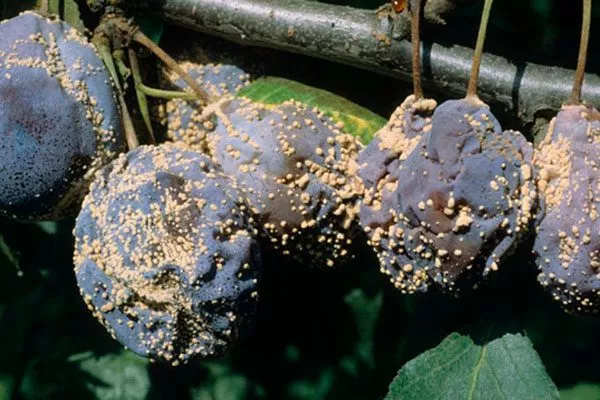 | Prune affected branches back to healthy wood. Treat with nitrafen (2%) after leaf fall or in early spring. Use Bordeaux mixture (1%) or copper oxychloride (80 g per 10 liters of water) before and after flowering (4 liters per tree). In the fall, till the soil, covering the leaves. |
| Marsupial disease | The fruits become deformed, resembling pitted sacs. By midsummer, a gray fungal growth appears, and the plums fall off. The disease recurs annually.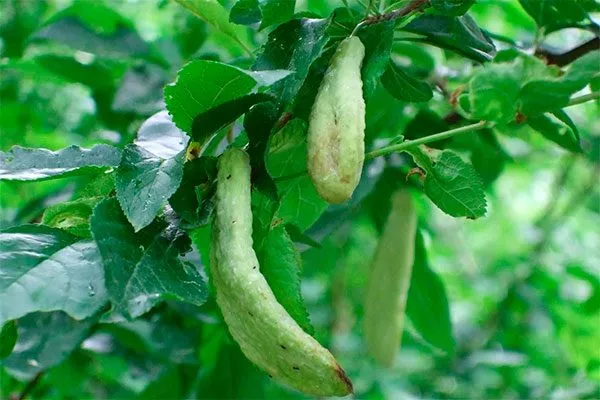 | Immediately remove and burn diseased fruits and branches. Apply a 3% Bordeaux mixture during bud swelling and a 4% Zineb suspension before flowering. Ensure adequate ventilation of the crown to avoid overcrowding. |
Pros and cons
The Peach plum is excellent for transportation: the fruits remain fresh for a long time and do not lose quality during transit.
Gardeners note that this variety has no significant drawbacks.
Reviews
Michurin's Peach is a reliable plum variety that combines high winter hardiness and excellent fruit flavor. Disease resistance and consistent fruiting allow for a bountiful harvest even in unfavorable conditions. Thanks to its strong skin and excellent shelf life, the fruit stays fresh for a long time.