
The Peach plum variety originated in Western Europe. Most gardeners grow it in their gardens and vegetable plots, eagerly awaiting each harvest because its fruits grow large, juicy, and sweet. Furthermore, the Peach plum is considered a wonderful garden ornament.
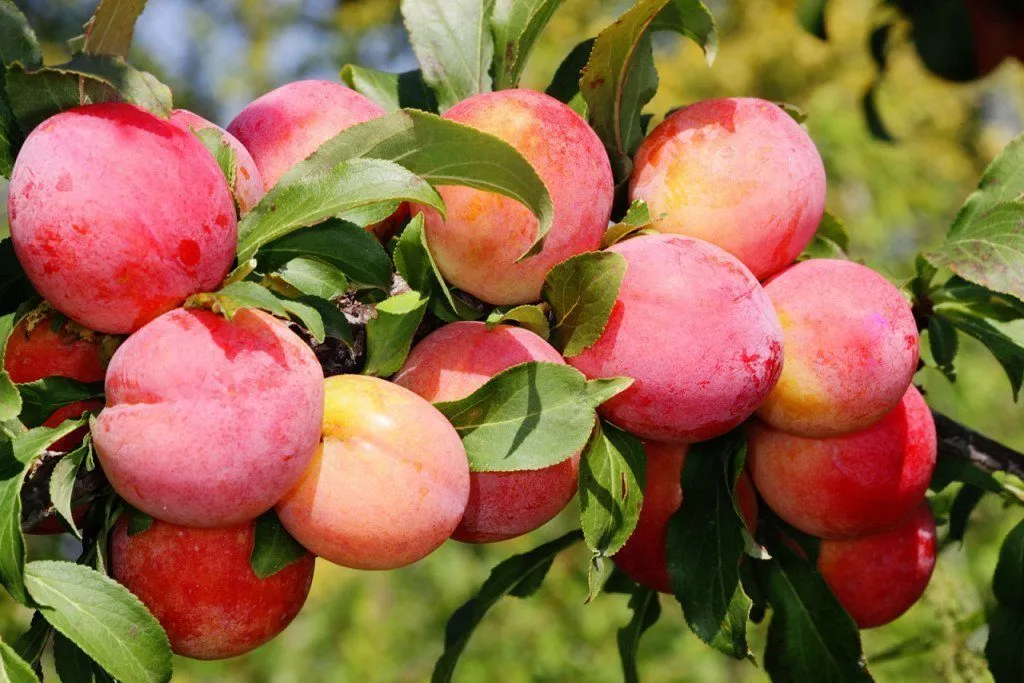
plum variety "Peach"
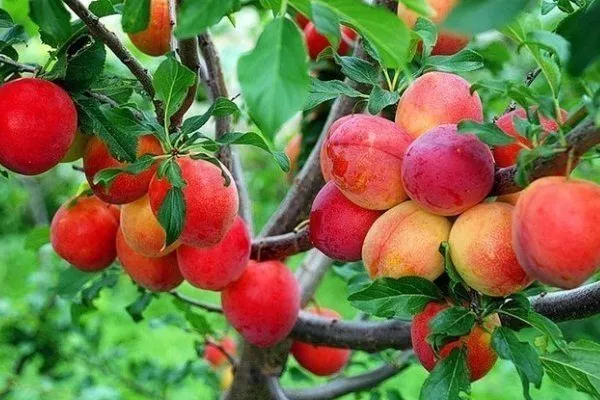
Peach plum delights with a rich peach aroma
How did the variety appear?
No one knows the exact origins of the Peach Plum. It is only known that ownership is shared between two countries: France and England. For now, the Peach Plum is a variety of Western European origin with early-ripening fruits. It has been known since 1830 and has two other names: Royal Rouge and Red Nectarine.
France is considered a more suitable place for breeding this variety due to its climate, but England at that time was making many discoveries in various fields and plant growing was no exception.
If you are interested in other varieties of plums, you can read this article.
Description and characteristics of peach plum
Like any variety, peach plum trees also have their own distinctive features by which they can be distinguished from other plum varieties:
- average value;
- the crown is round with medium-sized foliage;
- thick and powerful branches;
- bark color - brown-gray;
- leaf color – bright green;
- the leaves are large and serrated at the edges;
- blooms late;
- fruits grow on thick stalks;
- the fruits are large;
- weigh up to 70 grams (average weight – 45-50 grams);
- fruit height – up to 4.5 cm;
- width – up to 4.5 cm;
- thickness – up to 4.0 cm;
- the peduncle is not thick and short (from 7 to 10 mm);
- shape – round or egg-shaped;
- the skin is thick with a waxy coating;
- the flesh is yellow, dense and elastic;
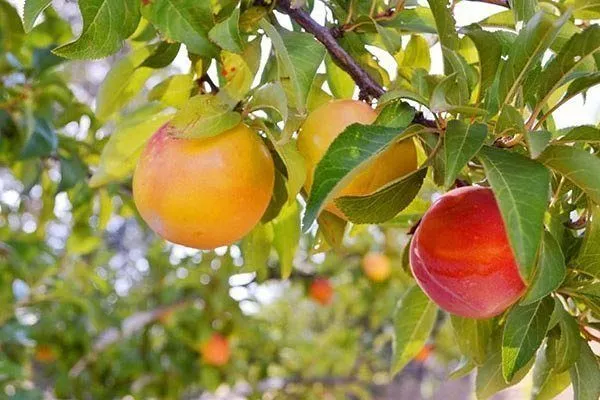
- the color of the ripe fruit is yellow-green, and one side is reddish;
- the stone is round-oval.
Where does it grow and in what climate?
The peach plum ripens in summer, so for good growth and fruiting, it requires plenty of sunlight and warmth. Therefore, its habitat is:
- Armenia;
- Azerbaijan;
- Georgia;
- Ukraine (Transcarpathian and Nikolaev regions);
- Moldova.
In Russia, this plum can be found in the following regions:
- Stavropol Krai
- Krasnodar Krai;
- Dagestan;
- Ingushetia;
- Rostov region.
Drought and frost resistance
The peach plum is a heat-loving tree—it prefers a mild, warm climate and can easily withstand both summer heat and drought (as long as it's watered regularly). The plum has average winter hardiness and frost resistance.
In the climate of the Moscow region, Astrakhan, and northern Ukraine, trees can often freeze, so it's important to cover them in winter. The peach plum is particularly hard hit by extremely harsh and cold winters.
Pollinators
| Name | Ripening period | Yield (kg per tree) | Disease resistance |
|---|---|---|---|
| Altana | Average | 30 | High |
| Lodva | Early | 25 | Average |
| Mirabelle Nancy | Late | 20 | High |
| Greengage | Average | 35 | High |
| Homemade Hungarian | Late | 40 | Average |
| Anna Shpet | Early | 30 | High |
| cherry plum Comet | Early | 25 | Average |
| cherry plum Lama | Average | 20 | High |
The Peach plum tree itself is sterile, so pollinator trees must be grown within a radius of 12-15 meters. It's important to focus on early-fruiting varieties: a consistent flowering time is an important and essential factor for successful cross-pollination. The following plum varieties are excellent for this purpose:
- Altana;
- Lodva;
- Mirabelle Nancy;
- Greengage;
- Hungarian home-made;
- Anna Shpet;
- cherry plum Comet and Lama.
Productivity and fruiting
The peach plum is an early-bearing variety. The first harvest can be expected within 5-6 years of planting. A stable harvest begins around age 15 – during this period, a single tree can yield up to 50 kg of excellent fruit.
Resistance to diseases and pests
The peach plum is fairly resistant to pests and diseases, but there are still a number of diseases and parasites that can harm this variety. Proper care and preventative measures can increase its resistance to these harmful diseases.
Peculiarities of planting peach plum
Planting a plum tree doesn't require a huge amount of effort—just know some simple rules and recommendations, and you'll get excellent results.
Requirements
Since the peach plum is a heat-loving tree, it requires a location with abundant light and warmth. Therefore, choose a site with good sunlight and shelter from north winds. All nearby trees and buildings should be at least 5 meters away. The plum needs plenty of open space to allow its root system to develop rapidly.
Plants that can be planted next to the Peach Plum:
- apple;
- gooseberry;
- currant;
- raspberry.
Plants that should not be planted next to this variety:
- cherries;
- cherry;
- pear.
Soil preparation
The soil should be fertile and adequately moist, but not soggy that it becomes waterlogged. Neutral loam or black soil are suitable. Groundwater availability is also important: if the groundwater level is less than 1.5 meters below the surface, an artificial mound 60 cm high should be created for the tree. Prepare this in advance, in the fall, and the planting hole can be dug in the spring, approximately 2-3 weeks before planting.
- ✓ Soil pH should be between 6.0-6.5 for optimal nutrient absorption.
- ✓ The groundwater depth must be at least 1.5 m to prevent root rot.
The hole should be about 70 cm deep and at least 60 cm in diameter. The bottom should be drained with large pebbles, after which a fertile mixture should be placed in a mound consisting of:
- 20 cm of top soil;
- 20 kg of manure;
- 15 kg of coarse river sand;
- 120 g superphosphate;
- 60 g potassium chloride;
- 300 g of ammonium nitrate.
Selecting and preparing a seedling
To avoid making a mistake with the material you choose, pay attention to the following characteristics:
- the seedling must be whole, fresh and without breaks;
- healthy, without signs of disease;
- choose a seedling 1-2 years old;
- make sure that the root system is well developed and closed;
- The height of one-year-old seedlings is 1-1.3 m, and those grown from seeds – 1.5 m.
Each unit of planting material must contain a tag containing all the information about the variety, its producer, breed, and favorable growing zone.
Saplings purchased in the fall should be given a proper wintering. Choose a spot in the garden for the tree and plant it at a slight angle, roots down, in a prepared hole. Then, fill it with soil until the root system is completely covered and the trunk is covered by a third from the bottom. Cover the top of the saplings with spruce branches to protect them from rodents.
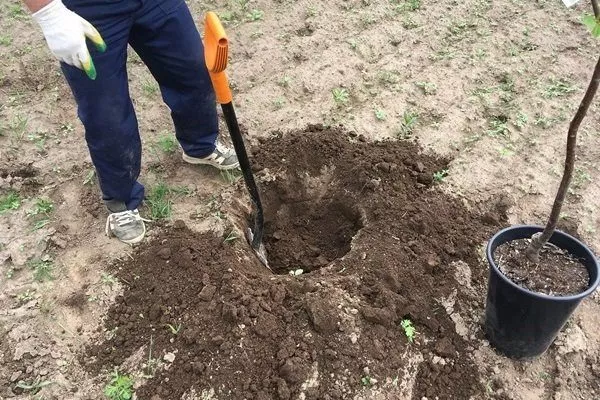
Planting instructions
Take the planting process seriously to ensure your trees grow in the best possible conditions. It looks like this:
- Make sure the seedling is completely intact and remove any rotten or dry shoots.
- Place the seedling in a 3% solution of manganese on 1-3 trunks for 14 hours.
- Treat the roots with a mixture of manure and clay (2 kg of clay to 1 kg of manure, mix until the consistency of thick sour cream), then let dry for 2-3 hours.
- Drive a 1.5 m high stake into the hole at a distance of 10-15 cm from the center.
- Form the soil in the hole into a mound, then place the seedling on top so that the plum root collar is 5-8 cm above the final soil level.
- Spread the roots of the cuttings out. They should be 5 cm from the bottom of the hole.
- Gradually cover the seedlings with the soil that was prepared ahead of time, carefully laying each layer.
- Pour two buckets of water over the planted tree.
- Remove the stake after two years.
What care is required?
Planting a tree is only half the job, as the real work begins next: caring for and maintaining it. Caring for a peach plum involves regular fertilizing, watering, pruning, loosening the soil, and removing weeds—this is the only way to ensure a healthy tree with large, tasty fruits.
Loosening and watering
Soil cultivation after planting is an important part of subsequent tree care. The area around the trunk helps provide the tree with air, water, and nutrients. The area around the trunk should be larger than the crown due to the tree's wide-growing root system.
To dig the soil properly, the flat of the shovel should be positioned along the radius of the tree's trunk circle to avoid damaging the roots, as they will take a long time to recover. The depth of loosening depends on the distance from the trunk: the closer to the trunk you dig, the shallower the depth should be (7-8 cm), while for the rest of the trunk circle, the distance should be 10-12 cm.
Watering should be done with extreme caution. The tree should be watered generously only during periods of active shoot growth and flowering (May-June), as well as during harvest ripening and root growth (August-September).
When watering, it is important not to overdo it, as overwatering can lead to the following consequences:
- the leaves turn yellow and dry out;
- tree growth slows down;
After planting, water the tree once a week with two to three buckets of water. Water a mature plum tree 5-6 times per season, using four buckets of water each time.
As the fruit ripens, water even more—6-8 buckets at a time. If the summer weather is too hot and dry, increase the amount of water as needed, as without sufficient watering, the fruit will fall off unripe. And in the fall, before preparing for winter, perform a moisture-replenishing watering.
Avoid pouring water under the tree trunk; instead, create furrows around the outer edge of the tree. Sprinklers are ideal for ensuring even water distribution.
Fertilization
The Peach Plum tree draws a large amount of nutrients from the soil, so provide it with regular fertilization. Feeding times are typically tied to pruning. However, during the first season, additional fertilization is not necessary, as it receives all the necessary nutrients from the soil used during planting. However, you can spray the seedlings with growth stimulants every 10 days—do this in calm weather.
- In the first year after planting, apply 100 g of ammonium nitrate in early spring.
- In the second year, add 50 g of superphosphate and 30 g of potassium salt at the end of summer.
- In the third year, use a complex fertilizer NPK 10-10-10 at the beginning of the growing season.
The feeding process occurs as follows:
- Start using urea in the second year, adding 45 g of fertilizer to every 10 liters of water.
- Fertilize with urea when the flowering period begins at a ratio of 45 g per 10 l of water.
- Add nitrophoska when the fruits begin to ripen, in a ratio of 3 tablespoons of the substance per 10 liters of water.
- Once the harvest is complete, apply 30g of potassium sulfate and superphosphate.
- Fertilize with rotted manure (1 bucket per 1 tree) in late autumn.
- Before you start fertilizing the soil, first water it and loosen it.
Trimming
Starting in its first year, the tree needs to be pruned. Prune to form the crown of the tree—this will help accelerate the growth of lateral shoots. If you planted a two-year-old sapling, shorten the branches by 1/3.
In the third or fourth year after planting, young trees begin to grow very rapidly—sometimes shoot growth can reach 2 meters in a single year. Therefore, all subsequent pruning is aimed at shaping the tree's crown, and this is done before the buds open. Trees are trained using a sparsely layered system, as this ensures sunlight reaches all branches and makes harvesting easier.
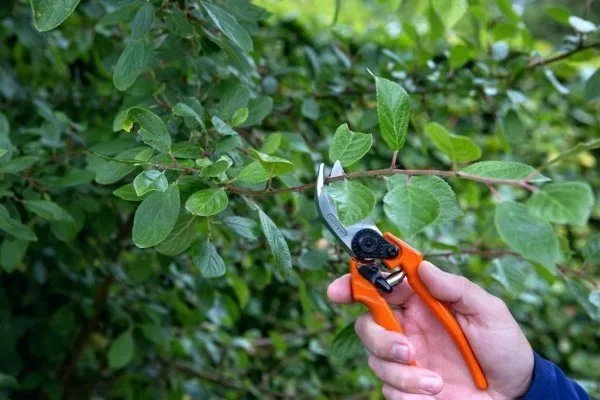
Pruning according to the sparse-tiered system looks like this:
- Select 5-7 strong and healthy shoots from the skeletal branches so that they grow in all directions.
- Cut the remaining branches to a ring so that a ring-shaped growth is visible, that is, right to the base.
- Arrange the rows of branches so that there are 3 branches in the bottom row, 2 in the middle, and 1 in the bottom row. Leave 50 cm between branches.
- Cut the central conductor so that it is 20 cm higher than the other branches.
- Cut off any branches that are frozen or dried out.
Also consider thinning the fruit. This method helps improve the quality of the harvest by reducing its quantity. The first thinning is done when the plums are still the size of walnuts, and the second when they have doubled in size. The remaining fruit will receive significantly more sunlight and nutrients, which has a positive effect on fruit size and flavor.
Preparing for frost
To ensure a good harvest, in addition to all the above measures, it's important to ensure the tree overwinters safely. Temperature fluctuations negatively impact the peach plum tree—bark burn can occur, and this phenomenon is most noticeable in February and March, when the difference between day and night temperatures is very significant.
To ensure a good wintering of the tree, whitewash the trunk with diluted lime and wrap it in burlap or heavy paper. Also, to increase frost resistance, regulate watering and fertilizing. Apply a thick layer of sawdust or peat, at least 25-30 cm. During severe frosts, you can smoke the tree, which increases the air temperature around the seedlings by 3-4 degrees.
Another winter threat to plum trees is damping off, when the bark at the base of the trunk begins to die. This occurs during frosts that follow heavy wet snowfalls, with temperatures below freezing around 0 degrees Celsius. To avoid this, it is recommended to pack down the snow around the trunk.
List of possible pests and diseases
Despite its relative resistance to pests and diseases, it's still worth periodically carrying out preventative and curative measures. Plums are most susceptible to moniliosis, rust, marsupial disease, and clasterosporium.
- Moniliosis or monilial burn – affects ovaries and leaves, turning them brown and dry, and mummifying the fruit. Treatment should be with copper-containing preparations before bud break. As a preventative measure, avoid overcrowding and prune regularly.
- Marsupial disease – the fruits fail to form seeds and remain hollow, while the surface becomes covered with a coating of spores. Treatment should be with a 1% Bordeaux mixture solution after flowering and at the beginning of fruit ripening. As a preventative measure, prune and destroy infected parts of the tree and harvest diseased fruits.
- Clusterosporiasis – Leaves are affected by brown spots with a dark border. Treat with a 3% Bordeaux mixture before and at the end of the growing season. As a preventative measure, prune and destroy infected parts of the tree.
- Rust – Rusty spots appear on the leaves, and the affected foliage falls off. Treatment should be with copper oxychloride before flowering. As a preventative measure, collect and destroy fallen leaves.
The following types of insect pests attack plums:
- Winter moth – it binds leaves with a web, eats buds and leaves, and chews out buds. Treatment should be with Lepidocide during bud break. As a preventative measure, installing trapping belts in the fall helps.
- Plum codling moth – lays its larvae inside the fruit. Treat with Chlorophos during fruit formation. As a preventative measure, dig up the soil, then collect and destroy the affected fruit.
- Goldtail – destroys buds and leaves. Treatment with benzophosphate should be done during the budding period. As a preventative measure, collect and destroy overwintering nests.
How to properly harvest and store crops?
The fruits ripen quite early – flowering occurs as early as July, and they can be harvested in early August. When transporting the fruits, begin picking them before they are fully ripe (approximately 3 days). Do this as carefully as possible – do not drop or crush them, as this will shorten their shelf life. Ripe fruits should be eaten quickly or processed.
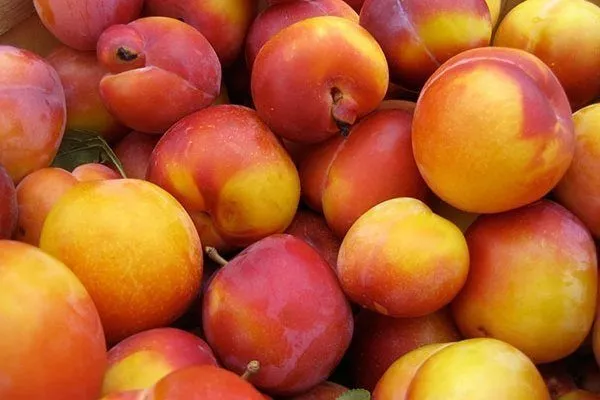
To increase the shelf life of plums, harvest them with the stems attached. At temperatures between 6-7°C (43-45°F), plums can last up to three weeks. Low humidity causes plums to wilt quickly, and at temperatures below 0°C (32°F), the flesh begins to darken.
Application areas
Peach plums are used to make compotes, preserves, and jellies. This variety also makes excellent wine, and ripe fruits can be frozen for winter use.
Peach Plum Reviews
The peach plum delights its growers with both its beautiful appearance and a bountiful harvest. The variety is generally easy to grow – it ripens early, is resistant to pests and diseases, and the ripe fruits are large, juicy, and sweet. All these advantages make this variety very popular among gardeners.