
In experienced hands, the Timiryazev Memory plum can compete with many established cultivars. However, even this worthy variety can be damaged (beginning to bear fruit poorly, etc.). Preventing this from happening and achieving the desired results requires proper care and knowledge.
How was this fruit created?
The "Pamiat Timiryazeva" variety was developed at the Moscow Research Institute of Horticulture in the second half of the 20th century. Its creation utilized old, traditionally bred varieties, such as "Victoria" and "Skorospelka Krasnaya."
Varietal trials for the "Pamiati Timiryazeva" variety began in 1948, and it was approved in 1959 for the Central and Middle Volga regions of Russia. It subsequently spread throughout the former USSR. Today, this variety can be found in commercial and private gardens in Belarus, the Baltic states, Moldova, and Ukraine.
Where to grow - suitable climate
This tree variety does not have a high tolerance for winter frosts. It is particularly sensitive to spring frosts, which can lead to a complete crop failure. Growing this tree is optimal for the climate of the Middle Volga and Central regions of the country, but not in all areas.
The plants will thrive in the Penza, Moscow, and Smolensk regions. Planting in the Tula and Ryazan regions is also an option. More challenging climates will require more careful care, especially when preparing the tree for winter.
Description
This is a medium-sized indoor plum tree with distinct varietal characteristics. Experienced gardeners can instantly recognize this variety among others thanks to these distinctive features.
Tree
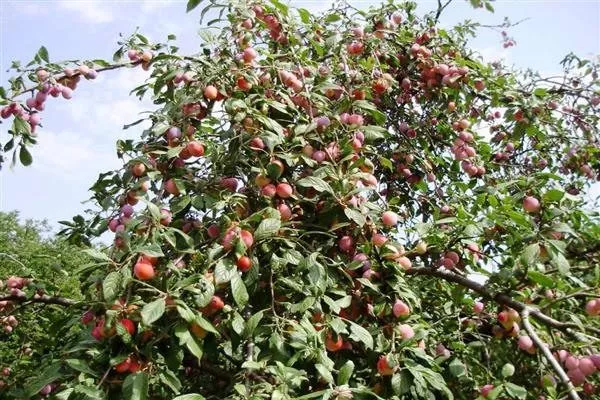
An adult Timiryazev Memory plum tree is of medium size – its height reaches a maximum of 300-320 cm, and the crown is wide, with a slightly drooping shape and moderate leaf fall.
Leaves
Small buds are located on the shoots at a slight angle. The tree's leaves are obovate, light green (the younger they are, the lighter the color), and have edges decorated with small, sparse teeth.
The surface of the leaf is slightly wavy, the upper side is smooth, while the lower side is covered with slight fluff.
Bloom
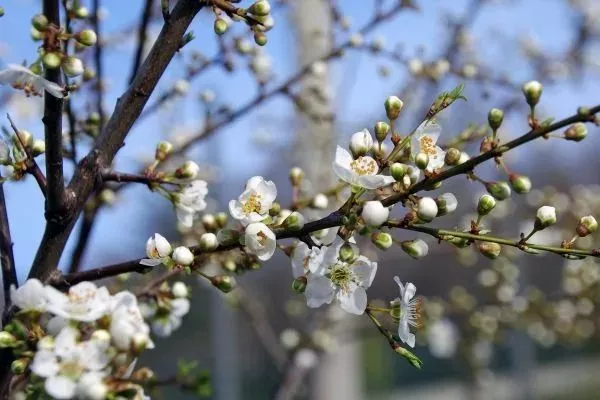
The white flowers of the Timiryazev Memory plum are fragrant and magnificent. They are medium-sized, full and lush, with petals that do not fold into a sepal. Each flower contains 21 stamens.
The peduncle is pubescent and medium-length, and the ovary remains bare. Budding begins on one-year-old shoots and bouquet branches. The plum tree begins flowering between May 12 and 15.
Fruits and their taste
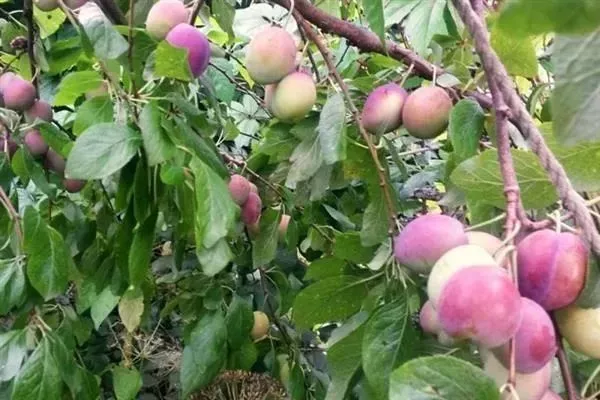
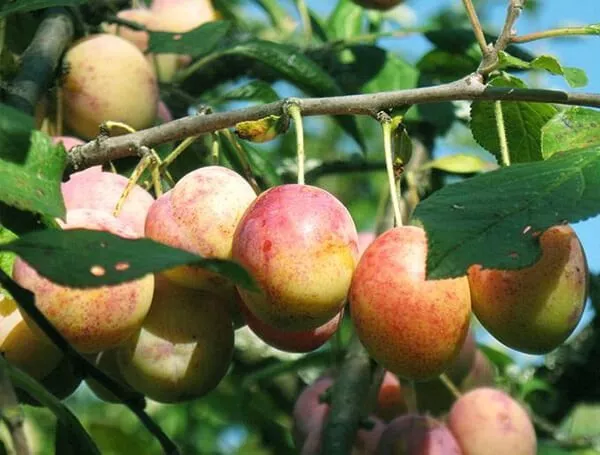
The plums are medium-sized, weighing between 20 and 30 grams each. Their shape resembles an egg with a slight elongation.
Other features:
- Their peduncle is small and long.
- The peel is marked by a bright yellow base, which is complemented by a pinkish-red blush on the sun-exposed side. The surface is decorated with numerous small dots under the skin. It is smooth and covered with a waxy film, without pubescence, and the ventral suture is barely visible on the fruit.
- The stone is medium-sized, oval-shaped, weighs about 1 g and is easily separated from the pulp.
- The pulp is moderately juicy, though not particularly juicy. The fruits are fibrous, and the flavor can range from sweet and sour to fresh and sweet. The aroma of the pulp is not very pronounced.
Plums contain 15% dry matter, 9.5% sugars, and 1.4% free acids. They contain up to 110 mg of vitamin C per kg. Based on tasting tests, the variety received an average rating of 4.2 points.
Characteristics
Plums of the "Pamyat Timiryazeva" variety do not burst and remain fresh on the tree for a long time. The selective harvesting process begins with the ripest fruits and then gradually moves on to the remaining ones, which are nearing completion. The tree has moderate drought resistance.
Fruiting and ripening
This variety bears fruit intermittently, lasting for 20 years. Timiryazev's Memory plums are considered late-ripening, and the full harvest is usually harvested in August or early fall. However, this timing can vary depending on weather conditions and a variety of other factors.
The tree begins bearing fruit fairly quickly, within 3-4 years of planting. Although fruiting is intermittent, this episodicity is not particularly pronounced.
Productivity
This variety's productivity is above average, which hasn't diminished its popularity even with the widespread availability of newer hybrids. Officially, a single tree can yield up to 9 kg of plums.
The actual yield depends on soil quality, adherence to agricultural recommendations, and weather conditions. The average yield is 15-35 kg per tree. A distinctive feature of this variety is its resistance to long-distance transportation.
Frost resistance
The winter hardiness of 'Pamiat Timiryazeva' is rated as average. Branches can freeze at temperatures as low as -25-30°C, but this variety recovers quickly. Key branches and flower buds are generally unaffected by frost. 'Pamiat Timiryazeva' also has average drought tolerance.
Pollination
Plum is a self-pollinating variety, which is a positive aspect. However, to achieve maximum yield, neighboring trees are necessary for pollination.
Self-fertility doesn't always guarantee a consistent harvest across years or in the same region. Therefore, having nearby donor plants guarantees a reliable and regular harvest.
You can plant the Vengerka, Skorospelka Krasnaya or Vengerka Moskovskaya varieties next to the Timiryazev Memory plum.
Keeping quality
At temperatures of 3-5°C, Timiryazev's Memory plums can be stored for up to two months without loss of quality. Unripe plums can ripen during storage. To do this, they should be laid out in a single layer in a room with a comfortable temperature, avoiding direct sunlight.
Planting recommendations
The Pamyat Timiryazeva variety, which is susceptible to frost, should be planted in the spring, after the soil has warmed up but before the buds begin to open. This variety doesn't require any special growing conditions.
Timing of planting seedlings and choice of location
The ideal time to plant plum trees is in the spring, before the first green buds appear on the tree. If you purchase a container-grown seedling with a closed root system, planting is possible throughout the season, from spring to fall.
When choosing a site for a plum tree, it's important to consider that its root zone occupies an area of 9 square meters, or 3 by 3 meters, so it should be spaced at least 300 cm in all directions from other plants, buildings, and fences.
Basics of selecting a site for planting a garden:
- Choose a location that receives consistent sun exposure to ensure the fruits are particularly sweet and large.
- The Timiryazev tree has average winter hardiness, so it's recommended to plant it near residential buildings or outbuildings with brick walls on the south side. Brick absorbs sunlight and gradually releases heat, providing the tree with additional protection from cold winds.
- Plums do not tolerate flooding or prolonged wet soil conditions, so lowlands should be avoided. Hills and slopes where the groundwater level does not exceed 200 cm are more favorable for their growth.
How to prepare a site and make a planting hole?
The crop thrives particularly well in soils with a neutral loam or sandy loam content. However, if you're working with less favorable soil types, such as poor sandy soils or heavy clay soils, you'll need to pay special attention to hole preparation and fertilizing.
Let's look at soil options and their stabilization:
- If your site is dominated by clay, use these tips:
- Create drainage ditches to improve moisture drainage and soil ventilation.
- Then you should engage in cultivation: during the digging process, add sand (6-12 kg per 1 sq. m) and manure (20 kg), which is best done in the fall.
- You can use sunflower or buckwheat husks, chopped straw as a leavening agent.
- Sown green manure and its subsequent digging in the fall also have a beneficial effect on the soil structure.
- In sandy soils, on the other hand, the tree may lack moisture and nutrients. But there are ways to overcome these difficulties:
- When digging, add high-moor peat, which retains moisture well.
- Add manure (4-6 kg per 1 sq. m) or compost, which enrich the soil with nutrients.
- Sow green manure crops annually, then cultivate them and return them to the soil, which will help improve its quality.
Creating the perfect hole for planting:
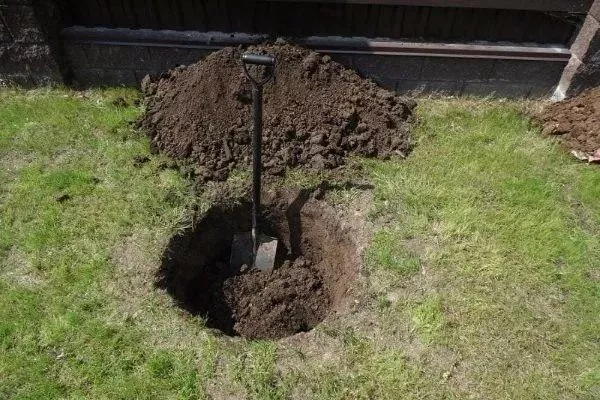
- Select a plot of land and dig a hole 50-60 cm wide and deep. If the soil is clayey, sandy, or infertile, increase the dimensions to 60-70 cm.
- Keep the top layer of soil separate. For easier mixing with fertilizer, you can lay plastic film, roofing felt, or plastic sheeting underneath. Do not use the bottom layer of soil for planting; it is not suitable for this purpose.
- Mix the top layer of soil with an equal mass of compost or humus, add 200-250 g of superphosphate, 75-85 g of potassium sulfate and, if your soil is acidic, add 200 g of dolomite flour.
- Fill the hole with this soil mixture, but if it's not enough to fill it completely to the brim, top it off with regular soil from your garden. The plant's primary nutrition is found in the root zone.
- Insert a stake into the center of the prepared hole. This will serve as a guide in the spring, and after planting, it can serve as a support for the young plant.
Selecting a seedling
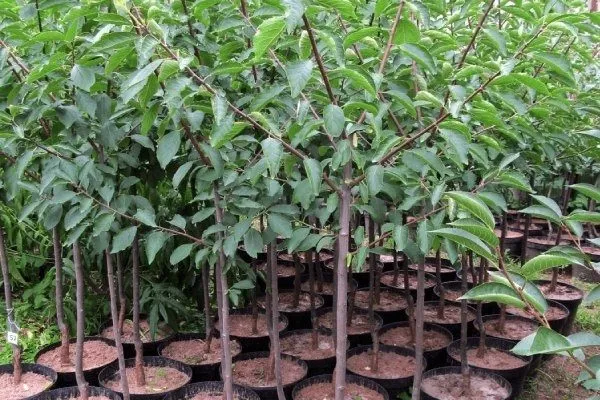
To find suitable planting material, you should contact specialized gardening stores. There, you can purchase the exact variety you need. When choosing a seedling, pay attention to the following aspects:
- Age. Young seedlings, one- and two-year-old, take root and adapt better, and also grow faster.
- Height. Resist the temptation to choose tall plants, thinking they're better. One-year-old seedlings should be about 75-80 cm tall, without branches, but with well-formed buds. Two-year-old plants should reach 100-110 cm in height, have 3 to 5 branches, and a straight trunk about 1.5 cm in diameter.
- Bark. The health of a seedling can be determined by its smooth and elastic skin, without visible damage.
- Root system. This is a key element determining the plant's survival. A central root with developed lateral branches and numerous small rootlets is a sign of a healthy seedling. These rootlets should not be rotten, damaged, or swollen.
Stages of planting a seedling
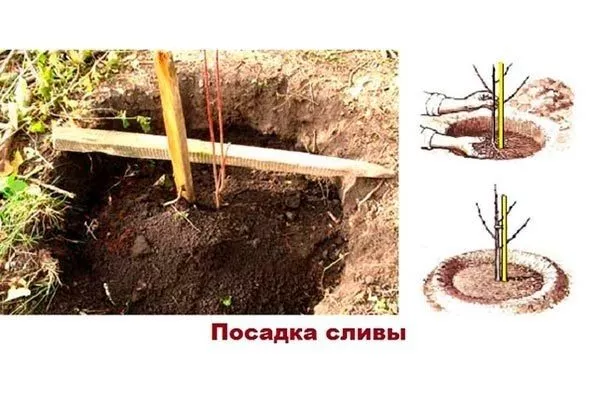
In the prepared planting hole, located south of the stake, dig a hole the size of the seedling's roots. The plum tree's root collar should be level with the soil surface.
Next, follow the instructions:
- Spread the roots and carefully cover them with soil. While you're doing this, pay special attention to the root collar, holding the seedling so it doesn't get too deep or break.
- Create an irrigation ditch 10-20 cm deep and wide around the plum tree trunk, keeping it 20-30 cm away from the tree. During irrigation and rain, water should not accumulate at the base of the tree.
- After watering, cover the soil with dry grass and secure the seedling to a stake.
Care Features
During the first year after planting, the seedling doesn't need fertilizing. It's only important to carefully care for it: regularly moisten the soil, remove weeds around it, and apply mulch.
Watering
This variety isn't particularly drought-tolerant, so young plants require careful care and adequate water. During periods of hot weather and low humidity, water every two weeks, providing 30-40 liters of water per plant.
In October, be sure to carry out a moisture charge before the onset of cold weather to fix moisture in the root system.
Top dressing
In the second year after planting, the first stage of tree fertilization begins. Here's a rough outline:
- At the beginning of June, a large amount of minerals is needed. For this, a urea solution is applied directly to the roots.
- At the end of the month, the procedure is repeated, this time urea can be replaced with azophoska.
- To speed up the development of a young plant, it is recommended to water it with a special growth stimulating solution every 10-14 days.
- In autumn, the last root feeding is carried out with phosphorus and potassium.
In the future, plums are fed annually:
- in May - using nitrogen fertilizers;
- in June – using nitrophoska;
- in August – using superphosphates.
Use 2-3 buckets of the liquid solution per tree. When plum trees begin to bear fruit, apply the fertilizer according to the same schedule, but with some adjustments:
- 1st time - before flowering;
- 2nd time - at the beginning of fruit ripening;
- 3rd time - after harvesting.
Trimming
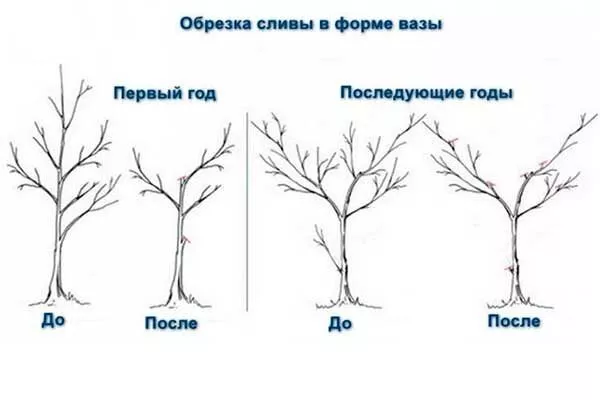
The first formative pruning is performed immediately after planting. Several strong shoots are left, reduced by a third of their length, and weak and unnecessary stems are removed. The central branch is also pruned, but so that it is a few centimeters higher than the side branches.
Perform all subsequent pruning in the spring, removing damaged, dried, and frost-damaged branches, as well as excess shoots growing inward. Any remaining shoots should simply be trimmed back slightly.
Other important actions:
- Dig out root shoots around the plum tree to prevent them from taking away nutrients and moisture, which can inhibit the tree's growth.
- To maintain the health of your plum tree, keep the area around the trunk clean. Failure to remove weeds and fallen leaves can lead to the proliferation of pests that will later harm the tree.
Preparing for frost
A young tree requires special attention before the cold weather sets in. To protect it from frost, carefully tie off the branches and wrap the trunk in a warm cloth, such as burlap. You can also cover it with spruce branches with the needles pointing downward.
A plastic film can be added on top to protect from low temperatures and small rodents. In snowy winters, it is recommended to cover the trunk with snow for additional insulation.
Additionally, do the following:
- treat the wood with 3% Bordeaux mixture;
- loosen the soil around the tree to a depth of 15-20 cm using a pitchfork;
- whitewash the trunk and branches with lime solution, after first cleaning the bark from mold and lichen.
Diseases and pests
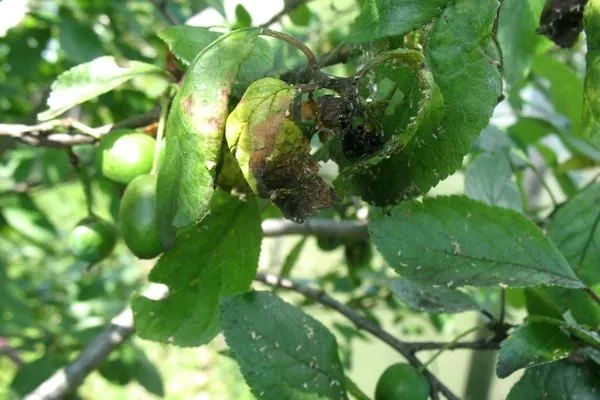
The Timiryazev Memory plum is resistant to diseases such as fruit rot and clasterosporium, but is susceptible to attack by plum gall mites and other sucking parasites:
- Plum gall mite. It poses a threat to leaves and young branches. It can be identified by red growths (galls) on the bark. To control the mite, use a colloidal sulfur solution and insecticides/fungicides, spraying the plum tree crown every 10-12 days. Damaged parts of the tree are removed and destroyed by burning.
- Spider mite.It is characterized by the appearance of small reddish spots on plum tree leaves. The mite feeds on the plant's sap, which leads to the formation of a sticky web, which subsequently dries out and causes the leaves to fall off. The mite attacks not only the leaves but the entire tree.
To avoid spider mite infestation, it is necessary to monitor the condition of the tree trunk circle:- ensure its cleanliness;
- remove fallen leaves;
- Spray the tree regularly with a solution of household soap.
If mites are detected, insecticides are used to kill them. For aphid infestations on plum trees, apply Biotlin every two weeks. Treatments are stopped 20 days before harvest.
Harvesting and storage rules
Plums should be picked only in dry weather. Fruits growing in the sunniest areas are picked first, and then the rest are harvested as they ripen. It's important to carefully remove the fruits with the stems attached, without damaging the waxy coating on the skin, to prolong their shelf life.
Storage requires a dark, cool room with a temperature of 0 to +2 degrees and humidity of 85 to 90%.
Positive and negative qualities
Reviews
The Timiryazev Memory plum variety is an ideal choice for a garden plot, especially when nearby pollinator varieties are unavailable. This variety doesn't require any special conditions and produces fruit beautifully with proper care, both in southern Russia and in central Russia.