
The Ozark Premier plum is a high-quality cultivated variety distinguished by its longevity, robustness, and excellent fruit flavor. It has become one of the most sought-after among both professional and novice gardeners. Some sources also refer to this variety as Ozark Premier.
Origin
In the United States, specifically in the state of Missouri, work was underway to develop a new plum variety. The goal was to develop a hybrid that would demonstrate high yields in various climate zones and possess attractive fruit appearance and flavor.
To achieve this goal, the Metli and Burbank varieties were crossed. The experiment resulted in the selection of a unique seedling that not only inherited the best traits of its ancestors but also demonstrated superior qualities in several other areas.
Height and appearance of the tree
Ozark Premier is a medium-sized tree, reaching a height of 300 to 350 cm. Its crown is rounded—wide and bowl-shaped—and distinguished by dense foliage. The trunk of this hybrid is medium thick and covered with uneven gray-brown bark.
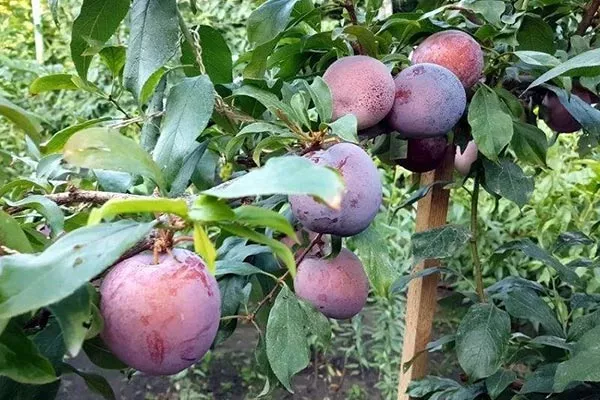
Other varietal characteristics:
- The branches are slightly curved and diverge at an angle of 35-40 degrees. Young shoots are straight, initially greenish in color, but darken to brown over time. They are not pubescent, but are filled with lenticels.
- The leaves are perfectly ovate, convex, smooth, and richly dark green in color. The undersides are pubescent. The petioles are medium-length and thick, green. The leaflets end in pointed tips and rounded bases, and the margins are finely serrated.
- The buds are small and reach a diameter of about 1.5-2 cm when opened. Two buds form from each generative bud, each containing five whitish, rounded petals that do not merge with each other.
- The budding period begins in mid-May and continues for ten days.
- The annual growth of the tree is 35-45 cm.
Fruit parameters
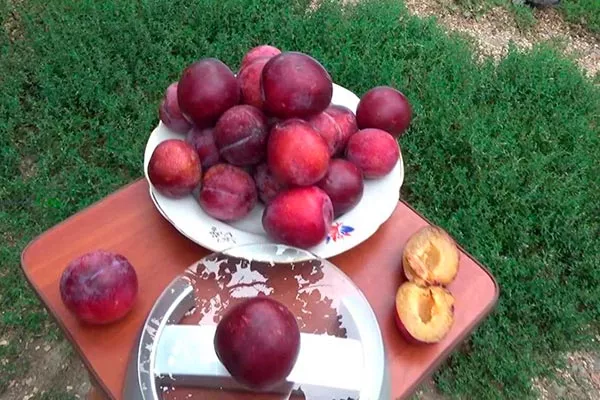
It is distinguished by its oval-shaped fruits with a somewhat narrow top, weighing on average about 90-130 g. Their ventral suture is wide and clearly defined, but does not crack.
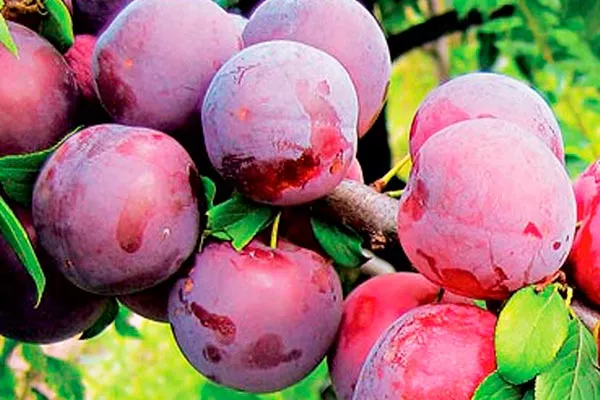
There are other signs of a hybrid:
- The end of the fruit is slightly depressed, while the base is a wide, deep funnel-like structure with thickened and slightly raised edges.
- The fruit skin is elastic and difficult to peel, with a slight waxy coating that rubs off easily. The base color is dark pinkish.
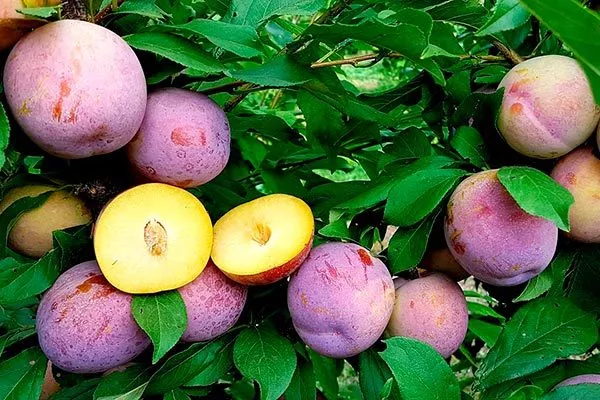
- The pulp has a light creamy hue, is distinguished by its juiciness, delicately tender structure and pleasant aroma.
- The stone is small and easily separated, but sometimes a piece of pulp comes off with it.
Characteristic differences
To evaluate the effectiveness of a hybrid compared to other varieties, it's important to study its characteristics. This will help identify optimal growing conditions and determine the key factors for regular fruiting.
Uses of fruits
The Ozark Premier plum is a true find for gardeners seeking variety and new taste sensations. These plums are fleshy, sweet, and slightly tart, making them ideal for both fresh consumption and for making preserves, such as jams, compotes, and jellies.
Plus, thanks to their high sugar content, they're perfect for drying, turning into natural sweets that'll delight you this winter.
Ripening and fruiting
At 3-4 years of age, the tree begins to produce its first fruit. Harvesting the fruit is not done all at once, but requires several stages.
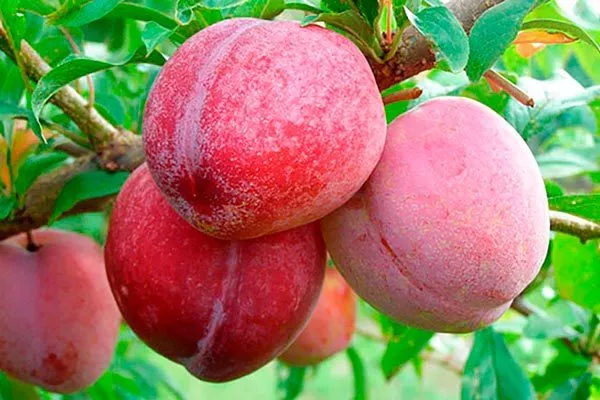
The first ripe fruits appear in July, and the harvest period lasts approximately 18-25 days. Ripe fruits hold well on the branches and do not fall off.
Productivity
This variety is distinguished by its generous and consistent yield. In its third or fourth year, a tree produces approximately 4.5-5.5 kg of berries, and this yield can increase significantly over the years with proper care. A mature bush yields up to 50-60 kg annually, of which 86-90% are marketable.
Growing zones
Ozark Premier is recommended for cultivation in the central and southern regions of the country due to its adaptability to the temperate continental climate.
In the Ural region, planting this variety is possible, but additional insulation of young bushes is required before the onset of winter.
Drought and frost resistance
It has good frost resistance. The root system and aboveground parts of the plant can easily withstand temperatures as low as -28°C. However, Ozark Premier is sensitive to gusts of wind, which can cause damage to shoots during the winter.
The tree's ability to withstand winter weather conditions develops as it grows, so at the beginning of the shrub's development, it is recommended to provide it with additional heat, if necessary, taking into account the local climate.
When growing plums, it's important to maintain optimal soil moisture levels, avoiding both excess and insufficient watering. Although fairly drought-resistant, the plant requires three waterings throughout the season.
Self-fertility and the need for pollinators
The species is not capable of self-pollination. To ensure fruiting, it must be planted close to donor trees. The optimal distance is 5 to 10 meters.
The following can be used as pollinators for the Ozark Premier plum variety:
- Satsuma;
- Friar;
- Shiro;
- Santa Rosa;
- Delicious;
- Sarking.
Planting the Ozark Premier plum
The Ozark Premier plum is characterized by rapid growth and development, requiring careful planting and care. To increase the tree's resistance to common diseases and pests, as well as to ensure abundant harvests, it's important to follow simple agricultural practices.
The optimal time for planting is spring, but the site should be prepared in the fall. If fall planting is preferred, the soil should be dug out and fertilized two weeks before the expected planting date.
Choosing a landing site
Make sure that the chosen location provides sufficient light for healthy plant growth and a tasty harvest for as long as possible throughout the day.
Other important aspects:
- It's important to find a location protected from cold winds. This will help maintain the tree's health and increase its resistance to winter frosts.
- Use an area free from standing water to prevent root rot and other unwanted effects of excess moisture.
- Before planting, be sure to check the soil condition and determine its structure and composition. If the soil is insufficiently fertile and loose, you can use organic matter, sand, peat, etc., to improve its quality and nutritional value.
How to prepare soil and seedlings for planting?
Successful plum planting requires careful soil cultivation. First, clear the area of weeds and other plants that could rob the plums of nutrients. Then, till the soil to a depth of 30 to 50 cm to improve its structure and ensure adequate root aeration.
Preparing seedlings also includes a number of important steps:
- Carefully examine their quality and condition, selecting specimens with a well-developed root system and no damage.
- Soak in warm water for a while to hydrate the roots.
Methods of planting plum trees
When choosing a method for growing the Ozark Premier plum, two main strategies are available: direct planting in the ground and using a container system.
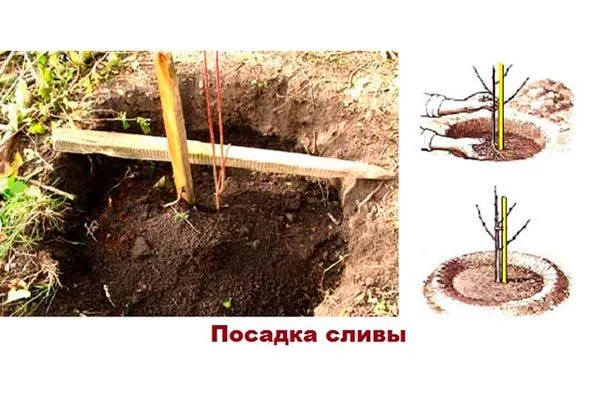
Into the open space
After all the preparatory activities, proceed as follows:
- Dig a hole of appropriate dimensions. The depth should be sufficient for the seedling's roots to avoid them becoming bent, and the width should be twice the diameter of the root system.
- Place the seedling in the hole, carefully arranging the roots at the base.
- Cover with soil, leaving the root collar at ground level.
- Compact the soil around the seedling and add enough water.
- After planting, cover the trunk area with organic mulch to retain moisture and prevent weed growth.
Into containers
Select a container that's large enough to accommodate the seedling's root system. Follow these step-by-step instructions:
- Place a mixture of fertile substrate and perlite (or stones, pebbles, etc.) into it to ensure effective drainage.
- Place the seedling in the container so that the roots are evenly distributed, add the soil mixture.
- After planting, moisten the soil, providing the required amount of moisture.
- Find a suitable location for the container that will be in full sun and protected from gusts of wind.
Care instructions
In order for Ozark Premier to thrive and bear fruit abundantly every year, it is necessary to follow the established principles of its care and maintenance.
- ✓ For optimal growth, ensure a minimum distance of 4 meters between trees to prevent competition for resources.
- ✓ It is recommended to use drip irrigation to maintain optimal humidity levels without overwatering.
Watering
The hybrid requires balanced moisture, but is sensitive to excess soil moisture. Therefore, watering should only be done during prolonged periods of dry weather.
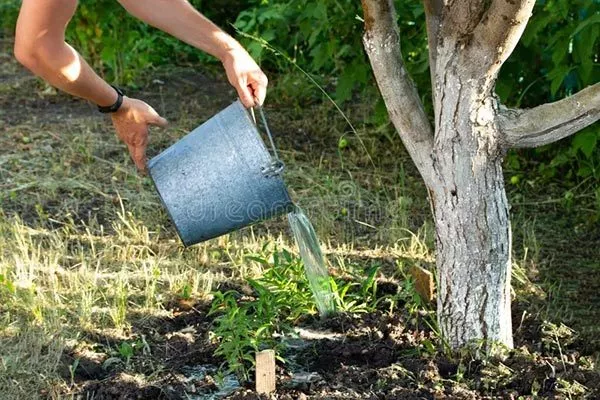
Immediately after planting, the plants need to be watered weekly, and after a month, reduce the frequency of watering to once every two weeks.
Mature trees require additional moisture only during prolonged droughts, especially during the period of budding and fruit ripening.
Top dressing
For optimal growth of Ozark Premier, three fertilizations are required throughout the growing season:
- The feeding process should be started at the beginning of spring, when active vegetation begins, using 50-70 g of urea for this.
- The next two applications are recommended after the plants have flowered and during the fruit ripening stage. In these cases, use 50-80 g of superphosphate and 30-50 g of potassium sulfate.
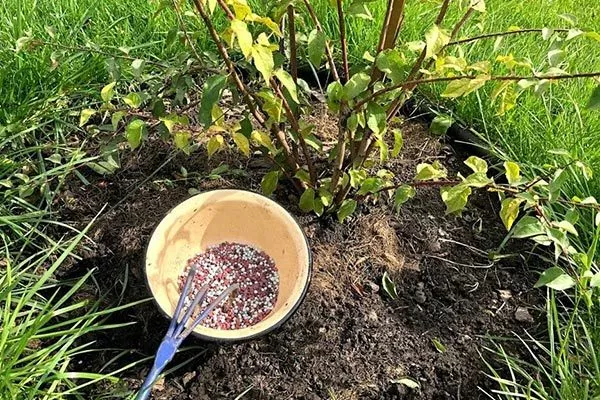
Recommendations:
- Fertilizers can be applied either dry, by placing them in the root zone and lightly compacting the soil, or as a solution. The latter is preferable, but in the former case, it's important to water the plants beforehand.
- The exact dosage of fertilizer depends on several factors – the level of soil fertility, the age of the tree, and the instructions for the product from the specific manufacturer.
Insulation
In cold climates, such as the central and northern regions, it's advisable to provide plum trees with additional warmth during the first three years after planting. To achieve this, before winter sets in, spread a 10-15 cm thick layer of mulch at the root level and cover the upper part of the plant with several layers of agrofibre.
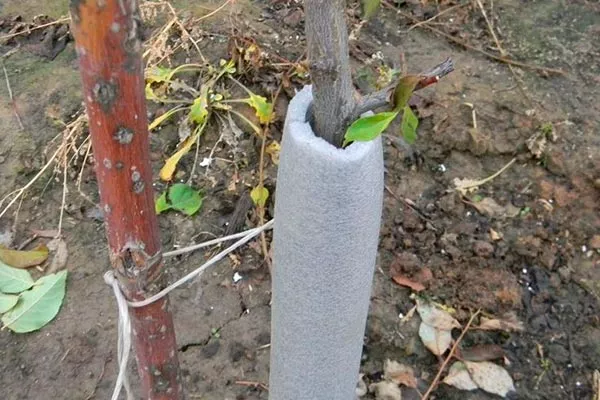
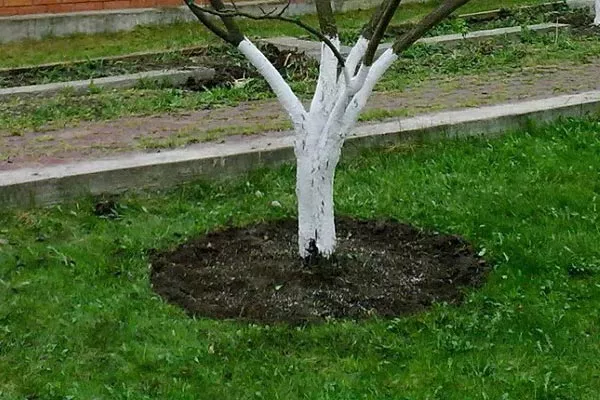
Once the tree reaches maturity, mulching the area around the trunk and whitewashing the trunks with lime is sufficient. To prevent rodents from damaging the bark during the winter, wrap the trees with fine-mesh netting or roofing felt.
Trimming
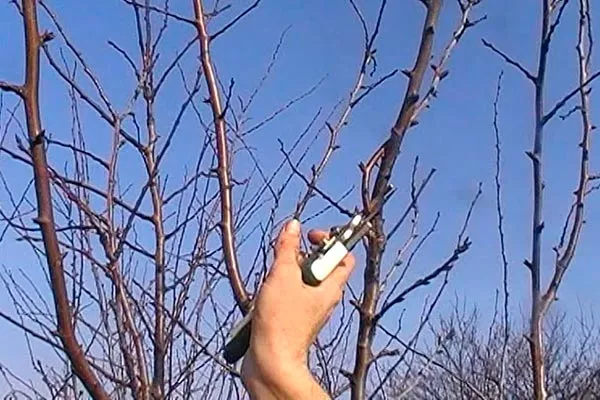
To form the correct crown for the Ozark Premier plum, immediately after planting, the main stem should be cut back to 55-65 cm. The following year, select 3-4 lateral shoots to form the lower tier and prune them by a third of their length, leaving the main stem 15-18 cm taller.
Other subtleties:
- After a year, the pruning procedure is repeated, but now only 2-3 lateral shoots remain, which should be 20-25 cm higher than the previous ones.
- Subsequent pruning is carried out to remove excess, broken, and damaged branches. Every spring, basal suckers must also be removed.
- When the plum tree reaches the age of 8-10 years, it will require rejuvenation, which involves removing all branches older than five years, and cutting young shoots by a third of their length.
Loosening and caring for the tree trunk circle
To improve soil moisture and permeability, it's recommended to periodically loosen the soil around the tree trunks. This should be done a couple of days after each watering. Thoroughly removing weeds around the plant stems will help prevent diseases and pests.
Diseases and pests
Some common diseases can threaten not only reduced productivity, but also the plants themselves:
- Clusterosporiasis. This disease affects Ozark Premier plums, causing brown spots with black borders to appear on the bark. Holes may be visible on the leaves, while white spots develop on healthy foliage. To prevent the spread of the disease, the following measures are recommended:
- spraying trees with a 1% solution of Bordeaux mixture or a solution of copper oxychloride at a concentration of 40-50 g per 10 liters of water;
- removal of affected branches from the crown;
- fixing the wound surface with garden varnish.
- Rust. To diagnose the disease, look for the following symptoms: leaves begin to turn yellow prematurely and fall off, rapidly enlarging red bumps appear on the upper surface of the foliage, and the tree appears weakened and depressed. At the first sign of the disease, immediate action is necessary against rust:
- For spraying, use a special copper oxychloride solution, prepared at a rate of 80 g per 10 liters of water. For garden treatment, 3 liters of this solution is required.
- After the harvest has been collected, it is advisable to carry out additional treatment with copper sulfate or another similar preparation.
- Fruit rot. The main signs of this disease include: the formation of spores on the skin of the plum, the appearance of dark brown spots on the fruit, which quickly expand at high temperatures and humidity.
A characteristic feature of the pathogen is its ability to rapidly disperse spores, which are easily carried by the wind. To protect Ozark Premier plums, remove affected fruit and treat them with Bordeaux mixture. - Sooty mold. A symptom of the disease is the appearance of a dark film on leaves and shoots. This film prevents oxygen and solar radiation from reaching the plant cells, leading to a halt in photosynthetic activity.
To combat the disease, it's necessary to first eliminate the conditions conducive to the growth of sooty mold. To combat it, use a special solution made from grated soap (150-200 g), copper sulfate (5-7 g), and water (10 l), which is sprayed on the plants.
Storage of the harvest
The Ozark Premier variety produces grapes that are resistant to transportation and retain their marketable appearance. This variety is ideal for long-term fresh storage.
For effective collection, it is necessary to follow some recommendations:
- Choose dry weather for harvesting fruits.
- Pack the harvest into wooden boxes or cardboard boxes, forming layers of 3-4 and separating them with layers of paper or straw.
- For long-term storage of cherry plum, optimal conditions include a temperature of around +2 degrees Celsius and humidity of around 60%.
If these conditions are met, the Ozark Premier variety can be stored for up to two months if harvested at the stage of technical maturity.
Strengths and weaknesses
This variety boasts a number of advantages that have been highly praised by gardeners. However, it also has a number of disadvantages that are worth considering when choosing this hybrid.
The fruit-bearing life cycle of a tree lasts for 20 years.
Reviews
Ozark Premier is one of the most popular varieties, thanks to its refined flavor and attractive appearance, which is essential for commercial gardening. It is easy to care for, and if you follow the basic rules, it promises abundant harvests every year. Due to its early maturity, this hybrid requires regular replanting to maintain productivity.